
Reviewed · DESSERT TOURS
Japanese Traditional Sweets making
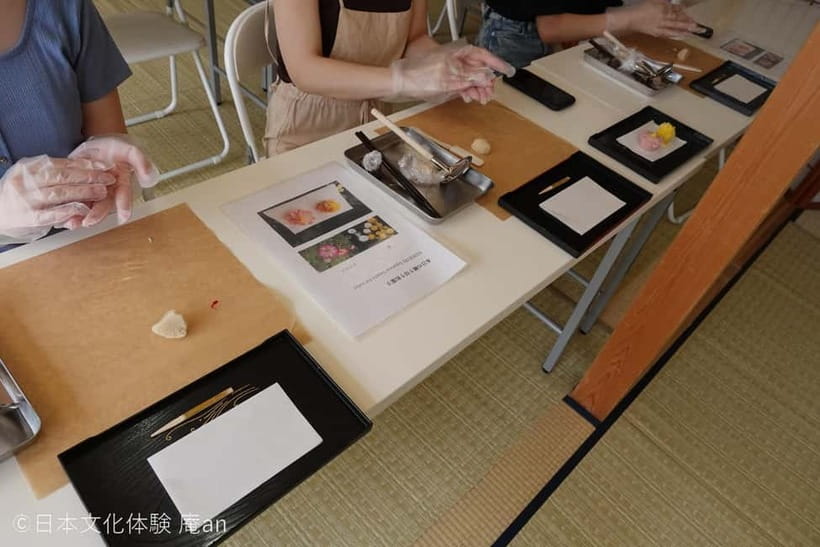
The best part of this short Tokyo class is that you work with the real stuff: white and red bean paste supplied by long-established Kyoto shops. In 65 minutes, you shape two seasonal nerikiri sweets, turning humble bean paste into small edible flowers and decorative kinton designs.
I like the low price, about $11 per person, and the fact that you can eat your sweets right away instead of carrying fragile confections across Japan. The main concern is pace. Some sessions move quickly, and the large classroom can make it hard to see if you sit at the back.
In This Review
- Key points to know before booking
- What makes nerikiri worth learning in Tokyo
- The 65-minute schedule, minute by minute
- Flower-shaped nerikiri: your first edible design
- Kinton nerikiri: a different texture and shape
- Picture time and eating your sweets on site
- The instructor, language, and classroom pace
- Is $11 good value for this Tokyo activity?
- Who will enjoy this best?
- Location and timing tips for AN TOKYO
- My verdict on the hands-on sweet making
- FAQ
- How long does the Japanese traditional sweets class last?
- How many sweets will I make?
- Can I eat the sweets during the activity?
- What ingredients are used?
- Is English instruction available?
- Can I take the sweets home?
- What is the cancellation policy?
Key points to know before booking
- Kyoto bean paste: The class uses white and red bean paste made by established Kyoto sweet shops.
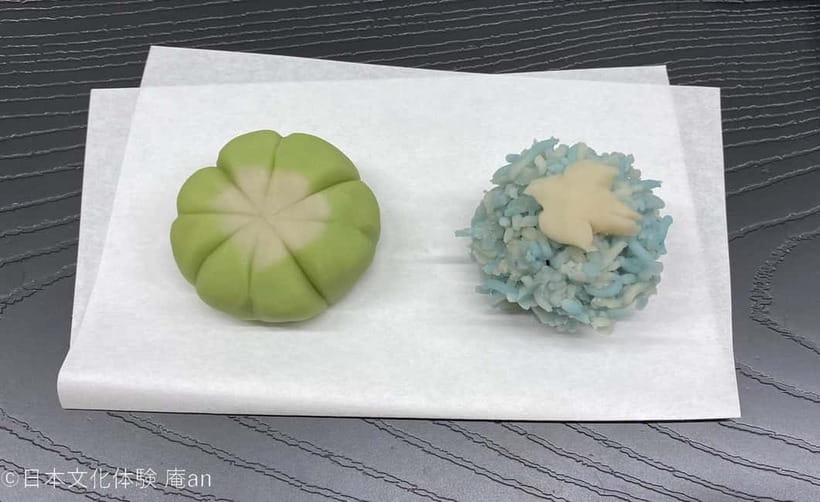
- Two seasonal designs: You make a flower-shaped nerikiri and a kinton nerikiri, with designs tied to the season.
- Short, affordable format: The 65-minute class fits neatly into a Tokyo sightseeing day and costs about $11.
- Eat your own work: A picture session comes before tasting, so you can enjoy the sweets on site.
- Japanese-led instruction: The instructor teaches in Japanese, with English translation provided as much as possible when requested.
- Keep an eye on the clock: Late arrivals cannot be accommodated, and the class may feel rushed for careful makers.
What makes nerikiri worth learning in Tokyo
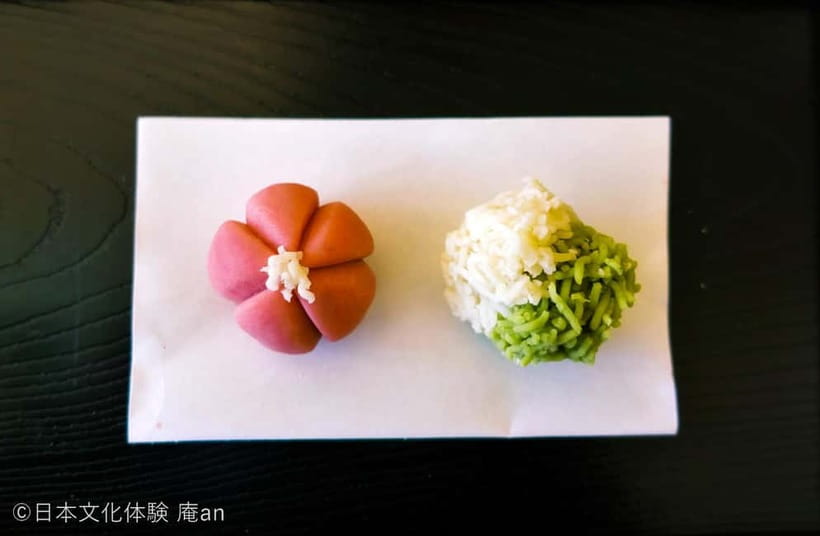
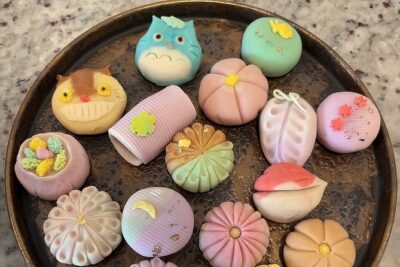
Nerikiri is a refined Japanese sweet made by shaping bean paste into seasonal forms. It is usually associated with tea gatherings, where appearance matters almost as much as flavor. You are not simply mixing ingredients here. You are learning how a small piece of food can reflect flowers, weather, and the time of year.
That makes this class different from a standard cooking lesson. There is no long recipe, hot stove, or heavy meal at the end. Instead, you use your hands and simple tools to form smooth paste into a tiny piece of edible art.
The ingredients matter. The class uses white and red bean paste produced by long-established shops in Kyoto. That gives you a taste of the soft, sweet base used in formal Japanese confectionery, rather than a casual supermarket substitute.
I also like the scale of the activity. You make only two sweets, which keeps the session manageable and gives the instructor a clear task to demonstrate. The tradeoff is that you have little room for trial and error. If you enjoy working slowly, shaping every petal until it is perfect, this may feel more like a guided demonstration than an open studio.
A few more Tokyo tours and experiences worth a look


The 65-minute schedule, minute by minute
The class begins with an explanation of Japanese traditional sweets. This opening gives you the basic context for nerikiri and prepares you for the shapes ahead. Since the instructor is Japanese-speaking, English support is provided as much as possible if you request it.
After the introduction, you make the first sweet, a flower-shaped nerikiri. This is the more immediately recognizable design, and its seasonal character is part of the fun. The exact appearance can change with the time of year, so you are not making a fixed souvenir all year round.
The second project is a kinton nerikiri. Kinton refers to a looser, textured style that gives the sweet a different look from the smooth flower. Making both designs lets you compare two ways of handling the same basic ingredient.
The listed program allows roughly 55 minutes for the explanations, both sweets, and photographs. The final 10 minutes are for eating, followed by departure at the 65-minute mark.
That timing is worth understanding before you reserve. A session can move briskly, with each shaping step following soon after the last. One detailed account described only 30 to 40 seconds for some tasks before the instructor moved ahead. If you want time to experiment, ask for English help early and pay close attention during the demonstrations.
Flower-shaped nerikiri: your first edible design
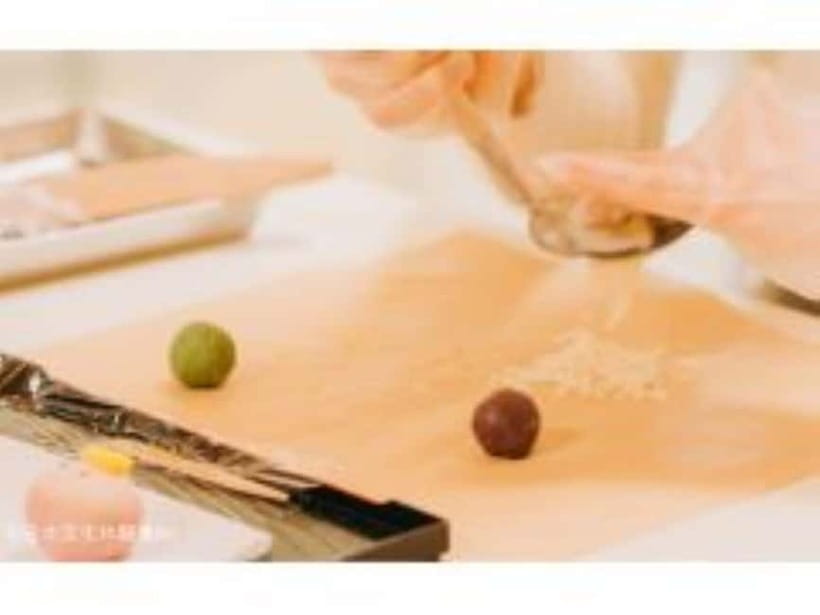
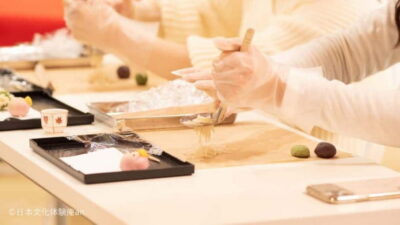
The flower sweet is likely the easiest place to understand the basic method. You begin with prepared bean paste, then shape it into a smooth form and add the lines and details that make it resemble a flower.
The appeal lies in the precision. A small change in pressure can alter the petals, and the final shape depends on how evenly you handle the paste. You do not need professional pastry skills, but you do need to follow the instructor’s movements carefully.
This is also the point where seating matters. The classroom has been described as large enough for around 30 people, and anyone seated toward the rear may have trouble seeing the demonstration. If the room is busy, try to sit where the instructor’s hands are easy to watch.
Do not expect a long one-on-one lesson. The instructor must guide the whole group, so the class works best when you copy the basic form rather than chase perfection. Your finished sweet may have a few uneven petals. That is part of its charm, and it will still be edible.
Kinton nerikiri: a different texture and shape
The kinton sweet gives the class a useful second act. Instead of relying on a smooth flower form, you create a more textured design from the bean paste. The contrast helps you see how Japanese confectioners use shape and surface to suggest natural forms.
Making two sweets also gives you a better sense of the ingredient. The white and red bean pastes are not just filling. They are the main material, and their texture must be managed with care. The taste stays familiar and gently sweet, while the appearance does the storytelling.
The class does not promise a large amount of food, and you should not book it as a substitute for lunch. Two small sweets are enough for a tasting and a hands-on lesson. For many people, that is the right amount, since nerikiri is designed to be enjoyed in small portions with tea.
The final result is personal. Even if everyone receives the same basic instructions, each flower and kinton sweet will look a little different. You get a simple souvenir in the form of a photograph, followed by something you can actually eat.
Picture time and eating your sweets on site
Once both sweets are finished, you have time to photograph them. This is an important part of the schedule because nerikiri is most attractive before it is touched with a fork or chopstick.
You should have your phone ready before the picture period begins. The class moves on to eating shortly afterward, and the overall schedule does not leave much extra time. The listed program places the picture session before the end of the making portion, with eating during the final 10 minutes.
The best feature here is the immediate tasting. You do not need to worry about protecting soft bean paste in your luggage, and you can see how the finished sweets taste while the lesson is still fresh in your mind.
A take-out box is available for an extra 100 yen if you want to carry the sweets away. That may be useful if you are too full, want to show someone else, or prefer to save one for later. The box is not included in the $11 price.
A completion certificate is also optional for 300 yen. If you want a certificate with your name printed on it, you need to provide the names in advance. Otherwise, a blank space is left for you to fill in.





The instructor, language, and classroom pace
The instructor is Japanese, and the listed language is Japanese. English translation is provided as much as possible when requested, but this is not presented as a fully English-language class.
That distinction matters. You can still follow the activity through demonstrations, but you should not assume every explanation will be delivered slowly in English. Contacting the organizer ahead of time to request English assistance is the sensible move.
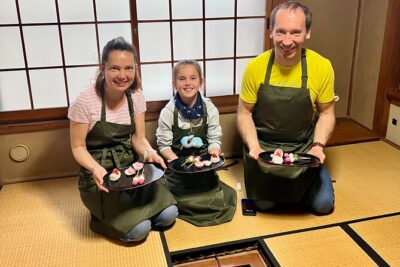
The class has received praise for its instructor, staff, and clear location updates. It can also be a friendly way to meet people if you are sightseeing alone, since everyone works on the same small projects.
At the same time, the welcome and teaching style may feel businesslike rather than warm. One account found the introduction cold, the instructions rushed, and the end of the session hurried. You should arrive ready to concentrate and work at the group’s pace.
There is another practical issue: coat and bag storage may be limited. A report described coats and bags being left on the floor because there was nowhere to hang them. Bring only what you need, especially if you are visiting in cooler weather.
Is $11 good value for this Tokyo activity?
At about $11, this is one of the easier cultural activities to fit into a Japan trip without much financial risk. The fee covers the full nerikiri-making set and two finished sweets, using bean paste from established Kyoto producers.
The value is strongest if you want a short, focused activity. You do not spend half a day traveling to a workshop, and the 65-minute duration leaves room for museums, shopping, or a meal nearby. The class also gives you something more memorable than a quick snack because you take part in shaping the food.
The value is weaker if you want a slow, detailed confectionery lesson. The cost is low partly because the format is compact and group-based. You are unlikely to receive extended individual coaching or many attempts at each design.
The optional extras are modest. A 100-yen box is reasonable if you need to transport the sweets, while the 300-yen certificate is mainly for people who enjoy keeping a formal record of activities. Neither is needed to enjoy the class.
Who will enjoy this best?
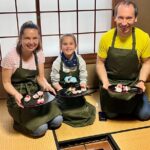
I would recommend this experience to you if you like Japanese food, small crafts, and activities that produce something you can taste. It works well for solo visitors, couples, families, and groups looking for a cultural break between major Tokyo sights.
It is particularly suitable for:
- First-time visitors who want an easy introduction to wagashi, Japanese sweets
- Solo visitors who enjoy shared activities
- Families with children who can follow short instructions
- Food lovers interested in Kyoto-style bean paste
- Anyone seeking a low-cost activity lasting about an hour
Children under two who sit on a parent’s lap are free. Other participants need to be included in the reservation, and people who are not taking part cannot enter the activity.
I would be more cautious if you dislike group instruction, need a slow pace, or expect detailed English teaching. The session may also frustrate anyone who arrives late, since the event will not be held back for delays.
Location and timing tips for AN TOKYO
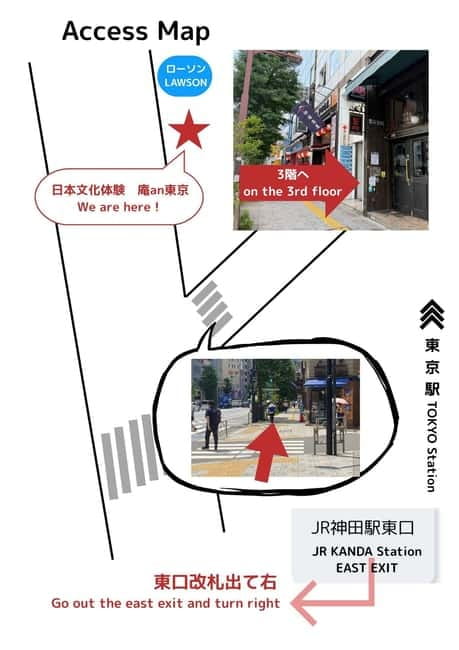
The meeting point is AN TOKYO Japanese Culture Experience in central Honshu, at coordinates 35.6916541, 139.7715022. Check your route carefully before setting out, since the organizer will not delay the class for late arrivals.
Operation hours are from 10:00 to 17:00. Reservations received after 17:00 are processed the next day. The available starting time depends on the date, so check the schedule when booking.
Plan to arrive early enough to find the room, settle your belongings, and choose a good viewing position. Since the class may take place in a large room, sitting near the front can make a real difference when the instructor demonstrates delicate shaping steps.
Book this early in your day if possible. A delay on a sightseeing visit can put the class at risk, and the cancellation terms are strict after the free-cancellation deadline. You can cancel up to 24 hours in advance for a full refund, but changes made after a cancellation fee applies may bring an additional specified charge.
Keep in mind that the organizer does not cover your travel costs if you cancel. Reserve only when your schedule is reasonably firm, even though the reserve-now, pay-later option lets you hold a place without paying immediately.
My verdict on the hands-on sweet making
I like this activity for what it is: a cheap, compact introduction to seasonal Japanese confectionery with good ingredients and an enjoyable final tasting. The flower and kinton designs give you two distinct shapes, and the Kyoto bean paste adds a useful connection to Japan’s wider sweets tradition.
The weak point is not the food. It is the format. A quick group lesson, Japanese-first instruction, limited storage, and a potentially crowded classroom mean you need to arrive prepared and accept some pressure to keep moving.
Book it if you want a simple cultural activity, especially if you are traveling alone or want a break from sightseeing. Skip it if you need a relaxed workshop with plenty of personal attention. For $11, the risk is small, but your enjoyment will depend heavily on your tolerance for a brisk class.
FAQ
How long does the Japanese traditional sweets class last?
The experience lasts 65 minutes. The making, explanations, and picture time take about 55 minutes, followed by eating time and room departure at the 65-minute mark.
How many sweets will I make?
You will make two seasonal Japanese sweets called nerikiri. The program includes a flower-shaped nerikiri and a kinton nerikiri.
Can I eat the sweets during the activity?
Yes. Eating time takes place at the end of the session, after the picture period.
What ingredients are used?
The class uses white and red bean paste produced by long-established shops in Kyoto.
Is English instruction available?
The instructor is Japanese, and the listed activity language is Japanese. English translation will be provided as much as possible if you request it, so contact the organizer before the class.
Can I take the sweets home?
A sweets take-out box is available for an additional 100 yen. It is not included in the activity price.
What is the cancellation policy?
You can cancel up to 24 hours in advance for a full refund. The class cannot be held for late arrivals, and cancellation or date changes after a fee applies may incur additional charges.
More Dessert Tours in Tokyo
More tours in Tokyo we've reviewed






Dessert Tours, compared.
 ★ 5.0Matcha Making Class in Tokyo with Authentic Japanese Sweets SetFrom $21
 ★ 4.9Tokyo: Matcha Making Experience with Mochi Sweets in AsakusaFrom $221 hour
 ★ 5.0Make Traditional Nerikiri Sweets & Matcha experience in ShibuyaFrom $60
 ★ 5.0Private Mochi Sweets Making class near Shibuya areaFrom $79
 ★ 4.7Japanese Traditional Sweets making and Tea CeremonyFrom $181h 35m
 ★ 5.0Tokyo Local Food Tour: Noodles, Skewers, Dumplings, SweetsFrom $74