
Reviewed · HAKONE DAY TRIPS
Hakone Hachiri: Old Tokaido Highway Hiking Half-day tour
The most rewarding part of this Hakone Hachiri hike is that you follow an old route with your own feet. Edo-period travelers once crossed the Hakone Mountains between Kyoto and Edo, now Tokyo. You cover only part of that demanding journey, but the cobbles, cedar trees, tea stop, and checkpoint make the past feel close at hand.
I like the small group of six and the way the route mixes gentle hiking with local transport. I also like the 400-year-old Amasake Tea House, where a sweet amasake drink and Japanese snack give the walk a welcome lift. The main consideration is the weather: Mt. Fuji, Lake Ashi, and the famous red torii gate may not all appear clearly.
In This Review
- Key points to know before you book
- Why the Old Tokaido feels different on foot
- Starting at Hakone-Yumoto and reaching the trail
- Hatajuku, the woodcarving village
- Amasake at a 400-year-old teahouse
- Walking the cobbles of the Old Tokaido
- Lake Ashi and the postcard view
- The 400-year-old cedar avenue
- Hakone Checkpoint and an early finish
- Guide quality and the small-group format
- Is $112 a fair price?
- Who should choose this hike?
- Should you book Hakone Hachiri?
- FAQ
- Where does the Hakone Hachiri tour start?
- Where does the tour finish?
- How far do I walk?
- Is transportation included?
- Can I see Mt. Fuji?
- How many people are in the group?
Key points to know before you book
- Walk part of a 32-kilometer historic route: Hakone Hachiri refers to the old mountain section of the Tokaido, with hachi meaning eight and ri representing roughly 4 kilometers.
- Enjoy a 400-year-old teahouse: The Amasake Tea House provides a memorable break with amasake and local snacks.
- Expect about 4 kilometers of beginner-level hiking: The route uses gentle slopes, forest paths, and uneven cobblestones.
- Finish beside Lake Ashi: The tour ends at Hakone Checkpoint around 12:30 pm, leaving time for lunch and further sightseeing.
- Travel in a group of no more than six: A certified National Mountain Guide leads the English-language outing.
- Mt. Fuji is weather dependent: You may get the postcard view of Fuji, the lake, and Hakone Shrine’s torii gate, but no guide can promise clear skies.
Why the Old Tokaido feels different on foot
Hakone is often seen from a bus window, a ropeway, or a boat on Lake Ashi. This walk gives you another way to understand it. You move through the same mountain region that once slowed journeys between Kyoto and Edo, when a trip between the two major cities could take serious effort.
The name Hakone Hachiri points to the scale of that old journey. Eight ri came to about 32 kilometers, a difficult stretch of mountain road. You will not walk all of it. The tour wisely skips the steepest parts by shared taxi and local bus, then focuses your energy on the sections that best show the road’s character.
That balance matters. You get a real walk, rather than a quick photo stop, but you do not need the stamina of an Edo-period messenger. The route is aimed at beginners and takes about 210 minutes, including transport and visits.
I like the idea of learning this history through movement. The stones under your shoes, the slope of the path, and the quiet of the forest explain more than a display panel alone. You begin to see why Hakone was a serious obstacle on the old highway.
A few more Hakone tours and experiences worth a look
Starting at Hakone-Yumoto and reaching the trail
Meet your English-speaking guide at the ticket gate of Hakone-Yumoto Station. This is a practical meeting point, especially if you are arriving by train and want clear instructions before leaving the station area.
The first ride is a shared taxi of about 15 minutes to the trailhead. This cost is not included in the tour price. The shared taxi is about 2,000 yen to be divided among the group, so your final amount depends on how many people join.
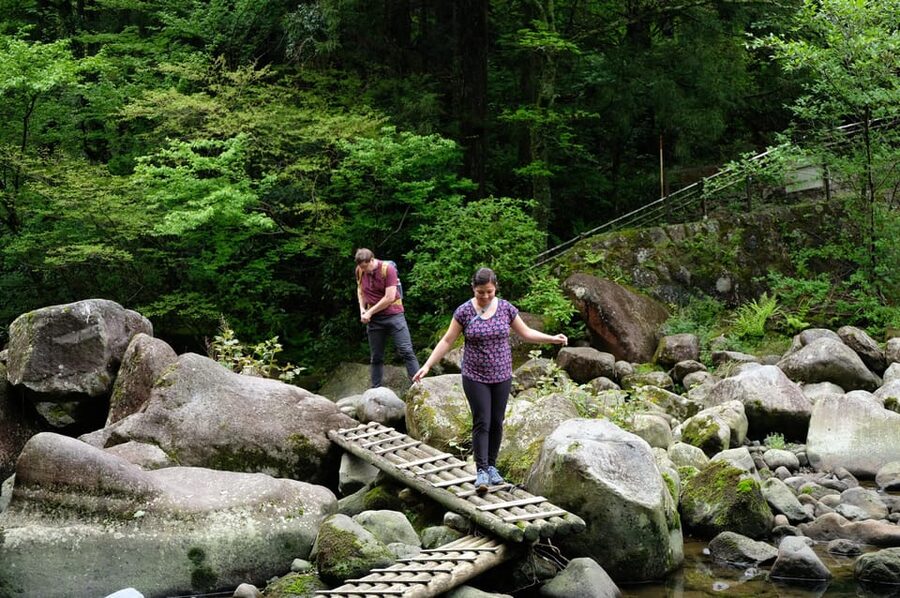
From the trailhead, you begin the first walking section toward Hatajuku. The route follows the Sukumo River and takes about an hour. This part gives you a gradual start, with forest scenery and a chance to settle into the pace.
Wear shoes with a good grip. The hike is suitable for beginners, but beginner-friendly does not mean perfectly smooth. The old road includes cobbled sections, and mountain paths can feel different from a paved city walk. A hat, sunscreen, and water are sensible additions even though the official packing advice specifically calls for comfortable shoes, a hat, sunscreen, and a camera.
Hatajuku, the woodcarving village
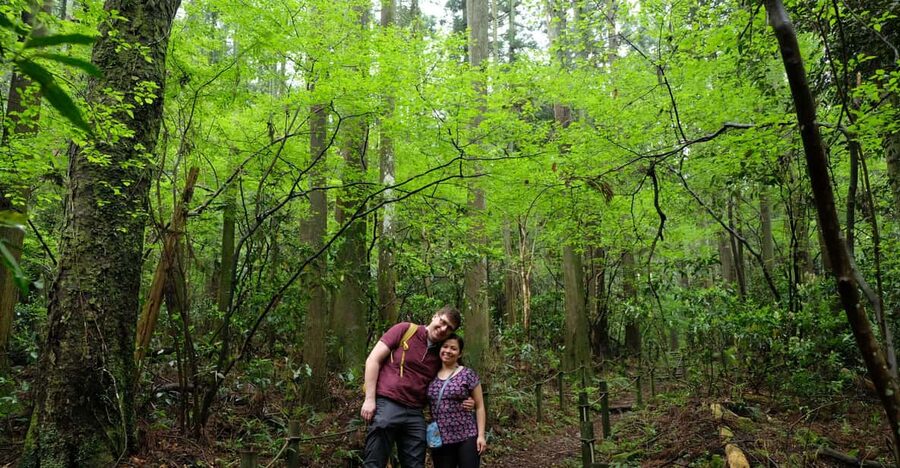
The route reaches Hatajuku, a village known for wood carving. You have about 30 minutes here to visit, browse, and pass through the village before continuing.
This stop adds a human side to the forest walk. Hatajuku is not just a place to stretch your legs. Its woodcraft tradition connects the local community with the mountain route, and shopping here gives you the chance to see a regional craft rather than only scenery.
Keep your expectations realistic. The stop is brief, so you will not have a long, unhurried shopping session. It works best as a compact introduction to the village and its craft tradition. If you find something you want, you will need to make decisions within the allotted time.
The next transfer is by bus, taking less than 10 minutes. The bus fare is also separate and costs less than 400 yen. These small extra costs are easy to overlook when comparing prices, so include them in your planning.
Amasake at a 400-year-old teahouse
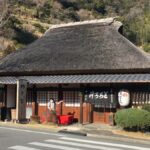
The Amasake Tea House is one of the most distinctive stops on the route. It has a history of about 400 years and sits along the old Tokaido. Here you pause for about 30 minutes, enjoy amasake, and try local snacks.
Amasake is a sweet, traditional Japanese drink. Despite its name, it is not always alcoholic, and the tour describes it as an energizing refreshment. It makes sense here as a break after the first hour of walking and before the cobbled road section.
This is the sort of stop that gives the outing its character. A modern café could provide a drink, but an old teahouse beside the historic route helps you picture how people once rested during the hard crossing. The snack and drink are also practical: you get a little fuel before the next walk.
The bus fare and shared taxi are not included, but this teahouse visit is part of the tour itself. If you prefer a hike with local food and cultural stops, that adds value. If you want a nonstop walk with no pauses, the scheduled visit may feel slow.
Walking the cobbles of the Old Tokaido
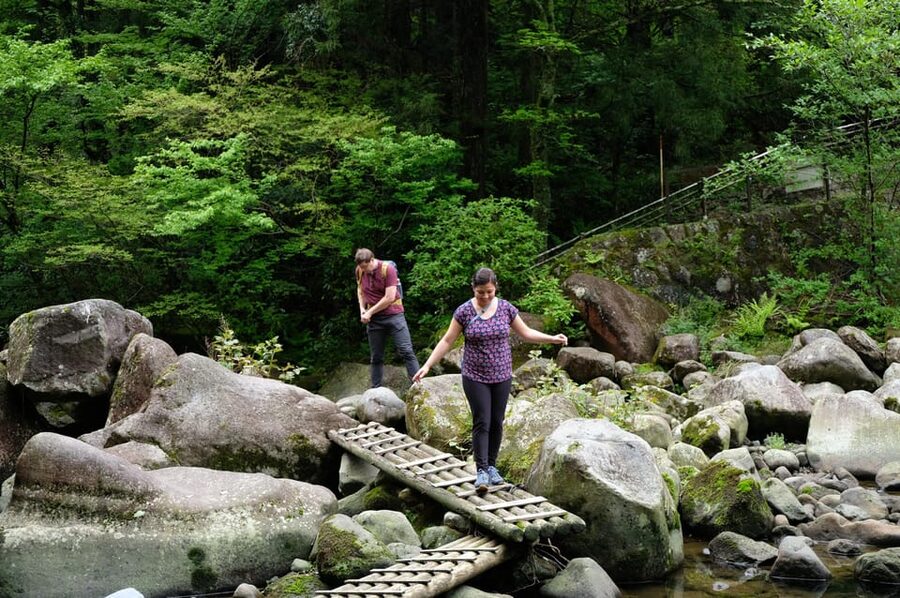
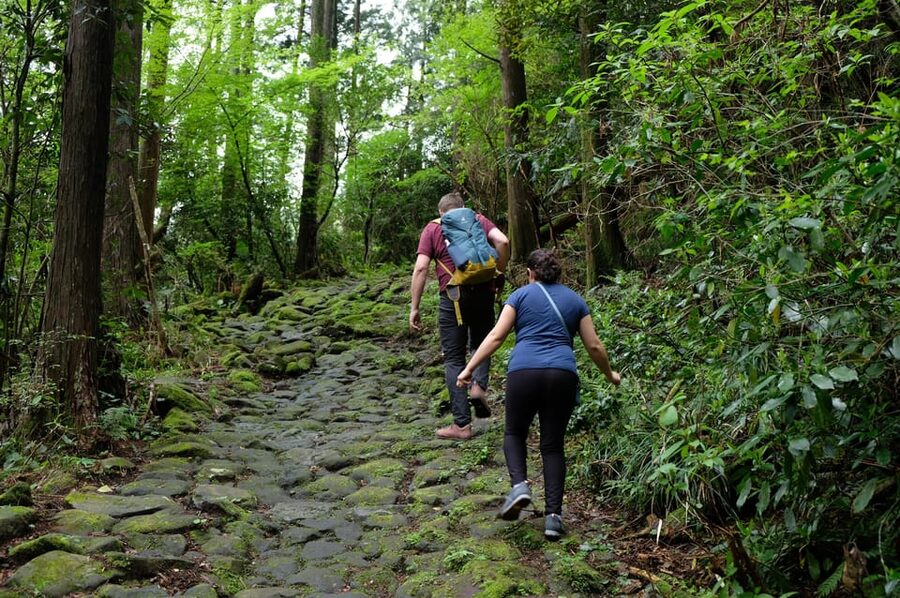
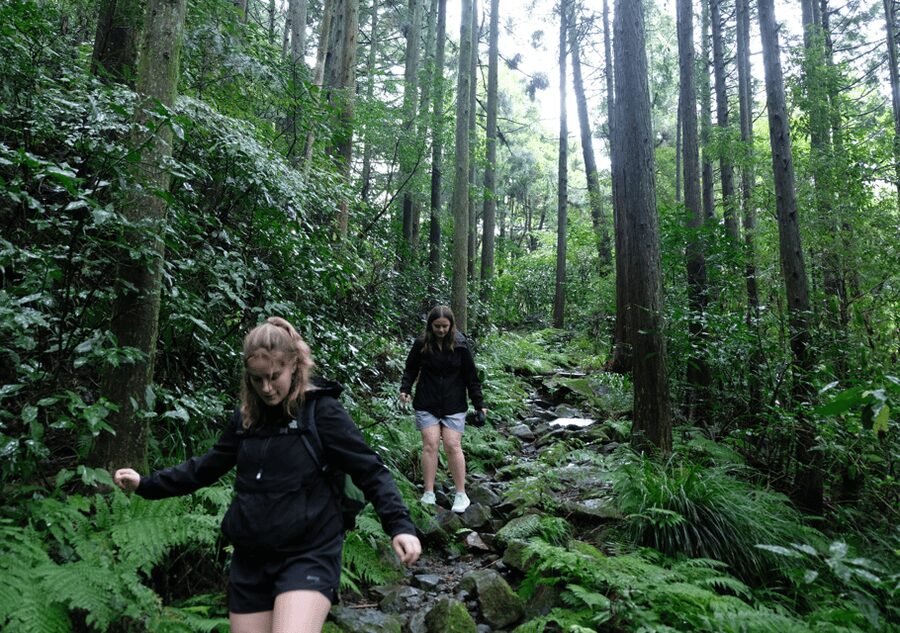
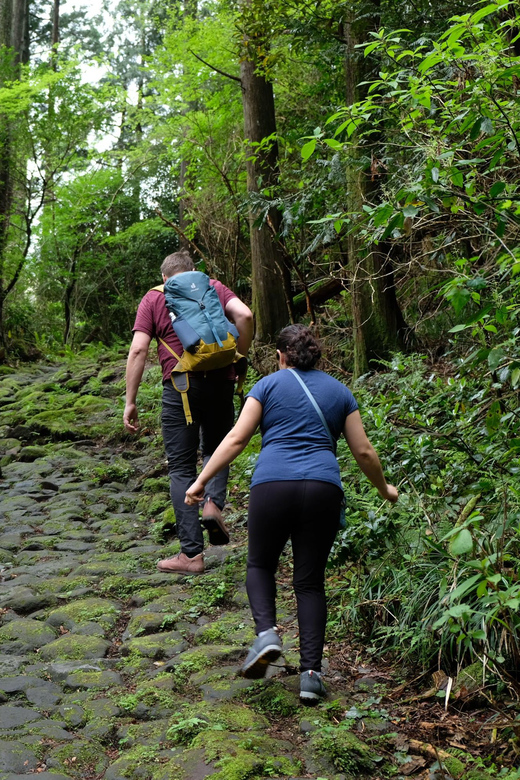
After the teahouse, you take on about 45 minutes of hiking along the cobbled Old Tokaido Highway. This is the heart of the experience for anyone interested in the road itself.
The stones make the journey tangible. You are not simply being told that the old route was hard. You can feel the uneven surface and imagine the demands placed on people carrying goods or traveling on foot between the major cities of the Edo period.
The route is described as suitable for beginners, with mostly gentle slopes and cobbled paths. Still, take your time. Comfortable footwear matters more here than fashionable footwear, and wet conditions could make stone surfaces less secure. Smoking is not allowed during the activity.
The forest setting also introduces shinrin-yoku, or forest bathing. This is not a spa treatment or a formal meditation class. It is the practice of spending attentive time among trees and letting the natural setting affect your pace and awareness. On this walk, the quiet path, clean air, and slow rhythm give you a practical sense of the idea.
Other hiking tours in Hakone


Lake Ashi and the postcard view
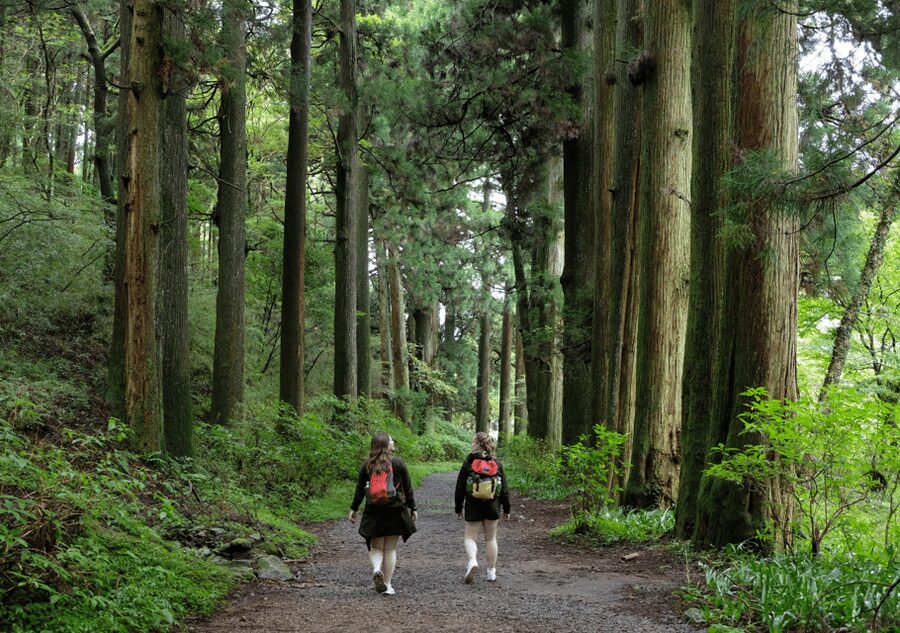
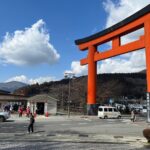
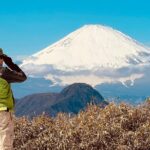
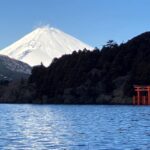
After the cobbled path, you reach Lake Ashi for a 15-minute break and photo stop. This is where the tour’s best-known views may appear: the lake, Mt. Fuji, and the red torii gate associated with Hakone Shrine.
The key word is may. Fuji is visible only when weather conditions cooperate. Cloud, haze, or rain can hide the mountain, so do not book this walk solely for a guaranteed Fuji photograph.
Even without Fuji, the stop matters. Lake Ashi gives you a change from the enclosed forest, and the view helps explain Hakone’s fame. You can look across the water, take photographs, and recover before the final walking sections.
The torii gate is one of Hakone’s familiar images, but this outing gives you more context than a quick roadside stop. You have already crossed an old mountain route, so the lake feels like part of a larger journey rather than an isolated photo background.
The 400-year-old cedar avenue
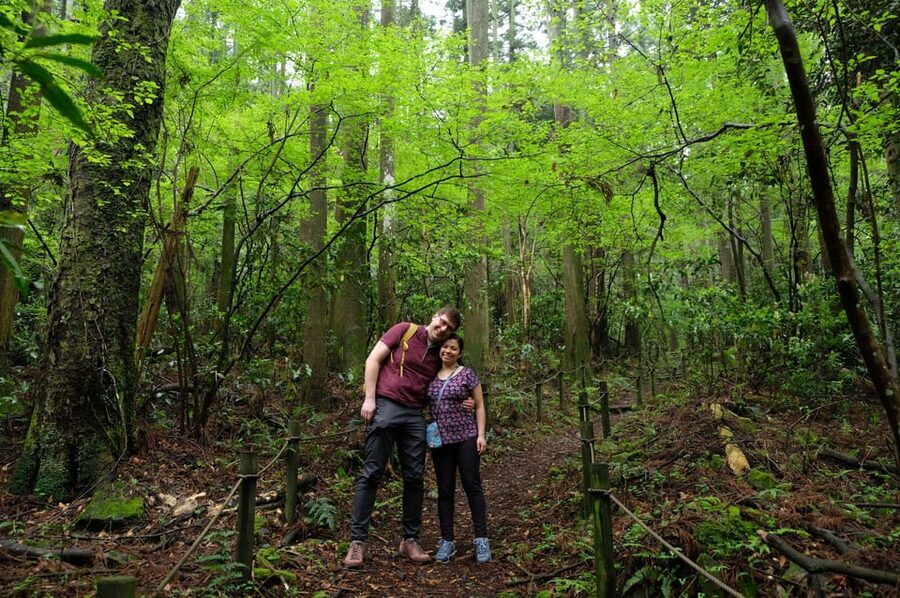
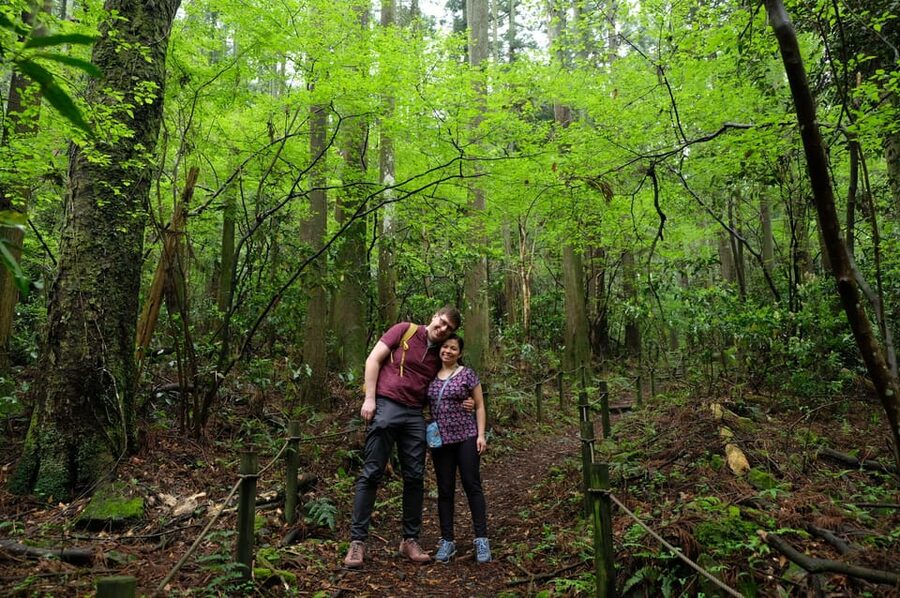
From the lake, the walk continues along the shore and through the Old Tokaido Road Ancient Cedar Avenue. The eastern end includes cedar trees more than 400 years old.
These trees bring a strong sense of time to the final stretch. They were already growing when the Edo-period road carried official messengers, merchants, and other people between Kyoto and Edo. Their age links the natural setting with the political and economic world that shaped the highway.
The route here includes walking and photo stops, with about 15 minutes listed for this section. You may want to pause for photographs, but keep the group’s pace in mind. The tour has a firm end point and is designed to finish around lunchtime.
This is another place where the forest-bathing idea makes sense. You are walking under old trees, away from traffic, while following a route shaped by centuries of use. The experience asks you to notice the setting rather than rush through it.
Hakone Checkpoint and an early finish
The final stop is Hakone Checkpoint, reached after the cedar avenue. The checkpoint controlled traffic under the Edo government, making it an important part of the old road system.
Your guide can help connect the physical route with the rules and controls that governed movement through Japan at the time. The checkpoint was not simply a scenic building. It represented government authority and the careful monitoring of people traveling through the country.
The tour ends here by Lake Ashi at about 12:30 pm. I consider the timing a major advantage. You get a substantial morning outing without giving up the rest of the day.
Afterward, you can find lunch in the area or continue to other Hakone sights. The nearby options listed for the afternoon include Hakone Shrine and the pirate ship on Lake Ashi. Since the tour ends at the checkpoint rather than returning you to Hakone-Yumoto, plan your next move before setting out.
Guide quality and the small-group format
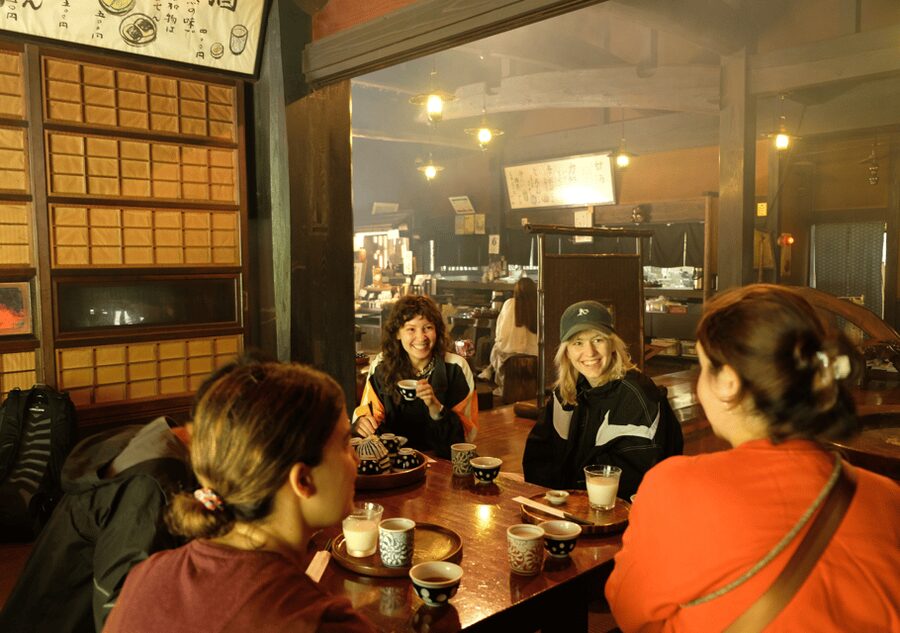
The tour includes a certified National Mountain Guide and is conducted in English. With a maximum of six people, the group should be small enough for explanations to feel personal and for the guide to monitor the pace more easily than on a large coach outing.
Aki is a guide associated with this experience, and specific praise has focused on the way Aki brings the area’s history to life while keeping the walk active. The right guide matters here because the route’s value comes from connections: the road, the tea house, the checkpoint, the forest, and the old travel system.
You are not simply paying for directions between points. You are paying for interpretation and route planning, including the decision to use a taxi and bus where the mountain path becomes too demanding. That is especially useful if you want context but do not want to organize the transport yourself.
The small group also makes this better suited to people who like asking questions. It may be less appealing if you prefer complete independence or a silent hike at your own pace.
Is $112 a fair price?
At $112 per person, this is not the cheapest way to see Hakone. You still pay separately for the shared taxi, about 2,000 yen divided among the group, and the bus, less than 400 yen. Food and drinks beyond the included tour arrangements are also your responsibility.
The value comes from the combination of a certified guide, a carefully chosen historic route, small-group attention, and a half-day schedule. You would need to arrange the trailhead transport and connect the Old Tokaido sections yourself if you did this independently.
I would consider the price reasonable if you care about Japanese history, prefer walking to sightseeing by vehicle, and want an English explanation along the way. It is less convincing if your priority is only Mt. Fuji photography, since the view depends on weather and the tour spends much of its time on the old road and in the forest.
The short duration also helps the value. A 210-minute tour leaves your afternoon open, and the finish beside Lake Ashi makes it easy to continue exploring rather than return immediately to the starting station.
Who should choose this hike?
I would recommend Hakone Hachiri to adults and older children who can manage about 4 kilometers on gentle slopes and uneven cobbles. Children under nine are not accepted, and the activity is not suitable for pregnant women or people with back problems.
You should choose it if you want:
- A history-focused walk instead of a standard sightseeing loop
- A small group and live English guidance
- A traditional drink and snack in an old teahouse
- Forest scenery, cedar trees, and Lake Ashi
- A half-day plan that finishes in time for lunch
- A beginner-level introduction to hiking in Hakone
You may want another Hakone activity if you need fully level paths, guaranteed Fuji views, a private vehicle, or a return to Hakone-Yumoto. This tour uses shared transport and ends at a different place from where it begins.
Free cancellation is available up to 24 hours before the start for a full refund, and you can reserve now and pay later. Those policies help if mountain weather or your Hakone schedule is still uncertain.
Should you book Hakone Hachiri?
Book this tour if you want to understand Hakone through its old road, not just collect a few scenic photographs. The Amasake Tea House, Hatajuku, ancient cedar avenue, and Hakone Checkpoint give the morning a clear story, while the manageable hiking distance keeps it within reach for beginners.
Skip it if you dislike uneven paths or want a guaranteed Mt. Fuji view. For the right pace of visitor, though, this is a thoughtful way to spend a morning: a little exercise, a traditional refreshment, and a direct connection to how people once crossed Japan.
FAQ
Where does the Hakone Hachiri tour start?
The tour starts at the ticket gate of Hakone-Yumoto Station, where the English-speaking guide will be waiting.
Where does the tour finish?
The tour finishes at Hakone Checkpoint beside Lake Ashi, around 12:30 pm.
How far do I walk?
You walk about 4 kilometers during the tour. The route is intended for beginners and uses mostly gentle slopes and cobbled paths.
Is transportation included?
Transportation to the trailhead is not included. A shared taxi takes about 15 minutes and costs around 2,000 yen to be shared among the group. The bus to the teahouse costs less than 400 yen and is also separate.
Can I see Mt. Fuji?
You may see Mt. Fuji from Lake Ashi if the weather is clear. The view is not guaranteed.
How many people are in the group?
The tour is limited to six participants and includes a certified National Mountain Guide. The live tour is conducted in English.
More Half-Day in Hakone
More Hiking & Trekking Tours in Hakone
More Hakone Day Trips in Hakone
More tours in Hakone we've reviewed



Hakone Day Trips, compared.
 ★ 5.0Mt Fuji and Hakone 1-Day Bus Tour Return by Bullet TrainFrom $163
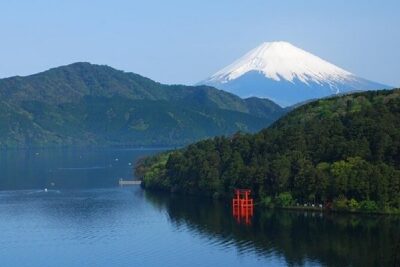 ★ 4.0Mt Fuji & Hakone Cruise, Drum Show Bullet Train 1 Day from TokyoFrom $149
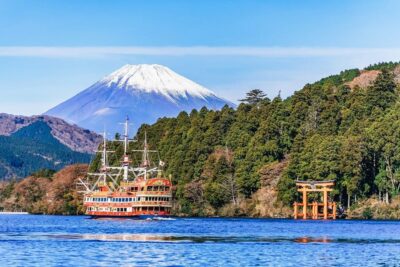 ★ 4.4Tokyo Mt Fuji 5th St & Hakone Cruise Bus Tour w/Bullet TrainFrom $15410 hours
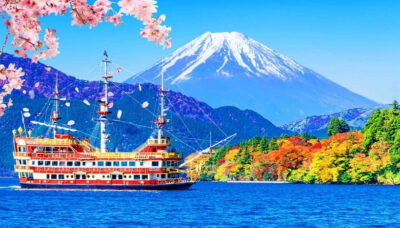 ★ 4.7Tokyo: Mt. Fuji Tour, Hakone Ropeway, Owakudani, Lake AshiFrom $5410 hours
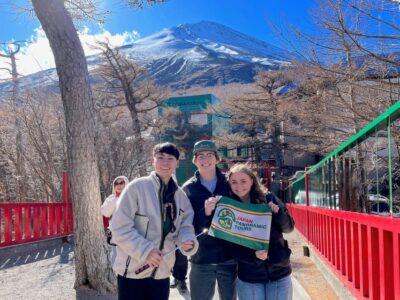 ★ 4.2Tokyo: Mt. Fuji 5th Station & Hakone Cruise 1-Day Bus TourFrom $12911 hours
 ★ 5.0Private Tour to Mt. Fuji and Hakone (Fully Licenced Operator)From $497