
Reviewed · MT FUJI DAY TRIPS
Hakone: Day Tour to View Mt Fuji & Wooden Culture Experience
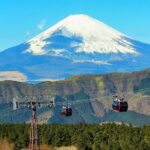
Hakone’s appeal is not just one grand view. It is the changing rhythm of the day: a cable car climbing toward sulfurous Owakudani, a boat crossing Lake Ashi, a red torii by the water, and quiet old crafts that still belong to local life. This private tour packs those pieces into one carefully timed loop with guide Munetaka Horiuchi.
I especially like the 200-year yosegi-zaiku workshop, where a seventh-generation artisan explains the fine wooden marquetry and secret boxes. I also like the 400-year-old thatched tea house on the old Tokaido Highway, where amazake is served beside a traditional hearth. The main drawback is pace: eight hours and several forms of transport leave little room for lingering, and Mt Fuji is never guaranteed in cloudy weather.
In This Review
- Key points at a glance
- Why this Hakone day makes sense
- Starting at Hakone-Yumoto with a practical plan
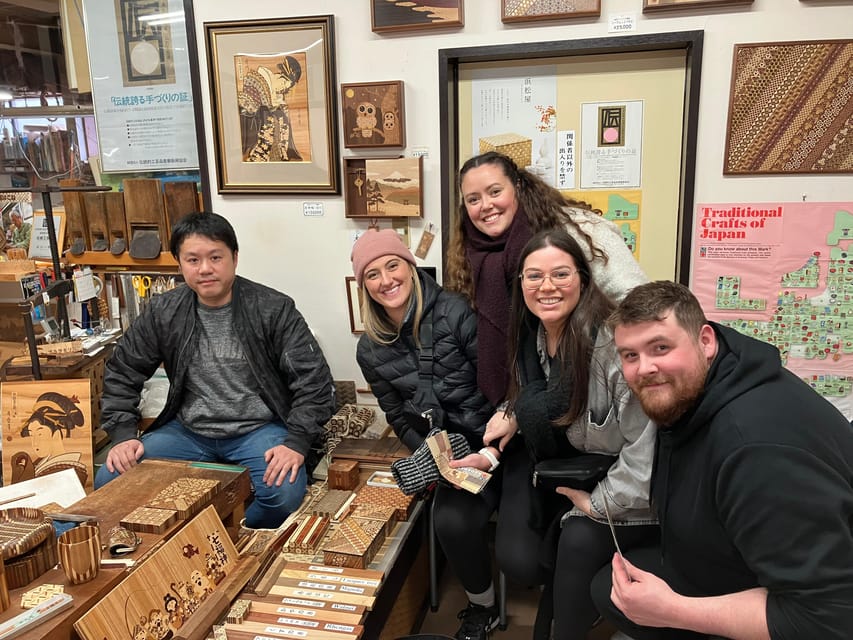
- The 200-year yosegi workshop
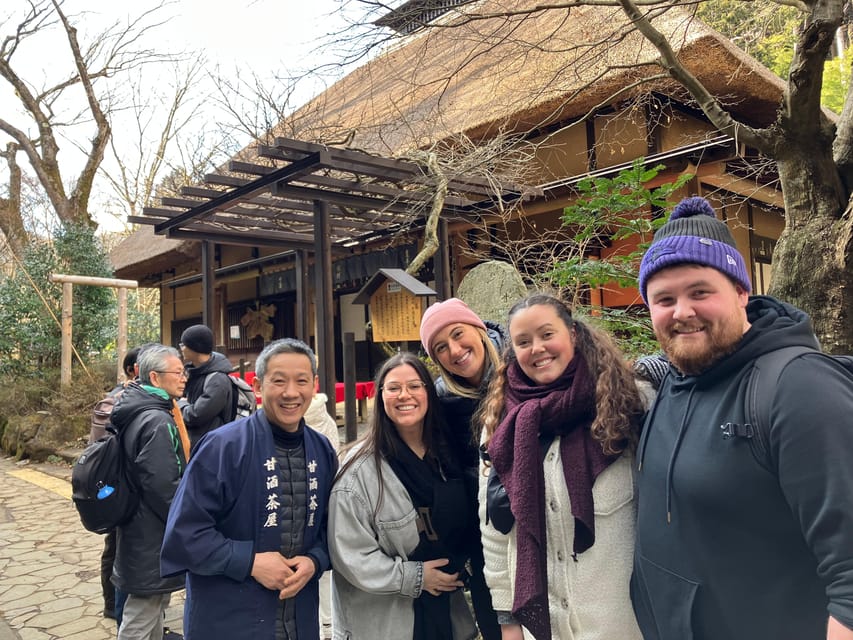
- A 400-year-old tea house on the Tokaido
- Hakone Shrine and the red torii by Lake Ashi
- Crossing Lake Ashi by sightseeing boat
- Owakudani at 1,044 meters
- The return through Hakone’s mountain railway
- The optional Hakone Open-Air Museum
- How much value do you get for $303?
- Who should book this tour?
- FAQ
- Where does the tour begin?
- How long does the tour last?
- Is transportation included in the tour price?
- How much does the Hakone Free Pass cost?
- Is lunch included?
- Can I see Mt Fuji on this tour?
- Is the Hakone Open-Air Museum included?
- What languages does the guide speak?
Key points at a glance
- Five forms of Hakone transport: Use trains, buses, a cable car, ropeways, and the sightseeing boat with the Hakone Free Pass.
- Two strong Fuji viewpoints: Look for the mountain from Lake Ashi at about 700 meters and Owakudani at 1,044 meters.
- A working wooden craft tradition: Visit a marquetry workshop operating for more than 200 years.
- An old highway tea stop: Taste non-alcoholic amazake in a 400-year-old thatched building.
- Private touring for up to six: Munetaka can adjust timing, photo stops, and the route for your group.
- A full day with extra costs: The $303 price covers guiding only, not transport, lunch, tea, or optional activities.
Why this Hakone day makes sense
Hakone is easy to enjoy badly. The sights are spread across a mountain area, and the route uses buses, trains, ropeways, a cable car, and a boat. Each service has its own schedule, and a missed connection can eat up a good part of your day.
That is the main reason to consider this private outing. Munetaka does not simply point out landmarks. He handles the order of the route and helps you move through the transport system without stopping at every timetable to work out the next step. Several bookings describe his advance communication, clear directions, and ability to adjust the plan around a hotel or meeting point.
The tour costs $303 per group of up to six, but that is only the guiding fee. You must add the Hakone Free Pass, which costs about ¥6,000 to ¥7,100 per adult and ¥1,500 to ¥1,600 for children aged 6 to 11, depending on the pass validity and current fare. Lunch, tea, and optional boat hire are also extra.
For a full private group, the guiding fee can be fair value, especially if you want help with transport and cultural explanation. For one or two people, the total cost becomes harder to justify beside an independent Hakone visit. The value improves when you have a family, older relatives, or a group that would rather spend the day seeing places than decoding connections.
A few more Hakone tours and experiences worth a look

Starting at Hakone-Yumoto with a practical plan
The meeting point is the single ticket gate at Hakone-Yumoto Station. The planned start is around 8:00 a.m., and the day usually ends back at Hakone-Yumoto at about 4:00 p.m.
You should plan this carefully if you are coming from Tokyo on the same morning. The tour information recommends staying in Hakone or Odawara the night before because the journey from Tokyo can take around two hours. If you do travel directly, Munetaka can advise you about the early Shinkansen from Tokyo to Odawara, which takes about 30 minutes, or an early Limited Express from Shinjuku.
Hotel pickup is not included. That sounds like a minor detail, but it matters for an early start. Send your accommodation details after booking and confirm the meeting point before the day begins. Munetaka has helped some groups move the meeting location or finish closer to a new hotel, but you should arrange this in advance rather than count on it automatically.
Bring comfortable shoes, warm clothing, rain gear, cash, a passport, and a charged smartphone. Hakone weather can change quickly, and higher stops are cooler. Cash is needed for amazake and black eggs, among other possible purchases.
The 200-year yosegi workshop
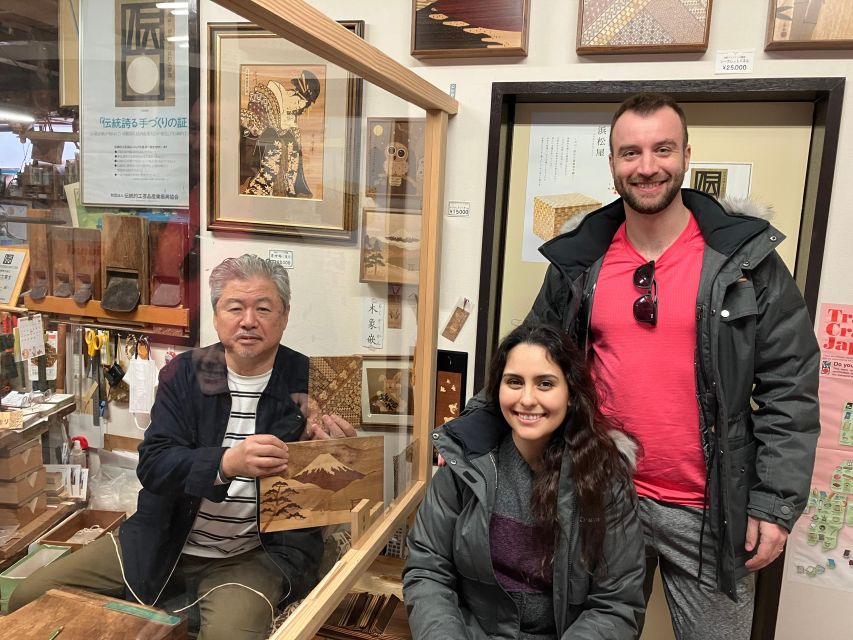
The cultural heart of the day is the yosegi-zaiku workshop. Yosegi is Hakone’s famous wooden marquetry, made by fitting small pieces of naturally colored wood into geometric patterns. The finished panels may look simple from a distance, but the craft depends on exact cutting and patient assembly.
At this workshop, a seventh-generation artisan explains how the pieces are produced. You may also see secret boxes and other wooden goods. The visit lasts about 25 to 30 minutes, so it is an introduction rather than a long class or a full hands-on craft session.
I value this stop because it gives you something more lasting than a photograph. You see a local skill in its working setting and understand why Hakone souvenirs often feature intricate geometric wood patterns. Munetaka arranges the visit, which removes the need to work out whether the workshop can receive you.
The short time is also the limit. If you want to shop slowly or study every box, you may wish for more room. Still, this is one of the tour’s most distinctive stops, especially for families and anyone interested in Japanese design.
A 400-year-old tea house on the Tokaido
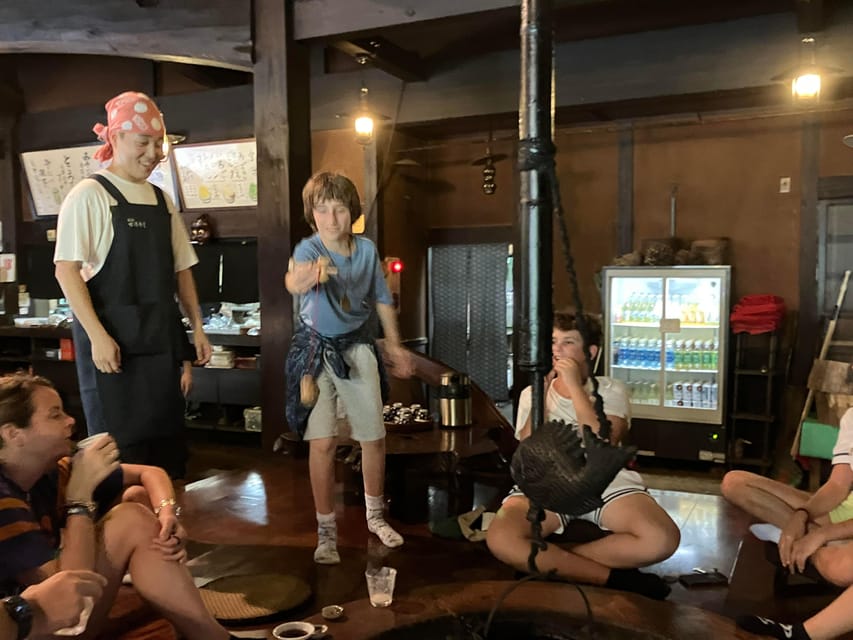
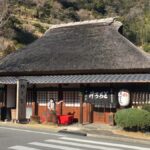
The bus carries you to an old tea house on the former Tokaido Highway, the historic route between Tokyo and Kyoto. The building has a thatched roof and sits among tall cedar trees, giving the stop a very different feel from Hakone’s transport hubs and viewpoint platforms.
The featured drink is amazake, a sweet rice drink made through fermentation without alcohol. Here it is non-alcoholic and non-sugar-sweetened according to the tour details, and costs ¥500 per person in cash. You can sit by the fired hearth and talk with the 13th-generation owner.
This is the kind of stop that gives the day its sense of place. You are not merely passing through an old building for a quick picture. You get a chance to hear about the tea house from the family that has maintained it over generations.
The visit lasts about 25 to 30 minutes. The drink is extra, and the stop may not suit you if you want a large meal or a long tea ceremony. It is better understood as a brief cultural pause, not a formal ceremony.
Hakone Shrine and the red torii by Lake Ashi
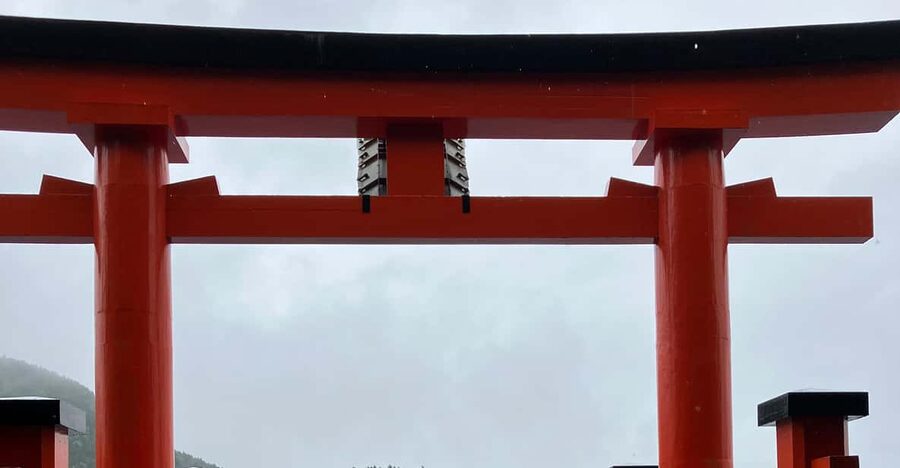
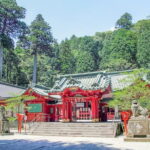
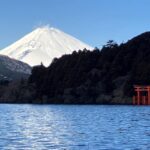
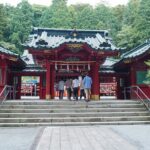
Hakone Shrine sits beside Lake Ashi and is one of the area’s most recognizable photo stops. The large red torii standing near the water is the image many people associate with Hakone.
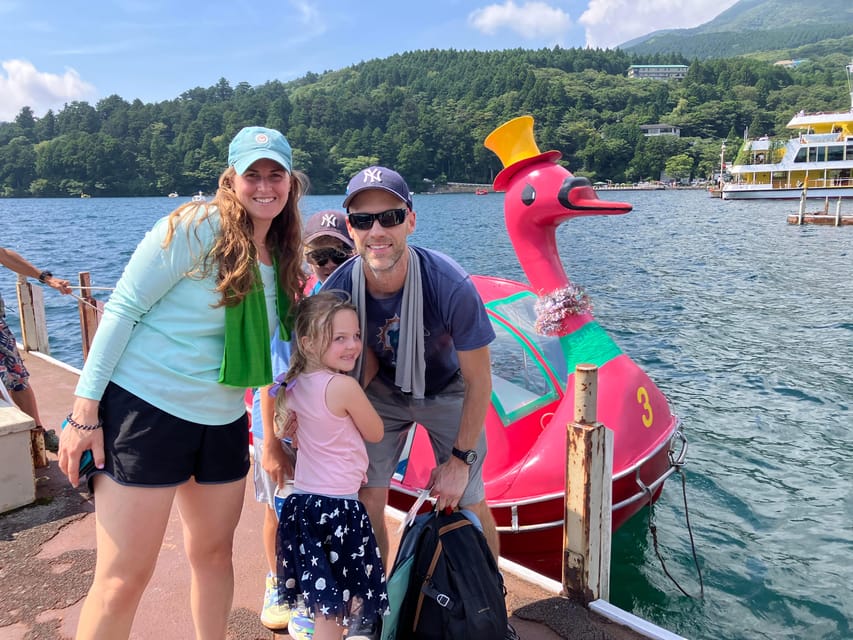
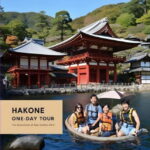
The route allows roughly 35 minutes at the shrine, with about 30 minutes of walking each way if you use the footpath described in the tour plan. Depending on conditions and your group’s preference, you may instead consider a swan pedal boat on the lake. That costs ¥1,500 for up to three people for 30 minutes.
The shrine is a good place to pause and pray for happiness, but expect the torii photo to be popular. Munetaka’s value here is practical: he knows where to position the group and how to fit the stop into the larger transport schedule. One family-focused booking specifically praised his help finding photo spots without a long wait.
The time is fairly tight. If shrine architecture and quiet prayer are your main interests, you may want longer than this tour provides. If you mainly want the lakeside setting and a good family photograph, the stop works well.
A few more Hakone tours and experiences worth a look
Crossing Lake Ashi by sightseeing boat
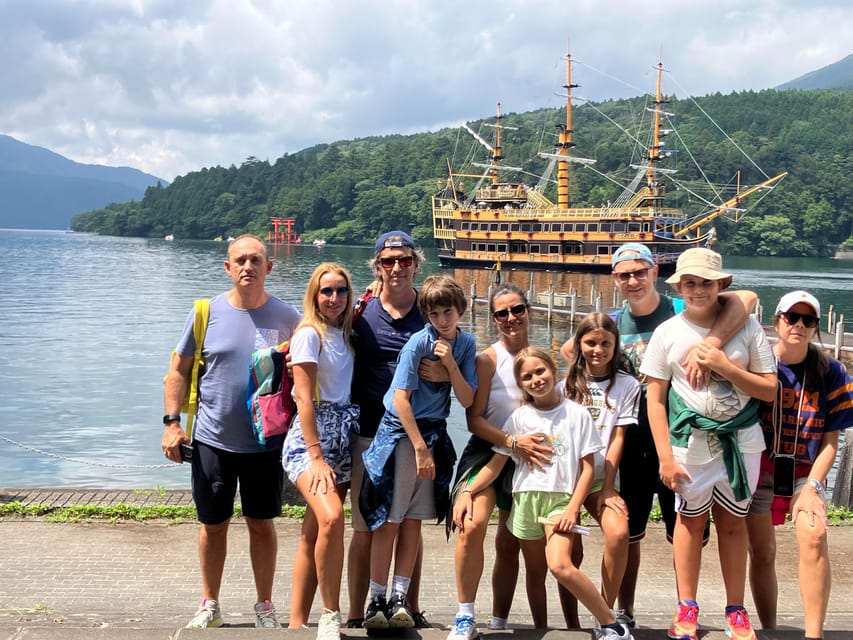
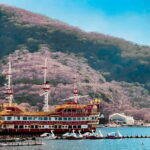
The 40-minute cruise across Lake Ashi gives the day a welcome change of pace. After buses and rail vehicles, you settle into a boat and see the surrounding mountains from the water.
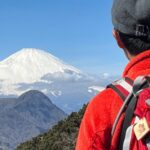
On clear days, Lake Ashi can offer a view toward Mt Fuji. The mountain may appear from the lake at an altitude of about 700 meters, but clouds often hide it. That uncertainty is part of any Fuji-focused Hakone plan, not a flaw unique to this tour.
The boat ride is also useful as a connecting section of the route. You are not adding a separate excursion that takes half the day. The cruise moves you onward while giving you time to enjoy the scenery.
Because the schedule depends on public transport, the exact order may change. Weather, boat times, and ropeway conditions can all affect the timing. A private guide helps here, but he cannot control visibility or service disruptions.
Owakudani at 1,044 meters
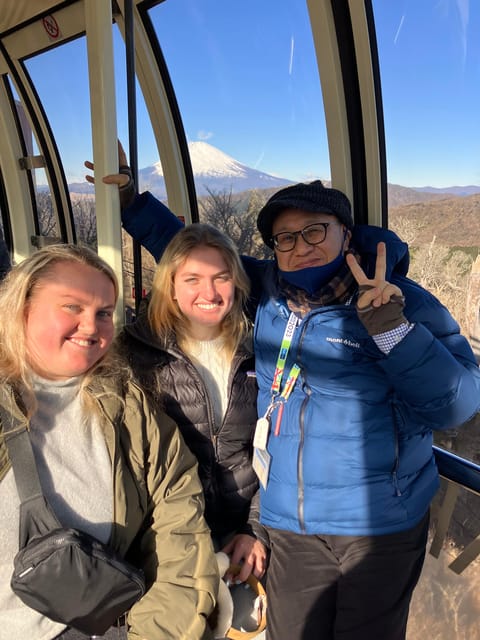
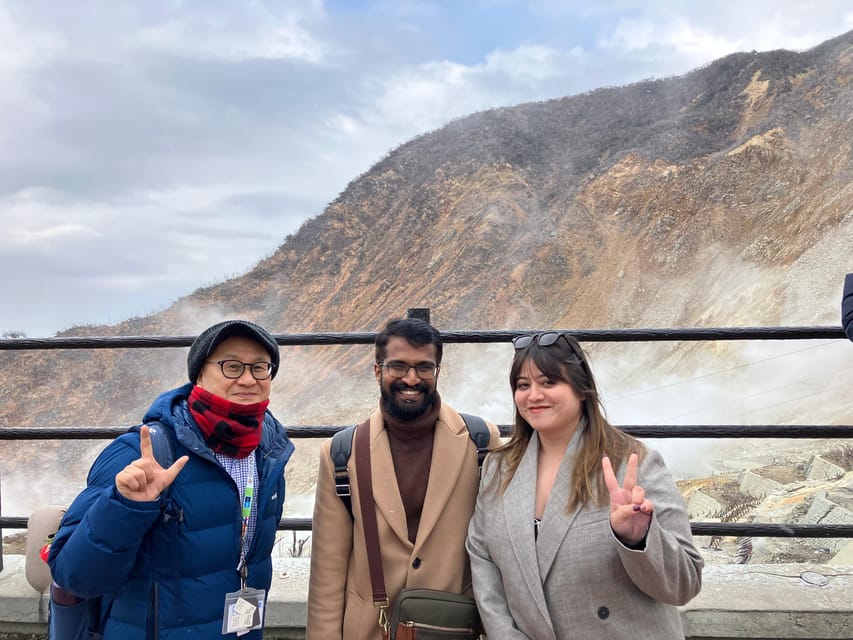
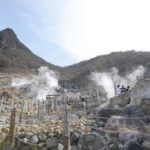
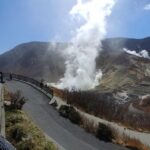
The ropeway climbs toward Owakudani Valley, a volcanic area at about 1,044 meters. Steam and sulfurous smells give this stop a stronger edge than the calm lake and cedar forest.
Owakudani is the tour’s second major Fuji viewing point. If the air is clear, you may see Mt Fuji from the higher elevation. If clouds cover the mountain, you still have the volcanic valley itself, but you should not book this day expecting a guaranteed Fuji photograph.
The famous snack is the black egg, cooked in the sulfurous waters. Four cost about ¥500, cash only, and local tradition says one egg adds seven years to your life. Treat that as folklore, of course, but it is an entertaining part of the stop.
Lunch takes place around Owakudani, with curry rice, a vegetable curry option, Japanese noodles, tempura, and other choices mentioned in the tour plan. Expect to spend about ¥1,500 to ¥2,000. Tell Munetaka about allergies or dietary restrictions before the tour so he can help with the meal plan.
People with respiratory issues should avoid this activity. The sulfurous environment can be uncomfortable or unsafe for some visitors. Warm clothing is useful too, since the higher elevation may feel much cooler than Hakone-Yumoto.
The return through Hakone’s mountain railway
The return route uses another ropeway section, a cable car, and the Hakone Mountain Train. The train takes about 40 minutes and uses switchbacks to handle the steep route, described as an 80 per mil grade and among the steepest mountain railway routes in the world.
This final transport sequence is not just a way back to the station. It shows how Hakone’s rail system works with the mountain rather than trying to force a straight route through it. The repeated changes can be fun, especially if you enjoy rail travel, but they also make the day feel busy.
The complete circuit uses five kinds of transport with the Hakone Free Pass: train, cable car, ropeway, sightseeing boat, and bus. The pass is required for the planned route and is not included in the tour fee. Munetaka helps you buy or use the pass, which is one of the most useful parts of having a guide on this particular day.
The optional Hakone Open-Air Museum
The tour details also mention the Hakone Open-Air Museum as an optional stop, while the main route focuses on the shrine, tea house, workshop, lake, and Owakudani. Confirm the plan before booking if the museum is important to you.
The published itinerary allows about 40 minutes for an arts and crafts market visit, but the museum is described separately as an option. That suggests a tradeoff. Adding it may mean shortening another stop or changing the route, especially since the day already includes several transport connections.
If your priority is sculpture and museum time, ask Munetaka whether it can fit your date. If your priority is traditional culture, the wood workshop and tea house are likely the better match.
How much value do you get for $303?
The price works best for a group of four to six. Split six ways, the guide fee is modest before transport. Split between two people, it becomes a more serious expense, especially after adding the Free Pass and food.
You are paying for more than commentary. You are paying for route planning, local transport help, cultural access, and the convenience of keeping one person responsible for the day’s timing. That has real value in Hakone, where a missed ropeway or bus can affect every later stop.
The private format also helps families. One booking described a pace suitable for an 81-year-old father, while other groups appreciated adjustments for children and specific schedules. The tour is not a slow, relaxed walk, but the guide can manage the rhythm better than a fixed large-group excursion.
The biggest cost is opportunity cost. You will not have long, unstructured time at each place. If you enjoy choosing your own cafés, skipping crowded sights, or spending hours in one museum, independent travel may suit you better.
Who should book this tour?
I would choose this tour if you want Hakone’s main sights in one day and do not want to solve the transport puzzle yourself. It suits first-time visitors, families, small private groups, and anyone who wants a guide who can explain Japanese history, religion, geography, and daily life along the way.
Munetaka’s strengths are his advance planning, clear communication, friendly manner, and ability to adjust the route when weather changes. One group faced poor weather and an expected typhoon, yet still received a revised plan without added stress. That kind of flexibility matters in Hakone.
I would hesitate if Mt Fuji is your only goal. Clouds may block the mountain from both Lake Ashi and Owakudani, even on a well-planned day. I would also think twice if you have respiratory problems, dislike frequent transport changes, or need a very slow pace.
For everyone else, this is a strong way to meet Hakone on its own terms: mountain railways, volcanic air, a lake cruise, a shrine, old highway culture, and a craft tradition still practiced by hand. Confirm the optional museum, prepare for extra costs, and allow for weather. If those conditions suit you, the private format offers a useful mix of efficiency and local character.
FAQ
Where does the tour begin?
The meeting point is at the only ticket gate inside Hakone-Yumoto Station.
How long does the tour last?
The tour lasts eight hours. It is planned to begin around 8:00 a.m. and return to Hakone-Yumoto at about 4:00 p.m.
Is transportation included in the tour price?
No. The $303 price covers the guiding fee only. You must buy the Hakone Free Pass separately, which covers the planned train, cable car, ropeway, boat, and bus travel.
How much does the Hakone Free Pass cost?
The stated price is about ¥6,000 to ¥7,100 per adult and ¥1,500 to ¥1,600 for children aged 6 to 11. The exact cost depends on the pass validity and current fares.
Is lunch included?
No. Lunch costs about ¥1,500 to ¥2,000. Food options mentioned include curry rice, vegetable curry, Japanese noodles, and tempura.
Can I see Mt Fuji on this tour?
You may see Mt Fuji from Lake Ashi and Owakudani if the weather is clear. Cloud cover can block the view.
Is the Hakone Open-Air Museum included?
The museum is listed as an optional stop. Contact Munetaka separately to ask whether it can fit your route and schedule.
What languages does the guide speak?
The tour is offered with a live guide in English or Chinese.
More Hakone Day Trips in Hakone
More Mt Fuji Day Trips in Hakone
More tours in Hakone we've reviewed

Mt Fuji Day Trips, compared.
 ★ 5.0Mt Fuji and Hakone 1-Day Bus Tour Return by Bullet TrainFrom $163
 ★ 4.0Mt Fuji & Hakone Cruise, Drum Show Bullet Train 1 Day from TokyoFrom $149
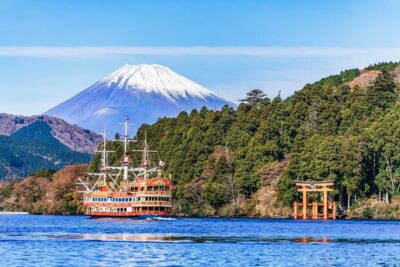 ★ 4.4Tokyo Mt Fuji 5th St & Hakone Cruise Bus Tour w/Bullet TrainFrom $15410 hours
 ★ 4.5From Tokyo: Mount Fuji Full-Day Sightseeing TripFrom $6810 hours
 ★ 4.7Tokyo: Mt. Fuji Tour, Hakone Ropeway, Owakudani, Lake AshiFrom $5410 hours
 ★ 4.4Tokyo:Mt.Fuji,Kawaguchiko Oishi Park,Arakurayama Sengen ParkFrom $5410 hours