
Reviewed · HAKONE DAY TRIPS
Hakone Adventure: Explore Nature’s Beauty and Tranquility
Hakone’s best sights are linked by an entertaining chain of trains, cable cars, ropeways, and boats. This tour lets you cross the region without wrestling with Japanese timetables, from the forested Hakone Tozan Railway to steaming Owakudani and a cruise on Lake Ashi. The changing views are the main event.
I like the way the route gives you several angles on Hakone, and I like having an English-speaking guide to explain the old Tokaido road, volcanic activity, and local customs. Guides including Yumiko, Taku, Yuuki, and Kyo have earned strong praise for being friendly and attentive. The catch is price: at $139 per person, you still pay transport fares separately, and crowds can make the full route feel rushed.
In This Review
- Key points to know before booking
- Why Hakone works so well by public transport
- The Hakone Tozan Railway takes the scenic route uphill
- Cable car and ropeway views above the volcanic basin
- Owakudani puts Hakone’s volcanic power close to you
- Lake Ashi brings the calmest part of the day
- Hakone Shrine adds history and atmosphere
- What the $139 price really buys you
- How demanding is the day?
- Who will get the most from this Hakone day?
- Should you book the Hakone Adventure?
- FAQ
- Where does the Hakone tour start?
- Where does the tour finish?
- How long does the experience last?
- Are transportation fares included in the $139 price?
- Is Mount Fuji guaranteed to be visible?
- Is the tour conducted in English?
- What should I bring?
Key points to know before booking
- Hakone’s mountain railway climbs through wooded slopes using switchbacks, making the one-hour train ride part of the sightseeing.
- Owakudani’s steaming vents give you a close look at Hakone’s active volcanic side, along with sulfur-scented air and the famous black eggs.
- Lake Ashi’s 50-minute cruise brings views of torii gates and, when clouds cooperate, Mount Fuji.
- Several transport changes are built into the day, including train, cable car, ropeway, sightseeing boat, and bus.
- Private-group guiding means the pace and help can feel personal, but it also makes the tour costly compared with exploring by yourself.
- Crowds matter, especially on the ropeway. Leave extra time if you have a train reservation back to Tokyo.
Why Hakone works so well by public transport
Hakone is not a place where one scenic train takes you everywhere. Its sights spread around a volcanic caldera, so the day naturally unfolds through several forms of transport. That sounds like a chore on paper. In practice, it is one of the pleasures of the region.
You begin at one of four possible meeting points: Mukaiyama Park, the Shinjuku Station East Exit Police Box, Hakone-Yumoto Station, or the Odawara Station Tourist Information Center. Your choice changes the length and shape of the day. The Shinjuku option is useful if you are based in Tokyo, while Hakone-Yumoto and Odawara make more sense if you are already staying in the area.
The advertised duration ranges from 270 to 570 minutes. That is a wide spread, so check the exact departure time and route when booking. A Tokyo start naturally involves more time on the road than a local Hakone start. You should also arrive 15 minutes early, since this is a transport-heavy day and a late start can affect every connection afterward.
The guide’s main value is not simply pointing out sights. You get help moving through a network that includes separate fares, queues, transfers, and return arrangements. If you find Japanese transport easy to manage, you may see the guide as an extra cost. If you want the day handled for you, the help can be worth paying for.
A few more Hakone tours and experiences worth a look
The Hakone Tozan Railway takes the scenic route uphill
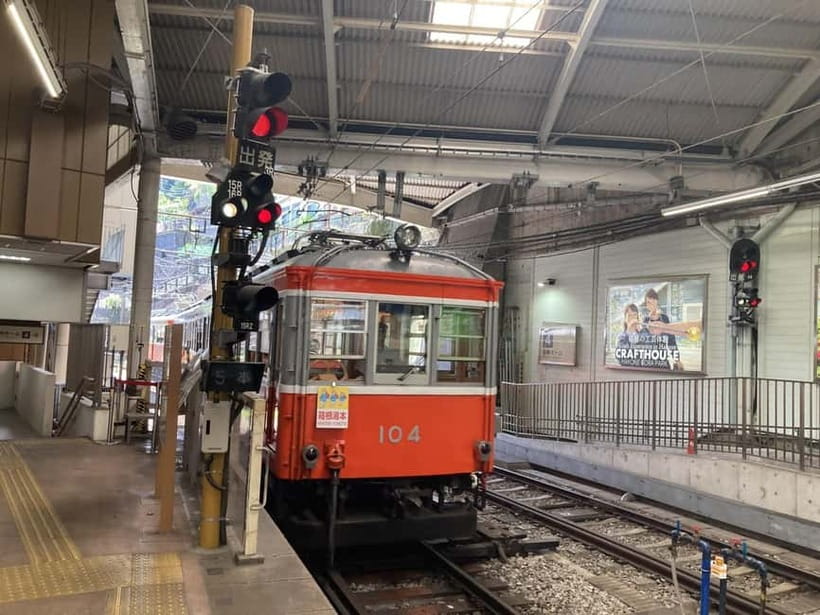
The first major ride lasts about one hour aboard the Hakone Tozan Railway, Japan’s only mountain railway. This is not a quick commuter transfer. The train climbs through forested slopes and narrow valleys, with seasonal scenery changing around the windows.
The line is known for its steep climb and switchbacks. Instead of charging straight uphill, the train changes direction as it gains height. That gives you a slower, more intimate look at the wooded hills. Your guide can add context about Hakone as a mountain resort and its place on the route between major regions of Japan.
I like this opening because it eases you into the day. You are not dropped at a viewpoint and told to admire it for ten minutes. The railway shows you the character of Hakone gradually, with the scenery changing as the train rises.
The drawback is that a train ride is still a train ride. On busy days, you may not get the window position you want, and the ride itself is not a private sightseeing carriage. Keep your expectations sensible. The appeal lies in the route, the climb, and the transition into the mountains, not in onboard luxury.
Cable car and ropeway views above the volcanic basin
After the train, the route continues by cable car for about 40 minutes before moving through the ropeway system. This is where Hakone opens up. You trade the close views of trees and valleys for wider views across the volcanic basin.
The cable car and ropeway are practical transport, but they also provide some of the day’s strongest views. You rise above valleys and rugged volcanic ground, gaining a clearer sense of the huge crater shaped by ancient eruptions. The guide can explain how Hakone’s present-day hot springs and vents relate to that volcanic past.
This section needs patience. The ropeway is popular, and queues can be long even on a weekday. One visitor lost enough time waiting that the final visit to Hakone Shrine had to be dropped because of a pre-booked train back to Tokyo. That is an important warning: the stated tour length is not a guarantee that every stop will receive the same amount of time on a crowded day.
If you have a fixed evening train, tell your guide at the start. You should also avoid building a tight connection after the tour. The route has several moving parts, and a queue at one station can affect the rest of the day.
Owakudani puts Hakone’s volcanic power close to you
Owakudani is the most unusual stop on the route. Steam rises from vents in the ground, and the air can carry a clear sulfur smell. This is not a polished garden or a quiet shrine. It feels raw, active, and a little otherworldly.
You get about 20 minutes for a guided visit and sightseeing. That is enough to see the main area, take photographs, and learn about the vents and the cultural traditions tied to the site. The famous black eggs are also part of Owakudani’s appeal, with their shells darkened by the local volcanic water.
I would give this stop your full attention. The steam is easy to photograph, but the more interesting point is that you are seeing a living geothermal area rather than a display behind glass. The sulfur smell, warm ground, and rising vapor make the region’s volcanic origins tangible.
Twenty minutes is brief. If you want to linger, eat, shop, or spend extra time with the views, a self-guided day gives you more freedom. On this tour, the guide keeps the group moving because the boat, ropeway, and other connections still lie ahead.
Weather also affects Owakudani. Clouds, rain, or poor visibility can reduce the distant views, although the vents remain interesting in less-than-perfect conditions. Wear warm clothing and check the forecast. The open, elevated sections can feel cooler than Tokyo or the lower parts of Hakone.
Lake Ashi brings the calmest part of the day
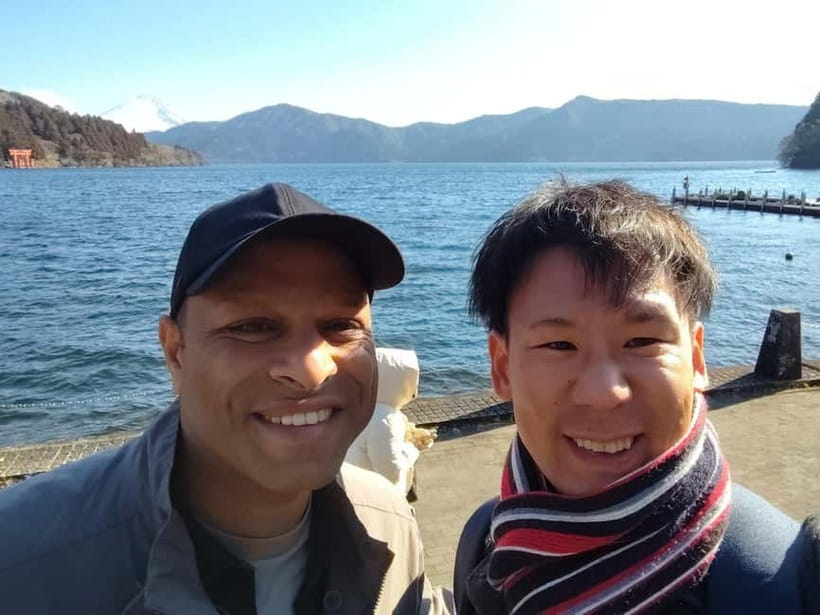
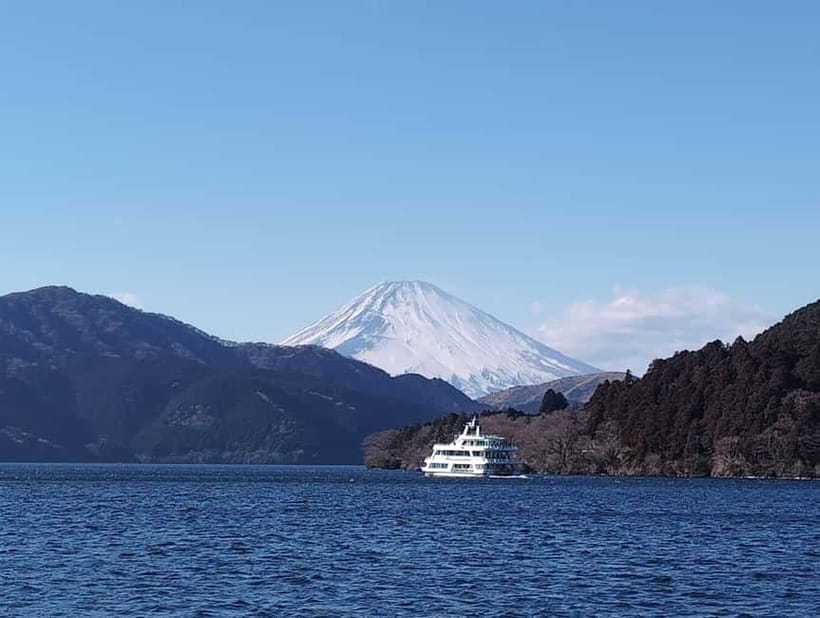
After the volcanic valley, the mood changes at Lake Ashi. The lake fills the old caldera of Mount Hakone, with wooded hills around the water. A sightseeing cruise lasts about 50 minutes, giving you time to sit down and watch the scenery move past.
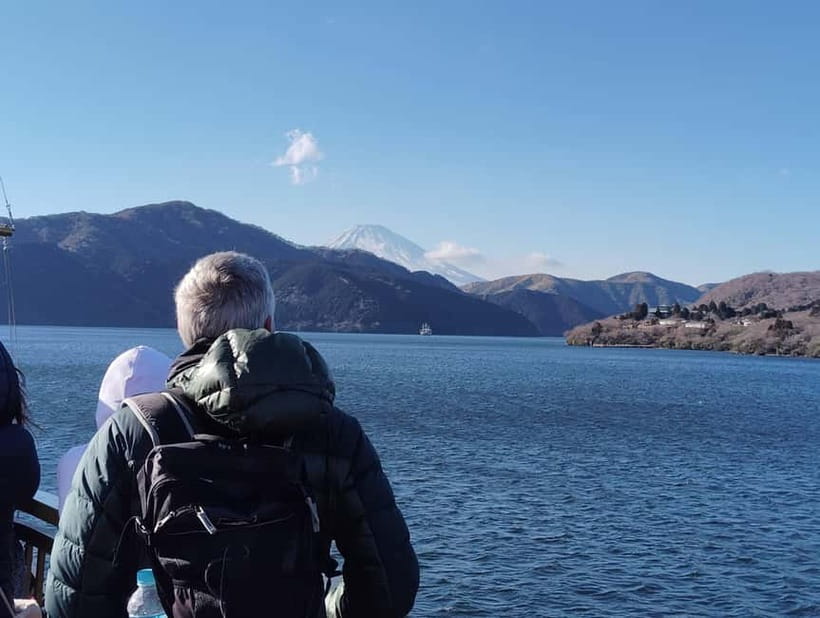
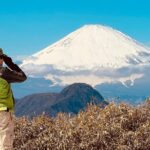
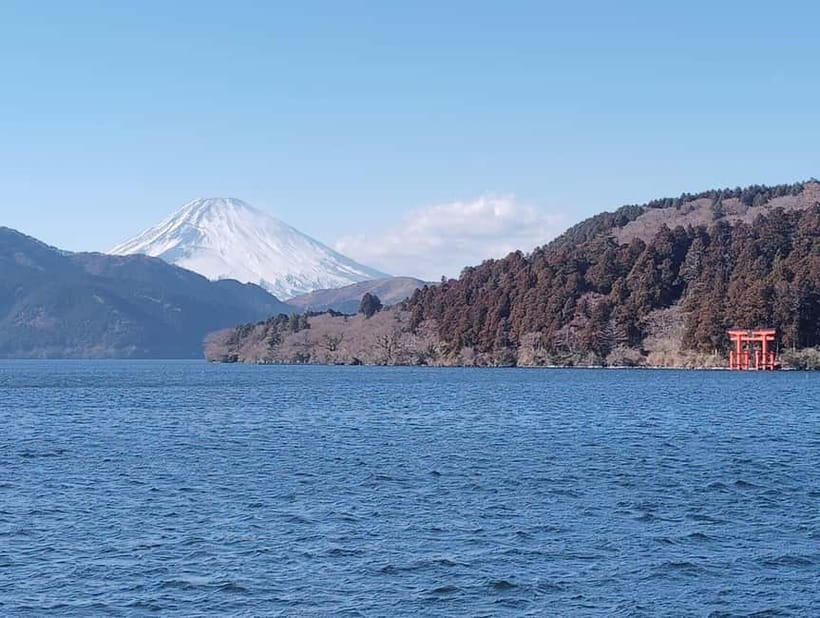
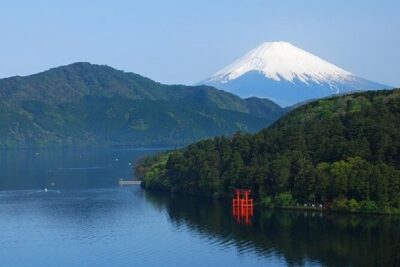
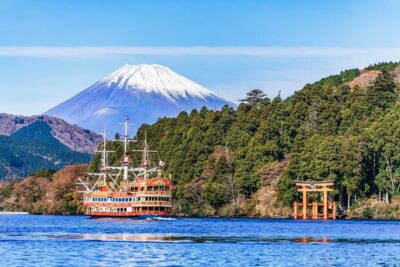
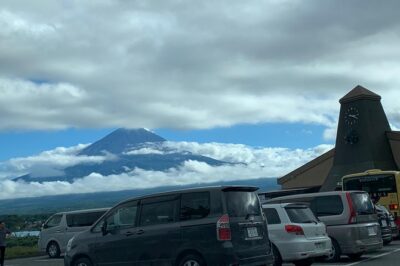
The cruise is a welcome pause after the transfers and walking. You can look for the red torii gates associated with Hakone Shrine, and on a clear day you may see Mount Fuji beyond the lake. Fuji is never a sure thing. Cloud cover blocked the mountain for some participants, even when the rest of the day was enjoyable.
That uncertainty is part of planning any Hakone outing. Do not judge the tour only by Fuji. The lake, forested slopes, boat ride, and shrine views still make the stop worthwhile when the mountain disappears behind clouds. For the best chance of a clear view, a forecast with low cloud is helpful, but no guide can control the sky.
The cruise also gives you a change in scale. On the railway, you see Hakone close up. From the ropeway, you look across the crater. On Lake Ashi, you experience the region at water level, with the hills rising around you. That variety is the strongest reason to choose this route over a single viewpoint visit.
Hakone Shrine adds history and atmosphere
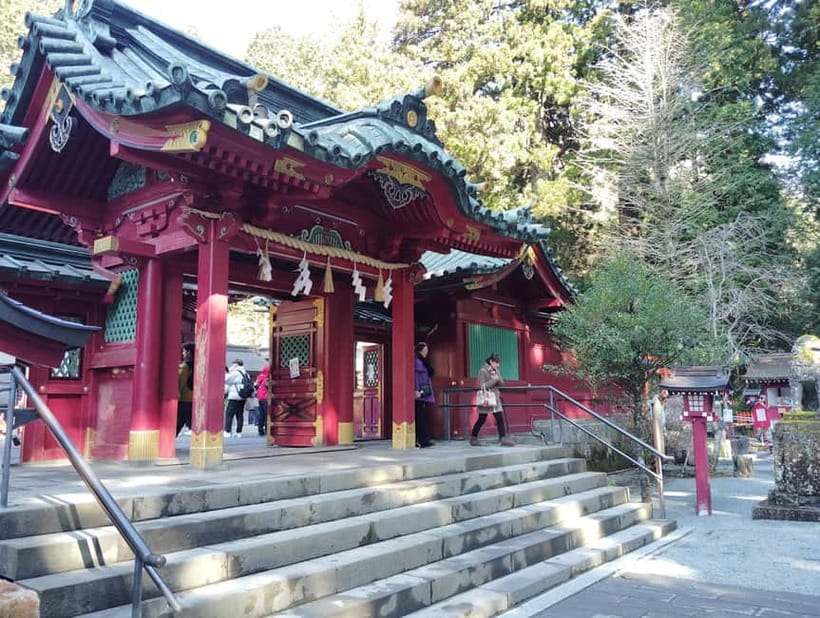
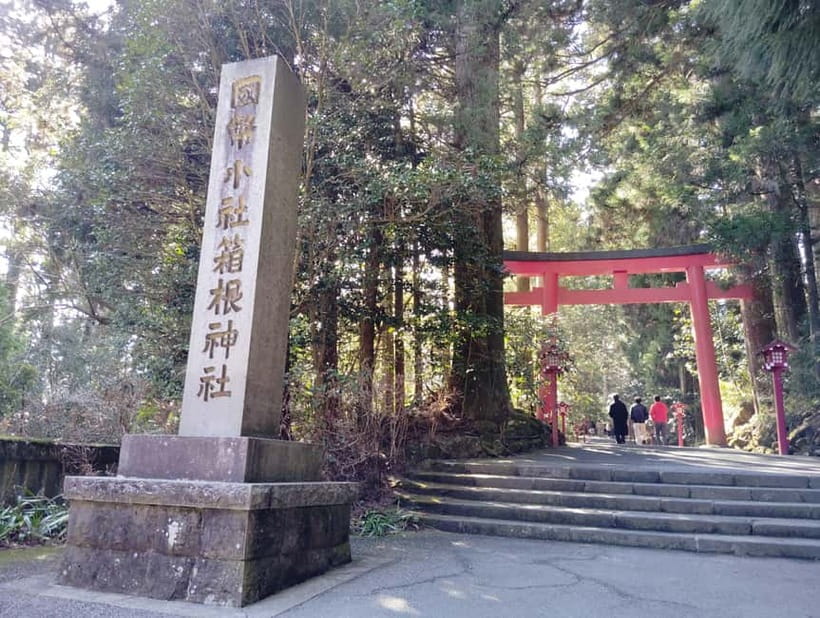
The route includes about 45 minutes at Hakone Shrine, followed by a 10-minute guided sightseeing stop at Lake Ashi and a 45-minute bus or coach ride toward the return point. The shrine is one of the day’s cultural anchors, not just another photo stop.
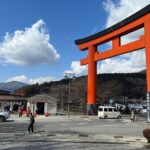
Its torii gates are closely tied to the lake views, and the shrine helps explain Hakone’s spiritual importance. The experience is different from Owakudani. There, nature is loud and physical. At the shrine, the mood is quieter and more reflective.
You should not assume the shrine visit is guaranteed to receive the full 45 minutes. Crowds and transport queues can compress the schedule. If you must catch a specific train from Tokyo or Odawara, ask how much buffer you have before setting out.
The return usually ends at Hakone-Yumoto Station or the Shinjuku Station East Exit Police Box, depending on the option booked. Confirm your drop-off point before the morning begins, especially if you have luggage or a later reservation.
What the $139 price really buys you
The tour costs $139 per person, but that is not the final transport cost. Train, cable car, ropeway, cruise, and other fares are paid separately during the day. Food and drinks are also not included.
That makes the price a serious consideration. You can purchase a transport pass or individual tickets and follow the route yourself for much less. One disappointed participant estimated that an independent round-trip ticket could cost about one-third of the tour price. The comparison is not perfect, since the tour also provides a private guide, route planning, explanations, and help with transfers, but the gap is large.
I see the tour as a convenience purchase rather than a budget deal. You are paying to reduce uncertainty. Someone meets you, explains the sights in English, helps with the transport system, and keeps the day moving. That can be especially useful on a first visit, when you want to cover Hakone’s major sights in one day and do not want to study every connection in advance.
The private-group format can make the day more comfortable and personal. Guides such as Taku have been praised for handling transport changes and helping people with slight mobility issues. Yumiko was noted for being prompt and considerate, while Yuuki was praised for friendly, flexible help and broad background information. Kyo also received thanks for useful explanations.
Still, a private group does not remove crowds. It does not include fares. It does not guarantee Fuji. And it cannot always prevent a missed shrine visit when the ropeway queue is long. Go in knowing what you are buying.
How demanding is the day?
You need comfortable shoes. There is walking between stations, platforms, viewing areas, the boat, and the shrine. The day also includes repeated boarding and leaving of vehicles, so it is more active than a simple coach tour.
The experience is not recommended for pregnant women, people with mobility impairments, or people with heart problems. That guidance matters because the route includes mountain transport, elevated sections, and walking around a volcanic site.
The tour is conducted in English and uses a live guide. Smoking is not allowed. Bring sunscreen, a camera, and warm clothing. Hakone’s weather can differ from Tokyo, and the elevated ropeway sections may feel cool or exposed.
If you have only slight mobility concerns, discuss them before booking. One guide was praised for giving extra help with transport, but the published guidance still says the experience is unsuitable for people with mobility impairments. Do not count on every part of the route being easy.
Who will get the most from this Hakone day?
I would recommend this experience to a first-time Hakone visitor who values structure more than low cost. It suits you if you want the railway, Owakudani, ropeway, Lake Ashi, and Hakone Shrine in one organized outing, with someone explaining what you are seeing.
It also works well if you are nervous about navigating Japanese transport or have limited time in the region. The guide’s help becomes more useful when connections are crowded or confusing.
Independent travelers who enjoy building their own route should think twice. Hakone is possible to explore on your own, and you will save money by doing so. You can also spend longer at Owakudani, wait for a clearer Fuji view, or skip a crowded section without worrying about a group schedule.
This is not the best pick for a slow day. The route covers a lot, and the appeal is breadth. You get many memorable experiences in a single outing, but you may have less time than you want at each one.
Should you book the Hakone Adventure?
Book it if you want a guide, a private group, and a broad introduction to Hakone’s main sights. The railway, cable car, ropeway, Owakudani, Lake Ashi cruise, and shrine form a satisfying full-day picture of the area. Strong guide feedback, especially for Yumiko, Taku, Yuuki, and Kyo, adds confidence that the human side of the tour can be excellent.
Skip it if $139 feels high before transport fares, or if you prefer a flexible pace. Also avoid a tight return schedule. Ropeway queues can be heavy, and Fuji may be hidden by cloud.
My practical advice is simple: book for a clear-weather weekday, wear good shoes, budget separately for every ride, and leave room after the tour before your train. With those conditions in place, this is a useful and enjoyable introduction to Hakone, though not the cheapest way to see it.
FAQ
Where does the Hakone tour start?
The available meeting points are Mukaiyama Park, the Shinjuku Station East Exit Police Box, Hakone-Yumoto Station, and the Odawara Station Tourist Information Center. The exact point depends on the option booked.
Where does the tour finish?
The available drop-off points are Hakone-Yumoto Station and the Shinjuku Station East Exit Police Box. Check your selected option before booking.
How long does the experience last?
The duration ranges from 270 to 570 minutes. The exact length depends on the departure option and starting time shown when you check availability.
Are transportation fares included in the $139 price?
No. Transportation fares are paid separately during the tour. Food and drinks are also not included.
Is Mount Fuji guaranteed to be visible?
No. Mount Fuji can be seen from Lake Ashi on clear days, but cloud cover may block the view.
Is the tour conducted in English?
Yes. The experience includes a live English-speaking guide and is offered as a private group.
What should I bring?
Bring comfortable shoes, warm clothing, a camera, and sunscreen. Arrive at the meeting point 15 minutes before departure.
More Hakone Day Trips in Hakone
More tours in Hakone we've reviewed

Hakone Day Trips, compared.
 ★ 5.0Mt Fuji and Hakone 1-Day Bus Tour Return by Bullet TrainFrom $163
 ★ 4.0Mt Fuji & Hakone Cruise, Drum Show Bullet Train 1 Day from TokyoFrom $149
 ★ 4.4Tokyo Mt Fuji 5th St & Hakone Cruise Bus Tour w/Bullet TrainFrom $15410 hours
 ★ 4.7Tokyo: Mt. Fuji Tour, Hakone Ropeway, Owakudani, Lake AshiFrom $5410 hours
 ★ 4.2Tokyo: Mt. Fuji 5th Station & Hakone Cruise 1-Day Bus TourFrom $12911 hours
 ★ 5.0Private Tour to Mt. Fuji and Hakone (Fully Licenced Operator)From $497