
Reviewed · HAKONE DAY TRIPS
Hakone Geology & History Tour
Hakone’s best day is not just a view of Mount Fuji. It is a lesson in how fire, water, old roads, and family traditions shaped Japan. This private tour links the steaming Owakudani crater, Lake Ashi, the cedar-lined Old Tokaido, and a 400-year-old teahouse in one well-planned outing.
I like the personal scale, with a private group of up to eight and an English-speaking guide who can explain the sights as you go. I also like the chance to chat with the 13th-generation manager of Amazake Teahouse, a rare encounter with a living family business. The main drawback is the cost, especially since local transport, lunch, and afternoon tea are extra.
In This Review
- Key points
- Why Hakone makes a fine history lesson
- Meeting in Hakone or arriving from Tokyo
- Owakudani and the ropeway over volcanic ground
- Lake Ashi by the famous pirate ship
- Walking beneath 400-year-old cedars on the Old Tokaido
- Amazake Teahouse and the Yamamoto family
- What Tony adds to the day
- The $483 price and what it covers
- Weather, walking, and health considerations
- Who will get the most from this tour
- Should you book the Hakone Geology & History Tour?
- FAQ
- How long does the Hakone Geology & History Tour last?
- Where can I meet the guide?
- Is the tour private?
- Is the tour conducted in English?
- Is local transportation included in the price?
- Are lunch and afternoon tea included?
- Will I definitely see Mount Fuji?
- Is the ropeway suitable for everyone?
Key points
- Owakudani by ropeway: Cross the mouth of an active volcanic crater with views into Hakone’s geologic past.
- Lake Ashi pirate ship: Ride across a deep volcanic lake that does not freeze because hot spring water rises from below.
- Old Tokaido walk: Follow a short stretch of the historic road between Tokyo, Kyoto, and Osaka beneath 400-year-old cedars.
- Amazake Teahouse: Meet the 13th-generation Yamamoto family manager and try traditional rice tea and mochi.
- Helpful local guidance: Tony can keep the day moving and handle the small transport problems that can derail a Hakone visit.
- Weather matters: Mount Fuji views are possible, not promised, and the ropeway is not suitable for people with heart or respiratory disorders.
Why Hakone makes a fine history lesson
Hakone is an ancient volcanic caldera, roughly 15 miles across. That means the broad area you see today was formed by a huge volcanic event, leaving behind peaks, hot springs, a crater, and Lake Ashi.
This tour gives you a useful way to read the area. The volcano explains the steam at Owakudani and the hot water below the lake. The lake explains Hakone’s importance as a travel stop. The old highway explains how people moved between Japan’s major centers long before modern trains and buses.
I like tours that connect the scenery to human life. Here, the views are not treated as decoration. Your guide, Tony, interprets how geology, trade, travel, and local customs fit together. That makes the day more satisfying than simply ticking off a few famous stops.
The experience lasts eight hours and is private for your group, with a maximum of eight people. That is a good size for asking questions, walking at a comfortable pace, and hearing your guide without a loudspeaker or crowd around you.
A few more Hakone tours and experiences worth a look
Meeting in Hakone or arriving from Tokyo
You can begin at Hakone-Yumoto Station, the nearby Hotel Mirahakone, or Odawara Station. For a day trip from Tokyo, Tony meets you at the Odawara Station ticket gate. If you are staying overnight in Hakone, pickup is available at your hotel.
That flexibility matters because Hakone has several rail connections and a spread-out sightseeing area. Starting at Odawara works well if you are making a day return from Tokyo. Starting in Hakone makes more sense if you are spending the night and want to avoid backtracking.
The stated train portion takes about 75 minutes. You will need to arrange and pay for local transportation yourself, and the tour advises purchasing a Hakone Free Pass in advance. Include that extra cost when comparing this outing with a standard group excursion.
Tony’s role is more than pointing out landmarks. He helps you move between different parts of the area, where schedules and connections can take time to understand. On one occasion, he continued helping his group after the main sightseeing had ended, walking with them to a hotel when both taxis and buses were unavailable. That kind of practical support is worth remembering in a place where transport can become complicated.
Owakudani and the ropeway over volcanic ground
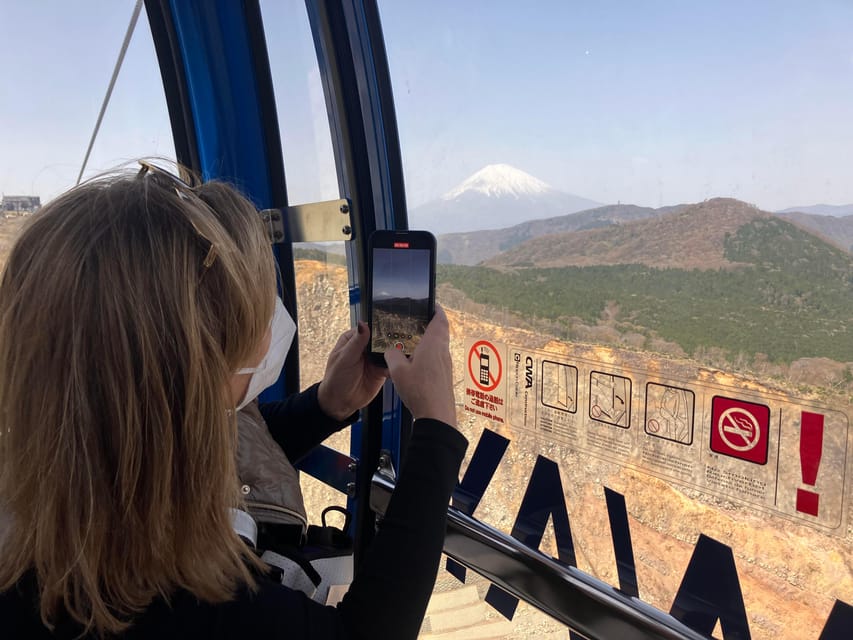
The first major stop is Owakudani Valley, reached by gondola, or ropeway. The ride takes about an hour as part of the day’s plan.
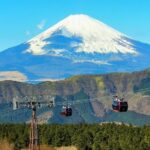
Owakudani is a small active crater within the larger Hakone caldera. A low-level eruption is ongoing, and the area’s volcanic activity is visible in the steam and fumes rising from the ground. The ropeway carries you across the mouth of the crater, giving you a striking view of the terrain below.
This is one of the tour’s strongest moments because it turns geology into something you can see from above. Instead of hearing a general explanation about volcanic activity, you are looking directly at a place where the earth is still releasing heat.
The ropeway is not recommended for people with heart or respiratory disorders. Take that warning seriously. Volcanic areas can also be affected by conditions on the day, so anyone with health concerns should ask for current advice before booking.
The ride also depends on weather and operating conditions. The tour information does not promise a particular view or exact route change if conditions interfere. That is normal for Hakone, where volcano access and mountain transport can vary.
Lake Ashi by the famous pirate ship
From volcanic ground, the tour moves to water. Lake Ashi is another crater within the Hakone caldera and is described as about half a mile deep. The lake never freezes because volcanic hot spring water rises from below.
You cross Lake Ashi aboard Hakone’s famous pirate ship, a playful vessel that adds a bit of theater to the trip. The ship is not an old sailing craft, of course, but it gives the crossing a memorable character and makes the lake journey feel like part of the sightseeing rather than a simple transfer.
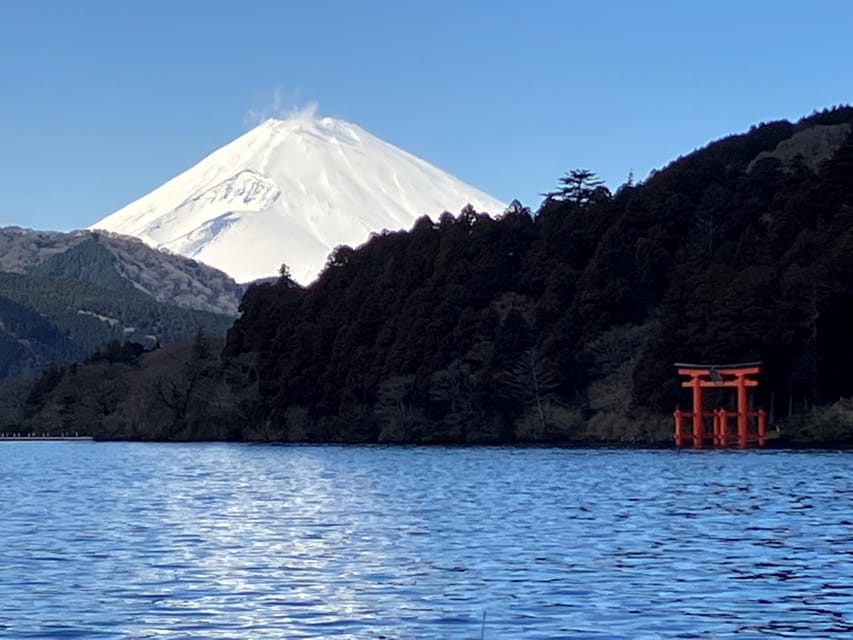
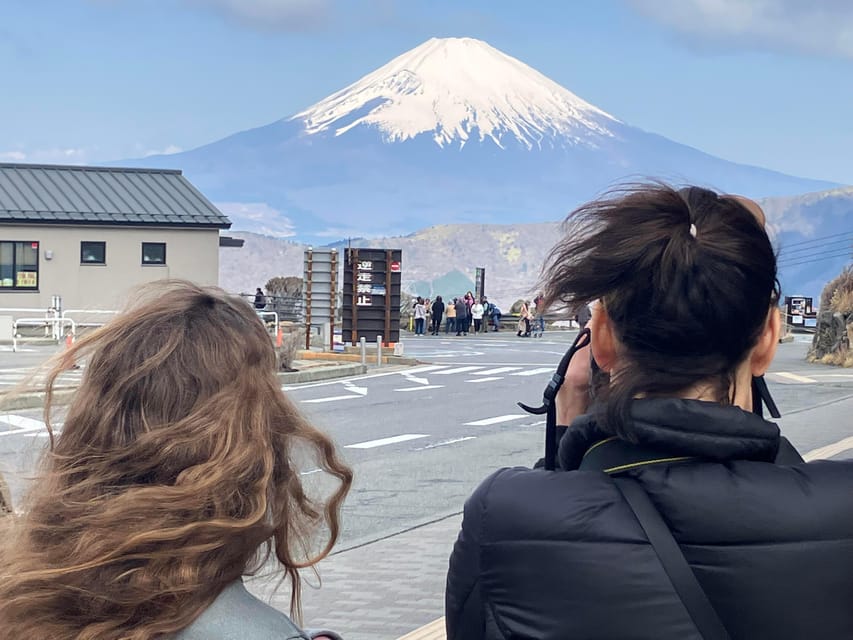
The boat ride lasts about an hour. It gives you time to look back at the surrounding mountains and, when the weather cooperates, search for Mount Fuji. Fuji views are one of Hakone’s big rewards, but clouds often get the final word. The tour makes no guarantee, and one summer outing had to go without the mountain because of weather or seasonal conditions.
That is an important point when planning your expectations. Book this for the volcano, lake, old road, and teahouse even if Fuji stays hidden. If Mount Fuji is the only reason you are coming, you may leave disappointed through no fault of the guide.
The lake crossing also breaks up the walking and road travel. You get a calm hour on the water after the more dramatic ropeway ride, which gives the full day a pleasant rhythm.
Walking beneath 400-year-old cedars on the Old Tokaido
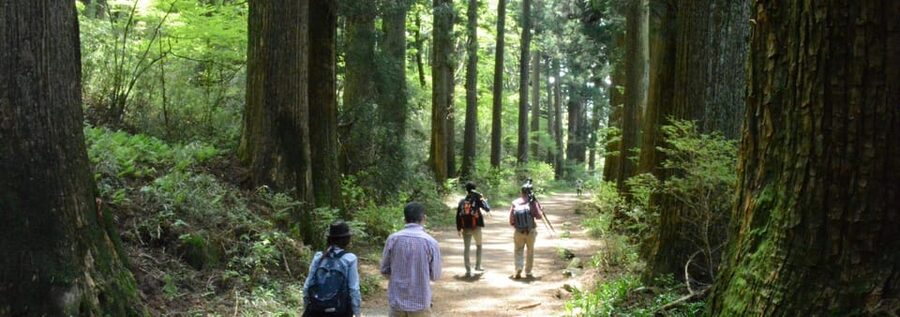
The Old Tokaido Foot Highway once linked Tokyo, Kyoto, and Osaka. You walk only a short section, but even that brief stretch helps explain how difficult long-distance travel once was.
The route is lined with Japanese cedars said to be about 400 years old. Their age gives the walk a weight that a modern road cannot provide. You are not simply walking through trees. You are following part of an old route that connected Japan’s main centers for centuries.
This portion of the tour is modest in physical scope, which is useful on a full eight-hour day. It is not presented as a long hike. Instead, it gives you a taste of the road and a chance to slow down after the transport sections.
Tony may also take you along side paths that are easy to miss when you are finding your own way. That can be valuable in Hakone, where a short detour may reveal more atmosphere than a crowded main stop. You should still expect a walking tour, not a vehicle-only sightseeing circuit, and wear shoes suitable for uneven paths.
The Old Tokaido section is especially good for anyone who wants more than scenic photographs. It places Hakone within the wider story of movement across Japan, linking the natural setting to the people who traveled through it.
Other historical tours in Hakone
Amazake Teahouse and the Yamamoto family
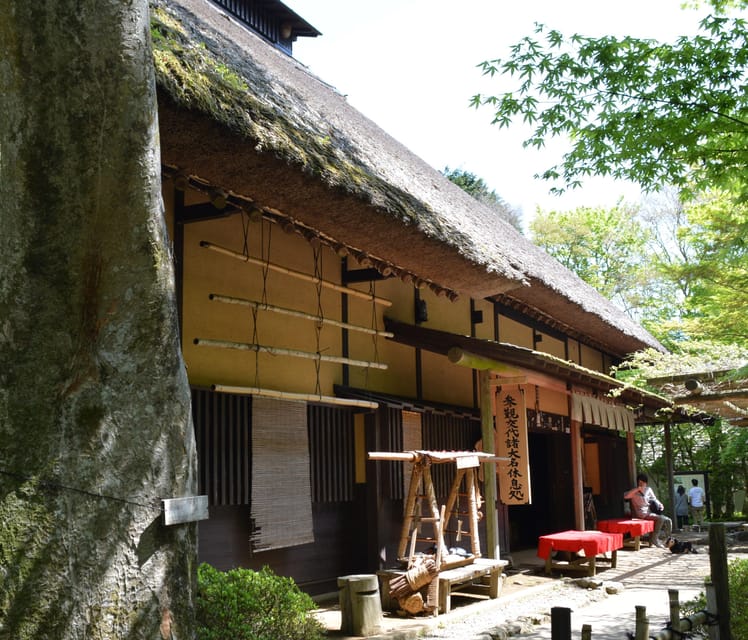
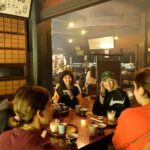
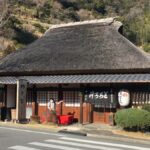
The most personal stop is Amazake Teahouse. The building and business are about 400 years old, and the Yamamoto family has managed the teahouse for 13 generations.
You have the chance to chat with the current family manager through Tony’s English interpretation. That is a meaningful difference from stopping at a historic building, taking a photograph, and moving on. You can hear about the place as a working family tradition rather than a preserved display.
The stop is planned for about an hour. You can try rice tea and mochi, two details that received particular appreciation. The rice tea is distinctive, and the mochi gives you a traditional snack tied to the setting.
The wording for this part of the day describes a tea ceremony, but the experience is best understood as a visit to a historic teahouse with traditional refreshments and conversation. Do not assume it is a formal, highly scripted ceremony unless the schedule is clarified before you go.
Afternoon tea is not included, so budget for what you want to order. That is a small extra cost, but it is also one of the few parts of the tour where you can support an old local business directly.
I find this stop gives the day its human center. Owakudani shows what the earth can do. The teahouse shows what people can preserve, adapt, and pass on.
What Tony adds to the day
The guide is Tony, an English-speaking guide who presents both Hakone and broader Japanese social history. His strength is interpretation: he can explain why a place matters, not just tell you its name.
That distinction matters in Hakone. The area has several famous rides and viewpoints, but without context they can feel like separate attractions. Tony links the volcano to the lake, the lake to the road, and the road to the teahouse.
He also appears to be attentive to the practical side of the day. One group expected the tour to end at the Open Air Museum, but Tony joined them there and guided them through it. When they could not find a taxi or bus afterward, he walked with them to their hotel, about a mile away.
The museum is not part of the stated core itinerary, so you should not book this tour expecting it as a guaranteed stop. Still, the example shows the sort of flexible help a private guide can provide when plans change.
A private group also lets you ask for clarification whenever a story catches your interest. You can spend more time on the history that matters to you, although the exact flexibility should be discussed with Tony before the day begins.
The $483 price and what it covers
The price is $483 per group of up to eight people. It includes the experienced guide and the guide’s own costs, but not local transport, lunch, or afternoon tea.
For eight people, the guide fee works out to about $60 per person before transport and food. For four people, it is about $121 per person before those extras. For only one or two people, the cost becomes much harder to justify unless private attention and historical explanation are your main priorities.
The value improves if you fill most of the eight-person limit. You are paying for a full day of private guiding, not just admission to one attraction. The guide’s help with transfers, interpretation, and unexpected transport problems also has practical value that is hard to price in advance.
Still, compare the total cost honestly. Add the Hakone Free Pass or other local transport, lunch, and tea-house purchases. If you prefer to move independently and are comfortable handling the area’s connections, a self-guided day will cost less.
I would choose this tour when you want the story behind Hakone and do not want to spend the day figuring out how the ropeway, boat, road, and historic stops fit together. I would skip it if your priority is a low-cost visit or a fixed focus on Mount Fuji.
Weather, walking, and health considerations
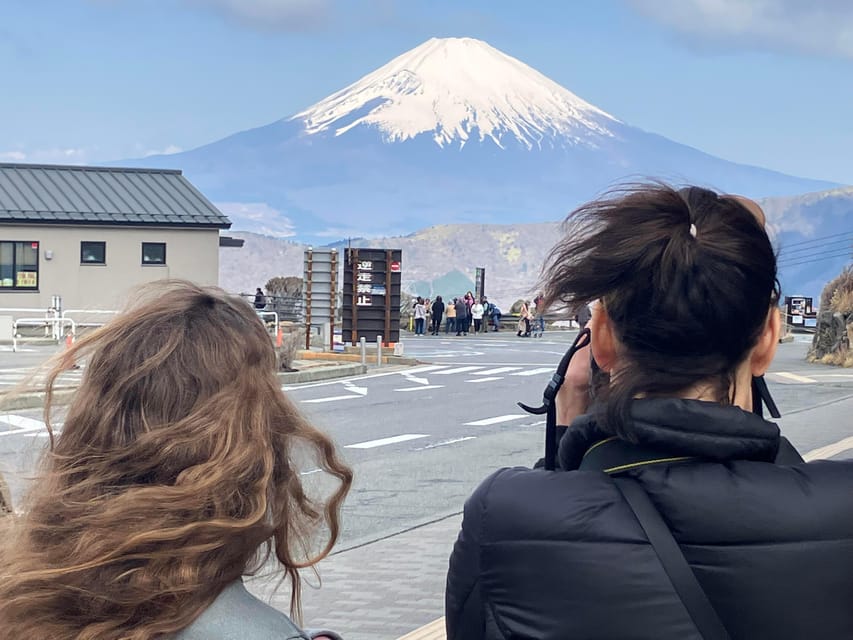
Hakone weather can change your experience. Mount Fuji is visible only when conditions allow, so treat the mountain as a welcome bonus rather than the main product.
The tour includes a ropeway, boat ride, and walking section. You should be comfortable with a full day that combines transport and time on foot. The information provided does not give a detailed accessibility rating or a precise walking distance, so ask Tony about current conditions if mobility is a concern.
The Owakudani ropeway is not recommended for people with heart or respiratory disorders. That is the clearest health restriction, and it should guide your booking decision.
Because lunch is not included, plan for your own meal during the day. Afternoon tea is also separate, including the refreshments at Amazake Teahouse. You may want to confirm exactly when food breaks occur, since the listed sightseeing blocks leave little room for an unplanned long meal.
Free cancellation is available up to 24 hours before the tour for a full refund. You can also reserve now and pay later, which helps if your Japan schedule is still shifting.
Who will get the most from this tour
This outing fits you best if you want:
- A private day instead of a large bus group
- Clear English interpretation of Japanese history and society
- A mixture of volcano, lake, historic road, and local food culture
- Help connecting Hakone’s major sights
- A chance to speak with someone from a long-running local family business
- A full-day experience beginning in Hakone or from Odawara
Families and small groups can benefit from the private format, especially if different people want different levels of explanation. History-minded visitors will get more from the Old Tokaido and Amazake Teahouse than someone interested only in scenic rides.
You should think twice if you have a heart or respiratory condition, if you dislike ropeways, or if you want a guaranteed Mount Fuji view. The cost also makes the most sense when several people share it.
Should you book the Hakone Geology & History Tour?
Book it if you want Hakone to make sense as a place, not just a collection of attractions. The combination of Owakudani, Lake Ashi, the Old Tokaido, and Amazake Teahouse gives you nature, travel history, and local tradition in one day.
The strongest reasons to choose it are Tony’s personal guidance, the private group setting, and the rare meeting at a teahouse managed by the same family for 13 generations. The biggest cautions are the added costs, the health restriction at the ropeway, and the uncertainty of Mount Fuji views.
For a group of six to eight, the price is easier to defend. For a couple, it is a splurge, but one that can be worthwhile if you value explanation and help with transport. If that sounds like your kind of Japan day, this is a well-focused way to see Hakone.
FAQ
How long does the Hakone Geology & History Tour last?
The tour lasts eight hours. The planned day includes a 75-minute train segment, about one hour at Owakudani with the gondola ride, about one hour on the boat, and about one hour at the teahouse, along with the other walking and transport portions.
Where can I meet the guide?
Pickup is available at Hakone-Yumoto Station, Yumoto Station Hotel Mirahakone, or Odawara Station. If you are coming from Tokyo for the day, the guide meets you at the Odawara Station ticket gate. Hotel pickup is available if you are staying overnight in Hakone.
Is the tour private?
Yes. It is a private group experience for up to eight people.
Is the tour conducted in English?
Yes. The tour has a live English-speaking guide, Tony.
Is local transportation included in the price?
No. Local transport is not included. You are advised to purchase a Hakone Free Pass in advance.
Are lunch and afternoon tea included?
No. Lunch and afternoon tea are separate expenses. The visit to Amazake Teahouse includes the chance to purchase traditional items such as rice tea and mochi.
Will I definitely see Mount Fuji?
No. Mount Fuji views depend on the weather. The tour specifically notes that Fuji may not be visible because of weather or seasonal conditions.
Is the ropeway suitable for everyone?
No. The ropeway at Owakudani is not recommended for people with heart or respiratory disorders.
More Historical Tours in Hakone
More Hakone Day Trips in Hakone
More tours in Hakone we've reviewed


Hakone Day Trips, compared.
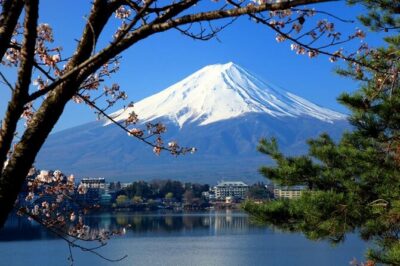 ★ 5.0Mt Fuji and Hakone 1-Day Bus Tour Return by Bullet TrainFrom $163
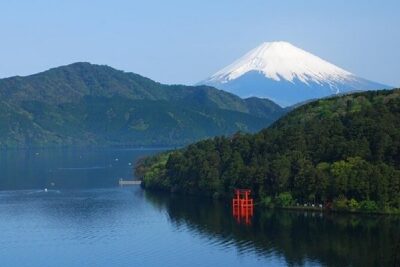 ★ 4.0Mt Fuji & Hakone Cruise, Drum Show Bullet Train 1 Day from TokyoFrom $149
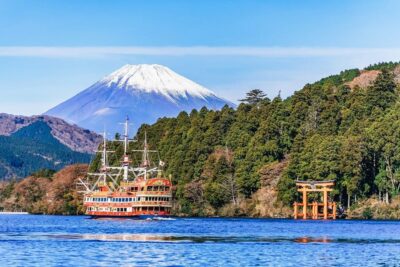 ★ 4.4Tokyo Mt Fuji 5th St & Hakone Cruise Bus Tour w/Bullet TrainFrom $15410 hours
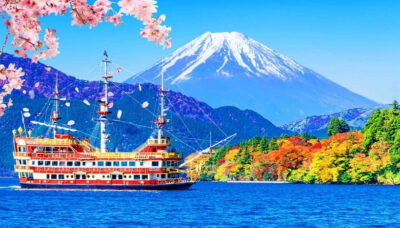 ★ 4.7Tokyo: Mt. Fuji Tour, Hakone Ropeway, Owakudani, Lake AshiFrom $5410 hours
 ★ 4.2Tokyo: Mt. Fuji 5th Station & Hakone Cruise 1-Day Bus TourFrom $12911 hours
 ★ 5.0Private Tour to Mt. Fuji and Hakone (Fully Licenced Operator)From $497