
Reviewed · WALKING TOURS
Gotokuji and Setagaya Walking Tour: Home of the Lucky Cat Statue
Gotokuji Temple is famous for its rows of white lucky cat statues, but this half-day walk gives you more than a quick temple stop. You’ll move through Setagaya’s local streets, visit shrines, see the remains of Setagaya Castle, and finish near the Shoin-jinja shopping area.
I like the private format, since your guide can explain shrine customs at your pace. I also like the included drink, worth up to ¥800, which gives you time to pause in a neighborhood where people shop and meet. The main consideration is walking: mountain paths are part of the route, and the tour may feel active for anyone who prefers a slow, flat outing.
In This Review
- Key points to know before you book
- Why the lucky cats are only the beginning
- Starting at Gotokuji Station
- Setagaya Hachimangu and its sumo ring
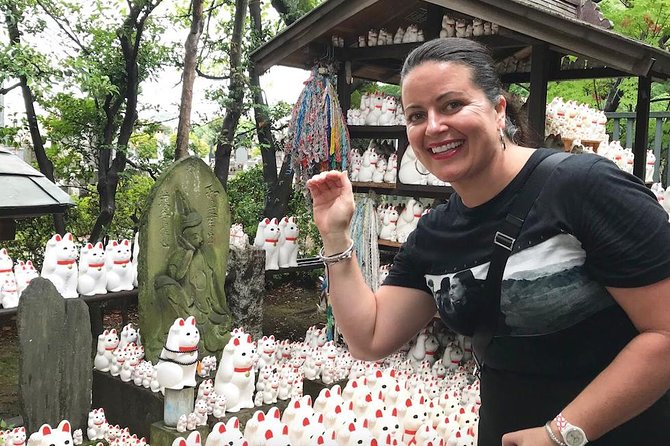
- Gotokuji Temple and the rows of cats
- Shoin Shrine and the story of Yoshida Shoin
- Setagaya Castle Ruins Park and the local streets
- A drink on Shoin Jinja Shopping Street
- Riding the Tokyu Setagaya Line
- Is $84.70 a fair price?
- Who should book this walk?
- Booking details that affect your day
- Should you book the Gotokuji walking tour?
- FAQ
- How long does the Gotokuji and Setagaya walking tour last?
- What time does the tour start?
- Where does the tour begin?
- Where does the tour end?
- Is the tour private?
- Is a drink included?
- Is hotel pickup included?
- What should I wear for the tour?
Key points to know before you book
- The lucky cats have a story: Gotokuji Temple connects the familiar beckoning cat figure with local history and legend.
- This is more than a temple visit: Setagaya Hachimangu, Shoin Shrine, Setagaya Castle Ruins Park, and local streets fill out the morning.
- Your guide can shape the experience: Guides named Yumi, Emiko, Mitsuko, and Yoshimi have led guests through shrine rituals, local history, and neighborhood navigation.
- You finish in a useful place: The walk ends at Shoin-jinja-mae Station, near a shopping street and the Tokyu Setagaya Line.
- Expect about three and a half hours: The listed visits are short, but walking between them makes this a proper neighborhood tour.
- The price reflects private guiding: At $84.70 per person, value improves when several people share the private booking and want help making sense of the area.
Why the lucky cats are only the beginning
Many Tokyo visitors know the raised-paw cat from shop entrances and restaurant counters. At Gotokuji Temple, you see the symbol in its most memorable setting: hundreds of small white figures gathered together on temple grounds.
The temple is often called the lucky cat temple, but the point of this tour is not simply to take a few photographs and leave. Your guide explains the origin of the cat, then places it within the story of Gotokuji, Setagaya, and the surrounding shrines. That context matters. Without it, the rows of statues can look like a curious photo display. With an explanation, they become part of a local religious and cultural tradition.
The private setup is especially useful here. You can ask why the cats are placed together, how to behave at a Japanese temple, or what the symbols mean without trying to keep up with a large crowd. Yumi, for example, has shown guests how to enter a shrine and follow its purification and prayer customs. That kind of practical guidance is one of the strongest reasons to book a guided walk rather than visit Gotokuji alone.
Other walking tours we've reviewed in Tokyo

Starting at Gotokuji Station
The tour begins at Gotokuji Station at 10:00 a.m., at 1 Chome-43 Gotokuji in Setagaya City. You meet the guide there and begin on foot, so plan your route to the station before the morning starts.
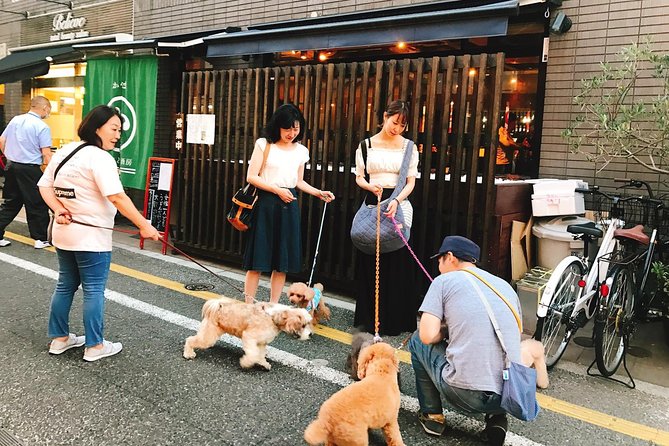
This is not a central Tokyo highlights tour. Setagaya is a suburban ward, and the appeal comes from seeing a calmer part of the city. You get local streets, neighborhood temples, small shopping areas, and a railway used by residents. That makes the outing a good fit if you have already seen Tokyo’s major sights and want a closer look at ordinary city life.
The tour ends at Shoin-jinja-mae Station, at 4-chome-21-16 Wakabayashi. Since the start and finish are at different stations, you should not expect to return to your starting point. This one-way design works well if you plan lunch or more exploring in the Shoin Jinja area afterward.
The exact walking distance is not provided, but mountain paths are specifically part of the route. Wear shoes that are easy to walk in. This is not the time for stiff fashion shoes or thin sandals.
Setagaya Hachimangu and its sumo ring
The first scheduled stop is Setagaya Hachimangu, one of the larger shrines in Setagaya Ward. You have about 20 minutes here, enough for an introduction to the grounds and the shrine’s place in the neighborhood.
One detail gives this shrine special character: a dohyo, or sumo ring, is set up on the grounds. The shrine is associated with honosumo, a sumo event held as an offering. If you have only seen sumo in a stadium or on television, this provides a different connection between the sport and Japanese religious life.
Do not expect a long museum visit or a formal performance during the tour. The information provided points to the shrine and its sumo connection, not a guaranteed event on your date. The autumn matsuri is a notable occasion, but festival timing is not part of the standard tour promise.
Your guide can help explain shrine etiquette here, which is useful early in the walk. Knowing how to approach the entrance, purify yourself, and offer a prayer makes the rest of the shrine visits easier. It also keeps you from treating the grounds as only a backdrop for photos.
Gotokuji Temple and the rows of cats
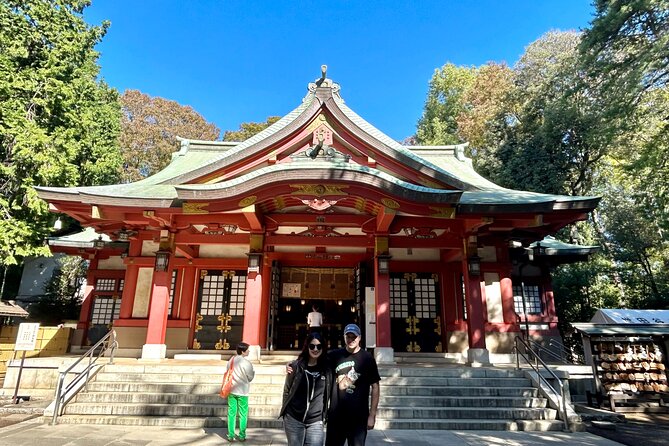
You spend about 35 minutes at Gotokuji Temple, the central stop of the outing. The temple began as the Kotokuin hermitage, built by Kira Masatada, the man associated with Setagaya Castle in 1480. It first belonged to the Rinzai sect and became a Soto Zen temple in 1584.
That history gives the site more weight than its nickname suggests. You are not visiting a themed attraction created for tourists. You are visiting an established temple with a long connection to Setagaya, where the lucky cat tradition has become its most recognizable feature.
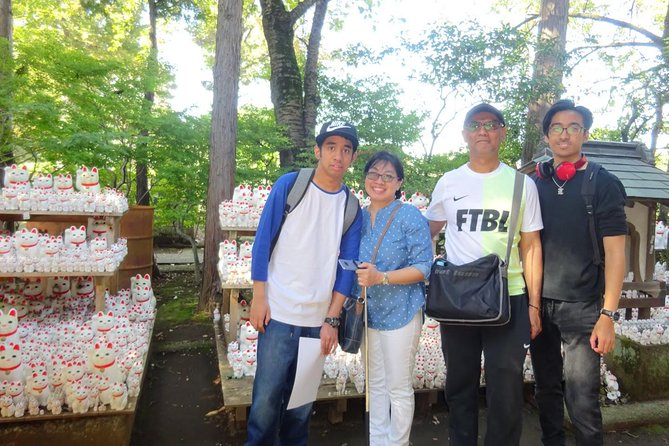
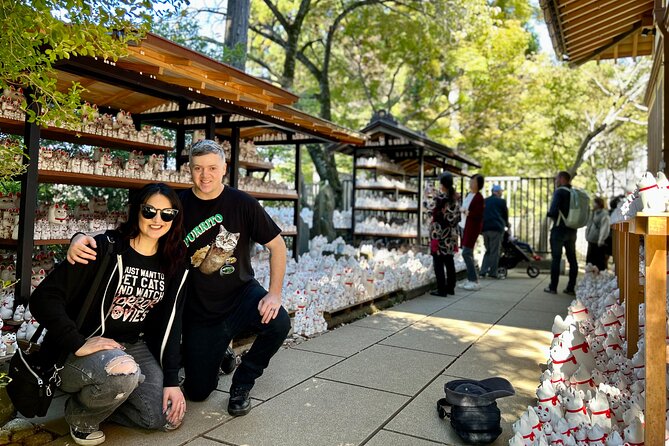
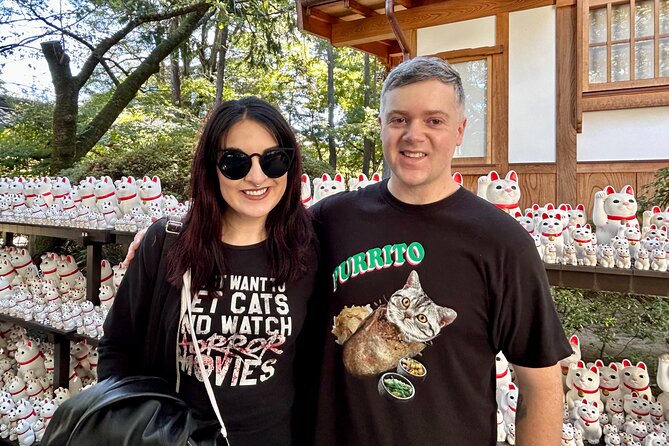
The cats are the visual highlight. They are generally small, white figures with one paw raised, and many are lined up together in dedicated areas. The sight is unusual and highly photogenic, but you should also pay attention to the explanation behind them. The guide’s story turns a familiar Japanese good-luck symbol into something connected to this particular temple.
Your time here is listed as 35 minutes. That is enough to see the main cat displays and hear the background, but it is not an unlimited temple visit. If you want long, quiet photography sessions or a detailed look at every corner, you may feel rushed. The tour is designed to keep moving through the district.
This is where individual guides can make a major difference. Mitsuko has led the walk as an engaging local guide, while Emiko has helped guests navigate the area with care and good humor. The provider does not guarantee a particular guide, so book this experience for the private format and subject matter rather than for one named person.
Shoin Shrine and the story of Yoshida Shoin
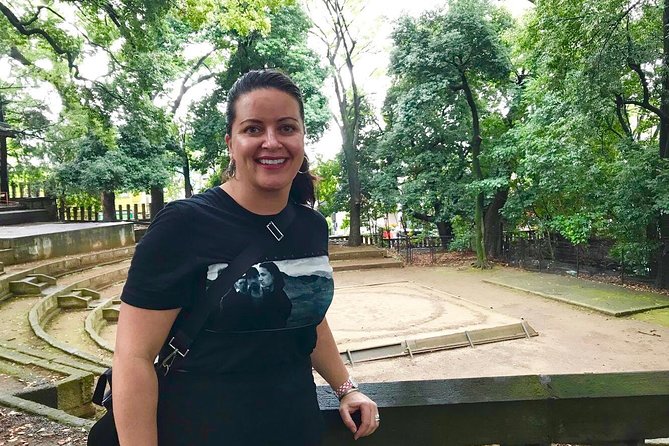
Shoin Shrine is the next major shrine, with about 25 minutes scheduled for the visit. It was founded in 1882 and centers on Yoshida Shoin, an important teacher associated with the Shoka Village school.
The grounds include tombs connected with the school’s students, including Yoshida Shoin. There is also a reproduced building connected with the school. These details give the visit a different feel from Gotokuji Temple. Gotokuji centers on Zen Buddhist tradition and the lucky cat, while Shoin Shrine focuses on a teacher, his students, and a major period in Japanese history.
You do not need a detailed background in Japanese history to enjoy this stop. A guide can explain the people and places in plain terms, then point out what you are seeing. That is more useful than reading a few signs on your own, especially when shrine buildings and memorial sites may look similar to first-time visitors.
The shrine visit also helps break up the cat focus. If you are booking this tour only for the lucky cats, you may be surprised by how much time is given to other religious and historical sites. I see that as a strength for most people, but it is worth knowing in advance. This is a Setagaya walking tour built around Gotokuji, not a single-attraction photo stop.




Setagaya Castle Ruins Park and the local streets
The route includes Setagaya Castle Ruins Park, linked to Kira Masatada and the early history of the area. The information provided does not promise reconstructed walls, a large museum, or dramatic ruins. You should think of this as a chance to understand the district’s past while walking through the place where that past unfolded.
The value lies in the connection between stops. Gotokuji, the castle story, the shrines, and the neighborhood are not isolated sights. Together, they show how religious sites, local rulers, memorials, and daily life overlap in an older Tokyo district.
The walking portions are also where the private tour earns its keep. A guide can point out details you might pass without noticing and answer questions as they arise. Yoshimi, for instance, has guided guests through the local area and helped them find the less obvious parts of Gotokuji. That is useful when you want more than a route from station to temple.
The mountain paths deserve attention. The tour requires a moderate level of physical fitness, and the provider specifically asks you to wear walking shoes. The paths may not be difficult for most active visitors, but the combination of stairs, uneven ground, and several hours on foot can be tiring.
A drink on Shoin Jinja Shopping Street
One included coffee or tea, worth up to ¥800, is provided at Shoin Jinja Shopping Street. This is a small benefit, but it improves the rhythm of the morning. After visiting temples and shrines, you get a chance to sit or pause while your guide offers local suggestions.
The shopping street is described as a place where locals gather. That is the sort of setting I value on a Tokyo tour. You are not being pushed from one famous sight to another. You get a short window into the practical side of the neighborhood, including possible places to eat and things to see after the guided walk.
Lunch is not included, so use this stop to ask for advice. The guide can suggest where to continue in the area, but the exact restaurant choices are not specified. If eating is a major part of your plan, set aside extra time after the tour rather than expecting a full meal during the scheduled three and a half hours.
The drink allowance is also not the same as a meal credit. It covers one coffee or tea up to ¥800. Anything beyond that, including lunch, is your responsibility.
Riding the Tokyu Setagaya Line
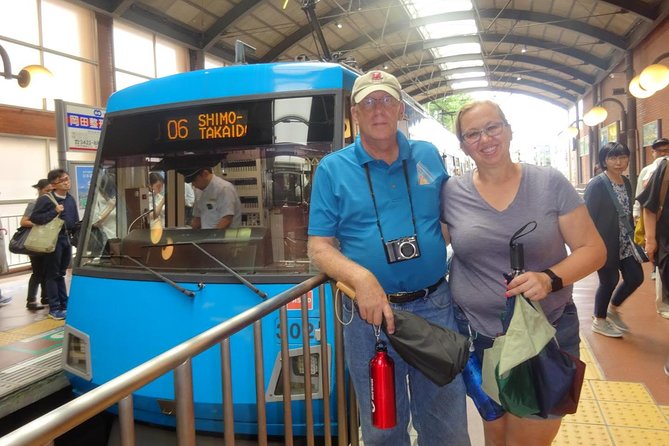
The itinerary includes a short look at the Tokyu Setagaya Line, with about 10 minutes listed for the stop. This local railway is used by residents and offers a simple way to continue exploring after the tour.
You do not need to treat this as a full train excursion. The point is practical: your guide can show you the local line, and you can use it after the walk if you want to continue through Setagaya. Since the tour finishes at Shoin-jinja-mae Station, the railway is especially convenient for planning the next part of your day.
The train stop also reinforces the tour’s local character. You are ending among everyday transport and neighborhood shopping rather than at a major Tokyo landmark. If you want an efficient route between famous central attractions, this tour is not the best match. If you enjoy seeing how residents move around their own district, it fits much better.
Is $84.70 a fair price?
The listed price is $84.70 per person, and the experience is booked as a private activity for your group. That price is not just an entrance fee. Admission to the listed sites is free, so you are paying mainly for the guide’s time, interpretation, route planning, and help with local customs.
Value depends heavily on group size. A solo visitor pays the full per-person rate, while friends or family sharing a private booking may find the arrangement more reasonable. Group discounts are available, but the exact discount is not specified, so check the final price before booking.
The private format is a real advantage if you want to ask questions, move at a comfortable pace, or get help with the railway and neighborhood. It is less compelling if you only want to photograph Gotokuji and leave. You could visit a free temple without a guide, but you would miss much of the explanation and local orientation that make this walk different.
The included drink adds a modest extra value. The bigger benefit is the advice you receive for eating and exploring after the tour. For a first visit to Setagaya, that practical help can make the rest of the day easier to plan.
Who should book this walk?
I would recommend it most strongly to visitors who have already seen Tokyo’s central sights and want a quieter district with a clear local focus. It also suits anyone curious about Japanese shrine etiquette, the lucky cat tradition, or the connection between temples, memorials, and neighborhood life.
Families and small groups may appreciate the private format. You can ask the guide to explain things at your level, and you do not have to worry about keeping pace with strangers. The moderate fitness requirement means you should be comfortable walking for several hours and handling mountain paths.
This tour is less suitable if you have limited mobility, want a completely flat route, or need hotel pickup included in the base price. Hotel pickup is available for an extra ¥5,000 per group for hotels in Tokyo and Yokohama, but the standard meeting arrangement is at Gotokuji Station.
The tour is also not ideal for a rushed Tokyo itinerary. At approximately three hours and 30 minutes, it takes a substantial part of the morning. That time feels worthwhile if you like neighborhood walks. It may feel long if your only goal is a quick look at the lucky cats.
Booking details that affect your day
Confirmation is sent within 48 hours, subject to availability. The tour starts at 10:00 a.m., and you should arrange transportation to Gotokuji Station yourself because transport to and from the attractions is not included.
The activity allows service animals and operates near public transportation. It is a private experience, meaning only your own group participates. If you need more time, the walk can be extended for ¥5,000 per group per hour, payable in cash.
Free cancellation is available if you cancel at least 24 hours before the start time. Changes or cancellations made within 24 hours are not accepted for a refund. The cut-off follows local Tokyo time, so check the clock carefully if your booking is close to the deadline.
Should you book the Gotokuji walking tour?
Book it if you want the story behind the lucky cats, not just a photograph of them. The walk gives you Gotokuji Temple, Setagaya Hachimangu, Shoin Shrine, castle history, a local shopping street, and a useful finish at the Setagaya Line.
The strongest reasons to choose it are the private guide, the help with shrine rituals, and the chance to see a residential part of Tokyo with someone who can explain what you are seeing. The main drawbacks are the price for solo visitors, the walking on mountain paths, and the fact that lunch and transportation are not included.
For a first-time Tokyo visitor with only a short stay, I would choose major city sights first. For a return visit, a small group, or anyone eager to get beyond the standard Tokyo route, this is a thoughtful and well-focused half-day outing.
FAQ
How long does the Gotokuji and Setagaya walking tour last?
The tour lasts approximately three hours and 30 minutes. It can be extended for ¥5,000 per group, per hour, payable in cash.
What time does the tour start?
The tour starts at 10:00 a.m.
Where does the tour begin?
The meeting point is Gotokuji Station at 1 Chome-43 Gotokuji, Setagaya City, Tokyo 154-0021, Japan.
Where does the tour end?
The tour ends at Shoin-jinja-mae Station at 4-chome-21-16 Wakabayashi, Setagaya City, Tokyo 154-0023, Japan.
Is the tour private?
Yes. Only your group participates in the activity.
Is a drink included?
Yes. One coffee or tea is included at Shoin Jinja Shopping Street, up to a value of ¥800.
Is hotel pickup included?
No. Hotel pickup is available for an additional ¥5,000 per group for hotels in the Tokyo and Yokohama area.
What should I wear for the tour?
Wear comfortable shoes that are easy to walk in. The route includes mountain paths, and participants should have a moderate level of physical fitness.
More Walking Tours in Tokyo

More tours in Tokyo we've reviewed







Walking Tours, compared.
 ★ 5.0Tokyo Tsukiji Fish Market Food and Culture Walking TourFrom $99
 ★ 5.0Tokyo: Imperial Palace and Shogun Historical Walking TourFrom $22
 ★ 4.9Tokyo: Shinjuku Local Bar and Izakaya Guided Walking TourFrom $343 hours
 ★ 5.0Tokyo: Tsukiji Fish Market Food and Walking tourFrom $30
 ★ 4.8Tokyo: Asakusa Walking Tour with Sensoji Temple VisitFrom $222 hours
 ★ 4.9Tokyo: Tsukiji Fish Market Guided Walking TourFrom $222 hours