
Reviewed · GUIDED
Freely set up plans Guided Private Tours in Tokyo
Tokyo can feel like several cities stitched together by train lines. This private tour tackles that problem by letting you choose the places that matter most, then pairing you with an English-speaking guide who handles the route. You can meet in your hotel lobby within Tokyo’s 23 wards and spend four to ten hours seeing the city at your own pace.
I like the custom itinerary and the way the tour uses public transportation instead of keeping you inside a vehicle. I also like the chance to mix famous sights with personal interests, such as a sushi lunch, an animal cafe, or a quieter garden.
The main caution is effort. Tokyo’s stations can mean long walks, stairs, and crowded platforms. One difficult day involved heavy rain and around 22,000 steps, so this is not a gentle sightseeing ride. Guide quality can also vary, and one poor experience involved a guide arriving on the wrong day.
In This Review
- Key points to know before booking
- A private way to get your bearings in Tokyo
- Tsukiji Jogai Market: Tokyo through food
- Senso-ji Temple and Asakusa
- Tokyo Skytree: pay extra for the wide view
- Ueno Zoo: a longer family stop
- Shibuya Crossing and Meiji Jingu
- Tokyo Tower and Shinjuku Gyoen
- Hamarikyu and the Imperial Palace East Gardens
- Animal cafes: unusual, but not for every group
- How the public transportation setup affects your day
- Guide quality and group dynamics
- Price, duration, and what you still pay
- Who should book this private Tokyo tour?
- FAQ
- How long does the private Tokyo tour last?
- Where does the tour begin?
- Is the tour private?
- Is public transportation included?
- Are attraction admission fees included?
- Can I choose which Tokyo sights to visit?
- Does the tour have different start times?
- What is the cancellation policy?
- Should you book it?
Key points to know before booking
- You choose the route: Pick from four to ten hours and tell the guide which sights, foods, or neighborhoods matter most.
- Public transit is part of the tour: Your guide leads you through Tokyo’s train and subway system, which can save time and reduce stress.
- Hotel lobby pickup is offered: Pickup applies to hotels in Tokyo’s 23 wards.
- The strongest praise goes to the guides: Kono, Yumi, Yoshi, Yoshio, Yumiko, and Yoki are singled out for patience, local knowledge, and flexibility.
- Admission costs extra: You pay entrance fees for places such as Tokyo Skytree, Ueno Zoo, Tokyo Tower, gardens, and animal cafes, including the guide’s admission where required.
- The tour is active: Stairs, station walks, and a full day on your feet are normal parts of the experience.
A private way to get your bearings in Tokyo
The best feature here is not a fixed list of sights. It is the ability to shape the day around your own Tokyo.
You might begin with Tsukiji and Asakusa, then move to Tokyo Skytree. Or you might focus on Meiji Jingu, Shibuya, and Shinjuku. If you have already seen the main temples, you can ask for gardens, food stops, shopping, or an unusual visit to an owl or hedgehog cafe.
That flexibility matters because Tokyo is enormous. A private guide can help you avoid wasting half the day crossing town for one extra stop. Several six-hour outings managed four requested sights, while other full-day plans included markets, temples, sushi, animal cafes, and shopping.
The guide also gives you more than directions. Guides such as Kono, Yumi, Yoshi, Yoshio, Yumiko, and Yoki are repeatedly praised for explaining customs, history, food, and everyday life. A strong guide can turn a temple gate into a lesson about Japanese worship, or a train transfer into a quick introduction to how Tokyo functions.
You should still arrive with a rough wish list. The city offers too much to leave every decision until the meeting time. Give the guide your top two or three priorities, then let the route be adjusted around opening hours, weather, energy, and travel time.
Other guided tours in Tokyo

Tsukiji Jogai Market: Tokyo through food
Tsukiji’s outer market is one of the most useful first stops because it introduces Tokyo through its food.
The streets hold a mixture of retail shops, wholesale sellers, traditional ingredients, prepared foods, and restaurants. You can look for seafood, Japanese cooking products, snacks, and fresh tuna. A guide helps explain what you are seeing and can make the market less confusing if you are not familiar with Japanese food customs.
This is also where several tours gained a memorable lunch. Sushi at a local shop was a highlight for some visitors, with fresh tuna making a strong impression. If food is high on your list, tell the guide early so the market and meal receive enough time.
The tradeoff is that one hour goes quickly. Tsukiji is best treated as a focused food walk, not a complete market exploration. Restaurant choices and purchases are your responsibility, and the tour price does not cover food.
Senso-ji Temple and Asakusa
Senso-ji is one of Tokyo’s essential sights, and it pairs naturally with Tsukiji.
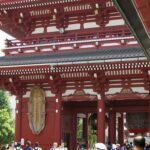
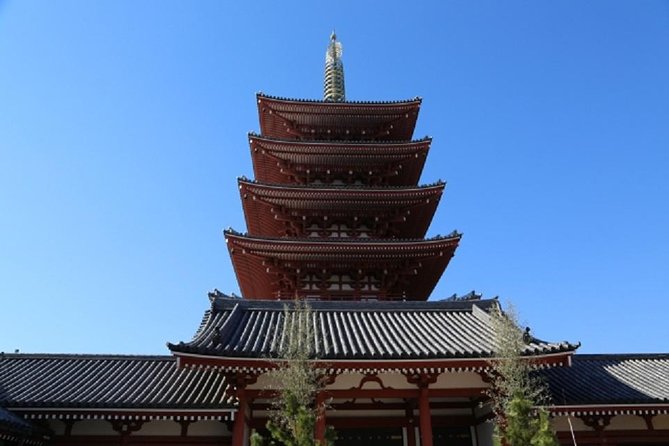
The temple grounds include the large gates, a five-story pagoda, and the Hozo-mon Gate, also called the Treasure-House Gate. This is a good place to learn how a major Buddhist temple works, rather than simply taking photographs and moving on.
Asakusa also gives you a different feel from Tokyo’s glass towers. The approach to Senso-ji is lined with shops and food stalls, so you can ask your guide about snacks, souvenirs, and customs as you walk.
Plan on about an hour here, though the area can absorb more time if you want to browse. The private format helps if your group has different interests. One person can focus on temple details while another looks at shops, with the guide helping keep the day moving.
Tokyo Skytree: pay extra for the wide view
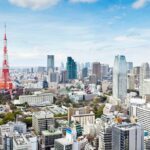
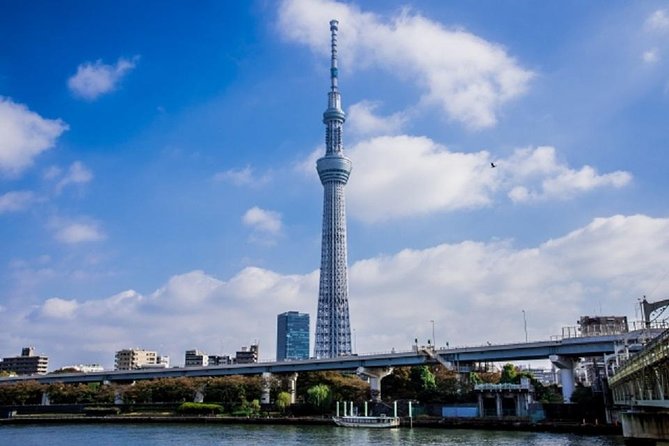
Tokyo Skytree reaches 634 meters and has observation areas at about 340 and 450 meters. It is the clearest choice on this tour if you want a high view across the city.
The admission fee is not included, and the guide’s ticket is also your responsibility. That makes Skytree a better choice for visitors who truly want the view, rather than a stop to fill time.
A one-hour visit can work well, but allow for transport and any waiting time when planning the rest of your day. Your guide can get you there and explain the surrounding area, but you should confirm the cost and decide in advance if the observation deck fits your budget.
Ueno Zoo: a longer family stop
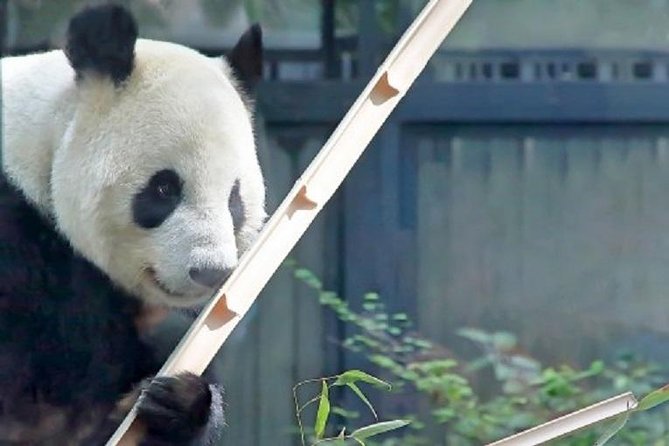
Ueno Zoo opened in 1882 and keeps about 400 species, including the Sumatran tiger. The suggested visit lasts two and a half hours, making it one of the more substantial stops on the list.
This is the obvious pick for families, animal lovers, or anyone who wants a break from temples and city streets. It is not a quick photo stop. If you choose Ueno Zoo, you will need to give up other sights or book a longer tour.
Admission is extra for you and the guide. The tour description does not promise special access or a private zoo program, so think of the guide’s value here as helping you reach the zoo and fit it sensibly into the day.
Other private tours in Tokyo

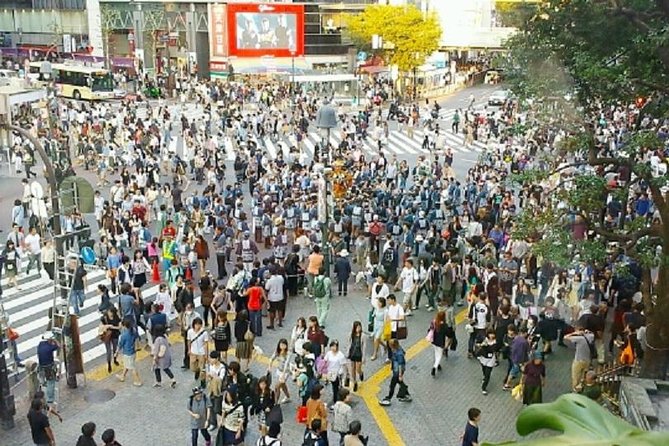
Shibuya Crossing and Meiji Jingu
Shibuya Crossing offers Tokyo’s famous burst of organized chaos. About 500,000 people use the intersection each day, and as many as 3,000 may cross during one green light.
The listed visit is only 30 minutes, which is enough to watch the crossing, take photographs, and get a feel for the district. It is not enough for a full exploration of Shibuya’s shops or side streets.
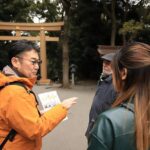
Meiji Jingu gives you a sharp change of mood. Built in 1920, the shrine honors Emperor Meiji and Empress Shoken. It is an important place for Japanese worship, and your guide can explain shrine manners and the meaning of what you see.
The two stops work well together because they show opposite sides of modern Tokyo: a major commercial intersection and a broad, quiet shrine setting. Allow about an hour for Meiji Jingu. The walk and station transfers between major neighborhoods can add more exertion than the stop times suggest.
Tokyo Tower and Shinjuku Gyoen
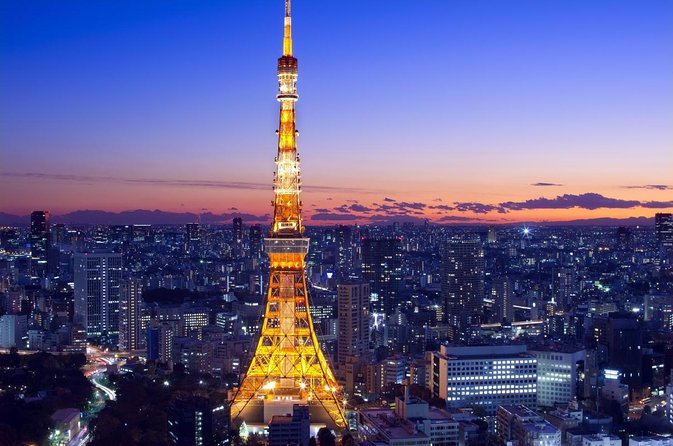
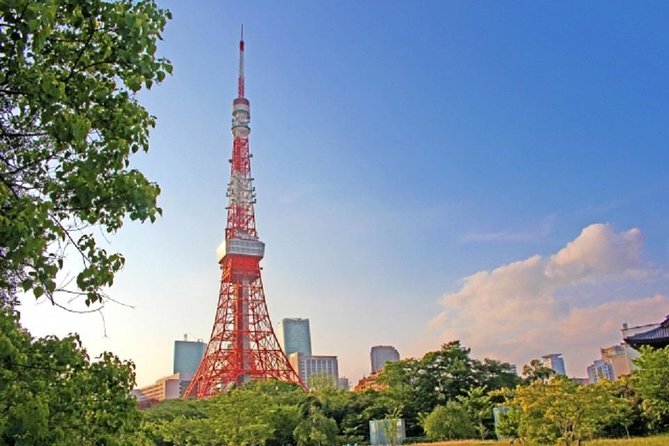
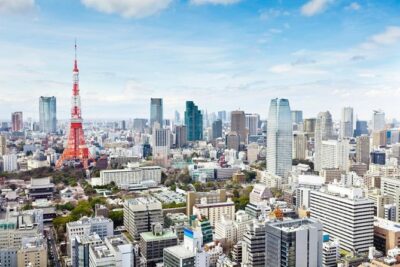
Tokyo Tower is the older city symbol, rising 333 meters and dating from 1958. It has viewing areas, a cafe, a shrine, and evening lighting patterns known as Landmark Light and Diamond Veil.
Like Skytree, admission is not included. Choose it for the atmosphere and classic Tokyo image, especially if you prefer the city’s older icon to its taller modern rival.
Shinjuku Gyoen National Garden offers another change of pace. Created as an imperial garden in 1906, it combines a formal garden, a landscaped garden, and a Japanese garden. A one-hour visit gives you a pleasant pause from stations and avenues, though a garden deserves more time if you want to stroll without rushing.
Both stops cost extra. They also require careful routing, so you should not expect to fit Tokyo Tower, Skytree, Shinjuku Gyoen, and several distant neighborhoods into a short four-hour plan.
Hamarikyu and the Imperial Palace East Gardens
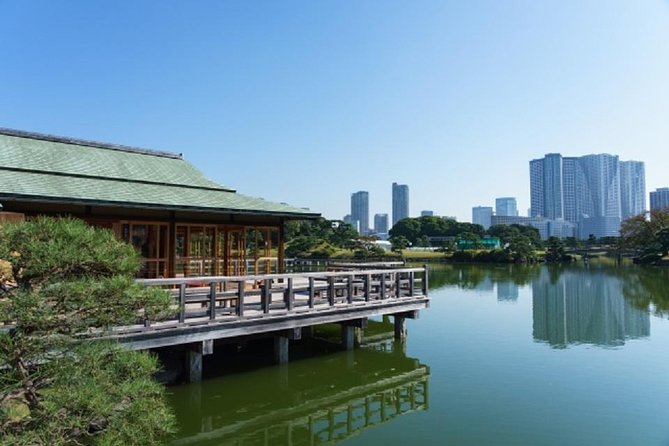
Hamarikyu Gardens covers about 250,165 square meters around Shioiri Pond. Its moat is connected to Tokyo Bay, giving the garden a distinctive waterfront setting.
This is a good choice if you want a calmer hour between city sights. The garden has an imperial past and a design centered on water, bridges, and changing views. Admission is extra, including the guide’s fee if required.
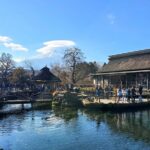
The East Gardens of the Imperial Palace occupy part of the former Edo Castle grounds in Chiyoda. The Imperial Palace complex remains the official home of the Emperor and Empress, while the gardens offer access to castle ruins and historic grounds.
These gardens are valuable for context. They help connect present-day Tokyo with the Tokugawa period and the city’s earlier political center. They are less dramatic than a tower or famous crossing, but I would choose one if you want history without another packed attraction.
Animal cafes: unusual, but not for every group
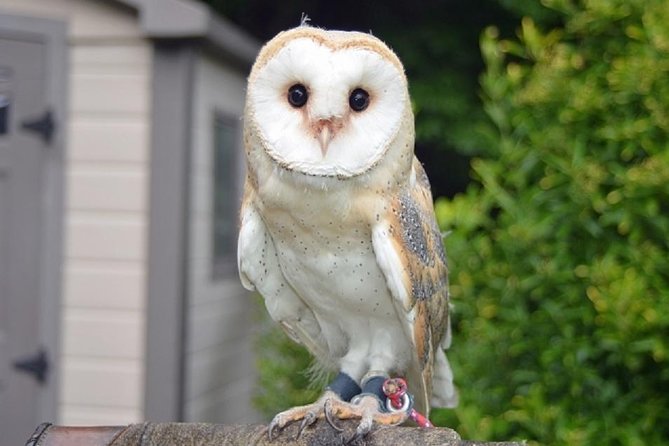
The tour can include Owl Cafe Tokyo Akiba Fukurou or Chiku Chiku Cafe, a hedgehog cafe. Each visit is listed at about an hour, and each requires an additional admission fee.
At the owl cafe, you can interact with owls in a setting that uses classical music. At Chiku Chiku Cafe, you handle hedgehogs while having drinks. Some animals may want to play, while others may simply sleep in your hands.
These stops suit families and visitors looking for something outside the standard Tokyo route. They are also best treated as optional interests, not essential city sights. One animal cafe was closed during a planned visit, so confirm that your chosen venue is operating before building the day around it.
How the public transportation setup affects your day
The guide takes you by public transportation to and from the places you visit. That is a major practical benefit. Tokyo’s rail system is fast and extensive, but station layouts, platform changes, and ticketing can be confusing at first.
A good guide also teaches you how to use the system for the rest of your trip. One first-day outing included advice about trains and markets, which made the tour useful beyond the hours you paid for.
But public transportation means walking. You may climb stairs, cross large stations, wait on platforms, and move through crowds. Accessibility is a real concern. One person with mobility problems found Tokyo’s transit system less accommodating than expected, with many steps. Another full day reached roughly 22,000 steps, even though that was an unusually demanding day.
If you have mobility limits, tell the provider before booking and keep the route compact. Ask for fewer stops, longer breaks, and stations with elevators when possible. The guides can adapt, but the city itself cannot always make movement easy.
Guide quality and group dynamics
The guide is the heart of this experience, and the strongest guide reports are very specific.
Yumiko is praised for excellent English, careful pacing, and detailed explanations. Yumi is singled out for patience with a family of five and for helping with ideas for the rest of the trip. Yoshio is noted for answering questions, explaining Japan’s past and present, and handling the train system with ease.
Kono is associated with market visits, sushi, Asakusa, animal cafes, and helpful explanations. Yoshi and Yoki are praised for adapting the route to the group’s requested order. With a group of eight, Funiko kept checking that everyone stayed together and handled frequent stops patiently.
That said, language ability may vary. One guide was difficult to understand in English and walked too far ahead. If clear English is especially important, request a guide with strong communication skills when you book, though a particular guide cannot be guaranteed from the information provided.
The tour is private, so only your group participates. That is especially useful for families, couples, and groups with different interests. A private guide can stop for photographs, change the order, add a lunch break, or shorten a visit without negotiating with strangers.
Price, duration, and what you still pay
The listed price is $132.14 per person. For a four-hour outing, that is a fairly substantial cost. For a full ten-hour private day with several people, the value improves because you are paying for personal planning, guidance, and navigation rather than just admission to one attraction.
Group discounts are offered, but the exact savings are not provided. Admission fees, food, drinks, and the guide’s admission costs are not included. That matters most if you choose Skytree, Tokyo Tower, Ueno Zoo, gardens, or an animal cafe.
You can book a shorter plan if you have limited time, including a cruise stop or a final day in Tokyo. You can also book a longer day if you want several neighborhoods. Keep your route realistic. Tokyo’s train travel and walking time can consume more of the day than a map suggests.
The tour is free to cancel up to 24 hours before the local start time. Changes or cancellations inside that window are not accepted for a refund.
Who should book this private Tokyo tour?
I would consider this a strong choice for a first visit, especially if you have one day and want help making sensible choices.
It also suits cruise passengers, families, groups of friends, and anyone nervous about Tokyo’s rail network. The private setup gives you control, and the guide can explain customs in a way a self-guided map cannot.
You should think twice if you dislike walking, need fully accessible transportation, or want a fixed sightseeing bus with little effort. You should also be comfortable paying admission and food costs separately.
FAQ
How long does the private Tokyo tour last?
You can choose a tour lasting approximately four to ten hours.
Where does the tour begin?
Pickup is offered in the lobby of your hotel if it is located within Tokyo’s 23 wards.
Is the tour private?
Yes. Only your group participates in the activity.
Is public transportation included?
Public transportation to and from the tour stops is included for the guides. Your own admission fees are not included, and the information does not state that your individual transit fares are included.
Are attraction admission fees included?
No. Admission fees for customers and guides are not included. This applies to paid stops such as Tokyo Skytree, Ueno Zoo, Tokyo Tower, Shinjuku Gyoen National Garden, Hamarikyu Gardens, the Imperial Palace East Gardens, and the animal cafes.
Can I choose which Tokyo sights to visit?
Yes. The experience is customized, so you can select the sights and interests you want the guide to use when building the route.
Does the tour have different start times?
Yes. Several start times are available, so you can choose an option that fits your schedule.
What is the cancellation policy?
You can cancel at least 24 hours before the local start time for a full refund. Cancellations or changes made less than 24 hours before the start time are not accepted for a refund.
Should you book it?
Book this tour if you want a personal introduction to Tokyo and value a guide who can handle the trains, explain the city, and reshape the day around your interests. The best use of it is a focused first day: choose two or three priority areas, add one food stop, and leave room for station walks and breaks.
I would not try to force all twelve suggested stops into one day. Choose Tsukiji and Senso-ji for food and old Tokyo, Shibuya and Meiji Jingu for contrast, or one tower plus a garden for a slower route. With the right guide and a sensible plan, the $132.14 price can buy more than sightseeing. It can help you understand how to continue exploring Tokyo on your own.
More Private Tours in Tokyo
More Guided Tours in Tokyo
More tours in Tokyo we've reviewed





Guided, compared.
 ★ 5.0Tokyo 6hr Private Tour with Government-Licensed GuideFrom $155
 ★ 4.9Tokyo: Shinjuku Local Bar and Izakaya Guided Walking TourFrom $343 hours
 ★ 4.8Tokyo: Private City Highlights Tour with Local GuideFrom $1064 - 8 hours
 ★ 4.9Tokyo: Tsukiji Fish Market Guided Walking TourFrom $222 hours
 ★ 5.0Tokyo 4hr Private Tour with Government-Licensed GuideFrom $109
 ★ 5.0Tokyo Guided Small-Group Biking TourFrom $106