
Reviewed · MT FUJI DAY TRIPS
TOKYO OishiPark, Oshino & KoedoKawagoe, Fuji Mount
Mount Fuji is the star here, but the route gives you three different views of Japan in one long day: lake scenery at Oishi Park, clear spring ponds at Oshino Hakkai, and old merchant streets in Kawagoe. It is a lot of ground for $85.02.
I like the seasonal variety, from cherry blossoms and lavender to autumn leaves and pink broom grass. I also like the mix of nature and town life, especially the chance to see Fuji country before ending among Kawagoe’s old wooden buildings and sweet-potato treats.
The catch is traffic. This is a road trip, and one recent outing spent about two and a half hours stuck in traffic, leaving less than two hours off the bus. If your priority is unhurried sightseeing, that risk matters.
In This Review
- Key points to know before booking
- Three sides of Japan in one long day
- Meeting at Shinjuku L Tower
- Oishi Park and the north shore of Lake Kawaguchi
- Oshino Hakkai and Fuji’s clear spring water
- Koedo Kawagoe and old Tokyo-style streets
- The real issue: road time and traffic
- Is $85.02 good value?
- Who will get the most from this tour?
- Practical booking advice
- Should you book this Fuji and Kawagoe day trip?
- FAQ
- Where does the tour meet?
- What time does the tour start?
- How long does the experience last?
- What places does the tour visit?
- What is included in the price?
- Are meals and drinks included?
- Can I cancel for a full refund?
Key points to know before booking
- Three very different stops: Fuji views at Oishi Park, spring-fed ponds at Oshino Hakkai, and Edo-style Kawagoe.
- A full 10-hour day: The advertised schedule allows about one hour at Oishi Park, two hours at Oshino Hakkai, and three hours in Kawagoe, plus road time.
- Traffic can change the tour: The route covers busy roads between Tokyo, Yamanashi, and Saitama, so sightseeing time may shrink.
- A good price for included transport: The $85.02 fare covers the air-conditioned vehicle, return transport, and an English or Chinese-speaking guide.
- Season matters: Fuji views and flowers depend on weather and time of year, while poor weather can cause cancellation.
- A medium-to-large group: The tour requires at least eight people and accepts up to 45, so the pace is organized rather than private.
Three sides of Japan in one long day
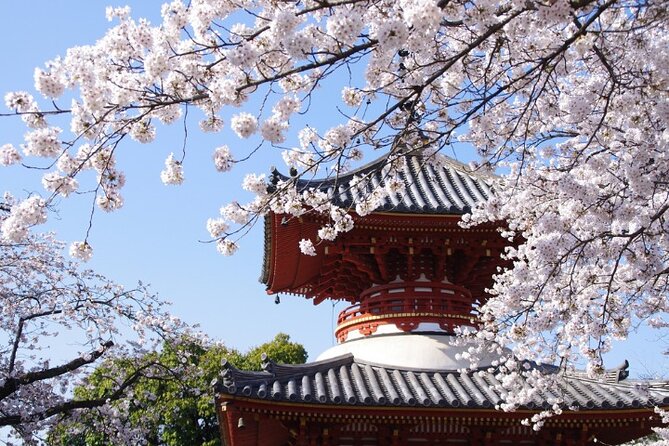
This tour links places that are appealing for different reasons. Oishi Park gives you the classic Fuji-and-lake view. Oshino Hakkai adds water, village scenery, and a strong connection to Mount Fuji’s snowmelt. Kawagoe then changes the mood entirely, with old-style streets and traditional shops.
I like that range. You are not spending the whole day looking at similar viewpoints. You get an outdoor stop, a village visit, and a historic shopping district. For a first visit to Japan, that variety can make the day feel worthwhile.
Still, the map is ambitious. Tokyo is the starting point, Oishi Park and Oshino Hakkai are in Yamanashi Prefecture, and Kawagoe is north of Tokyo in Saitama Prefecture. The coach has to cover a great deal of road, and traffic around Tokyo and the Fuji area can be heavy.
The planned duration is about 10 hours, starting at 8:00 a.m. and ending back at Shinjuku L Tower. Think of this as a sightseeing sampler, not a slow country outing. You will see more places than you could easily combine by local transport, but you may have less time at each one than you would on a private trip.
A few more Tokyo tours and experiences worth a look
Meeting at Shinjuku L Tower
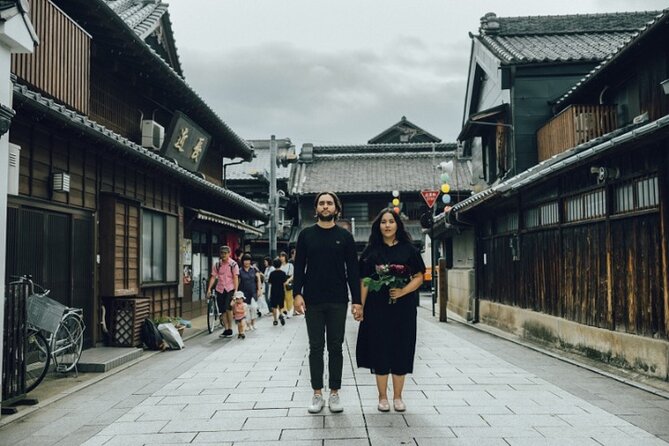
Since September 1, 2024, the meeting point has been Shinjuku Station Exit 20 at Shinjuku L Tower, 1-chōme-6-1 Nishishinjuku. That detail is important because Shinjuku is a huge transport district, and using the wrong exit can cost you valuable time in the morning.
The listed start time is 8:00 a.m. You should treat that as a firm departure time, not a rough suggestion. Your mobile ticket is useful, and confirmation is provided when you book.
The tour uses an air-conditioned vehicle and returns to the same meeting point. The group can range from eight people to a maximum of 45. That gives the operator enough scale to keep the price at $85.02, but a full coach will take longer to load, unload, and gather at each stop.
An English or Chinese-speaking guide accompanies the group. One especially praised tour leader was named Elli Wan, along with the driver and team. The guide’s role matters on a day like this because you need clear instructions about meeting times and locations more than long lectures.
Oishi Park and the north shore of Lake Kawaguchi
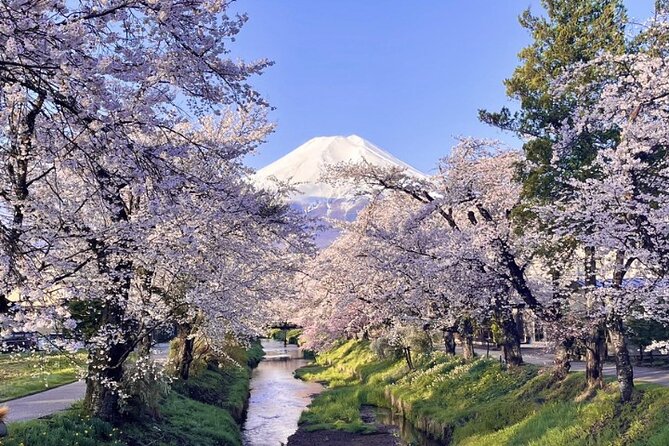
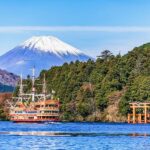
Oishi Park sits on the northern shore of Lake Kawaguchi, one of the five lakes around Mount Fuji. Its main appeal is the open view: lake in front, countryside around you, and Mount Fuji rising behind when the weather cooperates.
The planned visit lasts about one hour. That is enough to walk through the park, take photographs, and enjoy the view, but not enough for a slow wander. Admission is not included, although the supplied details do not state a separate entrance fee.
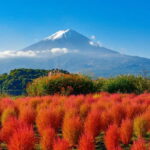
The park changes with the seasons. Cherry blossoms bring spring color, lavender is a summer draw, red leaves mark autumn, and pink broom grass adds another seasonal display. These plantings give the stop more to offer than a single Fuji photograph.
Weather is the key variable. Mount Fuji may be partly hidden or not visible at all, particularly when clouds gather. The tour requires good weather, and if poor conditions lead to cancellation, you are offered another date or a full refund.
I would treat Oishi Park as a chance to see Fuji, not a promise of a perfect postcard. Even when the mountain is hidden, you still have Lake Kawaguchi and the park itself. But if Fuji is your only reason for booking, a day with a clear forecast is worth seeking.
Oshino Hakkai and Fuji’s clear spring water
Oshino Hakkai is the most distinctive stop on the route. It is a group of eight natural spring ponds in Oshino village, fed by snowmelt from Mount Fuji. The water is famous for its clarity, and each pond has its own appearance and color.
The site is recognized as a designated natural monument and forms part of the Mount Fuji World Cultural Heritage area. That gives the visit more weight than a quick photo stop. You are seeing a place tied directly to Fuji’s water system, local tradition, and religious importance.
The planned stay is two hours. That is the longest nature stop, and it gives you time to view the ponds, walk through the traditional village, and look around the restaurants and souvenir shops. You can also see thatched-roof houses, which add a rural Japanese feel to the visit.
The ponds are linked to the legend of an eight-headed dragon, reflected in the name Oshino Hakkai. You do not need to know the mythology to enjoy the place, but the story adds a useful layer to what might otherwise seem like eight pretty pools.
You should take care around the water and follow local signs about drinking. The description says visitors can drink directly from the ponds, but it does not identify which pond or outlet is intended for that purpose. Ask your guide before filling a bottle.
Oshino Hakkai is also where the group schedule can affect your experience. Two hours sounds generous compared with Oishi Park, but it can pass quickly if you want photographs, food, shops, and the ponds. Keep track of the meeting time, and do not let a crowded path or a snack stop make you late.
Koedo Kawagoe and old Tokyo-style streets
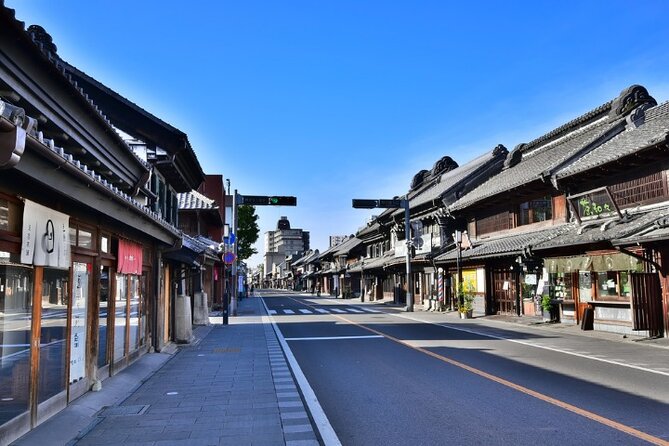
The final major stop is Koedo Kawagoe, about 30 kilometers north of Tokyo in Saitama Prefecture. The name means Little Edo, a reference to the town’s preserved Edo-period character.
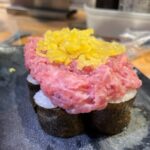
At Koedo Kurari and the surrounding area, you can explore narrow streets lined with traditional wooden buildings, shops, and restaurants. The town is also known for sweet-potato snacks called Kawagoe yaki. This is a pleasant change after the Fuji area, especially if you enjoy browsing local food and small shops more than visiting formal monuments.
The schedule allows about three hours, the longest single stop. That gives you room to walk at a reasonable pace and choose what interests you. The supplied information also points to Kawagoe Castle and Kitain Temple, which has more than 500 wooden Buddha statues. It does not confirm that the coach schedule includes admission or a guided visit to either site, so ask your guide how much of this area you can reach during your free time.
Admission at Koedo Kurari is listed as free. Meals, drinks, and personal purchases are not included, so plan to pay separately for lunch or snacks. Kawagoe’s sweet-potato food is one of the town’s simple pleasures, and this is a good place to use part of your own budget.
I see Kawagoe as a useful third act rather than the main reason to book this tour. If you want a full day focused on Edo buildings, temples, and local food, you would have more control by visiting Kawagoe independently. On this trip, you get a convenient introduction after the Fuji stops.


The real issue: road time and traffic
The strongest warning comes from the transport. One outing lost about two and a half hours to traffic, with roughly eight hours on the bus and less than two hours outside it. That is not a small inconvenience. It changes the tour from a full day of sightseeing into a long transfer with short stops.
The advertised stop times add up to six hours: one hour at Oishi Park, two at Oshino Hakkai, and three in Kawagoe. The remaining time is for travel, boarding, and group management. In ideal conditions, that is a reasonable balance. In heavy traffic, the stops can be cut sharply.
Motion sickness is another practical concern. A recent departure included many people feeling ill, and the operator only raised motion-sickness medicine the day before. If you are prone to sickness, bring your own medication before departure and choose a seat that helps you feel comfortable. The vehicle is air-conditioned, but that does not remove the effects of winding roads or stop-and-go traffic.
The tour’s 3.8 rating from four ratings reflects this split. One rating gave the day five stars and praised the reasonable price, careful planning, and competent tour leader and driver, while noting that the mini-coach felt a little small. Lower ratings focused on traffic, limited time outside, and motion sickness.
That range tells me the tour works best when the road conditions cooperate. It is not a guaranteed failure, but it is not a traffic-proof plan either.
Is $85.02 good value?
At $85.02 per person, the price is attractive for a 10-hour outing that includes return transport, an air-conditioned vehicle, and a professional English or Chinese-speaking guide. You are paying for convenience: one booking connects three locations that are spread across different parts of the region.
The value is strongest if you are staying in Tokyo for a short time and want to see Mount Fuji country without working out several train and bus connections. The tour also removes the need to navigate local roads or coordinate a return from Kawaguchiko, Oshino, and Kawagoe.
The value drops if traffic cuts the sightseeing time. You could spend most of the day in a coach and still pay separately for food, drinks, and any admission costs. A private vehicle would offer more control, but it would cost far more. Independent rail travel may give you a better day in one destination, though it would not reproduce this exact three-stop route as easily.
I would compare the price with your priorities. If you want breadth, this is a fair deal. If you want depth, choose one area and spend the day there.
Who will get the most from this tour?
This outing suits you if you want a broad first look at the Fuji region and nearby historic towns. It is also useful if you are comfortable with a fixed schedule, group departures, and the chance that weather or traffic will change the day.
Families and first-time visitors may like the simple structure. You meet in Shinjuku, ride in one vehicle, receive help from a guide, and return to the same place. Most people can participate, and the tour is near public transportation.
It is less suitable if you dislike coaches, need long breaks, or want to set your own pace. It is also a poor match for anyone booking solely for a guaranteed Mount Fuji photograph. The mountain is weather-dependent, and the tour cannot control traffic.
A full group of 45 can feel very different from a small group of eight. You may need patience at meeting points, especially when the schedule is tight. The positive side is that a larger group helps keep the price low.
Practical booking advice
Book only after checking the meeting point carefully. The current location is Shinjuku L Tower at Exit 20, not simply Shinjuku Station in general.
Wear comfortable shoes for walking around the ponds, village paths, and Kawagoe streets. Bring water and money for meals, drinks, souvenirs, and any personal purchases, since these are not included.
Pack for changing conditions. Fuji-area weather can affect visibility and may lead to cancellation. The cancellation terms are generous if your plans change: you can receive a full refund by canceling at least 24 hours before the 8:00 a.m. start. Changes or cancellations inside that 24-hour window are not accepted for a refund.
The operator also needs at least eight people for the tour to run. If that minimum is not reached, you are offered another date or experience, or a full refund.
Should you book this Fuji and Kawagoe day trip?
Book it if you want maximum variety for one reasonable price and accept that the day may involve a lot of road time. Oishi Park, Oshino Hakkai, and Kawagoe offer genuinely different experiences, and the guide plus return transport make the route easy to manage.
Skip it if you need a relaxed day or have only one clear goal, such as spending quality time around Lake Kawaguchi. In that case, a train or a destination-specific outing may give you more time on foot and less time in traffic.
My practical call: book with a clear-weather forecast, prepare for motion sickness, and think of this as a sampler of Fuji country and Kawagoe. It is a useful introduction, but the schedule and traffic risk keep it from being the best choice for slow, detailed sightseeing.
FAQ
Where does the tour meet?
The meeting point is Shinjuku Station Exit 20 at Shinjuku L Tower, 1-chōme-6-1 Nishishinjuku, Shinjuku City, Tokyo 160-0023, Japan.
What time does the tour start?
The tour starts at 8:00 a.m.
How long does the experience last?
The tour lasts approximately 10 hours and returns to the meeting point.
What places does the tour visit?
The route includes Oishi Park, Oshino Hakkai, and Koedo Kawagoe. The Kawagoe portion is associated with Koedo Kurari and the town’s old-style streets.
What is included in the price?
The price includes an air-conditioned vehicle, round-trip transport, and a professional English or Chinese-speaking guide.
Are meals and drinks included?
No. Beverages, meals, and other personal purchases are not included.
Can I cancel for a full refund?
Yes. You must cancel at least 24 hours before the local start time for a full refund. Poor weather or failure to reach the minimum group size can also lead to another date or a full refund.
More Mt Fuji Day Trips in Tokyo
More tours in Tokyo we've reviewed



Mt Fuji Day Trips, compared.
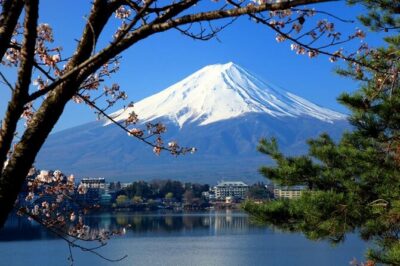 ★ 5.0Mt Fuji and Hakone 1-Day Bus Tour Return by Bullet TrainFrom $163
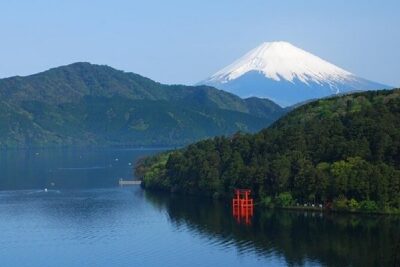 ★ 4.0Mt Fuji & Hakone Cruise, Drum Show Bullet Train 1 Day from TokyoFrom $149
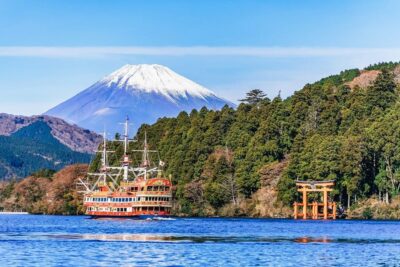 ★ 4.4Tokyo Mt Fuji 5th St & Hakone Cruise Bus Tour w/Bullet TrainFrom $15410 hours
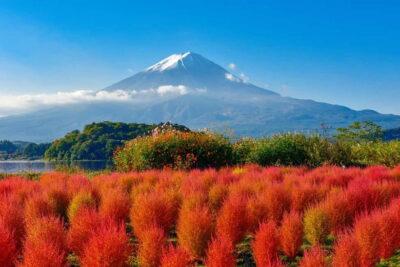 ★ 4.5From Tokyo: Mount Fuji Full-Day Sightseeing TripFrom $6810 hours
 ★ 4.7Tokyo: Mt. Fuji Tour, Hakone Ropeway, Owakudani, Lake AshiFrom $5410 hours
 ★ 4.4Tokyo:Mt.Fuji,Kawaguchiko Oishi Park,Arakurayama Sengen ParkFrom $5410 hours