
Reviewed · SUSHI MAKING CLASSES
Tokyo: Toyosu Market Tour with Tuna Cutting and Sushi Making
Toyosu Market is where this tour earns its keep. You enter a working fish market that is not normally open to tourists, watch more than 500 fish buyers at work, then follow one block of tuna from the market to your own sushi lunch. It is a rare look at the business behind the plate.
I like the direct connection between market and meal, and I like the small group, capped at six people. Guides Amy and Risako have been singled out for clear explanations and warm help. The main drawback is the price, $309 per person, plus transport, and the four-hour schedule leaves little room for a slow visit at either market.
In This Review
- The key points at a glance
- Starting at Shijomae Station
- Inside Toyosu’s working fish trade
- From market floor to Tsukiji Outer Market
- The tuna cutting lesson in Azabujuban
- Making and eating your own sushi
- What $309 buys you
- Timing, transport, and practical limits
- Who will enjoy this most
- Should you book the Toyosu tuna tour?
- FAQ
- Where does the tour begin?
- Where does the tour finish?
- How long does the experience last?
- Is transportation included?
- Is the tour conducted in English?
- Can I take photographs inside Toyosu Market?
- Is the sushi lunch included?
- Is the tour suitable for young children or wheelchair users?
The key points at a glance
- Enter working Toyosu Market: See the professional fish trade up close in an area most tourists cannot visit.
- Follow one tuna from purchase to plate: Learn how a block is cut into individual portions before eating it yourself.
- Make sushi with a chef: Use the tuna in several ways and try shaping your own nigiri.
- Visit Tsukiji Outer Market: Set aside an hour for walking, sightseeing, and personal shopping.
- Keep the group small: A maximum of six people gives you a better chance to ask questions.
- Plan for walking and extra costs: Transport and personal purchases are not included, and comfortable shoes matter.
Starting at Shijomae Station
Your meeting point is in front of the gate at Shijomae Station, the practical starting point for Toyosu Market. You meet your English-speaking guide there before heading into the market area.
This is an early, purposeful start to the experience. The point is not simply to look at seafood stalls. You are seeing the place where buyers come to purchase fish for restaurants and shops, with the guide explaining how tuna reaches the sushi counter.
The group size matters here. With no more than six people, you can stay close to the guide and ask questions without trying to speak over a large crowd. That also helps when you are moving through a working market, where the focus is business rather than tourism.
Wear shoes you can walk in for several hours. The tour includes Toyosu, Tsukiji, public transport, and the later sushi class, so thin sandals or uncomfortable footwear would be a poor choice.
A few more Tokyo tours and experiences worth a look
Inside Toyosu’s working fish trade
The Toyosu visit lasts about 45 minutes. You will see more than 500 fish buyers and get a look at a side of Tokyo’s seafood trade that ordinary sightseeing does not usually provide.
That restricted access is the main reason to book this experience instead of simply visiting a public food hall. Toyosu is not presented as a staged cooking attraction. It is a professional market, and the value comes from seeing where restaurant tuna begins its journey.
Your guide helps put the activity into context. You learn where the tuna served in restaurants comes from and how buyers handle the product before it reaches chefs. The supplied details do not promise a tuna auction or a particular kind of fish display, so I would book this for access and explanation rather than for one specific spectacle.
Photography is prohibited inside Toyosu Market. Take that rule seriously. One account describes being able to stop with a vendor to ask questions and take photographs, but the general instruction for the market is that photography is not allowed inside. Follow your guide and the market’s directions rather than assuming every area permits cameras.
This part can feel brisk. Forty-five minutes is enough to see the market with a guide, but not enough to wander at your own pace. That is a fair trade for a four-hour tour, especially since the market is only one part of the day.
From market floor to Tsukiji Outer Market
After Toyosu, the group takes a bus for about 15 minutes to Tsukiji Outer Market. You then have roughly one hour to walk, sightsee, and shop.
Tsukiji Outer Market gives the tour a different rhythm. Toyosu is about the professional supply chain. Tsukiji is the public-facing food district, where you can browse shops and decide how to use your free time.
The shopping is not included in the tour price, so bring a little extra money if you want to buy food or souvenirs. The supplied details do not specify particular vendors or a shopping allowance, and your guide cannot turn one hour into a full market expedition. Treat this as a useful introduction, not a dedicated shopping tour.
I like the contrast between the two stops. At Toyosu, you see the trade that supplies restaurants. At Tsukiji, you see how seafood and food culture are presented to the public. Together, they give you a clearer picture than either market alone.
Keep an eye on the clock. The group must leave for the next part of the experience, and an hour passes quickly if you stop at every stall. If shopping is your top priority, you may want to return to Tsukiji another day.
The tuna cutting lesson in Azabujuban
After Tsukiji, the tour uses public transport for about 30 minutes to reach Azabujuban. The final class lasts roughly 1.5 hours and takes place at Sanpia Azabujuban, the finishing point.
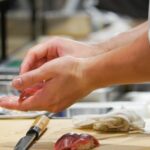
Here the experience shifts from observation to hands-on work. The tuna purchased through the Toyosu portion is cut from a block into individual portions. You see the process that turns a large piece of fish into the slices and portions used for sushi.
That is more interesting than a standard sushi-making class because you are not starting with neatly prepared ingredients. You are learning about the step before the familiar plate arrives at your table.
The tour describes this cutting job as a special skill that even young sushi chefs are not allowed to perform. You should not expect to become a professional cutter in one lesson. The point is to watch the technique, understand the care involved, and take part under the sushi chef’s guidance.
The chef also gives a lecture, and the information provided does not limit it to knife handling. You learn more about tuna, its path to restaurants, and the work involved in preparing it. Daniel specifically praised the chance to learn both tuna cutting and nigiri-making, which is a good clue about the class’s balance between explanation and participation.
Making and eating your own sushi
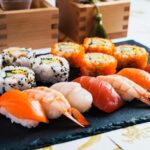
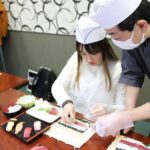
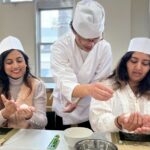
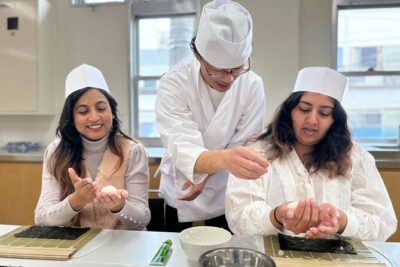
The class ends with lunch made from the tuna you have seen and helped prepare. You eat it in several forms and try your hand at making sushi, including nigiri.
This is the strongest part for anyone who likes food with a story. You are not simply served a sushi lunch and told where it came from. You have followed the ingredient from a professional market to the chef’s work area, then handled it yourself.
The sushi chef is described as fun and enthusiastic, which matters in a class where technique can feel intimidating. You get a special chance to work with the chef rather than only watch a demonstration.
Still, keep your expectations sensible. The supplied details do not promise a full professional cooking course, a large menu, or unlimited food. The included meal is sushi and tuna lunch, and the class centers on tuna, cutting, and nigiri. That focus is a strength if tuna is your favorite fish, but it may feel narrow if you want a broad Japanese cooking lesson.
Tell the operator about allergies or foods you cannot eat in advance. This is especially important here because seafood is central to both the market visit and the meal. The tour is not suitable for children under six, pregnant women, or wheelchair users.
Other shopping tours in Tokyo

What $309 buys you
At $309 per person, this is a costly Tokyo food activity. You also pay your own transportation fees and personal expenses, including anything you buy at Tsukiji.
The price makes more sense if you value access rather than simply lunch. You are paying for a small English-speaking group, a guide through a market that tourists generally cannot enter, an explanation of the tuna trade, a sushi chef’s lecture, the tuna lunch, and hands-on preparation.
If you only want to eat sushi, you can spend far less in Tokyo. If you only want to browse Tsukiji, you can do that independently. The value comes from combining the restricted market visit with a chef-led lesson and connecting the two parts through the tuna itself.
The six-person limit is another part of the calculation. In a larger group, the market explanation and cutting demonstration could be harder to follow. Here, you have a better chance to ask about what you are seeing and get help during the sushi-making portion.
I would not book this as a bargain activity. I would book it as a specialist experience for someone who wants to understand sushi from the supply side as well as the dining side.
Timing, transport, and practical limits
The stated duration is four hours. The working schedule includes about 45 minutes at Toyosu, 15 minutes by bus, one hour at Tsukiji, 30 minutes on public transport, and 1.5 hours in Azabujuban.
That adds up to a full morning or afternoon with little spare time. Transport is part of the movement between stops, but the fare is not included. You should budget for those tickets and avoid planning another fixed appointment immediately afterward.
The tour finishes at Sanpia Azabujuban rather than returning you to Shijomae Station. That is useful if you want to continue around Azabujuban, but it means you should note the ending point when arranging the rest of your day.
The tour runs with an English-speaking guide. Amy and Risako are names connected with the experience, and the personal guidance is important because the market rules and transport changes are easier to manage with someone leading the way.
Comfortable walking shoes are essential. Smoking is not allowed, and photography inside Toyosu Market is prohibited. Food allergies and restrictions should be shared ahead of time, not at the last minute.
You can cancel up to 24 hours before the activity for a full refund, and the reserve-now, pay-later option keeps you from paying at the time of booking. Those policies make the high upfront price a little easier to manage, though they do not remove the need to plan transport and market etiquette carefully.
Who will enjoy this most
I would choose this for a serious sushi fan, a first-time visitor who wants access beyond the usual sightseeing route, or anyone curious about the people and work behind Tokyo’s seafood restaurants.
It also suits families with older children. One account describes children having fun and seeing a great deal, but the minimum age is six, and the walking and food focus may not suit every child. A youngster who likes fish, food preparation, and short guided visits could have a good time.
This is less suitable if you dislike raw fish, have seafood restrictions that make the meal difficult, or want a relaxed market stroll. It is also not suitable for wheelchair users or pregnant women according to the activity information.
You should think twice if you mainly want photographs. The Toyosu portion has a no-photography rule inside the market, so the experience is about seeing and learning rather than collecting images.
Should you book the Toyosu tuna tour?
Book it if you want to see the working side of Tokyo’s fish trade and then eat the same ingredient after learning how it is prepared. The link between Toyosu, Tsukiji, tuna cutting, and sushi-making gives the day a clear purpose.
Skip it if $309 feels too high for a four-hour activity, if you want extensive free time at Tsukiji, or if you are looking for a general Japanese cooking class rather than a tuna-focused lesson.
For the right person, this is a memorable use of half a day. You see a restricted market, meet the food at its source, and gain a practical respect for the skill behind a simple piece of nigiri. That is a stronger experience than another restaurant meal, but only if you care about how that meal comes to the table.
FAQ
Where does the tour begin?
The meeting point is in front of the gate at Shijomae Station.
Where does the tour finish?
The tour finishes at Sanpia Azabujuban after the sushi class.
How long does the experience last?
The activity lasts four hours. The schedule includes visits to Toyosu Fish Market and Tsukiji Outer Market, transport between locations, and a 1.5-hour sushi class.
Is transportation included?
No. Transportation fees are not included. The schedule uses a bus from Toyosu to Tsukiji and public transport to Azabujuban.
Is the tour conducted in English?
Yes. The tour has a live English-speaking guide.
Can I take photographs inside Toyosu Market?
Photography is prohibited inside Toyosu Market. Follow the market’s rules and your guide’s instructions.
Is the sushi lunch included?
Yes. Sushi and a tuna lunch are included, along with a lecture from the sushi chef. You also have the chance to cut tuna and make sushi.
Is the tour suitable for young children or wheelchair users?
The activity is not suitable for children under six or wheelchair users. It is also listed as unsuitable for pregnant women.
More Markets in Tokyo
More Shopping Tours in Tokyo
More Sushi Making Classes in Tokyo
More tours in Tokyo we've reviewed
Sushi Making Classes, compared.
 ★ 5.0Sushi Making Tokyo Roll and Authentic Japanese Sushi ClassFrom $59
 ★ 4.9Tokyo: Roll and Authentic Sushi Making Class in AsakusaFrom $581h 40m
 ★ 5.0Make Sushi and Create Unforgettable Memories in TokyoFrom $79
 ★ 4.9Tokyo: Sushi Making Class in a Happi Coat near a Famous SpotFrom $421h 30m
 ★ 5.0Tokyo Sushi Making Class in Tsukiji with Professional ChefFrom $49
 ★ 5.0Tokyo Night Foodie Tour in Shinjuku – Seasonal Sushi, Wagyu BeefFrom $111