
Reviewed · TOURS
Tokyo: Tour Privado por Tokio en español
Tokyo reveals itself best through its neighborhoods, and this private Spanish-language tour covers four very different ones in a single day. I like the mix of old Tokyo and modern pop culture, from Senso-ji’s temple gates and traditional sweets to Akihabara’s anime shops and maid cafes. I also like the free view from Shinjuku City Hall’s 45th-floor observatory, a smart way to see the city without adding another ticket.
The main concern is the pace. Eight hours sounds generous, but four districts with roughly two hours each leave little room for long meals, shopping, or slow wandering. One booking also reported a guide no-show and a delay before help arrived, so confirm your meeting details carefully before the day begins.
In This Review
- Key points at a glance
- Why this route works for a first Tokyo day
- Asakusa and the Kaminarimon Gate
- Ueno Park, cherry trees, and temple paths
- Akihabara and Tokyo’s pop culture engine
- Shinjuku City Hall and the 45th-floor view
- Kabukicho, Godzilla, and Omoide Yokocho
- What the private format is worth
- Spanish-speaking guides and service reliability
- Who should book this Tokyo tour
- Should you book it?
- FAQ
- How long does the private Tokyo tour last?
- How many people can join the private group?
- What neighborhoods are included?
- Is the tour conducted in Spanish?
- Is hotel pickup included?
- Are food and drinks included?
- Is public transportation included in the price?
- What should you bring?
- Can I cancel for a full refund?
Key points at a glance
- Four Tokyo districts in one day: Visit Asakusa, Ueno, Akihabara, and Shinjuku, each with a different character.
- Spanish from start to finish: A private guide explains local customs, samurais, cherry blossoms, and everyday Japanese culture in your language.
- Classic sweets in Asakusa: Look for mochi, dorayaki, and melon pan near Senso-ji.
- Akihabara beyond electronics: Anime, manga, video games, maid cafes, and Japanese pop culture all come into play.
- A free Shinjuku view: The Tokyo Metropolitan Government Building observatory sits on the 45th floor.
- Best for small groups: The $338 rate covers up to five people, making the price more sensible when shared.
Why this route works for a first Tokyo day
Tokyo can feel like a collection of separate cities. Asakusa is temple-centered and traditional. Akihabara is packed with anime, manga, electronics, and games. Ueno brings parks, cherry trees, and temples. Shinjuku shifts the mood again, with high-rise views, nightlife, giant screens, and Kabukicho.
That variety is the real reason to consider this tour. Instead of spending a full day in one neighborhood, you get a broad introduction to Tokyo’s older customs and newer obsessions. A Spanish-speaking guide can also explain details that are easy to miss when you move on your own, including references to samurai culture, Japanese traditions, and the meaning of cherry blossoms.
I would think of this as a Tokyo orientation day, not a slow, detailed study of each area. You will see the main sights and get context, but you will not have unlimited time for every shop, temple building, food stall, or museum.
The tour is private, with room for up to five people, and hotel pickup is usually arranged. If a hotel pickup is not practical, the meeting point may be a nearby station. That matters in Tokyo, where getting from one district to another can take time even when the train system works well.
If you're still narrowing it down, here are other tours in Tokyo we've reviewed.
Asakusa and the Kaminarimon Gate
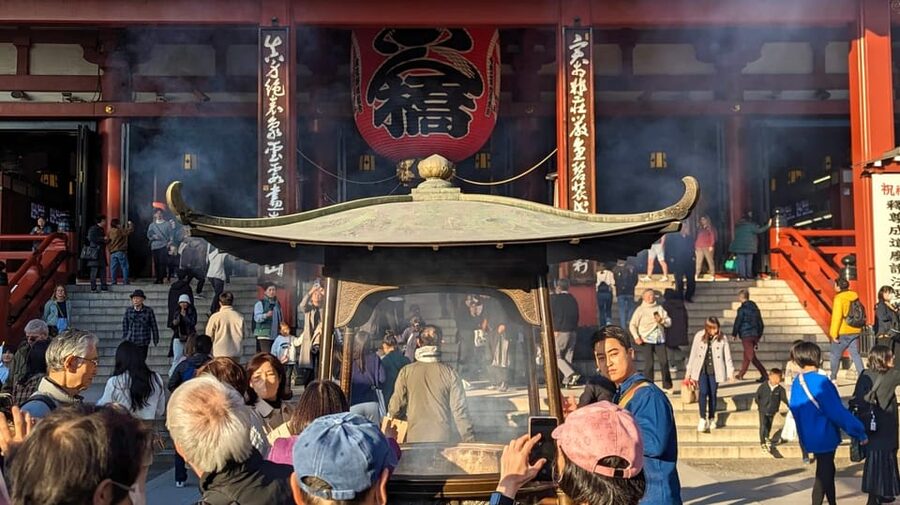
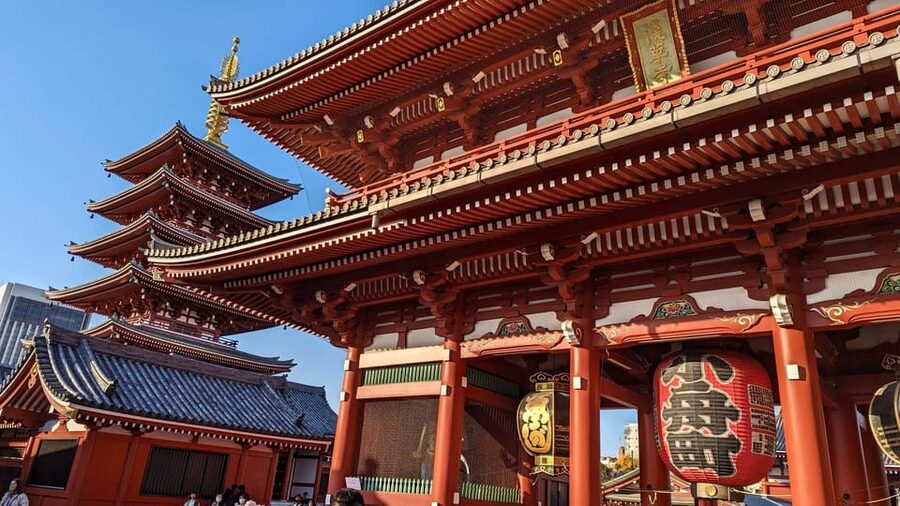
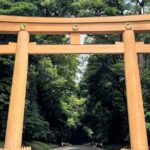
The day begins in Asakusa, one of the best places in Tokyo to see the city’s traditional side. The famous Kaminarimon Gate creates an obvious starting point for photographs, with its large lantern and strong visual connection to Senso-ji Temple.
A guide adds value here because Asakusa is not just a photo stop. You can learn how the temple area is organized, what visitors do before entering, and how Buddhist and local customs appear in the daily rhythm of the neighborhood. The tour also places Japanese tradition, samurais, and seasonal customs into the wider story of Tokyo.
Senso-ji is the main attraction, and the two-hour block should give you time to see the temple area without rushing through in a few minutes. The exact balance depends on the guide and the crowd, but you should expect a guided visit rather than a long private meditation in every corner.
Food is part of the Asakusa experience. The tour calls attention to mochi, dorayaki, and melon pan. These are useful choices for a first taste of Japanese sweets:
- Mochi: Soft rice cakes that may come with sweet fillings.
- Dorayaki: Round pancakes usually made with a sweet filling.
- Melon pan: A sweet bread with a crisp, cookie-like top. Despite its name, it is not necessarily melon-flavored.
Bring cash for snacks and small purchases. Food is not included, so you pay directly for anything you eat. I would also avoid treating the food stops as a full lunch unless your guide confirms the plan. The schedule has a lot of ground to cover.
Ueno Park, cherry trees, and temple paths
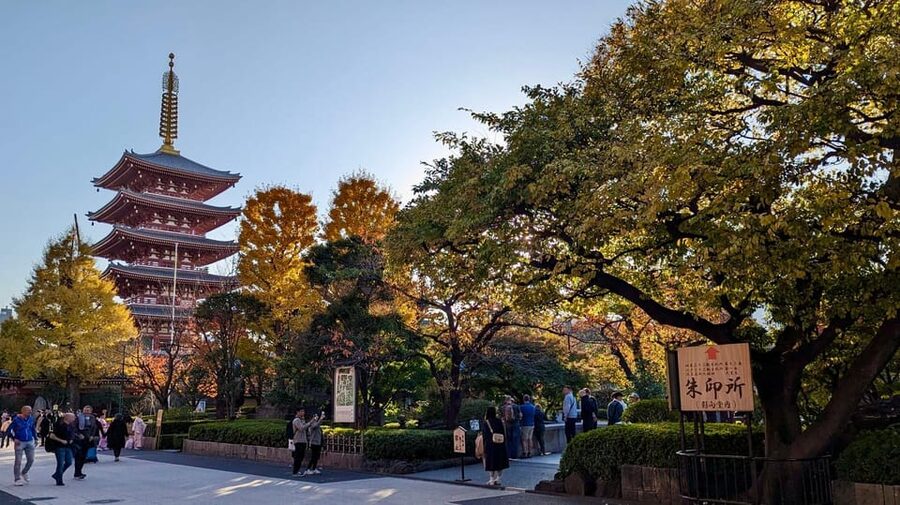
Ueno follows as another two-hour guided stop. Ueno Park is best known for its cherry trees and Sakura Avenue, making this part especially appealing during blossom season. The timing of the flowers changes each year, so you should not book the tour expecting the trees to be in bloom unless your dates line up with the season.
Even without blossoms, the park gives the route some breathing room after the dense streets of Asakusa. You can see popular temples and learn how seasonal celebrations fit into Japanese life. The guide can help connect the cherry blossom tradition to the broader cultural themes introduced earlier in the day.
This is one place where your expectations should stay realistic. A two-hour visit is enough for an introduction and some photographs, but probably not enough for every path and temple in the park. The tour is built around coverage, not a long picnic or an unhurried park walk.
I like the contrast between Asakusa and Ueno. Asakusa gives you a strong temple setting and old-town atmosphere. Ueno offers open space, trees, and a more relaxed setting. Together, they help you see that traditional Tokyo is not one single style.
Akihabara and Tokyo’s pop culture engine
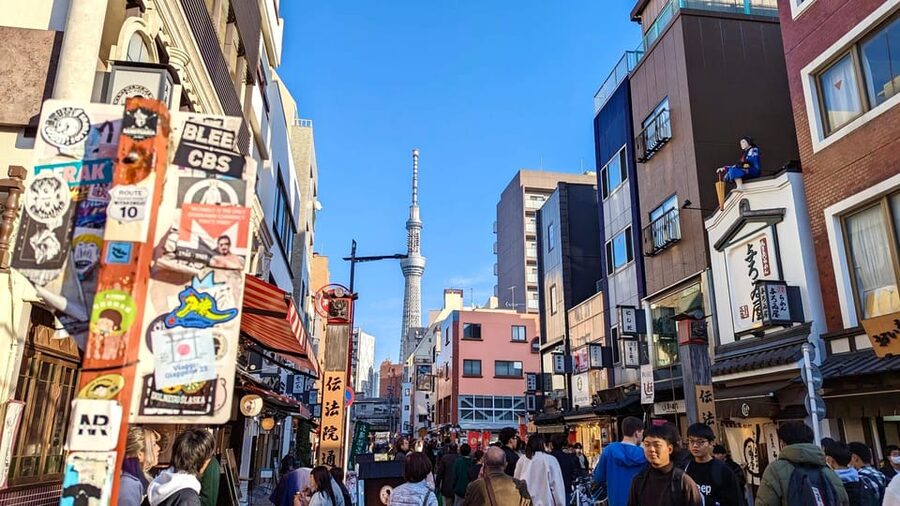
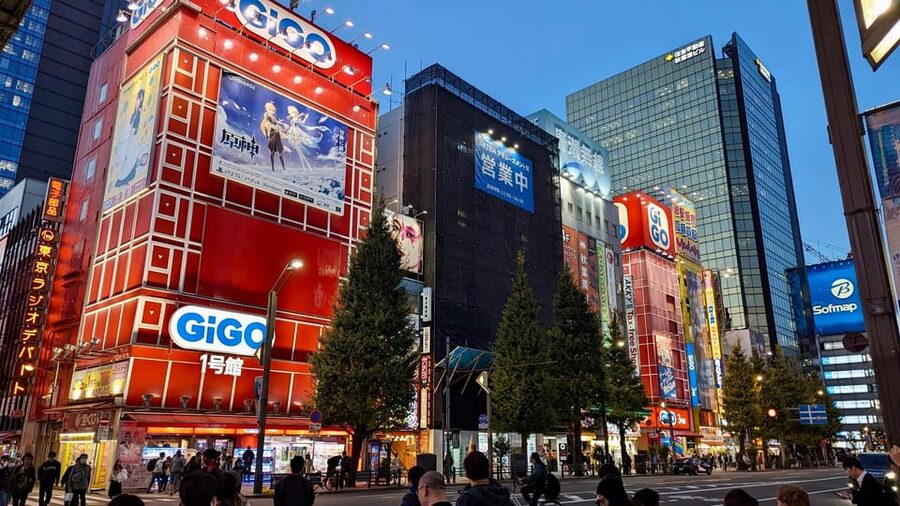
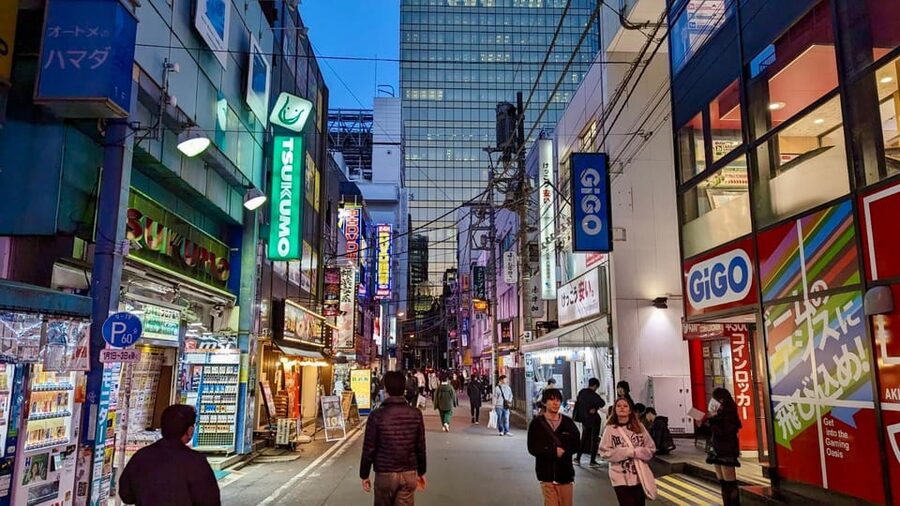
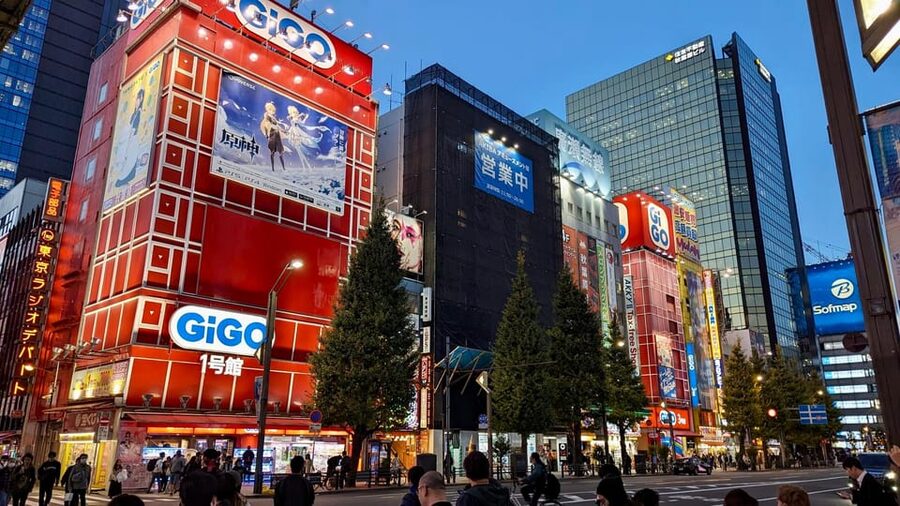
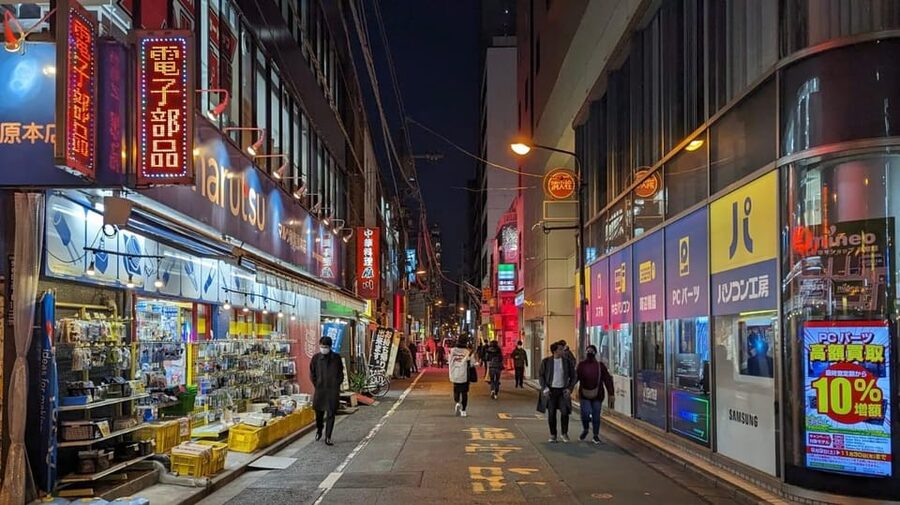
Akihabara changes the subject completely. This is the district for anime, manga, video games, and electronics. If you arrive expecting only quiet shrines and old wooden buildings, the walls of color, signs, stores, and character goods will feel like a sharp turn.
The value of a guide here is not simply finding an electronics shop. Akihabara can be confusing, especially if you do not follow anime or manga closely. A Spanish-speaking guide can explain the district’s role in Japanese pop culture and point out the difference between its major interests.
The tour also introduces maid cafes, where staff dress in themed uniforms and use a playful service style. The description presents the cafe staff as friendly young women, but you should understand this as a cultural stop, not a guaranteed private cafe visit or a meal. No cafe admission, food, or drink is included in the price.
If you enjoy video games, anime, manga, or Japanese electronics, you may want more than two hours here. That is the tradeoff. The private format lets you ask questions and focus on what interests your group, but the overall route still has to continue to Ueno and Shinjuku.
The stated day plan places two hours in each district, while the written route description discusses Akihabara before Ueno. Since the four areas are all included, confirm the exact order and meeting plan with the provider. The order may affect your energy, shopping time, and meal plans.
Shinjuku City Hall and the 45th-floor view
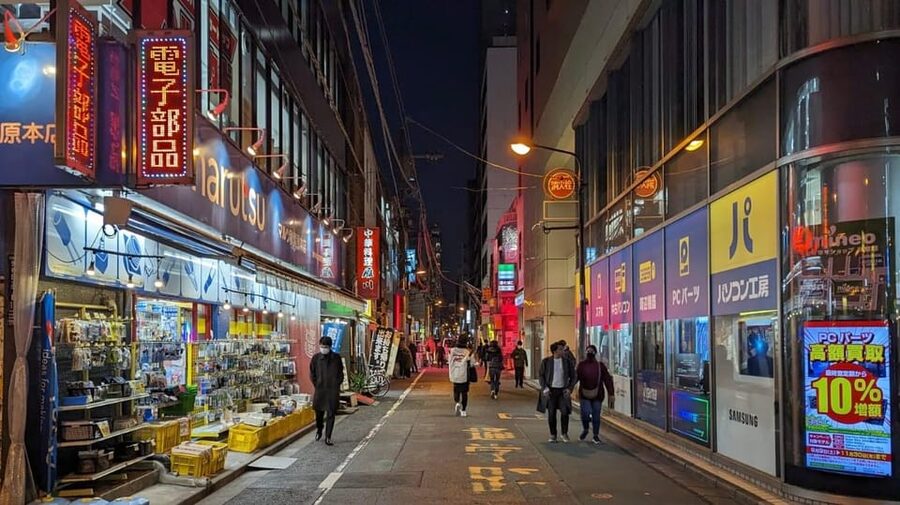
Shinjuku is the final major district, and it gives the tour its best high view. The observation deck on the 45th floor of the Tokyo Metropolitan Government Building offers a broad look over Tokyo.
This is a particularly good value feature because the view does not add a separate observatory ticket to the advertised tour price. You get a chance to understand Tokyo’s vast scale after seeing several neighborhoods at street level. From above, the city’s spread makes more sense than it does when you are moving through individual train stations and shopping streets.
Do not expect a private rooftop or an intimate viewing room. It is a city hall observation deck, and conditions can vary. Still, it is a practical stop for photographs and orientation, especially if you want a major Tokyo view without paying for a premium tower observatory.
The guide can also help you connect what you see from above to the neighborhoods visited earlier. That connection is useful: Asakusa, Ueno, Akihabara, and Shinjuku are not just four random stops. They show different parts of the same enormous city.

Kabukicho, Godzilla, and Omoide Yokocho
The day ends around Kabukicho, Shinjuku’s famous entertainment district. This is where Tokyo’s tone becomes more theatrical. You can see the Godzilla feature, the huge 3D screen, and Omoide Yokocho, also called Memory Lane.
Omoide Yokocho is known for its narrow alley setting and small food businesses. Since food is not included, this may be a natural place to ask your guide about dinner options, but do not assume a meal is part of the tour. Your guide can finish the sightseeing here, leaving you to continue on your own if you want to explore.
Kabukicho is also Tokyo’s best-known adult entertainment district. That point deserves clear attention, especially for families. The daytime and evening atmosphere can differ, and some signs, venues, and street activity may not suit every group. You can still see the major public sights, but decide in advance how much time you want to spend in the area after the formal tour ends.
The Godzilla feature and giant screen make good photo stops, while Omoide Yokocho offers a much smaller-scale setting. That contrast gives the final section some personality: one moment is oversized modern spectacle, the next is a narrow lane of compact eateries.
What the private format is worth
The price is $338 for a group of up to five people. For one person, that is expensive. For five people, it works out to about $68 per person for eight hours, before food and transport costs. For a couple, the per-person cost is much higher, so the value depends on how much you want personal guidance in Spanish.
The strongest benefit is flexibility within a private group. You can ask questions about customs, samurais, cherry blossoms, anime, or local neighborhoods without sharing the guide with strangers. Pickup also removes some of the work of arranging the first meeting, though you still pay your own transport during the day.
Transport is not included. That is important in Tokyo, since four districts require movement between locations. You receive assistance with public transport in Japan, but the tickets or fares remain your responsibility. Carry cash, as requested, for transport, snacks, and any small purchases.
Food is also separate. With four stops and a full eight-hour schedule, plan how you will eat. If you want a proper sit-down lunch, ask the guide how much time the route allows. Otherwise, the sweets in Asakusa and a later meal in Shinjuku may fit the day better.
Spanish-speaking guides and service reliability
A Spanish-speaking guide is the central reason to choose this experience. Tokyo’s etiquette, food names, temple practices, and pop culture references can be hard to sort out quickly. Having explanations in Spanish makes the day less tiring and gives you more freedom to ask simple questions.
Ignacio is one guide specifically praised for excellent information and a friendly manner. Another guide was described as warm and personal, with the kind of easy connection that makes a long day feel more comfortable. Those details suggest that the human side of the experience can be a major strength.
There is one serious caution. A booking report describes a guide who did not appear, followed by more than an hour before the problem was addressed after a complaint. That is not a small inconvenience on an eight-hour private tour. Contact the provider before the date, confirm the pickup location and time, and keep the booking contact information available.
The overall published rating is 4.3 from four ratings, which points to a generally positive experience but also a small sample and an important service warning. I would not let one poor incident cancel the whole idea, but I would take the confirmation step seriously.
Who should book this Tokyo tour
I would recommend it most to:
- Spanish-speaking first-time visitors who want a broad introduction to Tokyo.
- Families or friends who can share the $338 group rate.
- People who want help with trains and neighborhood changes.
- Visitors interested in both temples and anime culture.
- Travelers who prefer a private guide over a large group.
- Anyone who wants cultural explanations without managing the day alone.
I would be more cautious if you use a wheelchair, since the activity is not suitable for wheelchair users. I would also think twice if your priority is long shopping sessions, extended temple visits, or a relaxed lunch. The route covers a lot, but it does so at a steady pace.
The tour runs in most weather conditions, except during an earthquake or extreme weather event. Wear practical shoes and bring cash. Pets and drones are not allowed, and basic respect for temple areas and public spaces matters throughout the day.
Should you book it?
Book this tour if you want to see Tokyo’s major contrasts in one Spanish-language day and can share the group price with several people. The combination of Senso-ji, cherry trees, Akihabara, the free Shinjuku view, and Kabukicho gives you a useful first look at the city.
Skip it if you want a slow neighborhood day or if transport and meals need to be included. Before paying, confirm the guide, pickup time, and exact meeting point. The cancellation policy allows a full refund up to 24 hours before the start, and the reserve-now, pay-later option keeps your plans flexible, but good communication remains the key practical step.
FAQ
How long does the private Tokyo tour last?
The tour lasts eight hours.
How many people can join the private group?
The price covers a private group of up to five people.
What neighborhoods are included?
The route includes Asakusa, Ueno, Akihabara, and Shinjuku, with the final area around Kabukicho.
Is the tour conducted in Spanish?
Yes. The live guide speaks Spanish, and the activity is designed as a Spanish-language tour.
Is hotel pickup included?
Hotel pickup is included. Pickup is usually from your hotel or a nearby station.
Are food and drinks included?
No. Your food is not included, so you pay separately for sweets, meals, and drinks.
Is public transportation included in the price?
No. The guide assists you with transportation in Japan, but your transport costs are separate.
What should you bring?
Bring cash. You may need it for food, transport, and other personal expenses.
Can I cancel for a full refund?
Yes. You can cancel up to 24 hours in advance for a full refund.
More tours in Tokyo we've reviewed




Tours, compared.
 ★ 5.0Mt Fuji and Hakone 1-Day Bus Tour Return by Bullet TrainFrom $163
 ★ 5.01-Day Tokyo Bus TourFrom $129
 ★ 5.0Tokyo: Shinjuku Food Tour (13 Dishes at 4 Local Eateries)From $86
 ★ 4.4Tokyo Mt Fuji 5th St & Hakone Cruise Bus Tour w/Bullet TrainFrom $15410 hours
 ★ 5.0Flagship 2-Hours Official Street Go-Kart Tour – Tokyo Bay ShopFrom $642 hours to 2 hours 30 minutes (approx.)
 ★ 4.7Tokyo: Mt. Fuji Tour, Hakone Ropeway, Owakudani, Lake AshiFrom $5410 hours