
Reviewed · TOKYO
Tokyo Metropolis
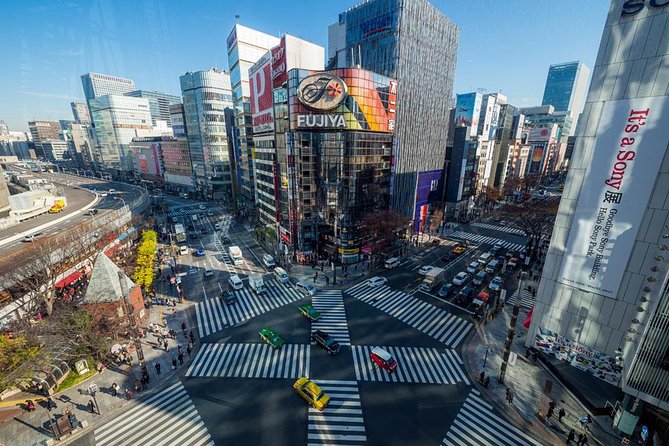
Tokyo is easy to photograph badly: point your camera at a tall building, press the button, and take home a picture that looks like everyone else’s. This 2.5-hour workshop teaches you to notice lines, reflections, people, and odd angles as you walk from Shinbashi through Shiodome, Ginza, and Yurakucho.
I like the carefully chosen route, which mixes polished towers with narrow Ginza lanes and the grand interior of Tokyo International Forum. I also like the personal instruction. Guides such as Stephane and Lukasz have helped photographers work on composition, camera settings, and the story behind an image. The main consideration is the focus: this is an urban architecture walk, not a broad introduction to Tokyo.
In This Review
- Key points at a glance
- Why this Tokyo photo walk is worth your morning
- Meeting at Shinbashi’s steam locomotive
- Shiodome: one hour among steel and glass
- Ginza beyond the main shopping streets
- Tokyo International Forum’s dramatic interior
- What the photography instruction covers
- Is $158.52 a good value?
- Who will enjoy this most
- Practical details that affect your choice
- Should you book the Tokyo photography workshop?
- FAQ
- Where does the photography workshop start?
- What time does the tour begin?
- How long does the experience last?
- How far do you walk?
- Which Tokyo districts does the route visit?
- What photography instruction is included?
- Is the workshop suitable for beginners?
- Is the tour refundable if I cancel?
Key points at a glance
- Start beside a steam locomotive: Meet at the SL Square outside Shinbashi Station, a clear and memorable starting point.
- Work on composition in Shiodome: Spend about an hour using steel, glass, reflections, and morning light as your subject.
- Find a different Ginza: The route leaves the grand avenues for narrow lanes, service entrances, cooks, wait staff, and salarymen at work.
- Finish beneath striking architecture: Tokyo International Forum offers 45 minutes of strong lines, curves, and dramatic interior views.
- Small group, practical advice: The experience is limited to six people, with booking priced at $158.52 for a group of up to two.
- Walk only about 1.3 miles: The distance is manageable, though you spend most of the time standing, framing, and taking pictures.
Why this Tokyo photo walk is worth your morning
I see this as a workshop first and a sightseeing tour second. You are not simply led to famous viewpoints and given time to snap away. The guide asks you to look at how a picture is built, then gives you time to try the idea yourself.
That difference matters in Tokyo. The city supplies plenty of visual material, but it can also overwhelm you. Signs, rail lines, towers, crowds, shop fronts, and overhead structures compete for attention. A good photography guide helps you decide what belongs in the frame and what should stay out.
The strongest part of the experience is its practical nature. You can ask about shutter speed, aperture, framing, reflections, or the use of people in a scene. The instruction is not limited to technical camera talk. Guides also help you think about mood, timing, negative space, patterns, and how an image can suggest a story.
The route is compact and efficient. You cover about 2 kilometers, or 1.3 miles, over roughly two and a half hours. That gives you time to stop often rather than rushing between distant sights. You should expect a steady walking pace with frequent pauses, not a long-distance hike.
If you're still narrowing it down, here are other tours in Tokyo we've reviewed.
Meeting at Shinbashi’s steam locomotive
The workshop starts at the steam locomotive in SL Square, outside the West Entrance of Shinbashi Station, at 10:00 a.m. The meeting point is useful because the locomotive is easy to recognize, even in a large station area.
Shinbashi is a fitting place to begin. It has a strong connection to Tokyo’s rail culture, while the nearby streets quickly shift into offices and high-rise development. From the first minutes, you move between older urban details and the clean geometry of the newer business districts.
You should arrive with your camera ready and your battery charged. The supplied information does not specify equipment requirements, so the sensible choice is the camera you already know how to use. A phone can be useful for notes or extra pictures, but the instruction is especially suited to people carrying a proper camera and wanting help with its settings.
The meeting point is near public transportation, and the finish is also well connected. That makes this a handy morning activity if you plan to continue to another part of Tokyo afterward.
Shiodome: one hour among steel and glass
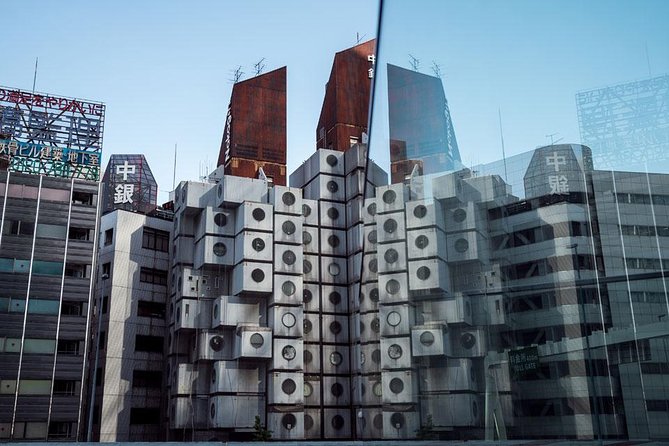
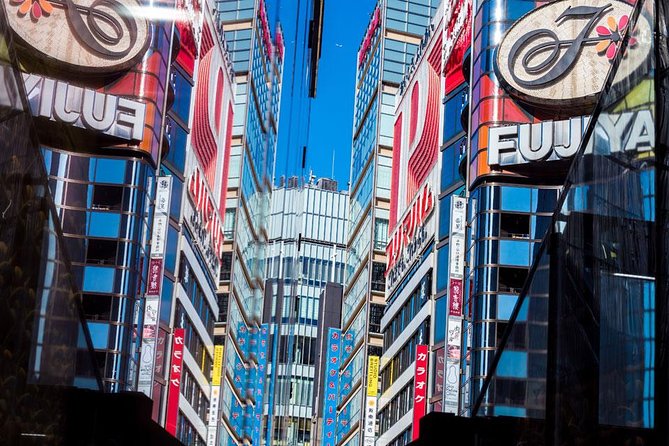
The longest stop is Shiodome, where you spend about an hour photographing towers and modern city structures. This is the workshop’s main classroom.
The guide works with you on composition, especially how to frame a scene. In a district filled with glass walls and tall facades, small changes in position can change the entire picture. A step to one side may bring a reflection into alignment. Looking upward may turn a flat building into a pattern of converging lines. Including a person can give the structure scale and a sense of daily life.
Morning light is part of the appeal. The tour is scheduled for 10:00 a.m., and the plan calls for photographing the towers in morning light. Light conditions vary by day, but the timing gives you a chance to work with shadows and reflections before the day progresses too far.
This is where the guide’s input can save you time. Instead of making dozens of random images, you can test one idea, review the result, and adjust. Several participants found advice on timing, camera settings, line, reflection, and framing especially useful. The teaching style appears to work for both beginners and experienced photographers because you can ask for help at your own level.
Shiodome may appeal less if you want traditional Tokyo scenes. The subject here is contemporary architecture, not temples, gardens, or old wooden streets. Still, that narrow focus is useful. You leave with a clearer sense of how to photograph modern buildings, a subject Tokyo offers in abundance.
Ginza beyond the main shopping streets
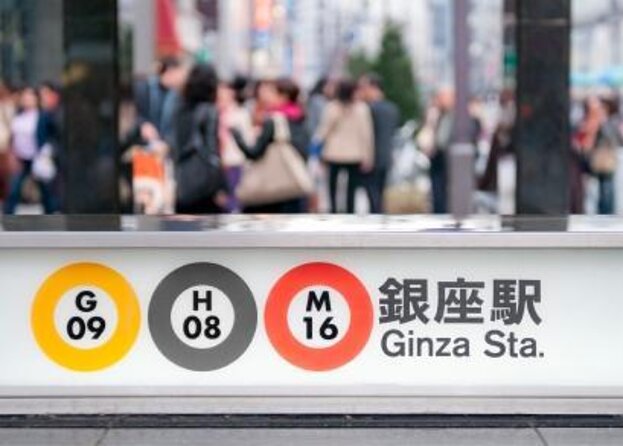
The route continues into Ginza for about 45 minutes. Ginza is often presented through its grand avenues, luxury storefronts, and polished facades. This walk takes a more attentive route through tiny alleys and less obvious corners.
That change in scale gives the workshop some character. You may photograph cooks, wait staff, and office workers going about their daily routines. The point is not to treat people as decoration. Instead, you learn how the human activity around a building can help create a story and show the relationship between people and place.
I like this section because it keeps the experience from becoming a parade of towers. Tokyo’s visual interest often appears where the formal city gives way to service lanes, narrow passages, back entrances, and small pockets between larger buildings. You might find stronger pictures in these transitions than in the obvious front-facing views.
The guide can also help you work respectfully in a busy public setting. One participant praised Lukasz for knowing places where you could take interesting photographs without getting in the way of pedestrians. That is a practical skill. The best angle is not useful if reaching it means blocking a narrow lane or disrupting someone’s work.
You should understand the limitation, though. The description does not promise a full Ginza food, shopping, or cultural tour. You are using Ginza as a photography setting. If you want time to browse stores or stop for lunch, plan to do that after the workshop.
Tokyo International Forum’s dramatic interior
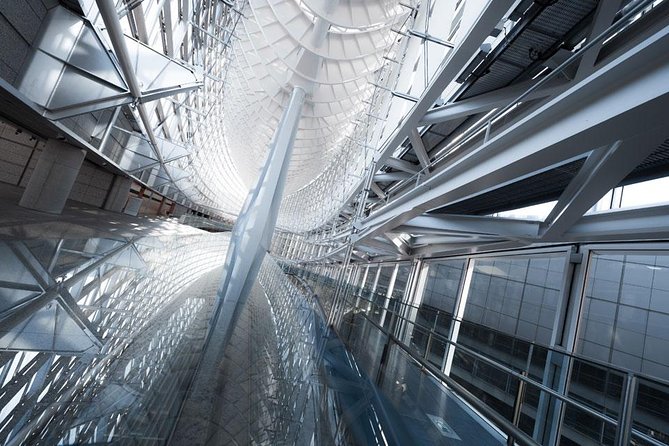
The final stop is Tokyo International Forum in Yurakucho, where you spend about 45 minutes photographing the interior. This is a strong finish because the building offers a different type of subject from the streets outside.
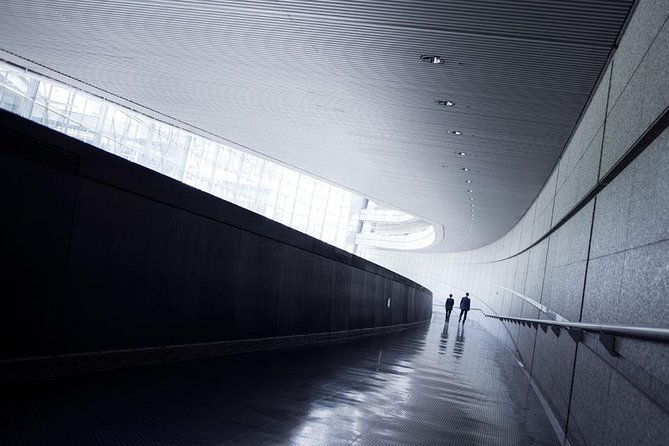
Its immense interior gives you room to work with scale, repeated lines, curves, glass, and open space. The guide can set you challenges that require more than simply pointing at an attractive building. You might consider symmetry, negative space, diagonals, or the way people move through the structure.
This stop is especially useful for photographers who want to make architecture feel dramatic. The interior can reward careful framing, and small adjustments in viewpoint may produce very different results. It is also a practical place to review the ideas from Shiodome and Ginza in a new setting.
The tour ends near Anthony Caro’s Barcelona Ballad, at 3 Chome-5 Marunouchi. The nearby station access makes it easy to continue your day. You are not left in an isolated area or required to retrace the route to Shinbashi.


What the photography instruction covers
The most valuable instruction is likely to be the kind you can use after leaving Tokyo. The guide helps you think about the image before you press the shutter.
Here are the main skills built into the walk:
- Framing a scene: You learn how to decide what enters the picture and what distracts from it.
- Lines and patterns: Buildings, railings, streets, and windows become tools for directing the eye.
- Reflections: Glass and polished surfaces can add a second structure or create visual tension.
- People in the frame: Workers and passersby can show scale, movement, and the human side of the city.
- Timing: The guide can help you wait for the right person, light, or moment.
- Camera settings: You can ask how to use different functions and settings on your own camera.
- Story and mood: A successful image is not only sharp or well exposed. It should give the viewer a reason to keep looking.
The teaching is described as hands-on, with time to check pictures and discuss how to capture a mood or story. That is more useful than a lecture because you can see the result immediately.
The guides named in the supplied experiences include Stephane, Lukasz, and Exel. The guide assigned to your date may differ, so you should not book solely to meet one particular instructor. Still, the repeated praise for patient explanations, constructive advice, and artistic ways of seeing suggests that the guide is central to the experience.
Is $158.52 a good value?
The listed price is $158.52 per group of up to two people. For two participants, that works out to about $79.26 each. The experience is private for your group, while the general group limit is six people, so the exact setup depends on how the booking is arranged.
That price is reasonable if you want instruction rather than a simple walking tour. You are paying for a professional photography instructor, a focused route, and personal feedback over two and a half hours. A private booking for two can be especially useful because you can ask questions freely and work at a pace that suits your skill level.
The value is weaker if you already know exactly how you want to photograph architecture and mainly want someone to escort you around. The tour does not include a meal, transport, or admission to a paid attraction. The listed stops have free admission, and bus fare is not included.
I would also consider how much use you will make of the advice afterward. If you have a camera sitting in your bag and want to improve your eye, the cost may pay off through better pictures for the rest of your Japan trip. If you are not interested in photography, the same two and a half hours could be better spent on a broader Tokyo sightseeing activity.
Who will enjoy this most
You do not need to be an expert. Beginners can ask about basic settings and receive patient explanations. People who already shoot regularly can focus on more refined questions about composition, timing, reflections, and visual style.
The workshop suits you particularly well if:
- You enjoy architecture and city photography.
- You want to photograph Tokyo without spending the whole time at famous landmarks.
- You like learning by trying an idea, checking the picture, and trying again.
- You want local suggestions for photographing less obvious corners.
- You prefer a small group to a large, fixed-route tour.
- You plan to keep taking pictures after the workshop.
It may not suit you if your main interest is traditional Japan, food, shopping, gardens, or major historical sights. The route is concentrated in Shimbashi, Shiodome, Ginza, and Yurakucho, with a clear focus on the modern city.
The walk is short by distance, but you should still wear comfortable shoes. You will be on foot for the full experience, stopping often and carrying your equipment. Most people can participate, and the route is near public transportation.
Practical details that affect your choice
The tour begins at 10:00 a.m. and lasts about 2 hours and 30 minutes. The listed schedule gives one hour to Shiodome, 45 minutes to Ginza, and 45 minutes to Tokyo International Forum.
The experience requires good weather. If poor weather causes cancellation, you are offered another date or a full refund. If you cancel for another reason or request a change, the amount paid is not refunded, so this is a booking to make when your Tokyo schedule is fairly firm.
A mobile ticket is provided. Confirmation normally arrives at booking, although reservations made within one day of departure are confirmed as soon as possible, subject to availability.
The route ends in Yurakucho rather than returning to Shinbashi. I consider that a plus because you can continue directly to your next stop. The supplied information does not include bus fare, so allow for local transport if you need it before or after the walk.
Should you book the Tokyo photography workshop?
Book it if you want to come away from Tokyo with a better way of seeing the city, not just a folder of random building pictures. The route is compact, the stops are varied, and the small-group format gives you a real chance to ask questions about your own photographs.
I would give this priority to photographers who are staying in Tokyo for several days. You can apply the lessons later at train stations, shopping streets, towers, and quiet side lanes across the city. It is also a strong choice for two people who want a shared activity and are comfortable paying the group price.
Skip it if you want a general tour of Tokyo or if bad weather is likely to disrupt your plans. For everyone else, the combination of Shiodome’s towers, Ginza’s working lanes, and the Tokyo International Forum creates a focused and useful morning with a clear payoff: you learn to find stronger pictures in ordinary city scenes.
FAQ
Where does the photography workshop start?
It starts at SL Square, beside the steam locomotive at Shinbashi Station’s West Entrance Square, 2-chome-7, Shinbashi, Minato City, Tokyo.
What time does the tour begin?
The start time is 10:00 a.m.
How long does the experience last?
The workshop lasts approximately 2 hours and 30 minutes.
How far do you walk?
The average walking distance is about 1.3 miles, or 2 kilometers.
Which Tokyo districts does the route visit?
The route includes Shiodome, Ginza, and Yurakucho, with the walk beginning in the Shinbashi area.
What photography instruction is included?
A professional photography instructor provides advice on composition, framing, timing, camera settings, lines, reflections, and using people and surroundings to create a story.
Is the workshop suitable for beginners?
Yes. The experience is designed for both novice and advanced photographers, and the small-group format allows for personal questions and practical guidance.
Is the tour refundable if I cancel?
No. The experience is non-refundable and cannot be changed for any reason. If poor weather causes the provider to cancel, you are offered a different date or a full refund.
More tours in Tokyo we've reviewed



Tokyo, compared.
 ★ 5.0Mt Fuji and Hakone 1-Day Bus Tour Return by Bullet TrainFrom $163
 ★ 5.01-Day Tokyo Bus TourFrom $129
 ★ 4.6Tokyo: teamLab Planets TOKYO Digital Art Museum Entry TicketFrom $251 day
 ★ 4.0Mt Fuji & Hakone Cruise, Drum Show Bullet Train 1 Day from TokyoFrom $149
 ★ 5.0Tokyo: Shinjuku Food Tour (13 Dishes at 4 Local Eateries)From $86
 ★ 4.4Tokyo Mt Fuji 5th St & Hakone Cruise Bus Tour w/Bullet TrainFrom $15410 hours