
Reviewed · SHIBUYA TOURS
Tokyo: Matcha Tea Ceremony Experience at Japanese room in Shibuya
The most appealing part of this Shibuya experience is that you do not just watch a tea ceremony. You make your own bowl of matcha, learning the basic movements and manners as you go. The one-hour session also includes several Japanese teas, giving you a useful taste of how matcha, hojicha, and other varieties differ.
I like the small group size of up to eight people, which should make questions and hands-on practice easier. I also like the relaxed tone. Instructors such as Taku, So-Wa, and Ryota are praised for explaining Japanese culture in clear, friendly terms. The main consideration is time: one hour offers a fine introduction, but not a full study of the ceremony’s many formal details.
In This Review
- Key points
- Making Matcha Instead of Just Watching
- A Calm Japanese Room in the Middle of Shibuya
- Learning the Manners Behind the Ceremony
- Comparing Matcha, Hojicha, and Other Teas
- What the One-Hour Schedule Delivers
- How Much Value Do You Get for $32.58?
- Who Will Enjoy This Shibuya Tea Session?
- Practical Details Before You Book
- My Take: A Worthwhile First Taste of Tea Culture
- FAQ
- How much does the Tokyo matcha tea ceremony cost?
- How long does the tea ceremony experience last?
- Where does the activity start?
- Where does the activity finish?
- Is the experience near public transportation?
- How many people can join the activity?
- Do I make my own matcha?
- Which teas will I taste?
- Is the tea ceremony suitable for beginners?
- Can I cancel for a full refund?
Key points
- Make your own matcha: Learn the basic technique with step-by-step help rather than simply observing.
- Taste several Japanese teas: The session includes matcha and other teas, with hojicha singled out as a favorite by some participants.
- Learn ceremony manners: The instruction covers essential etiquette and the cultural meaning behind the actions.
- Small group setting: A maximum of eight people keeps the activity personal and manageable.
- Convenient Shibuya location: Meet at 2-chōme-14-13 Shibuya, near public transportation.
- Flexible booking terms: Free cancellation is available up to 24 hours before the start time.
Making Matcha Instead of Just Watching
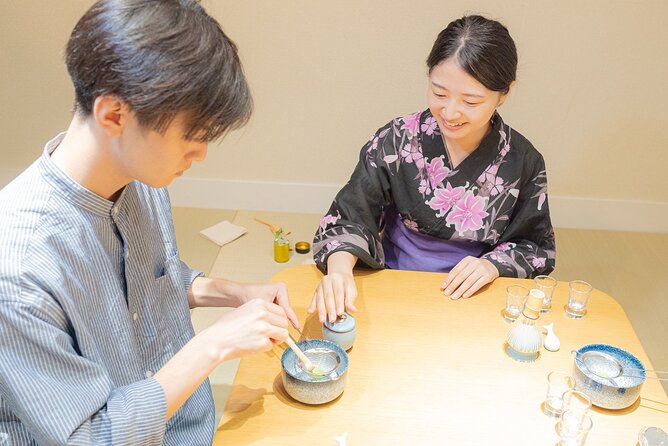
Many tea experiences put you on the sidelines. This one gives you a whisk, tea powder, and a chance to prepare the drink yourself under guidance. That changes the feel of the session. You are not trying to perform a flawless ceremony. You are learning the essential steps, then seeing how small movements affect the finished cup.
The instructor explains the manners and techniques as you work. That is useful for first-time visitors because Japanese tea ceremony etiquette can seem exacting from a distance. Here, you can ask why a particular action matters and get a practical answer instead of trying to copy a silent demonstration.
You should expect a gentle introduction rather than an advanced lesson in tea schools or formal ceremony practice. The session is designed for beginners, so the emphasis is on understanding the basic sequence and appreciating the care involved. I see that as the right approach for most visitors with limited time in Tokyo.
The matcha itself is also part of the cultural lesson. Preparing it by hand makes the drink feel less like a trendy café order and more like a traditional practice with its own pace. The result may not be perfect on your first try, but that is part of the fun. You get to notice the process, not just the flavor.
A few more Tokyo tours and experiences worth a look


A Calm Japanese Room in the Middle of Shibuya
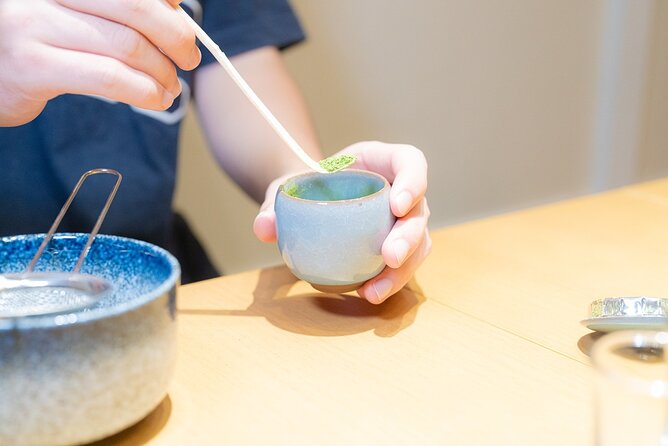
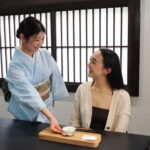
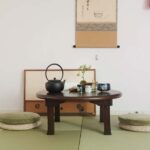
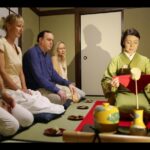
The meeting point is at 2-chōme-14-13 Shibuya, Tokyo 150-0002, with the activity ending at the same place. The setting is described as a Japanese room, which gives the session a more focused feel than a tea tasting held in a large commercial venue.
Shibuya is known for speed, crowds, shopping, and bright city energy. A quiet hour centered on tea offers a useful change of pace. You can use it as a pause between sightseeing stops, especially if you want a cultural activity that does not require a whole afternoon.
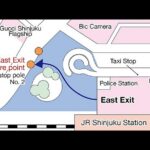
The location is near public transportation, but you should still allow time to find the exact address. Shibuya has many large intersections and busy streets, and a short walk on a map can take longer than expected when you are navigating unfamiliar blocks. Keep the meeting address available on your phone.
The mobile ticket is practical. You do not need to arrange a paper voucher, and your booking confirmation is issued at the time of booking. Since the session returns to the starting point, you also avoid the problem of ending in an unfamiliar part of Tokyo.
Learning the Manners Behind the Ceremony
A tea ceremony is not only about drinking matcha. The order of actions, the way tea is offered, and the attention given to the setting all reflect values such as respect, calm, and consideration. This experience introduces those ideas without expecting you to already understand Japanese customs.
The instructors explain essential etiquette step by step. That matters because even a simple tea ceremony can leave you wondering when to bow, how to receive the bowl, or what to do before drinking. You receive enough guidance to take part comfortably, rather than watching everyone else and hoping you are doing the right thing.
The cultural explanation appears to be one of the strongest parts of the session. Taku is praised for explaining matcha and hojicha, while So-Wa has shared background about Japanese tea ceremony and Japanese culture. Ryota is also named as an excellent instructor for learning more about matcha. Instructor assignments may vary, but these names give you a sense of the teaching style to expect: personal, conversational, and open to questions.
I especially like that the activity connects traditional and modern Japan. You are not treated to a museum-style lecture detached from daily life. Instead, you learn how tea fits into Japanese customs while actually preparing and tasting it.
Comparing Matcha, Hojicha, and Other Teas
The tasting portion adds variety to the experience. Alongside making matcha, you try different Japanese teas and compare their flavors. One session includes three additional teas, and hojicha receives special attention as a favorite discovery.
This is valuable because many visitors know matcha mainly as a sweet dessert flavor. Tasting it in a more traditional setting helps you notice its earthy, vegetal character. Hojicha provides a contrast, with a roasted profile that can feel gentler and less grassy. The other teas give you more points of comparison, even if the exact selection is not specified in advance.
You also get to see that Japanese tea is not one single category. Different teas can vary in aroma, color, strength, and preparation. The instructor’s explanations help connect those differences to Japanese tea traditions.
Traditional sweets may accompany the matcha, depending on the session. They provide a small but important contrast to the tea’s sharper notes. Do not expect a meal. This is a tasting and cultural activity, not a food tour, but the sweets make the tea ritual feel more complete.
If you already drink matcha, the comparison still gives you something to consider. You can focus less on learning how to whisk and more on the relationship between tea, sweetness, presentation, and etiquette. If you rarely drink tea, the relaxed structure makes it easy to try unfamiliar flavors without pressure.
What the One-Hour Schedule Delivers
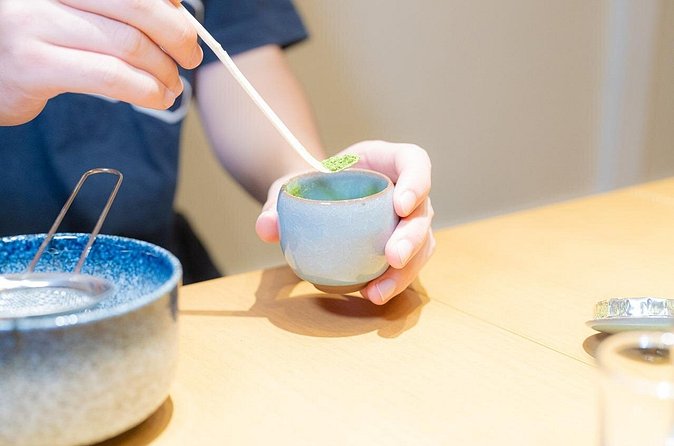
The activity lasts about one hour. That is enough time for a compact introduction, but you should set your expectations accordingly. You will learn the basic manners, prepare matcha, and taste several teas. You will not cover every regional style, tea school, utensil, or historical period in Japan.
The likely flow is straightforward:
- You arrive at the Shibuya meeting point and settle into the Japanese room.
- The instructor introduces the tea ceremony and its basic etiquette.
- You receive guidance while preparing your own matcha.
- You taste matcha and several other Japanese teas.
- You compare flavors and ask questions about tea and Japanese culture.
- The session finishes at the same meeting point.
This sequence works well for a first encounter because it combines explanation with action. A lecture alone can feel distant. Hands-on preparation alone can leave you unsure about the meaning behind the motions. The two parts support each other.
The short length also makes this easy to fit into a Tokyo itinerary. You can book it before or after other Shibuya plans without giving up half a day. The tradeoff is that discussion may be limited if the group has many questions. With a maximum of eight people, that risk is reduced, but the hour still passes quickly.
A few more Tokyo tours and experiences worth a look

How Much Value Do You Get for $32.58?
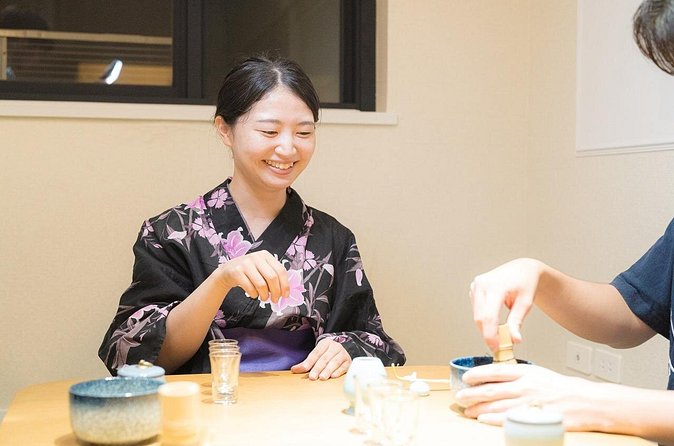
At $32.58 per person, this is priced as an accessible cultural introduction rather than a luxury ceremony. The value comes from the combination of instruction, hands-on preparation, multiple teas, and a small group setting.
I think the price makes sense if you want more than a quick cup of matcha. You are paying for a guided activity that explains what you are doing and why it matters. The chance to prepare the tea yourself is important here. A basic café drink would cost less, but it would not offer the same cultural context or personal instruction.
The value is also strong for visitors who want a manageable first step into Japanese traditions. You do not need prior knowledge, special equipment, or a full day of free time. The experience gives you a memory and a skill you can recognize later when you encounter matcha or hojicha elsewhere in Japan.
It may feel less worthwhile if you are looking for a formal, highly ceremonial performance with a long introduction and elaborate procedures. The activity is intentionally relaxed and beginner-friendly. That makes it approachable, but it also means the session is not intended as an exhaustive lesson.
Who Will Enjoy This Shibuya Tea Session?
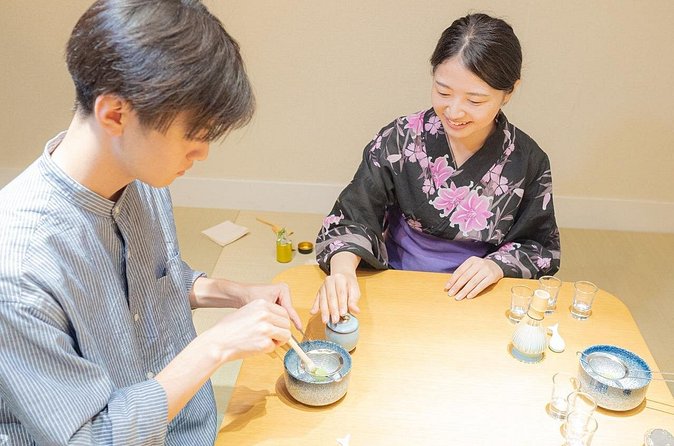
I would recommend this activity to first-time visitors who want a clear introduction to Japanese tea culture. It suits couples, solo visitors, families with older children, and small groups of friends who enjoy trying food and drink with cultural context.
It is also a good choice for anyone who feels uncertain about formal customs. The instructors guide you through the manners, and the atmosphere is described as welcoming rather than intimidating. You can ask questions about tea, ceremony, and Japanese culture without needing to arrive as an expert.
Tea lovers will appreciate the comparison between matcha, hojicha, and other varieties. The experience is especially useful if your knowledge of Japanese tea comes mainly from cafés or sweets. You will leave with a better sense of how the teas differ and why preparation matters.
I would be more cautious about recommending it to someone seeking a long, highly formal ceremony. The one-hour format and relaxed teaching style favor access and understanding over ceremony in its most elaborate form. That is not a flaw, but it is an important distinction when comparing experiences in Tokyo.
Practical Details Before You Book
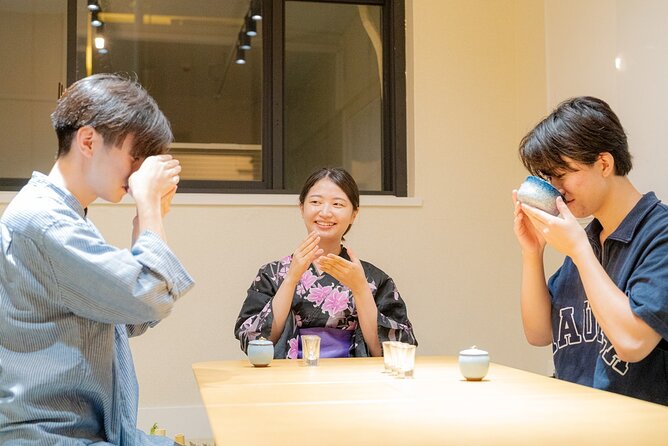
The activity has a maximum of eight participants, which is a comfortable size for a class involving questions and hands-on tea preparation. The smaller group should also make it easier to hear the instructor and follow the techniques.
You meet at 2-chōme-14-13 Shibuya, Tokyo 150-0002, and return there when the session ends. The site is near public transportation. Use the exact meeting address rather than relying only on the general word Shibuya, since the district covers a broad area.
A mobile ticket is accepted, and booking confirmation arrives at the time of booking. Free cancellation is available if you cancel at least 24 hours before the scheduled start time. Cancellations or changes made inside that window are not accepted for a refund, and the cut-off is based on local Tokyo time.
The activity is listed at around one hour, so avoid scheduling a tightly timed train, meal, or ticketed attraction immediately afterward. Tokyo transport is efficient, but Shibuya can still slow you down when you are finding an unfamiliar address.
My Take: A Worthwhile First Taste of Tea Culture
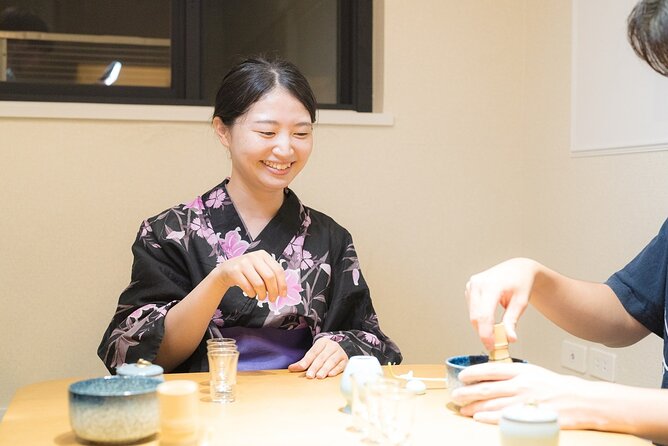
I would book this experience if you want an easy, hands-on introduction to Japanese tea ceremony while staying in central Tokyo. Making your own matcha gives the hour a clear purpose, and tasting several teas keeps it from feeling like a single-drink demonstration.
The strongest reasons to choose it are the small group, the friendly instruction associated with Taku, So-Wa, and Ryota, and the chance to compare teas such as matcha and hojicha. The main limitation is the short format. You will gain a foundation, not a complete education in tea ceremony.
At $32.58, the experience offers good value for visitors who want culture, conversation, and tasting in one compact session. Book it when you want a calm break from Shibuya’s city pace and a practical way to understand why Japanese tea is about much more than what is in the bowl.
FAQ
How much does the Tokyo matcha tea ceremony cost?
The experience costs $32.58 per person.
How long does the tea ceremony experience last?
The activity lasts approximately one hour.
Where does the activity start?
It starts at 2-chōme-14-13 Shibuya, Tokyo 150-0002, Japan.
Where does the activity finish?
The experience ends back at the meeting point.
Is the experience near public transportation?
Yes. The meeting point is near public transportation.
How many people can join the activity?
The group has a maximum of eight participants.
Do I make my own matcha?
Yes. You prepare your own bowl of matcha with step-by-step guidance from the instructor.
Which teas will I taste?
You taste matcha and different Japanese teas. Hojicha is specifically included among the teas discussed, and one session includes three additional teas.
Is the tea ceremony suitable for beginners?
Yes. The activity is designed as a relaxed, beginner-friendly introduction to tea ceremony manners and techniques.
Can I cancel for a full refund?
Yes, if you cancel at least 24 hours before the scheduled start time. Cancellations and changes made less than 24 hours before the start are not accepted for a refund.
More Tea Ceremony & Matcha in Tokyo
More Shibuya Tours in Tokyo



More tours in Tokyo we've reviewed






Shibuya Tours, compared.
 ★ 5.0Official Street Go-Kart in ShibuyaFrom $76
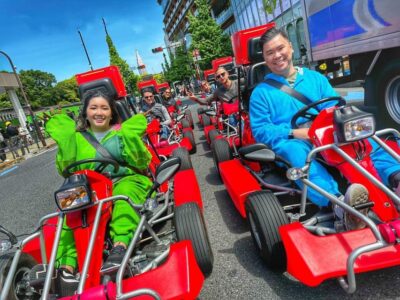 ★ 4.9Tokyo: Street Kart Experience in ShibuyaFrom $741 hour
 ★ 5.0Shibuya Meltdown Nightlife Tour: All-You-Can-Drink Bar HoppingFrom $106
 ★ 5.0Shibuya Official Street Go-Kart in Shibuya AnnexFrom $69
 ★ 5.0Tokyo: Shibuya Food Tour (13 dishes and 4 Eateries)From $77
 ★ 5.0Best of Shibuya Food TourFrom $217