
Reviewed · TOKYO FOOD TOURS
Tokyo: Local Foodie Adventure near Roppongi
Azabujuban gives you a taste of Tokyo that most visitors miss: a small old neighborhood tucked beside Roppongi, where family-run shops, shrines, temples, and snack counters still shape daily life. You’ll eat five Japanese treats, including possible stops for yakitori, taiyaki, mame daifuku, and homemade oden.
I like the small group size, usually just one to four people, because it gives guide Ellen room to answer questions and adjust stops to your interests. I also like the mix of food and local stories, from neighborhood folklore to places connected with Sailor Moon creator Naoko Takeuchi.
The main consideration is that the food selection changes with store availability, so you cannot count on a fixed menu. You’ll also walk around town at a moderate pace, and extra food, drinks, and transportation are not covered in the $71 price.
In This Review
- Key points about this Azabujuban food walk
- Why Azabujuban is worth your time near Roppongi
- Meeting Ellen at Azabujuban Station
- The food stops: five tastes of everyday Japan
- Shrines, temples, and the stories between meals
- The old shops and gift hunting in Azabujuban
- What the $71 price really covers
- Walking demands and practical planning
- Who will enjoy this most
- Should you book the Azabujuban food adventure?
- FAQ
- Where does the Azabujuban food tour meet?
- Where does the activity end?
- How many people join the tour?
- What food is included?
- Is a drink included?
- Is transportation included?
- What language is the tour offered in?
- What should I bring?
- Can I cancel the booking?
Key points about this Azabujuban food walk

- Five Japanese treats included: The day’s selection can include yakitori, taiyaki, mame daifuku, oden, pastries, omelettes, or sushi.
- Small groups of one to four people: You get a more personal walk than you would on a large bus-style food tour.
- Ellen brings local insight: She explains the area, its shops, shrines, folklore, and food traditions in English.
- Shrines and temples add cultural context: The walk is not only about eating, but also about good-luck customs and neighborhood history.
- A different side of Tokyo: Azabujuban has more than 300 shops, including stores that have served the area for decades.
- Sailor Moon connections: Fans can see real-life places associated with the setting that inspired Naoko Takeuchi’s manga.
Why Azabujuban is worth your time near Roppongi
Roppongi is known for nightlife, high-rise buildings, art museums, and international restaurants. Just beside it, Azabujuban feels much more local. The contrast is the point. You can spend the morning or afternoon among small food shops and old religious sites, then return to the modern Tokyo of Roppongi within minutes.
Azabujuban has more than 300 shops, many of them serving the neighborhood for close to a century. That gives the walk a useful sense of place. You are not simply moving between famous food stops. You are seeing how a traditional shopping district continues to function inside one of Tokyo’s most modern areas.
I like this kind of experience because food becomes a doorway into the neighborhood. A sweet rice treat can lead to a conversation about Japanese confectionery. A shrine visit can explain local good-luck customs. A family restaurant can show you a more ordinary side of eating in Japan than a famous reservation-only dining room.
The area also has a special connection for Sailor Moon fans. Real places around Azabujuban helped inspire the setting used by manga creator Naoko Takeuchi. The walk does not turn into a dedicated anime tour, but that connection gives fans another reason to look closely at the streets and landmarks.
A few more Tokyo tours and experiences worth a look
Meeting Ellen at Azabujuban Station
You meet at Azabujuban Station, Exit 4, in front of Oslo Coffee. Look for the Japan Hopping Tours logo and the guide waiting there. This is a simple meeting point, but Tokyo stations can be confusing, so give yourself enough time to find the correct exit.
The tour ends back at the same meeting point. Transportation to and from Azabujuban is not included, so you should budget separately for your train or subway fare. The meeting location also makes this activity easy to pair with time in Roppongi before or after the walk.
English is the tour language. Ellen is the guide most closely associated with the experience, and her role goes beyond leading you from one shop to the next. She explains the district, introduces the food, answers questions, and helps you understand why particular stops matter.
The group size is usually one to four people. That is a real advantage here. Small food shops often have limited space, and a tiny group makes it easier to hear the guide and interact with local staff. It also gives the tour a more relaxed, home-style feel.
The food stops: five tastes of everyday Japan
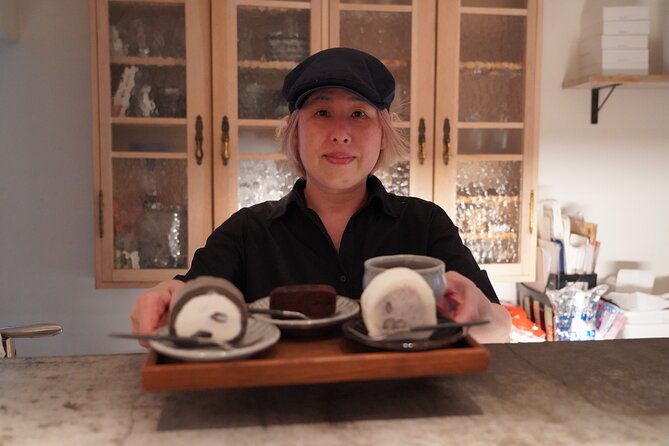
The strongest part of this activity is the variety. You receive five different Japanese treats, with the exact choices depending on what is available that day. One alcoholic beverage is also included.
Possible foods named for the tour include yakitori, mame daifuku, taiyaki, and oden. Additional food experiences described for the walk include pastries, omelettes, and sushi. You should treat these as examples rather than a promised menu.
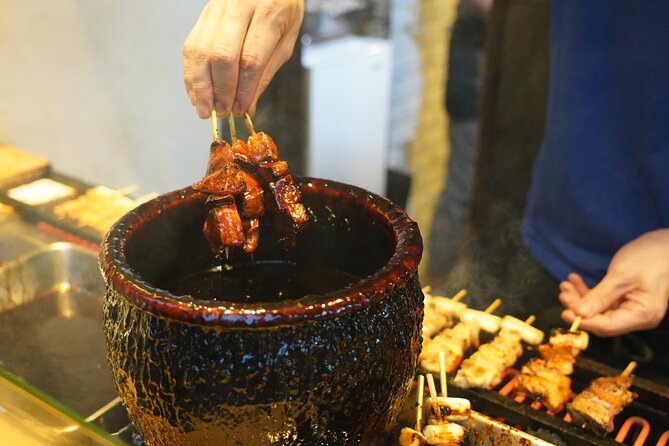
Yakitori gives you a savory introduction to Japanese street and casual dining culture. These grilled chicken skewers are simple, portable, and full of umami. Depending on the shop, the flavor may come from seasoning or a savory sauce. The value of having a guide is that you can learn what you are eating instead of guessing from a Japanese menu.
Mame daifuku is a traditional sweet made with soft mochi, sweet filling, and beans. Its texture may surprise you if you are new to Japanese confectionery. This is a good example of how the walk moves beyond familiar tourist foods and introduces snacks with a longer place in local food culture.
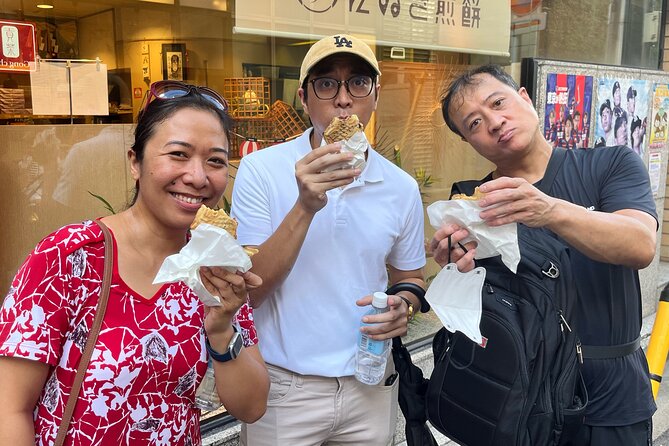
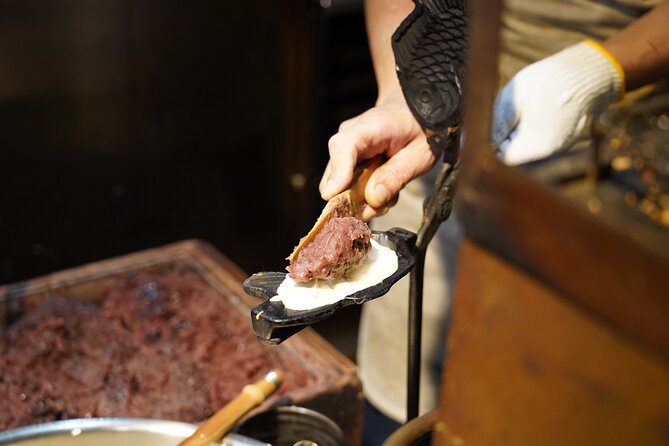
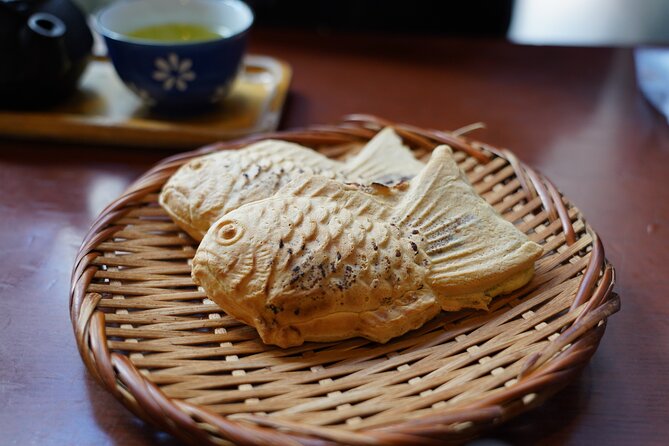
Taiyaki is a fish-shaped pastry, often filled with a sweet center. Here, the appeal is not only the shape. You get to try a classic Japanese snack in the setting of a long-established neighborhood shopping street, where such treats fit naturally into daily life.
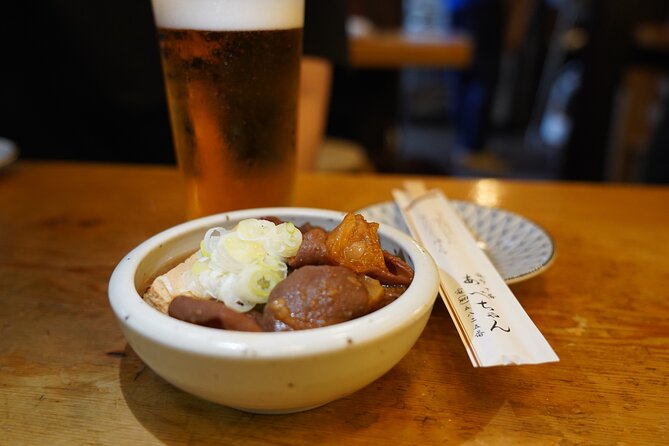
Oden offers a different experience. This savory dish is served in broth and is described here as homemade. It is comforting, casual food, and it helps show why local restaurants matter in a neighborhood such as Azabujuban. The selection may vary, so do not expect a fixed combination of ingredients.
Other possible bites include sushi, omelettes, and pastries. Five stops should be enough to fill you up, according to the tour details, but you should not assume you will be offered every food listed above. If you have a strong preference or dietary concern, ask before booking or at the start of the walk. No special dietary arrangements are promised.
One alcoholic beverage is included. Additional drinks and food cost extra, so bring some spending money if a shop catches your attention. The neighborhood is also a good place to buy edible gifts or small local items, though personal purchases are not included in the price.
Shrines, temples, and the stories between meals
The walking route includes local shrines and temples selected for their good-luck associations. These visits give the food stops a broader setting and keep the experience from feeling like a simple crawl from one restaurant to another.
You may learn how these places fit into neighborhood life, local folklore, and everyday customs. The supplied information does not name each shrine or temple, so you should expect the stops to depend on the guide and the day’s route rather than a fixed list of famous landmarks.
That uncertainty is not necessarily a weakness. Small local religious sites can be more meaningful when a guide explains their role in the area. Without context, a shrine can look like a quick photo stop. With Ellen’s explanations, you can better understand why people visit, what good luck means in this setting, and how these sites connect with the surrounding streets.
The walk also gives you a chance to meet local residents and chat with staff at some of the restaurants. This is one of the experience’s most valuable features. Tokyo can feel hard to enter as a visitor, especially when you do not speak Japanese. A guide provides the bridge, helping you take part in small exchanges that would otherwise be difficult.
You should keep your expectations realistic. This is not a formal cooking class, and there is no promise of long conversations with every shop owner. The interaction depends on the businesses and the pace of the day. Still, the small group makes these encounters more likely to feel personal.
The old shops and gift hunting in Azabujuban
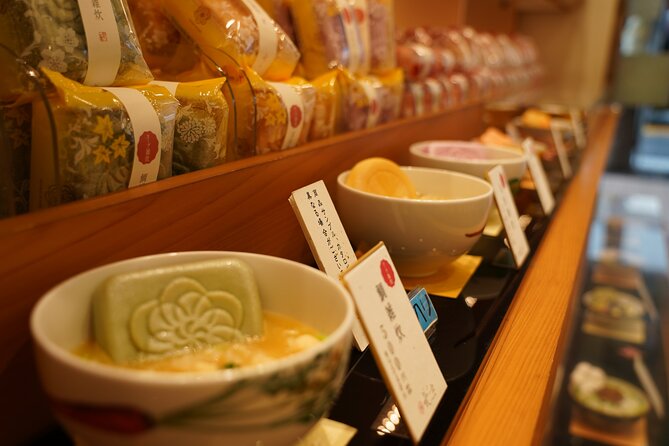
Azabujuban is useful for shoppers who want something less predictable than the usual Tokyo souvenirs. The tour visits unique stores found in the area, giving you a chance to browse while learning about the businesses and their place in the neighborhood.
The district’s long-running shops are part of the attraction. A store that has served customers for generations tells you something about local habits, family businesses, and the way Tokyo neighborhoods change without losing everything old.
I would think of the shopping as an added benefit rather than the main reason to book. The activity includes visits to distinctive stores, but it does not include a shopping allowance or promise specific purchases. If you find a gift you want, you pay for it yourself.
The best approach is to stay curious. Look for food items, sweets, or small objects that are tied to the neighborhood. You may find that a modest purchase from a local shop carries more meaning than a standard souvenir from a major department store.
A few more Tokyo tours and experiences worth a look



What the $71 price really covers
At $71 per person, this tour is priced above a self-guided snack walk, but it includes more than five small tastes. You are paying for an English-speaking guide, local interpretation, five Japanese treats, one alcoholic beverage, and the convenience of moving between food, religious, and shopping stops with someone who knows the area.
The price makes the most sense if you value context. You could walk through Azabujuban alone and buy snacks, but you might miss the history of the shops, the folklore attached to local sites, and the cultural meaning behind unfamiliar foods. Ellen’s help also reduces the guesswork involved in ordering.
The small group improves the value. With only one to four people, you get a chance to ask questions and request adjustments. One detailed account describes Ellen tailoring stops to individual needs, which suggests that the experience can respond to what interests you rather than forcing everyone through a rigid script.
Still, the price does not cover transportation, extra food, extra drinks, or personal expenses. If you like to sample widely or buy gifts, your final cost will rise. The included food should be enough to fill you up, so you probably do not need to plan a full meal during the walk.
Walking demands and practical planning
Wear comfortable shoes. You will walk around the neighborhood between food shops, shrines, temples, and stores, and the activity calls for a moderate level of fitness.
No tour duration is provided, so you should avoid scheduling a tight connection or a fixed appointment immediately afterward. The route includes several stops and conversations, and the timing may vary with store availability and the pace of the group.
Food availability is another practical point. The five treats are not fixed, and the selection can change. That is normal for a neighborhood food walk, but it matters if you are booking because you want one particular dish.
The activity is offered in English and is not suitable for people over 95 years old. Beyond that stated limit, the key question is how comfortably you can walk around town and stand or move between stops.
Cancellation is flexible if your plans change: you can cancel up to 24 hours in advance for a full refund. You can also reserve and pay later, which helps if your Tokyo schedule is still shifting.
Who will enjoy this most

I would recommend this walk to first-time Tokyo visitors who want a gentler introduction to Japanese food and neighborhood culture. It is also a good choice if you have already seen the major sights and want a quieter district near Roppongi.
Food-curious visitors will get the most from the changing menu. If you want to try traditional treats but feel unsure about ordering alone, the guide removes much of the friction. The walk also suits people who prefer small local businesses to large attractions.
Sailor Moon fans have an extra reason to consider it. The connection to Naoko Takeuchi’s inspiration adds a personal layer to the streets, even though the tour remains focused on food and local culture.
I would be more cautious if you need a guaranteed menu, have strict dietary requirements, dislike walking, or want a formal restaurant meal rather than several smaller tastes. The experience is built around discovery, and some flexibility is required.
Should you book the Azabujuban food adventure?
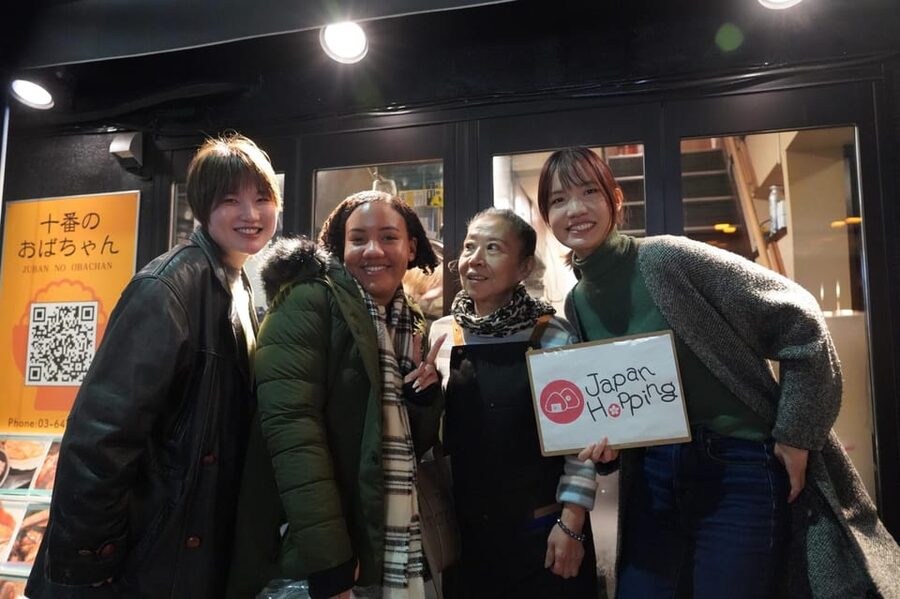
Book it if you want to eat your way through a less familiar Tokyo neighborhood while learning how its shops, shrines, temples, and residents fit together. The best features are the tiny group, the range of five changing foods, and Ellen’s warm, attentive guiding style.
Do not book it expecting a fixed list of restaurants or a carefully controlled menu. Instead, think of the $71 as payment for access and context: someone helps you enter Azabujuban, understand what you are tasting, and notice details you might otherwise pass by.
For many visitors, that is a fair price for a personal introduction to this old district. Add comfortable shoes, a little extra money for drinks or gifts, and an open mind about the menu, and this can be one of the more personal food experiences near Roppongi.
FAQ
Where does the Azabujuban food tour meet?
Meet at Azabujuban Station, Exit 4, in front of Oslo Coffee. Look for the Japan Hopping Tours logo and the waiting guide.
Where does the activity end?
The walk ends back at the original meeting point at Azabujuban Station.
How many people join the tour?
The activity is offered as a small group tour, with one to four people expected to join.
What food is included?
Five different Japanese treats are included. The selection changes based on store availability and may include foods such as yakitori, taiyaki, mame daifuku, oden, pastries, omelettes, or sushi.
Is a drink included?
Yes. One alcoholic beverage is included. Additional food and drinks are not included.
Is transportation included?
No. Transportation costs to and from the meeting point are not included.
What language is the tour offered in?
The tour is offered in English.
What should I bring?
Bring comfortable shoes because you will walk around Azabujuban. You should also bring money for personal expenses, extra food, drinks, or gifts.
Can I cancel the booking?
You can cancel up to 24 hours in advance for a full refund. Reserve and pay later is also available.
More Food Experiences in Tokyo
More Tokyo Food Tours in Tokyo
More tours in Tokyo we've reviewed






Tokyo Food Tours, compared.
 ★ 5.0Tokyo: Shinjuku Food Tour (13 Dishes at 4 Local Eateries)From $86
 ★ 4.9Tokyo: Shinjuku Food Tour (15 Dishes and 4 Eateries)From $853 hours
 ★ 5.0Best of Shinjuku: Izakaya Food Tour (4 Stops, 14+ Tastings)From $92
 ★ 5.0Tokyo Night Foodie Tour in Shinjuku – Seasonal Sushi, Wagyu BeefFrom $111
 ★ 5.0Eat and Drink Like a Local: Tokyo Ueno Food Tour-Taverns&RamenFrom $95
 ★ 5.0Tokyo: Shibuya Food Tour (13 dishes and 4 Eateries)From $77