
Reviewed · FULL-DAY
Tokyo full day Spanish speaking tour with hotel pick up and drop off.
Tokyo’s many personalities come together on this private Spanish-speaking tour: incense at Senso-ji, anime and electronics in Akihabara, quiet shrine paths in Harajuku, and giant screens beneath Godzilla in Shinjuku. It is a full day of sharp contrasts, connected by local trains.
I like the route for two clear reasons. First, you get a useful first look at four major districts without having to plan every train change yourself. Second, a group of up to five can share one guide, which makes the $386 group price more reasonable than a per-person tour.
The main drawback is the pace. Eight hours, several train rides, and four very different districts leave little room for wandering. You should also budget for lunch, drinks, snacks, and about ¥1,000 in transportation costs.
In This Review
- Key points at a glance
- Why this route works for a first Tokyo day
- Starting at Senso-ji in Asakusa
- Akihabara, from electronics to anime
- Meiji Shrine and the quieter side of Harajuku
- Shinjuku’s 3D cat, Godzilla, and Kabukicho
- How the trains shape the day
- Is $386 a fair group price?
- Who should book this Tokyo tour?
- Final verdict: book it for the language and the structure
- FAQ
- How long does the Tokyo Spanish-speaking tour last?
- How many people can join the private tour?
- Is the tour conducted in Spanish?
- Does the tour include hotel pickup and drop-off?
- Which Tokyo neighborhoods does the tour visit?
- What will I see in Asakusa?
- Is lunch included?
- Are train fares included?
- What should I bring?
- Can I cancel for a full refund?
Key points at a glance
- Senso-ji’s full temple sequence: Walk through Kaminarimon, Nakamise, and Hozomon before taking part in temple customs.
- Akihabara for otaku culture: Use an hour to see Tokyo’s electronics, manga, anime, and video game center, then take a separate lunch break.
- Meiji Shrine’s giant torii: Move from busy Harajuku into Yoyogi Park and one of Tokyo’s most important Shinto sites.
- Shinjuku’s 3D cat and Godzilla: See the famous cat screen, Kabukicho, Godzilla’s head, and the 2023 Kabukicho Tower.
- Spanish guidance in a small group: The private format lets you ask questions directly, with guides such as Naomi praised for her friendly manner and clear explanations.
- One busy but useful day: Hotel pickup and drop-off remove some planning work, but comfortable shoes are essential.
Why this route works for a first Tokyo day
Tokyo can feel like several cities joined by rail. One street is lined with shrines and old shops, while another has giant anime signs, department stores, and glowing video screens. This tour gives you a broad sample rather than focusing on one neighborhood.
The order is sensible. You begin in Asakusa, where Tokyo’s older religious and shopping traditions are easiest to see. Akihabara then shifts the mood to pop culture and technology. After lunch, Harajuku gives you a quieter spiritual setting, and Shinjuku finishes with Tokyo’s large-scale entertainment districts.
A private group of up to five matters here. You are not trying to hear a guide over a large crowd, and you can ask for explanations in Spanish as the day unfolds. The itinerary still follows a firm schedule, but a private guide can make the experience feel more personal than a standard coach outing.
The strongest personal touch comes from the guide. Naomi is described as friendly, ready to clarify questions, and well informed about Tokyo. That matters on a route filled with customs and local references that can otherwise pass by as colorful scenery.
A few more Tokyo tours and experiences worth a look
Starting at Senso-ji in Asakusa
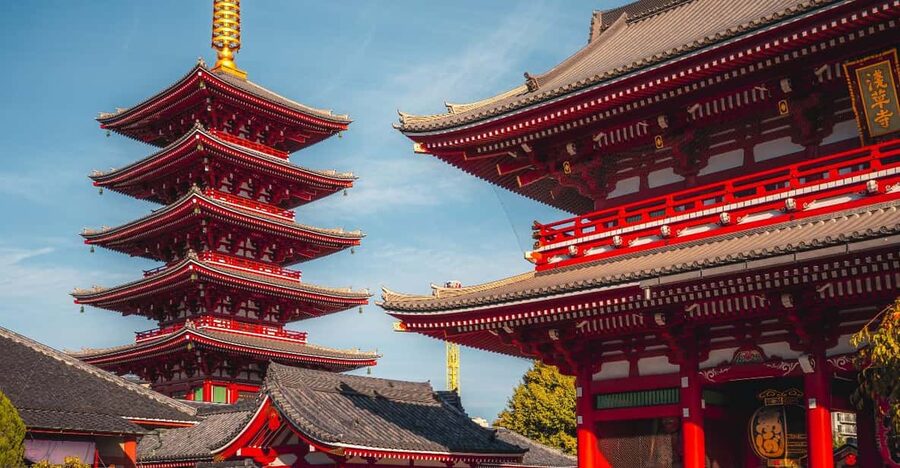
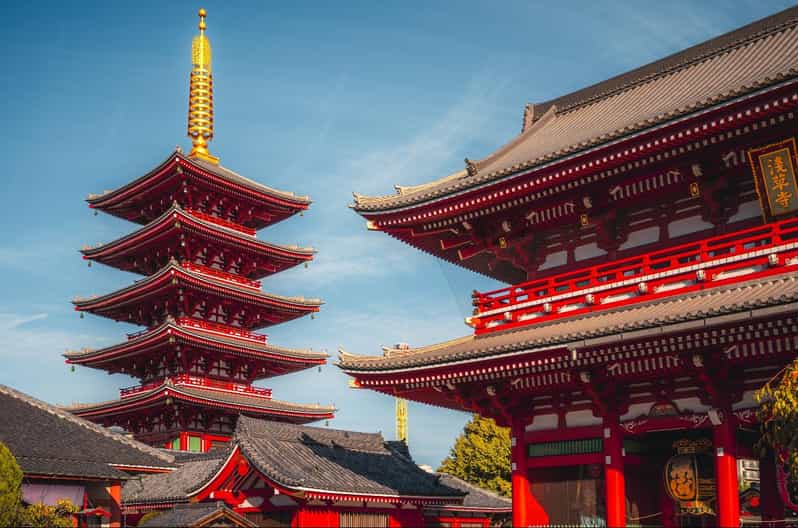
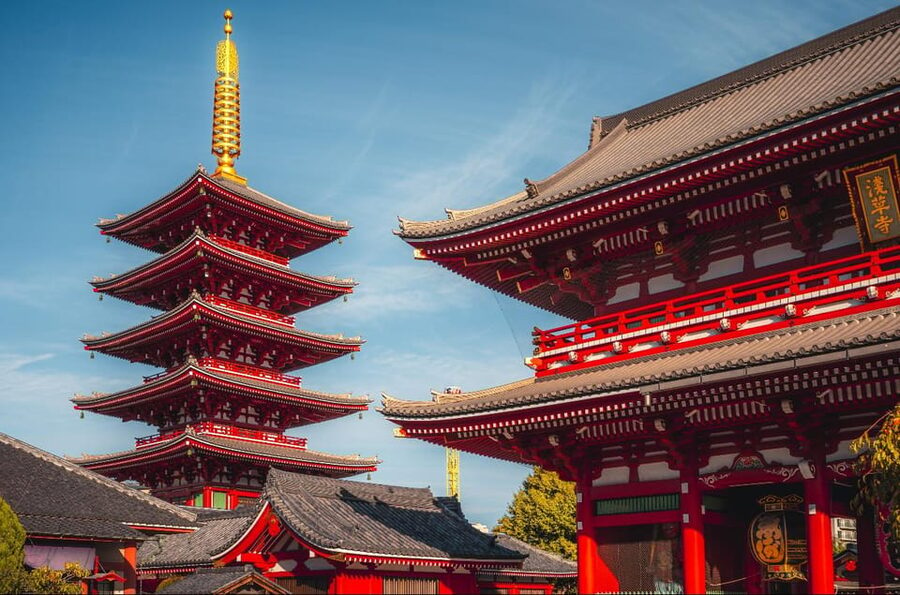
The morning begins in Asakusa, Tokyo’s most traditional district on this route. The centerpiece is Senso-ji, a Buddhist temple dedicated to Kannon, the goddess of compassion. It is also described as the world’s most visited Buddhist temple, so expect a major sight rather than a quiet backstreet sanctuary.
You enter through Kaminarimon, the Thunder Gate and the temple’s main entrance. From there, Nakamise shopping street leads toward the inner temple grounds. This is a useful introduction to the way Japanese religious sites often blend worship, souvenirs, food, and foot traffic in one continuous approach.
The next gate is Hozomon. After passing through it, you can see shops selling omamori, the small protective charms associated with Japanese temples and shrines. The guide can explain the difference between these objects and the customs around them, which is especially helpful if this is your first visit to Japan.
You will also have a chance to perform the temizu ceremony. This involves using water to cleanse your hands and mouth before approaching the sacred area. You can burn incense, called osenko, and move through the smoke as a symbolic way to purify body and mind.
At the altar, you may see people toss a coin and make a wish. The tour gives you a chance to take part rather than simply photograph the scene. The experience is more meaningful if you treat these acts as religious customs, not just sightseeing steps.
Allowing two hours here is sensible. Senso-ji has several layers, and rushing directly to the main hall would miss much of what makes Asakusa distinctive. The possible snag is crowding. This is one of Tokyo’s busiest attractions, so the visit is about seeing how the temple functions as much as finding a peaceful moment.
Akihabara, from electronics to anime
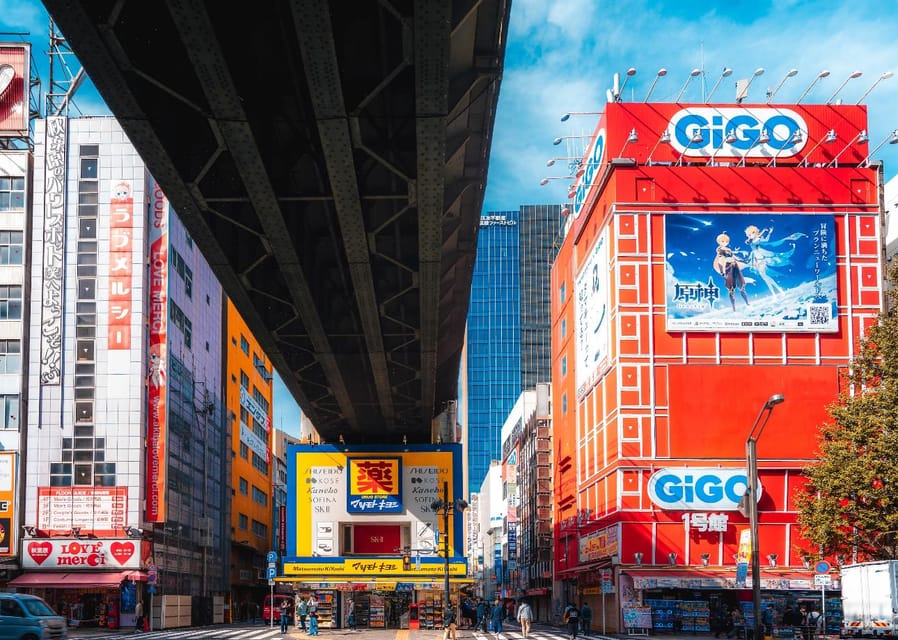
A train ride of about 10 minutes takes you to Akihabara. The district is known as Tokyo’s center of otaku culture and electronics, making it the clearest change of tone on the tour.
Your one-hour guided visit is aimed at the district’s main identity: technology, video games, manga, and anime. If those subjects interest you, this stop can help put Tokyo’s pop culture into context. If they do not, the signs and specialty shops can still be entertaining, but you may find the time more focused than the temple visit.
The tour includes a separate one-hour lunch stop in Akihabara. Lunch is not included, so you pay for your own meal, along with any drinks or snacks. Keeping lunch in this district is practical because it avoids another transfer and gives you a pause after the first half of the morning.
Do not count on a long shopping session. The schedule gives you a guided hour and a one-hour meal break, not an open-ended afternoon among electronics stores. If you have a particular anime, gaming, or technology purchase in mind, tell the guide early and ask how much free time is realistic.
Meiji Shrine and the quieter side of Harajuku
After lunch, the tour takes a longer train ride of about 40 minutes to Harajuku. This is the day’s biggest transfer, so it helps to see it as a reset between neighborhoods rather than wasted sightseeing time.
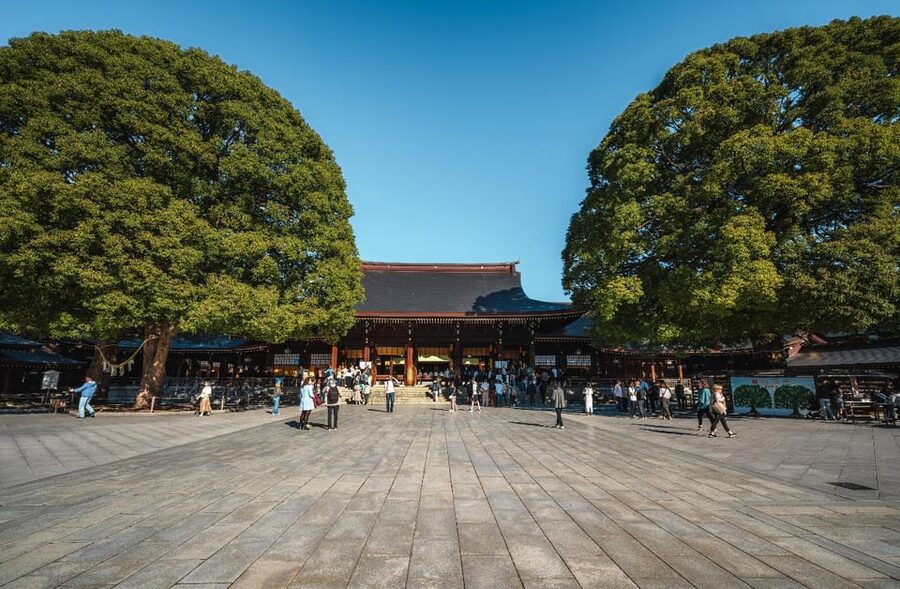
Meiji Shrine sits in Yoyogi Park. The grounds are linked with Emperor Meiji and Empress Shoken, who used the area for picnics. The shrine is also associated with couples praying for a prosperous marriage, giving the visit a personal focus beyond architecture.
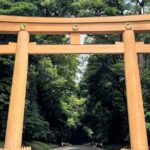
The entrance is marked by huge torii gates made from Japanese cypress wood. These gates symbolize the move from the ordinary world into a sacred space. That idea becomes easier to grasp when you arrive from Harajuku, one of Tokyo’s best-known youth and fashion areas.
The guided visit lasts about 90 minutes. The pace should give you time to notice the transition from city streets to the shrine setting, though the route still leaves no room for a long independent walk through Yoyogi Park.
This stop balances the more commercial parts of the day. After Akihabara’s screens and specialist shops, Meiji Shrine offers a place to slow down and observe Japanese religious customs. You do not need special religious knowledge to appreciate it, but a Spanish-speaking guide can explain what you are seeing without forcing you to rely on signs or guesswork.
Comfortable shoes are important here and throughout the day. The itinerary includes several walking stops, train stations, gates, shopping streets, and shrine grounds. Even without exact walking distances, eight hours on the move is enough reason to leave fashionable but painful footwear at the hotel.
Shinjuku’s 3D cat, Godzilla, and Kabukicho
A short train ride of about 10 minutes brings you to Shinjuku for the final guided visit. This section has the most immediately recognizable modern sights and is likely to be a favorite for anyone who enjoys Tokyo’s giant signs and playful public screens.
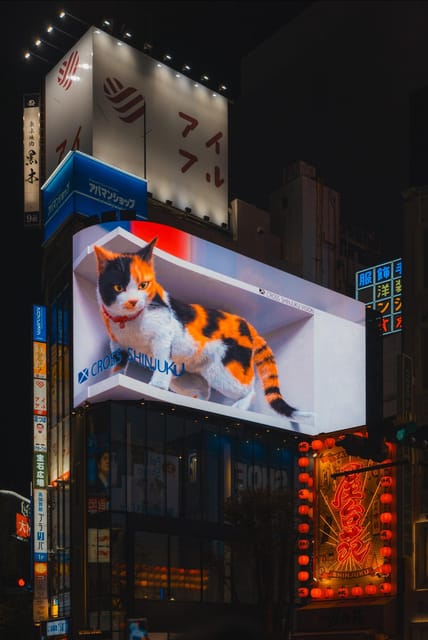
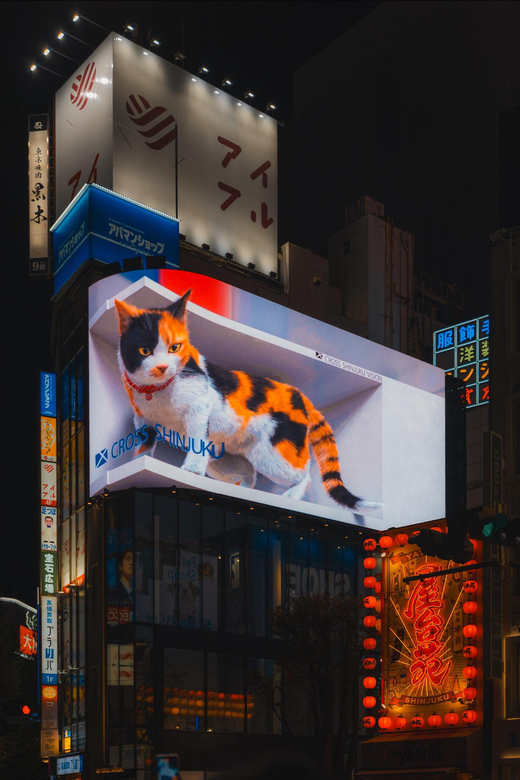
You will see what the tour describes as the world’s first 3D display, featuring the Calico cat, a Shinjuku mascot. The screen is designed to make the cat appear to move beyond the building’s flat surface. It is a quick stop, but it shows how Tokyo turns ordinary commercial space into a city attraction.
Next comes the large arch at Kabukicho Road. Kabukicho is one of Shinjuku’s best-known entertainment areas, and the route continues to the Gracery Hotel, where Godzilla’s head appears above the building. This is one of the tour’s most fun photo opportunities, especially if you want a distinctly Tokyo image rather than another temple gate.
The tour then visits the new Kabukicho Tower, opened in 2023. Its facilities include shopping malls, restaurants, and a theater with performances in different genres. The visit gives you a look at the district’s newer development, though the itinerary does not promise a particular show or reserved theater entry.
The day ends near the station at Omoide Yokocho, known as the Alley of Memories. Narrow lanes hold small bars and restaurants, creating a much more intimate setting than the large screens and towers nearby. Since the tour does not include dinner, you can treat this as a useful place to decide if you want to eat after the formal tour ends.
The one-hour Shinjuku visit is enough for the listed highlights, but not for a detailed exploration of the entire district. That is the tradeoff of the route: you get a strong overview of several famous areas, then return later if one neighborhood deserves more of your time.

How the trains shape the day
The itinerary uses trains between the four main districts. The listed rides take about 30 minutes from the starting point to Asakusa, 10 minutes to Akihabara, 40 minutes to Harajuku, and another 10 minutes to Shinjuku.
These transfers are not included in the tour price. The estimated transportation cost is about ¥1,000, and you should also pay for your own lunch, drinks, and snacks. The guide handles the route as part of the private experience, but you still need to allow for the normal movement and waiting involved in using Tokyo’s rail system.
The train rides are one reason the tour is useful for a first full day. Tokyo’s rail network can be confusing when you are watching the clock and trying to find the correct platform. A guide helps keep the group together and connects the stops in a workable order.
They also add to the day’s physical demand. You will walk through stations and between the main sights, then spend time standing at temples, shrines, shopping areas, and city viewpoints. Wear comfortable shoes and keep your bag manageable.
Is $386 a fair group price?
The cost is $386 for a private group of up to five people. That is not a cheap solo tour, but the calculation changes if you fill the group. Five people would bring the tour portion to about $77.20 per person, before transport, lunch, drinks, and snacks. Four people would pay about $96.50 each, and a couple would carry the full group price between them.
The value comes from the private format and the Spanish-language guidance. You are paying for a full eight-hour day with hotel pickup and drop-off, a guide, and a route covering four major Tokyo districts. You are not paying for meals, attraction tickets, or transport inside the listed price, so those extra costs should be part of your decision.
I see the price as most reasonable for a family or small group that wants a Spanish-speaking guide and would otherwise need to arrange a full day of rail travel and sightseeing alone. It is less attractive if you already know Tokyo’s train system, speak Japanese or English comfortably, and prefer spending a whole day in one neighborhood.
The strongest value is not the number of stops. It is the amount of planning removed from a complicated city day. You can ask questions in Spanish, move between distant districts, and finish with a clear sense of which areas deserve a return visit.
Who should book this Tokyo tour?
This experience suits first-time visitors who want an overview before exploring Tokyo on their own. It also fits families and small groups who prefer a guide rather than a self-guided day of maps, station signs, and timetable checks.
Spanish speakers will get the most from it, particularly those who want cultural explanations at Senso-ji and Meiji Shrine rather than a photo-only visit. Fans of anime, electronics, Godzilla, or Tokyo’s huge digital screens will also appreciate the mix of old and new.
You should think twice if your ideal day is slow and unplanned. The route covers four districts in eight hours, with set guided periods and several train rides. It is a sampler, not a relaxed neighborhood walk.
Cancellation is flexible up to 24 hours before the tour for a full refund, and you can reserve now and pay later. Starting times vary, so check availability before building the rest of your day around the tour.
Final verdict: book it for the language and the structure
I would book this tour if I wanted Spanish-speaking guidance, hotel pickup and drop-off, and a single day that connects Asakusa, Akihabara, Harajuku, and Shinjuku. Naomi’s friendly, question-focused approach is a strong reason to value the personal format, especially when temple customs and shrine etiquette are new to you.
I would skip it if I wanted extended shopping time, a long lunch, or a slow look at one district. For the right small group, though, the route gives you a practical first map of Tokyo, from Kannon worship and shrine gates to anime shops and Godzilla’s rooftop view.
FAQ
How long does the Tokyo Spanish-speaking tour last?
The tour lasts eight hours.
How many people can join the private tour?
The private tour is for a group of up to five people.
Is the tour conducted in Spanish?
Yes. The live tour guide language is Spanish.
Does the tour include hotel pickup and drop-off?
Yes. The experience is described as including hotel pickup and drop-off in Tokyo.
Which Tokyo neighborhoods does the tour visit?
The route visits Asakusa, Akihabara, Harajuku, and Shinjuku.
What will I see in Asakusa?
You will visit Senso-ji, including Kaminarimon Gate, Nakamise shopping street, Hozomon Gate, the omamori sales area, the temizu ritual, incense, and the main altar.
Is lunch included?
No. Lunch is not included, and the itinerary provides a one-hour lunch stop in Akihabara.
Are train fares included?
No. Transportation is not included. The estimated transportation cost is approximately ¥1,000.
What should I bring?
Bring comfortable shoes. The day includes guided walks through temples, shrines, shopping areas, stations, and entertainment districts.
Can I cancel for a full refund?
Yes. You can cancel up to 24 hours in advance for a full refund. You can also reserve now and pay later.
More Full-Day in Tokyo
More tours in Tokyo we've reviewed


Full-Day, compared.
 ★ 4.5From Tokyo: Mount Fuji Full-Day Sightseeing TripFrom $6810 hours
 ★ 4.9Mount Fuji Full-Day Private Tour from Tokyo (Customizable)From $393
 ★ 5.0Tokyo Private Full-Day Tour by Car or VanFrom $321
 ★ 4.7From Tokyo: Must-Visit Mount Fuji Highlight Full-Day TourFrom $6911 hours
 ★ 4.5Mt. Fuji, Hakone Full-Day Private Tour with English Driver GuideFrom $495
 ★ 4.8From Tokyo: Mount Fuji Full-Day Customizable Private TourFrom $48310 hours