
Reviewed · TOKYO FOOD TOURS
Tokyo Food Tour: The Past, Present and Future 11+ Tastings
Tokyo’s food story unfolds in three very different districts on this six-hour tour. You start with old-school ingredients and sweets in Nihonbashi, eat like a salaryman around Yurakucho, then finish in Akihabara, where traditional snacks get a modern marketing spin.
I like the 11-plus tastings, which give you a broad sample rather than one oversized meal. I also like the way the route connects food with everyday life, from dashi and gift-giving to railway workers, office workers, bullet trains, anime, and new technology. Guides including Paiva and Miko add cultural context along the way.
The main consideration is the pace. You walk about 6.5 kilometers, use two subway rides, and handle many station stairs. This is not a good match for wheelchair users, people with mobility limits, vegetarians, or vegans.
In This Review
- Key points to know before booking
- Why this Tokyo food tour feels different
- Nihonbashi: old ingredients and long-running food customs
- Tokyo Station: fruit sandwiches and the art of giving
- Yurakucho: eating like a Japanese office worker
- Akihabara: old snacks with new sales tactics
- What the 11-plus tastings are really worth
- Walking, transport, and practical demands
- Who will enjoy this food walk most
- Should you book the Tokyo Food Tour?
- FAQ
- How long does the Tokyo food tour last?
- How much does the tour cost?
- How many food tastings are included?
- Is an alcoholic drink included?
- Which areas of Tokyo does the tour visit?
- Where does the tour start?
- Where does the tour finish?
- Are subway fares included?
- Is the tour suitable for wheelchair users or people with mobility impairments?
Key points to know before booking
- Nihonbashi starts the story with old Tokyo flavors: Taste dashi ingredients, kombu tsukudani, amazake, imo kenpi, and daifuku mochi.
- The route covers three central Tokyo districts: You move from Nihonbashi to Tokyo Station and Yurakucho, then take the subway to Akihabara.
- You get 11-plus food tastings and one alcoholic drink: Portions are designed as a progressive food walk rather than a single sit-down meal.
- Railway-side dining gives you a local angle: In Yurakucho, you eat at the kind of izakaya and noodle spots associated with Japan’s office workers.
- The group stays small: You can book privately or join a group capped at eight people.
- The walk requires stamina: Comfortable shoes, a reasonable pace, and the ability to manage subway stairs are essential.
Why this Tokyo food tour feels different
Many Tokyo food tours focus on one neighborhood or one food theme. This one uses food as a timeline. You begin with ingredients that support classic Japanese cooking, move into the practical meals of modern city life, and finish with snacks shaped by technology and youth culture.
That structure gives you more than a list of things to eat. You learn why dashi matters, how Japanese gift-giving affects food sales, and why railway tracks became a setting for casual dining. The food is the doorway into the subject, but the wider topic is how Tokyo changes while keeping older habits in use.
The tour lasts about 5.5 to 6.5 hours, depending on the day’s schedule. You should treat it as a full half-day activity, not a quick tasting stop between major sights. The pace is moderate, and you need to stay with the group through streets, shops, stations, and short subway rides.
The small-group limit of eight is helpful here. Food tours can become awkward when a guide is trying to explain a dish to a large crowd while people wait at a counter. A smaller group should make it easier to hear the explanations and keep moving without turning every stop into a production.
A few more Tokyo tours and experiences worth a look
Nihonbashi: old ingredients and long-running food customs
The tour begins at Nihonbashi Subway Station, near Exit B12. This is important: after following the signs, remain inside the shopping mall on the basement level. The meeting point is a bench on the right, rather than outside at street level.
Nihonbashi provides the historical opening. The focus is not simply on old buildings or broad historical facts. Instead, you look at the ingredients that give Japanese cooking its basic flavor, especially dashi, katsuobushi, and kelp.
Dashi is a stock used in many Japanese dishes. Katsuobushi, made from dried and fermented bonito, contributes a savory taste, while kelp adds another layer. The tour helps you recognize these building blocks through actual food, which is more useful than hearing a quick explanation and then forgetting it.
You taste simmered kelp, or kombu tsukudani, along with amazake, a lightly sweet fermented rice drink. You also try imo kenpi, thin sweet potato chips, and daifuku mochi with a sweet filling.
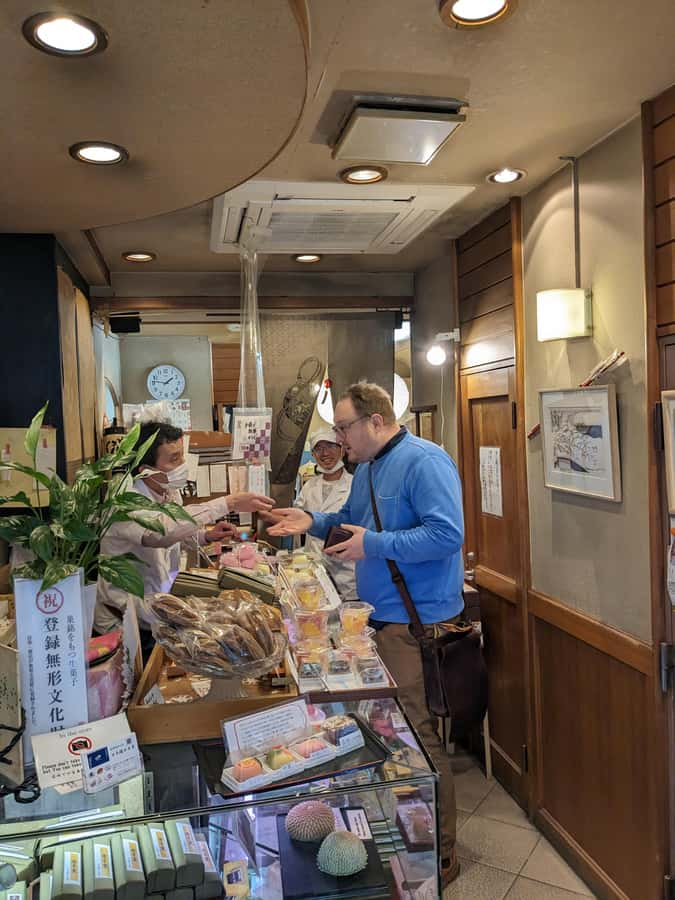
These are small portions, but that is part of the advantage. You can sample several textures and flavors without filling up early. The food comes from selected shops, including some with more than a century of operation, so the first section has a strong connection to established Japanese food traditions.
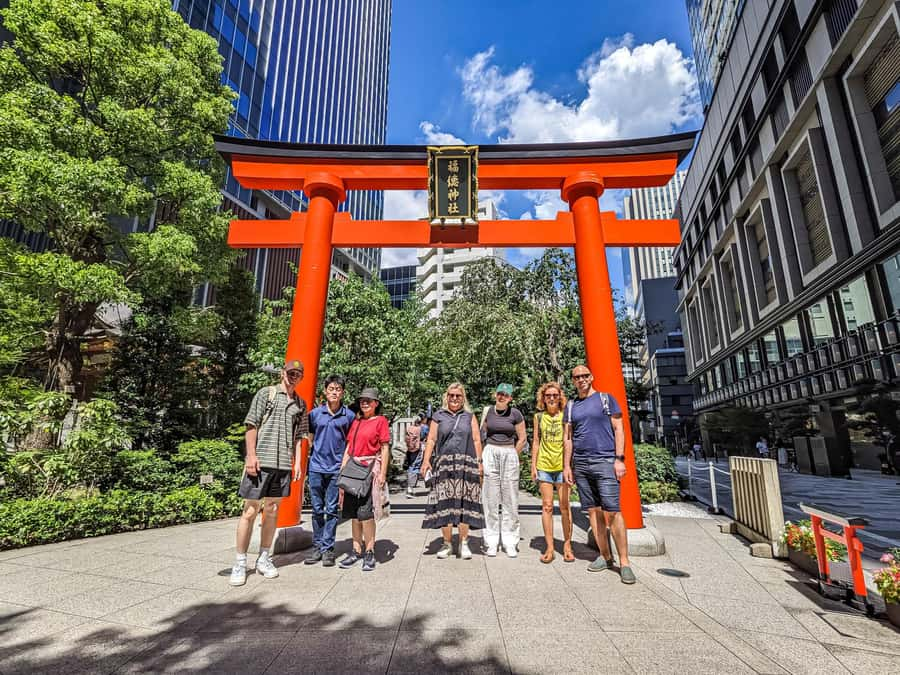
A shrine visit adds a cultural pause to the food stops. The exact shrine details are not specified, so you should think of this as a short cultural element rather than a major sightseeing visit. It helps break up the tastings and gives you a chance to see how food, custom, and daily religious practice can share the same neighborhood.
The main drawback of Nihonbashi is that anyone seeking large meals may find the early tastings modest. This is a food education tour, not a restaurant crawl built around full plates. You should arrive ready to sample, listen, and save room for what comes later.
Tokyo Station: fruit sandwiches and the art of giving
After Nihonbashi, you take a subway ride of about 15 minutes to the Tokyo Station area. Subway fares are not included, so you need to buy your own ticket for the two short rides during the tour.
At Tokyo Station, the focus shifts to present-day food culture and Japanese gift-giving. Food gifts are a major part of shopping in Japan, and Tokyo Station is a natural place to discuss that custom because it connects the capital with destinations across the country.
One featured tasting is a fruits sando, a soft Japanese milk bread sandwich filled with fresh fruit and whipped cream. It is a simple-looking snack, but it shows how presentation matters in Japanese food retail. The clean layers and careful appearance suit a culture where a food gift needs to look as good as it tastes.
You also learn about the relationship between food and bullet trains. Tokyo Station is not just a place to catch a train. It is a major point for buying portable food and gifts before a journey, so this stop links speed, travel, packaging, and regional identity.
This section is likely to appeal to you if you enjoy understanding the small customs behind ordinary purchases. You are not only trying a sweet sandwich. You are learning why certain foods are chosen as gifts, how travel affects what people buy, and how a station can function as a food market as well as a transport hub.
The timing here is about an hour, including sightseeing, explanation, and tastings. It is a shorter stop than Nihonbashi, but the subject is focused and easy to connect with the surrounding station.
Yurakucho: eating like a Japanese office worker
From Tokyo Station, you walk for about 15 minutes to Yurakucho. This is where the tour turns toward the food of working city life.
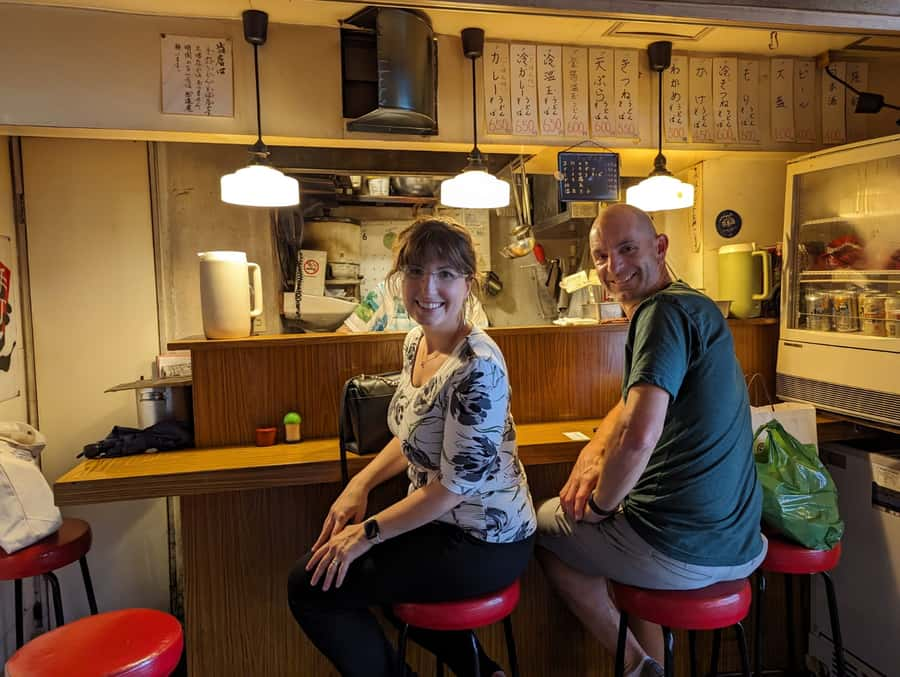
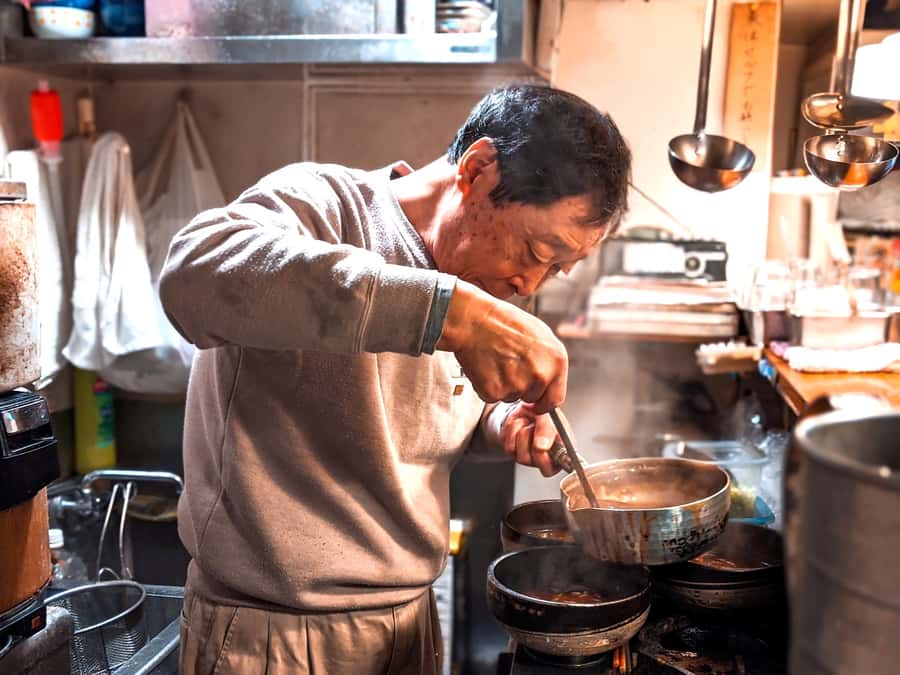
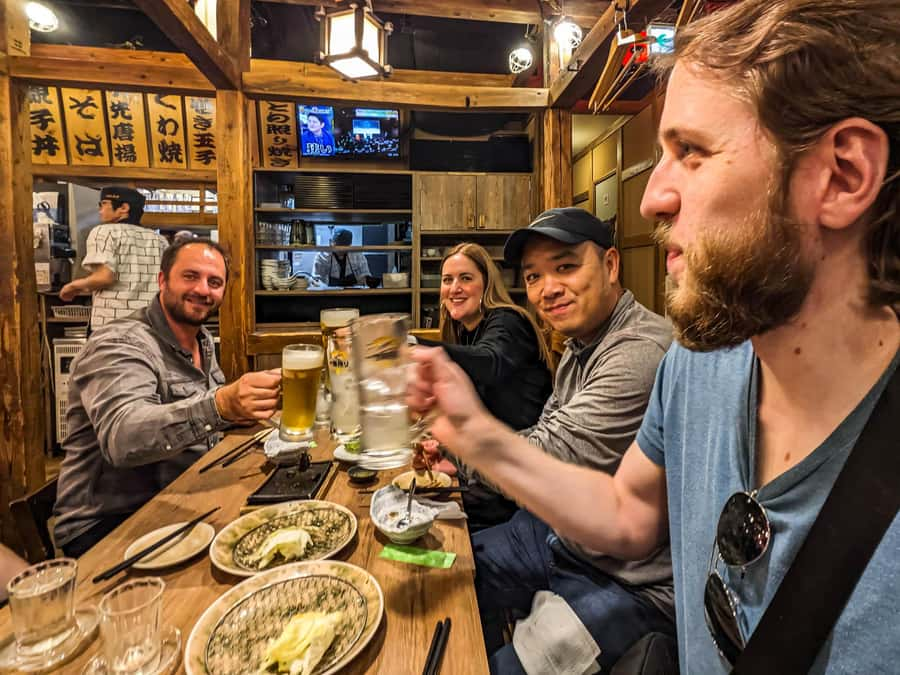
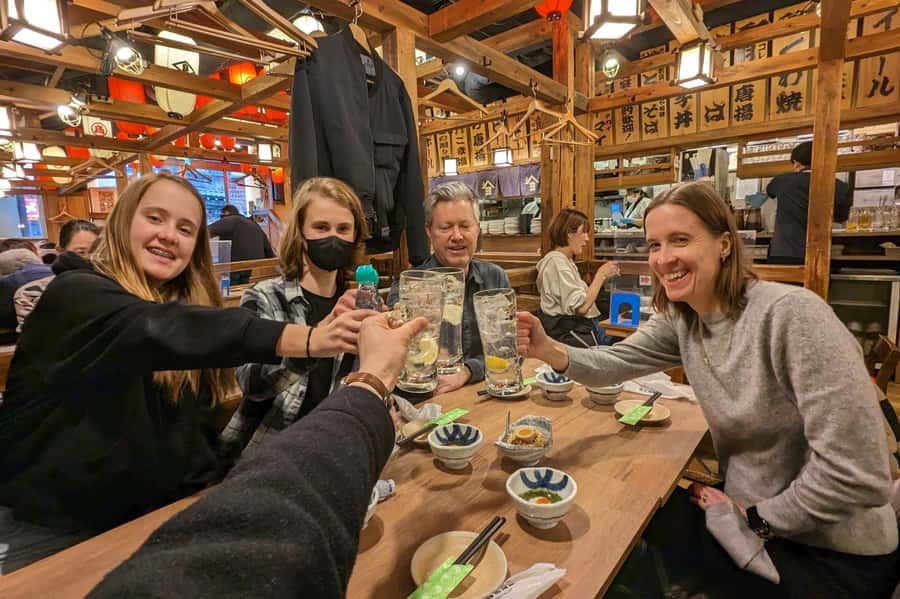
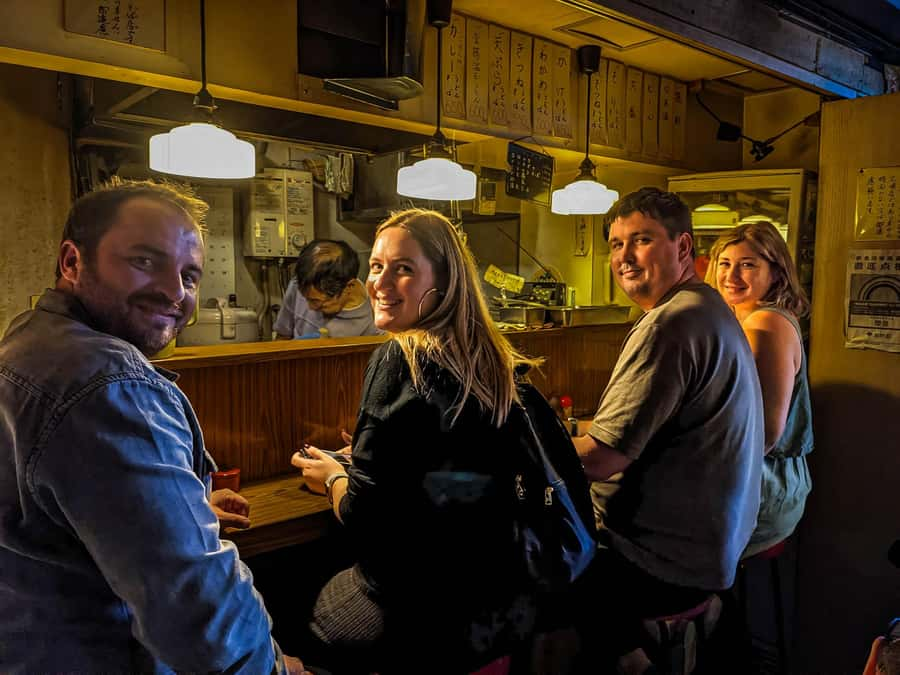
Under and around the railway tracks, you visit the kind of casual places associated with Japan’s salarymen. The setting matters. These are practical dining spots close to offices and train lines, where people can stop for a drink, a quick meal, or a bowl of noodles.
You taste common chicken dishes, drink one Japanese alcoholic beverage called a sour, and try curry udon. Curry udon combines noodles with a curry-flavored soup, giving you a useful example of how Japanese cooking absorbs outside influences and adapts them to local tastes.
This is the tour’s lunch section, though you should not expect a formal multi-course meal. The food is served as part of a sequence of tastings, with time to stand or eat in casual settings. If you prefer polished dining rooms and carefully paced courses, this section may feel rough around the edges. If you want a more ordinary Tokyo experience, it is one of the most useful parts of the route.
I like the contrast between the first and second districts. Nihonbashi explains the ingredients behind Japanese cooking, while Yurakucho shows how people eat when work, trains, and limited time shape the meal. The railway setting also gives you a physical reminder that Tokyo’s food culture is tied closely to its transport network.
The Yurakucho portion lasts about an hour. Because alcohol is included, you should tell the guide about any limits or preferences before ordering. The supplied information confirms one alcoholic drink, but it does not specify alternatives for guests who do not drink.
Akihabara: old snacks with new sales tactics
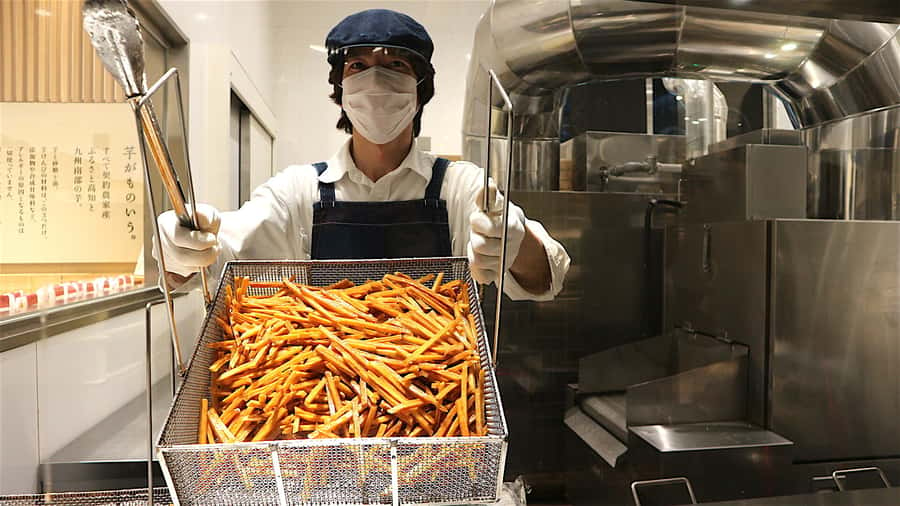
After Yurakucho, you take another short subway ride to Akihabara. This final district changes the mood again. Akihabara is associated with electronics, anime, technology, and youth culture, making it a fitting place to discuss how traditional foods reach younger customers.
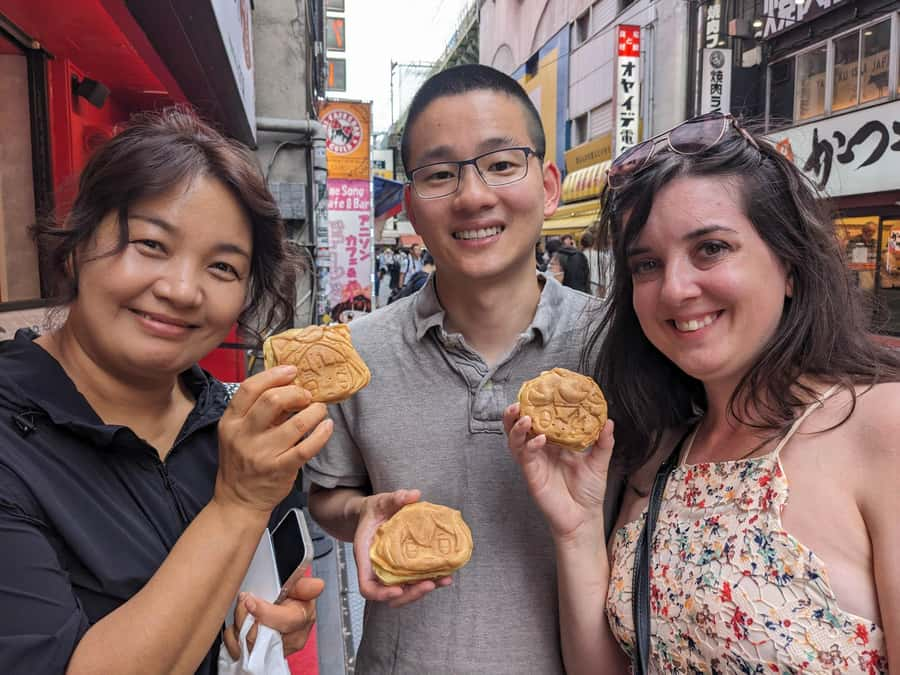
Here, the tastings focus on familiar Japanese snacks presented through modern marketing. The tour looks at how packaging, promotion, technology, and subcultures help older food traditions find a new audience.
The food itself is not fully specified in advance, so you should expect a selection rather than one guaranteed named dish. That may be a small uncertainty for people who plan every bite of a food tour, but it also allows the guide to respond to what is available on the day.
Akihabara is a strong ending because it prevents the tour from treating Japanese food as frozen in the past. You see that tradition can survive through new designs, new sales ideas, and new communities. The district’s connection to electronics and anime gives the discussion a setting that feels very different from Nihonbashi’s long-established shops.
The Akihabara stop lasts about an hour and includes dessert, local snacks, and guided sightseeing. The activity ends at Akihabara Station, which is practical if you plan to continue exploring the neighborhood afterward.
A few more Tokyo tours and experiences worth a look


What the 11-plus tastings are really worth
The price is $164 per person. That is not cheap for a food walk, especially since you pay separately for two subway rides. Still, the value depends on what you want from the experience.
You are paying for more than food portions. The price includes a live guide, 11-plus tastings, one alcoholic drink, movement through three districts, and explanations that connect each stop. You also get access to a small group of no more than eight people, or a private guide if you choose that option.
If you simply want the most food for the least money, you could spend less by visiting casual restaurants on your own. You would not get the same route planning, translations, background, or connection between the districts. You would also need to find the shops and understand what to order without the guide’s help.
For a first Tokyo visit, the price makes more sense if you value interpretation and variety. You sample sweets, snacks, noodles, chicken, a fruit sandwich, traditional ingredients, and a drink in one outing. The route also gives you a practical introduction to three areas that you can revisit later.
The private option should suit families or friends who need a slower or more flexible experience, though the tour still requires walking and stairs. A small group is likely the better value for most people who are comfortable keeping a steady pace.
Walking, transport, and practical demands
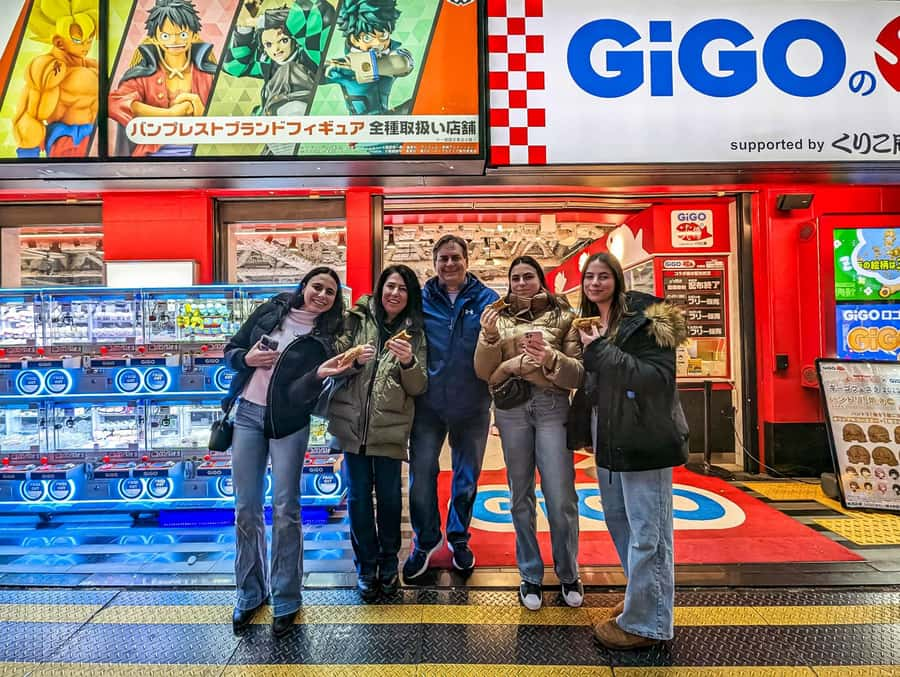
You walk about 6.5 kilometers, or four miles, over the course of the tour. You also use the subway twice and need to manage a large number of stairs in stations.
Wear comfortable shoes and clothing. A towel and reusable water bottle are recommended, which makes sense for a long walking day with repeated food stops. The tour runs rain or shine, so check the forecast and bring suitable protection even though the activity details do not list specific rain gear.
The tour is not wheelchair friendly and is not suitable for people with mobility impairments. It is also listed as unsuitable for vegetarians and vegans, so you should not book it if you need a meat-free or animal-product-free menu.
The group version requires you to walk at a reasonable pace. If you tire easily, need frequent breaks, or want control over the timing, the private option may be a better choice. However, private booking does not remove the basic route demands: you still walk between districts and use subway stations.
The starting point is easy to miss if you head straight outside. At Nihonbashi Station, follow the signs to Exit B12 and stay inside the basement-level shopping mall. If arriving by taxi, ask for Coredo Nihonbashi at 1 Chome-4-1 Nihonbashi. The elevator is to the right of the entrance, and the guide waits near a bench.
The activity is available with English, Japanese, or Portuguese-speaking guides. Hotel pickup is not included unless you book a private tour with hotel meeting. For that option, provide your hotel name and address and wait in the lobby 10 minutes before the scheduled start.
Free cancellation is available up to five days in advance for a full refund. The tour needs at least two bookings to operate, so a solo booking could be canceled and refunded if no one else signs up.
Who will enjoy this food walk most
I would recommend this tour to you if you want food paired with context. It suits first-time visitors who want an organized introduction to Tokyo’s central districts without spending the entire day in one market or restaurant.
It is also a good fit if you enjoy small portions and many stops. The route lets you compare old ingredients, casual working meals, station snacks, and youth-focused products in one day.
You should be comfortable with a full walking schedule. This is not the right choice if you want a slow, seated lunch, have limited mobility, avoid alcohol, or need vegetarian or vegan food.
The guide makes a real difference. Paiva is described as pleasant and well informed about Japanese culture, while Miko is noted for explaining the past, present, and future of Japanese food in a clear way. Since guides can vary by date, treat those names as examples rather than a guarantee.
Should you book the Tokyo Food Tour?
Book it if you want a structured food-and-culture lesson that keeps moving. The strongest feature is the route itself: Nihonbashi gives you traditional foundations, Yurakucho shows everyday city eating, Tokyo Station explains food gifts and travel, and Akihabara looks at modern promotion.
At $164, this is best value for someone who would otherwise struggle to choose where to eat or how to connect Tokyo’s districts. You will pay less by eating independently, but you will also lose the guide’s explanations and the carefully arranged progression.
Skip it if your priority is a large meal, a relaxed pace, or full control over every ingredient. For an active eater who wants 11-plus tastings and a clearer sense of how Tokyo’s food culture changes over time, this is a smart half-day choice.
FAQ
How long does the Tokyo food tour last?
The tour lasts about 5.5 to 6.5 hours. Starting times vary, so check availability when booking.
How much does the tour cost?
The listed price is $164 per person.
How many food tastings are included?
The tour includes more than 11 foodie tastings, covering traditional ingredients, sweets, noodles, chicken dishes, fruit sandwiches, desserts, and modern snacks.
Is an alcoholic drink included?
Yes. One alcoholic drink is included, described as a Japanese sour during the Yurakucho section.
Which areas of Tokyo does the tour visit?
The route covers Nihonbashi, Tokyo Station, Yurakucho near Ginza, and Akihabara.
Where does the tour start?
The meeting point is at Nihonbashi Subway Station Exit B12. Stay inside the basement-level shopping mall and meet at the bench on the right.
Where does the tour finish?
The activity ends at Akihabara Station.
Are subway fares included?
No. You take two short subway rides and must purchase those tickets yourself.
Is the tour suitable for wheelchair users or people with mobility impairments?
No. The tour requires about 6.5 kilometers of walking and many subway stairs, and it is not suitable for wheelchair users or people with mobility impairments.
More Food Experiences in Tokyo
More Tokyo Food Tours in Tokyo
More tours in Tokyo we've reviewed




Tokyo Food Tours, compared.
 ★ 5.0Tokyo: Shinjuku Food Tour (13 Dishes at 4 Local Eateries)From $86
 ★ 4.9Tokyo: Shinjuku Food Tour (15 Dishes and 4 Eateries)From $853 hours
 ★ 5.0Best of Shinjuku: Izakaya Food Tour (4 Stops, 14+ Tastings)From $92
 ★ 5.0Tokyo Night Foodie Tour in Shinjuku – Seasonal Sushi, Wagyu BeefFrom $111
 ★ 5.0Eat and Drink Like a Local: Tokyo Ueno Food Tour-Taverns&RamenFrom $95
 ★ 5.0Tokyo: Shibuya Food Tour (13 dishes and 4 Eateries)From $77