
Reviewed · ASAKUSA TOURS
Tokyo: Calligraphy Workshop Craft Your Own Art in Asakusa
Japanese calligraphy becomes much more approachable when you are holding the brush yourself. In Asakusa, instructor Mei guides beginners through brush control, stroke order, and the calm focus behind shodo before helping you make a finished piece of art. You do not need to read Japanese or have an artistic background.
I like the generous practice time and the chance to use both a traditional brush and a modern fude pen. I also like that your final work is more than a quick souvenir, since you choose characters and receive help shaping the piece to your ability. The main consideration is timing: the advertised session lasts 90 minutes to 1.5 hours, though some sessions may run closer to two hours.
In This Review
- Key points to know before booking
- What makes this Asakusa workshop worth your time
- Finding the fifth-floor workshop in Asakusa
- The first lesson: brush control and stroke order
- Plenty of practice before the final piece
- Choosing characters and making personal art
- Mei’s teaching style and English explanations
- How much value do you get for $38?
- Who should book this activity?
- Fitting calligraphy into an Asakusa day
- Booking flexibility and practical details
- Should you book Mei’s Asakusa calligraphy class?
- FAQ
- How long does the calligraphy workshop last?
- How much does the activity cost?
- Is the workshop suitable for beginners?
- Is the instructor English-speaking?
- What is included in the price?
- Where does the workshop meet?
- Is transportation included?
Key points to know before booking
- Mei teaches in English: She explains the strokes, cultural background, and writing process in a patient, accessible way.
- Practice comes before the final artwork: You work on brush control and stroke order before attempting your finished piece.
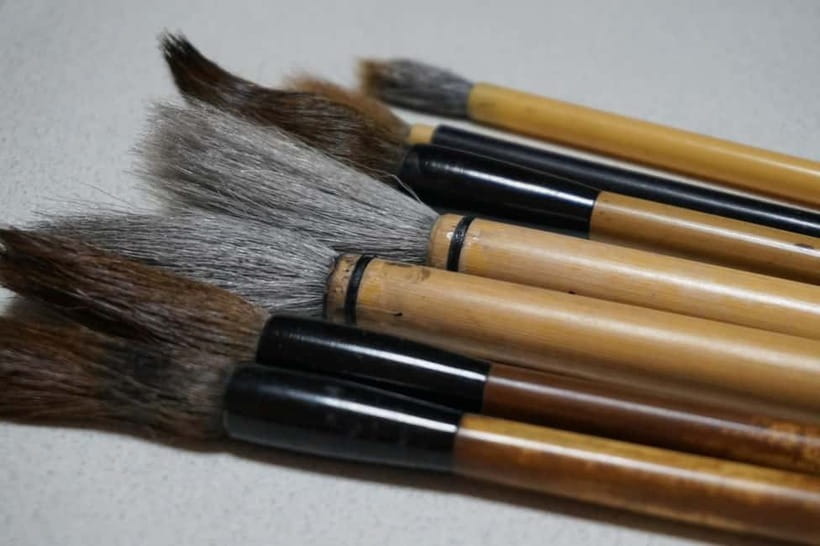
- Two writing tools add variety: Traditional brushes give you the classic feel of shodo, while a fude pen offers more control.
- Your souvenir is made by you: Depending on the session, you may create work on a scroll, fan, or hard-backed square.
- The setting is central Asakusa: The workshop meets at Tokyo Tourist Lounge Asakusa, on the building’s fifth floor.
- Small groups keep it personal: The class is limited to 10 participants and is wheelchair accessible.
What makes this Asakusa workshop worth your time
Asakusa is one of Tokyo’s best places for a cultural activity. The district gives you a strong sense of old Tokyo, while the workshop offers a quiet change of pace from crowded streets and packed sightseeing schedules.
I especially like the balance here. This is not just a demonstration where you watch an expert make perfect strokes. You practice, make mistakes, try again, and then create something of your own. That hands-on format makes the lesson useful even if you have only one afternoon in Tokyo.
At $38 per person, the price is reasonable for a 90-minute small-group lesson with an English-speaking instructor, art materials, and a finished souvenir. You are paying for instruction as well as an object, and that matters. A mass-produced calligraphy print may look attractive, but your piece carries the memory of learning how it was made.
The activity is also a good rainy-day choice. You stay indoors, the pace is calm, and the work requires enough attention to pull you away from your phone and the noise outside. Just do not book it expecting a formal museum lecture or advanced art training. This is a beginner-friendly introduction with room for creative expression.
A few more Tokyo tours and experiences worth a look


Finding the fifth-floor workshop in Asakusa
The meeting point is Tokyo Tourist Lounge Asakusa, located on the fifth floor of the building. Transportation to and from the workshop is not included, so you arrange your own way to the meeting point.
That detail is simple but useful. Give yourself enough time to locate the building and reach the fifth floor before the class starts. Since the activity takes place in Asakusa, you can pair it with sightseeing in the same district, but leave a comfortable gap between plans rather than rushing in from another part of Tokyo.
The small-group limit of 10 participants should make it easier to see demonstrations and receive personal guidance. It also gives the class a more relaxed feel than a large commercial workshop. The space is wheelchair accessible, which is important to confirm when planning a full day of Tokyo activities.
The first lesson: brush control and stroke order
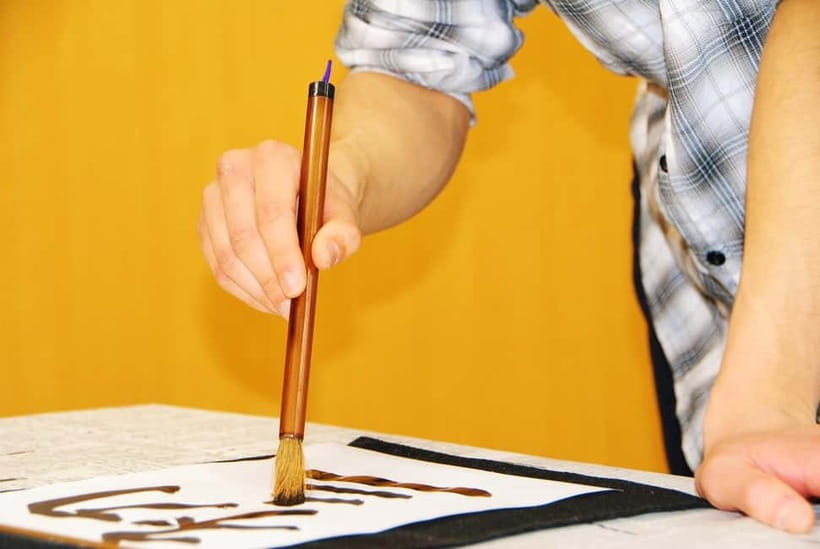
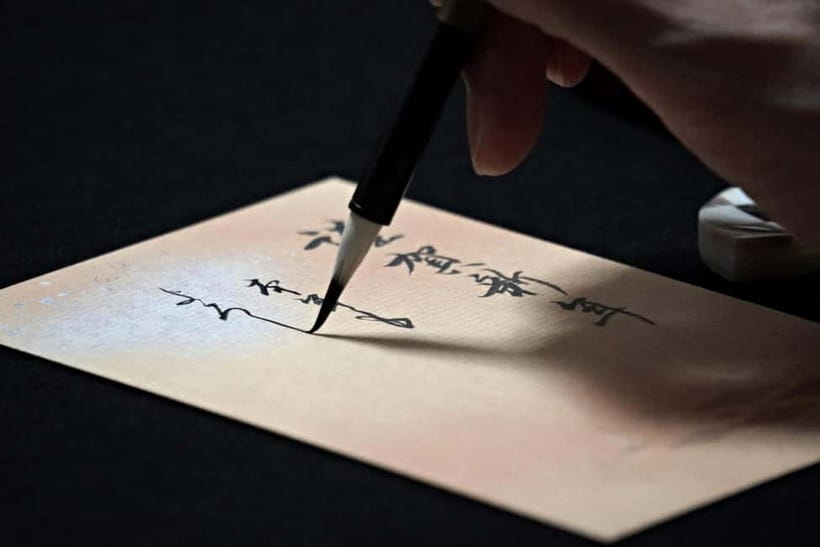
The class begins with the foundations of Japanese brush writing. Mei introduces the basic ideas behind shodo, then shows you how to handle the brush and control the movement of ink.
For a beginner, the hardest part is often not the Japanese character itself. It is learning how much pressure to use, how to start and finish a stroke, and how to move the brush with a steady hand. The instruction focuses on those building blocks before you attempt your final artwork.
Stroke order matters because Japanese characters are built from a set sequence of movements. Following that sequence helps the character look balanced and gives your hand a clear plan. You are not expected to memorize a language in one short class. Instead, you learn enough structure to make your writing look deliberate rather than random.
Mei’s teaching style appears especially suited to people who need time to settle in. She is described as patient, friendly, and clear in English, with plenty of guidance for students who learn at different speeds. That is a real advantage in an activity where one person may pick up brush movements quickly while another needs several attempts.
Plenty of practice before the final piece
The best part of the format is the practice stage. You do not go straight from a brief explanation to a final sheet that cannot be changed. You work through repeated strokes first, giving yourself a chance to understand how the brush responds.
That practice also lowers the pressure. Calligraphy can look intimidating when you see an experienced artist create a clean character in a few seconds. Your first attempts may be uneven. That is normal, and this workshop gives you time to improve before you make the piece you take home.
You can explore characters of your choice, with Mei helping you work at a level that matches your skill. If you are a complete beginner, that may mean concentrating on a small number of basic forms. If you already practice art, you may enjoy paying closer attention to balance, line weight, and the visual shape of each mark.
One particularly useful feature is the combination of traditional brushes and a fude pen, or brush pen. The brush gives you the classic movement and changing line width associated with shodo. The pen is more precise and may feel easier when you are refining details or trying to gain confidence.
Using both tools also shows you that Japanese calligraphy is not frozen in the past. You experience the traditional method while also seeing how a modern writing instrument can make practice more manageable.
Choosing characters and making personal art
The final stage turns technical practice into a personal souvenir. You write characters of your choice and create a finished piece to take home.
The exact presentation can vary, but the experience includes artwork made on formats such as a scroll, fan, or hard-backed square. These are more appealing than simply carrying home loose practice sheets, especially if you want something that can be displayed.
Choosing the character is part of the fun, but it is also where guidance helps. A character may have a pleasing shape, a meaningful idea, or a connection to your trip. Mei can help you create something that suits your ability instead of pushing you toward a result that is too difficult for a first class.
I like that the goal is not perfect professional calligraphy. The goal is a piece that shows what you learned. Small variations in pressure and line shape become part of its story. You leave with something connected to your own time in Tokyo, not just an item selected from a shop shelf.
The final work may be suitable for a wall, depending on its format. One participant used the finished piece as a wall hanging, while others created work on a fan or scroll. Handle it carefully during the rest of your trip, since the listing does not specify protective packaging or a carrying tube.
A few more Tokyo tours and experiences worth a look


Mei’s teaching style and English explanations
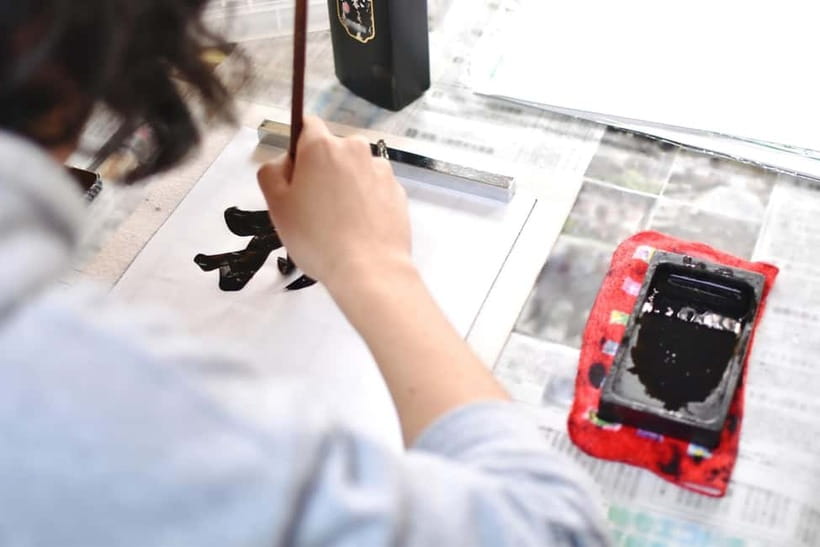
A strong instructor matters more here than fancy equipment. Calligraphy is built on small physical details, and a short correction at the right moment can save you many failed attempts.
Mei explains both technique and context in English. Her lesson includes the background of Japanese calligraphy, the meaning of the strokes, and the role of patience and concentration in the craft. That makes the class more than a handwriting exercise.
Her approach also seems welcoming to mixed groups. Adults and children can take part, and beginners are specifically welcome. If one member of your party is artistic and another is nervous about making marks, the class can still work for both. You can focus on learning rather than comparing your result with someone else’s.
The atmosphere is described as calm and peaceful, a useful contrast to Tokyo’s fast pace. That does not mean the class is silent or solemn. You still have room to ask questions, practice, and enjoy the process. The combination of concentration and friendly instruction makes it a good choice for people who want a cultural activity without a formal or rigid tone.
How much value do you get for $38?
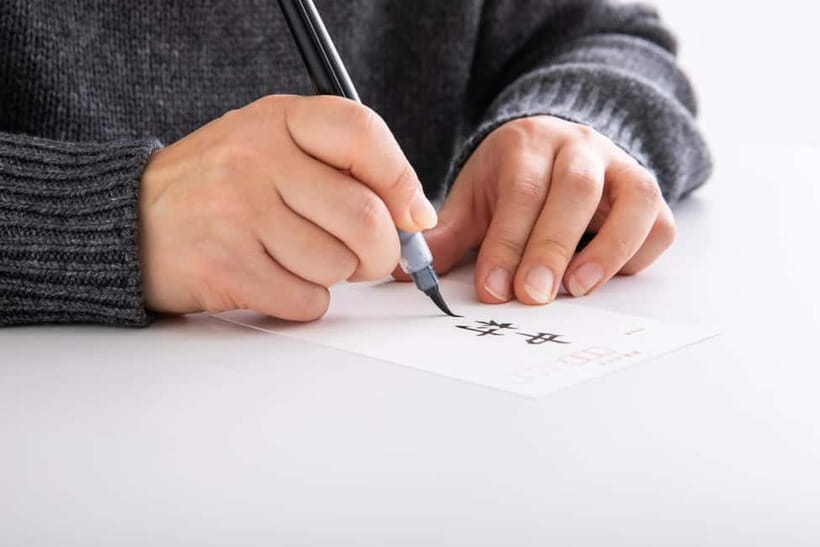
At $38, this is not the cheapest possible souvenir activity in Tokyo, but it offers solid value. The fee includes the workshop, an experienced English-speaking instructor, use of the traditional brushes, use of a fude pen, and your personal artwork.
The key value is the amount of direct instruction. You are not simply paying for access to materials. Mei watches your progress, explains the method, and helps you create a piece that fits your skill level. A small group of no more than 10 supports that personal attention.
The session also lasts long enough to include practice. A shorter activity might give you time for one quick demonstration and one final attempt. Here, the process includes learning, repetition, and making a finished work.
Still, keep your expectations realistic. You will not become a polished calligrapher in 90 minutes. If you already have serious shodo training, you may find the material introductory. One artist found the class useful, but the workshop is designed primarily for beginners and people seeking a cultural introduction.
There is also some uncertainty in the timing. The stated duration is 90 minutes, or 1 to 1.5 hours, while one session lasted about two hours. That extra time may be welcome, but avoid booking a tight follow-up reservation.
Who should book this activity?
I would recommend this workshop to first-time visitors who want a cultural activity they can actively take part in. It is also a good fit for returning visitors looking for something beyond temples, department stores, and observation decks.
Book it if you like:
- Making a souvenir rather than buying one
- Learning through practice
- Quiet, focused activities
- Small-group instruction
- Japanese art and writing
- Indoor plans for a rainy day
- Cultural activities suitable for adults and children
It is less suitable if you want a fast photo stop, a large-scale performance, or advanced instruction. It also may not satisfy you if you dislike repetitive practice. Brush control improves through trying the same movement several times, and that is a central part of the class.
The activity works well for solo participants, couples, families, and small groups of friends. The English instruction removes much of the language barrier, and the teacher’s patient approach helps take the edge off making mistakes in front of others.
Fitting calligraphy into an Asakusa day
The workshop is easiest to combine with other Asakusa plans because you do not need to cross the city between activities. You can build a day around the district, then use the calligraphy class as a quiet middle or closing activity.
Allow more time than the stated class length for getting to the fifth-floor meeting point. You also need your own transportation to and from the venue. Since the class may run longer than 90 minutes, keep the rest of your schedule flexible.
A calligraphy lesson can be a welcome pause after outdoor sightseeing. Instead of spending the whole day moving from one landmark to another, you sit down and work with your hands. That change in rhythm is part of the appeal.
If you are visiting Tokyo with children, the activity gives them a concrete task and a souvenir they made themselves. Younger participants may need help with patience and brush control, but the class is presented as suitable for children as well as adults. Keep in mind that no age range is specified, so confirm details if you are booking for very young children.
Booking flexibility and practical details
You can cancel up to 24 hours before the activity for a full refund. The reserve-now, pay-later option lets you hold a place without paying immediately, which is useful when your Tokyo schedule is still changing.
The instructor language is English. The workshop is wheelchair accessible, and the small group is limited to 10 participants. Starting times vary, so check availability for the date you want.
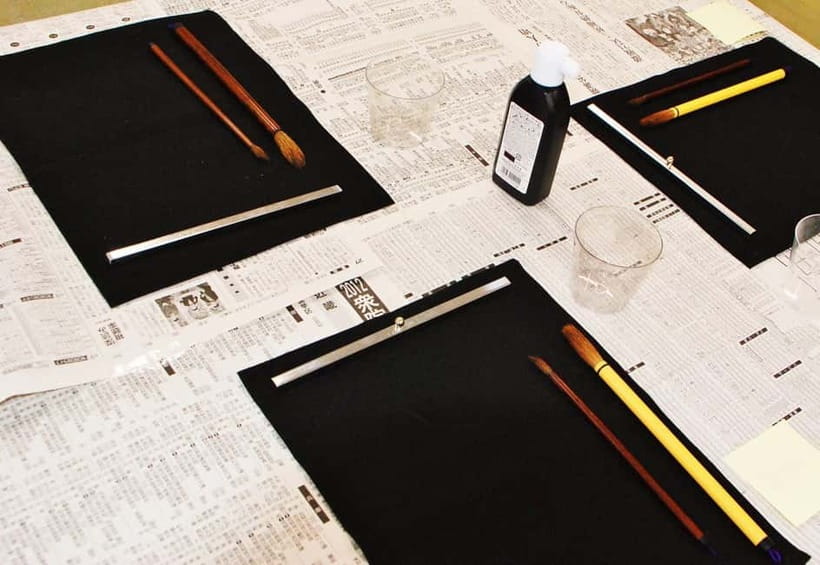
Materials are included, so you do not need to bring a brush or pen. Transportation is not included. The most useful things to bring are a little patience, comfortable clothing, and enough care to carry your finished work afterward.
Should you book Mei’s Asakusa calligraphy class?
Yes, if you want a personal, beginner-friendly introduction to Japanese calligraphy. The combination of practice, cultural explanation, two types of writing tools, and a finished artwork gives you more substance than a quick craft demonstration.
I would make this a strong choice for a rainy afternoon, a family activity, or a slower day in Asakusa. The main drawbacks are modest: advanced artists may want more challenging material, and the session can run longer than the advertised 90 minutes.
Book it when you want to sit still, pay attention, and make something with your own hands. You may not leave as a calligraphy expert, but you will leave with a better feel for the discipline of shodo and a souvenir that carries your own imperfect, personal marks.
FAQ
How long does the calligraphy workshop last?
The stated duration is 90 minutes, with the activity described elsewhere as lasting 1 to 1.5 hours. One session lasted about two hours, so leave some flexibility in your schedule.
How much does the activity cost?
The price is $38 per person.
Is the workshop suitable for beginners?
Yes. No prior calligraphy experience is required, and the class begins with basic brush control, stroke order, and introductory techniques.
Is the instructor English-speaking?
Yes. The instructor language is English, and Mei explains calligraphy techniques, cultural background, and writing practice in English.
What is included in the price?
The price includes the Japanese calligraphy workshop, instruction, use of traditional brushes, use of a modern fude pen, and personal calligraphy artwork to take home.
Where does the workshop meet?
The meeting point is Tokyo Tourist Lounge Asakusa, located on the fifth floor of the building.
Is transportation included?
No. You are responsible for transportation to and from the workshop.
More Workshops & Classes in Tokyo


More Craft Workshops in Tokyo
More Asakusa Tours in Tokyo


More tours in Tokyo we've reviewed








Asakusa Tours, compared.
 ★ 4.8Tokyo: Japanese Dance Cabaret Theater Asakusa-Kaguwa TicketFrom $492 hours
 ★ 4.7Tokyo: Meiji Shrine, Asakusa, Skytree Bus Tour and CruiseFrom $12210 hours
 ★ 4.9Tokyo: Roll and Authentic Sushi Making Class in AsakusaFrom $581h 40m
 ★ 4.8Tokyo: Asakusa Walking Tour with Sensoji Temple VisitFrom $222 hours
 ★ 5.0Tokyo Asakusa Rickshaw TourFrom $42
 ★ 4.5Tokyo Panoramic 1 Day: Meiji Shrine, Asakusa, Odaiba and SKYTREE®From $85