
Reviewed · ASAKUSA TOURS
Tokyo Asakusa Kimono Rental
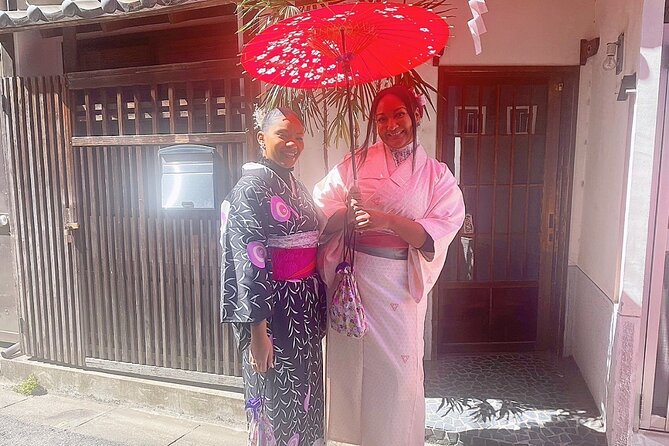
The best part of this Asakusa kimono rental is how little you need to arrange yourself. The shop provides the kimono, obi, undergarments, purse, sandals, dressing, and women’s hair styling, so you can focus on choosing a look rather than assembling one from scratch. I especially like the station-side location and the patient help with styling.
I also like the wide choice of colors, patterns, and styles, plus the chance to take your finished look into Asakusa for photos. The main catch is time: reception ends at 3 pm, every item must come back by 5:30 pm, and late returns cost ¥1,100 per hour.
In This Review
- Key points before you book
- Choosing a Kimono Near Asakusa Station
- What Happens During the One-Hour Dressing Appointment
- Women’s Hair Styling and the Finishing Touches
- Taking the Outfit Into Asakusa
- Families, Couples, and Small Groups
- Baggage, Damage, and Comfort Rules
- How This Compares With Doing It Yourself
- Booking, Cancellation, and Practical Timing
- FAQ
- What is included in the Tokyo Asakusa kimono rental?
- Is hair styling included for men?
- How long does the dressing process take?
- What time can I collect and return the rental?
- What happens if I return the kimono late?
- Can children take part?
- Should You Book This Asakusa Kimono Rental?
Key points before you book
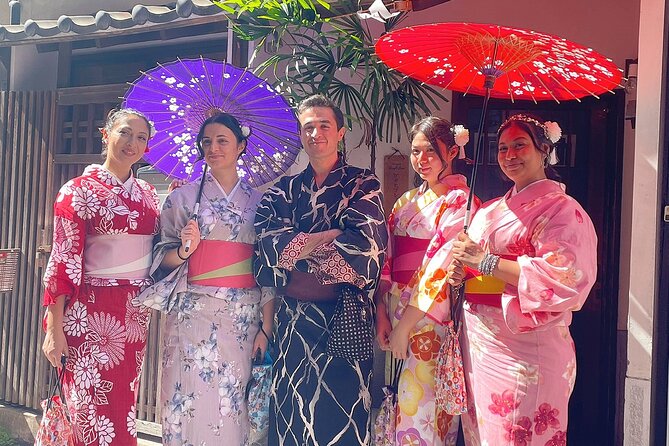
- All the main pieces are supplied: Your rental includes the kimono, obi, underwear, purse, sandals, dressing, and women’s hair set.
- Hair styling is for women only: Men can rent and be dressed, but men’s hair cannot be done.
- The shop is near Asakusa Station: You avoid carrying a costume across Tokyo before you even begin.
- Allow about one hour to change: The dressing process can take roughly an hour when the shop is not crowded.
- Same-day returns are strict: Pick-up is available from 9 am to 3 pm, and everything is due back by 5:30 pm.
- The advertised price has add-ons: A kimono or yukata is listed at ¥7,000, with ¥1,000 for obi and options and ¥500 for underwear. Upgrades and late returns cost extra.
Choosing a Kimono Near Asakusa Station
This is a dressing and rental appointment, not a guided sightseeing walk. You arrive at 日本文化体験・着物レンタルサロン 浅草桜永-ouei-Japan, at Hanakawado 1-chome 8-13, Flower Ichii Apartment, second floor, in Taito City.
The location matters. Asakusa is one of Tokyo’s easiest places to pair with traditional clothing, and a shop near the station saves you from a long trip in ordinary clothes while carrying bags. After dressing, you can make your own plans in the area, take photographs, or attend a special occasion.
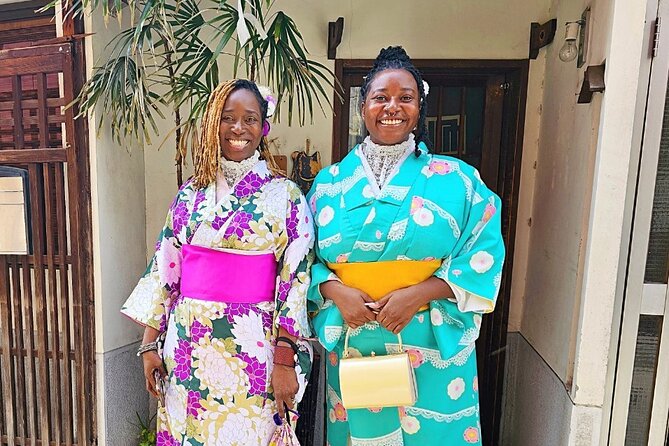
The selection is designed to give you some control over the final look. You can choose among different colors, patterns, and styles, then discuss the arrangement with the staff. That is useful if you have a clear idea of what you want, but also reassuring if you do not know the difference between an obi, a yukata, and the other layers.
The advertised cost is $38.37 per person, but read the pricing details carefully. The shop lists ¥7,000 for the kimono or yukata, ¥1,000 for the obi and options, and ¥500 for underwear. A kimono upgrade begins at ¥1,000, so your final cost can rise depending on your choices.
I see reasonable value here for a one-time cultural activity. Buying every piece would be expensive and impractical for most short visits, while this rental gives you the clothing, dressing service, accessories, and, for women, hairstyling in one appointment. The value is strongest if you want photographs or a special occasion outfit, rather than simply needing ordinary clothes for walking around Tokyo.
A few more Tokyo tours and experiences worth a look


What Happens During the One-Hour Dressing Appointment
The first stage is selection. You choose your kimono or yukata from the available designs and select options for the obi and styling. The staff then helps match the pieces and prepares the clothing.
The shop supplies the basic items you need:
- Kimono or yukata
- Obi
- Underwear
- Purse
- Sandals
- Dressing service
- Hair set for women
You do not need to bring special equipment. That makes this a simple addition to a Tokyo day, especially if you are traveling light or do not want to shop for individual accessories.
The actual change takes about an hour when the shop is not crowded. Do not treat that as a guaranteed ten-minute costume change. Traditional dressing involves several layers and careful obi work, so build the appointment into your schedule rather than booking a museum or meal immediately afterward.
The shared changing room is used by staff and other customers. Wear suitable innerwear, such as a camisole or petticoat, so you remain comfortable while changing. In cold weather, choose warm inner layers with a deep collar that will not show above the kimono. Ankle-length bottoms such as spats work better than tights because Japanese sandals are not made for tights.
That seasonal advice is practical. The kimono itself does not remove the need to dress for the weather, and sandals can leave your feet cold. In summer, the heat may affect your comfort as well. One family visit took place on a hot day, yet the children remained excited about wearing their outfits. For a family, that suggests the clothing can be the event itself, but you should still plan breaks and avoid an overpacked afternoon.
Women’s Hair Styling and the Finishing Touches
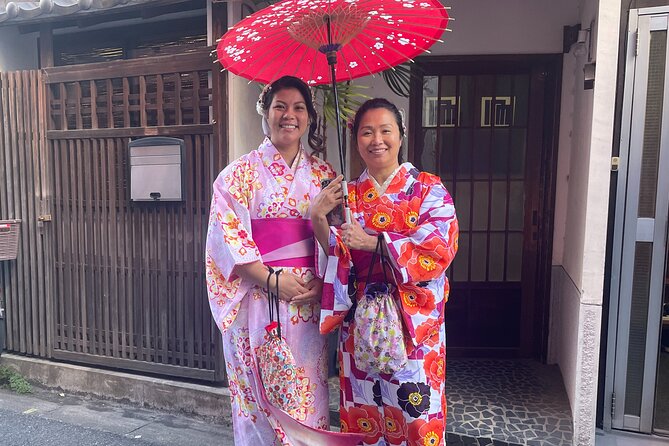
For women, hair styling is part of the price. You can consult with the stylist and choose the hairstyle you want, adding another layer to the final appearance without finding a separate salon.
This is one of the strongest reasons to choose this rental instead of arranging clothing alone. Hair can make the difference between simply wearing a kimono and feeling properly dressed for photographs. The staff has also accommodated long twists, which shows a willingness to work with a hairstyle that may not fit a standard Japanese styling routine.
Do not expect men’s hair styling. The service specifically excludes it, so men should arrive with their hair already arranged.
Once the dressing and hair are finished, you have the visual details that make the outfit work: the obi, sandals, purse, and coordinated colors. The staff may also help you with photographs. Photo assistance is not described as a separate formal photo session, but the staff has helped customers take pictures, which is useful if you are visiting with only one companion and want a photograph of both people.
For the best result, decide in advance what kind of look you want. You might prefer a bright, playful yukata, a more formal kimono, or colors that work with your partner’s outfit. The available selection gives you choices, but time spent comparing every pattern will use part of your appointment.
Taking the Outfit Into Asakusa
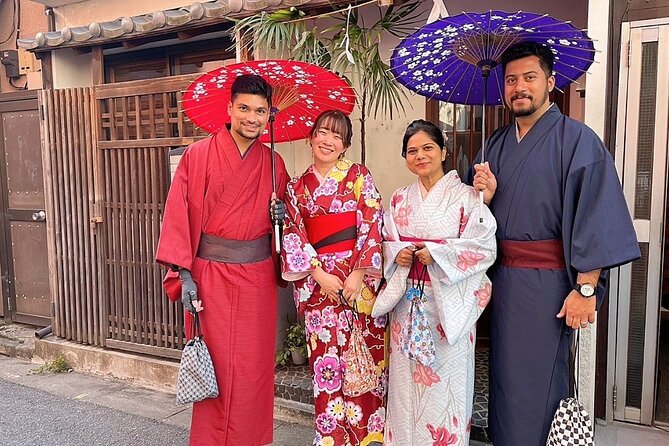
The activity ends back at the shop, but the rental is meant to give you time outside in the outfit. You are not being led on a fixed route, so you can decide how much walking and photography suit your group.
That freedom is valuable. You can keep the rental focused on pictures, arrange it around a nearby meal, or combine it with your own plans in Asakusa. You also avoid paying for a longer guided activity when the part you really want is the clothing and styling.
The trade-off is that you are responsible for your own timing and comfort. A kimono changes your walking pace, and sandals are not ideal for a long day of covering ground. I would plan a compact outing near the shop rather than trying to cross several Tokyo districts.
Keep an eye on the return deadline. All rented items must be back at the store by 5:30 pm on the same day. The deadline applies regardless of the reservation time or day of the week, and late returns cost ¥1,100 for each hour. A morning appointment gives you much more breathing room than a late afternoon one.
Reception runs from 9 am to 3 pm. If you book near the end of that window, the one-hour dressing process leaves less time for photographs and walking before the return deadline. For a relaxed day, I would choose an earlier appointment.
Families, Couples, and Small Groups
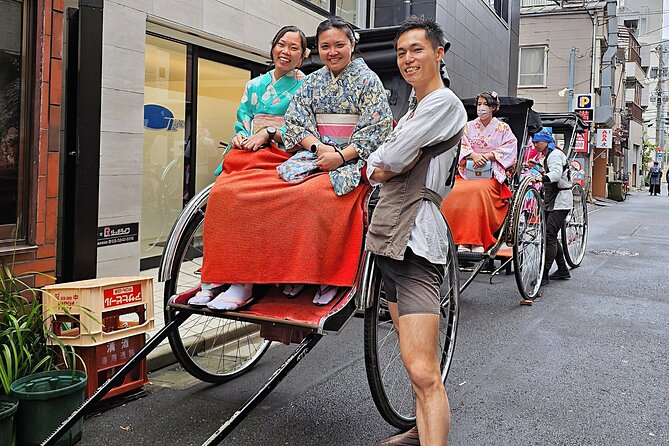
The experience can work well for families because children can take part in the same activity as adults. Children must be accompanied by an adult, and the booking request asks you to state the number of men, women, and children.
The available information lists a maximum of two people, so confirm the accepted group size before booking if you are planning for more than two. That point matters because the family details suggest children are welcome, but the capacity information is limited.
For couples or two friends, the arrangement is easier to manage. You can compare colors, help one another with photographs, and return together. Men can rent a kimono and be dressed, but they will need to handle their own hair.
The activity also suits anyone marking a birthday, engagement, family occasion, or simply wanting a visual memory of Tokyo. You do not need previous kimono knowledge. The dressing staff handles the technical work, while you make the style choices.
I would be more cautious about bringing very young children who dislike sitting still. The dressing process can take about an hour, and the changing area is shared. The clothing may be exciting, but the appointment itself requires patience.





Baggage, Damage, and Comfort Rules
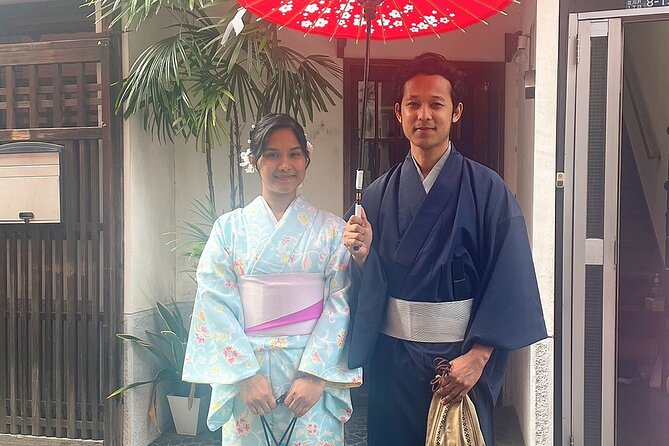
The shop accepts simple baggage if it fits in the designated compartment. Do not plan to leave expensive handbags, branded goods, valuables, or precision electrical equipment there. The shop is not responsible for those items left in its care.
That means you should arrive with only what you need. A small bag is easier to manage with a purse and sandals, and it reduces worry while you are being dressed.
There is no kimono insurance. You can face a repair charge for damage such as holes, scratches, stains that cannot be washed out, mud marks, or cigarette burns. Treat the rented clothing carefully, especially around food, drinks, wet ground, and smoking areas.
If you want to return the clothing the next day, the shop requires either identification or a ¥10,000 deposit. The deposit is refundable when the items are returned. Same-day return is simpler, but the overnight option may help if your schedule does not fit the 5:30 pm deadline.
The late-return fee deserves attention. At ¥1,100 per hour, a delayed photo stop or meal can quickly add cost. Set a reminder and leave enough time to walk back to the shop, rather than cutting the return close.
How This Compares With Doing It Yourself
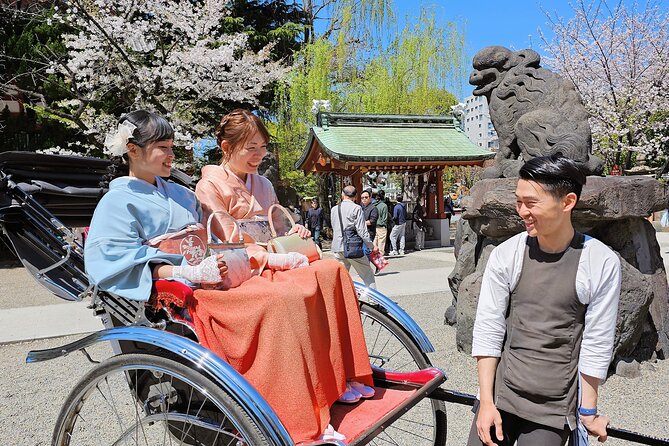
You could assemble a kimono look from separate rentals, but that creates several small problems. You would need to find the clothing, obi, undergarments, sandals, purse, and a person who can dress you correctly. Matching the pieces and arranging the obi would take time and may not produce the look you want.
Here, the staff handles the dressing and supplies the pieces in one place. That is the central value, especially for a first visit to Japan or anyone who wants a polished appearance without studying kimono construction.
The experience is not designed for a long lesson about textile traditions or formal Japanese dress. If you want detailed cultural instruction, this may feel brief. The focus is practical: choose an outfit, get dressed, style your hair if you are a woman, take photographs, and return the clothing on time.
I like that balance for a short Tokyo visit. You get the visual and social experience of wearing traditional clothing without giving up half a day to a lecture. Just keep your expectations clear about what you are booking.
Booking, Cancellation, and Practical Timing
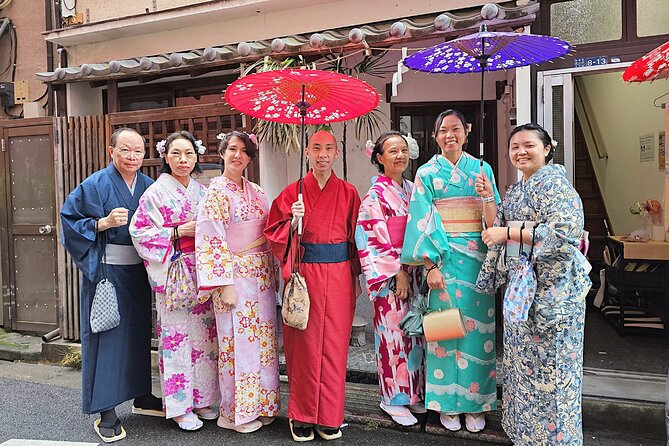
Confirmation is sent at booking, and the activity is close to public transportation. The meeting and ending point are the same shop, so you do not need to arrange a transfer to a hotel or another destination.
The experience is often reserved about 33 days ahead. That suggests planning early is sensible, particularly if you need a certain date, want two people dressed together, or are arranging the activity around a special occasion.
Free cancellation is available until 24 hours before the start time. Cancel later than that and the payment is not refunded, and changes made within the final 24 hours are not accepted. Cut-off times follow Tokyo local time.
The booking request asks for the number of men, women, and children. Give accurate numbers, especially if women need hair styling or if children are joining.
FAQ
What is included in the Tokyo Asakusa kimono rental?
The rental includes the kimono fee, dressing, and a hair set for women. The supplied clothing items include the kimono or yukata, obi, underwear, purse, and sandals.
Is hair styling included for men?
No. Hair styling is included for women only, and men’s hair cannot be done at the shop.
How long does the dressing process take?
Changing into the kimono takes approximately one hour when the shop is not crowded.
What time can I collect and return the rental?
Rental reception is available from 9 am to 3 pm. All items must be returned to the shop by 5:30 pm on the same day.
What happens if I return the kimono late?
A late return costs ¥1,100 for each hour, regardless of the reservation time or day of the week. Returning the next day requires identification or a ¥10,000 deposit, which is refundable when the items come back.
Can children take part?
Yes. Children must be accompanied by an adult. When booking, provide the number of men, women, and children in your party.
Should You Book This Asakusa Kimono Rental?
I would book this if you want an easy, photo-friendly cultural activity near Asakusa Station. The strongest points are the helpful dressing service, the broad choice of styles, the included accessories, and women’s hair styling. The staff has also shown patience with special hair needs and has helped with photographs, useful touches for a memorable occasion.
I would skip it if you want a full-day guided tour, a formal cultural class, or a very flexible return time. The one-hour dressing appointment, shared changing room, 5:30 pm deadline, possible upgrade fees, and damage charges all require a little care.
For the best value, book an early appointment, wear suitable inner layers, bring minimal baggage, and plan a short Asakusa outing close to the shop. With those limits in mind, this is a straightforward way to wear traditional Japanese clothing without buying a wardrobe you cannot take home.
More Asakusa Tours in Tokyo

More tours in Tokyo we've reviewed





Asakusa Tours, compared.
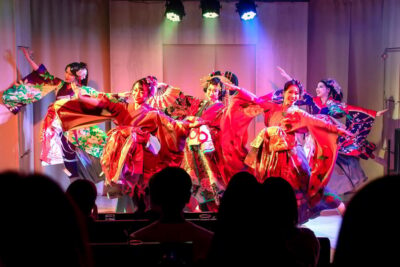 ★ 4.8Tokyo: Japanese Dance Cabaret Theater Asakusa-Kaguwa TicketFrom $492 hours
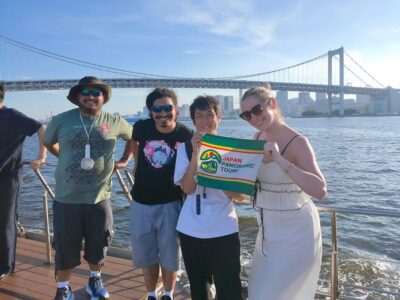 ★ 4.7Tokyo: Meiji Shrine, Asakusa, Skytree Bus Tour and CruiseFrom $12210 hours
 ★ 4.9Tokyo: Roll and Authentic Sushi Making Class in AsakusaFrom $581h 40m
 ★ 4.8Tokyo: Asakusa Walking Tour with Sensoji Temple VisitFrom $222 hours
 ★ 5.0Tokyo Asakusa Rickshaw TourFrom $42
 ★ 4.5Tokyo Panoramic 1 Day: Meiji Shrine, Asakusa, Odaiba and SKYTREE®From $85