
Reviewed · ASAKUSA TOURS
This is Asakusa! A Tour Includes the All Must-Sees!
Asakusa can feel like several Tokyos packed into one neighborhood: a centuries-old temple, festival streets, cheap drinks, kitchen knife shops, a riverside meal, and the soaring Tokyo Skytree. This private six-and-a-half-hour tour gives you one guide for your own party, which is a real help when the streets around Senso-ji fill up.
I like two things here. First, the route covers both the classic sights and useful local corners, especially Kappabashi kitchenware town, which many first-time visitors miss. Second, the guide can adjust the pace and answer questions about Buddhism, Japanese customs, food, and daily life. The main consideration is cost: the $137.29 booking price is only part of the bill, since food, transportation, and admission charges are extra.
In This Review
- Key points to know before booking
- Why a private Asakusa tour makes sense
- Starting at the Asakusa Culture Tourist Information Center
- Senso-ji and Asakusa Shrine
- Traditional shopping streets and Hoppy Street
- Kappabashi, where cooks shop
- Lunch at Gonpachi
- Tokyo Skytree and Tokyo Solamachi
- Timing, walking, and the real cost
- Who will get the most from this day
- Is this Asakusa tour worth booking?
- FAQ
- Where does the tour start?
- Where does the tour finish?
- How long does the experience last?
- Is this a private tour?
- Are transportation, food, and admission fees included?
- Which major sights are included?
- What happens if the weather is bad?
- Can I cancel the booking?
Key points to know before booking
- Private guiding keeps the day personal: Only your group takes part, so you can ask questions and discuss your own interests.
- The route links old and new Tokyo: You move from Senso-ji and Asakusa Shrine to Kappabashi, Tokyo Skytree, and Solamachi.
- Kappabashi is a practical highlight: Shops sell knives, tableware, cooking tools, and realistic plastic food displays.
- Lunch is at Gonpachi: A handmade soba restaurant with views toward the Sumida River and Tokyo Skytree.
- The end point is different: You finish at Oshiage Station near Skytree, not back at Asakusa Station.
- Budget extra money: The estimated additional cost is 4,880 yen per person, plus a possible 100 yen optional experience.
Why a private Asakusa tour makes sense
Asakusa is easy to reach but not always easy to read. Several major sights sit close together, yet the crowds, side streets, religious buildings, shops, and train routes can make the area feel confusing. A private guide gives you a person to handle the practical side while you pay attention to what you are seeing.
The private format matters most if your group has different interests. One person can ask about temple customs, another can look for a Japanese kitchen knife, and someone else can ask where locals eat or how the Sanja Matsuri fits into Asakusa life. You are not locked into the questions or pace of a large group.
Guides named in the available feedback include Haruo, Macky, Walt, and Sayaka. Haruo received praise for helping a group avoid the worst crowds at the observation area and for assisting with a knife purchase. Macky was singled out for shaping the day around the group’s needs and choosing a good lunch stop. Walt was praised for explaining Buddhism and Japanese history, while Sayaka was noted for polished English and careful attention to requests.
Those names do not guarantee who you will receive, but they show the type of service this experience aims to provide. The most useful quality here is not simply facts. It is having someone who can explain what you are looking at and help you make sensible choices during a busy day.
A few more Tokyo tours and experiences worth a look
Starting at the Asakusa Culture Tourist Information Center
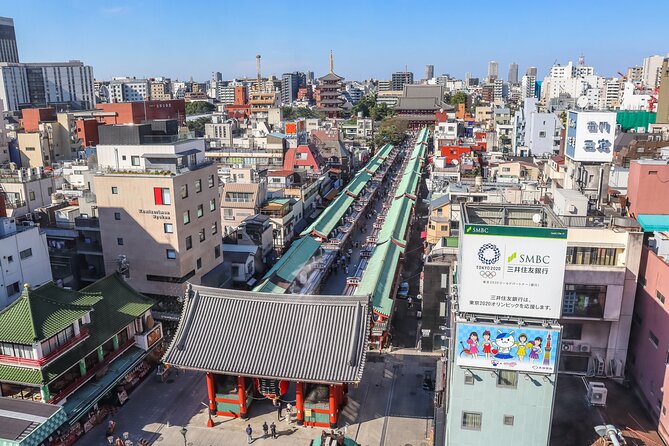
The tour begins near Asakusa Station at 1-chome-1-3 Asakusa. The Asakusa Culture Tourist Information Center is more than a place to pick up maps. Its upper observation terrace gives you a clear view across the neighborhood and is a smart first stop for getting your bearings.
You can see how the streets around Senso-ji fit together before heading into them. This is especially useful if Asakusa is your first Tokyo district, since the view helps turn a maze of roads into a readable plan.
The scheduled stop is about 15 minutes, with no admission charge. Do not expect a long visit. The value is in the quick orientation and the chance to look down on the district before entering its busiest lanes.
One practical warning: confirm the exact meeting point before the day begins. The address is near Asakusa Station, but Asakusa has several station exits and multiple railway lines. A past mix-up sent one group in the wrong direction by taxi. Ask which station and exit your guide means, rather than relying on the street address alone.
Senso-ji and Asakusa Shrine
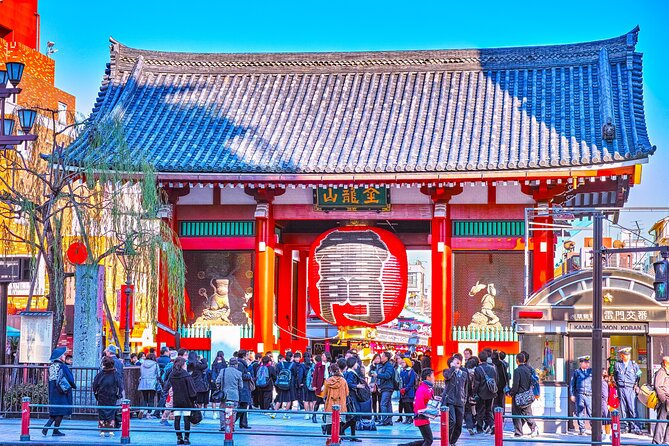
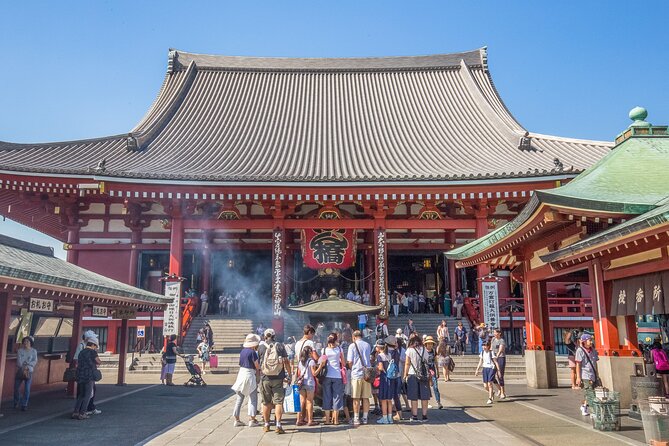
Senso-ji gets the largest early block, about one hour, and it deserves it. Tokyo’s oldest temple is marked by the enormous red lanterns at Kaminarimon Gate, the image most closely linked with Asakusa. From there, you follow the approach toward the main temple buildings and the busy shopping lane.
The red buildings, incense, religious details, and constant flow of people make Senso-ji a place to observe, not just photograph. Your guide can explain the difference between a Buddhist temple and a Shinto shrine, along with the customs you may see around the grounds.
The nearby Asakusa Shrine takes about 15 minutes. It is tied to the Sanja Matsuri, one of Tokyo’s major festivals, and it offers a useful contrast with Senso-ji. The two sites are close, but they represent different religious traditions.
This short visit works best when your guide explains the connection between the temple and shrine. Without that context, you could easily treat both as attractive red structures and miss why they matter.
Crowds are the obvious drawback. Senso-ji is one of Tokyo’s most popular sightseeing areas, and the main approach can feel packed. A private guide cannot remove the crowd, but can help you move with purpose and avoid wasting time trying to work out where to go next.
Traditional shopping streets and Hoppy Street
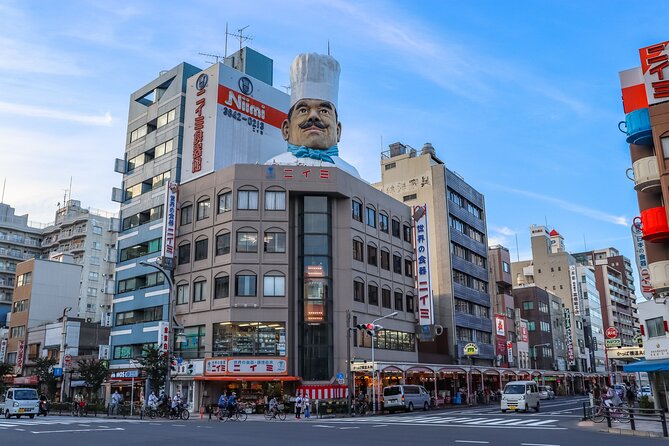
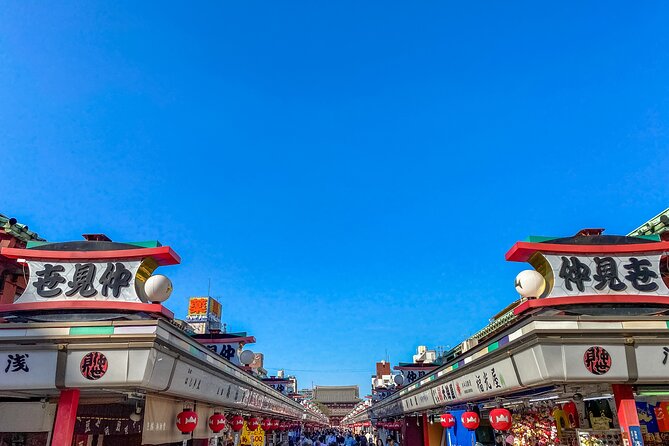
Asakusa Nishi-sando Shopping Street takes about 15 minutes. Its festival-style decoration and traditional shops show how the neighborhood balances local identity with tourism. This is a brief walk rather than a serious shopping session, so keep your expectations in check.
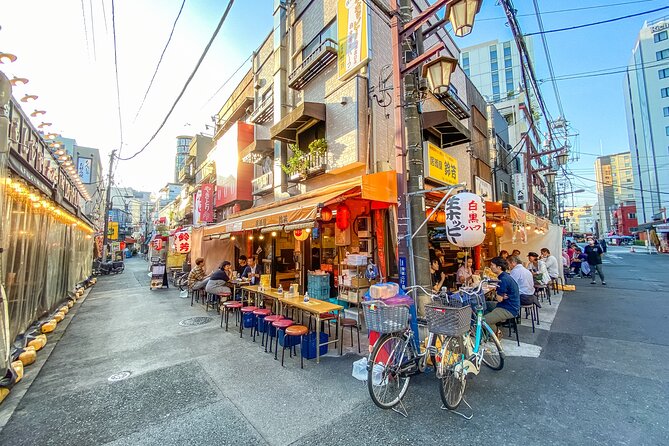
Hoppy Street is scheduled for only about five minutes, but it adds a different note. Restaurants line the street, many with outdoor tables and reasonably priced drinks. Tourists pass through, while local customers also come for a drink and a casual meal.
You may not have time to sit down here, since the main meal comes later at Gonpachi. Think of Hoppy Street as a quick look at Asakusa’s informal food-and-drink culture, not a full tasting stop.
The route is strongest when you notice these changes in atmosphere. Senso-ji is ceremonial and grand. Nishi-sando is designed around traditional shopping and festivals. Hoppy Street is relaxed and social. Together, they show more of Asakusa than a temple-only visit would.
Kappabashi, where cooks shop
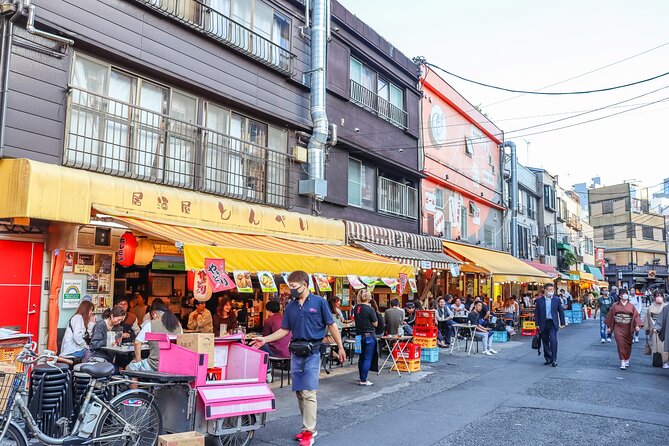
Kappabashi Dogugai receives about 30 minutes, and I consider it one of the tour’s most useful stops. This shopping district is lined with specialty stores selling knives, tableware, cooking tools, restaurant supplies, and food replicas.
For many people, this is where the tour becomes personal. You can browse professional-style kitchen knives, Japanese dishes, chopsticks, molds, pans, and other tools. If you cook, collect tableware, or want a practical souvenir, Kappabashi offers far more choice than a standard souvenir shop.
Thirty minutes is enough for an introduction, but not enough for a leisurely survey of every store. If you already know you want a knife or a particular piece of cookware, tell your guide early. The guide may help you find the right shop and handle basic questions about your purchase. Haruo was specifically praised for helping with a knife purchase, which points to the value of having assistance in this part of the route.
You should also remember that a knife purchase may require packing and transport planning. The tour information does not promise shipping or explain airline rules, so ask the shop and your guide about those details before buying.
Lunch at Gonpachi
The planned meal stop is Gonpachi, a handmade soba restaurant at the foot of Azumabashi Bridge. The restaurant has large windows looking toward the Sumida River and Tokyo Skytree, giving you a pleasant setting after the temple streets and shopping lanes.
The meal allowance is listed as 1,200 yen per person in the estimated extra costs. Actual spending can vary, and anything beyond the stated meal cost is your responsibility. Food and drinks are not included in the booking price.
This is a useful part of the tour because lunch is not treated as dead time. It gives your guide a chance to answer questions in a calmer setting and lets you experience a Japanese meal as part of the day rather than rushing between sights.
The schedule allows about 50 minutes. That is enough for a straightforward meal, but you should not expect a long restaurant visit if service is busy or you want to order several dishes. Tell your guide about food needs or preferences as early as possible, since the tour is private and the plan may be more adaptable than a fixed group outing.
Tokyo Skytree and Tokyo Solamachi
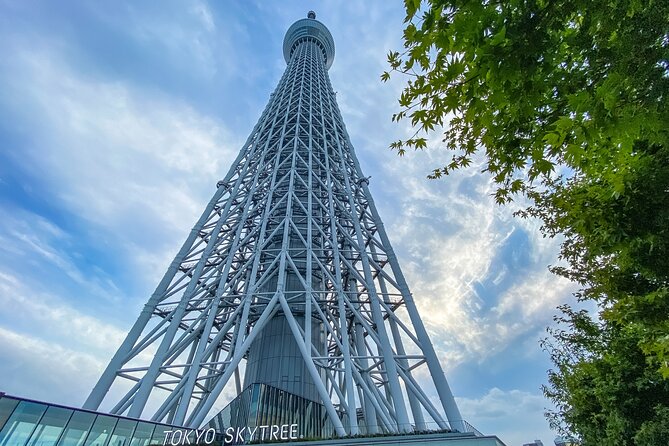
The day shifts from old Asakusa to modern Tokyo at Tokyo Skytree. At 634 meters, Skytree is Japan’s tallest building and opened in 2012. The tower complex includes observation areas, a mall, an aquarium, and office buildings.
The scheduled Skytree visit lasts about one hour and ten minutes, making it one of the day’s major stops. The best reason to include it is the change in viewpoint. After seeing Asakusa at street level, you can look back over the district and understand its place beside the Sumida River and the larger Tokyo area.
Admission is not included in the booking price. The estimated extra costs list 3,400 yen per person for admission fees, though exact charges can depend on the areas visited. Check the current amount when booking or with the operator before you set your budget.
The observation areas can be busy, and weather affects the view. If conditions are poor, the transportation, route, or destinations may change. That flexibility is sensible, but it also means you should not treat the tower view as guaranteed in every kind of weather.
Solamachi follows Skytree and allows about 30 minutes. This commercial complex sits beside the tower and follows a new downtown concept, with shopping, entertainment, dining, and other facilities. It is a practical place to browse after the observation visit, though half an hour gives you only a taste of the complex.
The tour ends at Oshiage Station, also called Skytree Station. That makes the route efficient if you plan to continue elsewhere from the eastern side of Tokyo, but it is inconvenient if you expect to return to Asakusa. You can ask the guide about changing the finishing spot, but do so before the tour day if possible.
Timing, walking, and the real cost
The advertised duration is about six hours and thirty minutes. The individual stop times add up to roughly four hours and fifty minutes, leaving time for walking, transfers, explanations, meal service, and crowd delays. That is normal for a route covering several districts, but it also means the day will feel active.
Transportation costs are estimated at 180 yen per person. Admission fees are estimated at 3,400 yen, meals at 1,200 yen, and an optional experience at 100 yen. In total, the expected extra cost is listed as 4,880 yen per person, with the optional charge potentially added depending on what you choose.
At $137.29 per person, this is not a bargain sightseeing loop. You are paying for a private guide, planning, local explanations, and the convenience of moving through a crowded district without having to organize every transition yourself. For a group that values personal attention, the price can be reasonable. For a solo visitor or a couple comfortable with temple etiquette, maps, trains, and self-guided sightseeing, it may feel high.
Group discounts are available, which improves the value for a family or group of friends. Since the tour is private, the price should be judged against the cost of hiring a guide for your party, not against the price of a public walking tour.
Who will get the most from this day
I would choose this tour for first-time visitors who want Asakusa explained rather than simply photographed. It also suits families and groups with mixed interests, since the route includes religion, shopping, food, city views, and modern architecture.
It is a good fit if you want to buy a Japanese knife or kitchen goods but are unsure where to start. A guide can save time and help you communicate, though the tour cannot guarantee a particular product or purchase arrangement.
The experience also works well for visitors who prefer a clear plan. You begin near Asakusa Station and finish near Skytree, with the day laid out from historic sights to modern Tokyo.
I would think twice if you want a slow, unstructured day. Nine stops in about six and a half hours leave limited time for lingering, shopping at length, or sitting over drinks on Hoppy Street. The route is also less appealing if you have already spent extensive time in Asakusa and only want one or two specific sights.
Most people can participate, and the tour runs near public transportation. Exact transport, route, and destination choices can change in bad weather or if a site closes temporarily.
Is this Asakusa tour worth booking?
Book it if you want a private introduction to Asakusa that keeps moving. The strongest parts are the contrast between Senso-ji and Asakusa Shrine, the practical Kappabashi stop, the soba lunch with Skytree views, and the final rise to the observation area.
Before paying, confirm the meeting station and exit, ask what admission charges apply, and budget the extra 4,880 yen per person. Tell the operator if you want more time for knives, food, religious sites, or Skytree.
Skip it if your main goal is a cheap temple visit or a long shopping afternoon. Choose it when the guide’s local explanations and private format are worth more to you than keeping the day inexpensive.
FAQ
Where does the tour start?
It starts near Asakusa Station at 1-chome-1-3 Asakusa, Taito City, Tokyo 111-0032. Confirm the exact station and meeting point with the guide because the area has several nearby rail stops and exits.
Where does the tour finish?
The planned finishing point is Oshiage Station near Tokyo Skytree, at 1-chome-1-65 Oshiage, Sumida City, Tokyo 131-0045. You can ask the guide about changing the finishing spot.
How long does the experience last?
The tour lasts approximately six hours and thirty minutes.
Is this a private tour?
Yes. Only your own group participates, and a tour guide accompanies your party.
Are transportation, food, and admission fees included?
No. Transportation, entrance fees, food, drinks, and other costs at the visited sites are paid by you. The estimated additional cost is 4,880 yen per person, with an optional experience cost of 100 yen per person.
Which major sights are included?
The route includes the Asakusa Culture Tourist Information Center, Senso-ji Temple, Asakusa Shrine, Asakusa Nishi-sando Shopping Street, Hoppy Street, Kappabashi Street, Gonpachi, Tokyo Skytree, and Tokyo Solamachi.
What happens if the weather is bad?
The transportation, destinations, and route may change in bad weather. Sites may also be replaced if they are temporarily closed.
Can I cancel the booking?
You can cancel up to 24 hours before the experience start time for a full refund. Cancellations or changes made less than 24 hours before the start time are not accepted for a refund.
More Asakusa Tours in Tokyo
More tours in Tokyo we've reviewed



Asakusa Tours, compared.
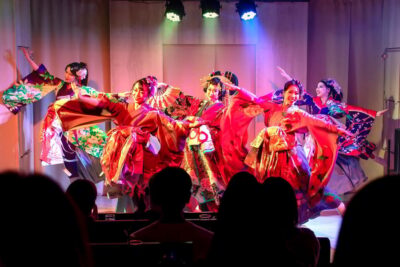 ★ 4.8Tokyo: Japanese Dance Cabaret Theater Asakusa-Kaguwa TicketFrom $492 hours
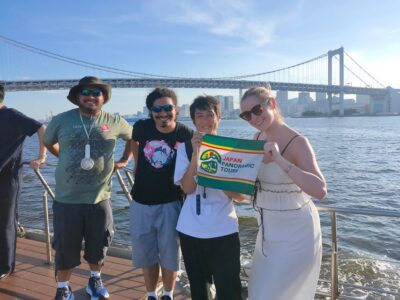 ★ 4.7Tokyo: Meiji Shrine, Asakusa, Skytree Bus Tour and CruiseFrom $12210 hours
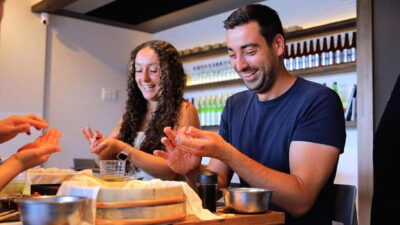 ★ 4.9Tokyo: Roll and Authentic Sushi Making Class in AsakusaFrom $581h 40m
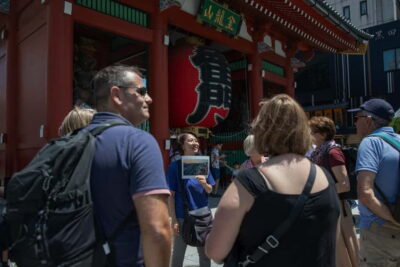 ★ 4.8Tokyo: Asakusa Walking Tour with Sensoji Temple VisitFrom $222 hours
 ★ 5.0Tokyo Asakusa Rickshaw TourFrom $42
 ★ 4.5Tokyo Panoramic 1 Day: Meiji Shrine, Asakusa, Odaiba and SKYTREE®From $85