
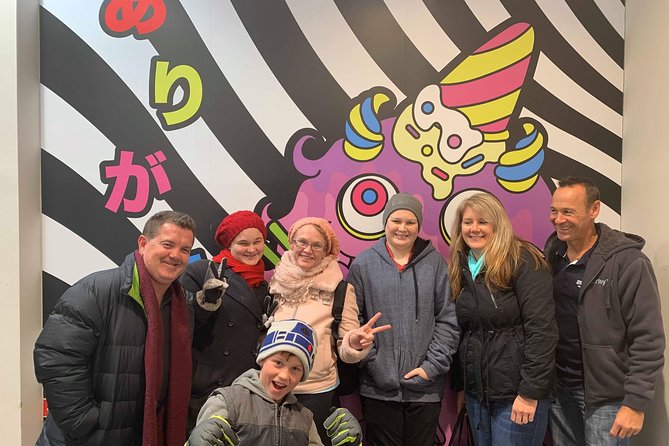
Reviewed · TOKYO FOOD TOURS
Taste of Harajuku Fun & Colorful Family Food Tour Kids Go Free!
Harajuku is easiest to enjoy with a plan, especially when you are hungry, traveling with children, and trying to make sense of its bright, crowded shopping streets. This four-hour walk pairs sweet crepes and snack stops with Meiji Jingu, Takeshita Street, Cat Street, Laforet Harajuku, and Tokyu Plaza.
I like the mix of food and local culture. You are not simply led from one dessert counter to another. You also see a major Shinto shrine, learn about Harajuku’s youth culture, and get help choosing places that can be hard to judge on your own. I also like the small group limit of 10, plus free admission for children under six.
The main consideration is the price, $175.75 per person. That can be fair if you value a guide, several tastings, and a structured introduction to Harajuku, but it is high for a family that could visit the streets and buy snacks independently. Expect a walking tour, not a sit-down feast.
In This Review
- Key points to know before you book
- Why a food walk works well in Harajuku
- Starting at Harajuku Station
- Meiji Jingu: a calm first contrast
- Takeshita Street and the art of the Harajuku snack
- Cat Street and the quieter side of the neighborhood
- Laforet Harajuku and Tokyo’s youth fashion
- Tokyu Plaza and the final look at Omotesando
- What the food portion is really worth
- The guide can shape the whole afternoon
- Who will enjoy this four-hour walk
- Timing, comfort, and useful planning tips
- Should you book the Harajuku food tour?
- FAQ
- How long does the Harajuku food tour last?
- Where does the tour start and finish?
- What food is included?
- Are children under six charged for the tour?
- How many people can join the tour?
- Can I cancel for a full refund?
Key points to know before you book
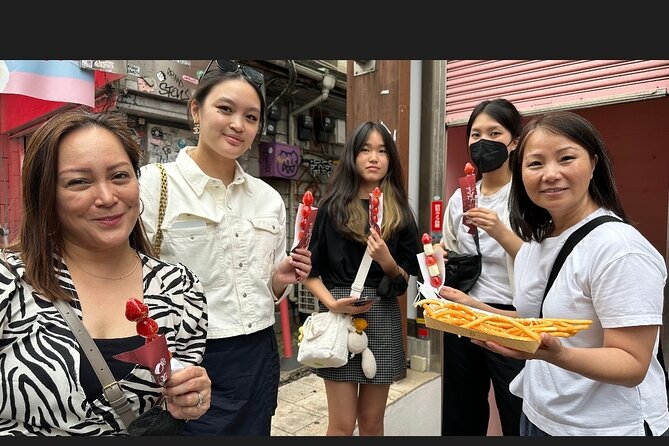
- Three to four food stops: The included tastings feature crepes, biscuit custard, snacks, and bottled water.
- A useful Harajuku overview: The route combines Meiji Jingu with Takeshita Street, Cat Street, Laforet, and Tokyu Plaza.
- Family-friendly pricing: Children under six join free of charge.
- Small group format: The maximum group size is 10 people, which should allow more direct contact with your guide.
- Guide-led local context: Guides including Midori, Yumi, and Kuori have helped with food choices, photos, shopping, and cultural explanations.
- Four hours on foot: Wear comfortable shoes and allow enough time for the stops, crowds, and food breaks.
Why a food walk works well in Harajuku
Harajuku can feel like several parts of Tokyo packed into one neighborhood. At one end, you have the wooded approach to Meiji Jingu. Near the station, you find youth fashion, candy-colored snacks, department stores, and narrow side streets filled with cafés and boutiques.
The difficulty is not finding food. It is knowing which treats are worth your time and how they fit into local culture. A guide gives you a clearer route and removes some guesswork. You can ask what a dish is, how it is eaten, and why a particular food has become associated with Harajuku.
The tour focuses on sweets, but it is not limited to dessert. The included food list names crepes, biscuit custard, snacks, and bottled water. Food experiences connected with the guide team have also included okonomiyaki, cotton candy, and other Japanese dishes. Since the exact stops can vary, you should treat the advertised crepe and custard tastings as the reliable core, not assume every extra dish will appear on every departure.
That distinction matters. If you want a full lunch, this may not be enough by itself. If you want a light meal with several small tastes, it makes more sense.
A few more Tokyo tours and experiences worth a look
Starting at Harajuku Station
The meeting point is Harajuku Station at 1-chōme-18 Jingūmae, Shibuya, Tokyo 150-0001. The station is a practical starting place because it puts you right beside the area named in the tour title and close to the major sights on the route.
The first station stop is brief, about two minutes. Think of it as a meeting and orientation point rather than a sightseeing visit. Your guide can help the group get organized before the walk begins.
The tour ends back at the same meeting point. That is useful if you have onward plans in Tokyo, though you should avoid scheduling something immediately afterward. Four hours is approximate, and Harajuku crowds can slow the group.
The experience uses a mobile ticket, and confirmation is provided at booking. It operates near public transportation, so arriving and continuing to another part of Tokyo is straightforward. Hotel pickup and drop-off are not included.
Meiji Jingu: a calm first contrast
From the colorful commercial streets, the route heads to Meiji Jingu. The planned stop is about 15 minutes, and admission is free.
This is a smart early stop because it gives you a quick look at a completely different side of Harajuku. The shrine is known as one of Tokyo’s largest, and its setting feels far removed from the fashion and sweets near the station. Even a short visit helps explain why Harajuku is more than a shopping district.
Do not expect an extended shrine tour in 15 minutes. You will get an introduction and a chance to see the approach and grounds, but you may not have time for a long visit or a slow look at every detail. If Meiji Jingu is a major reason for your trip, plan to return separately.
The cultural explanation is one of the more valuable parts of having a guide here. A guide can give you context while keeping the stop short enough for the food and street portions of the tour.
Takeshita Street and the art of the Harajuku snack
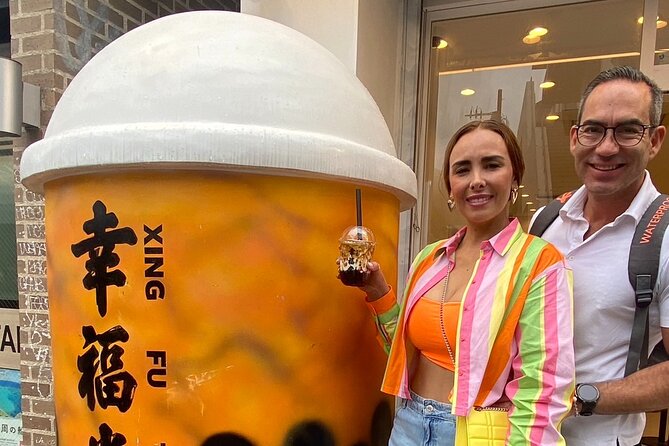
Takeshita Street receives about 30 minutes. This is the most obvious place to see Harajuku’s famous mix of youth fashion, novelty foods, drinks, and sweets.
The street is a good setting for a guided tasting because there are many choices packed close together. You might see foods designed as much for photos as for flavor, alongside treats that are simply popular local snacks. The guide helps you focus on the stops included in the experience rather than spending your entire visit studying menus.
Sweet crepes are the signature food here. Harajuku-style crepes are usually filled and folded so you can eat them while walking. The tour includes a crepe stop, which gives you a direct taste of one of the area’s best-known foods.
The practical drawback is crowding. Thirty minutes can pass quickly if the street is busy or if the group has to wait at a vendor. You should also pace yourself. A crepe can be filling, and more food follows.
Cat Street and the quieter side of the neighborhood
The itinerary allows about 30 minutes on Shibuya Cat Street, in the area often called Ura-Harajuku. This section offers a useful change from Takeshita Street.
Cat Street and its surrounding backstreets are associated with smaller roads, shops, and a less concentrated commercial feel. The guide can help you understand how the neighborhood changes from the main Harajuku strip to its side streets.
This part is valuable for anyone who wants more than the obvious tourist route. You still remain in a well-known part of Tokyo, but the pace and setting can feel different from the packed confectionery corridor.
The tour description does not promise a specific food stop on Cat Street, so do not book this portion expecting another named tasting. Treat it as the walking and culture part of the experience, with the guide explaining the district as you go.
A few more Tokyo tours and experiences worth a look



Laforet Harajuku and Tokyo’s youth fashion
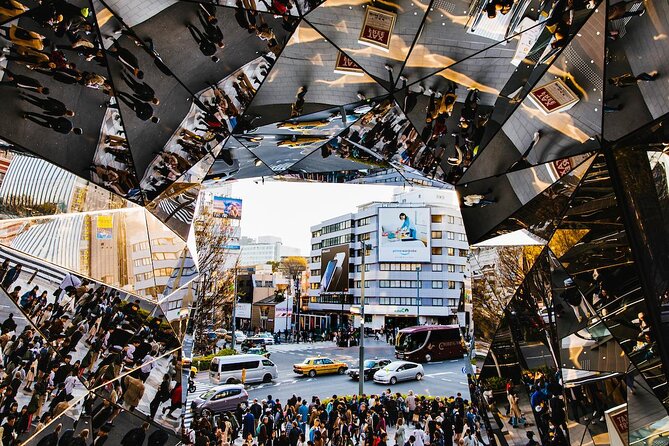
Laforet Harajuku receives about 30 minutes. The complex combines a department store, residence, and museum space in the Harajuku commercial area.
You may find this especially interesting if you want to understand why Harajuku became associated with bold youth fashion and subcultures. The stop is not only about buying things. It shows how shopping, style, music, and food overlap in this part of Tokyo.
The available information does not specify a dedicated shopping allowance or museum admission, so the stop should be viewed as a guided look at the complex rather than a full retail visit. Thirty minutes is enough for an introduction, but not for a serious shopping session across a large department store.
If you are traveling with children, this can be a good reset after the more crowded street section. It offers a change of pace and gives the guide another chance to explain the neighborhood beyond its sweets.
Tokyu Plaza and the final look at Omotesando
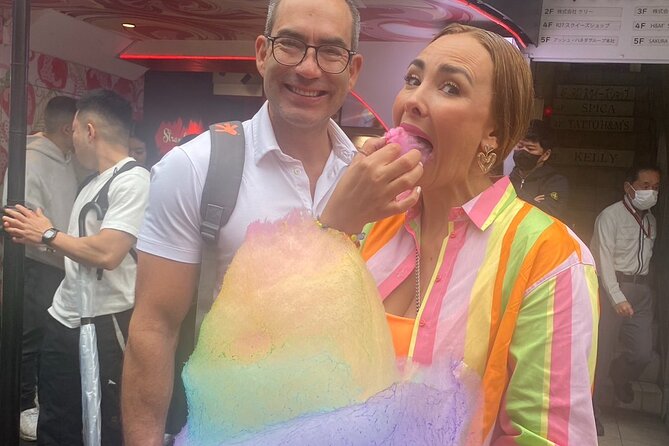
The final listed stop is Tokyu Plaza Omotesando Harajuku, with about 15 minutes. It is described as one of the area’s major shopping malls.
The short visit provides a final view of Harajuku’s polished, modern commercial side. In practical terms, it also keeps the route moving back toward the station and the meeting point.
Do not expect a long shopping break here. Fifteen minutes is best used for a quick look, photographs, or a brief explanation from the guide. If you want time to browse the mall, return after the tour.
The sequence of stops gives you a broad introduction in four hours: shrine, main shopping street, backstreets, fashion complex, and mall. You will not see every corner of Harajuku, but you will understand how the district’s different parts connect.
What the food portion is really worth
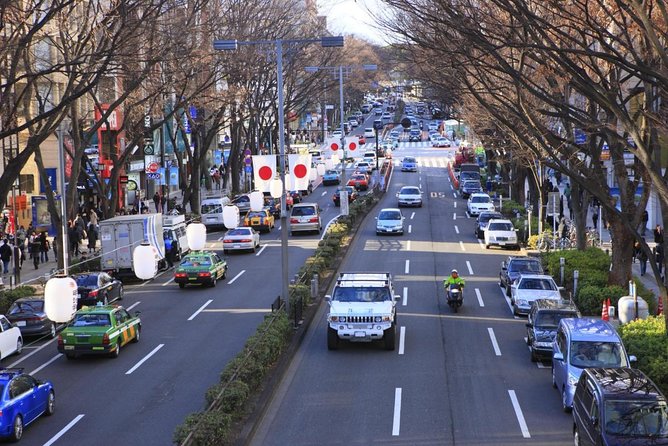
The food is the reason many people will consider this tour, so it deserves a clear look. Three to four food stops are included, along with crepe, biscuit custard, snacks, and bottled water.
That is a useful arrangement for families and first-time visitors. You get several small experiences rather than placing all your hopes on one restaurant. It also lets you try foods that may be unfamiliar without committing to a large meal.
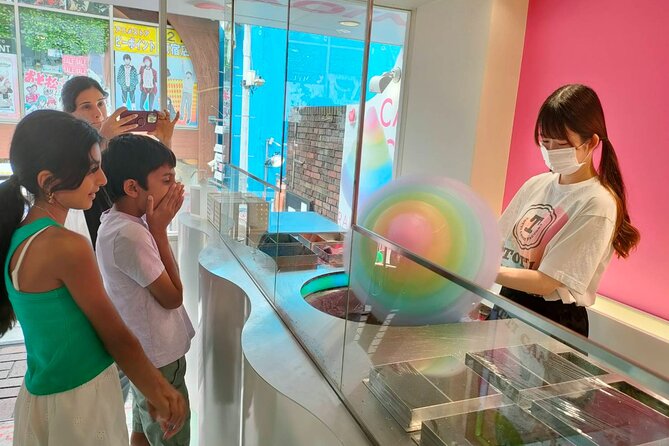
A review of the guide team highlights an okonomiyaki-making experience, a cotton candy shop, and a crepe stop. Another guide helped with a wagyu lunch. These examples show the range of food knowledge available through the provider, but they may relate to different Harajuku tours or tailored experiences. The safest expectation for this specific outing is the advertised sweet-focused tasting with three to four stops.
Alcohol is not included, though it can be purchased. There is no hotel transfer, and the experience is built around walking between neighborhood sights. The price covers the guide and food elements, not a private car or a formal restaurant meal.
At $175.75 per person, value depends on how you travel. A solo visitor or couple who wants structure, local explanation, and several tastings may find the cost reasonable. A family with older children who can navigate Tokyo independently may prefer to buy individual snacks and keep the difference.
The under-six policy improves the calculation for families with very young children. Children under six are free, though you should still account for the group walking pace and the fact that the tour is not built around a separate children’s program.
The guide can shape the whole afternoon
The strongest part of this experience is likely to be the guide. Midori has been praised for keeping in touch before the tour, explaining the area clearly, and creating a comfortable atmosphere. Yumi has helped with shrine visits, food, shopping, photos, and finding sought-after gifts. Kuori has led a route featuring Harajuku highlights, an animal café, rainbow-colored foods, photo booths, and a wagyu lunch.
Those details are useful, but you should read them carefully. They show that the guide team can add personal help beyond simply leading a route. They do not mean every departure includes an animal café, photo booth, wagyu lunch, or the same number of dishes.
You can reasonably expect a guide who explains Japanese food and local culture, helps the group move through Harajuku, and answers questions about the area. A small group of no more than 10 makes that more practical than a large coach-style outing.
The guide may also be valuable for families. Harajuku’s streets can be confusing, and children often need a change of scene. Moving from shrine to sweets to shopping gives the walk variety, while the guide handles the route.
Who will enjoy this four-hour walk
I would recommend this experience most strongly to:
- First-time visitors to Harajuku who want a clear introduction.
- Families with children under six, since those children join free.
- People who enjoy sweets and small tastings more than a long restaurant meal.
- Visitors who want cultural context along with shopping streets.
- Anyone who would like help with photos, gift choices, or food decisions.
- Small groups that prefer a maximum of 10 participants.
It is less suited to you if you want a serious food history tour, a large lunch, or a full day devoted to shrines and museums. It is also not the best choice if you dislike walking, crowds, or eating on a fixed route.
The itinerary includes free-admission sights, so the cost is mainly for the guide, organization, and food. That can be worthwhile when your Tokyo time is short. It is harder to justify if you are comfortable finding Harajuku’s snack shops on your own.
Timing, comfort, and useful planning tips
Set aside the full four hours. The schedule lists short stops of two, 15, and 30 minutes, but food service, street crowds, and group movement can affect the pace.
Wear shoes you can walk in. The experience is described as a city walking and culture tour, not a stationary tasting. Carry only what you need, since crowded shopping streets are easier with a light bag.
Arrive at Harajuku Station with your mobile ticket ready. The meeting point is specific, and the tour returns there, so you can plan around the station rather than arranging a separate ride back.
The tour is near public transportation, and most people can participate. The supplied details do not provide a separate accessibility description, so if your group has mobility needs, contact the provider before booking and ask how the walking route and crowds will affect you.
Free cancellation is available up to 24 hours before the start time for a full refund. Cancellations or changes made less than 24 hours before the start time are not accepted for a refund.
Should you book the Harajuku food tour?
Book it if you want a guided first look at Harajuku that mixes crepes and snacks with Meiji Jingu and youth culture. The route is varied, the group is limited to 10, and the guide can make food choices and local customs easier to understand.
Think twice if $175.75 feels steep for a few tastings, or if you want a full lunch. Independent visitors can explore Takeshita Street, buy a crepe, and visit Meiji Jingu without paying for a tour.
For families, the answer is more favorable when at least one child is under six. For adults who want personal guidance, photos, shopping help, and a simple route through a complicated neighborhood, the price buys convenience as much as food. I would choose it for a first Harajuku visit, then return on my own later for slower shopping and second helpings.
FAQ
How long does the Harajuku food tour last?
The tour lasts approximately four hours.
Where does the tour start and finish?
It starts at Harajuku Station, 1-chōme-18 Jingūmae, Shibuya, Tokyo 150-0001, and ends back at the meeting point.
What food is included?
The included food experiences cover three to four stops, including a crepe, biscuit custard, snacks, and bottled water.
Are children under six charged for the tour?
No. Children under six can participate free of charge.
How many people can join the tour?
The maximum group size is 10 participants.
Can I cancel for a full refund?
Yes. You can cancel at least 24 hours before the experience start time for a full refund. Cancellations or changes made less than 24 hours before the start time are not accepted for a refund.
More Food Experiences in Tokyo
More Tokyo Food Tours in Tokyo
More tours in Tokyo we've reviewed










Tokyo Food Tours, compared.
 ★ 5.0Tokyo: Shinjuku Food Tour (13 Dishes at 4 Local Eateries)From $86
 ★ 4.9Tokyo: Shinjuku Food Tour (15 Dishes and 4 Eateries)From $853 hours
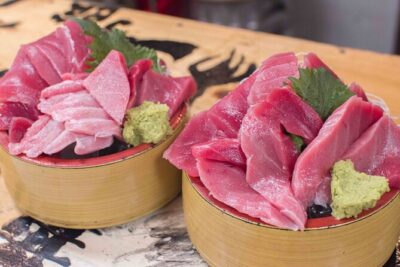 ★ 5.0Best of Shinjuku: Izakaya Food Tour (4 Stops, 14+ Tastings)From $92
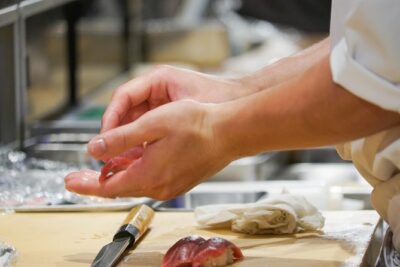 ★ 5.0Tokyo Night Foodie Tour in Shinjuku – Seasonal Sushi, Wagyu BeefFrom $111
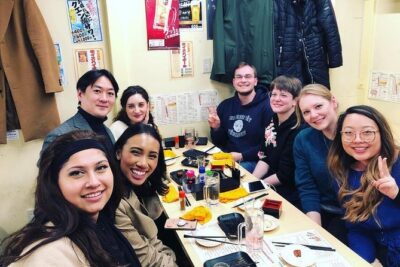 ★ 5.0Eat and Drink Like a Local: Tokyo Ueno Food Tour-Taverns&RamenFrom $95
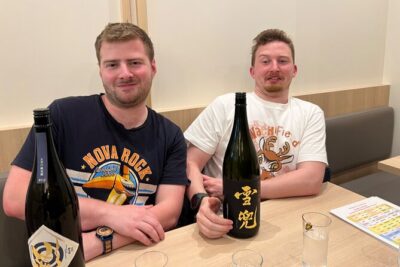 ★ 5.0Tokyo: Shibuya Food Tour (13 dishes and 4 Eateries)From $77