
Reviewed · SHIBUYA TOURS
Shibuya by night in Small Groups: Neon Lights and Local Flavors
Shibuya after dark is best understood on foot, one snack and neon street at a time. This three-hour walk links the famous Hachikō statue and crossing with places you might skip alone, including a konbini, Miyashita Yokocho, a special onigiri stand, and the packed shelves of Don Quijote.
I like the small maximum of 10 people, which gives guides such as Lily, Jorge, Giorgio, and Camila room to answer questions. I also like the mix of simple local foods and major sights: egg sandwiches, fried chicken with bread, onigiri, takoyaki, and a Korean corndog appear alongside Shibuya’s best-known streets.
The main thing to watch is the pace. Seven stops in about three hours leaves limited time at each one, and the advertised tastings and shop visits may not all receive equal attention if the group moves slowly or a stop gets crowded.
In This Review
- Key points to know before booking
- Starting at Hachikō Square at 6 pm
- Miyashita Park and the lower-level food streets
- Shibuya Crossing with a konbini tasting
- Center-gai, takoyaki, and the 10-yen coin
- A quick look inside MEGA Don Quijote
- A traditional onigiri stop at Antenna 21
- Finishing at Hands Shibuya
- What the $79 price really covers
- Guide style and language
- Who should book this Shibuya walk
- Should you book it?
- FAQ
- How long is the Shibuya night tour?
- What time does the tour start?
- Where does the tour begin?
- Where does the tour end?
- How large is the tour group?
- Is the tour offered in English?
- What food is included?
- Can I cancel for a full refund?
Key points to know before booking
- Hachikō starts the story: Learn why Tokyo’s most famous dog statue became a symbol of loyalty and Shibuya itself.
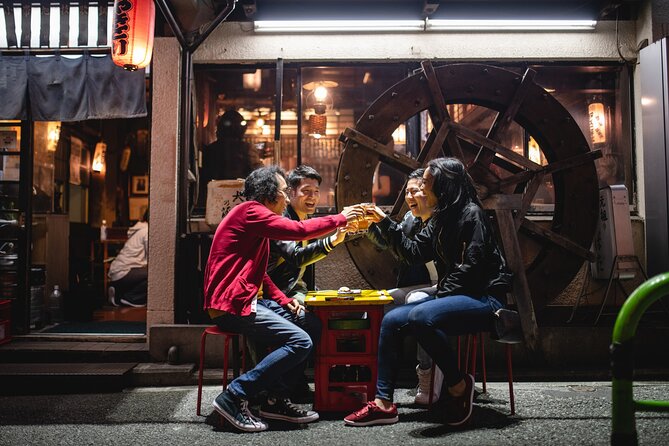
- Food is part of the walking route: Tastings include konbini snacks, takoyaki or a Korean corndog, and onigiri.
- The group stays small: A maximum of 10 people makes questions and guide interaction easier.
- Shibuya gets several different faces: You see a public square, a modern park, shopping streets, nightlife, and everyday food stops.
- The tour runs from 6 pm: You get Shibuya after dark, when the signs and crossing are at their most photogenic.
- The finish is useful: The walk ends at Hands Shibuya, a good place to continue shopping or browse Japanese design goods.
Starting at Hachikō Square at 6 pm
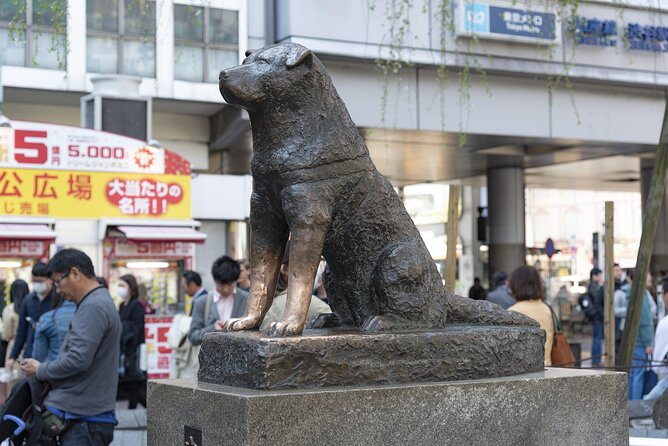
The meeting point is beside the Hachikō Statue at 2 Chome-1 Dogenzaka. This is a practical start because Hachikō Square sits near public transportation and gives you a clear landmark in a busy part of town.
The guide begins with the story of Hachikō, an Akita dog who waited for his owner every day for nearly a decade. The stop lasts about 10 minutes and costs nothing to enter. It is a short introduction, not a museum visit, but it gives the rest of the walk a useful local frame: Shibuya is not only giant screens and shopping towers.
Look for your guide and the bilingual English and Spanish tour. Lily has led several of the strongest experiences associated with this walk, while Jorge, Giorgio, and Camila have also guided groups. The company assigns the guide, so you should not book on the assumption that one particular person will lead your departure.
A few more Tokyo tours and experiences worth a look


Miyashita Park and the lower-level food streets
From Hachikō Square, the group heads to Miyashita Park. The park is a modern public space that combines greenery, shops, and entertainment above the street. Your guide gives a short explanation of the renovation and its role in current Tokyo life.
The useful part comes next. You go down to explore Miyashita Yokocho, where the mood changes from polished public park to a more street-level setting. The full stop lasts about 40 minutes, making it one of the longer sections of the evening.
I like this contrast. Shibuya can look like one giant commercial zone if you stay near the crossing, but Miyashita Park shows how the district adds new public spaces without losing its busy, compact feel. The guide’s explanation also helps you see the park as part of Tokyo’s changing city design, rather than just a convenient photo stop.
The exact food or shop experience here is not specified, so keep your expectations open. The value is the combination of orientation, a different type of Shibuya setting, and time to look around.
Shibuya Crossing with a konbini tasting
The route returns to the famous crossing, then makes a quick stop at a convenience store. This is one of the tour’s most practical food moments because a Japanese konbini is part of everyday life, not a special restaurant built only for tourists.
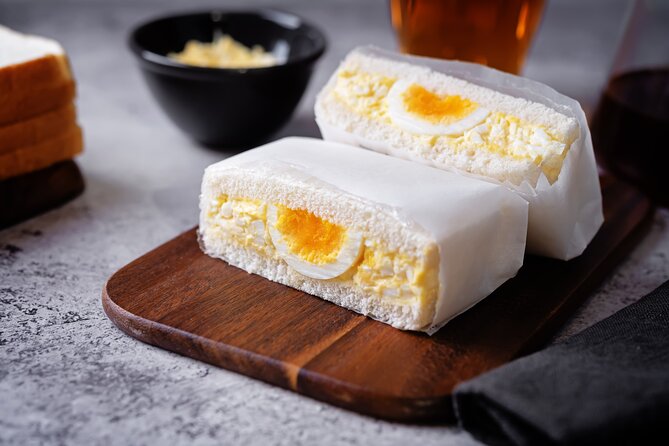
You can try foods such as an egg sandwich, fried chicken with bread, and classic onigiri. The tasting gives you a chance to see why convenience stores are such a useful part of eating in Japan. These are ordinary, widely available foods, but the format and selection can be new if this is your first visit.
The stop lasts about 15 minutes. That is enough for a guided introduction and tasting, but not a leisurely meal. You should arrive with room for small bites, not an empty stomach expecting dinner.
The crossing itself remains the visual star. Your guide can place it in context before you continue, while you get the chance to see one of Tokyo’s most famous public spaces at night. For photographs, the group may not linger long, and the crowd can make exact timing hard to control.
Center-gai, takoyaki, and the 10-yen coin
The longest stop is Center-gai, with about 55 minutes listed for this part of the walk. This is Shibuya’s energetic shopping and nightlife street, full of signs, small storefronts, and people moving between restaurants and shops.
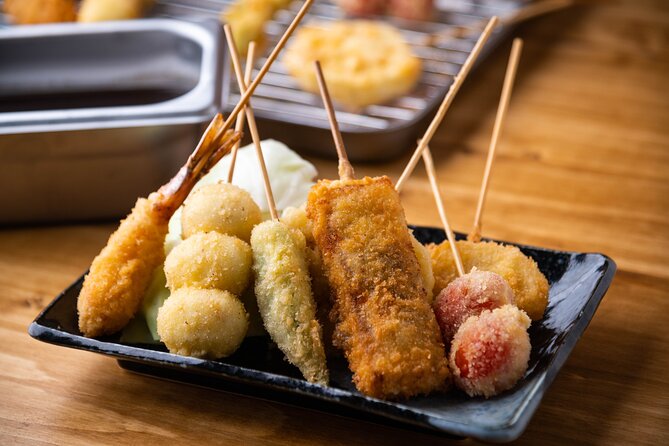
Here you can taste either a Korean corndog or takoyaki and take photos along Center-gai. Takoyaki, the round batter snacks usually cooked with a hot filling, fits the setting well: quick, casual, and made for eating while out. The Korean corndog offers a different street-food style and gives the tasting some variety.
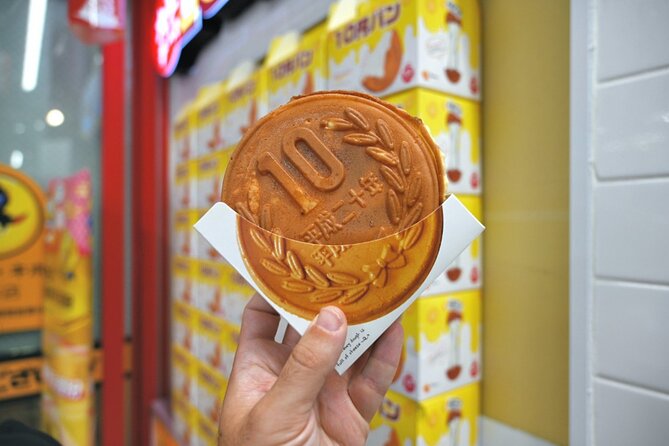
There is also a short stop to purchase a 10-yen coin from a nearby vending machine. The purpose is not explained in the supplied details, so treat it as a small curiosity rather than a major attraction. It is the sort of odd detail that can make a walk more memorable, especially if you enjoy collecting inexpensive souvenirs.
This section may be the best match for you if you want photographs and food in the same place. It may feel too compressed if you prefer to sit down, eat slowly, and study menus. The tour is built around sampling and moving on.
A quick look inside MEGA Don Quijote
The group then spends about 10 minutes at MEGA Don Quijote Shibuya. This discount store is packed with Japanese snacks, souvenirs, household goods, and unusual products. It can be overwhelming, but that is part of the appeal.
The guide gives a short explanation of how to make the most of the store. That orientation matters because Don Quijote shops are dense, brightly presented, and easy to browse without a plan. You can use the stop to note items you want to return for later, rather than trying to complete all your shopping in 10 minutes.
This is also where the fixed pace becomes clear. Ten minutes is enough for an introduction and a fast look, but not enough for serious souvenir shopping. If you already know you want snacks, cosmetics, gifts, or novelty goods, plan to return after the tour.
A few more Tokyo tours and experiences worth a look



A traditional onigiri stop at Antenna 21
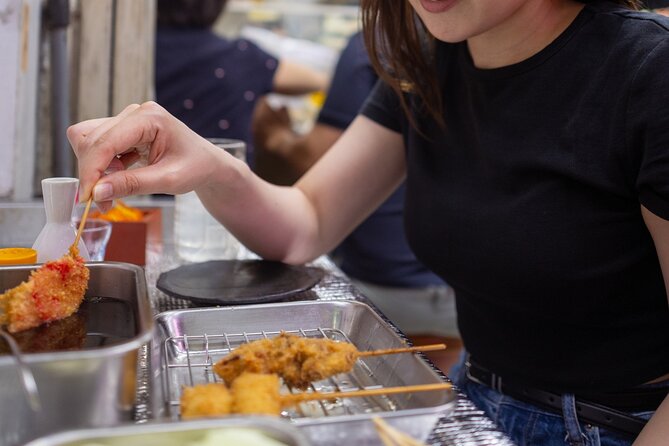
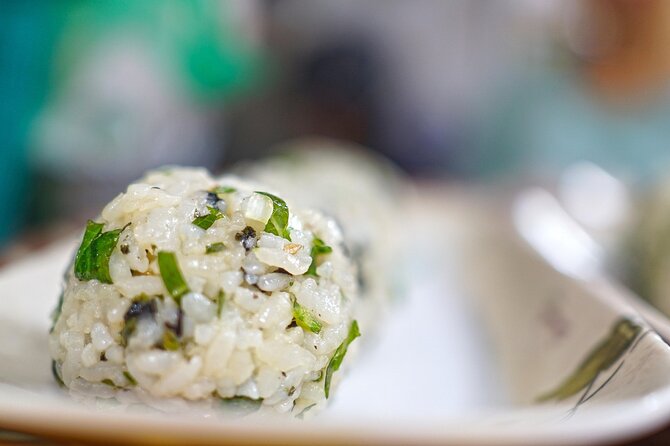
The next stop is a special onigiri stand at the Antenna 21 Building. You have about 15 minutes to try one of Japan’s most familiar foods.
Onigiri are portable rice snacks, and they make sense on this route because they are both traditional and everyday. After the more obvious sights and novelty shopping, this stop brings the food side of the tour back to a simple staple.
The details of the filling and preparation are not provided, so you should not expect a full lesson or a large meal. The tasting is one part of a broader evening of small portions. If you need a substantial dinner, budget for one separately.
Finishing at Hands Shibuya
The tour ends at Hands Shibuya, formerly known as Tokyu Hands, at 12-18 Udagawachō. The final stop lasts about 30 minutes, longer than the Don Quijote visit and long enough to get a useful introduction to the store.
Hands carries stationery, home goods, design accessories, gadgets, and Japanese curiosities. It is a strong finish for anyone who likes practical souvenirs rather than only T-shirts and key rings. The guide explains the types of products available, which helps you decide where to look.
Ending here is convenient. You can continue shopping after the tour, browse at your own pace, or use the store as a final reference point while you explore Shibuya on another evening. Since the tour does not include personal purchases, bring a payment method and allow extra time if shopping is a priority.
What the $79 price really covers
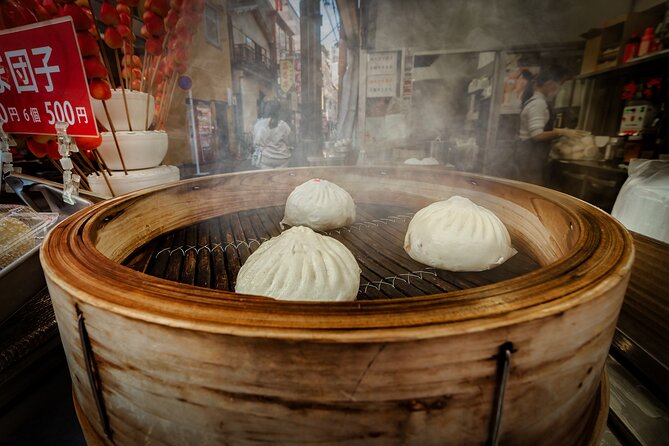
At $79, this is not a cheap food crawl, but the price includes a bilingual guide, a small group capped at 10 people, and tastings of the foods named in the route. You are paying mainly for structure and interpretation: someone connects Hachikō, the crossing, food culture, shopping streets, and newer city spaces into one evening.
The value is strongest if this is your first visit to Shibuya or your first night in Tokyo. A guide can help you get oriented quickly, point out everyday foods, and explain where to return when you have more time. The small group also gives the walk a more personal feel than a large bus-style outing.
The value is weaker if you already know Shibuya well, dislike fixed schedules, or want a full dinner at a sit-down restaurant. The tastings are small, and the stop lengths favor variety over depth.
All admission tickets are free, but personal purchases, extra food, and drinks are not included. The 10-yen coin, Don Quijote items, Hands products, and any additional meals come from your own budget.
Guide style and language
The tour is offered in English and Spanish. Guide quality matters a great deal on a compact walking tour, and the available guide names include Lily, Lili, Jorge, Giorgio, and Camila.
Lily is described as warm, attentive, and good at responding to family interests. Jorge is praised for answering questions and helping throughout the walk. Giorgio, Lili, and Camila have also guided together and can speak several languages, including Portuguese in Jorge’s case. These details suggest a friendly, flexible guiding style, though your specific guide depends on the departure.
The guide’s role is especially useful at the food stops. You get more than a list of snacks because someone can explain what you are trying and help you decide what deserves a second purchase later.
Who should book this Shibuya walk
I would point this tour toward first-time Tokyo visitors, couples, families, and anyone who wants a gentle introduction to Shibuya after sunset. It works well for people who want famous sights but also want to sample ordinary Japanese foods without planning every stop themselves.
It is also a good fit if you are comfortable walking through crowded streets and standing for short food tastings. The route moves through busy public areas, shops, and food stops rather than quiet neighborhoods.
I would hesitate if you want a slow photography tour, a full dinner, or extended shopping time. The listed stops add up to about 175 minutes, close to the three-hour duration, so there is little spare time for delays. One portion of the experience may receive more attention than another depending on crowding and group pace.
You can cancel for a full refund if you do so at least 24 hours before the 6 pm start time. Cancellations or changes made inside that window are not accepted for a refund. Confirmation arrives at booking, and the activity is near public transportation. The operator says most people can participate.
Should you book it?
Book this walk if you want a compact first look at Shibuya with food included, especially at the start of your Tokyo stay. The mix of Hachikō, the crossing, Center-gai, Miyashita Park, konbini snacks, takoyaki or a corndog, onigiri, and Japanese stores gives you a useful evening sampler.
Skip it if you prefer to choose your own restaurants and shops or if $79 feels high for small tastings. My practical advice is to eat a light meal beforehand, keep room for the samples, wear comfortable shoes, and return to Don Quijote or Hands later if you find something worth buying.
FAQ
How long is the Shibuya night tour?
The experience lasts approximately three hours.
What time does the tour start?
The tour starts at 6:00 pm.
Where does the tour begin?
It begins at the Hachikō Statue at 2 Chome-1 Dogenzaka, Shibuya, Tokyo 150-0043, Japan.
Where does the tour end?
It ends at Hands Shibuya, formerly known as Tokyu Hands, at 12-18 Udagawachō, Shibuya, Tokyo 150-0042, Japan.
How large is the tour group?
The group has a maximum of 10 people.
Is the tour offered in English?
Yes. A bilingual guide in English and Spanish is included.
What food is included?
The listed tastings include foods such as egg sandwiches, fried chicken with bread, onigiri, takoyaki or a Korean corndog, plus a traditional onigiri stop. Additional meals and drinks are not included.
Can I cancel for a full refund?
Yes. You can receive a full refund by cancelling at least 24 hours before the experience start time. Cancellations within 24 hours are not refunded.
More Evening Experiences in Tokyo
More Night Tours in Tokyo
More Shibuya Tours in Tokyo

More tours in Tokyo we've reviewed











Shibuya Tours, compared.
 ★ 5.0Official Street Go-Kart in ShibuyaFrom $76
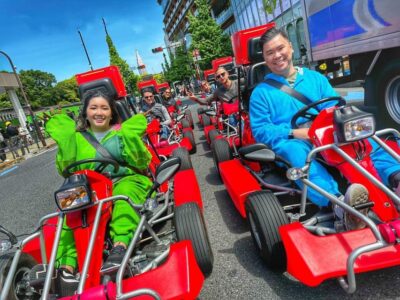 ★ 4.9Tokyo: Street Kart Experience in ShibuyaFrom $741 hour
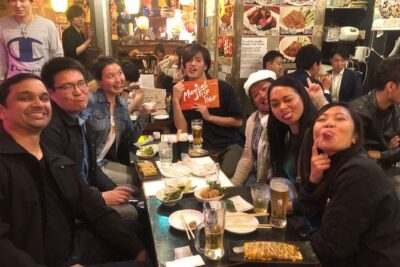 ★ 5.0Shibuya Meltdown Nightlife Tour: All-You-Can-Drink Bar HoppingFrom $106
 ★ 5.0Shibuya Official Street Go-Kart in Shibuya AnnexFrom $69
 ★ 5.0Tokyo: Shibuya Food Tour (13 dishes and 4 Eateries)From $77
 ★ 5.0Best of Shibuya Food TourFrom $217