
Reviewed · FULL-DAY
Private Tokyo Custom Full-Day Tour by Chartered Vehicle
Tokyo is too large for a single sightseeing formula, yet this private full-day tour gives you a practical way to cover several very different districts in eight hours. You can move from Tsukiji seafood stalls to the quiet gates of Meiji Jingu, then finish among the neon and crowds of Shibuya.
I like the freedom to adjust the day around your interests, and I like having a private vehicle for the long jumps across town. Guides such as Yutaka have patiently answered questions, while driver Tetsuo and guide Toshio have been praised for their courtesy and flexibility. The main drawback is cost: at $1,273.75 for up to four people, this makes the most sense for a family or small group sharing the bill.
In This Review
- Key points to know before booking
- A private route through six very different Tokyos
- Tsukiji for seafood, shops, and a lively first stop
- Meiji Jingu, a quieter hour near Harajuku
- Senso-ji and the old Tokyo feel of Asakusa
- Harajuku and Takeshita Street in one hour
- Omotesando for polished shopping and city design
- Shibuya Crossing as the final city scene
- What the private guide adds
- Is $1,273.75 a good value?
- Timing, pickup, and practical limits
- Who should book this Tokyo day?
- Should you book this private Tokyo tour?
- FAQ
- How long is the private Tokyo tour?
- What time does the tour start?
- Is hotel pickup included?
- How many people can join the private tour?
- Which stops are included in the planned route?
- Can the itinerary be customized?
- Are food and drinks included?
- Are parking fees included?
- What is the cancellation policy?
Key points to know before booking
- Six major Tokyo areas in one day: Tsukiji, Meiji Jingu, Asakusa, Harajuku, Omotesando, and Shibuya give you a broad first look at the city.
- Your group has the vehicle to itself: You avoid a large coach group and can ask to alter the route.
- Central Tokyo hotel pickup and drop-off are included: This saves time at the beginning and end of a long sightseeing day.
- The day begins at 9:00 am: Each planned stop is listed at about one hour, leaving little room for long meals or extended shopping.
- Parking is extra: Food, drinks, and parking fees are not included in the quoted price.
- New Year timing matters: January 3 can bring packed temples and difficult traffic, so holiday dates need extra care.
A private route through six very different Tokyos
This is best understood as a city sampler with a driver, not a ticketed attraction tour. You are not paying for entry to a museum or a reserved seat at a show. You are paying for a private vehicle, a guide, hotel transportation, and the ability to shape the day.
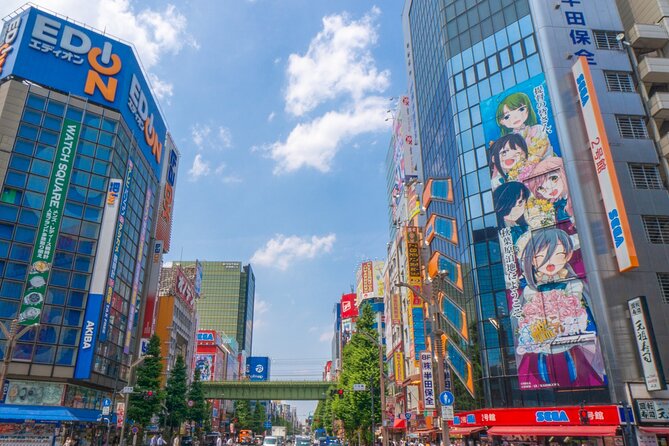
The suggested route gives you a useful cross-section of Tokyo. Tsukiji offers food and market culture. Meiji Jingu gives you a major Shinto shrine and a calmer setting. Asakusa provides Tokyo’s most familiar temple scene. Harajuku and Omotesando show two sides of modern city life, while Shibuya closes the day with one of Tokyo’s best-known urban views.
The schedule allows about one hour at each of six stops. That is enough for a first look, photos, a short walk, and questions, but it is not enough for a slow exploration of every district. I would treat the route as an introduction. If one place matters most to you, tell the guide early and ask for more time there.
The vehicle matters because these areas are spread across the city. On public transit, you would spend part of the day changing lines, finding exits, and regrouping. Here, you can talk with your guide between stops and arrive without managing every transfer yourself.
Other private tours in Tokyo

Tsukiji for seafood, shops, and a lively first stop
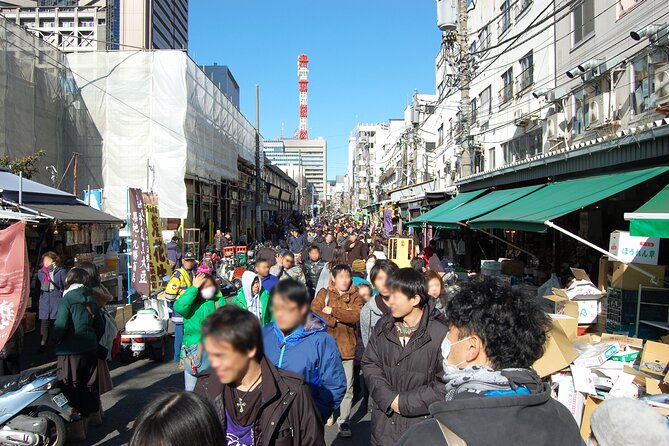
The day begins at Tsukiji Fish Market, with about an hour planned and no admission charge. Although the former wholesale market moved elsewhere, the Tsukiji area remains a popular place to see seafood shops, food stalls, and market-oriented Tokyo at close range.
This is a good opening stop because it gets you into the city quickly. You can look at the displays, watch the flow of shoppers, and decide if you want to spend some of your own money on food. Food and drinks are not included, so any tasting or meal comes directly from your budget.
An hour goes quickly here. If you have a strong interest in Japanese food, ask if the itinerary can give Tsukiji more time. If you mainly want photographs and a first taste of the area, the scheduled hour should work.
The private vehicle does not mean it can wait everywhere without charge. Parking fees are excluded, and traffic around popular districts can affect the timing. The driver can drop you near the stop, but your guide will determine the practical flow on the day.
Meiji Jingu, a quieter hour near Harajuku
Meiji Jingu is dedicated to Emperor and Empress Meiji. You enter through two large gates and walk toward one of Tokyo’s best-known Shinto shrines.
The appeal here is the change of pace. After Tsukiji’s food-focused streets, Meiji Jingu offers a more measured visit, with shrine architecture and broad pathways. Your guide can explain the meaning of the site and help you understand what you are seeing, rather than leaving you to guess at the customs.
Admission is free, and one hour is enough for a respectful visit and basic orientation. You should still expect some walking. The tour includes transport between districts, but it does not turn every stop into a vehicle-based viewing platform.
The shrine is also close to the Harajuku part of the route, making this pairing efficient. You get a traditional setting followed by one of Tokyo’s best-known youth shopping streets. That contrast is one of the smartest parts of the proposed day.
Senso-ji and the old Tokyo feel of Asakusa
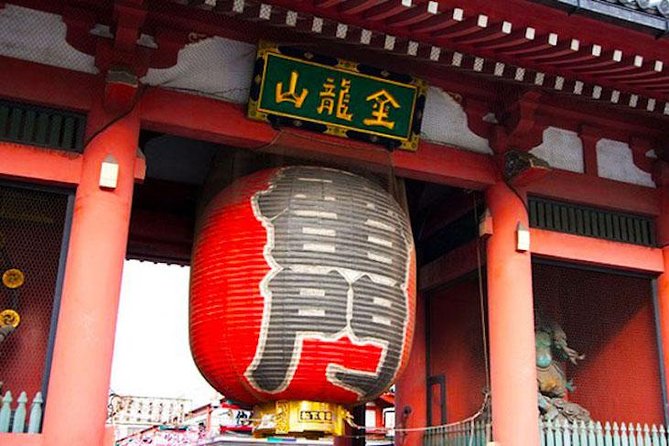
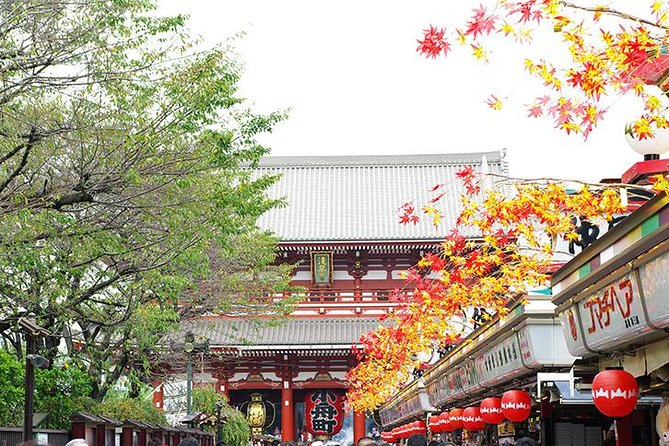
Asakusa brings you to Senso-ji, described as Tokyo’s most famous temple. You approach through Kaminarimon, or Thunder Gate, the outer gate of Senso-ji and one of the city’s most recognizable sights.
This stop gives you the classic temple experience many first-time visitors hope to see. The approach, gate, temple grounds, and surrounding streets provide plenty to look at within an hour. You can take photographs, ask questions, and get a feel for traditional Tokyo without spending extra on admission.
The limitation is crowding. Senso-ji is a major sight, and the timing of your visit matters. A January 3 visit can be especially difficult because New Year temple visits are extremely popular in Japan. One party found the major temples packed and traffic slow on that date. I would avoid assuming that a private vehicle can solve holiday congestion.
If Asakusa is your priority, ask for the longest possible window there. If you want a broad Tokyo overview instead, the one-hour stop gives you a sensible first visit without taking the whole day.
Harajuku and Takeshita Street in one hour
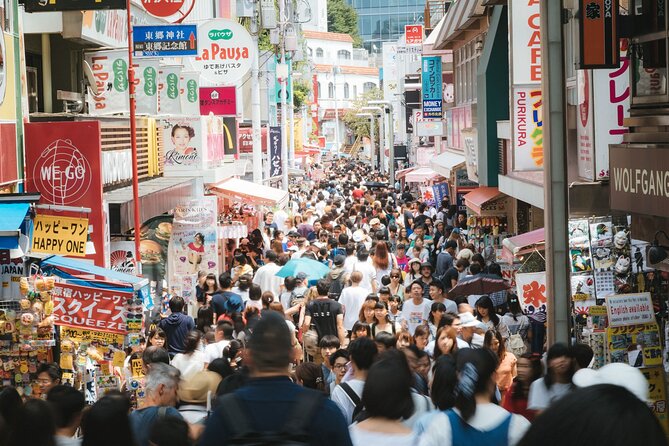
Harajuku Station and Takeshita Street represent a different Tokyo. The stop is built around the famous shopping street, so this is the place for youth fashion, small shops, and people-watching.
You should know what kind of stop this is. It is not a formal guided tour of every shop. It is time to walk the street, browse, and see the district for yourself while your guide remains available for context and help.
An hour may be enough for a look, but it will feel short if you want to shop. Takeshita Street can pull you into one store after another, and browsing is part of the fun. Families with children or anyone interested in Japanese fashion may want to request extra time here.
The route places Harajuku after Meiji Jingu, which works well. You can move from a major religious site to a modern shopping street without spending another hour figuring out transportation. That contrast also makes the day feel more like Tokyo than a string of similar monuments.
A few more Tokyo tours and experiences worth a look
Omotesando for polished shopping and city design
Omotesando is listed as a shopping area and offers a more polished counterpart to Takeshita Street. The two stops are close enough to connect naturally, yet they have different moods and audiences.
You might prefer Omotesando if you care more about architecture, major retail brands, and a broad avenue than novelty shops. You might prefer Takeshita Street if you want a narrower, more playful shopping scene. With a private itinerary, you can tell the guide which side interests you more.
The planned hour is useful for orientation, but it is not a full shopping session. Parking and traffic can also affect how much time you have on foot. Since parking fees are not included, your final cost can rise if the vehicle needs to wait or park in several central districts.
I like this stop as part of the larger route because it prevents the day from becoming only temples and markets. Tokyo’s shopping districts are part of its identity, and Omotesando gives you a look at that side of the city without requiring a separate day.
Shibuya Crossing as the final city scene
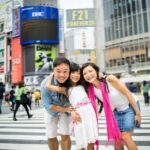
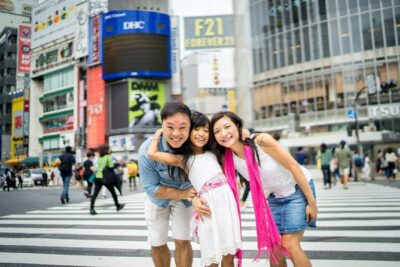
Shibuya is the final listed stop, with Shibuya Crossing as the main focus. It is a strong way to end a first day in Tokyo because the setting is instantly recognizable and visually unlike the shrine and temple districts earlier in the route.
Your guide can help you find a useful viewpoint and explain the area while you take photographs. The supplied details do not promise a specific building access or observation deck, so you should not book this expecting an included rooftop admission. The listed stop is Shibuya Crossing itself.
One hour gives you time to see the crossing and walk a little around the district. It also gives your group a chance to decide if you want to linger, shop, or simply return to the vehicle. If you want a longer evening in Shibuya, ask about ending the tour there instead of using the included drop-off immediately.
The final drop-off at your central Tokyo hotel is convenient after a full day. You do not need to make your own way back after six stops, though exact timing will depend on traffic.
What the private guide adds
The strongest part of this experience is not a special entrance or a rare attraction. It is the human help built into a private day. The guide travels with your group, answers questions, and can adjust the route when your interests become clearer.
Yutaka is specifically praised for giving lots of information and patiently handling questions. Toshio is described as courteous, accommodating, and attentive to the group’s needs. Driver Tetsuo is noted for being polite and cheerful. Those details matter because a long private day depends heavily on communication and attitude.
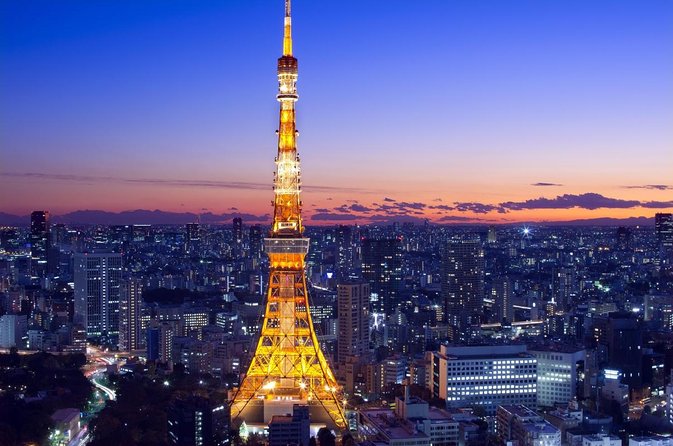
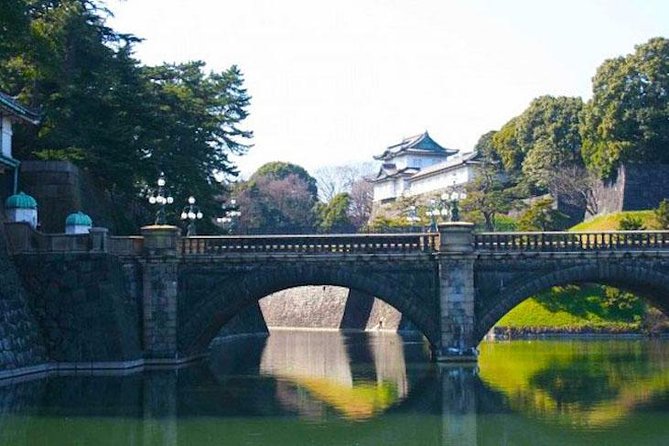
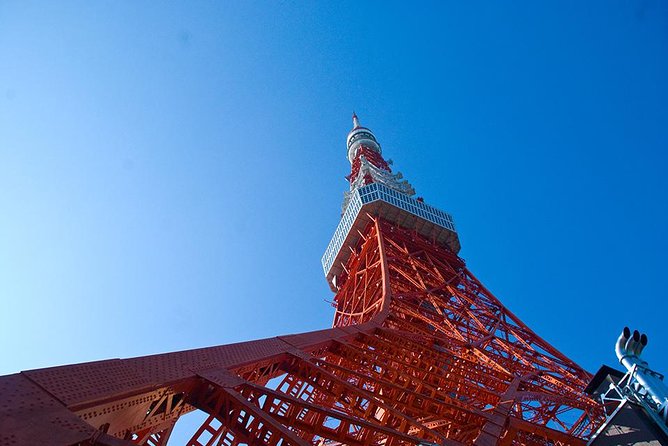
You should tell the guide what you care about at the start. Mention food, temples, shopping, photography, or a wish to see Tokyo landmarks such as Tokyo Tower, the Imperial Palace, or Edo Castle. Those locations are presented as possible choices, while the six-stop route provides the clearest planned schedule.
A private tour also gives you room to ask for changes. One party found the guide and driver flexible when the group wanted different places. That does not mean every change is possible. Eight hours, traffic, parking, and the distance between districts still set limits. It does mean you are not locked into a fixed coach schedule.
Is $1,273.75 a good value?
The price is $1,273.75 per group of up to four people. Split four ways, that is about $318.44 per person. For two people, the per-person cost is much higher, so the value improves sharply when you fill the vehicle.
The fee includes hotel pickup and drop-off, a driver, private transport, and a guide. It does not include food, drinks, admission charges if a chosen attraction requires them, or parking fees. The included stops listed here are free, but a customized route could create extra costs.
I see the value in three situations. First, you are a family or small group that would rather pay for convenience than spend the day changing trains. Second, you have limited time in Tokyo and want a broad first look. Third, someone in your group prefers a private vehicle and a guide who can answer questions directly.
The price is harder to justify if you are a solo visitor, a couple on a tight budget, or someone who enjoys planning rail routes. Tokyo’s public transportation can make many of these districts accessible without a private car. This tour sells time, comfort, and flexibility, not cheap sightseeing.
The 4.9 rating from 16 recorded ratings and 94 percent recommendation indicate strong satisfaction, but the sample is small. I would use those numbers as a useful signal, not a guarantee that every day will run perfectly. Traffic, holidays, weather, and the match between your interests and the guide all matter.
Timing, pickup, and practical limits
The start time is 9:00 am. Hotel pickup and drop-off are included for central Tokyo hotels, which removes one of the day’s most annoying tasks. The exact meeting arrangement should be confirmed after booking, since confirmation is provided within 48 hours and remains subject to availability.
The experience lasts approximately eight hours. Six stops at about one hour each leave roughly two hours for driving, pickup, drop-off, and transitions. That is a sensible outline for Tokyo, but it leaves little spare time if you add long meals or several extra sights.
Most people can participate, and the tour is near public transportation. The available information does not give a detailed accessibility plan, so you should raise specific mobility needs when arranging the booking.
You can cancel for a full refund at least six full days before the local start time. Cancellation two to six full days ahead receives 50 percent back, while cancellation less than two full days ahead is not refunded. This is worth noting before you commit to a high-priced private booking.
Who should book this Tokyo day?
I would recommend it most strongly to first-time visitors who want orientation without managing Tokyo’s rail network all day. It also suits families, older relatives, and groups with mixed interests. The route lets one person see a shrine, another browse shops, and everyone share the same vehicle.
It is a good fit for a short stay. You can cover several districts in one day, then return later to the area you liked best. The guide’s flexibility is especially useful if your group has a short list of priorities.
I would be more cautious if your main goal is slow temple visits, extended shopping, or detailed food exploration. Six one-hour stops create breadth, not depth. You should also reconsider a major holiday date such as January 3, when temple crowds and traffic can eat into the schedule.
Should you book this private Tokyo tour?
Book it if you value a private vehicle, central hotel service, and a flexible guide more than the lowest possible price. For four people, the shared cost becomes more reasonable, and the route gives you a well-organized introduction to Tokyo’s food, religious, shopping, and city-center districts.
Skip it if you are comfortable using public transportation and prefer to spend half a day at one or two places. The best booking strategy is to arrive with a short priority list, ask about adding Tokyo Tower, the Imperial Palace, or Edo Castle, and be honest about which scheduled stops matter least to you.
For the right group, this is an efficient first day rather than a bargain tour. You trade some depth for comfort and coverage, with a guide who can help turn a long Tokyo wish list into a workable eight-hour plan.
FAQ
How long is the private Tokyo tour?
The tour lasts approximately eight hours.
What time does the tour start?
The scheduled start time is 9:00 am.
Is hotel pickup included?
Yes. Hotel pickup and drop-off from central Tokyo are included.
How many people can join the private tour?
The price covers one private group of up to four people.
Which stops are included in the planned route?
The planned route includes Tsukiji Fish Market, Meiji Jingu Shrine, Asakusa and Senso-ji Temple, Harajuku’s Takeshita Street, Omotesando, and Shibuya Crossing.
Can the itinerary be customized?
Yes. The experience is designed around a customized itinerary, and possible attractions include Tokyo Tower, the Imperial Palace, Edo Castle, Senso-ji Temple, and Tsukiji Market.
Are food and drinks included?
No. Food and drinks are not included in the tour price.
Are parking fees included?
No. Parking fees are excluded.
What is the cancellation policy?
You receive a full refund when you cancel at least six full days before the local start time. Cancellation two to six full days ahead receives a 50 percent refund. Cancellations less than two full days before the start time are not refunded.
More Full-Day in Tokyo
More Private Tours in Tokyo

More tours in Tokyo we've reviewed


Full-Day, compared.
 ★ 4.5From Tokyo: Mount Fuji Full-Day Sightseeing TripFrom $6810 hours
 ★ 4.9Mount Fuji Full-Day Private Tour from Tokyo (Customizable)From $393
 ★ 5.0Tokyo Private Full-Day Tour by Car or VanFrom $321
 ★ 4.7From Tokyo: Must-Visit Mount Fuji Highlight Full-Day TourFrom $6911 hours
 ★ 4.5Mt. Fuji, Hakone Full-Day Private Tour with English Driver GuideFrom $495
 ★ 4.8From Tokyo: Mount Fuji Full-Day Customizable Private TourFrom $48310 hours