
Reviewed · JDM & CAR CULTURE
JDM Itasha trip to famous car meet up spot Daikoku Parking
Tokyo’s famous Daikoku Parking Area is not easy to reach on your own, and getting there in an Itasha-decorated Toyota 86 or another performance car makes the trip part of the attraction. You leave Shinjuku, cruise through Tokyo’s raised highways, cross Rainbow Bridge, and arrive at a major Japanese car meet with a local driver handling the route.
I like the small group size, which keeps the ride personal, and I like that the guides, including Jeremy, Graham, Alistair, Hawk, and nanakommm, talk about both cars and daily life in Japan. The main catch is simple: Daikoku depends on weather and the night’s car turnout, so no one can promise a packed meeting or a rare supercar.
In This Review
- Key points to know before booking
- Why Daikoku Parking is worth the late-night trip
- Starting in Shinjuku under the neon
- Tokyo from the raised highways
- Crossing Rainbow Bridge toward Odaiba
- Arriving at Daikoku in an Itasha or GT-R
- What the guides add to the experience
- Comfort, timing, and group size
- Is $191.60 good value for up to three?
- Who should book this night ride?
- FAQ
- How many people can join the private tour?
- How long does the experience last?
- Where does the tour start and finish?
- Which car will be used?
- What might I see at Daikoku Parking Area?
- Can I cancel for a full refund?
- Should you book it?
Key points to know before booking
- Daikoku is the main event: Spend about 90 minutes at the parking area, where JDM cars, tuned builds, exotics, and classics may appear.
- The ride is part of the tour: You cross Rainbow Bridge and view Tokyo Tower, Skytree, high-rises, and the night skyline from the highway.
- Only three people per group: This private format suits couples, families, or a small group of friends.
- The car can vary: Toyota 86s, Itasha cars, Nissan GT-Rs, and other performance cars have been used, but your exact vehicle is not guaranteed.
- The experience lasts 2 to 3 hours: The Daikoku stop itself is listed at about 1 hour 30 minutes, with the rest spent driving.
- Weather matters: You can receive a full refund or choose another date if poor weather cancels the trip.
Why Daikoku Parking is worth the late-night trip
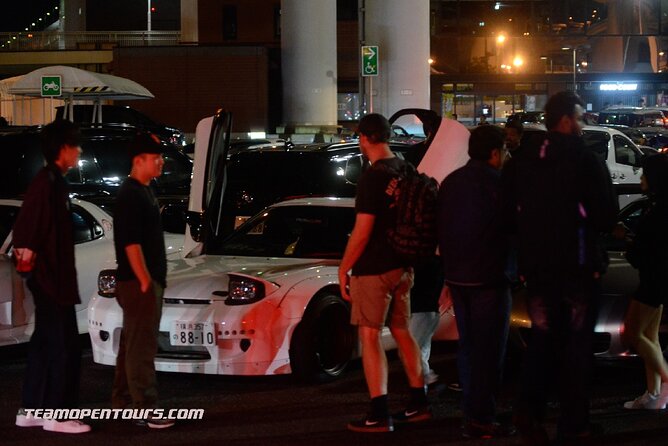
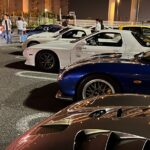
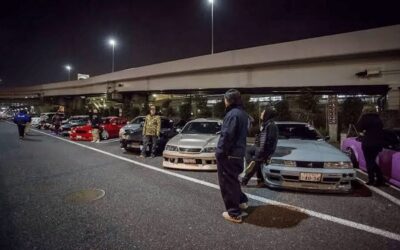
Daikoku Parking Area is more than a service stop. It is one of the best-known meeting places in Japan’s car scene, set among Yokohama’s port roads and industrial highways. On a good night, you might see tuned Skylines, RX-7s, Subarus, Silvias, older Japanese cars, Ferraris, McLarens, or even a Koenigsegg.
That variety is what makes the visit exciting. You are not walking into a fixed museum collection. You are seeing cars that arrive and leave, often with owners nearby. One night may bring hundreds of cars, while another Tuesday may feel much quieter. The experience has a real element of chance, and that is both its charm and its weakness.
You also need a practical way to get there. Daikoku is designed for road traffic, not casual sightseeing by train. This tour solves that problem with a private driver who knows the route and can explain what you are seeing along the way. You are not simply dropped at a parking lot and left to figure things out.
At the stop, the guide first drives around the meeting area and points out the cars and activity. You then have time to walk around, take photos, use the toilets, visit the shops, and buy something from the vending machines. The setting is functional rather than polished, so keep your expectations aimed at car culture, not a formal attraction.
A few more Tokyo tours and experiences worth a look
Starting in Shinjuku under the neon
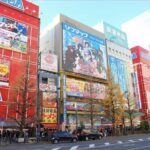
The meeting point is at 5-8 Funamachi in Shinjuku City, and the tour ends back there. The experience begins in the real center of Tokyo’s neon district, with giant screens and bright signs creating an immediate contrast with the road trip ahead.
This opening is brief, but it gives the outing a clear sense of place. You start in dense central Tokyo, surrounded by towers and commercial streets, then move out toward the expressway system. That change is one of the reasons the tour feels different from a normal city sightseeing circuit.
A train gives you speed and efficiency. A bus gives you a window view. Here, you get the sensation of moving through Tokyo as a road user, with the driver choosing the route and pointing out details as they appear. The exact sights depend on traffic and the route used that night, but the planned views include Shibuya, Shinjuku, Tokyo Tower, Skytree, and Tokyo’s high-rises.
The private format helps here. With no large group to manage, you can ask about the cars, Japanese driving culture, the city, or life in Japan. Guides such as Jeremy and Graham are especially associated with explaining both the vehicles and the city during the ride. You should treat the guide as part driver, part local interpreter, and part car-scene host.
Tokyo from the raised highways
The drive through Tokyo is not a racing session. You are riding with a trained, responsible driver, and normal road conditions still apply. The appeal is the car, the route, and the view, not dangerous speed.
The highways thread between buildings and give you angles you cannot get from a sidewalk or ordinary train platform. Tokyo’s towers rise beside the road, while the city lights stretch ahead and behind. It is a good chance to take short video clips, though reflections and motion can make night photography tricky.
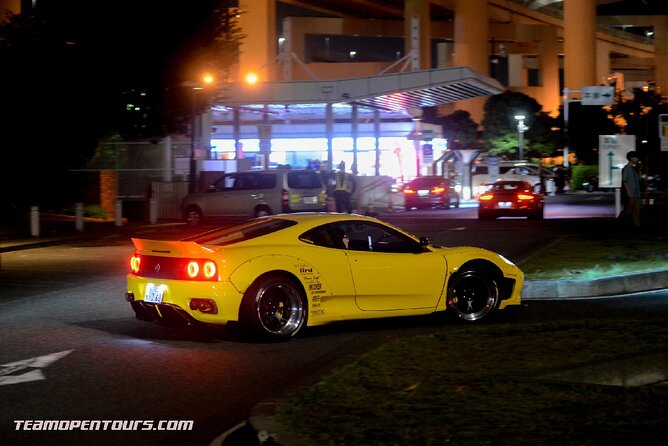
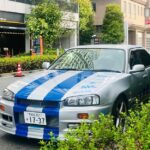
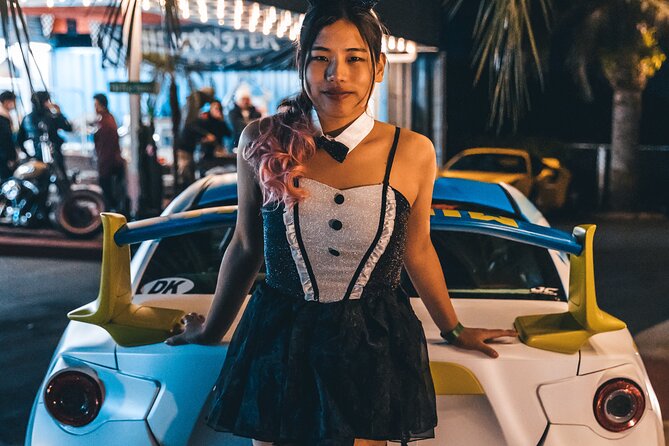
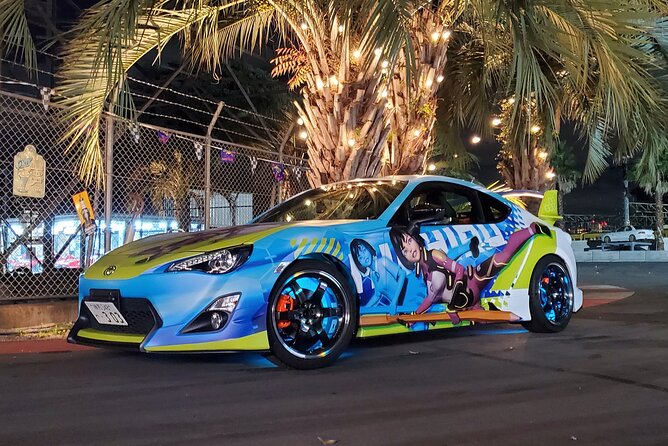
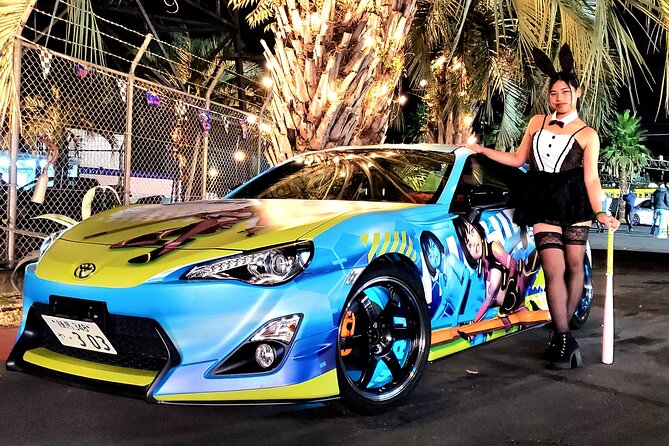
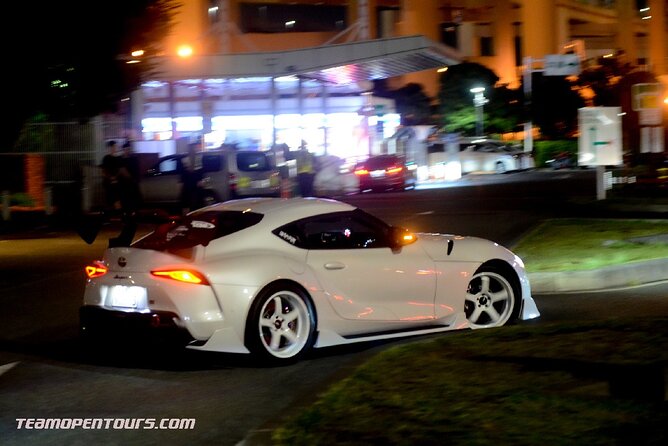
The car itself adds plenty to the ride. The Toyota 86 is compact and sporty, and the Itasha styling gives it a playful anime-car identity. Some departures have used Nissan GT-Rs, including the R35, while other vehicles may be available depending on the group and date. If the exact car matters to you, confirm it before booking rather than assuming the headline vehicle will be yours.
That point matters for families with car-focused teenagers. Several groups have found the ride itself to be as memorable as Daikoku, especially when the driver is in a GT-R or a particularly striking Itasha car. If you are mainly interested in Tokyo at night, the vehicle still adds character. If you are a serious enthusiast, the specific car may influence your decision more than the sightseeing route.
Crossing Rainbow Bridge toward Odaiba
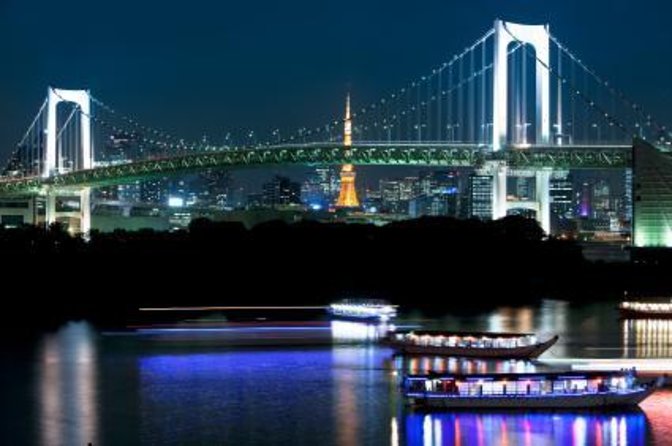
Rainbow Bridge is the visual high point of the drive. From the road, you see Tokyo’s lights spread across the bay, with the bridge structure and reflections adding depth to the night view. The route continues toward Odaiba, the futuristic waterfront district.
This is a moving viewpoint, not a long photo stop. You should have your camera ready, but do not expect time to get out and set up a tripod. The view is best enjoyed as part of the drive, when the city keeps changing around you.
Odaiba also gives the tour a useful rhythm. You begin with neon Shinjuku, shift into high-speed roads between skyscrapers, then reach the open bay and bridge before heading toward the car meet. The sequence feels like a night tour of Tokyo’s different faces, even though the main purpose is Daikoku.
Your guide may point out landmarks and explain the route as you go. The supplied information does not promise a fixed number of photo stops, so think of the bridge and skyline as scenic moments from the passenger seat. For better photos, keep your phone charged and use a fast camera setting if you have one.
Arriving at Daikoku in an Itasha or GT-R
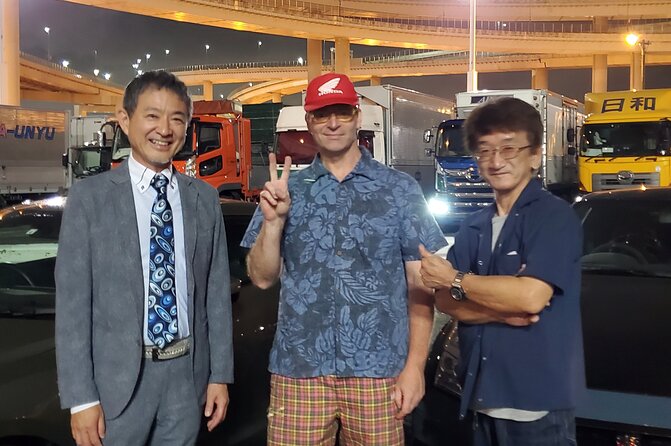
The arrival is designed to be theatrical. You enter Daikoku with a distinctive performance car, neon details, or both, rather than arriving as a regular taxi passenger. Some people enjoy the attention and the feeling of showing up in style. Others may prefer a quieter arrival, so this is worth considering if you dislike being noticed.
Once parked, the guide gives you context about the Japanese car scene. That explanation adds real value because a row of modified cars can be hard to read if you do not know what you are looking at. You might recognize a Skyline or Subaru, but the guide can help explain why a particular build matters, what has been changed, or how Japanese tuning culture differs from car culture at home.
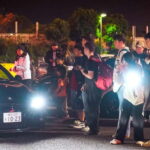
The exact turnout is never fixed. A busy night may bring more than 300 cars, with JDM icons sharing space with European exotics and modern supercars. A slow night, cold evening, or poor-weather period may produce less. One departure found only a modest selection, which is a fair warning for anyone expecting a major show every time.
That uncertainty should not put you off, but it should shape your expectations. You are booking access to a famous meeting place and a knowledgeable local host, not a guaranteed display of R34 GT-Rs and rare Italian cars. If you want a scheduled exhibition with a known collection, choose a museum instead. If you like the surprise of seeing what arrives, Daikoku is a better fit.
What the guides add to the experience
The strongest part of this tour is often the human connection. Drivers such as Jeremy and Graham are car fans who can discuss models, modifications, and the local scene without turning the ride into a formal lecture. Alistair has also been praised for combining car information with useful suggestions for spending the rest of your time in Tokyo.
That wider conversation matters. You can ask about driving in Japan, the differences between Japanese and imported cars, or how the meeting scene works. The guide also makes the city feel less like a backdrop. You are given context for the roads, towers, bridge, and parking area rather than simply passing them in silence.
The staff list can vary, and you may be paired with another guide, including Hawk or nanakommm. The exact personality and vehicle are part of the variable nature of the experience. Still, the private group format means your questions do not get lost in a crowd.
This is also why non-enthusiasts can enjoy the outing. You do not need to name every engine or recognize every Silvia. The night drive, bridge crossing, city views, and unusual destination give the tour enough variety for a general visitor. Car fans simply get more from the details.
Comfort, timing, and group size
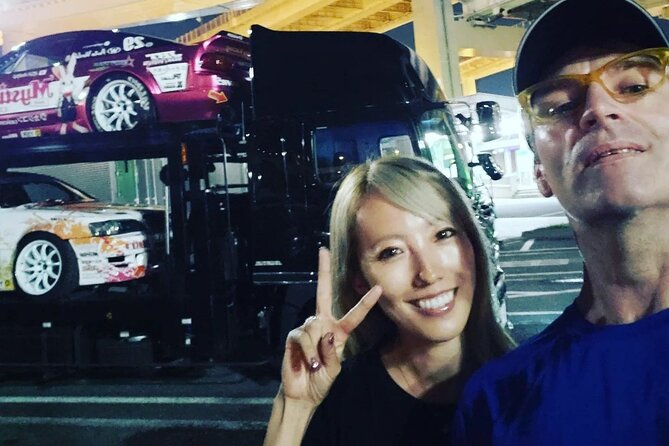
The maximum group size is three people. That is a major advantage for a couple or a small family, since you avoid the stop-and-start feel of a large excursion. It also means the car’s interior matters more, especially if all three seats are occupied.
One person who was 5 feet 10 inches tall and another who was 6 feet 4 inches found the car tight. The Toyota 86 is a compact sports car, not a roomy people carrier. If you are tall, broad-shouldered, or traveling with large bags, ask about the vehicle and seating before you commit.
The trip takes roughly 2 to 3 hours. The drive from the meeting point to Daikoku has been around 35 to 40 minutes on some departures, though traffic and the route can change the timing. The Daikoku visit is listed at about 1 hour 30 minutes, leaving time for the return drive and city views.
The tour starts and ends at the listed Shinjuku meeting point. It is near public transportation, and most people can participate, but the provided details do not promise hotel pickup. Some departures have arranged late-night collection and drop-off at accommodation, yet you should not assume that service is included for every booking.
Because the experience is weather dependent, check the forecast before the day. Poor weather can cancel the trip, with a new date or full refund offered. For your own plans, avoid scheduling a major dinner, show, or early morning commitment too close to the tour.
Is $191.60 good value for up to three?
The listed price is $191.60 per group, not per person, for up to three people. That makes the math attractive for a full group: roughly $64 per person before any additional booking costs. For one person, it is a much larger spend, but you are paying for a private driver, a distinctive car ride, and access to a destination that is awkward to reach independently.
The value depends on what you want from Tokyo. If your main goal is simply to see Rainbow Bridge, cheaper public transport and regular sightseeing can do the job. If you want the Daikoku experience without arranging a car, and you care about the journey as much as the destination, the price is easier to justify.
I would especially consider it for three people sharing the cost. A parent with two car-loving children, three friends, or a couple who wants a memorable night out can get good value from the private setup. The small group also lets you shape the conversation around your own interests.
The price does not remove the risk of a quiet night at Daikoku. You are paying for the full outing, not a guaranteed rare-car count. That is the key value question: can you enjoy the city drive and the car culture even if the parking area is less active than hoped?
Who should book this night ride?
I would recommend it first to car enthusiasts, especially anyone interested in JDM models, Itasha styling, GT-Rs, RX-7s, Subarus, Silvias, and Japanese tuning culture. Teenagers and young adults with a serious interest in cars are likely to remember this more than another standard city tour.
It also suits visitors who have already seen Tokyo’s major districts and want a different evening. You get Shinjuku, Shibuya, the bay, Rainbow Bridge, Odaiba, and Daikoku in one compact outing, with the road itself acting as the connecting thread.
You should think twice if you dislike tight sports-car seating, need guaranteed accessibility details, or expect a fixed display of rare vehicles. You should also avoid booking on a night when rain could spoil your plans, even though the provider offers a refund or alternate date if poor weather causes cancellation.
For cancellation, you can receive a full refund when you cancel at least 24 hours before the start time. Changes or cancellations inside 24 hours are not accepted for a refund, so leave yourself some planning room.
FAQ
How many people can join the private tour?
The tour is for a maximum of three people, and only your group participates.
How long does the experience last?
The full experience takes approximately 2 to 3 hours. The visit at Daikoku Parking Area is listed at about 1 hour 30 minutes.
Where does the tour start and finish?
It starts at 5-8 Funamachi, Shinjuku City, Tokyo 160-0006, Japan, and ends back at the meeting point.
Which car will be used?
Vehicles can include an Itasha-style Toyota 86, Nissan GT-R, or another performance car. The exact vehicle is not guaranteed in the provided tour details.
What might I see at Daikoku Parking Area?
You might see Japanese cars such as Skylines, RX-7s, Subarus, and Silvias, along with classic cars and imported exotics such as Ferraris, McLarens, or Koenigseggs. The selection changes from night to night.
Can I cancel for a full refund?
Yes. Cancel at least 24 hours before the local start time for a full refund. Cancellations or changes made less than 24 hours before the start time are not refunded, while a weather cancellation offers a different date or full refund.
Should you book it?
Book this tour if you want a car experience first and Tokyo sightseeing second. The ride through Shinjuku, the highway views, and Rainbow Bridge give the night plenty of appeal, but Daikoku and the performance car are the real reasons to go.
For the best value, share the $191.60 group price with two other people, confirm the vehicle if that matters to you, and choose a night with a favorable forecast. Go in expecting an unpredictable car meet rather than a guaranteed supercar show, and you will be ready to enjoy both the machines that appear and the unusual way you reach them.
More JDM & Car Culture in Tokyo
More tours in Tokyo we've reviewed

JDM & Car Culture, compared.
 ★ 4.7FAST&FURIOUS EXPERIENCE Tokyo Car Club membershipFrom $138
 ★ 4.8GT-R35 800hp Club Membership – secret underground car meetFrom $205
 ★ 4.8Tokyo: Fast & Furious Tokyo Drift 3 Experience (Kaila Yu SP)From $157
 ★ 4.8Tokyo: Daikoku JDM Car Meet & Night Car Culture TourFrom $984 hours
 ★ 4.8Secret Car Meet: R34 Skyline Car Club MembershipFrom $236
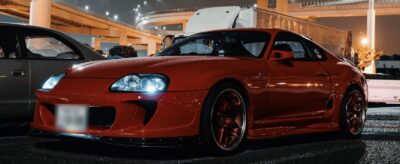 ★ 4.7Tokyo Drift: Daikoku PA Supreme Car Experience 大黒PAFrom $583 hours