
Reviewed · MT FUJI DAY TRIPS
From Tokyo: Top 5 Scenic Spots of Mount Fuji Full-Day Tour
Mount Fuji is the star, but the clever part of this 11-hour trip is the variety of views. You see the mountain beside a pagoda, above a small-town street, behind clear spring ponds, across Lake Kawaguchi, and even over a Lawson convenience store. I like the simple photo strategy: if clouds hide Fuji at one stop, the next angle may still work. I also like having round-trip transport from Tokyo, since reaching all five places by public transit in one day would take far more planning.
The trade-off is time. This can be a large group of up to 45 people, and several stops feel brisk, especially in cherry blossom season or on a holiday. Traffic can push the return to Tokyo past 9 p.m., so I would not schedule a train, dinner reservation, or flight immediately afterward.
In This Review
- Key points before you book
- Why this route works for a first Fuji day
- Arakurayama Sengen Park and the pagoda view
- The Hikawa Clock Shop street scene
- Oshino Hakkai and its spring-fed ponds
- Lake Kawaguchi and the seasonal Oshi Park stop
- The Lawson convenience store photo stop
- Weather, crowds, and the Fuji gamble
- Guides, language, and group size
- Is $56.14 good value?
- Who should book this Mount Fuji tour?
- FAQ
- Where does the tour depart from?
- How long does the Mount Fuji tour last?
- Is Mount Fuji guaranteed to be visible?
- What is included in the price?
- Is lunch included?
- How large is the group?
- Is there an extra fee for the Lake Kawaguchi Cherry Blossom Festival?
- What happens if I need to cancel?
Key points before you book
- Five very different Fuji viewpoints: Combine a pagoda, a clock-shop street, spring ponds, a lakeside park, and a convenience-store photo stop in one day.
- A long but practical day from Tokyo: Depart from Tokyo Station or the Shinjuku LOVE sculpture and expect roughly 11 hours, including road time.
- Best for photographers: The route is built around recognizable Fuji compositions, with plenty of chances for seasonal flowers and snow.
- Guides can make a major difference: Guides such as Luna, Christy, James, Seki, Sawaki, and Lyn have been praised for organizing groups, taking photos, and filling the bus ride with facts and activities.
- Weather decides the headline view: Mount Fuji may be hidden by cloud, and no clear sighting is promised.
- Bring money and patience: Food is not included, some stops are crowded, and the optional lunch arrangement has received mixed reactions.
Why this route works for a first Fuji day
The tour gives you a broad taste of the Fuji area without asking you to rent a car or decipher several train and bus connections. That matters because the most photographed sites are spread across Yamanashi Prefecture, well outside central Tokyo.
You leave from Tokyo Station Marunouchi Front Square at 8 a.m. or meet the group near the Shinjuku LOVE sculpture at 8:40 a.m. The exact pickup arrangement should be checked in the message sent the evening before. At the meeting point, look for the guide holding a yellow flag with the Gogoday logo, and arrive 15 minutes early. The bus will not wait for late arrivals, and there is no refund for a missed departure.
The air-conditioned vehicle is the main convenience here. It also becomes your base for a lot of the day, so your comfort depends partly on traffic, seating, and the size of the group. The bus may carry English and Mandarin-speaking groups together. That can work well with an organized guide, but the amount of English information has not been consistent. Some guides have been warm, clear, and highly active. One English-speaking guide was criticized for giving little information and not using the microphone.
I would book this as a sightseeing and photography day, not as a quiet mountain outing. You will see several famous places, but you will also follow a tight schedule and share busy paths with many other people.
A few more Tokyo tours and experiences worth a look
Arakurayama Sengen Park and the pagoda view
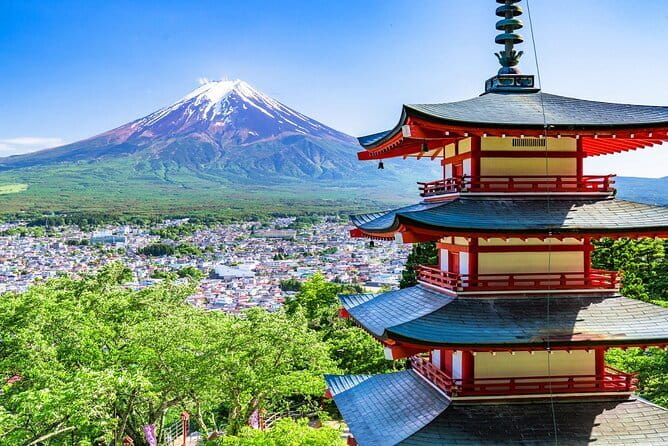
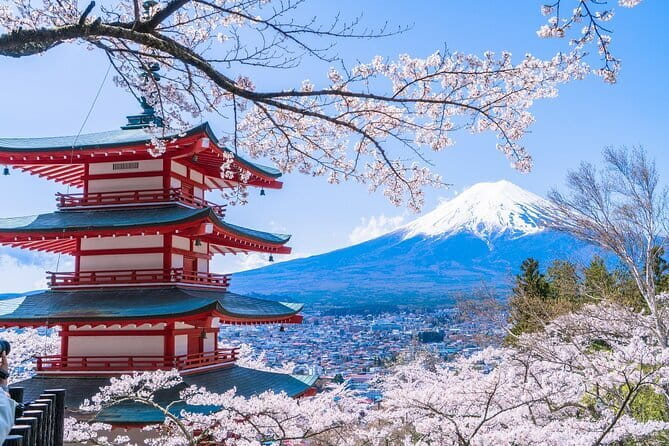
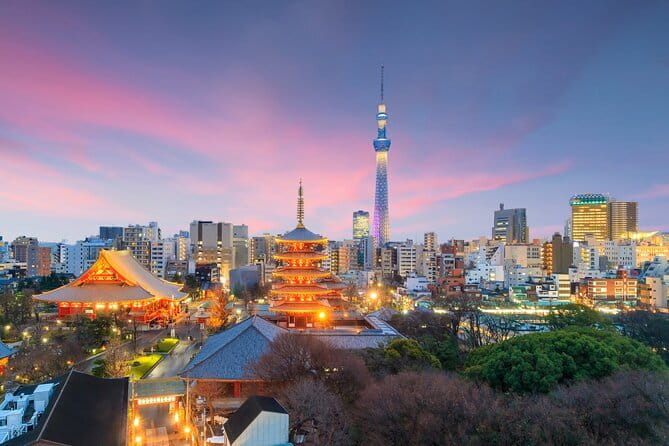
The first major stop is Arakurayama Sengen Park, one of the classic Mount Fuji picture spots. The familiar composition places a red pagoda in the foreground with Fuji rising behind it. In clear weather, this is the image many people hope to bring home from Japan.
The setting is also more physical than a quick roadside photo. You need to make your way toward the elevated viewpoint, and the route can feel crowded. During cherry blossom season, queues and foot traffic may slow everyone down. One visitor found there was not enough time to reach the upper area, while another noted that crowds made the shrine section difficult.
That is the first important timing lesson: do not assume the full hour means an hour at the best viewpoint. Some of the stop includes moving with the group, finding the bus again, and managing congestion. Wear shoes you can walk in, and keep your camera ready rather than packing it away between shots.
If Fuji is covered, the pagoda and surrounding trees still offer attractive photographs. Snow can also give the scene a different look. Guides such as James and Luna have been praised for helping with pictures, while Seki was noted for keeping people informed even when the mountain disappeared behind cloud.
The Hikawa Clock Shop street scene
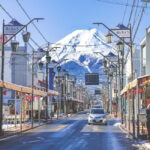
Around 11:45, the bus reaches the Hikawa Clock Shop area in Yamanashi for about 20 minutes. This is a very different Fuji view. Instead of a formal park, you get a Japanese street scene with the mountain appearing at the end of the road or above the buildings.
The charm comes from the contrast between ordinary town life and the enormous peak behind it. You are not simply collecting another postcard view. You are photographing a place that feels lived in, with a street, shopfronts, steps, and utility lines shaping the frame.
Twenty minutes is enough for a few careful pictures, but not for a leisurely walk. Stay close to the guide and note exactly where the bus is parked. Finding your way back can be confusing when several tour buses use the same area.
This stop may appeal most to people who like urban photography. If you only want wide-open mountain views, it may feel less important than Oshino Hakkai or Lake Kawaguchi. I like it because it changes the pace and shows how Fuji appears in everyday Japanese surroundings.
Oshino Hakkai and its spring-fed ponds
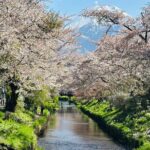
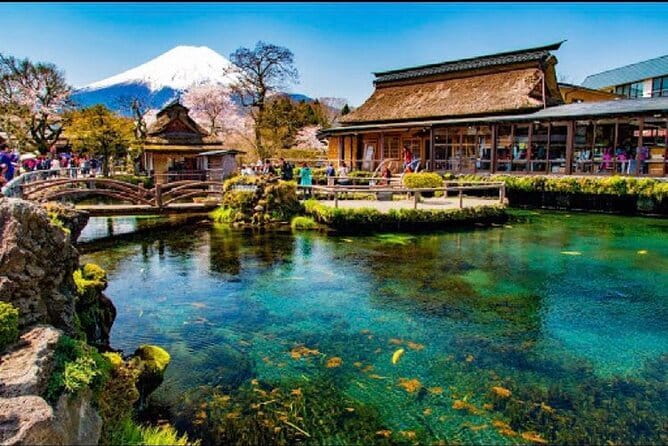
Oshino Hakkai receives about 90 minutes, making it one of the more substantial stops. The village is known for eight spring ponds formed by snowmelt from Mount Fuji. The water is famously clear, and the ponds, wooden buildings, small bridges, and nearby food stalls create a more traditional village setting than the urban stop before it.
A complimentary grass cake is included, giving you a small taste of a local snack. Lunch is not included, so this is also one of the places where you may buy food. You can bring your own meal, purchase something on the route, or follow a restaurant suggestion from the guide. An optional buffet has produced mixed impressions, and one especially useful tip is to avoid feeling pressured into buying it on the bus. You may prefer to use your own judgment and look for snacks or food at a later stop.
Ninety minutes sounds generous, but it can disappear quickly. You may want to see the ponds, take photos, use the restroom, eat, and browse stalls. During peak periods, restroom lines can be long and paths can be packed. One of the strongest criticisms of the day was that Oshino Hakkai deserved more time, especially compared with the shorter Lawson stop.
I would make this stop a priority. Photograph the water and village details, not just Fuji. If the mountain is hidden, Oshino Hakkai still gives you a worthwhile visit because the springs and village atmosphere do not depend on a clear summit.
Lake Kawaguchi and the seasonal Oshi Park stop
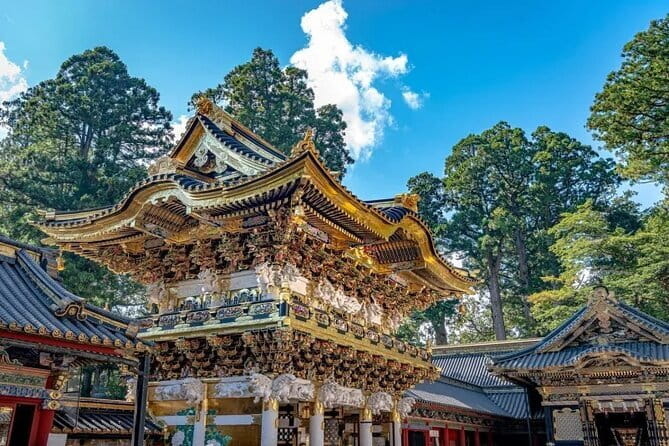
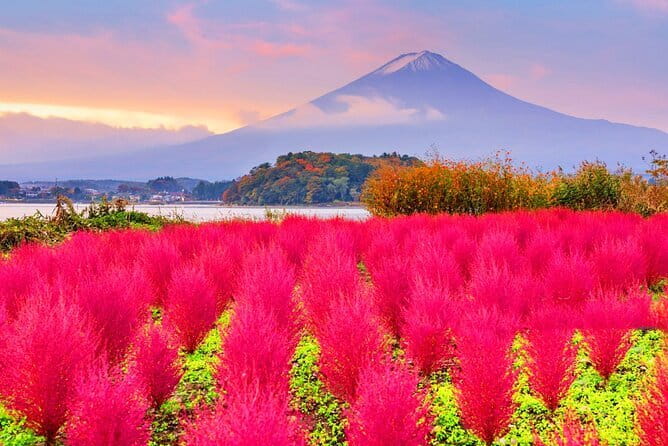
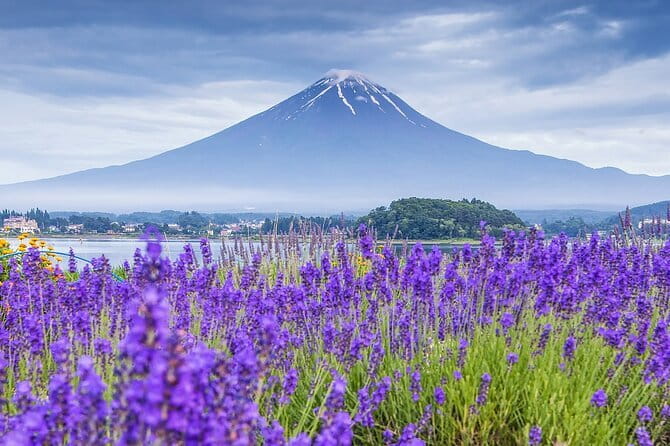
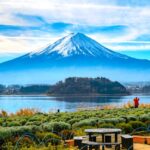
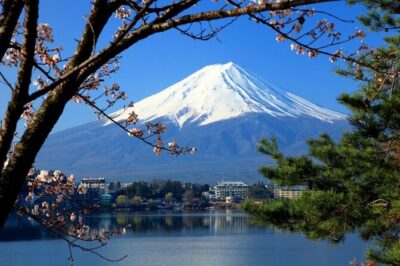
Around 2:30 p.m., the route reaches Lake Kawaguchi. The listed stop is Oshi Park during periods outside certain seasonal events, with about 50 minutes available. This is your broadest view of the day, with Fuji set beyond the lake and open foreground space for photographs.
The park changes with the calendar. Lavender, broom grass, crabapple blossoms, and cosmos appear in different seasons, so the exact flowers and timing can vary from year to year. The cherry blossom festival may require a separate ticket, listed at $9 per person. Check the date-specific details before you go, since seasonal attraction schedules are only a guide.
This is often the place where the tour feels least rushed. You have room to walk, compare viewpoints, and wait for a break in the clouds. Several positive experiences centered on clear views across the lake, while cloudy days still offered snow and attractive scenery.
The main limitation is that 50 minutes is not enough for a full circuit or a slow lakeside visit. Think of it as a focused photo stop. If Lake Kawaguchi is your main reason for leaving Tokyo, a dedicated lake-area day would give you more freedom. If you want a sampler of the region, this stop is well chosen.
A few more Tokyo tours and experiences worth a look
The Lawson convenience store photo stop
At about 3:40 p.m., you stop for roughly 20 minutes at Lawson Fujikawaguchiko Town Hall. Fuji rises behind the familiar convenience-store sign and roofline, creating one of Japan’s most recognizable modern travel photos.
This is an amusing contrast to the pagoda and spring ponds. It also shows how tourism changes an ordinary place. The spot has become so popular that local conditions can be crowded, and you need to be respectful when taking pictures near the store and surrounding roads.
The criticism here is fair: 20 minutes at Lawson can seem like too much when Arakurayama and Oshino Hakkai already feel compressed. If you are deciding which stop matters most, I would give priority to the pagoda and ponds. Still, the Lawson view takes little effort, and it gives you a completely different image for your photo collection.
Weather, crowds, and the Fuji gamble
Mount Fuji visibility is never guaranteed. The mountain can vanish behind cloud for most or all of the day, even when the rest of the weather seems pleasant. Some departures have had only brief glimpses, while others enjoyed clear views from several stops.
That uncertainty is not a flaw unique to this tour. It is simply the reality of Fuji from the lowlands. The best practical approach is to value the route itself, not only the summit. Oshino Hakkai, seasonal flowers, the pagoda, and the town streets can still make the day worthwhile when Fuji is hidden.
Crowds are the bigger predictable problem. Weekends, public holidays, and cherry blossom season can bring heavy foot traffic, full buses, long restroom lines, and slower roads. Traffic may delay your return beyond 9 p.m. The operator says it will cover guide and driver overtime, but that does not shorten your day. Leave the evening open.
Guides, language, and group size
The tour includes a multilingual guide, driver, and transport, with a maximum of 45 people. That is a sizeable group. You will need to listen carefully for meeting times, remember the bus location, and return promptly after each stop.
The best guides add real value. Luna has been praised for keeping a mixed English and Chinese group on schedule, offering trivia, helping with photos, and even using origami during long drives. Sawaki was praised for speaking English, Japanese, and Mandarin, giving clear information, and helping recover a forgotten baseball cap. James was appreciated for both his explanations and photography help. Christy and Seki have also been praised for friendly, useful assistance.
The less positive side is important. English delivery can vary, especially when two language groups share one bus. One person found the English guidance too limited, while another found the morning pickup poorly organized. The tour operator sends guide and driver contact details by email the evening before, so keep that message available.
Is $56.14 good value?
At $56.14 per person, the tour is priced as an economical way to reach several Fuji viewpoints from Tokyo. The value comes mainly from transportation and route planning. A private car or taxi covering these distances would cost far more, while public transit would require careful transfers and would not easily reproduce this five-stop schedule.
The price does not include lunch, drinks, or the possible $9 cherry blossom festival ticket. That keeps the base cost low, but you should budget separately for food and snacks. I would bring some cash, as recommended, and carry a packed meal if you prefer control over timing or dietary choices.
The value is strongest for a first visit, a photographer, or anyone with only one open day. It is weaker if you dislike group schedules, need a slow pace, or want a high level of historical explanation in English. In those cases, a smaller or private tour may suit you better, though likely at a higher price.
Who should book this Mount Fuji tour?
I would choose this trip if you want the most recognizable Fuji viewpoints in one organized day. It suits first-time visitors, couples, families, and photographers who want someone else to handle the driving. It also works for you if seeing five different settings feels more useful than spending all day at one lake or village.
I would think twice if you need guaranteed Fuji views, dislike long bus rides, or have an evening reservation that cannot move. The tour can run late, and the schedule may be shortened, changed, or canceled at individual attractions because of weather, traffic, or crowd conditions.
Book with realistic expectations: you are buying access to a well-planned route, not a private mountain escape. Arrive early, keep your food plan simple, wear comfortable shoes, and treat every clear glimpse of Fuji as a bonus. With that mindset, $56.14 buys a very efficient day outside Tokyo.
FAQ
Where does the tour depart from?
The listed meeting points are Tokyo Station Marunouchi Front Square at 8 a.m. and the Shinjuku LOVE sculpture at 8:40 a.m. You should check the evening-before email for the exact pickup details.
How long does the Mount Fuji tour last?
The tour lasts approximately 11 hours. Weekend and holiday traffic may delay the return to Tokyo beyond 9 p.m.
Is Mount Fuji guaranteed to be visible?
No. Weather conditions are unpredictable, and the operator cannot guarantee a clear view of Mount Fuji.
What is included in the price?
The tour includes air-conditioned transportation, pickup and drop-off at two designated points, a multilingual guide, and a driver.
Is lunch included?
No. Food and drinks are not included. You may bring your own food, buy something along the route, or choose a restaurant recommended by the guide.
How large is the group?
The tour can have a maximum of 45 travelers.
Is there an extra fee for the Lake Kawaguchi Cherry Blossom Festival?
If the seasonal visit includes the Lake Kawaguchi Cherry Blossom Festival, the listed ticket cost is $9 per person. Seasonal attraction dates can change each year.
What happens if I need to cancel?
You can receive a full refund if you cancel at least 24 hours before the experience start time. Cancellations or changes made less than 24 hours before departure are not accepted for a refund.
More Full-Day in Tokyo
More Mt Fuji Day Trips in Tokyo
More tours in Tokyo we've reviewed


Mt Fuji Day Trips, compared.
 ★ 5.0Mt Fuji and Hakone 1-Day Bus Tour Return by Bullet TrainFrom $163
 ★ 4.0Mt Fuji & Hakone Cruise, Drum Show Bullet Train 1 Day from TokyoFrom $149
 ★ 4.4Tokyo Mt Fuji 5th St & Hakone Cruise Bus Tour w/Bullet TrainFrom $15410 hours
 ★ 4.5From Tokyo: Mount Fuji Full-Day Sightseeing TripFrom $6810 hours
 ★ 4.7Tokyo: Mt. Fuji Tour, Hakone Ropeway, Owakudani, Lake AshiFrom $5410 hours
 ★ 4.4Tokyo:Mt.Fuji,Kawaguchiko Oishi Park,Arakurayama Sengen ParkFrom $5410 hours