
Reviewed · ASAKUSA TOURS
From Asakusa: Old Tokyo, Temples, Gardens and Pop Culture
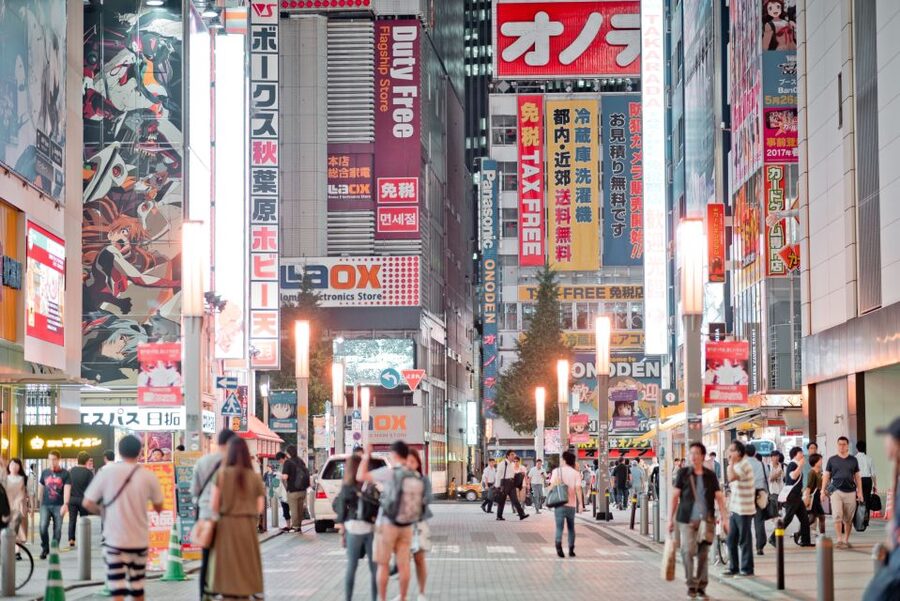
East Tokyo tells Tokyo’s story in fast-forward. At Asakusa, you meet old temple lanes and the grand Senso-ji gate. In Akihabara, anime, games, electronics, and cosplay take over the streets. Between them, Ueno’s market life and Koishikawa Korakuen’s Edo-era garden show how many different Tokyos can fit into one afternoon.
I like the wide historical sweep and the fact that you use local trains instead of viewing the city from a tour bus. I also like the small group, limited to eight people, which gives you room to ask questions. The main drawback is pace: five neighborhoods in four hours means this is an introduction, not a deep visit to every stop.
- Senso-ji and Asakusa: Start with Tokyo’s best-known Buddhist temple and the old shopping street leading toward it.
- Ueno and Okachimachi: See a less polished, more everyday market district with street vendors and food shops.
- Akihabara: Learn how an electronics center became Tokyo’s main anime, manga, gaming, and pop-culture district.
- Koishikawa Korakuen: Trade neon and crowds for a traditional garden shaped during the Edo period.
- Small-group format: With no more than eight participants, the guide can keep the walk conversational.
- Good practical value: The $68 fee includes guide costs, standard admissions, and local train rides, but not food or a possible Tokyo National Museum visit.
In This Review
- One Afternoon, Five Different Tokyos
- Asakusa: Temple Tokyo Begins at Senso-ji
- Ueno and Okachimachi: Tokyo at Street Level
- Akihabara: From Electronics to Otaku Culture
- Koishikawa Korakuen: A Quiet Finish
- What the Four-Hour Pace Feels Like
- Which Travelers Will Get the Most From It
- Should You Book This East Tokyo Walk?
- FAQ
- How long does the tour last?
- Where does the tour meet?
- What language is the tour offered in?
- Are admissions and local train rides included?
- Is food included?
- How large is the group?
One Afternoon, Five Different Tokyos
This four-hour East Tokyo walk is designed around contrast. You begin at Kamiya Bar in Asakusa, near 1-chome-1-1 Asakusa, then move through temple grounds, shopping streets, market alleys, pop-culture avenues, and a formal Japanese garden.
That range is the tour’s main strength. You are not spending four hours on one type of sightseeing. Instead, the route gives you a useful answer to a basic Tokyo question: how did an old city become this modern one without losing every trace of its past?
The route is also a lesson in urban change. Asakusa connects to early public transportation and temple culture. Ueno and Okachimachi show commerce at street level. Akihabara reflects postwar technology and entertainment. Koishikawa Korakuen offers a quieter reminder of the city’s former ruling class and garden traditions.
Your English-speaking guide provides the thread tying these places together. Past guides have included Taka, Toru, Michelle, and Takee. The comments about these guides point to a warm, personal style, with Taka praised for his explanations around Asakusa, Michelle noted for fluent Italian as well as professional guiding, and Takee remembered for engaging children, including an origami activity and a pub stop.
Those details matter because a walking tour can feel either like a moving lecture or a shared afternoon with a local companion. This one appears intended to be the latter, though your exact guide and any extra touches will vary.
Asakusa: Temple Tokyo Begins at Senso-ji
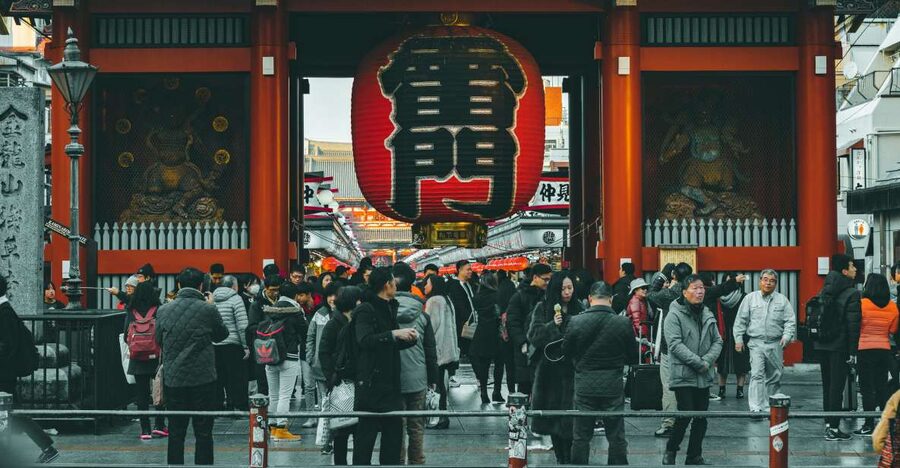
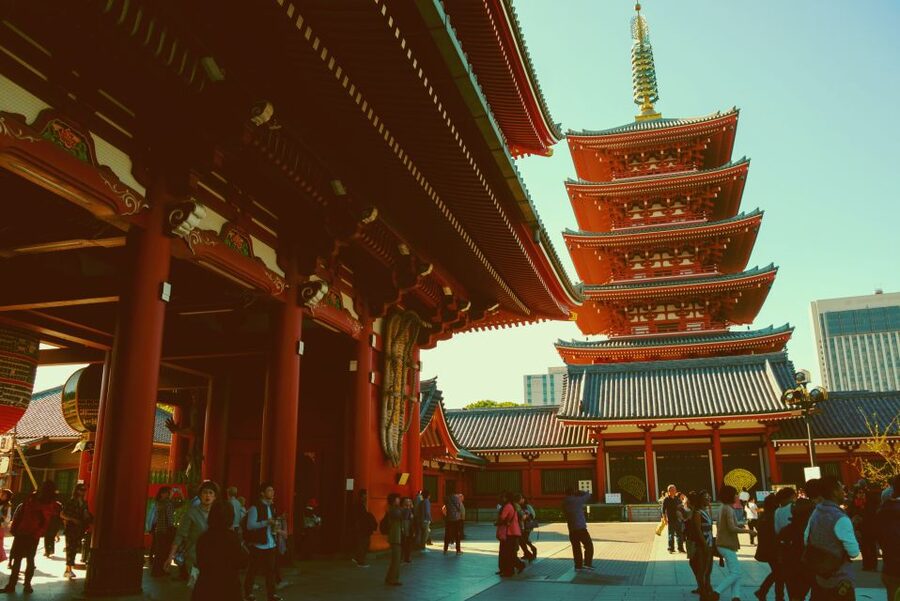
Asakusa is the natural starting point for a tour about old Tokyo. The district grew around Senso-ji, one of Japan’s earliest Buddhist temples, and the approach still gives you a strong sense of arrival.
The first 45 minutes are devoted to Asakusa, followed by about 15 minutes at Senso-ji itself. That timing tells you something important: the guide is not only taking you to the temple, posing you near the gate, and moving on. You should have time to understand the neighborhood around it and how Asakusa became a major center of entertainment, shopping, and transport.
Nakamise-dori, the shopping street leading toward Senso-ji, is part of the experience. It is lined with shops selling snacks, souvenirs, and traditional items. The street can be crowded, and it is not a quiet introduction to Japanese religion. That is precisely why it works here. You see worship, commerce, tourism, and daily movement occupying the same narrow approach.
At Senso-ji, your guide explains the temple’s early Buddhist roots and points out what you are seeing. This is especially helpful if temple layouts, statues, gates, and rituals are new to you. Without context, the site can become a blur of red buildings and photo stops. With context, the temple becomes a starting point for understanding how faith and neighborhood life developed together.
The tour also connects Asakusa to transportation history. About a century ago, Asia’s first subway line began running between Asakusa and Ueno. That link is more than a historical footnote. It helps explain why these two districts developed as connected centers of trade, entertainment, and movement.
A few more Tokyo tours and experiences worth a look


Ueno and Okachimachi: Tokyo at Street Level
From Asakusa, the tour continues toward Ueno and Okachimachi. The planned time is about 25 minutes in Ueno and another 25 minutes in Okachimachi, so expect an orientation walk rather than a long museum visit.
Ueno is known for museums, seasonal cherry blossoms, and busy public spaces. The tour’s emphasis, though, is not only on polished cultural attractions. You also get a look at the commercial side of the district, where shops and food sellers have served local customers for generations.
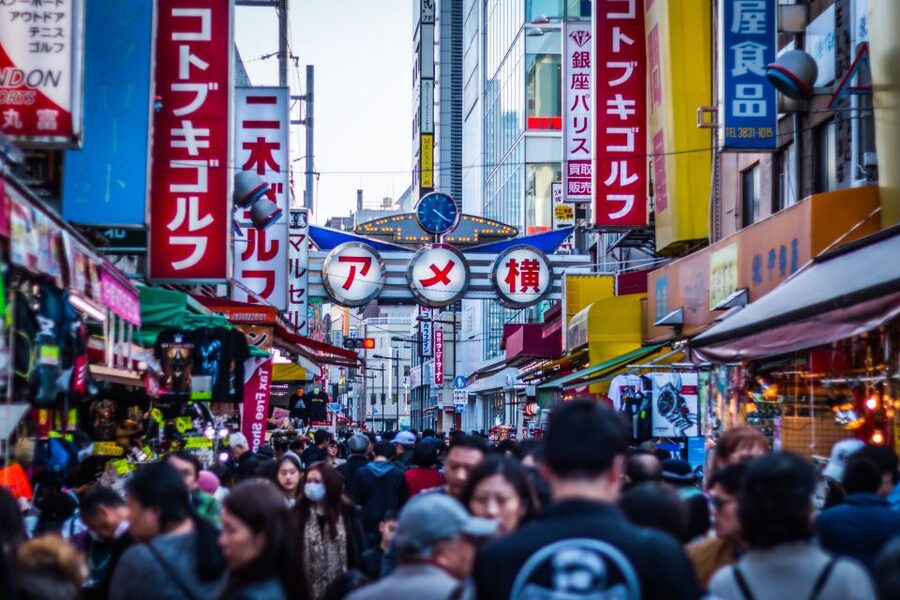
Okachimachi brings that everyday character into sharper focus. The area is associated with Ameya-Yokocho, a market street where vendors sell food and other goods. It has a rougher, more crowded feel than a department-store district, and that is part of its appeal. You see merchandise close to the pavement, narrow storefronts, and a commercial rhythm that feels direct rather than carefully packaged.
I like this part of the route because it gives you a break from postcard Tokyo. Temples and gardens are important, but markets often tell you more about how a city works today. Here, you can watch people shop, eat, compare prices, and move through a district shaped by trade.
The limitation is time. Fifty minutes across Ueno and Okachimachi will not let you explore every stall or museum. If the Tokyo National Museum is a priority, admission is not included, and choosing to visit it would require customizing the tour. Treat this section as a guided introduction, then return later if you want a longer market or museum visit.
Akihabara: From Electronics to Otaku Culture
Akihabara receives about 45 minutes, making it one of the tour’s major stops. The district is often called Electric Town, a name tied to its long role as a center for electronics.
The guide explains how Akihabara changed from a prewar electronics hub into a center of otaku culture. That term refers to passionate interest in anime, manga, games, and related pop culture. The district’s identity is not frozen in one era. Electronics, entertainment, fantasy, retail, and street performance overlap here.
You should expect an energetic change of mood after Ueno and Okachimachi. Akihabara’s signs, specialist shops, gaming venues, and anime-focused businesses create an atmosphere unlike the temple district you visited earlier. Cosplayers may be part of the street scene, and the guide can help you understand what you are seeing rather than leaving you to decode it alone.
This is one place where a guide adds real value. If you already follow Japanese games, manga, or anime, you may recognize much of the setting. If you do not, Akihabara can feel visually loud but culturally confusing. The tour frames the district as part of Tokyo’s development, not just as a collection of colorful storefronts.
There is also a useful point about reality and fantasy here. Akihabara is a real working neighborhood, yet parts of it can feel like a manga or anime setting. That tension helps explain why the district attracts such strong interest. It is not simply old Tokyo versus new Tokyo. It is a place where technology and imagined worlds have become part of everyday city life.
Forty-five minutes is enough to get oriented and ask questions. It is not enough for serious shopping, a full arcade session, or a careful search through specialist stores. Plan to return independently if Akihabara is your main reason for booking.
Koishikawa Korakuen: A Quiet Finish
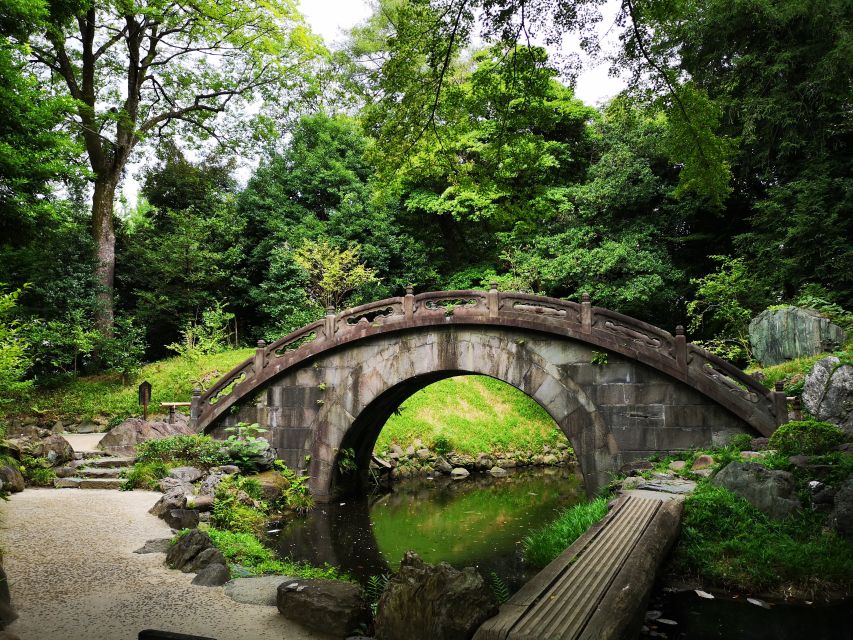
Koishikawa Korakuen receives about 45 minutes, including sightseeing and scenic views along the way. Its position in the route is smart. After temples, markets, trains, and neon, the garden gives your eyes and feet a different kind of work.
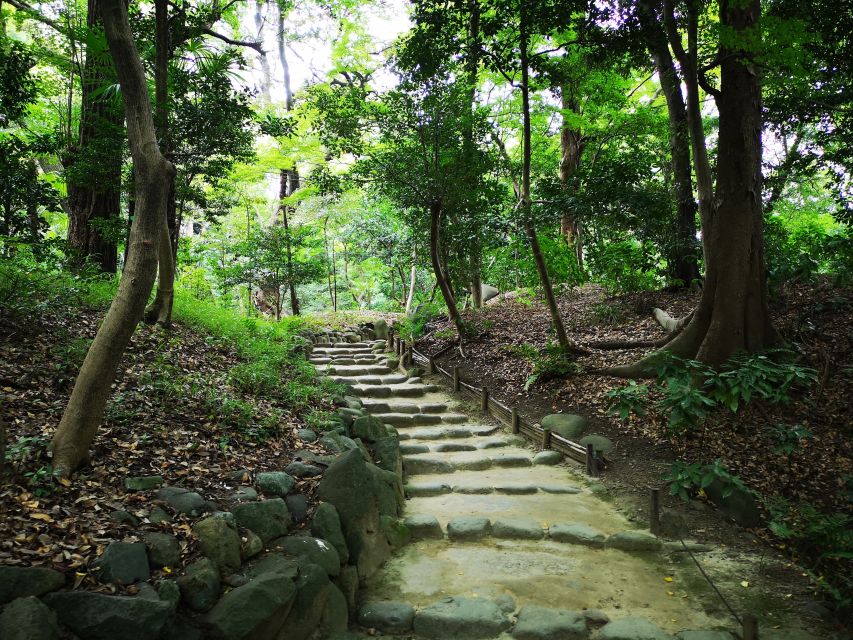
This is an Edo-era Japanese garden, with designed paths, water features, seasonal scenery, and carefully framed views. Spring brings cherry blossoms, while autumn brings red and gold foliage. The garden is not wilderness. It is a planned setting, built to guide how you move and what you notice.
The stop also adds historical balance. Asakusa, Ueno, and Okachimachi show public life and commerce. Akihabara shows technology and popular culture. Koishikawa Korakuen brings you into a more controlled world shaped by older ideas of beauty, status, and leisure.
I would not treat this as a rushed photo stop. The garden’s value comes from slowing down. You can compare its quiet paths with the streets you have just left and see how Tokyo keeps older spaces inside its modern core.
Still, 45 minutes is a short garden visit. You will get a clear taste of the setting, but not the leisure of a full morning. If gardens are your special interest, this tour introduces Koishikawa Korakuen rather than replacing a dedicated visit.
What the Four-Hour Pace Feels Like
The route covers a lot of ground, and the sequence is active. You walk through several districts, use local trains, and shift between crowded commercial streets and calm garden paths.
Comfortable shoes are essential. The tour is wheelchair accessible, but the mixed city route means you should still discuss any specific mobility needs when booking. The group is capped at eight people, which is a useful middle ground: more social than a private guide, but small enough for the guide to keep track of everyone.
The guide costs and standard admissions while on the tour are included, as are local train rides. Food and drinks are not included, so bring money if you want snacks in Asakusa or Okachimachi. The Tokyo National Museum is also outside the standard price if you decide to add it.
At $68 per person, the value is strongest if you want orientation and context in one half-day. Paying separately for transport, temple guidance, and garden entry could add up, but the larger benefit is saving planning time. You get a route that would take some effort to organize on your own.
The value is weaker if you prefer slow, independent sightseeing. You will not have much time to linger in shops, eat a full meal, or study museum collections. This is a sampler with explanation, not a relaxed day in one neighborhood.

Which Travelers Will Get the Most From It
I would recommend this walk to a first-time Tokyo visitor who wants to understand East Tokyo beyond the usual headline sights. Families may like the variety, since children can move from temple gates to markets and anime shops rather than spending hours in one museum. Takee’s reported origami activity also suggests that some guides adapt well to younger participants, though it is not a guaranteed part of every tour.
It is also a good choice if you are curious about how Tokyo changed over time. The route has a clear idea behind it, and the stops support that idea.
You may want a different plan if your main goal is shopping, temple photography, or a long garden visit. The tour touches each interest, but none receives the full afternoon. Akihabara fans may want extra time for games and electronics. Temple enthusiasts may prefer an extended Asakusa walk. Museum lovers should set aside another visit for the Tokyo National Museum.
The cancellation policy adds some flexibility: you can cancel up to 24 hours ahead for a full refund, and you can reserve now while paying later. Availability and starting times vary, so check the schedule before building the rest of your day around it.
Should You Book This East Tokyo Walk?
Book it if you want a compact, well-connected look at Tokyo’s contrasts, especially if this is your first stay. The strongest features are the small group, included local transport and standard admissions, and the route’s unusual range from Senso-ji to Akihabara and Koishikawa Korakuen.
I would be most inclined to book when you value a guide who explains the story behind what you see. Past guides such as Taka, Toru, Michelle, and Takee have been praised for warmth, language ability, and personal attention. Your experience will depend on the assigned guide, but the format allows room for that human touch.
Skip it if you want to set your own pace or spend hours in one district. For everyone else, $68 is a fair price for a four-hour introduction that helps East Tokyo make sense.
FAQ
How long does the tour last?
The tour lasts four hours. Check availability for the specific starting times.
Where does the tour meet?
The meeting point is Kamiya Bar in Asakusa.
What language is the tour offered in?
The live tour guide speaks English. The listed tour language is English.
Are admissions and local train rides included?
Yes. All standard costs during the tour, including admissions and local train rides, are included. Admission to the Tokyo National Museum is not included if you choose to visit it.
Is food included?
No. Food and drinks are not included in the tour price.
How large is the group?
This is a small-group tour limited to eight participants.
More Asakusa Tours in Tokyo
More tours in Tokyo we've reviewed

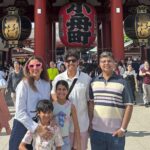

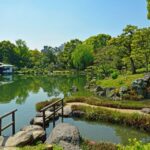


Asakusa Tours, compared.
 ★ 4.8Tokyo: Japanese Dance Cabaret Theater Asakusa-Kaguwa TicketFrom $492 hours
 ★ 4.7Tokyo: Meiji Shrine, Asakusa, Skytree Bus Tour and CruiseFrom $12210 hours
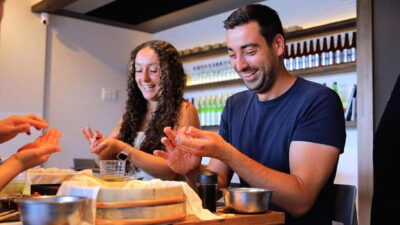 ★ 4.9Tokyo: Roll and Authentic Sushi Making Class in AsakusaFrom $581h 40m
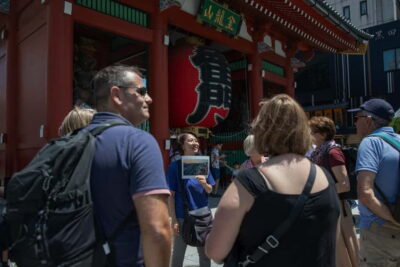 ★ 4.8Tokyo: Asakusa Walking Tour with Sensoji Temple VisitFrom $222 hours
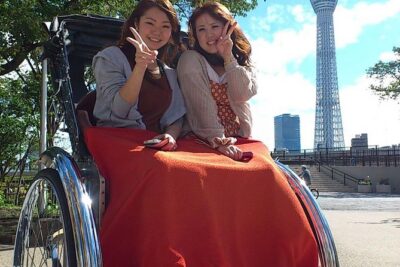 ★ 5.0Tokyo Asakusa Rickshaw TourFrom $42
 ★ 4.5Tokyo Panoramic 1 Day: Meiji Shrine, Asakusa, Odaiba and SKYTREE®From $85