
Reviewed · PHOTOGRAPHY SESSIONS
Explore Unique Tokyo Streets / Learn with a Pro Photographer
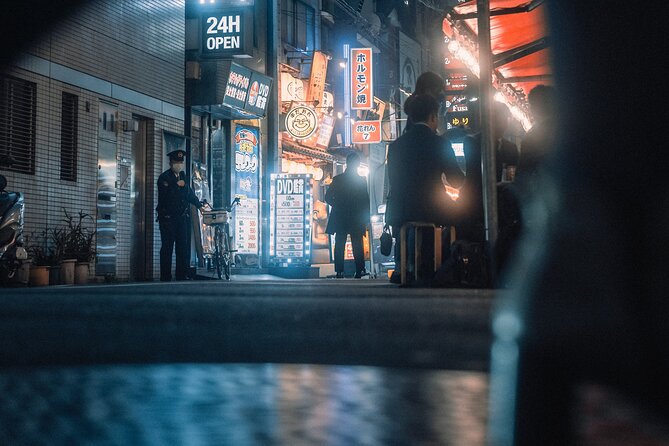
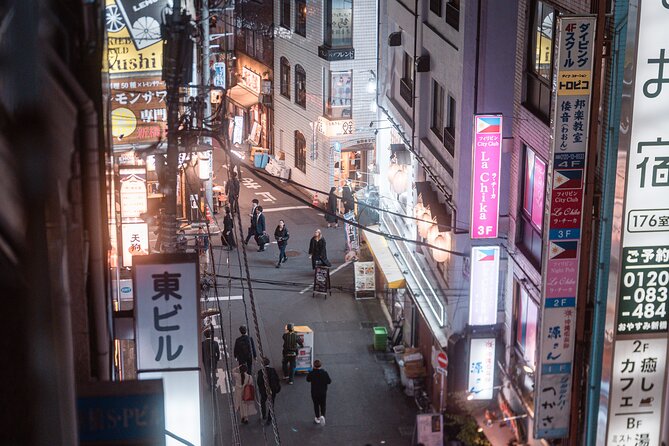
Tokyo after dark is the real classroom here. With photographer Deniz Demir, you walk through Yurakucho and Shinbashi, two central districts where neon, narrow streets, commuters, and everyday city life give you plenty to frame. This is part photo lesson, part guided street walk.
I like the maximum group of six, which gives Deniz room to look at your camera and offer advice that fits your skill level. I also like the practical range of topics, from settings and lenses to framing, street-shooting ideas, LED lights, and prisms. The main consideration is the two-hour limit: you will get useful instruction, but not a full photography course.
In This Review
- Key points to know before booking
- Why this Tokyo photo walk feels different
- Starting at Shimbashi Station
- Yurakucho and Shinbashi after sunset
- The photography lesson, from camera settings to creative tools
- What you can learn in two hours
- The value of the $128.09 price
- Who will get the most from this experience
- How to prepare for the evening walk
- My recommendation for booking
- FAQ
- Where does the photography tour begin?
- Where does the activity end?
- How long does the experience last?
- How large is the group?
- Can the guide bring a tripod?
- What is the cancellation policy?
Key points to know before booking
- Tokyo after dark: Explore Yurakucho and Shinbashi when evening lights and commuter life shape the streets.
- Small-group instruction: The group is limited to six, allowing for personal feedback on your camera and images.
- Professional guide: Deniz Demir is a working photographer who has lived in Japan since 2015.
- Practical camera advice: Discuss settings, lenses, equipment, framing, and creative tools such as LEDs and prisms.
- Weekday salaryman focus: Evening weekday departures can offer a close look at Japan’s office-worker culture as you photograph the streets.
- Flexible equipment help: Deniz can bring a tripod if you would like to use one.
Why this Tokyo photo walk feels different
Many Tokyo walking tours are built around famous sights. This one takes a different path. The subject is not one major landmark, but the way the city looks and behaves after sunset.
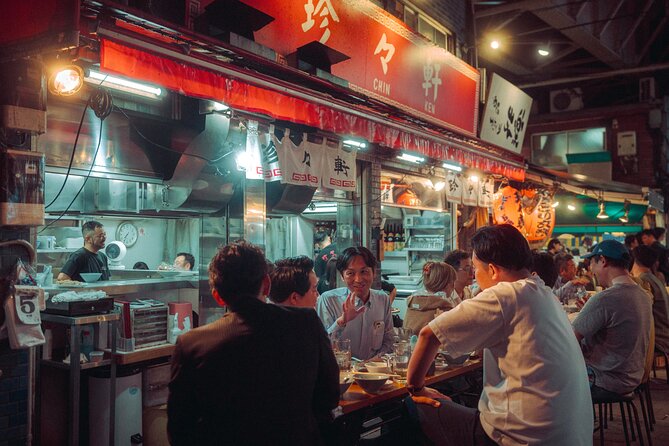
Yurakucho and Shinbashi are useful places for this kind of lesson because they give you changing conditions in a short period. You may work with bright signs, darker side streets, people moving through the frame, and the contrast between Tokyo’s polished office districts and its more casual evening corners. The point is not simply to collect pictures. It is to learn what to notice before you press the shutter.
Deniz Demir came to Japan in 2015 with a new camera and a long-held wish to live there. He now works as a professional photographer and runs one of Tokyo’s larger Meetup groups for creative people. That background matters because the tour is built around both photography and human connection. You are not just being led from one photo stop to another. You are encouraged to think about why a picture works.
I like that approach. A camera lesson can quickly become a list of buttons and settings. Here, the technical advice is tied to the streets in front of you. If you are unsure about your equipment, you can ask about it while photographing real scenes rather than trying to remember a lecture later.
Other photography tours in Tokyo

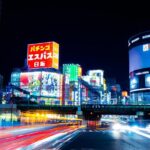
Starting at Shimbashi Station
The meeting point is Shimbashi Station at 2 Chome-17 Shinbashi, Minato City. The activity begins and ends at the same meeting point, which keeps the evening simple.
You should arrive ready to walk and with your camera accessible. The description calls for a moderate level of physical fitness, so this is not intended as a seated lesson or a short transfer between fixed viewing platforms. The experience takes place on city streets, where you will move through the Yurakucho and Shinbashi areas while stopping to photograph and discuss technique.
The station meeting point is also practical for an evening activity. You do not need to solve a complicated one-way route at the end of the night. After roughly two hours, you return to where you started.
No precise list of streets or stops is promised, and that is worth understanding before booking. The value comes from Deniz’s choice of viewpoints and his response to the conditions that evening. A photo walk can benefit from that flexibility, since the best scene may change with the light, the crowd, or the moment.
Yurakucho and Shinbashi after sunset
The first major appeal is the setting. Yurakucho and Shinbashi offer a very different feel from Tokyo’s grandest sightseeing areas. Rather than focusing on a single monument, you photograph the city as people use it.
Evening gives Deniz plenty to work with. Light becomes more important, and you have to make decisions about exposure, focus, timing, and framing. A scene that looks ordinary in daylight may take on a stronger shape when signs, shop lights, and shadows become part of the image.
You may also find that the streets require patience. People are moving, backgrounds can be cluttered, and strong light can fool your camera. That is exactly why the setting works as a lesson. You get to test advice immediately, then look at the result and adjust.
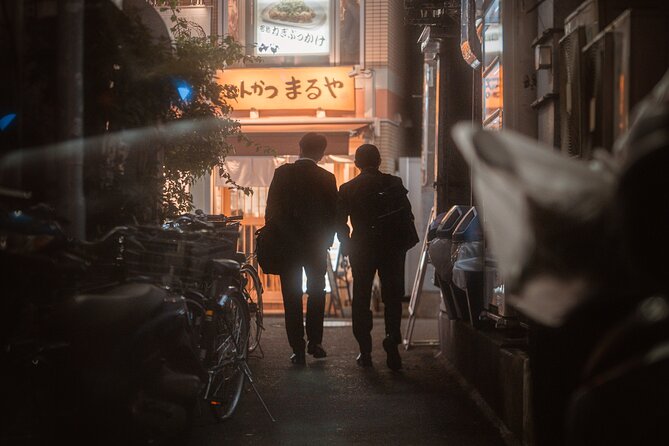
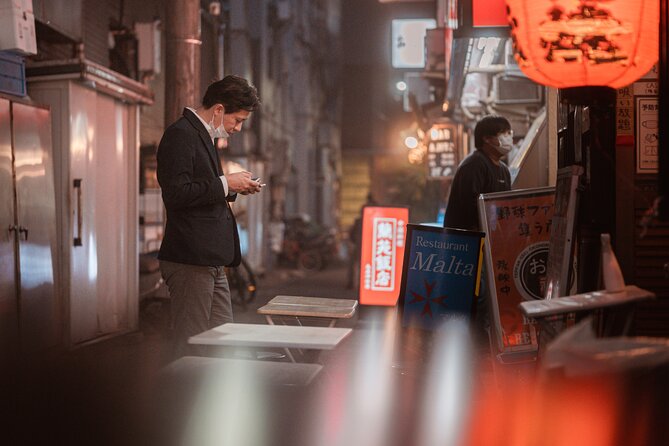
The two districts also connect the photo practice to Tokyo’s working life. On weekday evening tours, Deniz discusses and photographs Japan’s salaryman culture up close. This is not presented as a staged cultural show. It is an opportunity to observe the rhythm of office workers finishing the day and moving through central Tokyo.
Be respectful when photographing people. The tour description centers on street photography, but it does not promise posed portraits or permission from every person in the frame. If photographing people is new to you, ask Deniz how he approaches the subject and follow his lead.
The photography lesson, from camera settings to creative tools
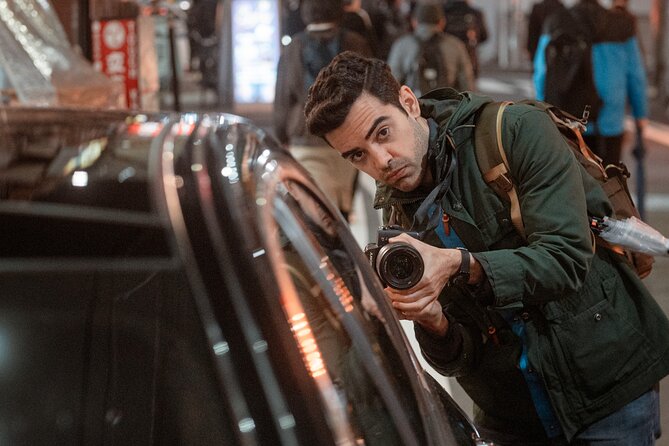
Deniz covers basic subjects such as camera settings, lenses, and other equipment. This makes the experience suitable for someone who has a camera but is not yet comfortable using it in changing light.
A useful benefit of one-on-one or small-group guidance is that you can ask about your own setup. One participant found the lesson helpful for understanding what they knew and what they still did not know about their equipment. They also had the chance to put the advice into practice and came away with good images. That is a practical measure of value: you are not only hearing tips, you are trying them on the street.
The lesson can also move beyond the basics. Deniz discusses street-shooting philosophies, what to look for, framing, and ways to use the surroundings to make an image more deliberate. Those ideas are harder to teach in a large group because each person sees a different subject and uses a different camera.
You might discuss creative accessories such as LED lights and prisms. These are not required for the tour, and the activity is not described as a gear-shopping session. Their inclusion simply shows that the instruction is not limited to automatic mode and basic composition. If you already know your camera, you can ask about more advanced ways to shape a picture.
A tripod is also available if desired. You should request one in advance rather than assume it will be present. A tripod can be useful for certain low-light techniques, but the tour’s value does not depend on having one.
What you can learn in two hours
Two hours is enough time to improve a few habits, especially if you arrive with a clear question. It is not enough to master every setting, lens choice, and creative method Deniz mentions.
I would use the opening part of the tour to explain what you want help with. Maybe you struggle with night exposure. Maybe you own several lenses but do not know when to use each one. Maybe your pictures look crowded and you want better framing. The smaller group makes these questions more manageable, but you still need to speak up.
The best use of the time is active practice. Listen to the explanation, make a picture, check the result, and ask what you could change. This turns the walk into a working session rather than a passive talk.
You should also expect different levels within the group. The maximum is six people, not a private lesson. Deniz will divide attention among the participants. Still, six is a small enough number that personalized feedback is a realistic feature, especially compared with a large city tour.
The supplied rating is 4.9 from 19 reviews, with 100 percent recommending the experience. That is a strong sign of satisfaction, but the individual feedback also gives a useful warning: one person rated it four out of five and felt the session was helpful and insightful while still falling short of a perfect experience. I read that as a reminder that photo instruction is personal. Your results will depend partly on your starting skill, your camera, the evening conditions, and how actively you take part.
The value of the $128.09 price
At $128.09 per person, this is not a cheap sightseeing walk. You are paying for a small group, a professional photographer, and instruction rather than only transportation and commentary.
The price makes the most sense if you want to improve your photography while seeing Tokyo. If you only want a general evening stroll, you can explore these districts on your own for far less. If you want someone to help you understand your equipment and make stronger street images, the calculation changes.
The group discount may improve the cost for people booking together. Since the group can include up to six people, the experience may suit friends or family members who want to learn side by side. Keep in mind that a discount does not turn it into a private tour, so ask questions and make your goals clear.
The professional guidance is the main source of value. You are not promised edited images, a printed set, or a long lesson after the walk. The useful takeaway is better judgment: knowing what to look for, how to frame it, and how to adjust your camera when Tokyo’s evening light gets difficult.
For a serious hobby photographer, that can be worthwhile. For someone carrying a phone and hoping for a standard sightseeing tour, the price may feel high unless you specifically want photography instruction.
Who will get the most from this experience
I would recommend this tour most strongly to:
- Someone who owns a camera but still feels uncertain about settings.
- A photographer who wants to practice street photography in an unfamiliar city.
- A person who enjoys small groups and direct feedback.
- A visitor interested in Tokyo’s everyday evening life, not only headline attractions.
- Friends or couples who want to learn together and may benefit from the group discount.
It may be less suitable if you dislike walking, want a fixed list of famous landmarks, or prefer a private lesson with the guide’s attention at every moment. The maximum group size is six, which is small, but not one-to-one.
It also suits people who enjoy learning by doing. If you want to collect a few quick snapshots and move on, you may find the instruction more detailed than needed. If you want to understand why your photos work or fail, the format is much better suited.
Service animals are allowed, and the meeting point is near public transportation. Confirmation is provided at booking. The tour has free cancellation if you cancel at least 24 hours before the start time. Changes or cancellations inside that window are not accepted for a refund.
How to prepare for the evening walk
Bring the camera you actually want to use during the rest of your trip. This is a poor time to arrive with unfamiliar equipment and no idea how it works, though Deniz can help you understand your setup.
Before meeting, think of two or three questions. You might ask about lens choice, photographing in low light, composition, or using people in street scenes. Clear questions help you make better use of a short session.
Wear shoes suitable for walking and keep your equipment easy to reach. The activity takes place outdoors in central Tokyo, and the physical requirement is listed as moderate. Since the walk returns to Shimbashi Station, you can plan the rest of your evening around the same transport area.
If you want Deniz to bring a tripod, request it beforehand. The same applies to any particular photography concern you hope to cover. The tour offers flexibility, but flexibility works best when you communicate what you need.
My recommendation for booking
Book this experience if you want hands-on photography advice in a real Tokyo setting. The small group, professional guide, evening timing, and focus on both technique and creative choices make it more useful than a standard sightseeing walk for anyone serious about taking better pictures.
I would skip it if your main goal is a broad introduction to Tokyo or a guaranteed list of major sights. The route centers on Yurakucho and Shinbashi, and the experience is designed around photography rather than landmark collecting.
The strongest reason to book is Deniz’s mix of local street access and technical coaching. The most important caution is the price and the short duration. Go with specific questions, use the camera you know, and treat the two hours as a concentrated practice session. For the right person, that can produce more lasting value than another quick evening tour.
FAQ
Where does the photography tour begin?
It begins at Shimbashi Station, at 2 Chome-17 Shinbashi, Minato City, Tokyo 105-0004, Japan.
Where does the activity end?
The activity ends back at the meeting point.
How long does the experience last?
The tour lasts approximately two hours.
How large is the group?
The maximum group size is six people.
Can the guide bring a tripod?
Yes. Deniz can bring a tripod if you would like one, but you should request it in advance.
What is the cancellation policy?
You can cancel for a full refund up to 24 hours before the experience start time. Cancellations or changes made less than 24 hours before the start time are not accepted for a refund.
More Photography Tours in Tokyo
More tours in Tokyo we've reviewed





Photography Sessions, compared.
 ★ 5.0Best Go Kart Experience in Shibuya Crossing with Iconic PhotosFrom $106
 ★ 4.8Tokyo Go-Karting Experience: Shibuya Crossing with PhotosFrom $901 hour
 ★ 5.0Tokyo Cyberpunk Street Photo TourFrom $184
 ★ 5.0Tokyo by Night Photography Tour (Private Option Available)From $105
 ★ 5.0Tokyo Shinjuku Night Photo Tour with Pro GotaFrom $85
 ★ 5.0Tour with Pro Tokyo Photographer and take Edgy Unique PortraitsFrom $145