
Reviewed · TOKYO
EDOCCO Tea House–A Quick Dive into Japanese Traditional Culture
The best thing about EDOCCO Tea House is how much it fits into one focused hour. You make matcha, watch a graceful Japanese dance, put on a kimono, write a character with a brush, and fold origami. It is a quick, hands-on introduction rather than a long formal ceremony.
I especially like the small-group attention and the friendly English guidance. I also like that you leave with more than photographs: your calligraphy and origami give the hour a personal touch. The main trade-off is time. The dance performance lasts less than 10 minutes, and every activity moves briskly.
This is a smart choice if you want a gentle first meeting with Japanese culture, especially with children or a mixed-age group. At $72.48 per person, it is not a bargain snack stop, but the four activities, instruction, tea, sweet, and dress-up make it fair value for a compact Tokyo program.
In This Review
- Key points before you book
- What EDOCCO Tea House actually offers
- Arriving at EDOCCO STUDIO in Sotokanda
- Making matcha and tasting a Japanese sweet
- Watching the Japanese dance performance
- Putting on a kimono for the Edo-style moment
- Writing a character with shodo calligraphy
- Folding origami from a single sheet
- How the one-hour schedule feels
- The people who make the program work
- Is $72.48 a fair price?
- Who should book this Tokyo activity?
- My recommendation for EDOCCO Tea House
- FAQ
- Where does the EDOCCO Tea House experience take place?
- How long does the activity last?
- Where does the activity end?
- What is included in the price?
- Is a tea-making set included?
- Is the experience offered in English?
- How many people can join the activity?
- Is the activity suitable for beginners?
- Can I cancel for a full refund?
- What happens if the provider cancels the activity?
Key points before you book
- Four traditions in one hour: Matcha, Japanese dance, kimono dress-up, shodo calligraphy, and origami are all part of the visit.
- English help throughout: Staff explain the customs and activities in English, which matters when the gestures and etiquette are unfamiliar.
- A good family activity: Children aged 8 and 11 were able to take part in the tea, writing, folding, dance, and kimono portions.
- Small groups help: The maximum is 20 people, and some sessions may be much smaller, allowing more direct help.
- Easy to fit into Tokyo plans: EDOCCO STUDIO is near public transportation in Sotokanda, and the program lasts about one hour.
- The dance is brief: It is a lovely cultural sample, not a full-length stage performance.
What EDOCCO Tea House actually offers
Many Tokyo cultural activities ask you to watch quietly. EDOCCO asks you to take part. That difference gives the program its appeal.
The restored EDOCCO space is designed around the idea of old meeting new. You get the feel of a traditional setting without committing half a day to a formal cultural school. The program is made for international visitors, so the instructors explain what you are doing and why it matters.
The format is carefully packed. You move from tea to dance, then to clothing, brushwork, and paper folding. That range gives you a useful picture of Japanese customs: ceremony and hospitality through tea, performance through dance, visual expression through calligraphy, and patience through origami.
You should not expect specialist training in any one field. This is a sampler. If you want to study tea ceremony posture or calligraphy technique in detail, you will need a longer class. If you want a friendly introduction that gives everyone something to do, this format works well.
If you're still narrowing it down, here are other tours in Tokyo we've reviewed.


Arriving at EDOCCO STUDIO in Sotokanda
The meeting point is EDOCCO STUDIO at 2-chōme-16-2 Sotokanda, Chiyoda City, Tokyo 101-0021. The area is near public transportation, making it a practical stop during a day in central Tokyo.
Allow enough time to find the building. Tokyo addresses can be confusing, and the supplied directions describe a route from Ochanomizu Station using the Marunouchi Line, with a short walk involving a stairway to a flyover and a turn at the next intersection. A mobile ticket is provided, so keep it ready on your phone.
The activity begins and ends at the same location. That is useful if you are fitting it between sightseeing stops. You will not need to arrange a separate return transfer, and the one-hour length leaves room for nearby plans.
The maximum group size is 20 people. That is not an intimate private lesson, but the format tends to feel personal when attendance is low. One couple had the entire session to themselves, and another solo participant still received the program rather than having it canceled. You should treat that as a possibility, not a promise.
Making matcha and tasting a Japanese sweet
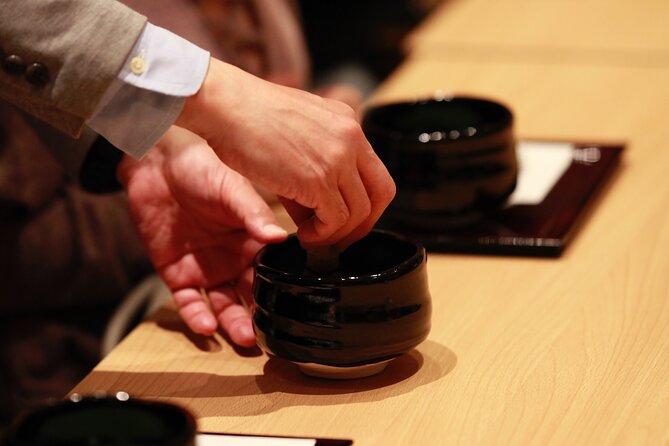
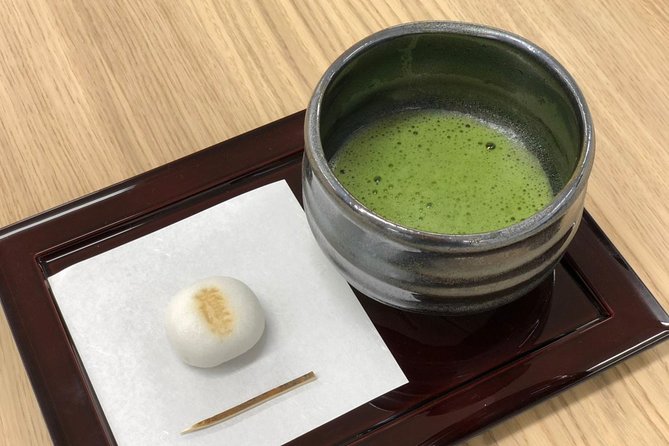
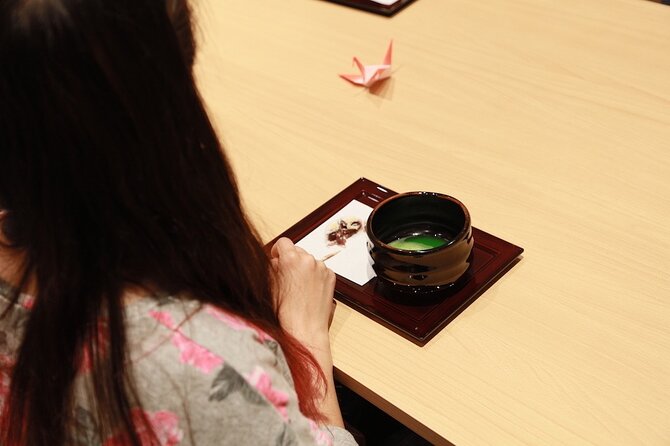
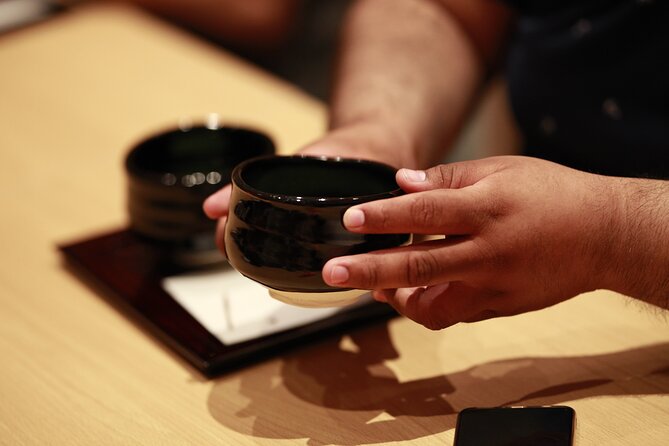
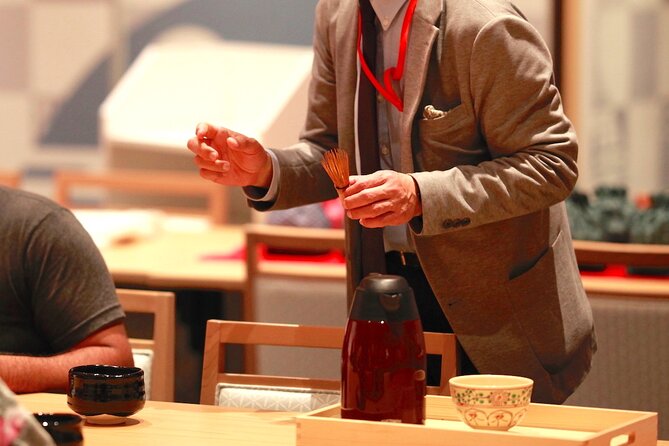
The tea portion gives you a direct way to understand Japanese hospitality. An instructor shows you how to prepare and serve matcha, then you drink the tea with a Japanese sweet.
You are not simply handed a cup. You handle the tools and learn the basic order of the preparation. For a first-time visitor, this makes the ceremony easier to understand. The quiet movements, attention to presentation, and pairing of bitter tea with a sweet all become more meaningful when you take part.
The included snack is a set of matcha and Japanese sweets. A tea set for home use, including a bowl, matcha powder, bamboo whisk, and other tools, is available separately. That purchase is optional and is not included in the ticket price.
This section is especially good for adults who enjoy food traditions, but children can take part too. The activity is simple enough for beginners, while the instructor’s explanation adds cultural context. Do not expect a full tea-school ceremony with every formal rule. Think of it as a practical introduction to the main ideas.
Watching the Japanese dance performance
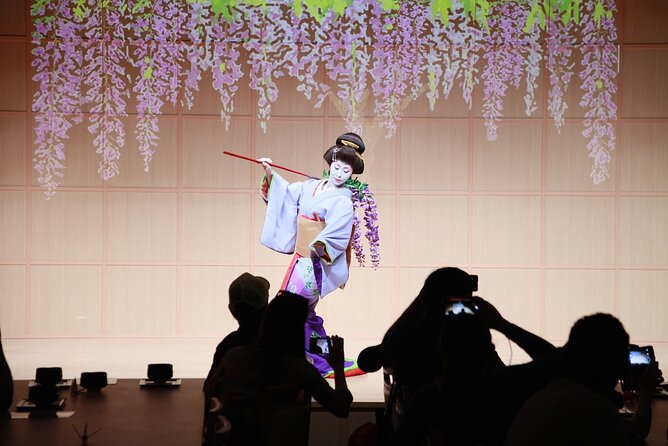
The dance show is the most purely theatrical part of the hour. The performer uses controlled movement and traditional gestures, sometimes with a fan, while the staff explain the cultural meaning in English.
The performance gives you a glimpse of an art form that can be difficult to encounter in an ordinary Tokyo sightseeing day. It is not just a costume photo opportunity. The explanations help you notice how small movements and props carry meaning.
The honest limitation is its length. One session included a dance of less than 10 minutes, which was too short for one family to fully appreciate the form. I would set your expectations accordingly. You are getting a short demonstration within a larger program, not a full evening of dance.
Still, the short length has one benefit: young children and first-time culture seekers are unlikely to lose interest. It also keeps the overall schedule moving. If dance is your main reason for booking, choose a dedicated performance instead. If you want dance as one part of a wider cultural hour, it fits nicely.
Putting on a kimono for the Edo-style moment
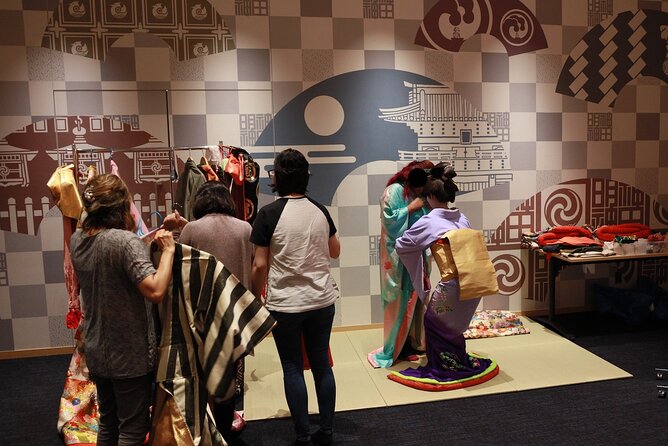
The kimono portion lets you step into the visual world of old Japan. You dress up, pose for photographs, and learn a little about the clothing and atmosphere associated with the period.
This is described as kimono cosplay, so you should see it as a visitor-friendly dress-up activity rather than a formal dressing lesson. It gives you a physical connection to the culture, and it can be the highlight for children. One child especially enjoyed wearing the kimono and learning traditional dance movements with a fan.
The value here is partly social. Families and couples can share photographs, and solo visitors still get a memorable keepsake from the session. The activity also makes the dance easier to understand because you are seeing the clothing, posture, and gestures together.
The time is limited, so do not expect an elaborate styling appointment or an extended photo session. The program has several other parts to cover. Wear something comfortable and easy to move in, but no special clothing is required.





Writing a character with shodo calligraphy
Shodo, Japanese calligraphy, is the most tactile part of the workshop. You learn basic brush strokes and create a character of your own under instruction.
A brush does not behave like a pencil. Pressure, speed, and the amount of ink all affect the result. Even a simple character can feel challenging when you are trying to control each stroke. That is part of the fun, and the instructors are patient with beginners.
Your finished writing becomes one of the small reminders of the session. It may not look like a master’s work, but it carries more meaning than a souvenir bought in a shop because you made it yourself.
The calligraphy lesson is not long enough to teach a full system of Japanese writing. It does, however, show why shodo is treated as an art of movement and balance, not just handwriting. I find this section particularly worthwhile for adults and older children who like making things with their hands.
Folding origami from a single sheet
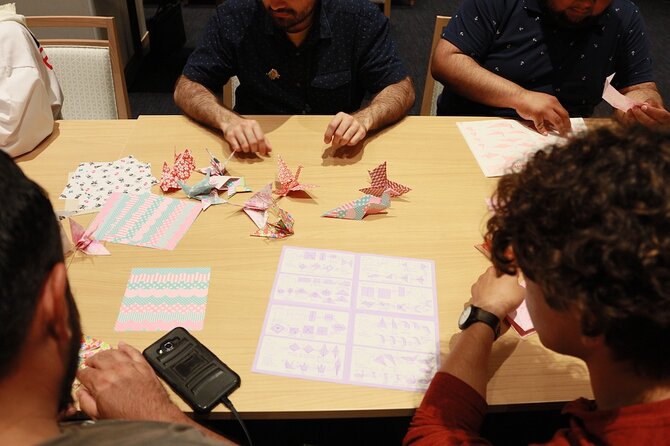
Origami provides the most accessible activity in the program. You learn how paper can become a crane or another design through a sequence of folds.
The instructions are guided, and the task is suitable for beginners. That said, it can still be tricky. A fold in the wrong place early on may make the later steps confusing, so listen carefully and ask for help rather than trying to rush ahead.
Origami works well in a mixed group because everyone can participate at the same table. It also gives younger children a clear goal and older participants a quiet creative challenge.
Together, calligraphy and origami balance the more performative parts of the visit. You are not only watching Japanese culture. You are using your hands to create something connected to it.
How the one-hour schedule feels
The program is efficient without feeling like a checklist. Staff guide you through the four main areas in a clear order, and the activities are short enough to hold attention.
The pace can feel fast if you want long explanations or many photographs. You will need to focus during the demonstrations, especially with tea preparation, brush strokes, and origami folds. Ask questions as they arise, since there may not be much spare time at the end.
The strongest part of the schedule is its variety. Tea appeals to the senses, dance gives you a performance, kimono adds a visual and social element, and the two workshops give you something to make. If one section is not your favorite, another arrives soon.
The program is also flexible enough for different group sizes. Sessions have gone ahead with only one couple or one participant, which can lead to very personal instruction. The stated maximum is 20 people, so the experience may feel less private on a full date.
The people who make the program work
The staff are central to the experience. Ori is identified as a calligraphy instructor and host, and the program also includes a host referred to as Mr. Bambu. Their role goes beyond handing out materials. They explain the customs, answer questions, and help beginners through unfamiliar steps.
English ability is a practical strength. You can follow the tea instructions, understand the dance explanation, and ask about the meaning of the writing or folds without relying on guesswork. That is important in a program built around small movements and cultural details.
The tone is warm and patient. That matters most during calligraphy and origami, when a rushed instructor could turn a simple activity into frustration. Families in particular benefit from staff who are willing to slow down and help.
Because the session is short, the quality of the explanations affects how much you take away. Here, the teaching is a major reason to choose this over simply seeing a kimono or buying a matcha drink elsewhere.
Is $72.48 a fair price?
At $72.48 per person, EDOCCO is a mid-range cultural activity rather than a low-cost attraction. You are paying for instruction, staff time, the dance performance, matcha and a sweet, kimono dress-up, calligraphy materials, origami materials, and the convenience of doing everything in one place.
The price makes the most sense if you value structure and personal help. Recreating the same range of activities independently would be difficult, especially the dance explanation and kimono portion. You would also lose the benefit of having someone guide you through the tea and brushwork.
It is less compelling if you only want a formal tea ceremony. In that case, a dedicated tea experience may offer more depth for the same money. Likewise, a visitor mainly interested in professional dance should look for a longer performance.
For a family, the value improves because several ages can enjoy different parts of the same hour. For a first visit to Tokyo, it can also serve as a useful orientation to customs you will notice elsewhere during your trip.
Who should book this Tokyo activity?
I would recommend EDOCCO to first-time visitors who want a friendly cultural starting point. It works particularly well near the beginning of a Japan trip, when tea etiquette, kimono, calligraphy, and origami are still new.
Families with children should give it serious thought. The 8 and 11-year-old age range handled the activities well, and the program offers enough changes of pace to prevent boredom. Couples and solo visitors also fit comfortably, especially if you enjoy guided creative activities.
It suits you less if you dislike group instruction, dress-up, or short scheduled activities. It is also not the right choice if you want an advanced lesson in one tradition. The program’s strength is breadth, not specialist depth.
The activity requires a minimum number of participants, though some very small sessions have still gone ahead. It also carries a weather-related cancellation condition. If the provider cancels for weather or because the minimum is not met, you are offered another date or experience, or a full refund.
Free cancellation is available up to 24 hours before the start time. Changes or cancellations inside that window are not refunded, so keep the local cut-off time in mind when making Tokyo plans.
My recommendation for EDOCCO Tea House
Book it if you want a compact, well-guided introduction to several Japanese traditions and you value doing things yourself. The English instruction, kind staff, and small-group feel make the program approachable, while the tea, dance, kimono, calligraphy, and origami provide plenty of variety.
Do not book it expecting a long tea ceremony or a full dance recital. The hour goes quickly, and the dance is particularly brief. But if you see the visit as a cultural sampler with a few handmade mementos, $72.48 is a reasonable spend for Tokyo.
For families, first-time visitors, and anyone with only one free hour, I would choose it. It gives you a useful cultural foothold before you continue exploring the city.
FAQ
Where does the EDOCCO Tea House experience take place?
It takes place at EDOCCO STUDIO, 2-chōme-16-2 Sotokanda, Chiyoda City, Tokyo 101-0021, Japan.
How long does the activity last?
The experience lasts approximately one hour.
Where does the activity end?
It ends back at the same meeting point, EDOCCO STUDIO.
What is included in the price?
The price includes matcha and a Japanese sweet, appreciation of the Japanese dance show, calligraphy, origami, and Japanese dress-up.
Is a tea-making set included?
No. A tea bowl, matcha powder, bamboo whisk, and other tea tools are available for separate purchase.
Is the experience offered in English?
Yes. English explanations are provided during the cultural activities, including the dance presentation.
How many people can join the activity?
The maximum group size is 20 people.
Is the activity suitable for beginners?
Yes. The instructors guide you through matcha preparation, calligraphy, and origami, and the program is designed as an introduction to Japanese culture.
Can I cancel for a full refund?
Yes, if you cancel at least 24 hours before the local start time. Cancellations made less than 24 hours in advance are not refunded.
What happens if the provider cancels the activity?
If poor weather or an insufficient number of participants causes cancellation, you are offered a different date or experience, or a full refund.
More tours in Tokyo we've reviewed







Tokyo, compared.
 ★ 5.0Mt Fuji and Hakone 1-Day Bus Tour Return by Bullet TrainFrom $163
 ★ 5.01-Day Tokyo Bus TourFrom $129
 ★ 4.6Tokyo: teamLab Planets TOKYO Digital Art Museum Entry TicketFrom $251 day
 ★ 4.0Mt Fuji & Hakone Cruise, Drum Show Bullet Train 1 Day from TokyoFrom $149
 ★ 5.0Tokyo: Shinjuku Food Tour (13 Dishes at 4 Local Eateries)From $86
 ★ 4.4Tokyo Mt Fuji 5th St & Hakone Cruise Bus Tour w/Bullet TrainFrom $15410 hours