
Reviewed · TOKYO
Tokyo: Real Ramen & Dumpling Cooking with Master Chef
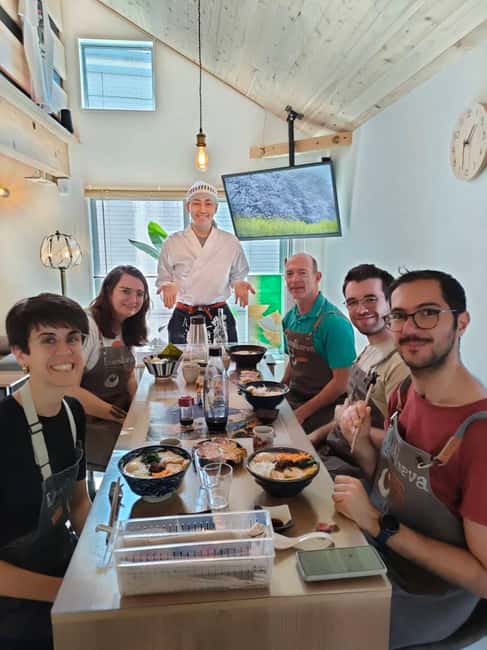
The best part of this Tokyo class is that you do not simply watch a chef prepare ramen. You build the meal yourself, from a soft-boiled egg and gyoza filling to the final noodle drain. Yoshi and Amo teach in English, and the class may have as few as four people, so you get plenty of help.
I like the small-group setting and the chance to learn from a chef who ran a restaurant in Sydney and trained in Japanese ramen shops. I also like that you leave with the recipes, not just a full stomach. The main drawback is the location and meeting point: Ekoda is on the Seibu Ikebukuro Line, not the JR network, and late arrival can shorten your two-hour class.
In This Review
- Key points to know before booking
- What this two-hour ramen class is really like
- Meeting Yoshi and Amo near Ekoda Station
- Starting with eggs and ramen toppings
- Folding five gyoza by hand
- Building the bowl in the final cooking sequence
- Why the English instruction matters
- A small group with a personal feel
- What you take home after the meal
- Is $99 a fair price?
- Who should book this experience
- Practical booking advice for Ekoda
- Should you book the Tokyo ramen and gyoza class?
- FAQ
- Where does the ramen cooking class meet?
- Which train line serves Ekoda Station?
- Should I take a rapid train to Ekoda?
- How early should I arrive?
- How long does the cooking experience last?
- Is the instruction in English?
- Is vegetarian ramen available?
- What food do I make and eat?
- Do I receive the recipes after the class?
Key points to know before booking
- You make both ramen and five gyoza: The class covers a full meal rather than a single dish.
- Yoshi teaches in English: You can ask questions about technique, ingredients, and ramen culture as you cook.
- The group may be limited to four people: This gives the lesson a personal feel and makes hands-on guidance easier.
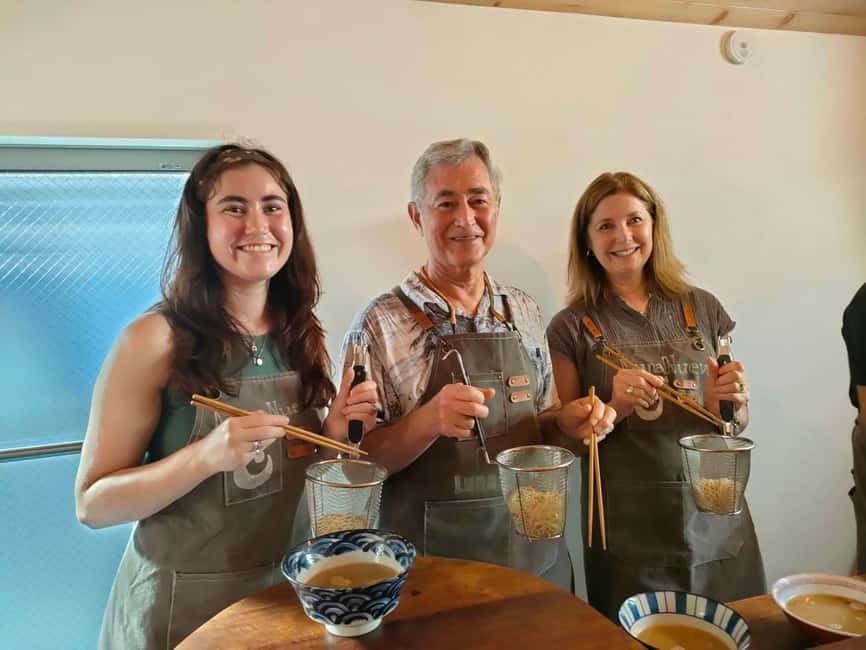
- You learn the final noodle-draining technique: The class ends with soup, noodles, toppings, and the classic quick drain.
- Vegetarian ramen requires advance notice: The kitchen cannot make this change on the same day.
- Recipes arrive after class: You can try the dishes again at home instead of relying on memory.
What this two-hour ramen class is really like
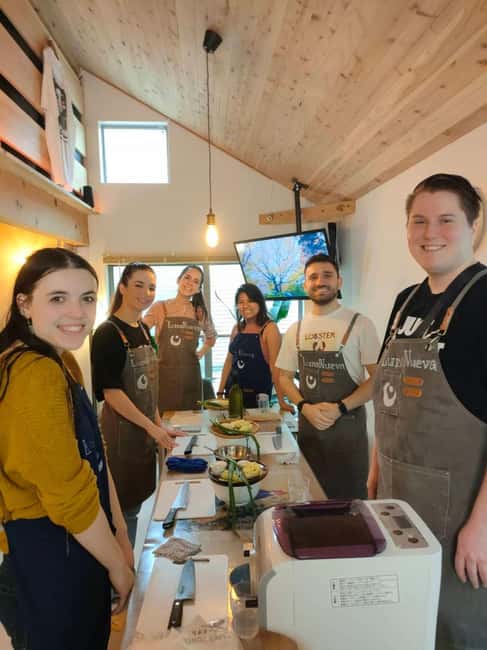
This is a practical cooking lesson with a meal at the end. You work through the parts of ramen and gyoza in a clear order, with the soup, ramen sauce, fragrant oil, and chashu already prepared for the lesson.
That setup matters. Making a proper ramen broth from scratch can take many hours, so this class focuses on the skills you can realistically repeat at home. You still learn how the components fit together, but you do not spend the entire afternoon waiting for stock to cook.
The class also gives you a useful look at how ramen is assembled. A bowl may appear simple, but the egg, meat, seaweed, spring onion, wood ear fungus, sauce, oil, soup, and noodles each have a job. You get to handle those parts yourself and see how small changes affect the finished bowl.
The pace is active without being rushed. The class lasts two hours, so you should arrive ready to work rather than expecting a long talk followed by a prepared meal.
If you're still narrowing it down, here are other tours in Tokyo we've reviewed.


Meeting Yoshi and Amo near Ekoda Station
Your meeting point is outside the ticket gate at Ekoda Station, at 1 Chome-78 Asahigaoka in Nerima City. The station is on the Seibu Ikebukuro Line, not the JR Line. That distinction is important in Tokyo, where a familiar station name or a rushed transfer can send you in the wrong direction.
Arrive at least 15 minutes before the class. Amo waits near the station before walking with you to the cooking location, which is about a five-minute walk according to the class instructions. You will want this extra time to find the correct platform, leave the station, and get settled.
Use a local train. Rapid trains do not stop at Ekoda. The instructions also list a phone number, +81 80 7262 1175, and recommend saving it to WhatsApp. That is useful if you have Wi-Fi but no mobile service.
Late arrival can reduce your cooking time. This is not a class where you can quietly slip in after the introduction and catch up later. Several steps build on one another, so plan the station connection carefully.
Starting with eggs and ramen toppings
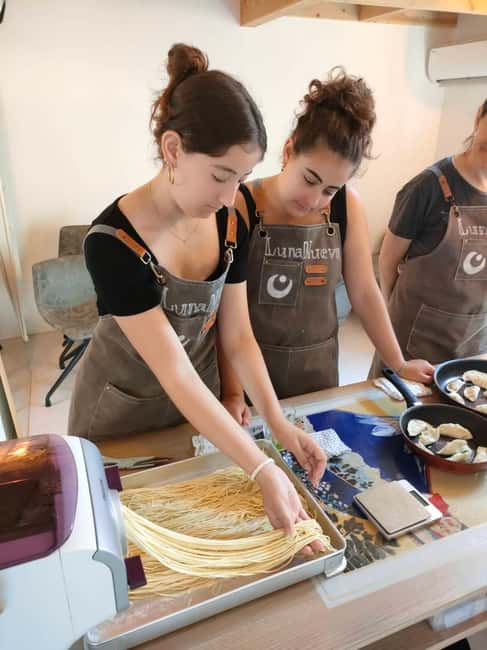
The first kitchen task is making semi-soft boiled eggs, known in the menu as nitamago. The yolk should remain soft and slightly running, while the white holds its shape well enough to slice and place in the bowl.
This is a good opening lesson because egg timing is one of the details that separates a casual bowl of noodles from a carefully built one. You get to see how an ordinary ingredient becomes a classic ramen topping.
Next comes the topping preparation. The listed ingredients include seaweed, sliced spring onion, wood ear fungus, and chashu. These are not decorative extras. They provide different textures and flavors, and you learn how they are prepared and arranged before the noodles arrive.
The chashu is described as slow-cooked chicken in the menu. One published account refers to the meat as pork, so if the type of chashu is important to you, confirm the current preparation before booking. Either way, the class includes a seasoned, slow-cooked meat topping as part of the ramen.
Folding five gyoza by hand
The gyoza portion gives you a different kind of kitchen practice. You slice and combine the filling ingredients, then fold the dumplings yourself. The meal includes five gyoza per person.
Folding looks easy when someone experienced does it at speed. Your first dumplings may be less tidy. That is part of the value. You get a direct lesson in filling quantity, sealing, and shaping instead of receiving a perfect dumpling with no idea how it was made.
The instructors help as you work. Yoshi and Amo are described as patient and clear in English, which matters here because small folding errors can lead to open seams or uneven cooking.
After folding, the gyoza are cooked until they are properly browned. The class describes the process as sizzling them to perfection, but your own result will depend on how evenly you fold and place them. That makes this section more hands-on than a simple demonstration.
For families, couples, and friends, the dumpling stage is likely to be one of the most social parts of the class. Everyone can compare shapes, ask questions, and improve from one dumpling to the next.
Building the bowl in the final cooking sequence
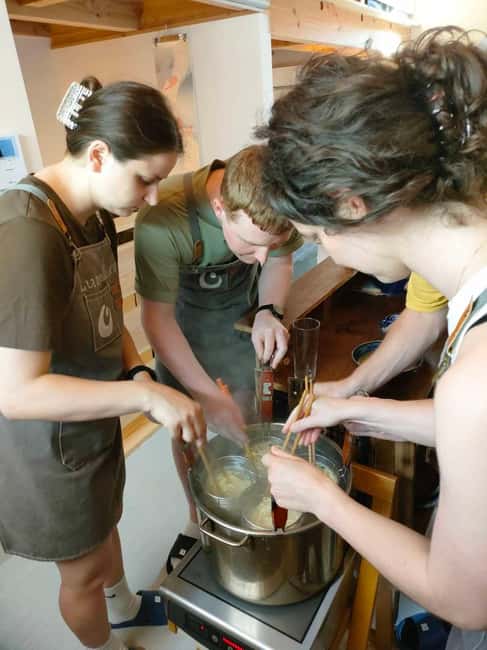
After the toppings and dumplings are prepared, the class turns to the final ramen assembly. You make the soup, boil the noodles, and learn the noodle-draining technique.
The draining step is a small but memorable piece of ramen craft. Freshly boiled noodles carry water, and too much of it can weaken the soup. You learn to lift and drain them quickly before placing them in the bowl.
Then comes the assembly. The ramen sauce and fragrant oil are combined with the soup, followed by the noodles and toppings. You add the egg, chashu, seaweed, spring onion, and wood ear fungus to create the finished bowl.
This order helps you understand timing. Ramen is best assembled while each part is hot and ready. If the noodles sit too long, they continue to soften. If the toppings are not prepared first, the bowl can lose heat while you scramble to finish.
You also get to eat what you make. The included meal is ramen and five gyoza, along with the toppings and seasoned egg. Several published accounts describe the portions as generous, so this should function as a proper meal rather than a tiny cooking sample.





Why the English instruction matters
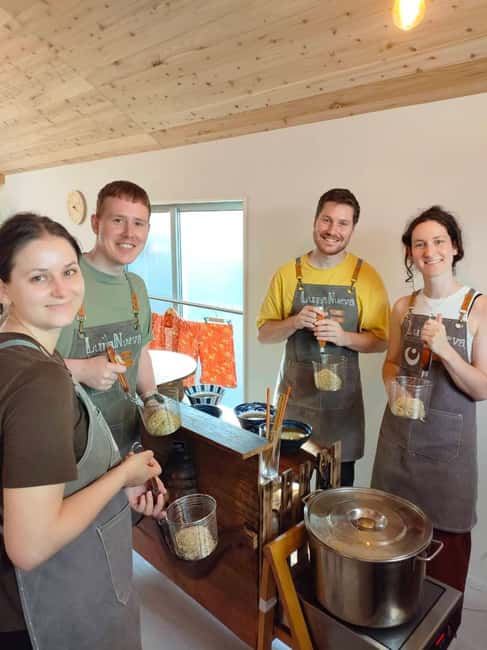
English-language ramen instruction is not just a convenience. It lets you ask why a step matters instead of copying movements without context.
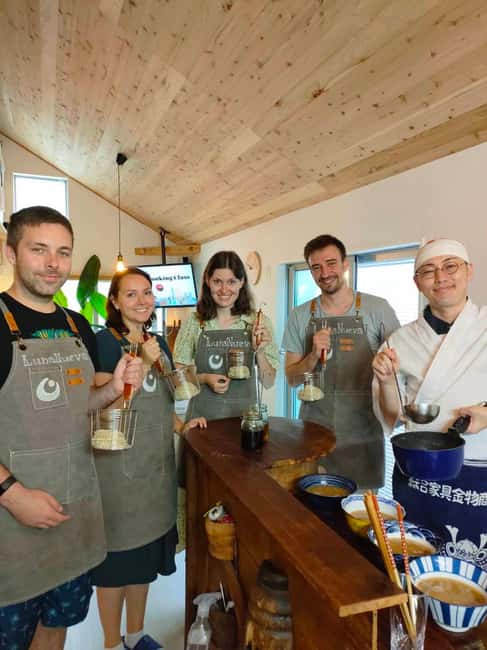
Yoshi has run a restaurant in Sydney and trained in well-known Japanese ramen settings. The class also includes stories and anecdotes from the ramen world, giving the cooking a cultural side without turning it into a lecture.
Amo helps with the class and station meeting. The pair are described as friendly, patient, and easy to approach. That combination is especially useful for first-time cooks, families, and people who want to ask basic questions without feeling out of place.
You should not expect a professional chef certification course. This is a short practical session, and some ingredients are prepared before you arrive. But you do get clear instruction in several steps that are difficult to understand from a recipe alone.
The class received a perfect five-star rating from the ten published bookings available for this experience. The strongest praise centers on the instructors, clear explanations, delicious food, and the warm atmosphere in the cooking space. One couple particularly liked being in the hosts’ home and seeing how cooking fits into daily life.
A small group with a personal feel
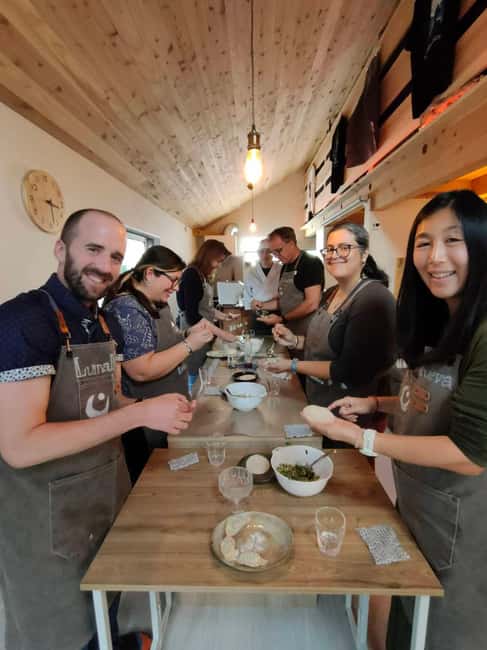
The class may have up to four participants. That small size is one of its best features.
With only a few cooks, Yoshi and Amo can watch your folding, chopping, and noodle technique. You are less likely to spend the lesson waiting for a turn or trying to see over a crowd.
The tradeoff is that a small home-based class can feel more personal than a commercial cooking studio. Some people will enjoy that relaxed setting. Others may prefer a larger, more formal school with separate workstations and a polished classroom feel.
The available descriptions do not promise a private class every time, only a possible group of up to four. If you book for two people, you may share the session with others.
The atmosphere seems suited to people who want conversation along with cooking. The instructors answer questions and share stories, so the class is not only about following a fixed set of motions.
What you take home after the meal
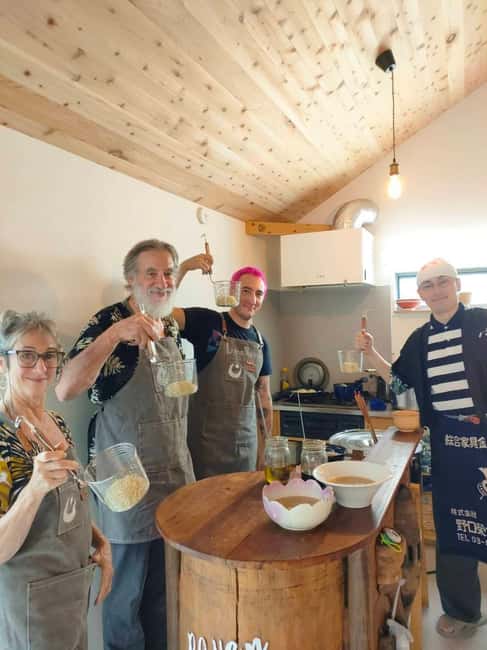
The class sends the recipes after the lesson. This adds real value to the price because ramen has several separate components, and it is easy to forget measurements or cooking order once you leave Tokyo.
You also receive the practical memory of making the dish. The recipes are more useful because you have already handled the ingredients, folded the gyoza, cooked the noodles, and assembled the bowl.
The hosts may also offer small complimentary merchandise, and custom aprons and self-designed T-shirts are available for purchase. These extras are not the reason to book, and you should treat them as optional souvenirs rather than part of the core value.
The most important takeaway is repeatability. You can try making ramen and gyoza at home with a clearer idea of what each component should look and feel like.
Is $99 a fair price?
At $99 per person, this is not the cheapest way to eat ramen in Tokyo. A restaurant bowl costs far less, and even a casual gyoza meal will not approach the class price.
The comparison is different if you value instruction. You receive two hours with English-speaking teachers, a full ramen and gyoza meal, several toppings, the chance to practice each major step, and the recipes afterward.
The small group strengthens the value. A class for four gives you more direct time with the instructors than a large tour group, though the exact group size is not guaranteed.
I would call the price reasonable for a visitor who wants a cooking activity rather than only a meal. It is less compelling for someone who simply wants to taste excellent ramen or who already has strong ramen-making skills.
The cost also makes sense for families and couples who want one shared activity. You are paying for the meal, the instruction, the stories, and the ability to repeat the recipes later.
Who should book this experience
This class is a good match for:
- Families who want a hands-on food activity
- Couples looking for a shared meal with a practical element
- Ramen fans curious about toppings, soup, and noodle timing
- First-time cooks who want patient English instruction
- Visitors who like taking recipes home and trying them again
- Small groups that prefer a personal setting
It may not suit you if you need a fully vegetarian meal but have not informed the hosts in advance. Vegetarian ramen is available only with prior notice, and same-day requests cannot be accommodated.
It is also not ideal if you have a tight Tokyo schedule. The class itself takes two hours, and you need extra time to reach Ekoda Station and arrive 15 minutes early. A late train or a wrong rapid service can cut into the lesson.
Practical booking advice for Ekoda
Check your route before leaving and confirm that your train is local. Ekoda is on the Seibu Ikebukuro Line, not JR, so do not assume a JR pass or JR station route will take you there.
Save the phone number in WhatsApp before the class. This gives you a way to contact the hosts if you have Wi-Fi but no regular phone connection.
Tell the hosts about vegetarian ramen when you book. Do not wait until you arrive. The kitchen needs advance notice, and the same-day change is not possible.
The activity allows cancellation up to 24 hours before the start for a full refund, and you can reserve now while paying later. Check the available start times because the two-hour class does not run at one universal time.
Should you book the Tokyo ramen and gyoza class?
I would book this if you want to do more than eat Japanese food. The strongest reasons are the small possible group, clear English instruction from Yoshi and Amo, the full hands-on sequence, and the recipes sent afterward.
The class offers a good balance of cooking and eating. You make soft-boiled eggs, toppings, gyoza, soup, and noodles, then sit down to enjoy the result. That is more satisfying than a demonstration where you only watch.
Skip it if you are mainly seeking a cheap bowl of ramen, need a last-minute vegetarian option, or cannot comfortably reach Ekoda on time. For everyone else, $99 buys a personal food lesson and a recipe you can carry into your own kitchen.
FAQ
Where does the ramen cooking class meet?
The meeting point is outside the ticket gate at Ekoda Station, 1 Chome-78 Asahigaoka, Nerima City, Tokyo 176-0005, Japan.
Which train line serves Ekoda Station?
Ekoda Station is on the Seibu Ikebukuro Line, not the JR Line.
Should I take a rapid train to Ekoda?
No. Rapid trains do not stop at Ekoda. Take a local train.
How early should I arrive?
Arrive at least 15 minutes before the class starts so you have time to meet the host and get settled.
How long does the cooking experience last?
The class lasts two hours.
Is the instruction in English?
Yes. The instructor language is English.
Is vegetarian ramen available?
Yes, but you must request vegetarian ramen in advance. The kitchen cannot accommodate a same-day request.
What food do I make and eat?
You make ramen and five gyoza. The ramen includes toppings such as seasoned soft-boiled egg, chashu, seaweed, sliced spring onion, and wood ear fungus.
Do I receive the recipes after the class?
Yes. The recipes are sent after the lesson.
More tours in Tokyo we've reviewed











Tokyo, compared.
 ★ 5.0Mt Fuji and Hakone 1-Day Bus Tour Return by Bullet TrainFrom $163
 ★ 5.01-Day Tokyo Bus TourFrom $129
 ★ 4.6Tokyo: teamLab Planets TOKYO Digital Art Museum Entry TicketFrom $251 day
 ★ 4.0Mt Fuji & Hakone Cruise, Drum Show Bullet Train 1 Day from TokyoFrom $149
 ★ 5.0Tokyo: Shinjuku Food Tour (13 Dishes at 4 Local Eateries)From $86
 ★ 4.4Tokyo Mt Fuji 5th St & Hakone Cruise Bus Tour w/Bullet TrainFrom $15410 hours