
Reviewed · PRIVATE DRIVERS
Tokyo Private Tour by Car/Van with English Speaking Driver
Tokyo is a huge city, and this private day tour tackles it by car. In about 10 hours, you can move from the seafood stalls of Tsukiji to the quiet forest of Meiji Jingu, then finish with neon, skyline views, and Tokyo Bay. Drivers such as Asif, Ayan, Aju, Orko, and Galin have been praised for being flexible, careful, and helpful.
I like the door-to-door convenience, especially if you have children, older family members, luggage, or a cruise-port pickup to arrange. I also like the freedom to adjust the day. Several drivers have helped guests change the order, add a preferred stop, find photo spots, or reach another appointment.
The main caution is that this is a driver-led tour, not always a full guiding experience. Most feedback praises the English and personal attention, but one guest reported very little explanation, while another described a serious vehicle and arrival problem. Confirm your group size, vehicle, pickup point, and expectations for sightseeing commentary before you go.
In This Review
- Key points at a glance
- A full day built around Tokyo’s far-flung sights
- Tsukiji: seafood, snacks, and a lively first stop
- Senso-ji: Tokyo’s traditional face in Asakusa
- Tokyo Skytree: pay extra for the high view
- The Imperial Palace: walls, moats, and a quiet center
- Meiji Jingu: forest paths beside the city
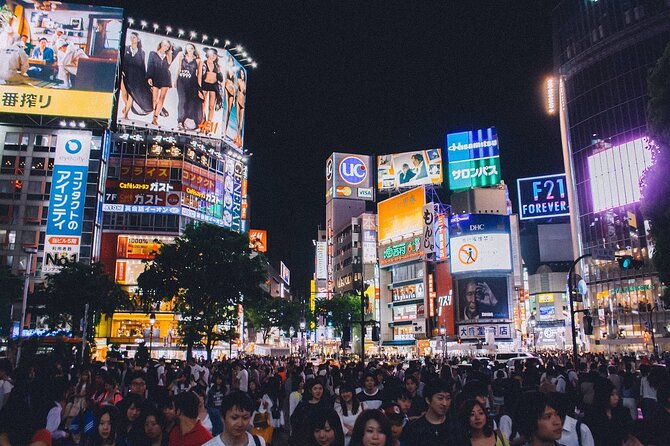
- Shibuya Crossing: Tokyo in one grand sweep
- Odaiba: bay views and a modern finish
- What the private car adds to the price
- The driver can make or break the day
- Who should book this Tokyo tour
- Should you book it?
- FAQ
- How long does the private Tokyo tour last?
- How many people are included in the listed price?
- Is hotel or port pickup available?
- Which sights are included?
- Is Tokyo Skytree admission included?
- Are food and drinks included?
- What does the tour price include?
- Is the route flexible?
- What is the cancellation policy?
Key points at a glance
- Seven major Tokyo stops: Tsukiji, Senso-ji, Tokyo Skytree, the Imperial Palace, Meiji Jingu, Shibuya Crossing, and Odaiba.
- A private vehicle for roughly 10 hours: The advertised price is $355.09 per group of up to three people.
- Flexible routing: Drivers have adjusted plans for photo stops, meal needs, mobility concerns, and fixed appointment times.
- Skytree costs extra: Admission is listed at ¥3,100 per person and is not included.
- Useful for families and cruise passengers: Pickup and drop-off flexibility can save time and reduce long walks.
- Check the guide service carefully: English ability and the amount of narration may vary by assigned driver.
A full day built around Tokyo’s far-flung sights
The appeal here is simple: you can cover a lot of Tokyo without learning several train routes on your first day. The vehicle includes petrol, tolls, private transportation, and Wi-Fi when available. Pickup is offered, and the listed start time is 9:00 am.
That convenience matters because the stops are spread across different parts of the city. Tsukiji and Asakusa sit east of central Tokyo, the Imperial Palace is near the middle, Meiji Jingu and Shibuya are west, and Odaiba is across Tokyo Bay. By train, you can reach all of them, but station transfers and walking can eat into a short visit.
You should think of this as a Tokyo highlights sampler, not a slow neighborhood tour. The schedule gives about one to two hours at each stop. That is enough to see the main features, take photographs, eat a little, and get your bearings, but not enough for lengthy museum visits or relaxed exploration in every district.
The private format gives you more control than a fixed bus route. Drivers named in the feedback, including Dhanu, Asif, Ayan, and Orko, have been praised for changing the pace and order. One driver helped a family with a vegetarian meal and the needs of a 23-month-old child. Another took less-mobile guests close to each stop and limited unnecessary walking.
Other private tours in Tokyo

Tsukiji: seafood, snacks, and a lively first stop
Tsukiji is a practical opening stop because it offers food, atmosphere, and a quick introduction to Japanese market culture. The former inner wholesale market moved to Toyosu, but the Tsukiji area remains known for its retail lanes, seafood shops, sushi counters, and small eateries.
You will have about an hour here. Use it to stroll through the narrow streets, inspect the displays of fish and shellfish, and choose a snack or sushi meal if something catches your eye. The market is free to enter, but food is not included in the tour price.
This stop works best if you enjoy eating as you walk. It is less useful if you expect a formal museum or a quiet market visit. The lanes can feel crowded, and one hour passes quickly. Ask your driver where to meet afterward so you do not lose time finding the vehicle.
Senso-ji: Tokyo’s traditional face in Asakusa
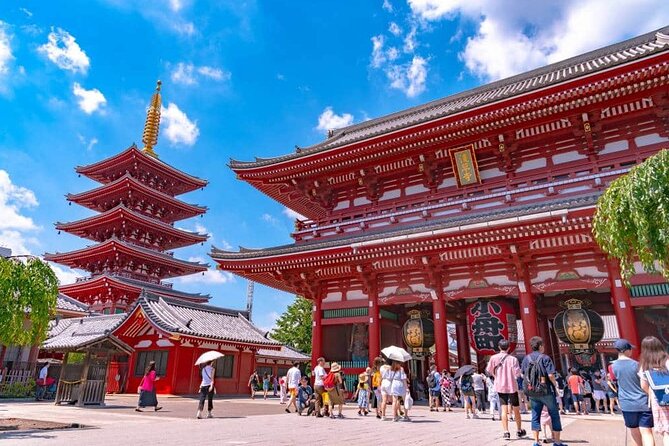
Senso-ji gives the day its strongest traditional setting. You approach through Kaminarimon, the Thunder Gate, with its large red lantern, then walk along Nakamise-dori toward the temple grounds. The shopping street sells snacks, crafts, souvenirs, and other items tied to Japanese temple culture.
The planned two hours make this one of the more relaxed stops. You can walk the approach, see the main temple buildings, browse the stalls, and pause for food or a drink nearby. Admission is free.
I would use this time for more than a quick photograph at the gate. Look up at the rooflines, notice the mix of worshippers and sightseers, and take a little time to watch how the temple grounds work as a living religious place. The area can be crowded, so a driver who walks you to the entrance is useful, especially for a family or anyone who has trouble navigating busy streets.
Senso-ji is also a good test of your guide. A helpful driver can explain the gate, temple customs, and the role of the shopping street. If you want that context, say so at the start. The service has received one clear criticism from a guest who felt the driver offered almost no explanation during the day.
Tokyo Skytree: pay extra for the high view
Tokyo Skytree is the only listed stop with a separate admission charge. Tickets are stated as ¥3,100 per person, and the entry fee is not included in the tour price. You should budget for this before departure and confirm the current ticket procedure with the provider.
The tower rises 634 meters and offers broad views over Tokyo and beyond. You have about two hours here, which allows time for the ascent, observation areas, photographs, and the large complex around the tower.
This is the stop most affected by weather and visibility. On a clear day, the height gives you a useful sense of Tokyo’s scale. On a hazy day, the view may be less rewarding, although the tower itself remains an impressive modern landmark.
The tour does not include every possible attraction at the Skytree complex, so treat the two hours as an opportunity for the tower and its immediate surroundings rather than a full shopping visit. If you prefer street-level Tokyo to paid viewpoints, ask if you can shorten this stop and spend more time elsewhere.
The Imperial Palace: walls, moats, and a quiet center
The Imperial Palace offers a change of pace after the tower. Set in central Chiyoda, it is surrounded by stone walls, moats, and gardens. The Emperor’s residence is not generally open to the public, so you should not expect to tour the inner palace buildings.
The useful public experience is the view of the grounds and the East Gardens. You have about an hour, enough for photographs and a calm walk if conditions and mobility allow. There is no admission charge for the listed visit.
This stop is best for understanding Tokyo’s unusual balance: a modern capital with a quiet, protected center. It is not a dramatic interior attraction, and some of the value depends on your interest in gardens, architecture, and imperial symbolism. If your priority is food or shopping, you may prefer extra time in Tsukiji or Shibuya.
A few more Tokyo tours and experiences worth a look
Meiji Jingu: forest paths beside the city
Meiji Jingu feels far removed from the traffic and tall buildings of central Tokyo. The shrine honors Emperor Meiji and Empress Shoken and sits among forested grounds reached through large torii gates.
The planned visit lasts about an hour and is free. You can expect a walk through the grounds rather than a quick roadside photo. Wear comfortable shoes, since the shrine experience depends on moving along its paths.
This is one of the day’s best contrasts. After the market, temple crowds, and tower, Meiji Jingu gives you room to slow down. You might see traditional shrine activity, but the exact atmosphere depends on the day and season. The forested setting is the main reason to keep this stop in the schedule.
For anyone traveling with an older relative or young child, ask the driver about the closest practical drop-off point. One of the strongest themes in the feedback is that good drivers reduce walking when they can, but the shrine grounds still require some movement.
Shibuya Crossing: Tokyo in one grand sweep
Shibuya Crossing is a short, highly visual stop. When the traffic lights change, pedestrians move across the intersection from several directions at once. The scene captures Tokyo’s energy in a single few-minute burst.
The schedule allows about an hour, giving you time to cross, take photographs, and see the surrounding district. Admission is free. Your driver can point out useful photo locations, though the exact viewpoint is not specified.
Do not expect a guided historical visit here. Shibuya is about watching the flow of the city, then deciding if you want a little time in the surrounding streets. If the crossing is your main goal, tell the driver. If you want shopping or nightlife, one hour will feel short.
Odaiba: bay views and a modern finish
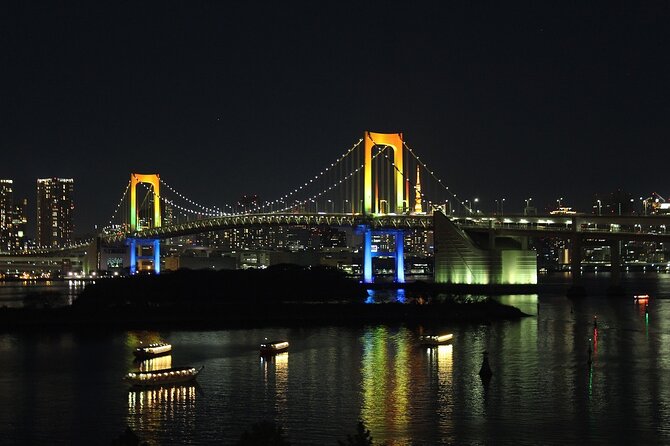
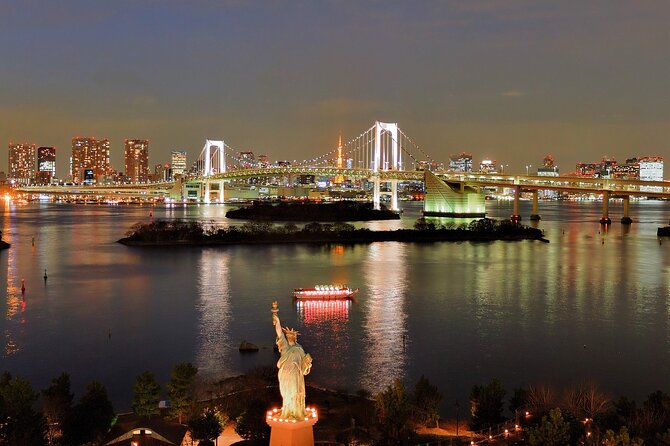
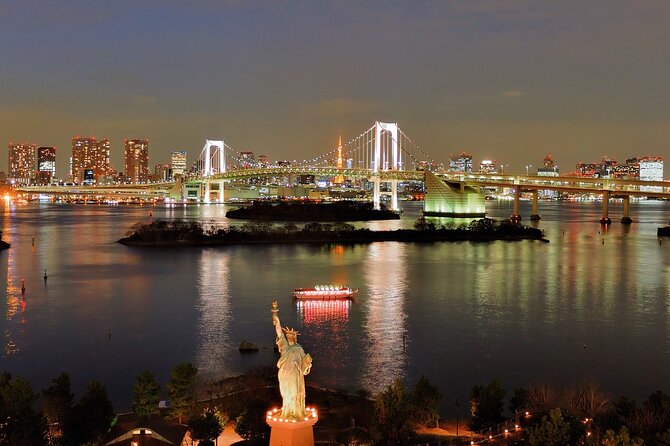
Odaiba is an artificial island in Tokyo Bay with open views toward the city, Rainbow Bridge, and the large Gundam statue. It provides the day’s clearest change from temples and palace grounds to modern Tokyo.
The two-hour stop gives you time for photographs and a walk near the waterfront. The beach and bay setting can make this a pleasant final stop, especially if you want skyline views rather than another tightly packed urban street.
Odaiba is also a good place to discuss your return plan. The tour finishes after roughly 10 hours, and traffic can affect the final part of the day. If you need to reach a hotel, station, airport connection, or ship at a fixed time, tell the driver early rather than waiting until the last stop.
What the private car adds to the price
The advertised price is $355.09 per group of up to three people. For three, that is about $118 per person before Skytree tickets, food, and any surcharge for an additional area. For one or two people, the per-person cost rises, but you are paying for private use of the vehicle and driver rather than a seat on a fixed group bus.
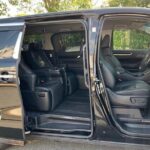
The package includes an air-conditioned vehicle, private transportation, petrol, tolls, meet-and-greet service, and Wi-Fi in the vehicle when available. That can be good value if you want to see distant parts of Tokyo in one day and would otherwise pay for several train rides, taxis, or a private transfer.
The value becomes stronger for families who need help with timing and movement. It also makes sense for cruise passengers. A pickup and drop-off at the port may cost extra, but one cruise passenger considered that added fee worthwhile for the time saved and the convenience.
The capacity needs attention. The advertised price covers up to three people, yet one experience involved a group of five and another described a family of seven. Do not assume the same vehicle or price applies to a larger party. Confirm the number of passengers and request one suitable van in writing before paying.
There may also be a JPY 5,000 surcharge for any additional area not covered by the planned route. Ask what counts as an additional area and when payment is due. Food and drinks are always separate, and Skytree admission is extra.
The driver can make or break the day
The best part of this experience is not the vehicle alone. It is the person behind the wheel. Aju was praised for punctuality, a clean car, and walking guests toward each stop. Galin helped with conversations in Japanese and managed large crowds. Asif was described as calm and willing to adjust the route. Ayan handled fixed arrival times, and Orko helped a family manage food preferences and a baby’s needs.
Those details show what you should ask for: safe driving, clear English, help at busy entrances, and enough commentary to understand what you are seeing. The service calls the driver English-speaking, but ability and guiding style may differ. One guest had an excellent day with a well-informed driver, while another found the narration too limited to learn much.
At booking, write a short note saying you want historical and cultural explanations, not just transport. Also tell the provider if you prefer a slow pace, need shorter walks, have children, or must reach another appointment at a fixed time.
One serious complaint described two vans arriving 40 minutes late for a larger family, with one guide unable to speak English. That appears to be an outlier against the overall 4.8 rating from 45 reviews and 96 percent recommendation figure, but it is still important. Larger groups should confirm the vehicle arrangement, guide language, pickup time, and contact method before the day begins.
Who should book this Tokyo tour
I would choose this for a first day in Tokyo, a short port visit, or a family group that wants the major sights without constant train transfers. It is also a good fit if some people in your party are not comfortable with Japanese public transport or cannot walk long distances between stations and attractions.
You will get the most from it if you accept a quick overview. The route touches food culture, Buddhist worship, imperial grounds, Shinto practice, modern architecture, city crowds, and bay views. You will not become an expert in any one subject, but you can see how many different parts of Tokyo fit together.
Independent visitors who enjoy long meals, shopping, museums, or neighborhood wandering may find the route too broad. You could see the same districts by rail for less money, but you would give up the private pickup, vehicle comfort, route planning, and help with local communication.
The tour requires good weather. If poor weather cancels it, you are offered another date or a full refund. You can cancel for a full refund up to 24 hours before the start time, but late cancellations and late changes are not accepted.
Should you book it?
Book this private Tokyo day tour if your priority is seeing the city’s major sights efficiently, with a driver who can adjust the pace and reduce the strain of a huge urban day. It offers especially good practical value for families, older relatives, cruise passengers, and first-time visitors with only one free day.
Before booking, confirm three things: your exact group size, the vehicle you will receive, and how much English commentary you want. If the provider matches you with a punctual, attentive guide such as Aju, Asif, Ayan, Galin, or Orko, this can be a comfortable and rewarding snapshot of Tokyo. If you want long, detailed guiding at every stop, make that expectation clear or consider hiring a dedicated guide in addition to transport.
FAQ
How long does the private Tokyo tour last?
The tour lasts approximately 10 hours and begins at 9:00 am.
How many people are included in the listed price?
The listed price of $355.09 covers one group of up to three people. Larger groups should confirm the vehicle and additional price before booking.
Is hotel or port pickup available?
Pickup is offered. One reported use involved pickup and drop-off at a cruise port, with additional fees for that arrangement.
Which sights are included?
The planned stops are Tsukiji Fish Market, Senso-ji Temple, Tokyo Skytree, the Imperial Palace, Meiji Jingu Shrine, Shibuya Crossing, and Odaiba.
Is Tokyo Skytree admission included?
No. Skytree admission is listed separately at ¥3,100 per person.
Are food and drinks included?
No. You pay separately for meals, snacks, and drinks during the day.
What does the tour price include?
The price includes an air-conditioned vehicle, private transportation, meet-and-greet service, petrol, tolls, and a Wi-Fi hotspot in the vehicle when available.
Is the route flexible?
The driver may adjust the route. Specific experiences describe changes for preferred sights, photo locations, meal needs, mobility concerns, and fixed appointment times. Additional areas may carry a JPY 5,000 surcharge.
What is the cancellation policy?
You can cancel at least 24 hours before the local start time for a full refund. Cancellations or changes made less than 24 hours before the start time are not accepted, and poor-weather cancellations offer either a different date or a full refund.
More Private Drivers in Tokyo
More Private Tours in Tokyo

More tours in Tokyo we've reviewed



Private Drivers, compared.
 ★ 5.0Mt Fuji Private Tour with English Speaking DriverFrom $415
 ★ 4.5Mt. Fuji & Hakone Private Day Tour with English-Speaking DriverFrom $453
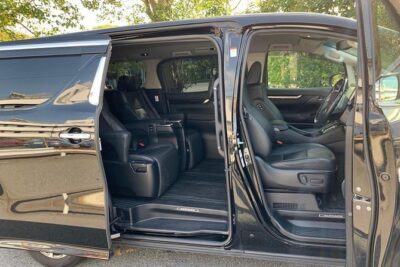 ★ 4.5Haneda Airport (HND) Private Transfer to Central TokyoFrom $104
 ★ 4.5Mt. Fuji, Hakone Full-Day Private Tour with English Driver GuideFrom $495
 ★ 5.0Mt. Fuji Day Trip from Tokyo with English Speaking Driver GuideFrom $497
★ 4.5Mt. Fuji Private Tour with English Speaking DriverFrom $464
★ 5.0Mt. Fuji Day Trip from Tokyo with English Speaking Driver GuideFrom $497
★ 4.5Mt. Fuji Private Tour with English Speaking DriverFrom $464