
Reviewed · SHINJUKU TOURS
Tokyo Ikebana Wellness Art Experience near Shinjuku
The best part of this small-group ikebana workshop is that you do not simply watch a demonstration. You handle the flowers, make the cuts, decide what should lead the arrangement, and leave with your own work. I especially like the calm Japanese-style room and the chance to learn directly from Ai-sensei, who guides beginners in English.
I also like the short 90-minute format. It fits neatly into a Tokyo afternoon, and the group is limited to five people, so you can receive personal advice rather than wait your turn in a crowded class. The main consideration is the strict booking policy: the experience is non-refundable and cannot be changed after booking.
In This Review
- Key points to know before booking
- What this ikebana class is really like
- Why the small group matters
- Meeting Ai-sensei in a Japanese-style room
- Working with flowers, branches, and empty space
- The take-home arrangement is a useful extra
- The $52.71 price and what you receive
- Who will enjoy this most
- What may not suit you
- How to fit it into a Tokyo afternoon
- A thoughtful cultural souvenir
- Should you book the Tokyo ikebana experience?
- FAQ
- How long does the ikebana workshop last?
- What time does the workshop begin?
- Where does the experience meet?
- Do I need previous ikebana experience?
- Can I take my flower arrangement with me?
- How many people can join the workshop?
- Do I need to provide passport or flight information if I am already in Japan?
- Can I cancel or change my reservation?
Key points to know before booking
- A real hands-on introduction: You learn basic ikebana ideas, then create your own arrangement with fresh flowers and branches.
- Ai-sensei teaches beginners gently: English guidance is available, with step-by-step help on cutting, balance, height, and placement.
- The room adds to the atmosphere: The workshop takes place in a clean, bright Japanese-style setting rather than a standard tourist classroom.
- Your arrangement goes with you: You can enjoy the flowers in your hotel room or take them home.
- Only five places are available: The small group makes it easier to ask questions and receive individual advice.
- Plan around a 1:00 pm start: The meeting point is in Nakano City, a practical choice if you are staying near Shinjuku.
What this ikebana class is really like
Ikebana is more than putting flowers in a vase. The arrangement depends on space, height, line, balance, and the natural personality of each branch or bloom. In this class, you get a friendly introduction to those ideas without signing up for a long formal course.
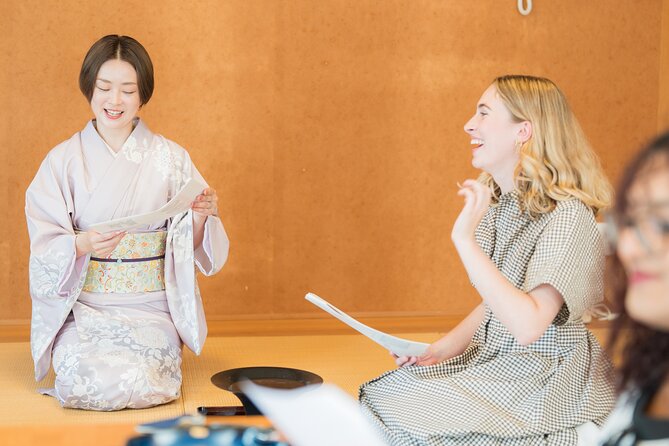
The session begins with an explanation of ikebana’s roughly 600-year history and cultural background. Ai-sensei uses photographs of her own work to show how the art can look in practice. This opening matters because it gives you a frame for what comes next. You are not just trimming flowers at random. You are learning why a branch might lean, why empty space matters, and how a small change can alter the whole shape.
You also learn about flower containers, tools, basic styles, and the handling of the day’s materials. The precise lesson can change with the season, which is part of the appeal. Fresh flowers and branches do not behave like identical craft supplies. One stem may be straight, another may curve, and a leaf may hide a useful line or distract from it.
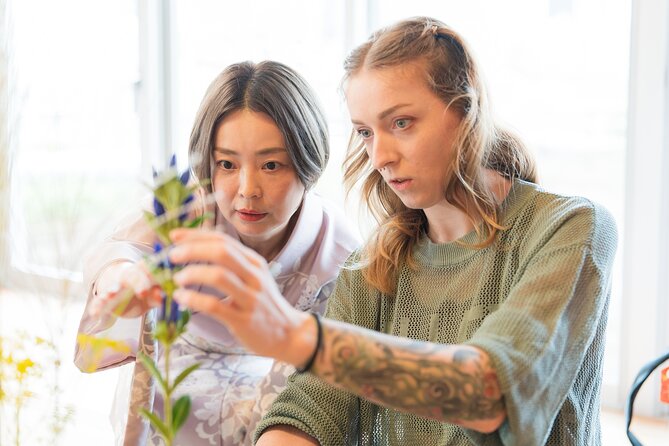
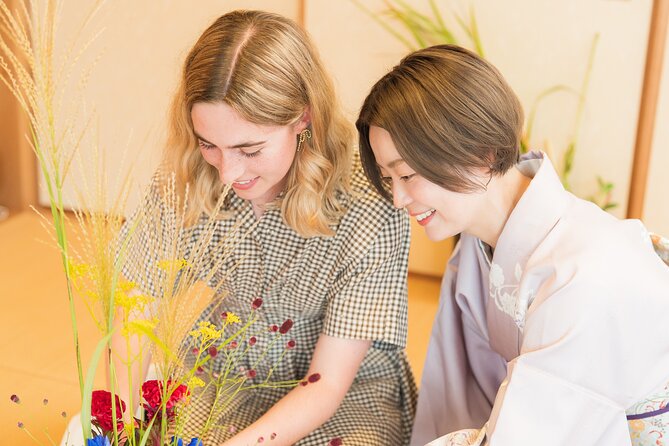
After the introduction, you work on your own arrangement. Ai-sensei demonstrates the process and then gives advice as you go. The help is practical: how to use the scissors, how to cut the flowers, how to position branches, and how to judge the balance of the finished piece.
The class uses a free-style approach, often called jiyuka, which makes it less intimidating for a first attempt. You still learn basic principles, but you are not expected to copy a rigid model. Your arrangement can reflect your own idea while staying within the structure of ikebana.
A few more Tokyo tours and experiences worth a look

Why the small group matters
The maximum group size is five people. That is a useful detail, not just a marketing line. Flower arrangement requires close looking, and you may want advice on one branch or leaf at exactly the moment you are deciding what to do with it.
With a larger class, beginners can easily become uncertain about whether to cut more, remove a leaf, or change the angle of a stem. Here, Ai-sensei can offer individual suggestions and adjust her explanation to your pace. The personal attention also helps if you are using English and want to confirm a technique before making a cut.
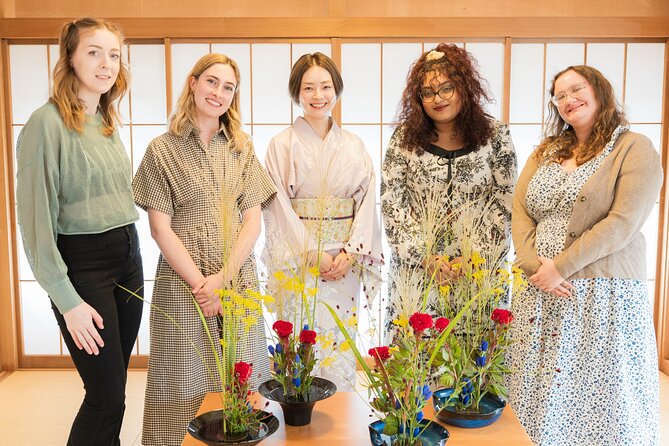
The small group creates an interesting comparison as well. Everyone works with the same general group of flowers, yet the finished arrangements can look quite different. One person may favor an open, airy shape. Another may create something more compact. That difference is a useful lesson in ikebana: there is room for personal expression inside the basic rules.
You can book alone, with a friend, or with family. The activity is designed for all ages, and the available information says most people can participate. It is a good pick for a pair who wants a shared cultural activity without committing to a full day.
Meeting Ai-sensei in a Japanese-style room
The meeting point is at MSQUARE, in Nakano 3-chome 8, Nakano City, Tokyo 164-0001. The location is near public transportation, but you should allow time to find the exact building and room. The class begins at 1:00 pm, so arriving with a little margin is sensible.
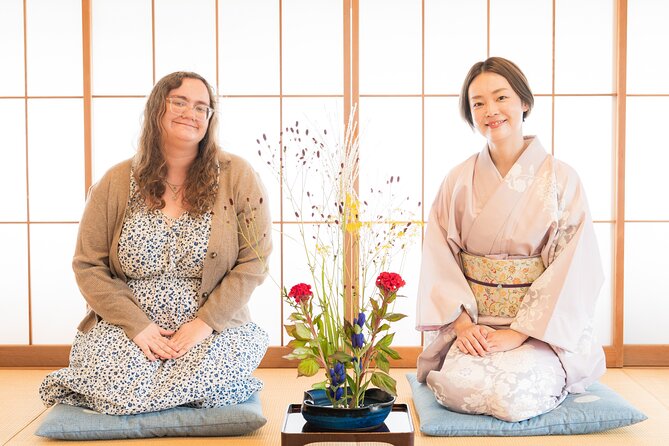
The room itself is part of the appeal. It is described as clean, bright, and Japanese in style. That gives the workshop a more personal setting than a large commercial studio. You sit down, slow your pace, and focus on the flowers in front of you.
Ai-sensei’s teaching style is one of the strongest reasons to book this particular class. The instruction is careful and kind, without making ikebana feel stiff or overly formal. That balance is important. Beginners often arrive with the impression that ikebana is elegant but difficult, perhaps something reserved for people who already understand Japanese etiquette. The lesson removes much of that pressure.
English instruction is available, and the teaching includes more than a list of steps. You learn the background of ikebana, hear about the characteristics of different flowers, and get help interpreting the materials in front of you. If you have an interest in Japanese arts such as tea ceremony or kintsugi, the cultural explanation may be especially rewarding.
Working with flowers, branches, and empty space
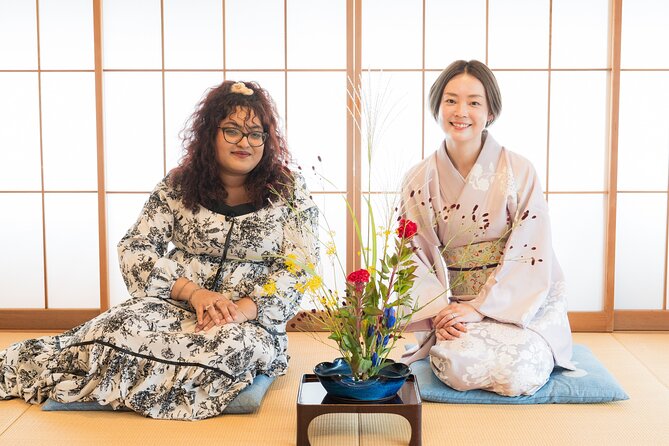
The hands-on part is where the class earns its price. You pick up the flowers one by one and begin to notice their shape. A chrysanthemum can look completely different depending on its height. A single removed leaf can open up the composition. The direction of a branch can make the arrangement feel light, formal, quiet, or energetic.
That is also why the class can feel unexpectedly calming. You have to concentrate on small choices. You look at the angle of a stem, decide which flower should be the focus, and consider how much space to leave around it. The exercise is creative, but it is also orderly.
You should not expect to produce a museum-quality arrangement on your first try. That is not the point. The instructor’s job is to help you see what is already interesting in the materials, then make choices that support it. Many first-time participants arrive unsure how to keep flowers alive or how to make a display look attractive. The class gives you a practical starting point.
The free-style approach is particularly helpful if you dislike copying someone else’s work. You can bring your own sense of shape and color to the arrangement, while Ai-sensei helps you make the result more balanced. The finished piece may not look exactly as you pictured it. That is part of the lesson, too.
The take-home arrangement is a useful extra
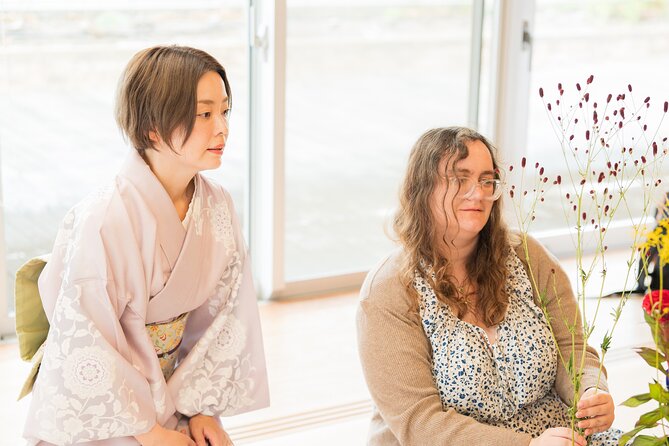
You can take your arrangement with you at the end of the session. During a Tokyo trip, that might mean placing it in your hotel room for the rest of your stay. If you live in Japan or have a way to transport it, you can continue enjoying it at home.
This changes the value of the class. You are not paying for 90 minutes that disappear when you leave. You get a physical reminder of the afternoon and a chance to see how the flowers develop after the workshop.
A practical point: flowers are not the easiest souvenir for a long, complicated journey. If you are checking out of your hotel immediately afterward or flying home the same day, the arrangement may be inconvenient. The take-home feature is most useful if you have several more hours in Tokyo, a nearby hotel, or a short journey ahead.
You also leave with a little more confidence about arranging flowers in a vase. The instruction covers how to handle the materials and how to think about display, so you may find yourself looking at ordinary flowers differently afterward.



The $52.71 price and what you receive
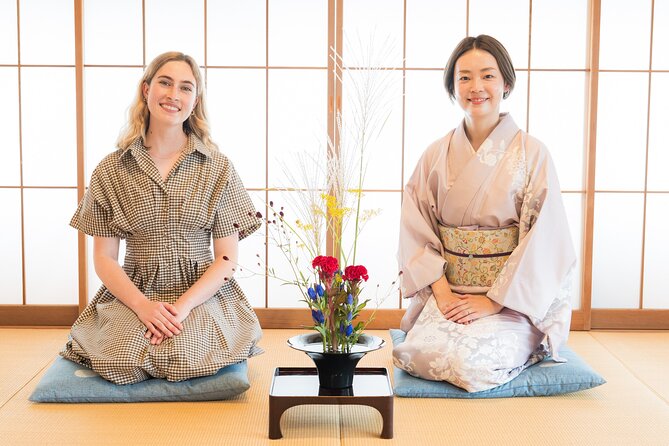
At $52.71 per person, this is not the cheapest activity you can add to a Tokyo itinerary. It is also not simply a flower-making craft class. The price covers a guided cultural lesson, access to the materials, personal instruction in a group of no more than five, and an arrangement to take with you.
I consider that fair value for people who want an experience rather than another viewing stop. The class lasts about an hour and a half, which is long enough to include cultural context and real practice without taking over your day. You can pair it with other plans in Nakano or central Tokyo.
The value is strongest if you are curious about Japanese aesthetics, enjoy making things with your hands, or want a quiet break from city sightseeing. If you only want a quick demonstration or a cheap souvenir, the price may feel high.
The activity is commonly booked about 22 days ahead. That suggests you should not leave it until the last minute, especially because the group is limited to five. A mobile ticket makes entry simple once the reservation is confirmed.
Who will enjoy this most
I would recommend this class to first-time visitors who want direct contact with Japanese culture. It gives you context without requiring prior study, and the creative work helps the ideas make sense.
It also suits:
- Couples and friends who want a shared activity
- Families looking for something suitable for different ages
- Solo visitors who prefer a welcoming small group
- People interested in flowers, design, or traditional Japanese arts
- Anyone who wants a quieter afternoon near Shinjuku
- Visitors who have already seen major temples and museums and want to make something themselves
Men should not feel that the activity is intended only for women. One review specifically noted that men enjoyed learning ikebana, and the teaching is focused on technique, shape, and Japanese culture rather than gender or prior experience.
You do not need to know flower names or Japanese manners before arriving. The class starts with the basics and explains the materials used that day. If you have a particular physical concern, confirm directly before booking, since the provided information only says that most people can participate.
What may not suit you
The workshop has a narrow time window: 1:00 pm and approximately 90 minutes. If your Tokyo schedule is packed with timed tickets, shopping, and long train transfers, getting to Nakano and back may feel like work.
The class is also best for people willing to participate. You will not spend the entire time sitting back while someone else creates an arrangement for you. You will handle flowers and tools, make decisions, and accept that the result may change as you work.
The non-refundable policy deserves attention. You cannot cancel or amend the reservation for any reason and receive your money back. I would book only after checking your Tokyo plans, especially if your arrival date, accommodation, or afternoon schedule is uncertain.
Finally, do not confuse this with an advanced ikebana lesson. You receive a meaningful introduction and hands-on coaching, but the 90-minute format cannot cover every school, formal rule, or technical method in depth. If you already study ikebana, you may want a longer or more specialized class.
How to fit it into a Tokyo afternoon
The workshop meets in Nakano City, near public transportation, and ends at the same meeting point. That makes the return straightforward, but you should still check the route from your hotel before the day of the class.
A sensible plan is to keep the hour before the start flexible. You do not want to rush into a quiet flower session after a long transfer or a complicated sightseeing stop. Arrive ready to slow down.
Afterward, the arrangement gives you a reason to return directly to your hotel if you are carrying delicate flowers. If you are staying elsewhere, you can continue with nearby plans, but remember that the piece may need careful handling.
Because the session ends where it begins, you can use the rest of the day for dinner, shopping, or another activity. The class does not include transportation between sights, so any wider Tokyo itinerary is up to you.
A thoughtful cultural souvenir
I like this experience because the souvenir is not an object chosen from a shop shelf. You make it while learning why Japanese flower arrangement values line, restraint, seasonal materials, and the spaces between things.
The workshop also offers a small lesson in individuality. Two people can receive similar flowers and create very different compositions. You see that difference immediately when the arrangements are placed side by side. It is a simple, memorable way to understand how ikebana combines structure with personal feeling.
The setting and manner of instruction help, too. Ai-sensei’s calm guidance lets you ask basic questions without embarrassment. You can learn about the origins and styles of ikebana, then put those ideas to work with your own hands.
Should you book the Tokyo ikebana experience?
Book it if you want a personal, hands-on cultural activity and have a dependable 1:00 pm afternoon available. The small group, English guidance, Japanese-style room, seasonal flowers, and take-home arrangement make it a strong choice for beginners.
Skip it if you want a fast sightseeing stop, dislike creative activities, or may need to change your schedule. The price is reasonable for the instruction and materials, but the strict cancellation policy means you should be certain before paying.
For most people, this is a gentle way to see a different side of Tokyo. You leave with an arrangement, a better eye for flowers, and a quiet hour and a half that feels far removed from the city outside.
FAQ
How long does the ikebana workshop last?
The activity lasts approximately 1 hour and 30 minutes.
What time does the workshop begin?
The scheduled start time is 1:00 pm.
Where does the experience meet?
The meeting point is MSQUARE at Nakano 3-chome 8, Nakano City, Tokyo 164-0001. The location is near public transportation.
Do I need previous ikebana experience?
No. The workshop is designed for beginners and includes an introduction to ikebana history, cultural background, basic styles, tools, and flower handling.
Can I take my flower arrangement with me?
Yes. You can take your finished arrangement with you and enjoy it during your stay, including in your hotel room.
How many people can join the workshop?
The activity has a maximum of five participants.
Do I need to provide passport or flight information if I am already in Japan?
No. If those details are requested during booking, enter N/A in the passport number and flight information fields.
Can I cancel or change my reservation?
No. The experience is non-refundable and cannot be changed for any reason.
More Shinjuku Tours in Tokyo

More tours in Tokyo we've reviewed




Shinjuku Tours, compared.
 ★ 5.0Tokyo: Shinjuku Food Tour (13 Dishes at 4 Local Eateries)From $86
 ★ 5.0Tokyo Bar Hopping Tour in Shinjuku (All-You-Can-Drink + Dinner)From $106
 ★ 4.9Tokyo: Shinjuku Food Tour (15 Dishes and 4 Eateries)From $853 hours
 ★ 5.0Best of Shinjuku: Izakaya Food Tour (4 Stops, 14+ Tastings)From $92
 ★ 4.9Tokyo: Shinjuku Local Bar and Izakaya Guided Walking TourFrom $343 hours
 ★ 5.0Tokyo Shinjuku Chopsticks Making ClassFrom $20