
Reviewed · MT FUJI DAY TRIPS
Tokyo: Full-Day Tour of the Six Majestic Spots of Mt Fuji
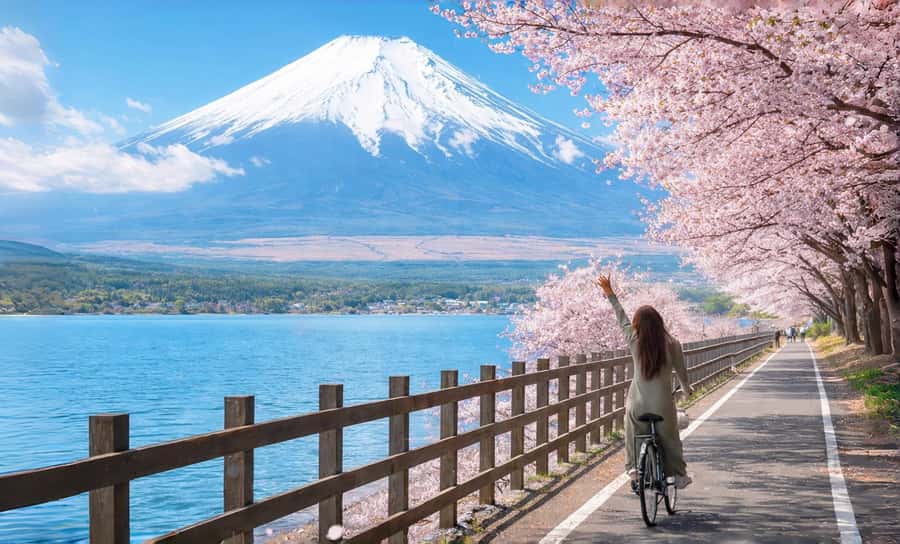
The best moment on this full-day outing can come early, at Hirano Beach on Lake Yamanaka, where Mount Fuji may reflect across still water beside a group of resident swans. Add a pagoda, clear springs, flower fields, and a straight road aimed at Fuji, and you get a busy but picture-packed day from Tokyo.
I like the variety here. You see Fuji in several different settings, and the $45 price includes an air-conditioned vehicle, driver, and guide. I also like the cultural stops, especially Oshino Hakkai, where traditional buildings and spring-fed pools give the day more substance than a string of photo stops.
The main catch is Fuji itself. Clouds can hide the mountain for much of the day, and traffic can stretch the ride. The schedule may also change on weekends, holidays, or during bad weather, so book this for the wider Fuji area and its villages, not for one guaranteed postcard view.
In This Review
- Five things to know before you book
- Why this $45 day trip can be good value
- Hirano Beach and the morning Fuji reflection
- Higashikawa Clock Shop and the straight road to Fuji
- Arakurayama Sengen Park and the famous pagoda view
- Oshino Hakkai, clear water and a traditional village
- The Lawson convenience store photo stop
- Oishi Park and Fuji through the seasons
- Guides, languages, and the pace of the day
- Weather, traffic, and the Fuji gamble
- Who should book this Fuji tour
- Should you book it?
- FAQ
- How much does the Mount Fuji day tour cost?
- Does the tour include hotel pickup and drop-off?
- What sights are included?
- When should I depart for the best reflection at Hirano Beach?
- Are meals and drinks included?
- What languages are available?
- Is the tour wheelchair accessible?
- What happens if bad weather hides Mount Fuji?
Five things to know before you book
- Hirano Beach works best in the morning: The still water and swans offer the tour’s most atmospheric photo opportunity, but the reflection is not an all-day feature.
- Arakurayama means stairs: The famous five-story pagoda view requires a climb, even though the village and other stops are easier to manage.
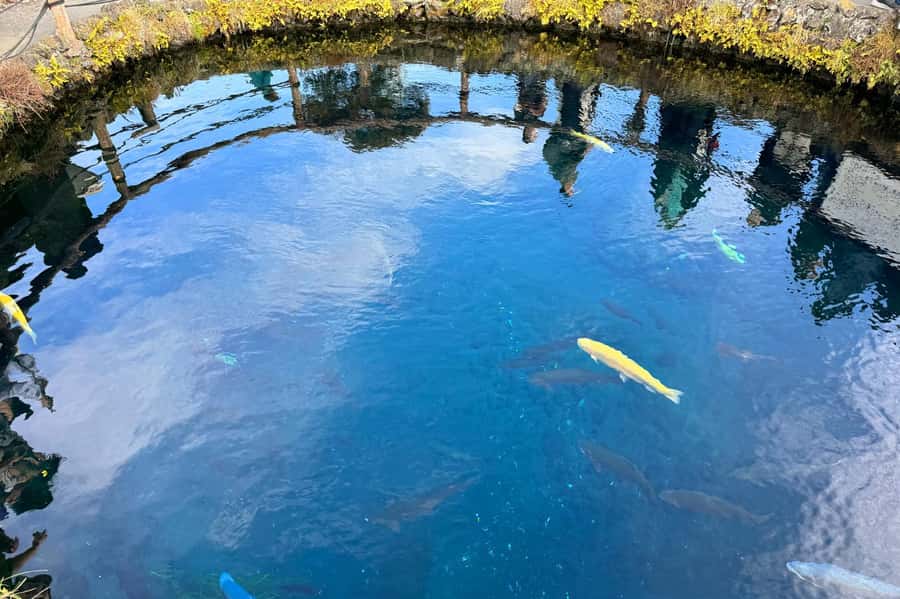
- Oshino Hakkai adds real local character: Eight clear springs, wooden bridges, and thatched-roof buildings make this more than a quick Fuji lookout.
- Oishi Park changes with the calendar: Tulips, moss phlox, lavender, begonias, and autumn maple color take turns providing the foreground.
- The guide can shape the day: Tim, Agnes, and Sakuragi have each led departures, with strong praise for clear explanations, helpful photo assistance, and friendly service.
Why this $45 day trip can be good value
At $45 per person, this is a low-cost way to reach several Fuji-area sights that would take much more planning by train and local bus. You are paying for transport from Tokyo, a driver, and a guide, while food, drinks, entrance extras, and personal spending remain yours.
I see the value in the route’s range. You are not spending the whole day at one lake hoping the clouds part. Instead, the day gives you several chances to see Fuji from different angles, plus a traditional spring village and seasonal gardens that are worthwhile even when the peak is hidden.
The tradeoff is time. A full day of driving between Tokyo and the Fuji Five Lakes area can feel long, especially when traffic builds on weekends and holidays. If you want a slow lunch, a long walk, or extended time at one site, a private visit would give you more control.
The vehicle is air-conditioned, though one departure had a problem with its air conditioning. Another passenger found the bus speakers too loud, so if you are sensitive to sound, sitting farther from the front may be worth asking about when possible. Food and drinks are not allowed inside the vehicle, so plan to eat during the stops.
A few more Tokyo tours and experiences worth a look
Hirano Beach and the morning Fuji reflection
Hirano Beach sits on the northeastern side of Lake Yamanaka. Its gravel shore gives you an open view across the water, and the early timing matters. When the lake is calm, Fuji can appear both above and below the water, creating the kind of doubled image that is hard to arrange later in the day.
The swans are an extra pleasure. They live around the beach and may come close enough for nature photographs, adding movement to an otherwise still scene. I would bring a phone or camera ready before you get off the vehicle because this is one stop where the light and water conditions can change quickly.
The tour specifically favors a morning departure for this reason. If you book a later departure, you may still enjoy the lake, but you should not expect the same mirror effect. This is also your first reminder that weather controls the show. A gray sky can make the shore pleasant, but Fuji may disappear completely.
Higashikawa Clock Shop and the straight road to Fuji
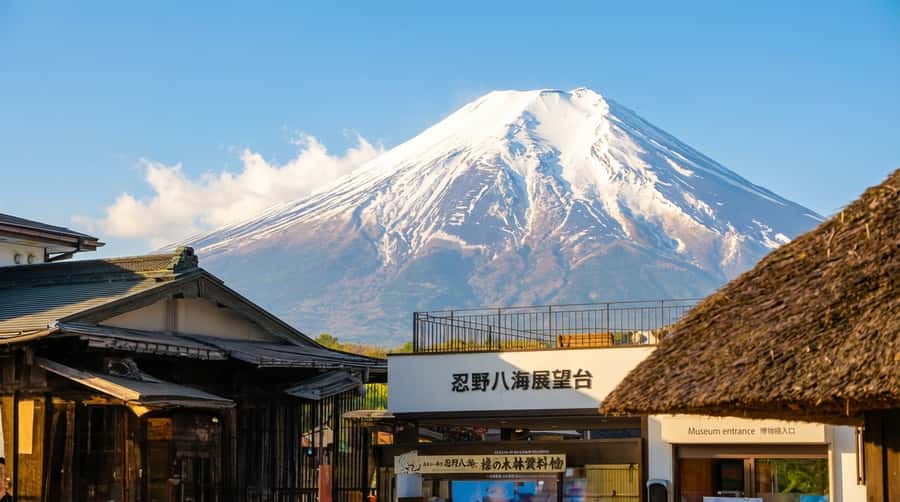
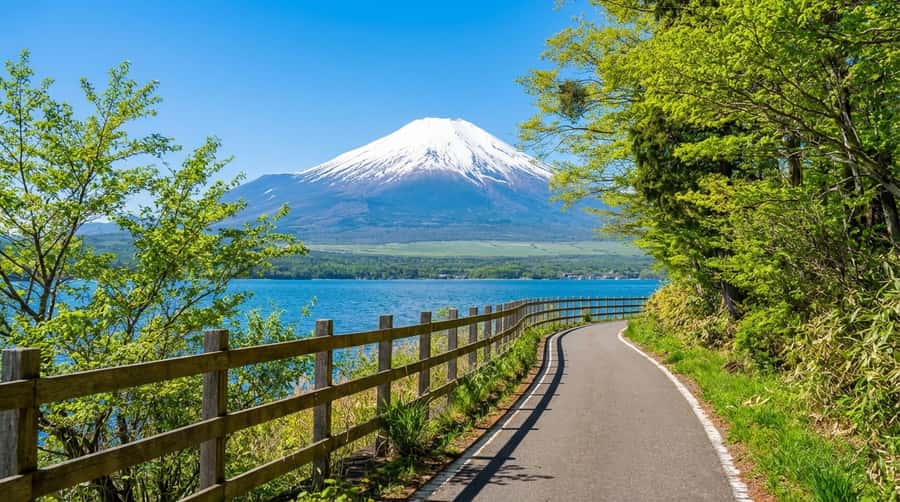
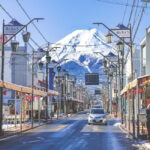
The Higashikawa Clock Shop stop is less about entering a major attraction and more about the view along the street. A quiet, straight road points toward Mount Fuji, creating a strong visual line that makes the mountain seem close even when it is far away.
This is a quick, simple photo idea, but it works because the scene is uncluttered. You can stand on the road and frame Fuji at the end, using the buildings and pavement to draw the eye forward. It has a calmer feel than the more famous pagoda stop, and I like that it gives you a different kind of Fuji image.
The road can become crowded with people taking the same photograph, particularly during popular seasons. Be respectful of traffic and local residents, and expect this stop to be about composition rather than a long visit.
Arakurayama Sengen Park and the famous pagoda view
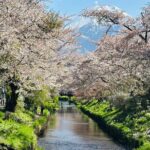
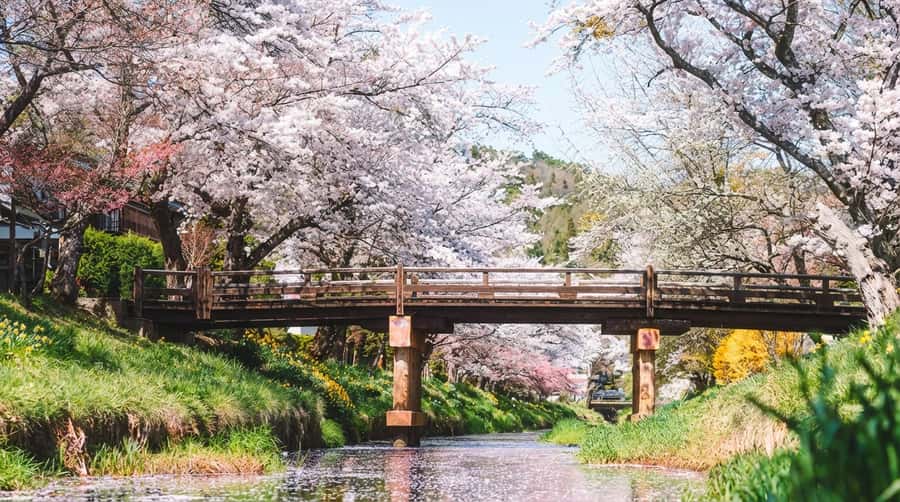
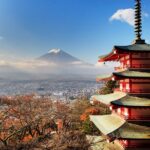
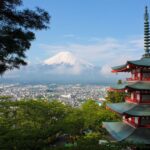
Arakurayama Sengen Park is the tour’s classic Fuji photograph: a red five-story pagoda with Mount Fuji behind it. In spring, cherry blossoms may frame the mountain. In autumn, red and gold leaves provide the color.
The view requires effort. From near Shimoyoshida Station, you climb stone steps toward the pagoda. That makes this the least suitable stop for anyone with limited mobility, knee trouble, or difficulty with stairs. The booking information describes most stops as accessible except the pagoda steps, but it also lists the tour as unsuitable for wheelchair users, so wheelchair users should not assume the vehicle or full route will meet their needs.
Take your time here. The appeal is not only the final photograph, but the changing view as you climb. Afterward, the village below offers a chance to slow down with coffee, though food and drinks are not included.
This is also the stop most likely to feel crowded. The pagoda and Fuji composition are famous for good reason, but you may need patience to find a clear angle. Seasonal timing helps, yet blossoms and foliage do not follow exact dates, so the tour cannot promise a particular color display.
Oshino Hakkai, clear water and a traditional village
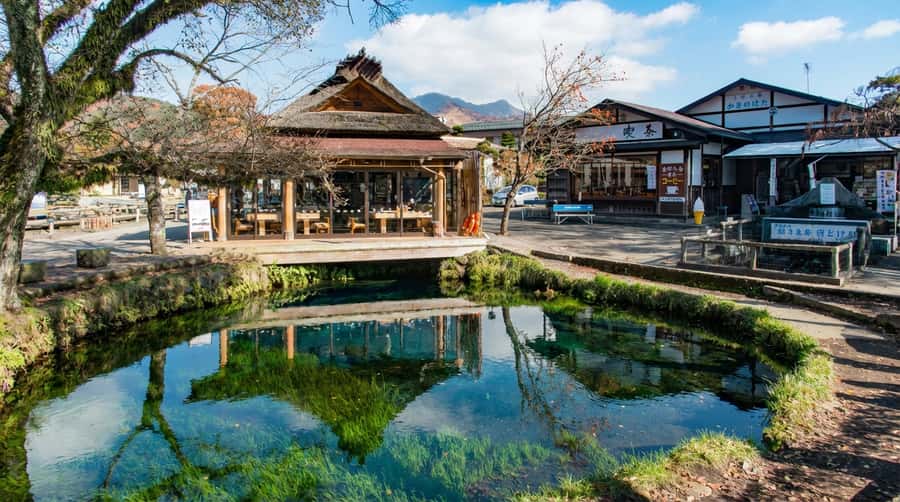
Oshino Hakkai gives the day a welcome change of pace. Here, eight clear springs are fed by snowmelt from Mount Fuji. You walk among turquoise pools, wooden bridges, and traditional thatched-roof buildings in a village setting.
I consider this one of the strongest stops for a cloudy day. If Fuji is hidden, the springs still give you something concrete to see: clear water, reflections, village architecture, and a closer look at how the area presents its connection with the mountain.
The pools are the focus, so keep your expectations realistic. This is not a long countryside walk or an isolated nature reserve. It is a popular stop, and crowds can gather around the clearest water and best viewing points. Still, it provides cultural texture that the road-side photo stops do not.
You may also find this a practical place to look for food, but meals are not part of the tour. One guide, Agnes, recommended an authentic lunch and a kimono experience to the people on her departure. Treat that as guide-dependent advice rather than a fixed feature of the booking.
A few more Tokyo tours and experiences worth a look
The Lawson convenience store photo stop
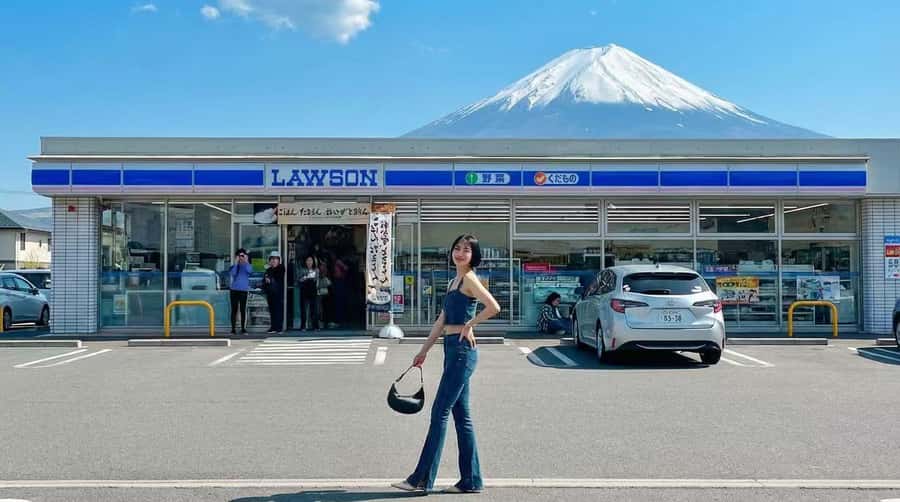
The Fuji-facing Lawson store has become famous because its plain convenience-store design contrasts with the mountain behind it. The minimalist storefront, windows, and road create a quick Japanese street photograph that has spread widely as a phone-wallpaper image.
The appeal is its simplicity. You can buy a snack, make a fast photograph, and move on without needing a long visit. It is a good example of how ordinary Japanese places can become memorable when Fuji appears in the background.
Do not expect a large attraction or much free time here. This is a short photo stop, and the view depends heavily on clear weather and a safe place to stand. Follow the guide’s directions and do not obstruct the shop or road while taking pictures.
Oishi Park and Fuji through the seasons
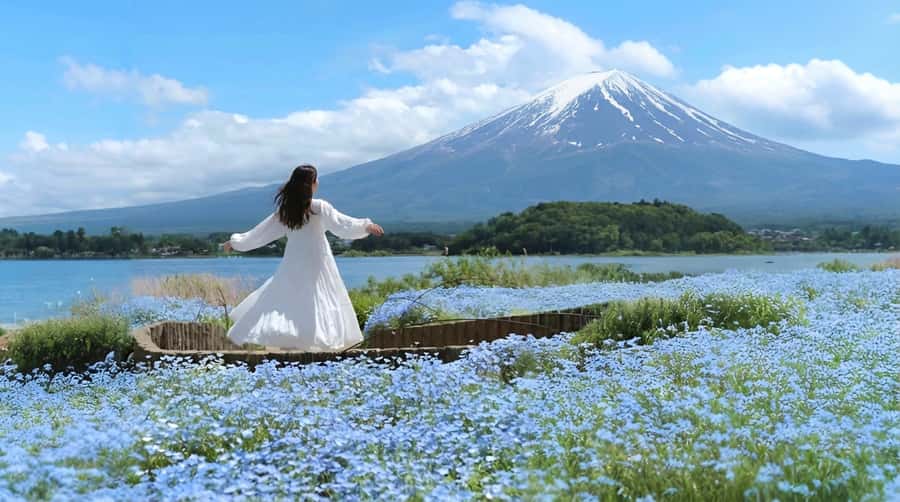
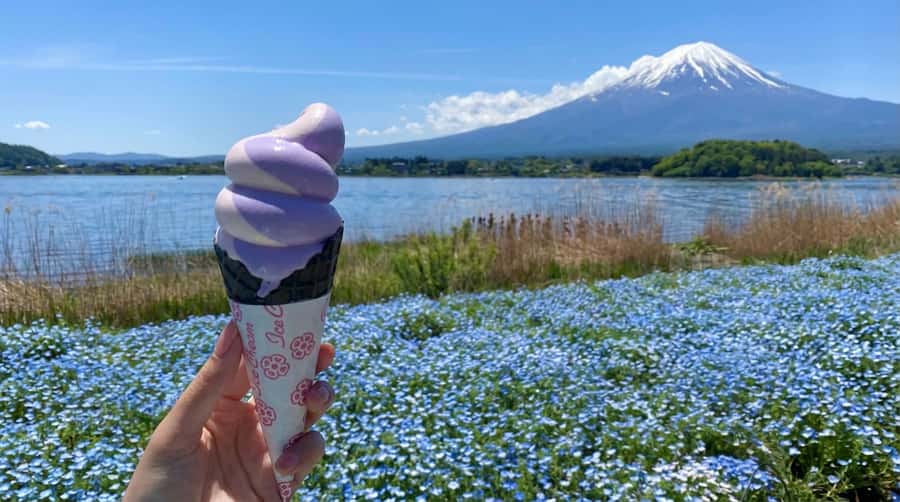
At Lake Kawaguchi, Oishi Park supplies the flowers. The planting changes through the year, giving you a different foreground depending on your date:
- April may bring tulips, daffodils, and rapeseed flowers.
- May is associated with moss phlox.
- June and July bring lavender and the Kawaguchiko Herb Festival.
- August through October may feature begonias.
- November can bring scarlet maple leaves.
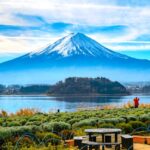
The park is a strong final stop because it combines open lake views with color close to the camera. Even if Fuji is partly covered, the flower beds give you a pleasant place to walk and photograph.
Flower timing can shift slightly from year to year. I would check current conditions before booking if one particular plant is the reason you want this tour. Also remember that the route has several popular stops, so Oishi Park may not feel quiet during peak bloom.
Guides, languages, and the pace of the day
The guide makes a real difference on a long shared excursion. Tim has been praised for energy, clear explanations, and inclusive commentary. Agnes helped make one departure enjoyable and offered useful local suggestions. Sakuragi has explained the stops clearly in both English and Chinese.
The service is not identical on every departure. Small groups may have the driver acting as guide, with limited English commentary and no talking while driving. Multilingual service is provided for international passengers, rather than a single-language presentation, so you may hear more than one language during the day.
That setup keeps the price low, but it can mean less detailed commentary than you would receive from a dedicated private guide. One passenger found some explanations hard to understand, while another found the bilingual information clear. If guide narration is your top priority, confirm the language arrangement for your selected departure.
Photo help can be a pleasant bonus. Guides have taken pictures for people at the sights, but this should be viewed as friendly assistance, not a guaranteed photography service.
Weather, traffic, and the Fuji gamble
Mount Fuji is the central reason to book, but no day tour can control visibility. One departure saw the mountain from beginning to end. Another spent the whole day under clouds and still found the villages and parks worthwhile.
That difference explains how to approach this outing. You might get the reflection at Hirano Beach, the pagoda with autumn leaves, and Fuji above Oishi Park. You might instead get a scenic day around lakes, springs, flowers, and village streets with only brief glimpses of the peak.
Traffic can also force changes, especially on weekends and holidays. Attractions may close early, and poor weather can lead to substitute stops. No refund is offered for changes caused by traffic or weather, so do not schedule a same-day flight, Shinkansen, or evening activity after the tour. Give yourself a buffer.
Who should book this Fuji tour
I would choose this trip if you want a broad first look at the Fuji area without arranging several trains and buses. It suits photographers who want multiple compositions, families and couples who prefer vehicle travel, and city visitors who want one full day outside Tokyo.
It is less suitable if you dislike a fixed schedule, need long meal breaks, or want a quiet mountain experience. It is also not suitable for pregnant women, people with high blood pressure, people over 70, or wheelchair users according to the stated restrictions.
Wear comfortable shoes and clothes. You will walk at several stops, and Arakurayama requires stairs. Bring a layer for changing conditions, though the tour information specifically asks you to focus on comfort rather than a formal dress code.
Should you book it?
Book this tour if you value variety and price. For $45, the combination of transport, a guide, six distinct Fuji-area stops, and several strong photo settings is hard to match through independent planning.
Skip it if a clear Fuji photograph is your only goal. Clouds, crowds, traffic, seasonal timing, and the morning-only reflection all create uncertainty. For the best chance, choose an early departure, avoid relying on a same-day connection afterward, and accept that Oshino Hakkai and Oishi Park still need to carry the day if the mountain stays hidden.
FAQ
How much does the Mount Fuji day tour cost?
The tour costs $45 per person. Transportation in an air-conditioned vehicle, a driver, and a guide are included.
Does the tour include hotel pickup and drop-off?
No. Hotel pickup and drop-off are not included. The tour begins and ends at the assigned meeting point, which may vary according to the option you book.
What sights are included?
The route includes Hirano Beach, Higashikawa Clock Shop, Arakurayama Sengen Park, Oshino Hakkai, the famous Lawson store, and Kawaguchiko Oishi Park.
When should I depart for the best reflection at Hirano Beach?
A morning departure is recommended. The mirror-like Fuji reflection at Hirano Beach is described as a morning-only opportunity.
Are meals and drinks included?
No. Food and drinks are not included. Eating and drinking are also not allowed inside the vehicle.
What languages are available?
English and Chinese are listed as available languages. On small daily groups, the driver may also serve as guide, with limited English commentary and no commentary while driving.
Is the tour wheelchair accessible?
The pagoda steps at Arakurayama Sengen Park are not accessible. Although the other stops are described as accessible, the booking information lists the overall tour as unsuitable for wheelchair users.
What happens if bad weather hides Mount Fuji?
The route may switch to other places if weather closes an attraction. Changes caused by weather or traffic do not qualify for a refund.
More Full-Day in Tokyo
More Mt Fuji Day Trips in Tokyo
More tours in Tokyo we've reviewed





Mt Fuji Day Trips, compared.
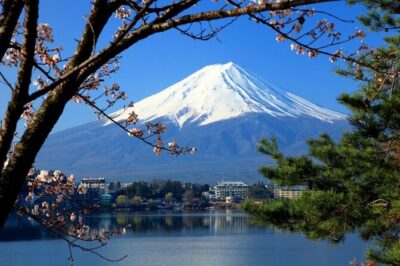 ★ 5.0Mt Fuji and Hakone 1-Day Bus Tour Return by Bullet TrainFrom $163
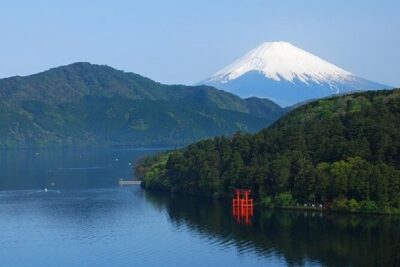 ★ 4.0Mt Fuji & Hakone Cruise, Drum Show Bullet Train 1 Day from TokyoFrom $149
 ★ 4.4Tokyo Mt Fuji 5th St & Hakone Cruise Bus Tour w/Bullet TrainFrom $15410 hours
 ★ 4.5From Tokyo: Mount Fuji Full-Day Sightseeing TripFrom $6810 hours
 ★ 4.7Tokyo: Mt. Fuji Tour, Hakone Ropeway, Owakudani, Lake AshiFrom $5410 hours
 ★ 4.4Tokyo:Mt.Fuji,Kawaguchiko Oishi Park,Arakurayama Sengen ParkFrom $5410 hours