
Reviewed · TOURS
Tokyo: Full Course Tour: Explore 15 Must-Sees & Hidden Gems
Tokyo is not a city you simply look at. You cross it, ride it, bow in it, eat in it, and learn its unspoken rules as you go. This 10-hour small-group tour packs Meiji Shrine, Shibuya, Tsukiji, the Imperial Palace, Akihabara, Ueno, and Asakusa into one long day, with every listed sight free to enter.
I like the born-and-raised Japanese guides, who explain more than dates and photo stops. I also like the clever route, which uses the metro to connect very different parts of the city without asking you to organize the transfers yourself. The catch is simple: this is a demanding day of about 20,000 steps, and the $90 price does not include transport, food, or drinks.
In This Review
- Key points at a glance
- Why this route works for a first day
- Meiji Shrine and Harajuku: quiet woods, bright streets
- Hachiko and Shibuya Crossing: Tokyo in ten minutes
- Tsukiji Honganji and the Outer Market
- Imperial Palace, Marunouchi, and Tokyo Station
- Akihabara and Ueno Park: pop culture and art
- Ameyoko and the old streets of Asakusa
- What the $90 price really covers
- The walking, weather, and age rules
- Who should book this Tokyo day
- FAQ
- Where does the tour start?
- Where does the tour finish?
- How long does the tour last?
- How many people can join?
- Is the tour conducted in English?
- Are admission fees included?
- Are transportation fares included?
- Is food included?
- What should I bring?
Key points at a glance
- 15 major sights in one day: Move from Meiji Shrine and Harajuku to old Asakusa, with modern Tokyo in between.
- A useful first-day lesson: Learn public transport manners, shrine customs, konbini culture, and small details of daily life.
- Small group of up to seven: The size gives your guide room to answer questions and adjust the pace when possible.
- All listed attractions are free: Your main extra cost is about ¥1,500, or roughly $10, for Metro and JR fares.
- A serious walking commitment: Comfortable shoes are essential, and the tour is not suitable for people with mobility issues or low fitness.
- Food is part of the conversation, not the price: Tsukiji lunch, snacks, and any izakaya dinner are paid separately.
Why this route works for a first day
Tokyo can feel like several cities stitched together. Shinto shrines sit behind busy stations. Office towers rise beside old stone walls. A quiet park may be one turn from a shopping street packed with signs, music, and people.
This route gives you a quick working map. You begin in Yoyogi and Harajuku, move east through Tsukiji and the Imperial Palace area, then continue to Akihabara, Ueno, and Asakusa. You see the polished, traditional, youthful, commercial, and slightly rough-edged sides of Tokyo in one sweep.
That range is the main value. You are not spending the whole day in one district, so you get less free time at each stop. But you also avoid the common first-visit problem of seeing only Shibuya and Asakusa, then discovering later that Tokyo has many different moods.
The guides are English-speaking Japanese locals, with names including Yasuko and Michiko among those who have led the tour. Yasuko has been praised for clear English, strong city knowledge, a considerate pace, and adapting when people had individual needs. Michiko has also helped with practical matters, including arranging a taxi after the tour. Those details matter because this is not just a sightseeing circuit. It is also a day of learning how the city works.
If you're still narrowing it down, here are other tours in Tokyo we've reviewed.
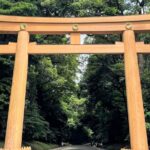

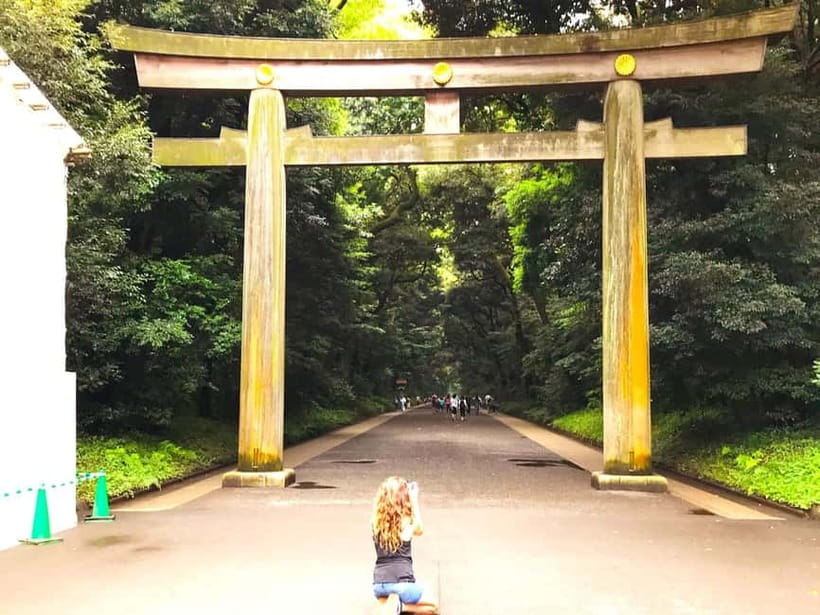
Meiji Shrine and Harajuku: quiet woods, bright streets
Meet outside the west exit of JR Yoyogi Station. Be there early. The group leaves on time, and late arrivals cannot join.
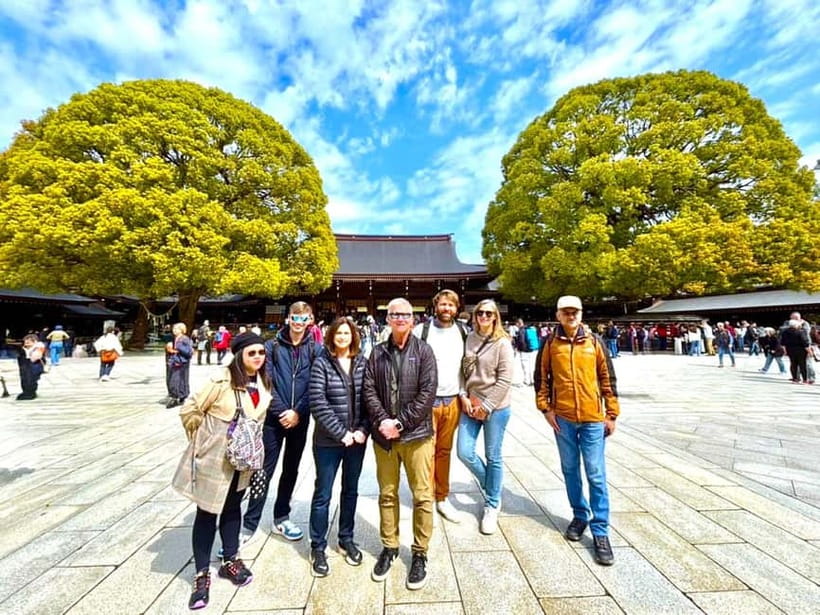
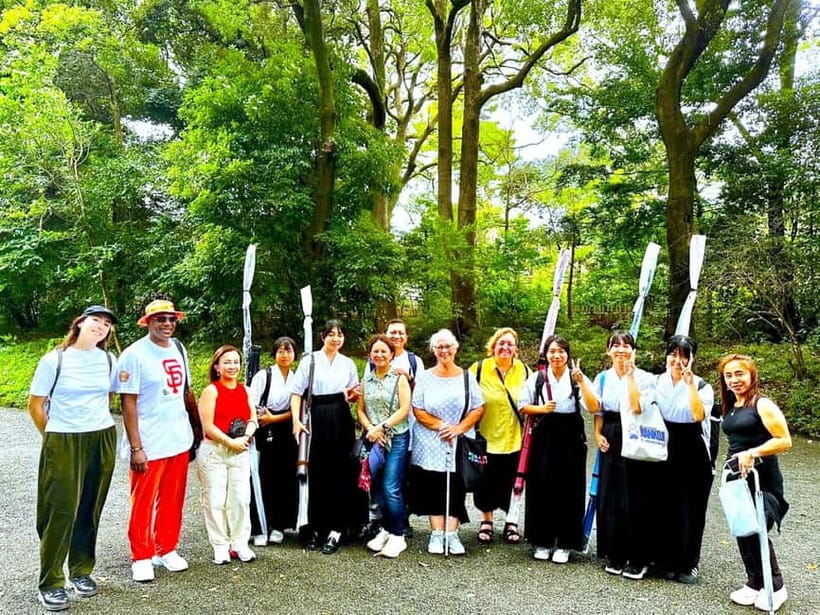
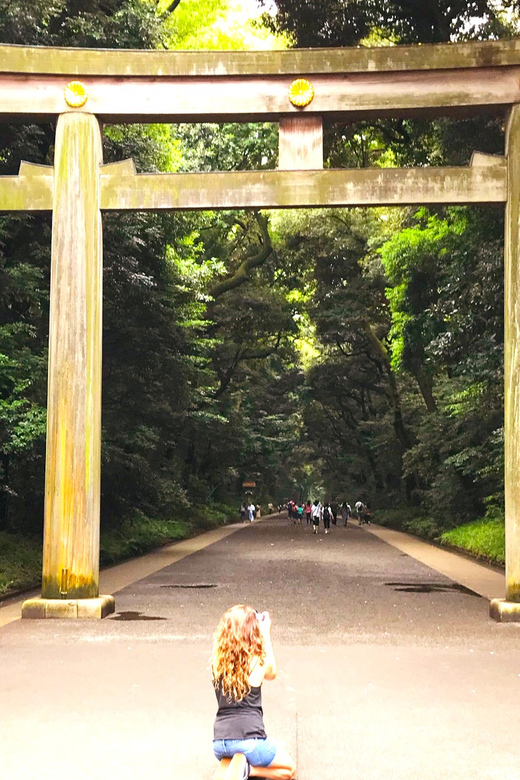
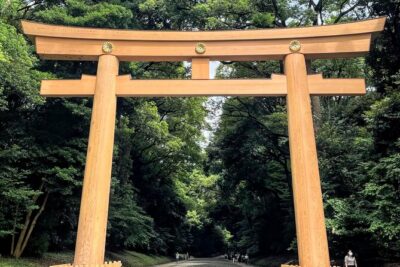
The first stop is Meiji Jingu, a broad shrine area set within a forested part of central Tokyo. Allow about 30 minutes here. Your guide can explain how to behave at a Shinto shrine, including the basic approach to worship and the respectful tone expected at the site.
This early stop is well chosen. It gives you a calm opening before the day reaches Tokyo’s louder districts. You also get an immediate lesson in contrast: Yoyogi and Meiji Shrine feel spacious and quiet, while nearby Harajuku is associated with youth style, kawaii goods, street food, and changing fashion.
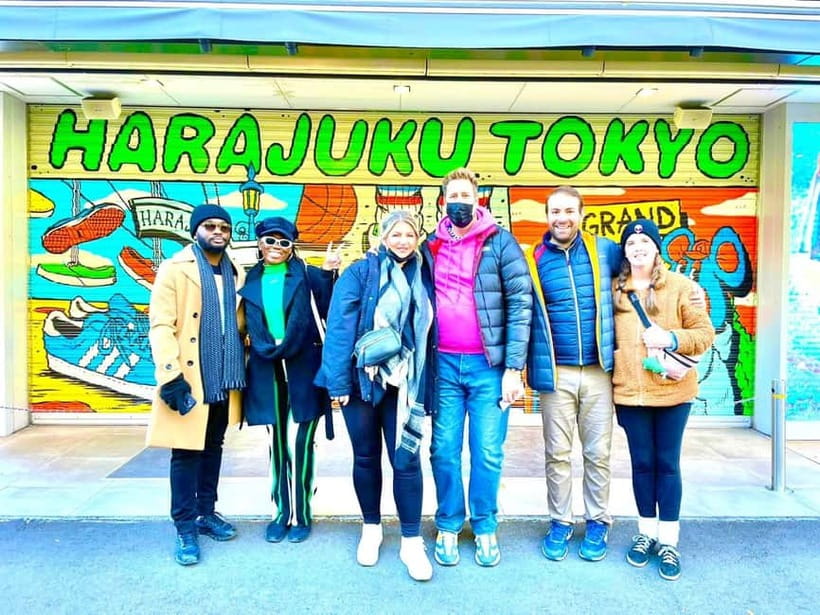
The Harajuku portion lasts about 30 minutes. Think of it as a quick orientation rather than a long shopping session. You will see the area’s famous fashion street and get a sense of why it has become a symbol of youth culture.
The nearby convenience-store visit is a small but useful touch. A Seven-Eleven in Japan is more than a place for emergency snacks. It introduces konbini culture, including the quality and variety of everyday food that locals buy on the run. If you have never tried Japanese convenience-store snacks, this is a good moment to ask your guide what to look for.
Hachiko and Shibuya Crossing: Tokyo in ten minutes
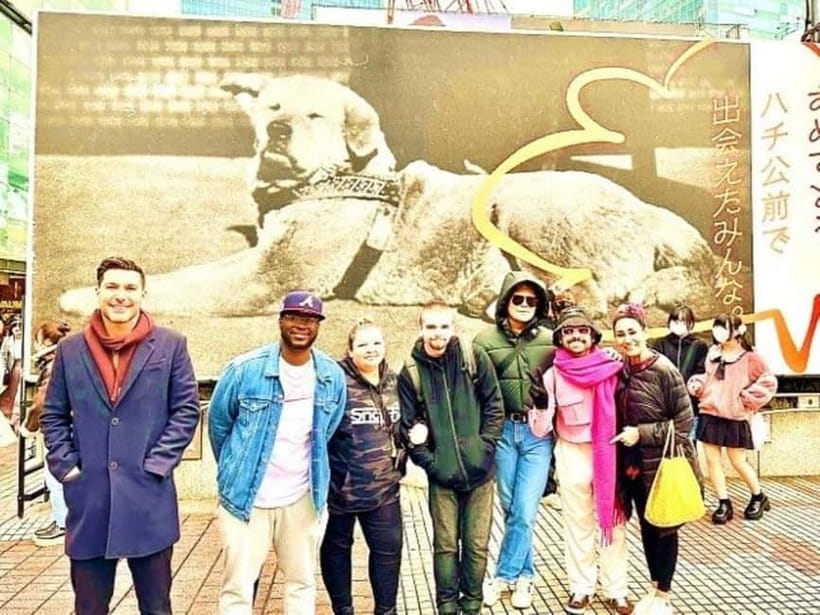
The next pair of stops is short but instantly recognizable. At the Hachiko Statue, you have about 10 minutes to hear the story of Japan’s loyal dog and take photographs.
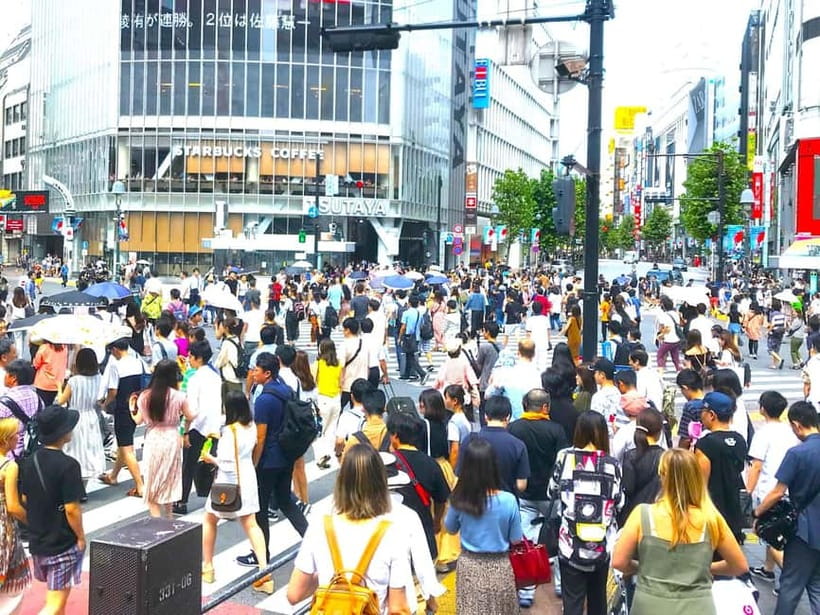
Then comes Shibuya Scramble Crossing, with another 10 minutes. The crossing is famous because several streams of pedestrians move through the intersection at once, surrounded by giant screens and tall buildings. Your guide will help you understand where to stand and how to approach the crossing without losing the group.
Do not expect a long Shibuya shopping break. This section is about seeing two symbols of modern Tokyo efficiently. If you want department stores, cafés, or fashion shops, return to Shibuya later on your own.
From Shibuya, the group takes the Metro for about 30 minutes. Keep your transport card ready and stay close. A pre-charged Suica, Pasmo, or Icoca is required, and fares are not included.
Tsukiji Honganji and the Outer Market
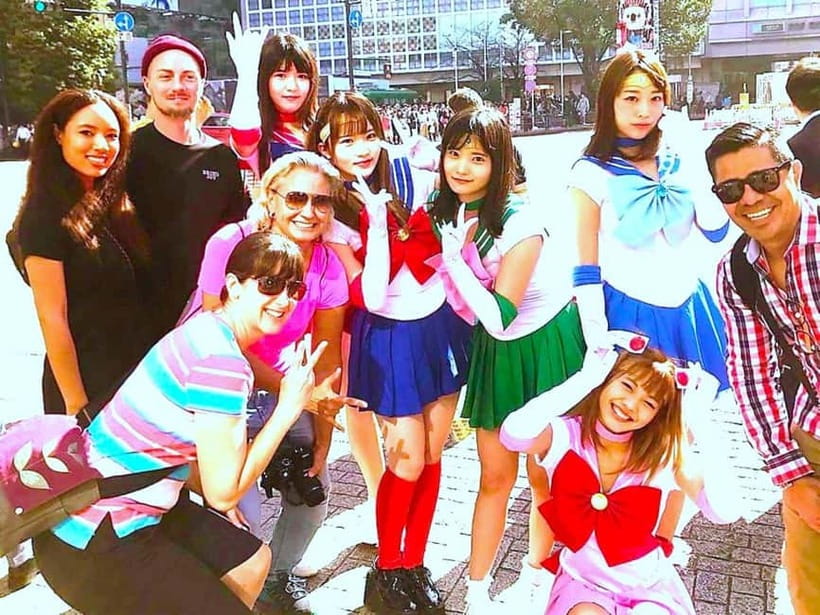
Tsukiji is where the day starts to slow down. Tsukiji Honganji receives about 30 minutes. The temple is known for its unusual Indian-inspired exterior and stained glass, a striking change from the shrine architecture at Meiji Jingu.
After that, you have roughly 90 minutes at Tsukiji Outer Market. This is the longest stop of the day, and rightly so. The market is a practical place to learn about Japanese food rather than simply photograph it. You might find seafood, prepared snacks, kitchen goods, and small shops selling ingredients used in everyday cooking.
Lunch is not included, so budget separately. Food choices can vary by day and shop, but the guide will introduce you to recommended restaurants and local places, including options for vegetarians and vegans. If you have allergies or dietary restrictions, tell the guide at the start rather than waiting until lunch.
Bring cash in yen. Some smaller food shops accept cash only. The market is also one of the better places to spend a little extra, since your purchase is part of the experience rather than an added admission fee.
The tradeoff is timing. Ninety minutes is enough for a useful taste of the market, but not enough for a slow, leisurely food crawl. If Tsukiji becomes your favorite area, make a separate return visit.
Imperial Palace, Marunouchi, and Tokyo Station
A short Metro ride brings you toward the Imperial Palace. The scheduled palace-area visit is about 15 minutes, followed by 15 minutes in Marunouchi and 15 minutes at Tokyo Station Square.
The Imperial Palace stop focuses on the grounds of the former Edo Castle, especially the stone walls and the sense of power built into the location. It is a brief look, not a palace interior tour. That distinction matters if you are expecting access to rooms or a long garden visit.
Marunouchi provides a sharp change in tone. Sleek office buildings and formal streets meet the old imperial setting. Your guide can help connect modern business Tokyo with the city’s earlier political center.
Tokyo Station is the visual highlight of this section. Its red-brick exterior gives you a strong photograph and a useful reminder that Tokyo is not all neon and glass. The 15-minute stop is enough for an introduction, but not for a full station exploration.
This middle section is efficient to the point of being brisk. You get context and photographs, but you will not have time to browse shops or linger over architecture. I would treat it as a well-guided preview.

Akihabara and Ueno Park: pop culture and art
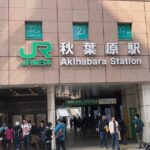
The train to Akihabara takes about 10 minutes. The sightseeing stop lasts around 30 minutes, which gives you an introduction to the area’s anime, gaming, electronics, and Japanese pop culture identity.
Akihabara can easily consume an entire afternoon, especially if you want to visit specialist shops. Here, you are learning where the district fits into Tokyo’s culture and seeing its bright streets with a guide who can explain what you are looking at. Bring questions if you have a particular interest in games, animation, or manga.
Another 10-minute train ride takes you to Ueno Park. The park receives about 30 minutes and is presented as a cultural area with museums and links to samurai history. The name Forest of Art captures the general idea, though this tour does not include museum admission or extended museum time.
The quick pace can work in your favor. You get a broad introduction without spending the whole day on one interest. But if you want to enter a museum, plan a separate visit. The attraction stops are free, but any optional admission is outside the tour price.
Ameyoko and the old streets of Asakusa
Ameyoko Street is a 15-minute stop. Its appeal is its rougher market character, with food and retail shops packed into a busy urban corridor. It offers a useful contrast with polished Marunouchi and the highly branded streets of Harajuku.
Again, the stop is short. Use your time to notice the atmosphere and ask your guide what makes the street different from a department-store district. If you see a snack you want, have cash ready and keep purchases small so you can stay with the group.
The final major area is Asakusa. Sensoji Temple receives about 30 minutes. As Tokyo’s oldest temple, it is the day’s strongest encounter with old downtown Tokyo. You will have time to see the approach, observe the temple grounds, and learn about its religious role.
Asakusa Shrine gets another 10 minutes. It is a Shinto site within the Sensoji area, giving you a chance to compare Buddhist and Shinto traditions in one compact setting. The tour finishes here, rather than returning to Yoyogi, so plan your evening from Asakusa.
The experience description also includes a goal celebration at a local izakaya. Dinner is not included, and the scheduled route ends at Asakusa Shrine, so confirm the exact arrangement for your departure when booking. In any case, an izakaya is a fitting way to continue the evening if you want food and a local pub setting after the walking day.
What the $90 price really covers
At $90 per person, the tour is not a cheap way to get from place to place. You still pay about ¥1,500, or $10, for JR and Metro fares, plus lunch, snacks, drinks, and dinner.
The value comes from the guide and the planning. All listed attractions are free, so you are paying to connect 15 places in a sensible order, handle the transport, understand etiquette, and avoid losing time to Tokyo’s confusing station layouts.
For a first day, that can be worthwhile. You get a local explanation of everyday details, from convenience stores to public transport manners, rather than a list of dates and building names. A private guide would cost more, while independent sightseeing costs less but requires more preparation.
The small group limit of seven is another reason the price may make sense. A guide can learn your interests, answer questions, and watch the pace more closely than on a large coach tour. Still, this is best for someone who values coverage and orientation over unhurried museum visits or long meals.
The walking, weather, and age rules
Plan for about 20,000 steps. Wear sporty shoes and easy-moving clothing. High heels are not allowed, and this is not a suitable choice for wheelchair users, pregnant women, people with back problems, people with a cold, or anyone with a low fitness level.
The tour runs in rain, so bring an umbrella or raincoat. Tokyo’s weather can change the feel of the day, especially at shrines, parks, and open market streets.
Children under 13 are not suitable for this group tour. Anyone under 18 must be accompanied by an adult, and children under 13 require a private tour. Oversize luggage, baby strollers, and baby carriages are not allowed.
The group must stay together. The guide cannot leave everyone else to look for someone who has wandered off, so keep your phone, wallet, and meeting instructions close at hand.
Free cancellation is available up to seven days before the tour for a full refund. Since the tour leaves on time and late arrivals cannot join, the safest plan is to arrive at JR Yoyogi Station’s west exit with extra time.
Who should book this Tokyo day
I would choose this tour if you have only a short stay, want a strong first-day orientation, or feel uneasy about using Tokyo’s trains. It is also a good fit if you like asking practical cultural questions and prefer a local guide to a recorded audio tour.
You should skip it if your priority is shopping, museums, long meals, or slow photography. The route is packed, and the 20,000-step total is not a minor detail. You will see a lot, but you will not linger everywhere.
The strongest part is the combination of local explanation and route design. Guides such as Yasuko and Michiko have been praised for friendly manner, clear English, considerate pacing, and personal attention. Those qualities can make a very full day feel manageable.
FAQ
Where does the tour start?
It starts outside the ticket gate at the west exit of JR Yoyogi Station, at 1-chōme-34 Yoyogi, Shibuya City, Tokyo 151-0053.
Where does the tour finish?
The scheduled tour finishes at Asakusa Shrine.
How long does the tour last?
The tour lasts 10 hours.
How many people can join?
The group is limited to seven participants.
Is the tour conducted in English?
Yes. The tour has a live English-speaking guide.
Are admission fees included?
All listed attractions are free to enter. The tour price includes the professional guide fee and taxes, but any separate optional admission is not included.
Are transportation fares included?
No. JR and Metro fares cost approximately ¥1,500, or about $10, and you need a pre-charged Suica, Pasmo, or Icoca card.
Is food included?
No. Lunch at Tsukiji, snacks, drinks, and dinner at an izakaya are not included. Vegetarian and vegan food choices are available.
What should I bring?
Bring comfortable shoes, easy-moving clothes, cash in Japanese yen, rain gear, and a pre-charged public transport IC card. Plan for about 20,000 steps and do not bring oversize luggage or a stroller.
More tours in Tokyo we've reviewed



Tours, compared.
 ★ 5.0Mt Fuji and Hakone 1-Day Bus Tour Return by Bullet TrainFrom $163
 ★ 5.01-Day Tokyo Bus TourFrom $129
 ★ 5.0Tokyo: Shinjuku Food Tour (13 Dishes at 4 Local Eateries)From $86
 ★ 4.4Tokyo Mt Fuji 5th St & Hakone Cruise Bus Tour w/Bullet TrainFrom $15410 hours
 ★ 5.0Flagship 2-Hours Official Street Go-Kart Tour – Tokyo Bay ShopFrom $642 hours to 2 hours 30 minutes (approx.)
 ★ 4.7Tokyo: Mt. Fuji Tour, Hakone Ropeway, Owakudani, Lake AshiFrom $5410 hours