
Reviewed · JDM & CAR CULTURE
Daikoku Car Club Temporary Membership
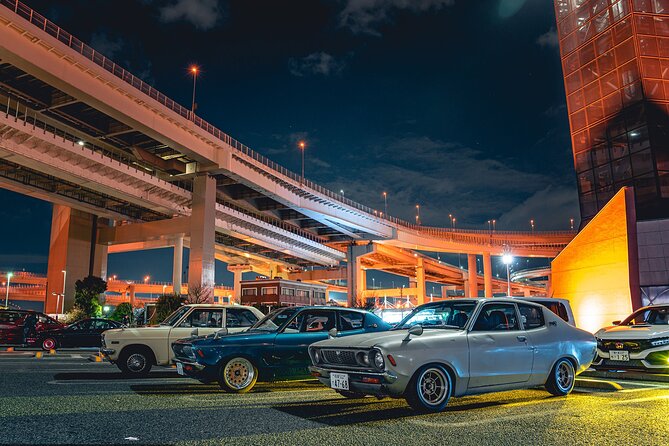
Tokyo’s Daikoku Parking Area is the main draw here: a famous gathering point where tuned cars, motorcycles, and curious onlookers share the same patch of waterfront pavement. You travel there as part of a club-style convoy, then add Tokyo night views, Rainbow Bridge, Tokyo Tower, and a stop at Japan’s biggest automotive shop.
I like the chance to see Japanese car culture in its natural setting rather than inside a museum. I also like the personal side of the experience, especially when you are paired with a friendly driver such as Tiago, Timi, Victor, Yoshi, or Vitor. The major caution is simple: your exact car, driver, ride arrangement, and access to Daikoku are not guaranteed.
In This Review
- Key points before you book
- Why Daikoku attracts car fans
- Meeting at Ricoland Tokyo Bay
- The convoy and your assigned car
- Wangan, Rainbow Bridge, and Tokyo Bay after dark
- Daikoku Parking Area: the unpredictable highlight
- A-PIT Super Autobacs in 40 minutes
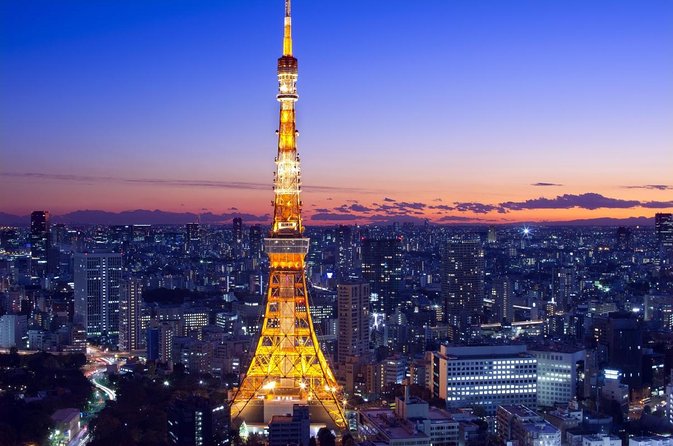
- Tokyo Tower photo stop
- What the $145.31 price really buys
- Organization, communication, and practical concerns
- Who will enjoy this night most
- Should you book the Daikoku Car Club experience?
- FAQ
- Where does the tour start?
- Where does the tour end?
- How long does the experience last?
- What time of day does the tour take place?
- Is a ride in a specific car guaranteed?
- Is access to Daikoku Parking Area guaranteed?
- What is included in the price?
- Is Tokyo Tower admission included?
- How long is the A-PIT Super Autobacs stop?
- Can I cancel for a full refund?
Key points before you book
- Daikoku is the headline stop: You may see JDM builds, sports cars, motorcycles, custom paint, and drivers gathering after dark.
- You ride in a shared convoy: The outing is a club membership experience, not a guaranteed taxi or private supercar ride.
- The car assignment can shape the night: Some people ride in Skylines, an M2, a convertible, or other tuner cars. Others receive less exciting vehicles.
- A-PIT Super Autobacs gets about 40 minutes: This is a large automotive store with parts, clothes, accessories, and memorabilia.
- The evening timing matters: Tokyo Bay, Rainbow Bridge, and Tokyo Tower are especially photogenic after sunset.
- Organization is the main risk: Last-minute meeting-point changes, late arrivals, no-shows, and overbooking have all been reported, so confirm details carefully.
Why Daikoku attracts car fans
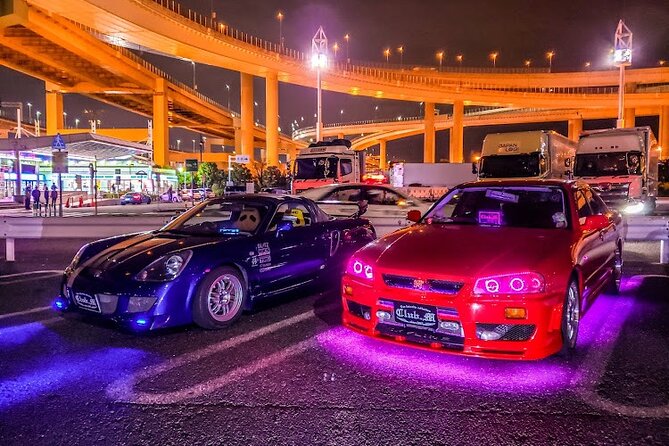
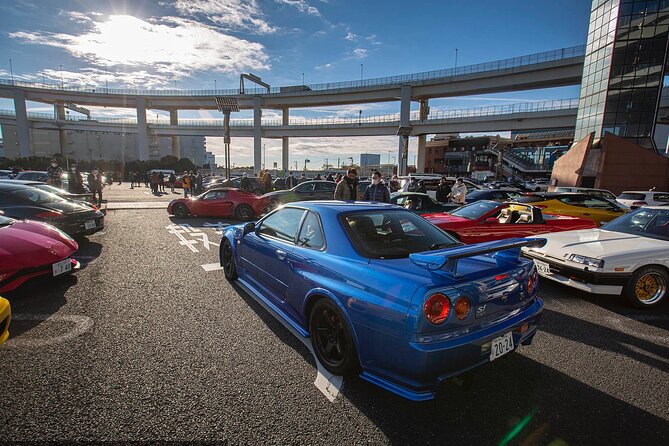
The Daikoku experience is less about a polished attraction and more about seeing a living car scene. Daikoku Parking Area sits beside Tokyo’s highway network, and cars can gather there as part of ordinary night driving, club meetups, or informal social events.
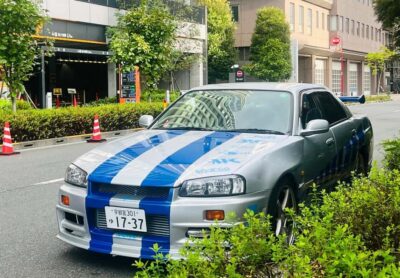
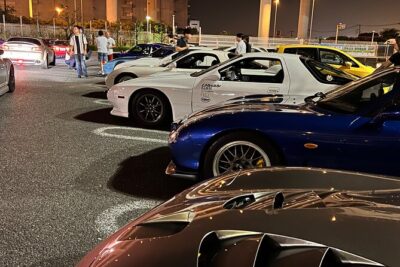
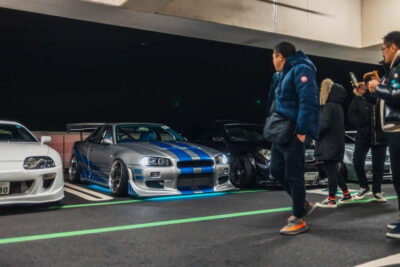
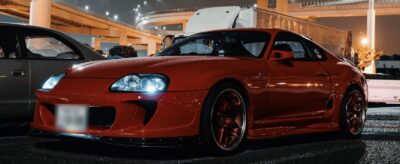
You might see modified Japanese cars, Nissan Skyline models, Nismos, sports coupes, motorcycles, and unusual custom work. The exact lineup changes. That is part of the appeal, but it also means you should not book this expecting a fixed display of famous cars.
The outing connects with the Wangan, or Bayshore Route, a long highway made famous in Japanese street-racing culture and car media. You do not simply sit in a parking lot all night. The route gives the evening a sense of motion, with city lights, elevated roads, Tokyo Bay, and the convoy itself becoming part of the show.
The best moments often come from the atmosphere around the cars. You can take casual photographs, meet enthusiastic owners, and watch the parking area fill or empty. The experience feels more social than a standard sightseeing bus tour, especially when your driver talks about cars and the local scene.
A few more Tokyo tours and experiences worth a look
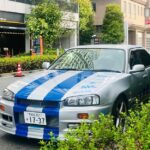
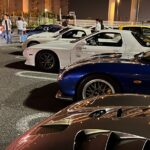
Meeting at Ricoland Tokyo Bay
The stated meeting point is Ricoland Tokyo Bay, 2-chome-7-12 Shinonome, Koto City. You make your own way there, and the tour returns to this same point after roughly four to five hours.
That arrangement has two advantages. You do not spend time waiting for hotel pickup, and the starting point is near public transportation. It also puts you at an automotive location from the beginning, rather than meeting in a generic downtown lobby.
The weak spot is coordination. Some bookings have involved a change of location or an earlier meeting time sent close to departure. A few people have arrived at the stated place and found no guide, while others have encountered overbooking or a late pickup.
I would treat the meeting instructions as something to verify, not something to skim. Check your booking messages on the day, keep the operator’s contact method available, and arrive early. If the company sends a new time or place, save that message. This is particularly important because the experience is shared and may involve several cars gathering at once.
The advertised maximum is 100 people, which is much larger than the phrase small group suggests. In practice, you may be assigned to a smaller vehicle group, but the overall gathering can feel large. That difference matters if you want a quiet, highly personal tour.
The convoy and your assigned car
The central promise is a night drive in a group of enthusiast cars. In the strongest version of the experience, you meet the drivers, photograph the cars before departure, and then ride through Tokyo in convoy.
The vehicle you receive is a matter of assignment and availability. The supplied information specifically warns that a ride is not guaranteed because this is a membership club rather than a transportation service. At the same time, many bookings clearly involve rides, sometimes in memorable cars.
Cars mentioned in firsthand accounts include a Nissan Skyline, an M2, a convertible, a Nissan R32 GT-R, a Honda Accord, and a Dodge Challenger. That range explains the mixed reactions. One person may receive the exact JDM car they dreamed about, while another may end up in a vehicle that feels ordinary or out of place in Japan.
If the vehicle matters more to you than the general atmosphere, ask before booking what can and cannot be promised. Do not pay this price assuming you will drive or ride in a Skyline, GT-R, or particular sports car. A car swap may be possible in some situations, but it is not an advertised guarantee.
Your driver also makes a large difference. Tiago, Timi, Victor, Yoshi, Vitor, Ryo, Fernando, Takagi, Kai, and Sanjula received especially warm praise for friendliness, photography, conversation, safe driving, or car knowledge. Some drivers explain the route and talk freely about their cars. Others may speak little English, which can make the four-hour outing feel quiet.
The strongest reports describe drivers who take photographs, check on passengers, explain the area, and make a solo visitor or family feel included. The weakest describe silent guides, poor communication, or a car that did not match expectations. This is not necessarily a problem with every departure, but it is a real part of the risk.
Wangan, Rainbow Bridge, and Tokyo Bay after dark
The Wangan route gives you a moving view of Tokyo. Elevated highways, industrial waterfront areas, and the bay create a different picture of the city than you get from a temple, shopping street, or observation deck.
You also pass over or near Rainbow Bridge, the suspension bridge linking Odaiba with central Tokyo. At night, its lights and the surrounding water make a good photo setting. The bridge is not a long stop in itself, but it adds a welcome sightseeing layer to an outing that could otherwise be only about parked cars.
This is one reason I think the evening schedule works well. The city lights frame the convoy, the bridge, and Tokyo Tower, while the cooler nighttime setting suits a car meet. You should still remember that much of the tour involves sitting in a vehicle, waiting for the group, or walking around a parking area. It is not nonstop action.
The road itself is important to car fans because of its place in Japanese automotive culture. For anyone who only has a casual interest in cars, the drive and views may be just as valuable as the meet. For a serious enthusiast, the road connects the experience to the culture that made these vehicles famous around the world.
Daikoku Parking Area: the unpredictable highlight
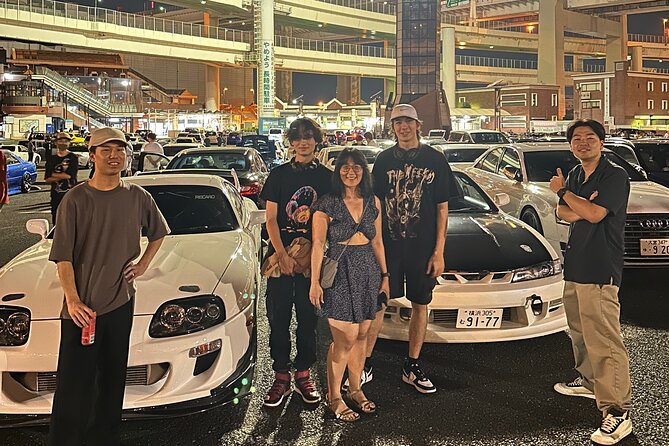
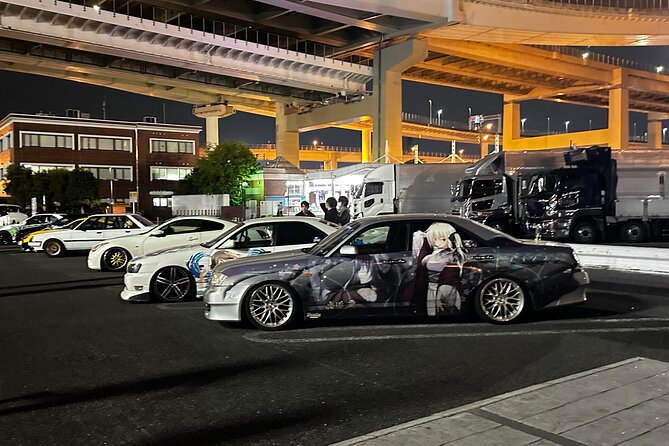
At Daikoku, you get time to walk around, take pictures, and see what has gathered. The setting can change from a modest meetup to a packed evening with cars arriving one after another.
That uncertainty is worth understanding. You might find an exciting collection of tuned cars and custom builds, or you might arrive during a quieter period. One account described seeing relatively few race cars, while another described the lot becoming packed with cars and personalities.
The club’s presence is part of the setting. You may see cars connected with the Gaijin Tuned group, along with independent owners and other enthusiasts. You are not just looking at vehicles from behind a barrier. You are entering a social gathering, so respectful photography and sensible behavior matter.
The listing says access to Daikoku depends on conditions. That is an important limitation. Parking areas can have their own rules, and the route may change. The company does not give you a firm promise that Daikoku will always be available in exactly the same way.
A good guide can rescue a slow night by explaining what you are seeing and finding the best place to watch the cars. A rushed stop or poor communication can have the opposite effect. Some bookings have had only about 20 minutes at the meet, despite the stop being the main reason for booking. If Daikoku is your only priority, ask how much time is normally planned there.
A-PIT Super Autobacs in 40 minutes
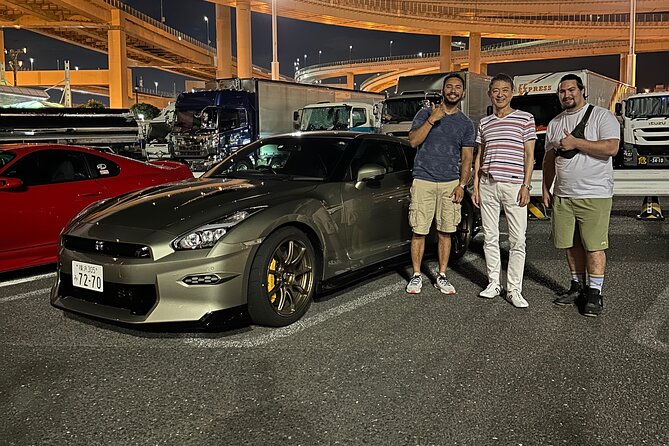
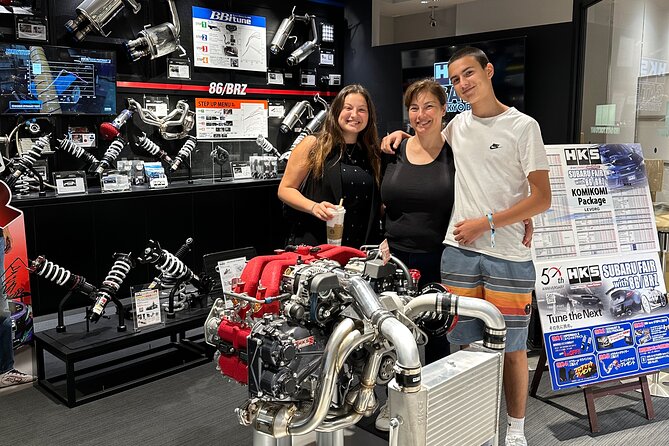
The A-PIT Super Autobacs stop gives the tour a practical retail angle. It is described as Japan’s largest automotive parts and accessories shop, and it serves as a hangout for JDM owners who wash their cars, shop for maintenance parts, or browse new equipment.
Inside, you can look for car parts, accessories, clothing, and souvenirs. Even if you are not buying anything, the store shows how car culture operates as a hobby with its own shops, brands, tools, and merchandise.
The planned stop is about 40 minutes, and that is a substantial portion of a four-to-five-hour outing. I can see the value if you want to shop or compare Japanese automotive products. If your only goal is Daikoku, the store may feel too long, especially if the car meet is running behind schedule.
This is also a useful place to buy something tangible from the night. A photo at Tokyo Tower is easy to take elsewhere, but a small automotive item or piece of clothing can make a more personal souvenir for a car fan.
Tokyo Tower photo stop
The Tokyo Tower stop is brief, about 10 minutes, and tickets are not included. The plan is a photo opportunity, not entry to the tower.
That distinction keeps the stop efficient. You can capture one of Tokyo’s best-known night views without adding an admission fee or a long indoor visit. You should not expect time to go up the tower, visit its shops, or explore the surrounding area.
For a car-focused night, this is a sensible final landmark stop. It breaks up the automotive theme and gives you a classic Tokyo image. Still, ten minutes is short, so have your camera ready and follow the guide’s timing.
What the $145.31 price really buys
At $145.31 per person, this is not a cheap way to get from one Tokyo landmark to another. You are paying for access to a themed club outing, a shared van or car arrangement, evening route planning, the chance to join a convoy, and a membership card.
The value is strongest if you are genuinely interested in Japanese car culture. You may get a memorable ride, a good driver, access to a special gathering, and photographs that would be difficult to arrange alone. The social element also matters. A solo visitor can meet drivers and other car fans without having to search out a Japanese car event independently.
The value is weaker if you mainly want a guaranteed premium car or a smooth sightseeing tour. Your specific vehicle is not promised, and the car club model means the service is not the same as a private chauffeur experience. You may also spend a fair amount of time waiting.
Some bookings describe the price as high for the amount of time at the meet or for the car provided. That criticism is fair. The best way to view the fee is as a gamble on access and atmosphere, not a guaranteed supercar rental.
Organization, communication, and practical concerns
The most serious concern is not the itinerary. It is reliability. Several bookings describe no guide appearing at the meeting point, unanswered messages, a phone number that did not work, or a group being told it was overbooked after arriving.
Other outings began chaotically but ended well. Last-minute time changes, late pickups, and unclear check-in instructions appear to be recurring risks. Once the group is moving, the experience can be excellent. Getting that group moving is where you need to stay alert.
The activity is shared, and a comfortable van is listed as part of the arrangement. The overall capacity can reach 100 people, though smaller vehicle groups may operate within that larger event. Most people can participate, but the information does not describe a guaranteed private group or a particular vehicle size for every booking.
You receive confirmation when booking, and free cancellation is allowed up to 24 hours before the start time. Inside that 24-hour window, the fee is not refunded and changes are not accepted. Given the coordination concerns, read the confirmation closely and keep a record of the agreed meeting details.
Who will enjoy this night most
I would recommend this experience to:
- Dedicated JDM and Japanese tuning fans
- People who enjoy informal car meets more than formal museums
- Visitors who want Tokyo sightseeing combined with a night drive
- Solo visitors who like joining a social group
- Parents or couples looking for a car-themed birthday activity
- Fans of Japanese street-racing films and car media
I would be cautious if you need a guaranteed Skyline, GT-R, convertible, or high-performance car. I would also hesitate if you dislike waiting, large shared groups, uncertain vehicle assignments, or last-minute changes.
If you book, arrive early, confirm the meeting point on the day, and bring a phone with the operator’s messages available. Ask about the vehicle arrangement before paying if that detail determines your decision. And keep your expectations focused on the full club experience, not only the car seat you hope to occupy.
Should you book the Daikoku Car Club experience?
Book it if the chance to join a real Tokyo car meetup matters more than a guaranteed luxury ride. The strongest nights combine a passionate driver, a lively Daikoku gathering, a fun convoy, and excellent views over Tokyo Bay. Drivers such as Vitor, Timi, Victor, and Yoshi have helped make the outing personal and memorable.
Skip it if you want dependable logistics and a specific car. The reported no-shows, overbooking, communication failures, short Daikoku visits, and uneven English service are too important to ignore.
For the right person, this can be one of Tokyo’s most unusual evenings. Just buy the experience for the culture, the roads, and the possibility of an unforgettable car, not for a promise that the perfect machine will be waiting.
FAQ
Where does the tour start?
The stated meeting point is Ricoland Tokyo Bay at 2-chome-7-12 Shinonome, Koto City, Tokyo 135-0062, Japan.
Where does the tour end?
The activity ends back at the meeting point.
How long does the experience last?
The tour lasts approximately four to five hours.
What time of day does the tour take place?
It takes place in the evening, allowing you to see Tokyo Bay, Rainbow Bridge, and Tokyo Tower after dark.
Is a ride in a specific car guaranteed?
No. A ride in a particular car is not guaranteed, and the experience is described as a membership club rather than transportation.
Is access to Daikoku Parking Area guaranteed?
No. Access to exclusive locations, including Daikoku Parking Area, depends on conditions.
What is included in the price?
The experience includes club activities, casual automotive photography during meetups, participation alongside car and motorcycle enthusiasts, and an official car club membership card.
Is Tokyo Tower admission included?
No. The Tokyo Tower stop is for photographs, and tickets are not included.
How long is the A-PIT Super Autobacs stop?
The planned stop at A-PIT Super Autobacs lasts about 40 minutes.
Can I cancel for a full refund?
Yes. You can cancel at least 24 hours before the experience start time for a full refund. Cancellations or changes made within 24 hours are not accepted and are not refunded.
More JDM & Car Culture in Tokyo
More tours in Tokyo we've reviewed

JDM & Car Culture, compared.
 ★ 4.7FAST&FURIOUS EXPERIENCE Tokyo Car Club membershipFrom $138
 ★ 4.8GT-R35 800hp Club Membership – secret underground car meetFrom $205
 ★ 4.8Tokyo: Fast & Furious Tokyo Drift 3 Experience (Kaila Yu SP)From $157
 ★ 4.8Tokyo: Daikoku JDM Car Meet & Night Car Culture TourFrom $984 hours
 ★ 4.8Secret Car Meet: R34 Skyline Car Club MembershipFrom $236
 ★ 4.7Tokyo Drift: Daikoku PA Supreme Car Experience 大黒PAFrom $583 hours