
Reviewed · TOURS
Tokyo Afternoon Tour with Pick-up Service from designated hotels
Tokyo packs old temples, samurai gardens, river views, anime shops, and towering modern buildings into one afternoon. This four-hour city tour gives you a quick taste of that contrast, beginning at Hama Rikyu Gardens and ending in Akihabara, with a 30-minute cruise linking the middle of the route.
I like the way the tour combines quiet garden time with a river journey, rather than keeping you on a bus all afternoon. I also like the choice at the end: you can leave in Akihabara to keep exploring, or select the return service to a designated hotel. The main caution is timing. Traffic, weather, and pickup problems can stretch the afternoon, so do not book a tight dinner reservation afterward.
In This Review
- Key points to know before booking
- A four-hour slice of Tokyo with a smart route
- Hama Rikyu Gardens: a quiet start beside the skyscrapers
- Hinode Pier and the 30-minute ride toward Asakusa
- Senso-ji and Nakamise Street in a crowded Asakusa
- What you see from the bus: Sky Tree, Kappabashi, and Ueno
- Akihabara: a useful finish for pop-culture fans
- The guides and the value of the commentary
- Walking, weather, and the pace of the afternoon
- Who will get the most from this Tokyo afternoon
- Should you book the Tokyo Afternoon Tour?
- FAQ
- How long does the Tokyo Afternoon Tour last?
- What time does the tour start?
- Is hotel pickup available?
- Is hotel drop-off included?
- Is the river cruise included in the price?
- What happens if the Sumida River Cruise is unavailable?
- Is lunch included?
- Can young children join the tour?
Key points to know before booking
- Hama Rikyu begins the afternoon with a calm break from Tokyo’s traffic, including a tidal pond, tea houses, and old daimyo garden design.
- The 30-minute Sumida River cruise is the route’s most relaxing ride, carrying you toward Asakusa instead of sending you there by road.
- Senso-ji and Nakamise Street give you a compact introduction to old Tokyo, but expect crowds and plenty of outdoor walking.
- The bus route passes Tokyo Sky Tree, Kappabashi, Ueno, and Akihabara, with some options to leave the tour in those areas.
- Akihabara is the final stop, making this a useful choice if anime, manga, electronics, and Japanese pop culture interest you.
- Pickup can simplify a first afternoon in Tokyo, but confirm the exact hotel and meeting point carefully.
A four-hour slice of Tokyo with a smart route
At $55.28 per person, this is priced as an accessible introduction rather than a full sightseeing day. Your fee covers the air-conditioned vehicle, a nationally licensed English-speaking guide, admissions to Hama Rikyu Gardens, and the river cruise. You do not pay separately for the temple, though food, shopping, and gratuity are extra.
I see the value in the route itself. Tokyo’s attractions are spread across a large city, and moving between them by bus and boat saves you from working out several train connections during a short afternoon. The ride also lets you see districts you may not have time to visit on foot, including Ueno and Kappabashi.
The tradeoff is depth. Forty minutes in Hama Rikyu and 50 minutes around Senso-ji are enough for an introduction, not a slow study. You will collect strong first impressions, then return later if one place catches your attention.
The advertised start is 1:30 p.m., though the total outing can run about 4.5 hours once hotel pickups and travel between stops are counted. A group may include up to 40 people. That is a manageable size for a bus tour, but it is not a private outing, and moving a full group through crowded Tokyo requires patience.
If you're still narrowing it down, here are other tours in Tokyo we've reviewed.
Hama Rikyu Gardens: a quiet start beside the skyscrapers
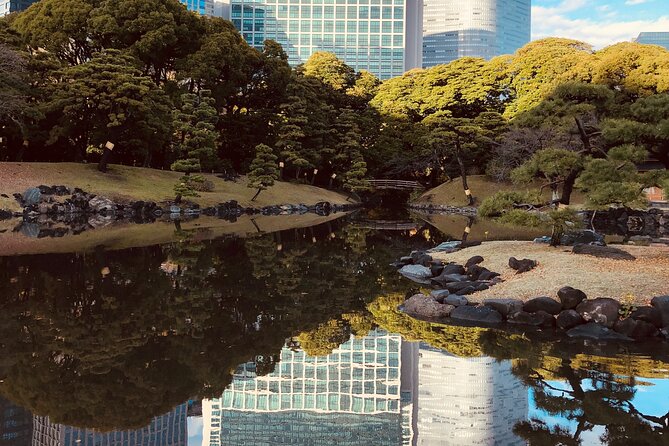
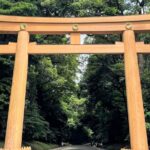
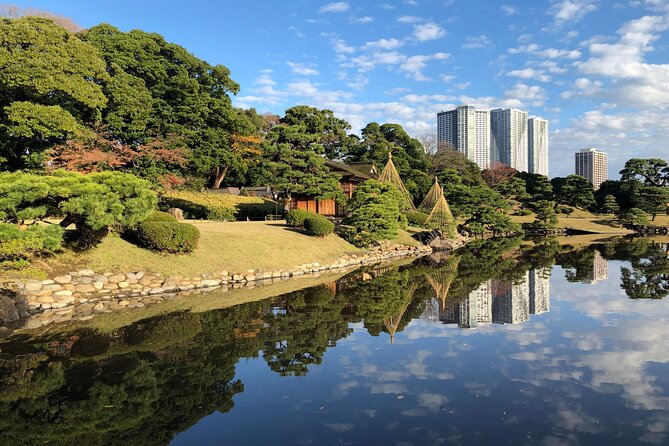
Hama Rikyu Gardens is an excellent opening stop because it shows a side of Tokyo many first-time visitors miss. This was a daimyo garden, created for a feudal lord, and its design includes a tidal pond, man-made hills, traditional tea houses, and carefully arranged views.
You get about 40 minutes here, with admission included. That is enough to walk through the main sections and hear how the garden served the ruling class, but not enough for an unhurried circuit. Wear shoes you can walk in comfortably, since the tour is outdoors and the path continues later at other stops.
The garden’s appeal comes from its change of pace. Tokyo may be roaring just beyond the grounds, yet the pond and planted paths create a calmer setting. I like that the tour starts here instead of at a shopping district, since you get a bit of historical context before reaching Asakusa.
Do not expect a private or empty garden. The route is shared with other visitors, and the visit is guided at a brisk pace. If you want time for detailed photography, tea, or every side path, you will need to return on your own.
Hinode Pier and the 30-minute ride toward Asakusa
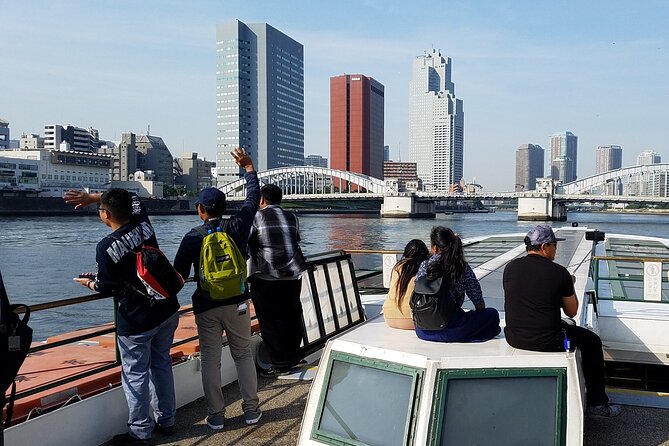
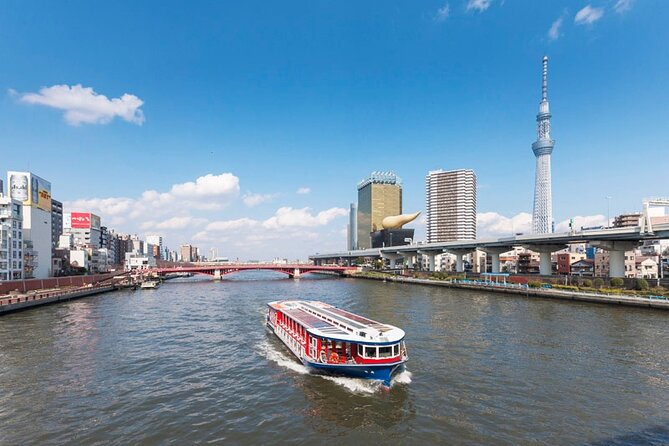
From Hama Rikyu, the group continues to Hinode Pier for a one-way cruise through Tokyo Bay and along the Sumida River. The boat ride lasts about 30 minutes and takes you toward Asakusa, replacing a stretch of road travel with changing views from the water.
This is one of the best reasons to choose the tour. The cruise gives your feet a rest and helps you understand Tokyo’s geography. Instead of simply appearing at Senso-ji by bus, you approach Asakusa along the river, with the city opening out around you.
The cruise is also the part most affected by conditions outside the operator’s control. If the Sumida River service is suspended, the company may use a roughly 50-minute Tokyo Bay cruise from Odaiba via Rainbow Bridge. In that case, Hama Rikyu Gardens is omitted.
If both water options are unavailable because of operations or weather, the replacement may be a bus ride through Odaiba and across Rainbow Bridge, followed by the Metro Expressway to Asakusa. That keeps the day moving, but it changes the balance of the experience. You should book this tour for the overall route, not on the assumption that the boat is guaranteed.
Rain needs special thought. The boat may be covered, but the walking sections remain outdoors. Bring an umbrella or raincoat, and do not assume the schedule will be redesigned around wet weather. One poor-weather experience involved long walks in heavy rain, and that is a fair warning for anyone visiting during an unsettled forecast.
Senso-ji and Nakamise Street in a crowded Asakusa
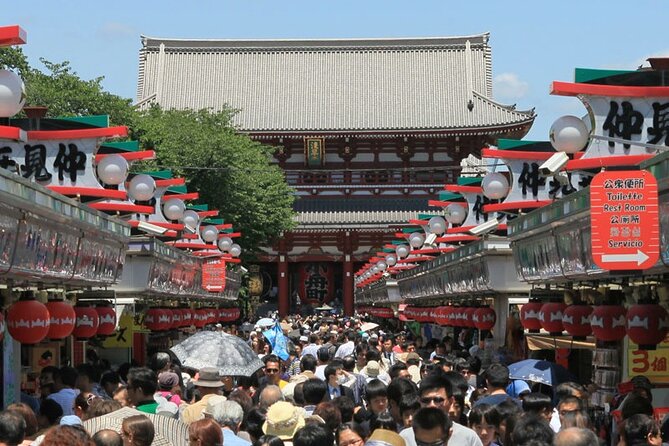
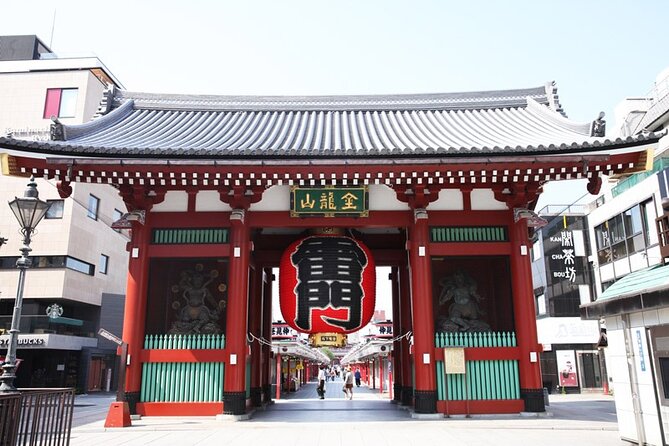
The tour allows about 50 minutes at Senso-ji, Tokyo’s oldest and largest Buddhist temple complex according to the supplied tour information. The temple dates to the seventh century, making this stop a direct link to Tokyo’s long religious past.
You will also have time along Nakamise Shopping Street, the approach lined with shops and food stalls. This is where you can browse traditional-style souvenirs and local snacks, though the short visit means you should decide quickly whether you want photos, temple grounds, shopping, or a snack.
The stop works well for a first look at Asakusa because the temple and shopping street sit together. You do not need to cross half the district to see the main sights. At the same time, this is one of the busiest parts of the afternoon. Crowds can slow the group, and the area can feel more commercial than quiet.
I recommend staying aware of the meeting instructions. Senso-ji has several gates, paths, and busy gathering points, so it is easy to pause for one more photograph and lose sight of the group. Comfortable shoes matter here, especially after the garden and the walk from the pier.
What you see from the bus: Sky Tree, Kappabashi, and Ueno
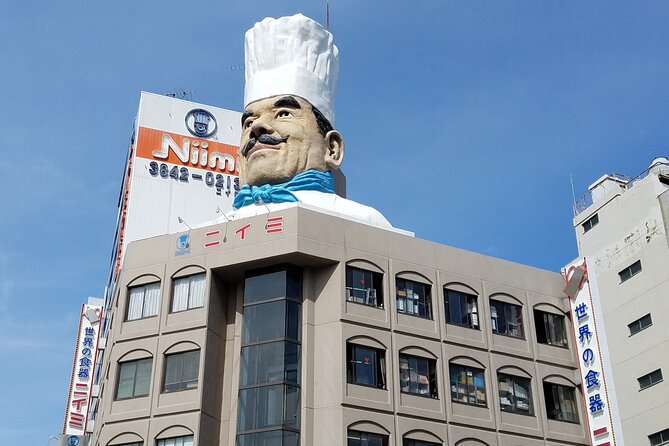
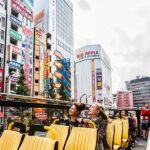
After Asakusa, the bus passes several Tokyo districts and landmarks. These drive-by sections are useful if you want an overview, but you should keep expectations clear: passing a place is not the same as visiting it.
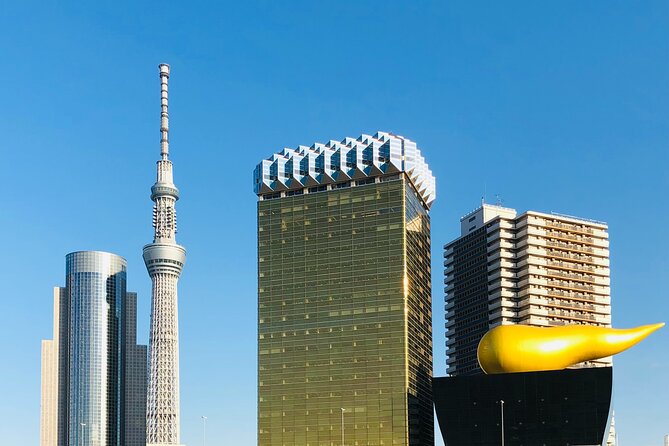
Tokyo Sky Tree rises 634 meters and is identified here as the world’s third tallest structure. If you want to remain in the area, you may be able to leave the bus there. That choice suits you if the tower is a priority, though leaving means you are no longer following the remaining group route.
Kappabashi is known for restaurant equipment, lifelike plastic food models, and Japanese cooking knives. It is a fascinating district for cooks and anyone interested in the behind-the-scenes tools of Japanese dining. The supplied schedule does not give you a dedicated walking stop there, so treat it as a possible place to visit later rather than a shopping session built into the tour.
The bus also passes Ueno, a commercial and cultural district centered on Ueno Park. The park contains museums and historical sites, and you may have the option to leave there as well. This flexibility is useful for repeat visitors or anyone who has already seen Senso-ji and would rather spend the rest of the afternoon in a museum district.
These optional drop-offs are worth confirming with the guide on the day. The exact route can change because of traffic or operational needs, and the tour does not promise a full visit at each passing point.
Akihabara: a useful finish for pop-culture fans
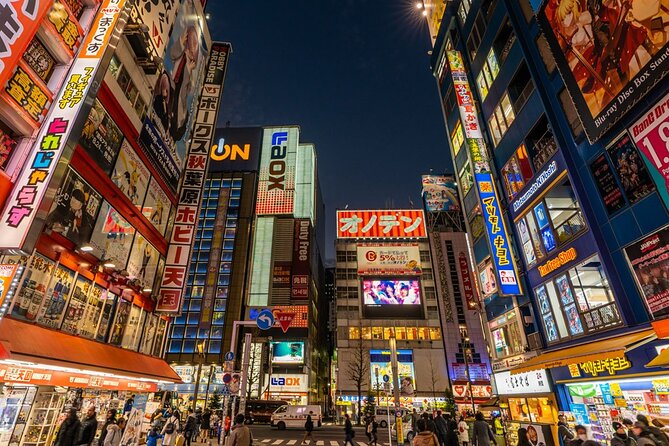
The official afternoon route ends in Akihabara, the center of Tokyo’s anime and manga culture. If you are curious about Japanese subculture, this is the place to continue independently after the guided portion ends.
Akihabara can be a better ending than a hotel return because it leaves you in an area with plenty to see after the bus tour. You can browse anime and manga stores, look for electronics, and take in the bright commercial streets at your own pace. The tour does not include shopping time with a guide, so your experience here depends on how long you stay and what you choose to explore.
You may select a return option instead, with the bus taking you back to your hotel or designated drop-off point. That makes the tour more convenient after a long day, but it removes your chance to spend extra time in Akihabara. I would choose the return service if you have an early evening plan near your hotel. I would remain in Akihabara if this is your main chance to see the district.
The route can also end earlier for people who leave at Tokyo Sky Tree or Ueno, subject to the day’s operation. That makes the bus useful as a sightseeing transfer, not only as a fixed sightseeing package.
The guides and the value of the commentary
The tour uses a certified English-speaking guide with a National Licensed Guide Interpreter qualification. The strongest guide experiences in the supplied feedback name Yoshi and Yunko, with particular praise for friendly, helpful, informative, and good-humored commentary.
That matters on a compressed route. You are not only being moved between points. The guide can explain what makes a daimyo garden different from an ordinary public park, provide context at Senso-ji, and point out places you could revisit later. One positive account specifically described the commentary as both informative and funny, which is a welcome quality during a long bus ride.
Sound quality is a practical concern. One person found the guide difficult to hear and understand. Sit where you can see the guide when possible, and ask for repetition if you miss an important meeting time. A full bus, traffic noise, and outdoor crowds can make spoken instructions hard to catch.
Pickup is another area where precision matters. Major Tokyo hotels are covered, but confusion over the correct hotel or stop has caused serious delays for some bookings. The company has sometimes sent an employee by taxi to collect people and reconnect them with the group, which shows useful flexibility, but you should not count on a rescue taxi. Double-check the hotel name, entrance, pickup time, and any instructions in your confirmation.
Walking, weather, and the pace of the afternoon
This is not a sit-down sightseeing ride. You walk through Hama Rikyu, from the pier and around Asakusa, and between meeting points. Sneakers or other comfortable shoes are the sensible choice.
The tour can operate in difficult weather unless the operator cancels the experience. Rain gear is specifically recommended. The company may substitute a different cruise or a bus route, and some stops may be omitted because of traffic, weather, or operating conditions. The fare is not refunded simply because part of the planned route changes, except when the whole experience is canceled under the stated weather policy.
I would avoid scheduling a nonrefundable dinner immediately after the tour. One delayed afternoon caused a missed dinner reservation, and Tokyo traffic can be unpredictable. Build in a generous buffer, especially if you rely on the return service.
Children up to age five may join without a tour charge, but that does not include a bus seat or lunch. If you need a seat for a young child, the applicable child fare is charged. Lunch is not included for anyone, so plan to eat before the 1:30 p.m. start or after the tour.
There is no onboard WiFi. That is not a major flaw for a four-hour outing, but download maps, translation tools, and your booking details before leaving your hotel.
Who will get the most from this Tokyo afternoon
I would recommend this tour if you have limited time in Tokyo and want several different settings without planning the transport yourself. It suits a first afternoon in the city, especially if Hama Rikyu, Asakusa, and Akihabara are all new to you.
It also works for you if you prefer a guide to explain the sights while you watch the city pass from an air-conditioned bus. The cruise adds a pleasant change from road travel, and the final choice between Akihabara and a hotel return gives the afternoon some flexibility.
I would think twice if you want long, quiet visits. The schedule is tight, the group may reach 40 people, and the busiest stops can feel rushed. It is also a poor fit if rain would spoil your day, since the outdoor walking remains a real part of the experience.
For independent visitors who already know Tokyo’s train system and have plenty of time, $55.28 may be better spent on individual admissions, food, or a longer visit in one neighborhood. For a first orientation, the combination of a licensed guide, bus transport, garden entry, and river ticket is fair value.
Should you book the Tokyo Afternoon Tour?
Book it if you want a compact introduction to Tokyo’s contrasts: feudal garden, river, Buddhist temple, modern tower, cooking district, cultural quarter, and anime center. The route covers a lot, and the included cruise makes it more than a standard bus loop.
Skip it if you need a weather-proof plan, dislike group pacing, or have a fixed dinner reservation soon after the scheduled finish. Confirm your pickup details carefully, bring rain gear, wear good shoes, and treat Akihabara as your best chance to extend the afternoon on your own.
Free cancellation is available up to 24 hours before the start time for a full refund. Changes or cancellations inside that window are not accepted for a refund, so keep the policy in mind when making a last-minute plan.
FAQ
How long does the Tokyo Afternoon Tour last?
The sightseeing portion is described as about four hours, while the total duration can reach approximately 4.5 hours because of hotel pickups and travel between attractions.
What time does the tour start?
The stated start time is 1:30 p.m.
Is hotel pickup available?
Yes. Pickup is available from major designated hotels in Tokyo. A taxi may be used for pickup or return, and a guide may not accompany you during those taxi transfers.
Is hotel drop-off included?
A return service is available if you select that option. The standard route concludes in Akihabara, and drop-offs are limited to designated locations.
Is the river cruise included in the price?
Yes. Admission and tickets for the river cruise are included.
What happens if the Sumida River Cruise is unavailable?
A Tokyo Bay cruise from Odaiba via Rainbow Bridge may be substituted. This alternative takes about 50 minutes, including the river cruise, and Hama Rikyu Gardens may be omitted.
Is lunch included?
No. Lunch is not included, and the tour does not provide free lunch for children.
Can young children join the tour?
Children up to five years old may join free of charge, but a free place does not include a bus seat or lunch. If a seat or lunch is needed, the applicable child fare is charged.
More tours in Tokyo we've reviewed











Tours, compared.
 ★ 5.0Mt Fuji and Hakone 1-Day Bus Tour Return by Bullet TrainFrom $163
 ★ 5.01-Day Tokyo Bus TourFrom $129
 ★ 5.0Tokyo: Shinjuku Food Tour (13 Dishes at 4 Local Eateries)From $86
 ★ 4.4Tokyo Mt Fuji 5th St & Hakone Cruise Bus Tour w/Bullet TrainFrom $15410 hours
 ★ 5.0Flagship 2-Hours Official Street Go-Kart Tour – Tokyo Bay ShopFrom $642 hours to 2 hours 30 minutes (approx.)
 ★ 4.7Tokyo: Mt. Fuji Tour, Hakone Ropeway, Owakudani, Lake AshiFrom $5410 hours