
Reviewed · WALKING TOURS
Tokyo After 5: Local Eats, Drinks & Culture Walk
Tokyo After 5 is built around a fine idea: skip the famous sights for one evening and eat the way Tokyo locals do after work. You move from Ginza’s department-store food hall to lantern-lit Yurakucho and Tsukishima’s hotplate restaurants, with a guide handling the language and local customs. I like the small group of eight and the hands-on monja-yaki cooking. The main catch is that the tour includes a fair amount of walking, subway stairs, and no vegetarian, vegan, or gluten-free option.
I also like the mix of foods. Yakitori gives you smoky street-level Tokyo, monja-yaki shows off a dish you cook yourself, and wagashi adds a quiet lesson in seasonal Japanese sweets. Guides such as Tsunematsu Hidenori, Yuki, Yoshi, Kirir, and Meg have been singled out for being friendly and attentive. Still, the overall rating of 3.8 from 40 reviews suggests a good but not flawless experience, with restaurant atmosphere and walking demands worth considering.
In This Review
- Key points to know before booking
- Starting beneath Ginza’s Lion statue
- A depachika lesson in Tokyo food culture
- Yurakucho and its after-work yakitori alleys
- Tsukishima Monja Street and the hotplate lesson
- Wagashi, seasons, and the sweet finish
- How much food and drink do you get?
- The small-group advantage, and its limits
- Walking, transport, and timing
- Who should book Tokyo After 5?
- Should you book it?
- FAQ
- Where does the tour meet?
- Where does the tour finish?
- How long does the experience last?
- What food is included?
- What drinks are included?
- Is public transportation included?
- Can children join, and are dietary alternatives available?
Key points to know before booking
- Depachika first: Begin among the polished basement food halls where locals buy prepared dishes, sweets, and seasonal specialties.
- Yakitori in Yurakucho: Eat grilled skewers in the after-work alleys near office workers and neighborhood regulars.
- Monja-yaki in Tsukishima: Sit at a hotplate and try preparing Tokyo’s soft, savory pancake-style specialty yourself.
- Wagashi with cultural context: Taste a traditional sweet and learn how seasons, color, and ingredients shape it.
- Two included drinks: Choose from sake, beer, or a soft drink, with non-alcoholic drinks for anyone under 20.
- Small but active: The group is capped at eight, but the route may involve about 9,000 steps and subway stairs.
Starting beneath Ginza’s Lion statue
The tour begins outside Mitsukoshi Ginza, in front of the life-size sitting Lion statue. This is a sensible meeting point, but Ginza Station has several exits, so use the A7 exit and come up to street level there. The station is served by the Ginza, Hibiya, and Marunouchi subway lines.
I would arrive a little early. One past booking had trouble finding the guide because the guest did not know the tour company name. Your confirmation should help, but the Lion statue is the landmark to look for, not a vague meeting point somewhere inside the department store.
Ginza is a useful place to start because it shows Tokyo’s polished side. Mitsukoshi is known for its careful presentation of food, and the basement food hall gives you a quick lesson in how much attention Japan pays to prepared meals. You are not simply looking at snacks behind glass. Your guide explains what you are seeing, how locals buy it, and why seasonal sweets and neatly arranged dishes matter.
Other walking tours we've reviewed in Tokyo
A depachika lesson in Tokyo food culture
A depachika is a department store basement food hall, but the word does not quite capture the experience. These spaces bring together boxed meals, grilled foods, sweets, pickles, seafood, and gifts in a setting that feels part market, part specialty shop, and part food gallery.
Your guide helps you sort out the unfamiliar choices. That matters early in a Japan trip, when labels can be hard to read and the difference between an everyday snack and a gift-quality sweet is not always clear. You also get a practical look at Japanese food etiquette and the role of presentation.
The food hall stop is more about orientation than a large meal. It prepares you for the dishes that follow and gives you a way to understand local food habits beyond sushi and ramen. If you enjoy asking questions, this is where a small group helps. With no more than eight people, the guide can explain an item without turning the stop into a lecture.
The exact tasting selection may vary with the season and shop availability. That is worth keeping in mind if you expect a fixed menu. The advertised food tastings are yakitori, monja-yaki, and wagashi, while additional food and drinks can be bought at your own cost.
Yurakucho and its after-work yakitori alleys
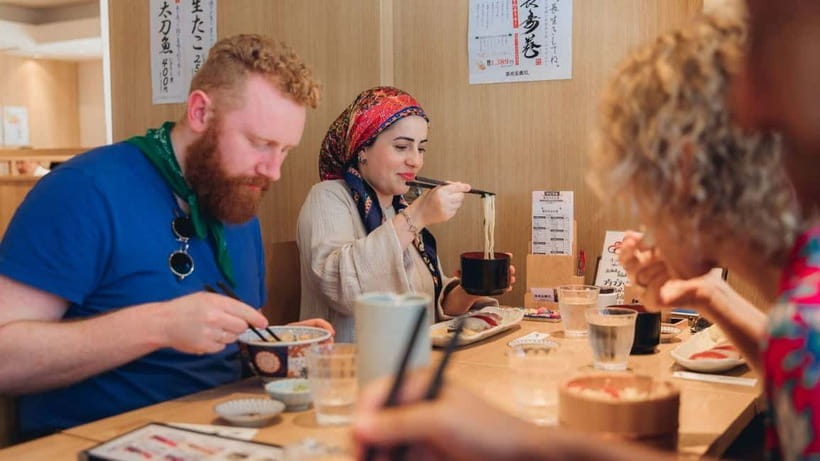
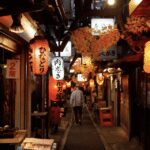
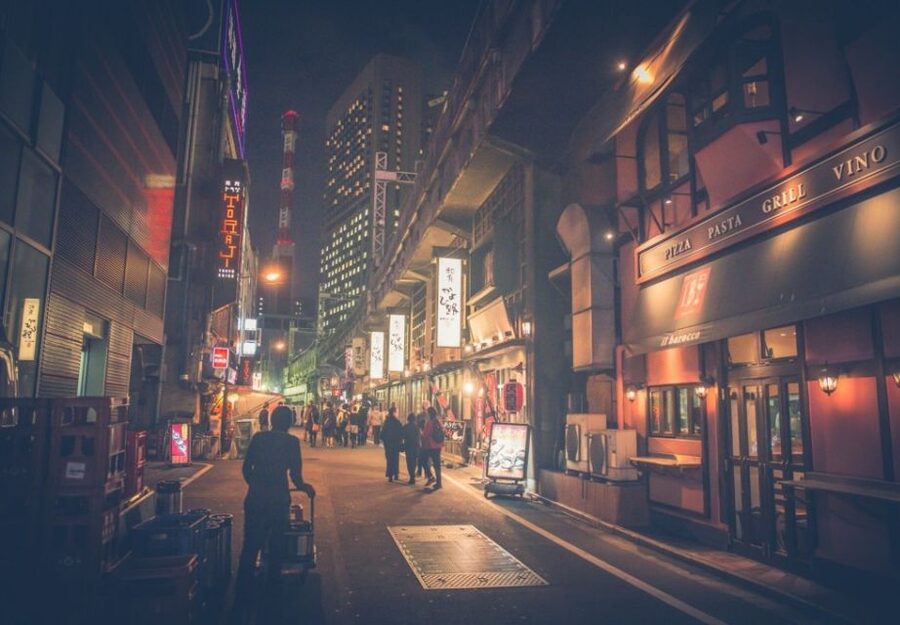
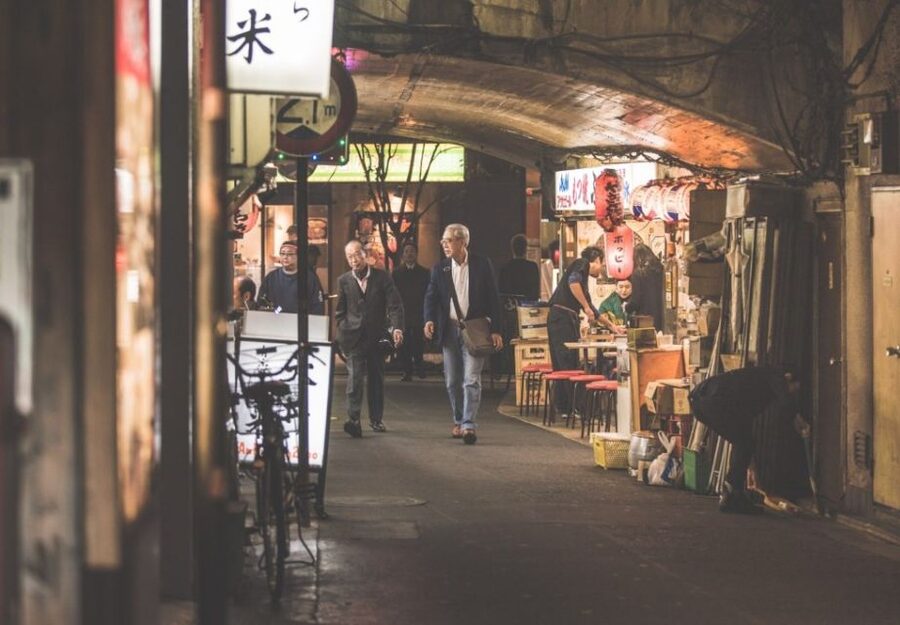
From Ginza, the route takes you toward Yurakucho, an area known for its narrow, informal restaurant lanes and after-work dining culture. The contrast with department-store Ginza is part of the appeal. Here, the mood is smaller, smokier, and more relaxed, with grilled food prepared close to the table or counter.
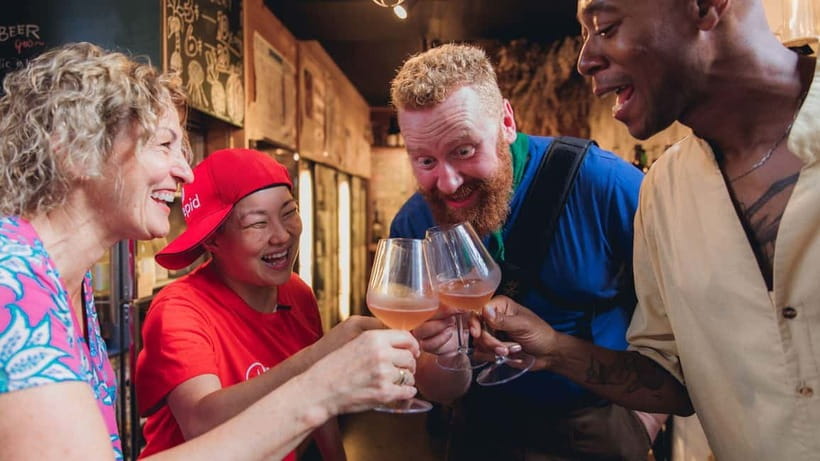
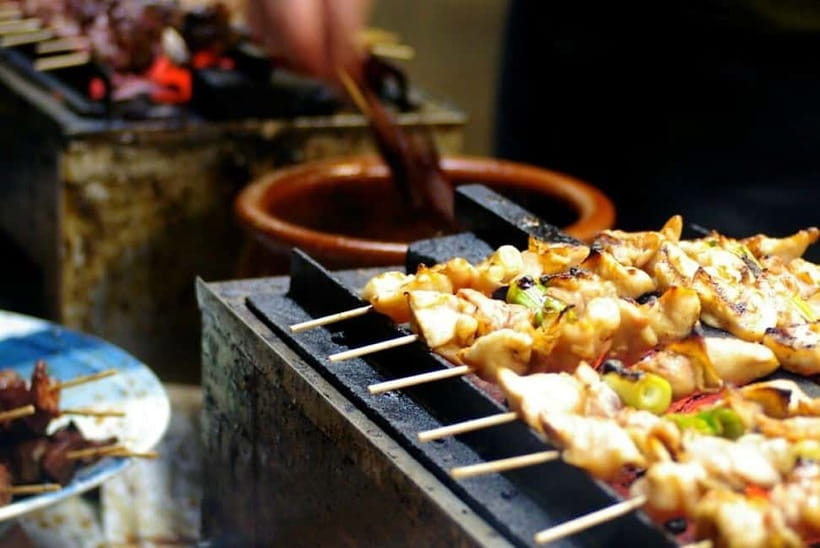
Yakitori is the ideal dish for this setting. Chicken and vegetables are cooked on skewers over a grill, and the guide explains how the skewers are prepared and why these simple eateries matter to city life. You get a taste of the food itself, but also a look at the routine of office workers stopping for a drink and a few skewers before heading home.
One included tasting is yakitori, and one of the two included drinks can be sake, beer, or a soft drink. Alcohol is not included for anyone under 20, and Japanese law sets 20 as the legal drinking age. If you are under that age, you receive a non-alcoholic drink instead.
The setting may be part of the experience, but it can also be the least predictable part. Small restaurants can be tight, noisy, and less polished than a large dining room. One past booking described a disruptive child in a tiny restaurant and felt the owner handled it poorly. That does not define the whole tour, but it is a reminder that local eateries come with local quirks.
I like this stop for another reason: you do not need to guess how to order or worry about basic etiquette. Your guide can explain what is on the plate and help you follow the rhythm of the place. Several guides, including Tsunematsu Hidenori and Yuki, have been praised for being social, patient, and easy to talk with.
Tsukishima Monja Street and the hotplate lesson
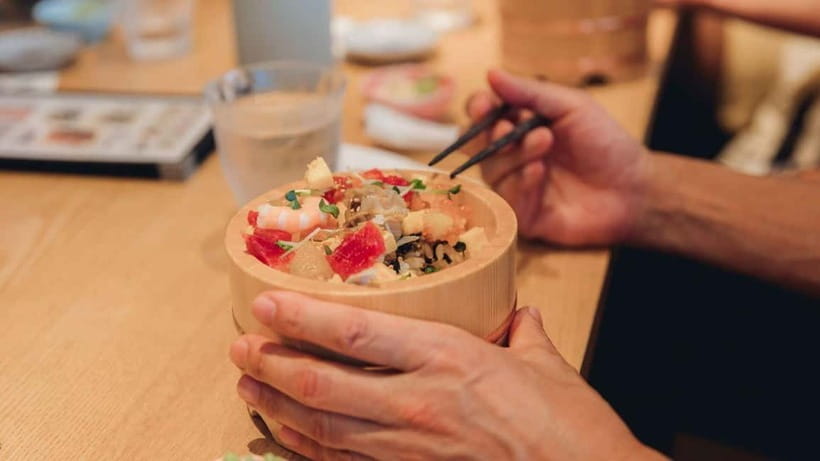
The route continues to Tsukishima Monja Street, the area associated with monja-yaki. This is the most hands-on part of the evening and likely the stop you would find hardest to arrange alone without some preparation.
Monja-yaki is a savory batter dish cooked on a hotplate. It is softer and more fluid than the familiar Osaka-style okonomiyaki, and part of its charm is the cooking method. Your meal is prepared in front of you, then you try your hand at the technique yourself.
Do not expect a neat pancake that arrives fully assembled. The hotplate, small spatula, and loose texture are central to the experience. Your guide or the restaurant staff helps you get started, so you can focus on the fun rather than worry about making a mess.
The tour includes one monja-yaki tasting and a hands-on cooking experience. Past menus have also included okonomiyaki, though the stated inclusions specifically promise monja-yaki. The selection can change, so book this for the cooking and local setting rather than for a guaranteed list of extra dishes.
Tsukishima is a strong choice because it takes you away from the Ginza streets most short visits cover. One past booking especially liked reaching an area that might not otherwise appear on a first Tokyo schedule. The neighborhood gives the evening a sense of movement, not just a series of restaurants near the starting point.
There is a practical cost to that movement. A past booking estimated roughly 9,000 steps and found the walking too much for an 83-year-old husband. The route also uses public transportation and subway stations with stairs. If you have limited mobility, ask before booking rather than assuming the food stops are close together.
Wagashi, seasons, and the sweet finish
The wagashi stop brings a different pace to the evening. These traditional Japanese sweets often use ingredients such as red bean paste and mochi, and their colors and shapes can reflect the season. Your guide explains the cultural meaning behind the sweets, not just their flavor.
This is useful context because wagashi can look familiar but taste quite different from Western desserts. The sweetness, chewy texture, and bean paste may take some getting used to. One past booking enjoyed the variety but did not particularly like the wagashi, so I would treat this tasting as a cultural lesson as much as a dessert stop.
Seasonality is the key idea. Japanese food culture pays close attention to the time of year, and wagashi often turns that idea into a small edible design. The point is not a large portion. It is noticing the ingredients, texture, shape, and presentation.
This stop also gives the tour some balance. Yakitori is smoky and savory. Monja-yaki is warm and interactive. Wagashi is quiet, precise, and tied to ceremony and the calendar. If you want an evening that explains how food fits into daily life, this range is more useful than a tour that simply serves several restaurant dishes.
How much food and drink do you get?
The package includes three local food tastings: yakitori, monja-yaki, and wagashi. It also includes two local drinks, with sake, beer, or a soft drink available depending on age and choice. Additional food and drinks are not included, so bring some extra money if you want more at a stop.
Several past bookings described the amount as enough for an evening introduction but not an enormous dinner. One person called it just enough food and just enough walking, while another enjoyed the range of dishes and an additional sweet on one tour. I would plan on a substantial sampling meal, not a guarantee that you will be full after 210 minutes.
That distinction matters for value. At $89 per person, you are paying for more than three small tastings. The price also covers an English-speaking guide, two subway tickets, restaurant introductions, local explanations, two drinks, and the chance to cook monja-yaki with help. For a first night in Tokyo, that can be a fair deal because it removes much of the uncertainty around small local restaurants.
The value is weaker if you only want a large meal or already feel comfortable ordering in Japanese eateries. In that case, you may prefer to spend $89 on a restaurant dinner and explore on your own. The tour earns its price through access, context, and the guide’s ability to connect three different food traditions.
The small-group advantage, and its limits
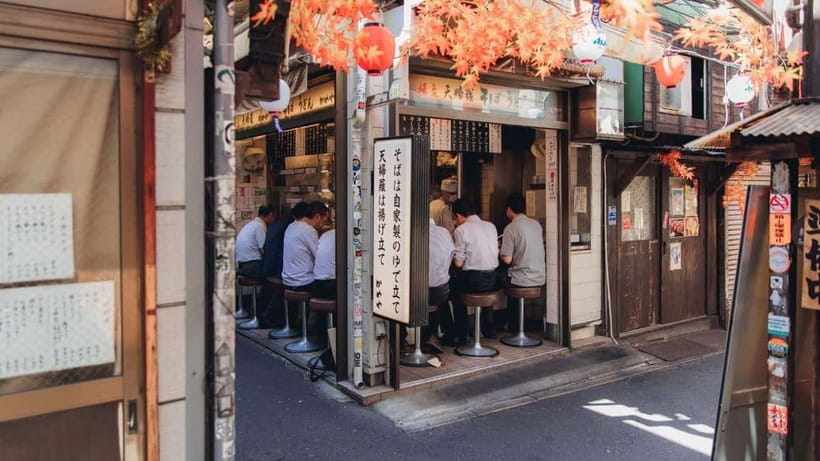
Eight people is a useful maximum for this route. Small restaurants do not always have room for a large tour, and a compact group makes it easier to sit together around a hotplate. You also have a better chance to ask about ingredients, customs, and the neighborhoods between stops.
The social side is part of the appeal. One past booking liked being with people who shared an interest in food, and several guides were praised for making conversation easy. If you are traveling alone or want a gentle way to meet people at the start of a trip, this format should work well.
Small groups do not guarantee a quiet evening, though. A cramped restaurant may still be noisy, and the group’s pace depends partly on the other seven people. The tour is also conducted in English, so this is not the right pick if you want a Japanese-language-only experience.
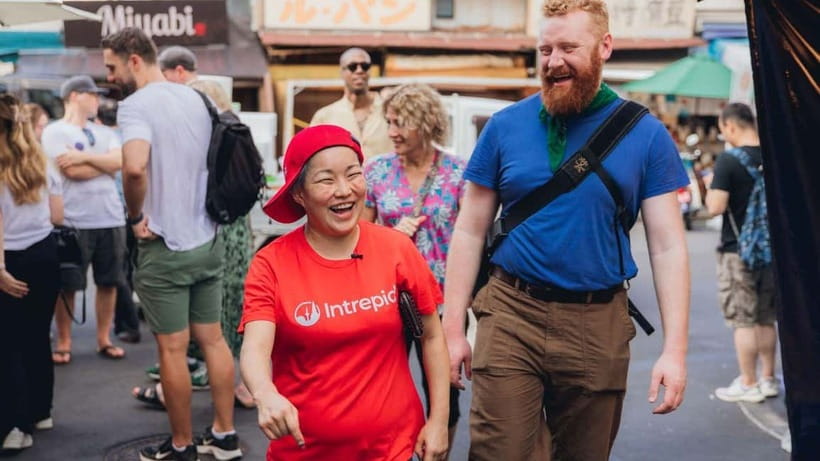
The guide makes a major difference. Tsunematsu Hidenori was praised for finding places that would be hard to locate alone and for being fun to talk with. Yuki was described as patient and well informed, while Kirir, Meg, and Yoshi also received warm comments for their friendly approach. The individual guide assigned to your date may differ, so I would judge the tour by its structure rather than expect a particular person.
Walking, transport, and timing
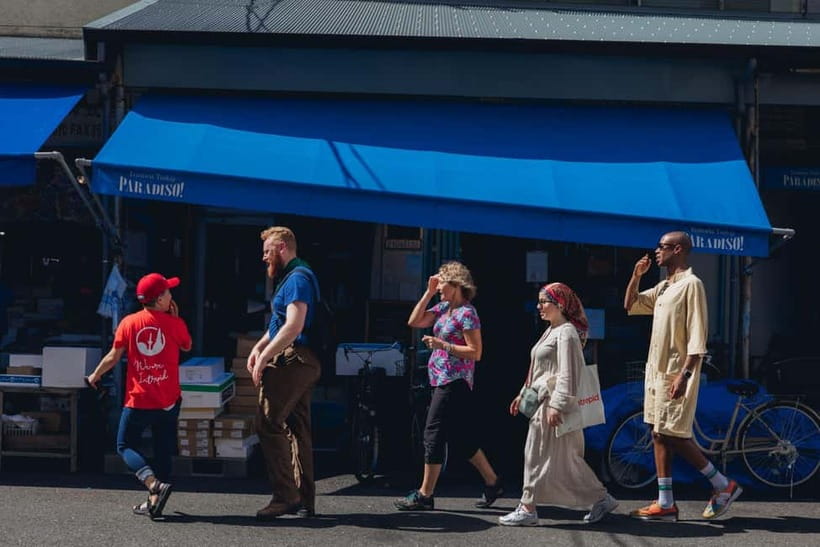
The experience lasts 210 minutes, or three and a half hours. It starts in Ginza and finishes in Ginza after visits to Ginza, Tsukishima Monja Street, and Yurakucho. Two subway tickets are included, which helps keep the evening simple and adds practical value.
The route is not a short crawl between neighboring restaurants. You walk through several districts and use the subway, with station stairs along the way. Wear comfortable shoes and avoid scheduling a major evening reservation immediately afterward. The finish time can vary depending on the starting time and the pace of the group.
The route works best as a first or second evening in Tokyo. You get your bearings in Ginza, see a local after-work dining area in Yurakucho, and reach Tsukishima without having to plan the connections yourself. The guide also gives you ideas for what to order and where to look during the rest of your stay.
Diet is the largest limitation. Vegetarian, vegan, and gluten-free options are not available because the tour uses establishments that cannot handle all dietary requirements. If you have an allergy or strict restriction, this is not a tour to book on the hope that substitutions will appear.
The minimum age is 12. Anyone under 20 receives non-alcoholic drinks, while those 20 and older may be offered sake or beer. The tour is carbon neutral and operated by a B Corp certified company, which may matter to you if you prefer booking with a business that has a stated environmental and social purpose.
Who should book Tokyo After 5?
I would recommend this experience if you want a guided introduction to Tokyo food culture without spending the whole night in a formal restaurant. It suits curious eaters who like small portions, local neighborhoods, conversation, and a bit of cooking.
It is especially useful if you are nervous about language, ordering rules, or choosing small restaurants on your own. You can ask questions as you go, learn how yakitori and monja-yaki fit into everyday life, and leave with a clearer sense of what to try later.
I would hesitate if you need a vegetarian, vegan, or gluten-free menu, dislike communal or compact dining, or have trouble with long walks and subway stairs. I would also skip it if your main goal is a large dinner rather than a varied sampling of Tokyo specialties.
Should you book it?
Book Tokyo After 5 if you want local food with useful cultural explanation, not just a checklist of dishes. The strongest parts are the small group, the guided access to Yurakucho’s after-work alleys, and the hands-on monja-yaki stop in Tsukishima.
Think carefully about the walking and dietary limits. At $89, the tour is good value for a first Tokyo evening when you want transport, drinks, tastings, and a guide bundled together. It is less compelling for confident independent eaters or anyone seeking a quiet, full-service meal.
FAQ
Where does the tour meet?
It meets in front of the life-size sitting Lion statue outside Mitsukoshi Ginza at 4-6-16 Ginza, Chuo-ku, Tokyo. Use the A7 exit of Ginza Station and go up to street level.
Where does the tour finish?
The tour finishes in Ginza.
How long does the experience last?
The experience lasts 210 minutes, or three and a half hours. Starting times vary, so check availability for the date you want.
What food is included?
The included tastings are yakitori, monja-yaki, and wagashi. Additional food is available for purchase but is not included.
What drinks are included?
Two local drinks are included. You can choose from sake, beer, or a soft drink, subject to age requirements. Anyone under 20 receives non-alcoholic drinks.
Is public transportation included?
Yes. Two subway tickets are included in the tour price.
Can children join, and are dietary alternatives available?
The minimum age is 12. Vegetarian, vegan, and gluten-free options are not available on this tour.
More Walking Tours in Tokyo

More tours in Tokyo we've reviewed


Walking Tours, compared.
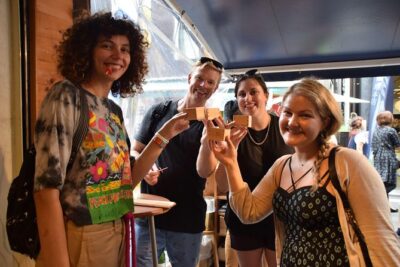 ★ 5.0Tokyo Tsukiji Fish Market Food and Culture Walking TourFrom $99
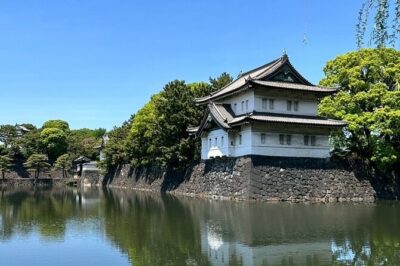 ★ 5.0Tokyo: Imperial Palace and Shogun Historical Walking TourFrom $22
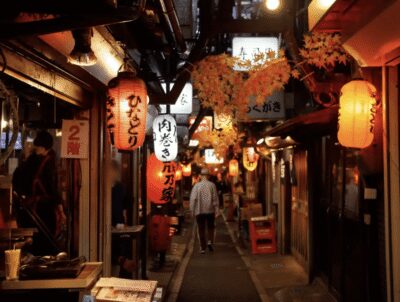 ★ 4.9Tokyo: Shinjuku Local Bar and Izakaya Guided Walking TourFrom $343 hours
 ★ 5.0Tokyo: Tsukiji Fish Market Food and Walking tourFrom $30
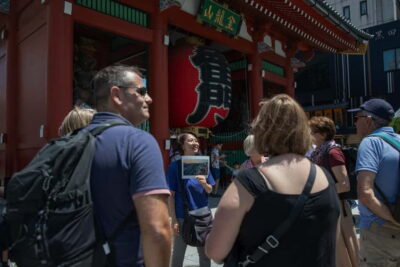 ★ 4.8Tokyo: Asakusa Walking Tour with Sensoji Temple VisitFrom $222 hours
 ★ 4.9Tokyo: Tsukiji Fish Market Guided Walking TourFrom $222 hours