
Reviewed · MT FUJI DAY TRIPS
Mount Fuji Full Day Tour form Tokyo Lake Kawaguchi & Yamanaka
Mount Fuji supplies the headline, but this 10-hour day trip from Tokyo is really about seeing the mountain from many angles. You’ll visit two Fuji lakes, a spring village, a shrine, a pagoda, a flower park, and a famously odd convenience-store photo stop without piecing together several train and bus routes.
I like the broad mix of places and the comfortable, air-conditioned coach. I also like that guides such as Taiyo, Belle, and Eric have been praised for clear communication, friendly service, and useful background on Japan. The catch is simple: Mount Fuji may hide behind clouds, and the schedule gives you only 15 to 60 minutes at each stop.
In This Review
- Key points at a glance
- What this Fuji day trip really covers
- Lake Yamanaka, the calm opening stop
- Oshino Hakkai and its eight clear springs
- Lake Kawaguchi and Oishi Park
- Arakurayama Sengen Park and Chureito Pagoda
- Arakura Fuji Sengen Shrine and the old shopping street
- Lawson Fujikawaguchiko Town Hall, an unusual final photo
- The coach ride, guide style, and pace
- The Fuji weather gamble
- Who will get the most from this tour
- Is $60.90 a fair price?
- Should you book this Mount Fuji tour?
- FAQ
- Where does the Mount Fuji tour start?
- What time does the tour begin?
- Where does the tour finish?
- How long does the tour last?
- What is included in the price?
- Is lunch included?
- How many people can join the tour?
- Can I cancel for a full refund?
Key points at a glance
- Eight Fuji-area stops in one day: See lakes, springs, shrines, a pagoda, a shopping street, and several photo points.
- Lake Yamanaka and Lake Kawaguchi: Compare two of the famous Fuji Five Lakes, each with a different feel and set of views.
- Chureito Pagoda photo stop: Arakurayama Sengen Park gives you the classic pagoda, mountain, and town composition.
- Air-conditioned transport from Tokyo: The coach saves you from arranging several regional buses and trains.
- Strong guide feedback: Taiyo, Belle, and Eric are noted for friendly, well-organized guiding and good communication.
- A weather-dependent day: Rain and cloud can block Fuji, so book this for the whole area, not only for one perfect mountain photo.
What this Fuji day trip really covers
At $60.90 per person, this is an ambitious outing. The tour begins at 8:00 am at STAND T Japan in Marunouchi, Tokyo, and returns to that same meeting point after about 10 hours. The price includes the air-conditioned vehicle and all listed fees and taxes. You pay separately for lunch, drinks, souvenirs, and other personal purchases.
The value comes from transport and coverage. Mount Fuji’s nearby sights are spread around Yamanashi Prefecture, and public transport takes planning. Here, you can sit back while the coach links eight stops in a single loop. That matters most if your Tokyo stay is short or if you want a broad introduction rather than a slow visit to one lakeside town.
This is not a private tour. The maximum group size is 48 people, so the vehicle may feel busy, especially at the most popular photo points. On the other hand, a larger group often helps keep the cost low. At this price, you are buying access and convenience, not a custom route or long, quiet pauses at every stop.
A few more Tokyo tours and experiences worth a look
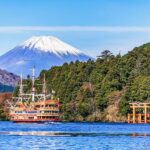
Lake Yamanaka, the calm opening stop
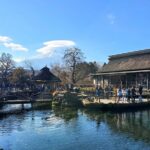
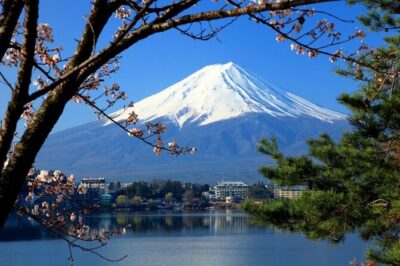
The first stop is Lake Yamanaka, also called Swan Lake. It is the largest of the five lakes around Mount Fuji, and the tour allows about 25 minutes here. You can stroll along the water, feed the swans, and try for a reflection photo if the conditions cooperate.
I like starting with the lake because it eases you out of Tokyo’s hard urban rhythm. The stop is short, so think of it as a first look and a chance to stretch your legs, not a full lake visit. If swans are a priority, keep your camera ready and do not spend the whole stop walking far from the meeting point.
The lake’s quiet mood also gives you an early sense of the day’s main theme: Fuji is viewed through water, trees, village streets, shrines, and open parkland. Even if cloud covers the summit, the setting still gives the outing some value.
Oshino Hakkai and its eight clear springs
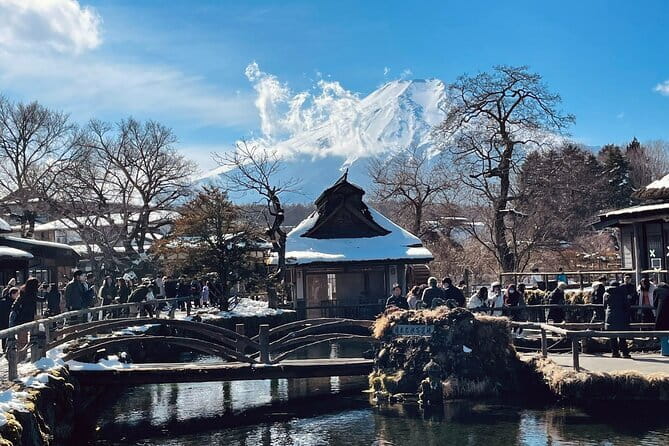
Next comes Oshino Hakkai, with about one hour to explore. This World Heritage Site is known for eight clear springs formed by snowmelt from Mount Fuji. The water is also listed among Japan’s 100 Famous Waters, and you can taste the spring water at no extra charge.
This is one of the more distinctive stops because it connects the mountain to daily life. You are not simply looking at Fuji from a distance. You are seeing water associated with the mountain emerge in a village setting, with small lanes and traditional-style surroundings.
An hour gives you time to inspect the springs, take photos, and sample the water without rushing quite as much as at the shorter stops. Still, the area can attract plenty of people, and the tour does not include lunch. Use this pause to buy food if suitable options are available, but do not count on having a long, relaxed meal. You will need to stay aware of the departure time.
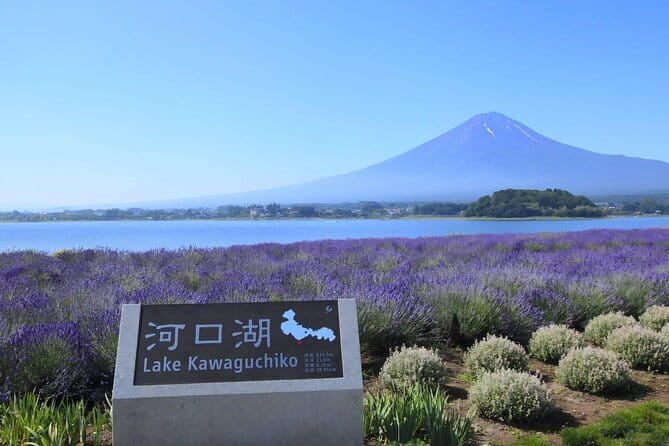
Lake Kawaguchi and Oishi Park
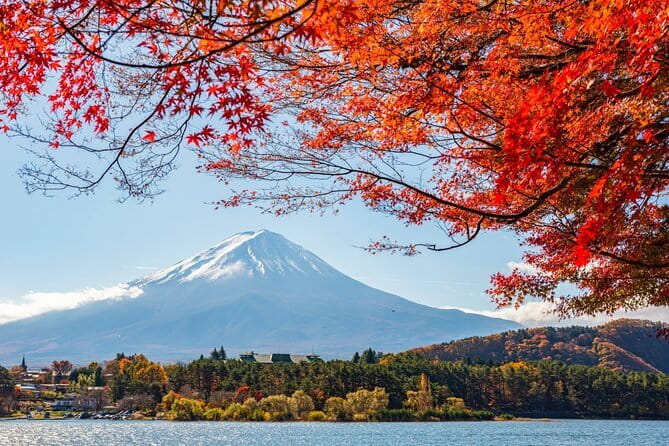
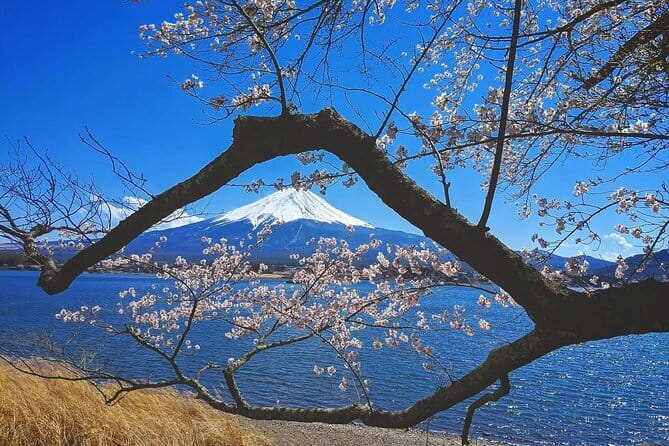
Lake Kawaguchi receives about 25 minutes, followed by another 25 minutes at Oishi Park. Together, these stops provide some of the best-known views in the Fuji Five Lakes area.
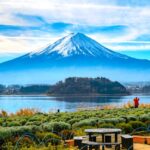
Lake Kawaguchi is often called the shining pearl of the five lakes. Its irregular shoreline creates many possible angles toward Mount Fuji, though this tour only gives you a short window to find one. The lake is also tied to the area’s volcanic past, with the basin shaped by an eruption of Mount Fuji thousands of years ago.
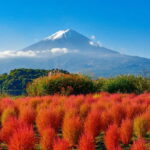
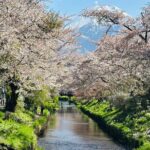
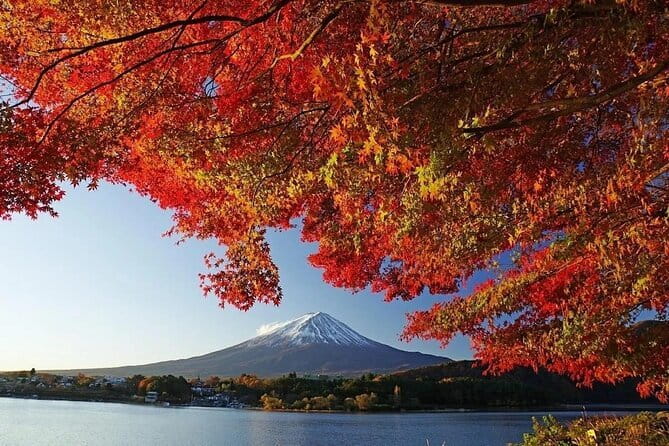
Oishi Park is the more seasonal stop. Its flower displays change through the year, with cherry blossoms, lavender, red leaves, kochia, snow, and reeds appearing at different times. That means the view depends heavily on your travel date. You may find flowers in bloom, autumn color, or a quieter winter scene.
I would treat these two stops as quick photo sessions. The schedule lets you compare the lake and park, but not wander far along the shore or spend hours waiting for perfect light. If Fuji appears through a gap in the clouds, move quickly. If it does not, enjoy the lake, seasonal plants, and open views instead of letting one missing summit ruin the day.
Arakurayama Sengen Park and Chureito Pagoda
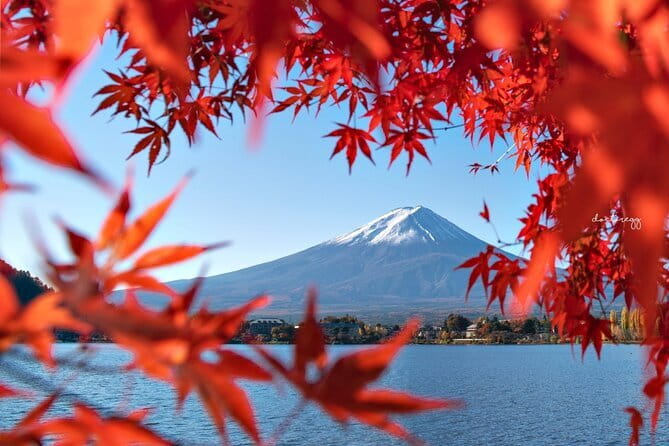
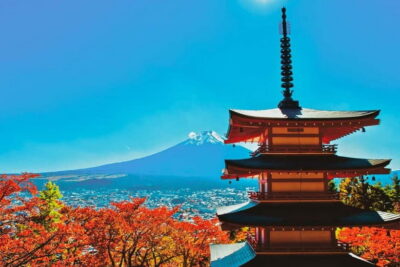
The tour then gives you about one hour at Arakurayama Sengen Park, the home of the famous Chureito Pagoda view. This is the image many people associate with a Mount Fuji visit: a five-story pagoda in the foreground, the city below, and Fuji rising behind it.
The famous viewpoint requires an uphill walk and stairs, so this is the most physically demanding part of the outing. The data provided does not give an exact stair count or walking distance, but you should expect more effort here than at the lakeside stops. Wear shoes that are comfortable for steps and uneven walking.
The hour is useful. You have time to reach the viewpoint, take photos, and return to the vehicle without treating the stop as a frantic dash. Still, the park is popular, and the best camera position may take patience. Fuji’s visibility also matters greatly. The pagoda remains worth seeing on a cloudy day, but the classic three-part composition is strongest when the mountain is clear.
This is the stop I would prioritize for photography. The view combines Japanese architecture, a hillside city, and the country’s best-known peak in one frame. It also explains why the tour keeps moving: the guide is trying to give you several chances at Fuji rather than betting the entire day on one viewpoint.
A few more Tokyo tours and experiences worth a look

Arakura Fuji Sengen Shrine and the old shopping street
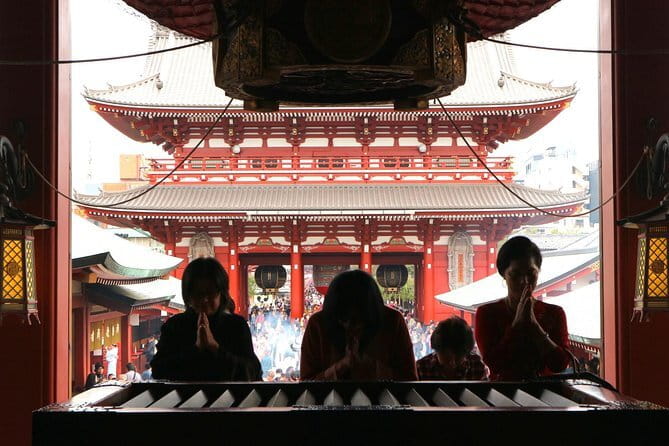
After the park, you’ll spend about 15 minutes at Arakura Fuji Sengen Shrine. The shrine was built in 705 and has more than 1,300 years of history. It is a place to pray for well-being and family happiness, and it is linked to local fear during a major Mount Fuji eruption in 807.
The short stop is best used for a quick look at the grounds and a moment of quiet. Fifteen minutes is not enough for a detailed shrine visit or a long explanation of every feature, but the guide can help place the site within local religious history. This is a useful counterweight to the photo-heavy parts of the day.
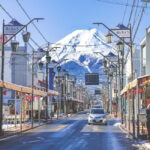
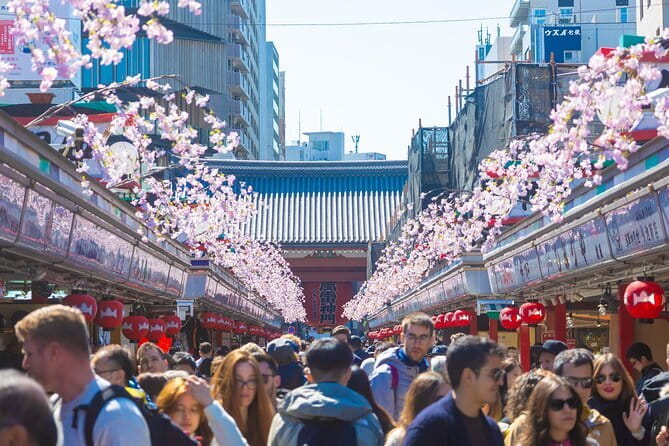
The next stop, Fujiyoshida Retro Shopping Street, lasts about 20 minutes. At Shimoyoshida Honcho Street, the Hikawa Clock Shop and the road toward Mount Fuji create another well-known composition. The street has an ordinary local feel, which is part of its appeal. You see how a regular town road can become a sought-after photo spot when Fuji lines up at the end of it.
Do not expect a full shopping afternoon here. Twenty minutes is enough for photographs and a brief look, not for browsing every shop. Stay alert to the group’s meeting time, since streets and storefronts can make it easy to lose track of where the vehicle is waiting.
Lawson Fujikawaguchiko Town Hall, an unusual final photo
The final listed stop is Lawson Fujikawaguchiko Town Hall, with about 15 minutes. A modern blue convenience-store facade contrasts sharply with Mount Fuji behind it, creating one of the area’s most recognizable social-media images.
This stop may sound less traditional than a shrine or lake, but it captures a very Japanese visual contrast: an everyday convenience store placed against an iconic natural landmark. You can take photos and make a quick purchase, but remember that this is a public shop, not a dedicated attraction. Be considerate of customers, traffic, and the entrance.
I like that the day includes this slightly playful stop. It keeps the itinerary from becoming eight versions of the same scenic overlook. You get old shrines, springs, lakes, flowers, town streets, and modern Japan in one sequence.
The coach ride, guide style, and pace
The air-conditioned vehicle is a major reason to consider this tour. Driving between the Fuji-area stops avoids the work of coordinating regional buses, transfers, and separate attraction visits. The coach has reclining seats according to one detailed account, though chargers are not provided, so bring a charged phone and perhaps a portable battery.
The route covers a lot of ground. That is its strength and its limitation. You see many famous places, but most stops last only 15 to 25 minutes. The one-hour visits at Oshino Hakkai and Arakurayama Sengen Park give you room to breathe, while the lake and street stops are closer to organized photo breaks.
Guide quality matters on a packed schedule. Taiyo is described as friendly, informative, and well organized, with good communication before and during the outing. Belle is noted for being funny, flexible, considerate, and willing to share information about Japan beyond the sites themselves. Eric is also described as friendly and well informed. The exact guide depends on the departure, but these names show the sort of service you can expect when the day runs well.
The driver matters too. The coach must keep to a tight route, and a courteous, capable driver helps the day stay on time. Do not expect the guide to provide a private lecture at each stop. The real benefit is having someone explain the area, keep the schedule moving, and help you understand what you are seeing.
The Fuji weather gamble
Every Mount Fuji outing comes with a weather warning, and this one is no different. Several successful days still had rain or cloud that hid the mountain. That is not a fault unique to this operator, but it does affect how you should judge the booking.
The tour protects you as much as an itinerary can by visiting many viewpoints. If Fuji is hidden at Lake Yamanaka, it might appear at Oishi Park, Arakurayama, or the Lawson street. But there is no guarantee. You should book this as a full day around Mount Fuji, with scenic lakes, historic sites, and photo locations, rather than as a guaranteed summit portrait.
Clear weather can transform the day. When the clouds part, the changing viewpoints make the mountain feel different each time. In poor weather, the springs, shrine, pagoda, flower park, and village streets still give you a worthwhile regional outing, but the emotional high point may be smaller.
Who will get the most from this tour
I recommend this outing if you want to see the main Fuji-area highlights without renting a car or learning a complicated bus network. It suits first-time visitors to the region, photographers who want several compositions, and anyone with only one free day from Tokyo.
It is also a good match for people who prefer an organized day. You meet at one Tokyo location, ride in an air-conditioned vehicle, receive site information from a guide, and return to the same place. The mobile ticket makes entry and confirmation simple.
The pace is less suitable if you are with a young child who needs long breaks, or if you prefer lingering at one lake or shrine. One account specifically found that a little more time would have helped when visiting with a young child. A group of up to 48 also means less flexibility than a private vehicle.
When booking, indicate if you have a stroller or large luggage. If you are traveling with relatives or friends who book separately, tell the provider at least one day ahead so you have a better chance of being assigned to the same vehicle. Most people can participate, and the meeting point is near public transportation, but the day still includes walking and stairs at Arakurayama.
Is $60.90 a fair price?
For $60.90, the tour offers strong practical value. You receive transport for roughly 10 hours, a long route through the Fuji region, an air-conditioned vehicle, and all listed fees and taxes. Recreating the same day on your own would require careful transport planning and could become costly once regional fares and time are counted.
The tradeoff is control. Lunch is not included, and you do not get a private car, custom timing, or freedom to skip a stop. The group size may reach 48, and the short photo pauses can feel brisk.
If you value convenience and variety, the price is sensible. If your goal is a slow lakeside day, a long shrine visit, or a private photography session, spend more on a smaller or custom tour instead.
Should you book this Mount Fuji tour?
Book it if you want maximum sightseeing in one day and accept that the schedule moves quickly. The mix is unusually broad: two lakes, eight springs, a flower park, a historic shrine, Chureito Pagoda, a traditional town street, and a convenience-store photo stop.
Skip it if seeing a clear Mount Fuji is your only reason for going. Weather can defeat even a well-planned route, and the short stops leave little room for waiting. For most first-time visitors with one free day from Tokyo, though, this is an efficient and fairly priced introduction to the mountain’s surrounding towns and sights.
Free cancellation is available until 24 hours before the 8:00 am start time. Changes or cancellations made inside that window are not accepted for a refund, so check your plans before the deadline.
FAQ
Where does the Mount Fuji tour start?
The tour starts at STAND T Japan, 100-6590 Tokyo, Chiyoda City, Marunouchi, 1-chōme 5-1, 1F.
What time does the tour begin?
The scheduled start time is 8:00 am.
Where does the tour finish?
The activity ends back at the original meeting point in Tokyo.
How long does the tour last?
The tour lasts approximately 10 hours.
What is included in the price?
The price includes an air-conditioned vehicle and all fees and taxes.
Is lunch included?
No. Lunch and other personal expenses are not included.
How many people can join the tour?
The activity can have a maximum of 48 travelers.
Can I cancel for a full refund?
Yes. You can cancel up to 24 hours before the experience start time for a full refund. Cancellations or changes made less than 24 hours before the start are not accepted for a refund.
More Full-Day in Tokyo
More Mt Fuji Day Trips in Tokyo
More tours in Tokyo we've reviewed










Mt Fuji Day Trips, compared.
 ★ 5.0Mt Fuji and Hakone 1-Day Bus Tour Return by Bullet TrainFrom $163
 ★ 4.0Mt Fuji & Hakone Cruise, Drum Show Bullet Train 1 Day from TokyoFrom $149
 ★ 4.4Tokyo Mt Fuji 5th St & Hakone Cruise Bus Tour w/Bullet TrainFrom $15410 hours
 ★ 4.5From Tokyo: Mount Fuji Full-Day Sightseeing TripFrom $6810 hours
 ★ 4.7Tokyo: Mt. Fuji Tour, Hakone Ropeway, Owakudani, Lake AshiFrom $5410 hours
 ★ 4.4Tokyo:Mt.Fuji,Kawaguchiko Oishi Park,Arakurayama Sengen ParkFrom $5410 hours