
Reviewed · WORKSHOPS
Japanese flower arranging (Ikebana) Experience/Workshop in Tokyo
Ikebana turns a shop full of cut flowers into a quiet lesson in shape, balance, and restraint. In this 90-minute workshop, you choose flowers, learn how to use the tools, and build an arrangement with help from a florist rather than simply watching a demonstration.
I like the personal guidance from hosts such as Ruby and Aki, and I like that the class uses ikebana for self-expression instead of demanding strict mastery of formal rules. The photos sent afterward are another useful touch.
The main consideration is the extra cost if you want to take your arrangement home in a vase or buy the kenzan used to hold the stems. Those items are not included in the $100 price.
In This Review
- Key points to know before booking
- Finding a quiet flower shop in Kojimachi
- What happens during the 90-minute class
- Learning asymmetry with a kenzan
- Meeting Ruby and Aki
- Why the mindful element works
- Flowers, symbolism, and personal choice
- What the $100 price includes
- Photos and the take-home arrangement
- Who should book this experience
- Booking, cancellation, and practical planning
- Should you book the ikebana workshop?
- FAQ
- Where does the ikebana workshop take place?
- How long does the workshop last?
- What does the $100 price include?
- Are vases and kenzan included?
- Who teaches the class?
- Can children and families participate?
- What is the cancellation policy?
Key points to know before booking
- A calm break from Tokyo: The workshop gives you a quiet, hands-on activity away from the city’s noise and packed sightseeing schedule.
- Guidance from working florists: Ruby and Aki explain the flowers, tools, history, and design choices in clear English.
- Playful rather than rigid: You practice asymmetry and flower placement without being pushed into a strict formal style.
- Small-group setting: The class accepts a maximum of 15 people, with individual advice from the instructor.
- A useful take-home memory: Photos are shared after the activity, and vases or kenzan can be purchased if you want to keep your work.
- Family-friendly format: Children and families are welcome, and pets are allowed.
Finding a quiet flower shop in Kojimachi
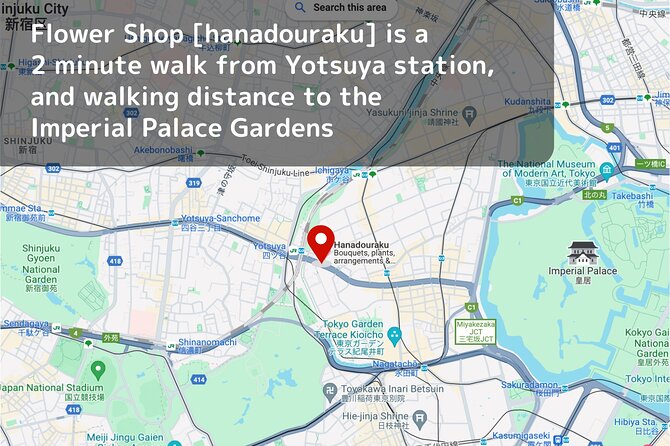
The class meets at 6-chome Kojimachi, Chiyoda City, Tokyo, postal code 102-0083. The workshop begins and ends at the same point, and the venue is near public transportation.
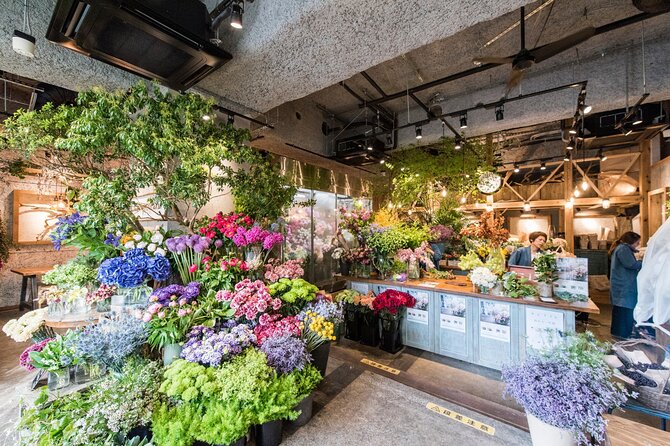
The setting matters. You are not arranging flowers in a hotel meeting room or a generic craft studio. You work in a florist surrounded by blooms, foliage, and the practical tools of the trade. That gives the activity a more natural connection to Japanese floral design.
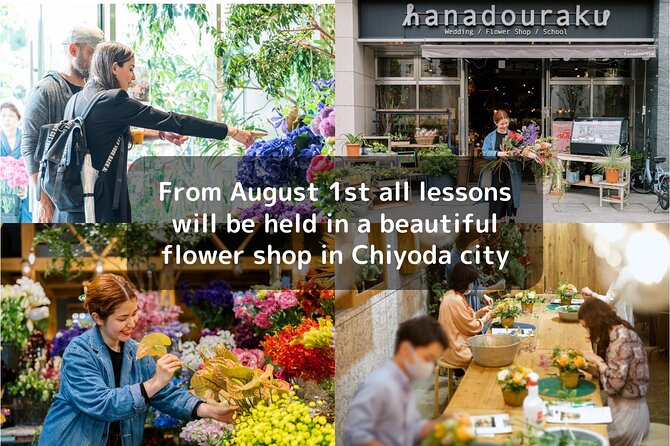
The shop, Hanadouraku, provides a pleasant change of pace from Tokyo’s usual sightseeing rhythm. You may arrive after a morning of temples, department stores, or train stations, then spend the next hour and a half looking closely at stems and branches. That shift in attention is part of the appeal.
The exact meeting directions still deserve care. Kojimachi is easy to reach by public transportation, but Tokyo addresses can be confusing when you are relying on a map pin alone. I would save the full meeting address on your phone before leaving your hotel and allow a little extra time to find the shop.
A few more Tokyo tours and experiences worth a look



What happens during the 90-minute class
This is a hands-on workshop, not a lecture. The instructor introduces ikebana, explains the basic ideas behind the craft, and then gives you flowers and tools so you can make an arrangement of your own.
You learn about the place flowers have held in human culture and about the way ikebana treats natural materials. The lesson includes flower types and symbolism, so the stems in front of you become more than decoration. You begin to consider color, line, height, direction, and the character of each bloom.
The teaching style is intentionally relaxed. You are not expected to memorize a demanding set of rules or produce a perfect arrangement on your first attempt. Instead, the workshop uses ikebana as a way to express your own eye while still introducing the ideas that make the art distinct.
That balance is important. A class that is too formal can make a first attempt feel like an exam. Here, the instructor offers advice, but you still have room to make decisions. You might receive help with the angle of a branch, the spacing between flowers, or the way a stem sits in the container.
Some participants create two arrangements during the session, depending on the pace of the class and the guidance they need. You should not assume that two arrangements are guaranteed, but the format gives you time to experiment rather than rushing through one finished piece.
Learning asymmetry with a kenzan
One of the most useful parts of the workshop is practicing asymmetry. Ikebana does not treat a flower arrangement as a round mass that looks the same from every side. It often leaves open space and uses uneven lines to suggest movement, balance, or growth.
That can feel harder than it looks. A few stems placed in a container may seem simple, but every angle changes the arrangement. The instructor helps you see why one branch may need to lean farther, why a flower may work better lower down, or why empty space can be just as important as the blooms.
The kenzan is the small, spiked holder that anchors the stems. You receive the necessary equipment for the session and learn how to use the tool as part of the arrangement process. It is a practical introduction to an object many first-time participants have never handled.
The kenzan used during the activity is not included as a take-home item. You can purchase one if you want to practice at home, just as you can buy a vase for your arrangement. Ask about those costs before making a final decision, especially if you are watching your spending.
Meeting Ruby and Aki
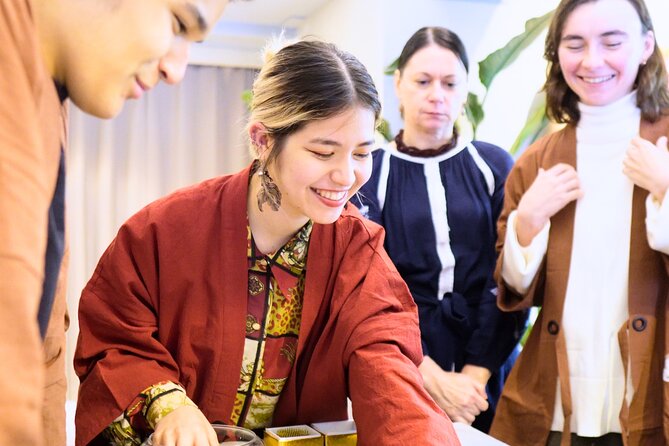
The instructor can vary, but Ruby and Aki are the two names most closely associated with this workshop. Both receive strong praise for their friendly teaching and clear English.
Ruby is described as an accomplished florist with a strong command of flowers and floral materials. Her teaching style leaves room for you to work independently, while still providing coaching when you want it. That is a good fit if you enjoy making your own choices but do not want to feel abandoned with a pile of stems.
Aki focuses on explanation and encouragement. Her instruction includes the history of ikebana, the flowers being used, and the meaning behind different choices. She also encourages you to connect with each bloom rather than treating the activity as simple decoration.
The personal tone is one of the class’s strongest points. You can ask for help, receive suggestions, and adjust your work as you go. The instructor does not simply demonstrate a finished example and leave you to copy it.
English ability is specifically noted as strong for both hosts in the available information. That matters when the lesson turns on subtle points such as asymmetry, symbolism, or the difference between a stem that looks accidental and one that looks deliberately placed.
Why the mindful element works
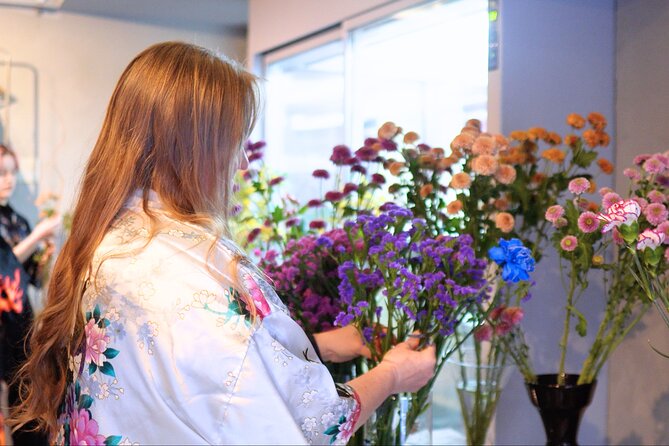
Tokyo can fill every minute of a trip. Trains, crossings, shops, museums, and restaurant queues keep your attention moving outward. Flower arranging asks you to slow down and notice small decisions.
You handle the flowers, trim stems, place them in the kenzan, and look at the arrangement from different angles. That process gives you something steady to focus on. The activity is not presented as medical treatment, but it is clearly designed as a mindful break from the city.
I especially like this option for the first or second day of a Tokyo visit. It gives you an activity that is distinctly Japanese without requiring a long ride or a full day away from the center. It can also work well near the end of a busy itinerary, when another crowded attraction sounds less appealing.
The class is still an activity, not a silent meditation session. You will listen, ask questions, choose materials, and work with your hands. If you want a completely quiet experience, the conversation and instruction may feel more social than expected.



Flowers, symbolism, and personal choice
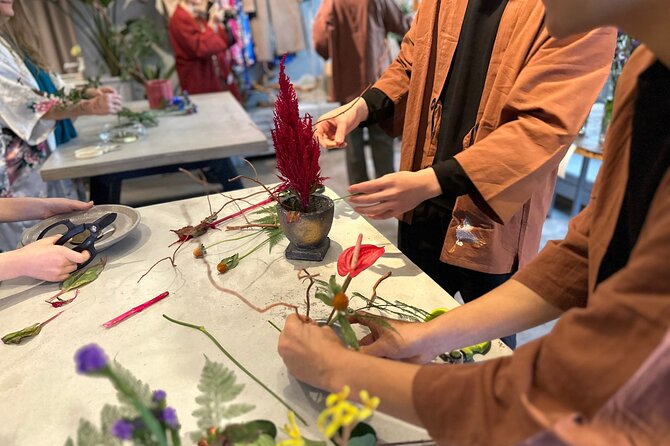
The workshop explains what different flowers can symbolize and how their natural qualities affect the design. This adds meaning to the practical work. You are not only asking which flower has the prettiest color. You are also considering what its shape, direction, or season might contribute.
The selection of blooms and foliage can vary. The florist setting offers a broad collection of materials, and you may find yourself choosing between flowers that differ in texture, height, or line. The freedom to select your own materials is part of the creative appeal.
Still, you are not left to guess. Ruby or Aki can help you understand what will work together and how to make the arrangement feel balanced. The result should feel personal, but it is supported by professional advice.
That makes the experience accessible to beginners. You do not need previous flower-arranging experience, and the class welcomes families and children. Young participants may enjoy the tactile side of the activity, though adults should be ready to help children handle sharp tools carefully.
What the $100 price includes
At $100 per person, this is not the cheapest short activity in Tokyo. It is also more than a basic craft class where you receive materials and follow a fixed pattern.
The fee includes use of ikebana tools, the flowers used in the arrangement, instruction, and photos taken during the activity. The small-group format adds value because you can receive advice while working rather than only hearing a general explanation.
The florist setting and the chance to make a personal arrangement also help justify the price for the right person. You are paying for a guided cultural activity, fresh flowers, professional attention, and a memory you can continue to enjoy during your stay.
The value is weaker if you want to take everything home. Containers and kenzan are not included, so add those purchases to your budget. One useful option is to buy a vase at the shop and carry your arrangement back to your accommodation. This has worked well for participants who wanted to enjoy their flowers for the rest of their Tokyo visit.
You should also remember that a flower arrangement is temporary. The experience and photos last longer than the blooms. If you see the flowers as part of the lesson rather than a permanent souvenir, the price makes more sense.
Photos and the take-home arrangement
Photos are shared after the event, including images of you and your group while you work. This is a better souvenir than a quick snapshot taken at the end because it records the creative process itself.
You can look back at the stages of choosing, cutting, and placing the flowers. For a first ikebana class, those images may also help you remember the design advice you received.
If you buy a vase, you can take the finished arrangement back to your Airbnb or other accommodation. The available information confirms that this has been practical for participants during their stay. Transport still requires care, since flowers can shift or break, and the arrangement will need water and a stable place to sit.
You can also buy the kenzan if you want to try the craft at home. That turns the workshop into more than a one-time activity, although you will need your own flowers and a suitable container later.
Who should book this experience
I would recommend this class to you if you want a short cultural activity with a creative result. It suits first-time visitors to Japan, couples, solo participants, families, and anyone who would rather spend 90 minutes making something than standing in another queue.
It is also a good choice for people who enjoy flowers but do not consider themselves artistic. The instructor helps you at the level you need, and the loose approach means your arrangement does not have to follow one rigid model.
Solo participants may find the format especially comfortable. The class can operate with a very small number of people, and one participant had the workshop alone, allowing plenty of time to work and ask questions.
I would think twice if you need a large souvenir, want a formal certification, or expect a highly traditional masterclass with strict technical instruction. This is a friendly introduction with room for play. It teaches real ikebana ideas, but it is not presented as an advanced school lesson.
Pets are welcome, and service animals are allowed. Most people can participate, and the maximum group size is 15. The available details do not promise a fully private class or describe specific accessibility arrangements, so contact the provider if you have needs beyond the general participation information.
Booking, cancellation, and practical planning
You receive confirmation when you book, and the mobile ticket is convenient for a day of sightseeing. The experience requires a minimum number of participants. If that minimum is not reached and the class is canceled, you are offered another date or experience, or a full refund.
Free cancellation is available until 24 hours before the start time. Cancel later than that and you will not receive a refund. Changes made inside the 24-hour window are not accepted, so check your Tokyo plans before reserving.
The class begins and ends at the meeting point. That makes it easy to pair with other activities in the city, but leave enough time for the address in Kojimachi and do not count on finishing early. Flower arranging rewards patience, and rushing away halfway through the final design would spoil the point.
Should you book the ikebana workshop?
Book it if you want a calm, personal Japanese experience that fits into a tight schedule. The best reasons are the florist setting, the gentle guidance from Ruby or Aki, the chance to practice asymmetry, and the freedom to make an arrangement that feels like your own.
At $100, it is a considered purchase, especially once you add a vase or kenzan. I think the cost is fair for fresh flowers, tools, instruction, photos, and a small-group class, but only if you value the process as much as the finished arrangement.
Skip it if you want a grand sightseeing landmark or a long traditional ceremony. Choose it if your ideal Tokyo memory is quieter: a few stems, an open space, a helpful florist, and something beautiful to carry back to your room.
FAQ
Where does the ikebana workshop take place?
The meeting point is at 6-chome Kojimachi, Chiyoda City, Tokyo, postal code 102-0083. The activity ends at the same location.
How long does the workshop last?
The experience lasts approximately 1 hour and 30 minutes.
What does the $100 price include?
The price includes use of ikebana tools, the flowers used in the arrangement, instruction, and photos taken during the activity.
Are vases and kenzan included?
No. Containers and the kenzan used for the arrangement are not included, but both are available for purchase.
Who teaches the class?
The experience provider is Ruby. The available class information also identifies Ruby and Aki as instructors who guide participants through the arrangements.
Can children and families participate?
Yes. Children and families are welcome, and most people can participate.
What is the cancellation policy?
You can cancel at least 24 hours before the start time for a full refund. Cancellations or changes made less than 24 hours before the start time are not accepted for a refund.
More Workshops & Classes in Tokyo

More tours in Tokyo we've reviewed





Workshops, compared.
 ★ 5.0Sushi Making Tokyo Roll and Authentic Japanese Sushi ClassFrom $59
 ★ 4.9Tokyo: Roll and Authentic Sushi Making Class in AsakusaFrom $581h 40m
 ★ 5.0Tokyo Shinjuku Chopsticks Making ClassFrom $20
 ★ 4.9Tokyo: Sushi Making Class in a Happi Coat near a Famous SpotFrom $421h 30m
 ★ 4.8Chopstick Making Workshop in GinzaFrom $251 hour
 ★ 5.0Tokyo Sushi Making Class in Tsukiji with Professional ChefFrom $49