
Reviewed · TOKYO
Home made Ramen you made from scratch!!
The best part of this Tokyo cooking class is that you do not simply assemble a bowl from prepared ingredients. Hideki teaches you to make ramen from scratch, including the noodles and soup, then guides you through gyoza, nitamago, and chashu. He spent about 10 years working in ramen restaurants, so you get practical instruction rather than a quick tourist demonstration.
I like the very small group size, capped at four people, and the personal touch of meeting at the train station and walking to Hideki’s home studio. I also like that you receive a recipe booklet and ingredient-sourcing help, which gives you a real chance to repeat the meal at home. The main consideration is the price: at $115 per person, this costs more than eating ramen in Tokyo, though it offers three hours of instruction and a full lunch.
In This Review
- Key points to know before booking
- Making real ramen instead of dressing up instant noodles
- Meeting Hideki in Shinagawa
- A home setting with a four-person limit
- Building the soup with dashi
- Preparing nitamago and chashu
- Making noodles, ramen, and gyoza
- What the $115 price includes
- Who will get the most from this class
- Practical details that affect your day
- The final bowl and what you take home
- Should you book Hideki’s ramen class?
- FAQ
- Where does the ramen cooking class take place?
- How long does the experience last?
- What food will I make?
- Is lunch included?
- Are drinks included?
- How many people can join the class?
- Is the studio near public transportation?
- When will I receive booking confirmation?
- Can I cancel for a full refund?
Key points to know before booking
- Former ramen chef Hideki leads the class: His roughly 10 years of restaurant experience shape the lesson.
- You make the noodles and soup: This is not just a topping or seasoning workshop.
- The menu covers a full ramen meal: You prepare dashi, nitamago, chashu, ramen, and gyoza.
- The class takes place in a home studio: Expect a personal setting rather than a large commercial cooking school.
- The group is limited to four people: That allows close, hands-on guidance.
- The Shinagawa location is practical: It is near transport and convenient for Ginza, Shibuya, Shinjuku, Shinagawa, and Haneda Airport.
Making real ramen instead of dressing up instant noodles
Tokyo has no shortage of ramen shops. A bowl can be inexpensive, fast, and excellent. That makes a cooking lesson worth booking only if it gives you something a restaurant cannot: the skills and understanding to make the dish yourself.
This class aims to do exactly that. You work through the main building blocks of a ramen bowl, from soup stock to noodles and toppings. The lesson also includes gyoza, so the meal feels like a proper Japanese lunch rather than a single bowl of noodles.
I especially like the focus on process. You are not simply watching Hideki prepare a finished dish while you stir something easy. You take part in making the ramen, and the cooking becomes more active as the class moves toward the final meal. One French participant described the pace as starting calmly and becoming faster during the cooking stage, with Hideki managing the final timing.
That detail matters. Ramen has several parts that need to come together at the right moment. The lesson gives you a look at how a professional handles that rush, while still allowing you to do the work yourself.
If you're still narrowing it down, here are other tours in Tokyo we've reviewed.


Meeting Hideki in Shinagawa
The meeting point is Hideki Ramen Cooking Studio at 6-chōme-15-3 Minamishinagawa, Shinagawa City, Tokyo 140-0004. The activity starts and ends at this location, and the class is near public transportation.
Several details make the arrangement easier than it may sound on a first visit. Hideki has met people at the train station, escorted them to and from the studio, and provided clear directions. He has also kept in touch through WhatsApp when someone was delayed while finding the right train connection.
You should still allow time to reach Minamishinagawa. Tokyo’s rail network is efficient, but large stations can take time to navigate. Send a message if you are running late, and do not treat the scheduled start as flexible simply because the class is personal.
The location works well for an itinerary that includes southern and central Tokyo. It is close to Shinagawa and offers practical access toward Ginza, Shibuya, Shinjuku, and Haneda International Airport. That makes the class a possible fit near the beginning or end of a Tokyo stay, though you should plan your day around the three-hour session.
A home setting with a four-person limit
This is a small class in Hideki’s home, not a large cooking school with rows of workstations. That setting can feel more relaxed and personal, but it also means you should know what kind of experience you are choosing.
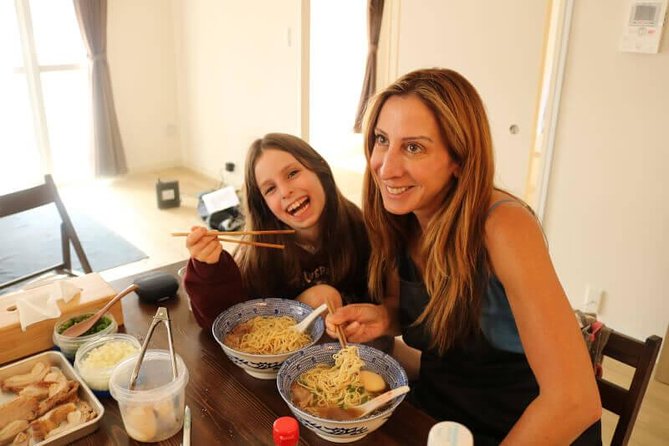
You get direct access to Hideki and can ask questions as you work. With a maximum of four people, he has room to watch your technique and step in when timing gets tricky. A class of two can feel almost private, while a full group of four should still remain manageable.
The home setting is also part of the experience’s character. You walk from the station to a private home and cook in an intimate space. If you prefer polished commercial kitchens, formal demonstrations, and a set program designed for a large group, this may feel modest. If you like meeting a local cook in a personal setting, the arrangement is a strong point.
The reviews consistently praise Hideki’s friendliness and patience. One person described him as welcoming and fun, while another appreciated that he escorted the group to and from the station. Those details suggest a host who pays attention to the practical side of the visit, not just the food.
Building the soup with dashi
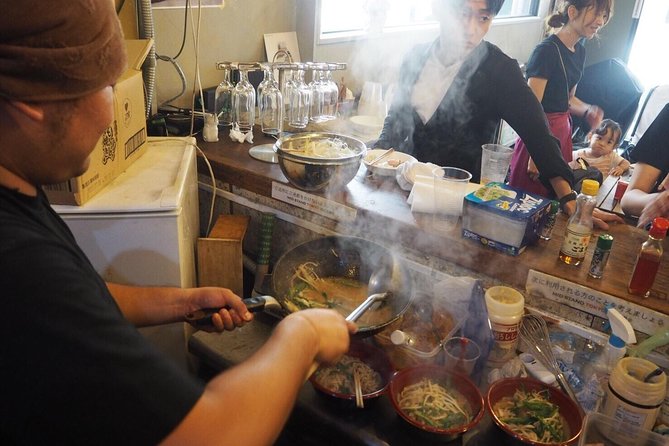
The lesson includes instruction in preparing dashi, the stock that gives many Japanese dishes their savory base. This is an important part of the class because soup quality often depends on what happens before the noodles enter the bowl.
You learn how the stock is prepared and how it fits into the finished ramen. The exact ingredients and method are not specified, so you should ask Hideki about substitutions and storage if you want to recreate it outside Japan.
This section is useful for home cooks because dashi is more than a ramen trick. The method can inform other Japanese dishes, and the class gives you a better sense of how a bowl develops its flavor. You also gain practical tips from someone who worked in ramen restaurants for about a decade.
The lesson is not presented as a lecture. You can expect to work through the steps with Hideki explaining what to do. That hands-on approach is especially helpful if you have never made soup stock before.
Preparing nitamago and chashu
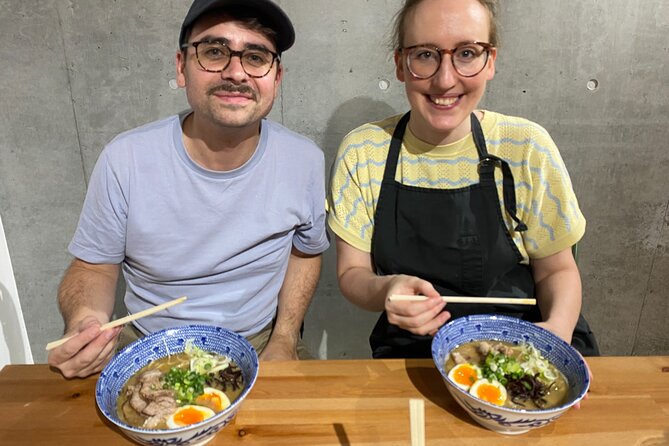
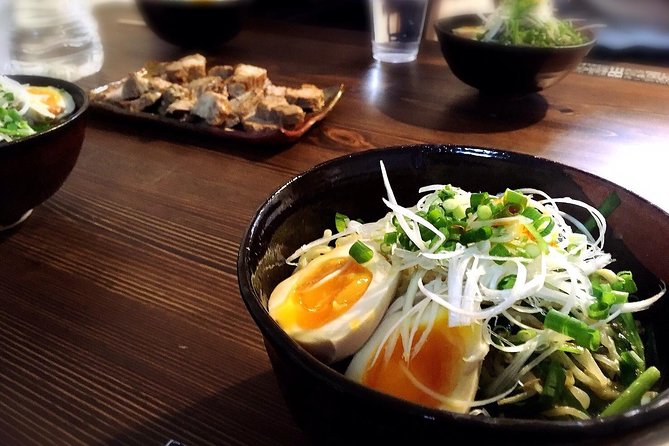
Ramen toppings are not decorative extras. Nitamago, the ramen-style boiled egg, and chashu, the boiled pork, add texture, richness, and much of the visual appeal of the finished bowl.
You learn how to prepare both. The class does not simply place them on the table for you, so you see how the toppings become part of the meal. For a first-time cook, this is a useful way to understand why ramen takes more work than boiling noodles and adding broth.
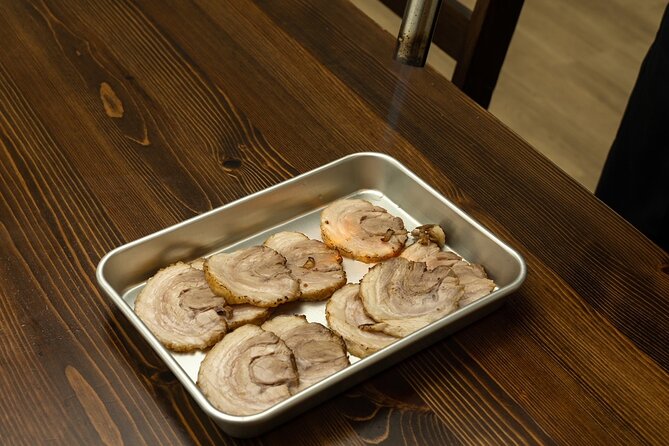
The chashu lesson also shows how a protein can be prepared for a noodle dish rather than served alone. Nitamago adds another technique and gives you a component that is easy to recognize when you order ramen in Japan afterward.
Because the class covers several elements, the three-hour duration makes sense. You are learning a full meal with separate preparations, not a single quick recipe. The tradeoff is that the pace can become busy near the end, so you should expect to stay engaged rather than casually chat through the cooking.



Making noodles, ramen, and gyoza
The central task is making homemade ramen. The class includes the noodles and soup, and the strongest part of the experience is the chance to handle both from the beginning.
You also make gyoza dumplings. This broadens the lesson and gives you another Japanese staple to practice. The dumplings add variety to lunch, but they also create another set of steps to follow while the ramen comes together.
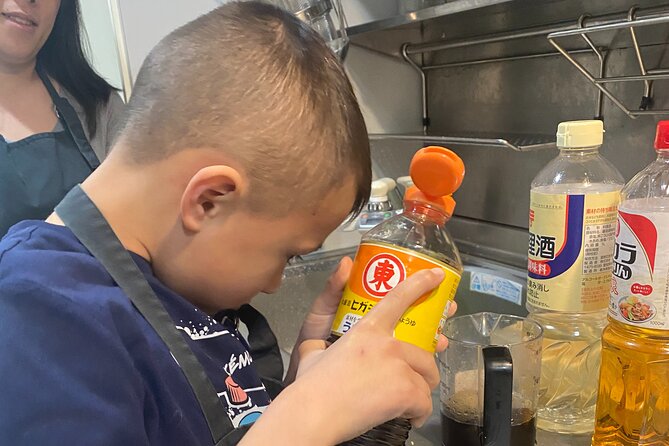
Hideki supplies guidance throughout the process. The instruction is designed for people who want to learn, not only for experienced cooks. One particularly useful feature is the small recipe book prepared for participants, along with help on sourcing ingredients. That makes it easier to remember the sequence after you leave.
I would pay close attention to the final cooking stage. Ramen can lose its best texture if the noodles sit too long, and the dumplings also need proper timing. Hideki handles the final cooking when needed, which protects the meal while still letting you see how the last steps work.
The result is lunch made from the food you prepared. That changes the meal from a simple tasting into the payoff for the work you have just done.
What the $115 price includes
The cost is $115 per person. Lunch, meaning the ramen you make from scratch, is included. Alcohol and soft drinks cost extra.
At first glance, the price is high compared with ordering a bowl of ramen at a neighborhood shop. If your goal is simply to eat good noodles, skip the class and visit a ramen restaurant. Tokyo gives you plenty of better-value meals.
The value improves if you treat this as a cooking lesson, a meal, and a personal local encounter in one booking. You receive about three hours of instruction, a small-group format, a homemade lunch, a recipe booklet, and advice on ingredients. The group limit of four also matters because you are paying for access to Hideki’s time rather than for a seat in a crowded demonstration.
I see this as a good value for people who cook at home or want a food memory they can repeat. It is a weaker value for someone with a short Tokyo schedule who has no interest in cooking after the trip.
Group discounts are available, so check the current price for your party before booking. Since alcoholic beverages and soft drinks are not included, budget separately if you want something beyond the meal provided.
Who will get the most from this class
This experience suits curious cooks, ramen fans, and people who prefer a personal activity to a standard sightseeing stop. It also works well for couples or small groups, since the maximum size is four.
You do not need to be a professional cook. Hideki’s role is to guide you through each stage, and the small group allows room for questions. Still, you should enjoy active participation. This is not the right pick if you want to sit back while someone else prepares lunch.
Families may want to confirm the suitability of the home setting and cooking activities before booking, since no specific age policy is provided. The same applies to dietary restrictions. The available information does not list substitutions or allergy arrangements, so ask Hideki before paying if you need changes.
The class is also useful for anyone staying near Shinagawa or passing through the area on the way to Haneda. Its location can save time compared with crossing Tokyo for a cooking lesson, though you still need to allow for the city’s busy rail stations.
Practical details that affect your day
The activity lasts approximately three hours and returns to the meeting point. Confirmation is sent within 48 hours of booking, subject to availability, so do not assume your reservation is final until you receive it.
The experience is booked around seven days ahead on average. That is a useful sign that you should reserve early if your Tokyo dates are fixed, especially because the group is limited to four people.
Mobile tickets make access simpler, but clear communication still matters. Use the meeting instructions carefully, and contact Hideki if a train delay affects your arrival. The station pickup described by participants can help, but you should not rely on an informal escort without confirming the details for your own booking.
Free cancellation is available up to 24 hours before the start time for a full refund. Cancellations or changes made less than 24 hours ahead are not accepted for a refund, and the cut-off uses Tokyo local time.
The final bowl and what you take home
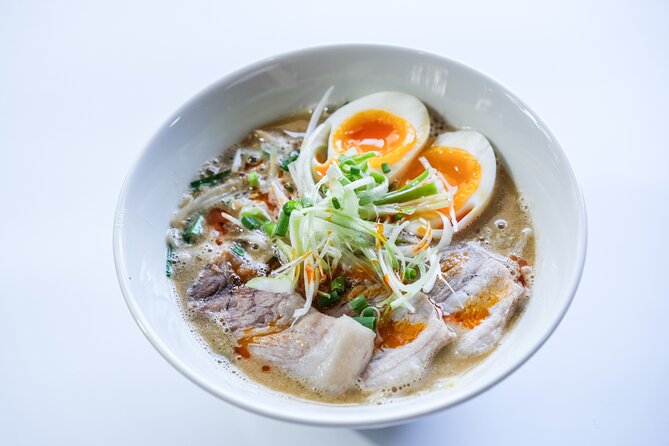
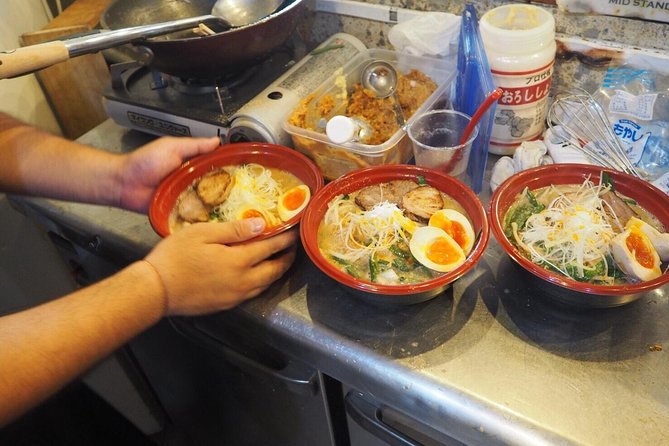
The final meal is the part you have been working toward: ramen made with your own noodles, soup, toppings, and the other prepared components, plus gyoza. You are not just tasting a professional chef’s bowl. You are seeing how separate preparations become one meal.
The recipe booklet gives the experience a useful afterlife. You can use it to try the dish at home, and the sourcing advice helps you understand what ingredients to look for. That is a major benefit over a class that ends when lunch is served.
Do not expect your first home attempt to match the speed or precision of a ramen professional. The value is in knowing the order of work, recognizing the key ingredients, and having a method to follow. Hideki’s tips can help you make the recipe your own once you have access to suitable ingredients.
Should you book Hideki’s ramen class?
Book it if you want more than a restaurant meal and like the idea of making a complete ramen lunch yourself. The small group, former chef host, hands-on noodles, and take-home recipe give the $115 price a clear purpose.
Skip it if your Tokyo schedule is tight, your main aim is inexpensive food, or you prefer a polished cooking school over a class in a private home. Also ask about dietary needs before booking, since the available details do not list substitutions.
For a food-focused visit, this is one of the more useful kinds of Tokyo activity: you eat well, learn techniques, and leave with a recipe you can try again. Just arrive ready to cook, keep an eye on the clock, and remember that drinks cost extra.
FAQ
Where does the ramen cooking class take place?
The class takes place at Hideki Ramen Cooking Studio, 6-chōme-15-3 Minamishinagawa, Shinagawa City, Tokyo 140-0004, Japan.
How long does the experience last?
The cooking class lasts approximately three hours.
What food will I make?
You will make ramen and gyoza dumplings. The lesson includes dashi soup stock, nitamago ramen-style boiled egg, chashu boiled pork, homemade noodles, and soup.
Is lunch included?
Yes. Lunch is the ramen you make from scratch during the class.
Are drinks included?
Alcoholic beverages and soft drinks are not included. They cost extra.
How many people can join the class?
The activity has a maximum of four participants.
Is the studio near public transportation?
Yes. The studio is near public transportation, and Hideki has met participants at the train station and walked with them to the studio.
When will I receive booking confirmation?
Confirmation is sent within 48 hours of booking, subject to availability.
Can I cancel for a full refund?
Yes. You can cancel at least 24 hours before the experience start time for a full refund. Cancellations or changes made less than 24 hours before the start time are not accepted for a refund.
More tours in Tokyo we've reviewed




Tokyo, compared.
 ★ 5.0Mt Fuji and Hakone 1-Day Bus Tour Return by Bullet TrainFrom $163
 ★ 5.01-Day Tokyo Bus TourFrom $129
 ★ 4.6Tokyo: teamLab Planets TOKYO Digital Art Museum Entry TicketFrom $251 day
 ★ 4.0Mt Fuji & Hakone Cruise, Drum Show Bullet Train 1 Day from TokyoFrom $149
 ★ 5.0Tokyo: Shinjuku Food Tour (13 Dishes at 4 Local Eateries)From $86
 ★ 4.4Tokyo Mt Fuji 5th St & Hakone Cruise Bus Tour w/Bullet TrainFrom $15410 hours