
Reviewed · MT FUJI DAY TRIPS
From Tokyo: Private Mt. Fuji and Hakone Tour by Car
Mt. Fuji and Hakone cover a lot of ground, and this private car tour lets you link the region’s best-known sights without wrestling with several trains, buses, and cable cars. You can see steaming Owakudani, Lake Ashi, the Hakone Shrine torii, and the Fuji Five Lakes in one long day.
I like the hotel pickup and the freedom to adjust the schedule. Drivers such as Haider, Umer, Anas, and Jabir have been praised for careful driving, good communication, photography help, and patience when families need extra time. I also like the value for a group of up to five: at $488 per vehicle, the per-person cost can compare well with several individual transport fares.
The trade-off is a packed itinerary. You may cover an impressive amount, but some stops can feel rushed, especially with traffic, weather, lunch, shopping, and optional activities all competing for the same 10 hours. This tour is best for seeing many highlights, not for lingering quietly at one or two.
In This Review
- Key points to know before booking
- Why a private car makes this day easier
- Leaving Tokyo for Mt. Fuji country
- Mt. Fuji’s 5th Station: the high viewpoint
- Lake Yamanaka and the Fuji Five Lakes
- Owakudani’s volcanic steam and black eggs
- Lake Ashi and the Hakone Shrine torii
- Lunch in Hakone, with room for your own choice
- The Hakone Open-Air Museum
- Gotemba Premium Outlets and the cost of extra stops
- What the drivers add to the experience
- Timing, pickup zones, and possible surcharges
- Price, group size, and who gets the best value
- Practical tips for a smoother Fuji day
- Should you book this Mt. Fuji and Hakone tour?
- FAQ
- How long is the tour?
- Is hotel pickup included?
- Is Mt. Fuji’s 5th Station included automatically?
- Are attraction tickets and meals included?
- Is the tour private?
- What happens if the tour runs overtime?
Key points to know before booking
- Private transport for up to five people: A modern air-conditioned vehicle takes your group from hotel to hotel, with no strangers and no fixed bus schedule.
- A full Fuji and Hakone circuit: The route combines Yamanakako, Owakudani, Lake Ashi, Hakone Shrine, Gotemba, and optional Mt. Fuji viewpoints.
- Flexible stops: Your driver can adjust timing and, within reason, help change the drop-off location in an allowed area.
- Strong driver service: Haider, Umer, Anas, Jabir, Mohinder, and others have been praised for safe driving, helpful advice, photography, and itinerary changes.
- Tickets cost extra: Food, drinks, cruises, museums, cable cars, and other attraction admissions are not included in the tour price.
- Weather matters: The tour runs in rain or shine unless conditions are considered unsafe, so Fuji views are never guaranteed.
Why a private car makes this day easier
The Fuji and Hakone region is spread out. Public transport can work well, but connecting the lakes, volcanic valley, shrine, museum, and outlet mall in a single day takes careful planning. A private vehicle removes much of that friction.
You are picked up directly from your hotel in Tokyo’s 23 wards. That includes areas such as Shinjuku, Shibuya, Chiyoda, Minato, Taito, and Shinagawa. The vehicle is air-conditioned, and food and nonalcoholic drinks are allowed inside if you leave the car clean.
For a group of five, $488 works out to about $98 per person. That is not a cheap solo excursion, but it can be sensible for a family or group that would otherwise pay for multiple train and bus tickets, taxis, and possibly a separate transfer back to Tokyo. The real value is time and control.
Your driver is English-speaking and can offer travel advice, but the standard booking does not include a separate guide. That distinction matters. Several drivers have offered useful explanations, but the experience is mainly a scenic touring day with transport rather than a formal guided history tour. If detailed cultural context is important to you, select the Driver-Guide option if it is available for your booking.
A few more Tokyo tours and experiences worth a look
Leaving Tokyo for Mt. Fuji country
A Tokyo pickup means a long start to the day. The transfer to the Fuji area can take about two hours, and traffic affects the timing. You will want comfortable clothes, comfortable shoes, and a little cash for food, tickets, and small purchases.
The benefit is that the drive itself becomes part of the outing. Instead of starting with a station transfer, you leave from your hotel and settle into the car. The group can use the drive to rest, enjoy the changing views, and discuss which stops deserve extra time.
Do not treat the schedule as a guarantee down to the minute. This is a 10-hour tour for Tokyo pickup and drop-off, and the route includes several major stops. If you spend longer at one place, something later may receive less time. Overtime costs ¥2,500 per 30 minutes, payable in cash, so keep an eye on the clock.
Mt. Fuji’s 5th Station: the high viewpoint
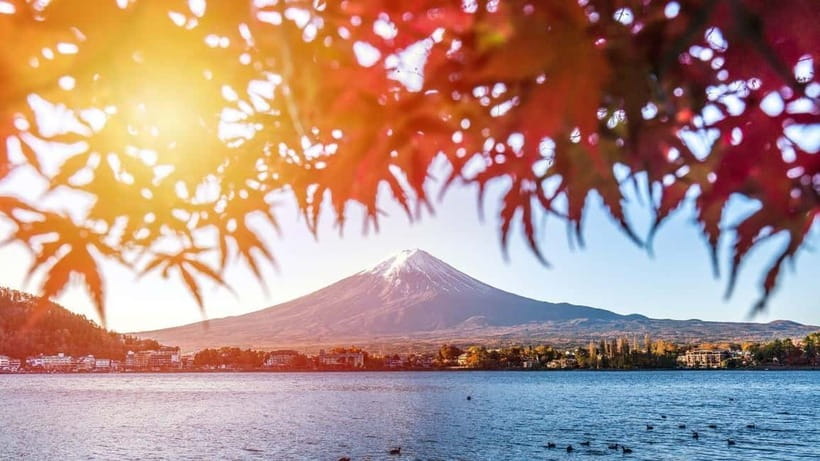
Mt. Fuji’s 5th Station is the highest point included as an optional route choice. At this elevation, you get a closer alpine view of Japan’s highest peak and the surrounding area. It is a strong choice if your priority is to feel physically closer to Fuji rather than simply photograph it from across a lake.
You must select this option at checkout. It is not something to assume will be added automatically on the day. The listed stop allows about two hours, including sightseeing, a photo stop, and the scenic drive up and down.
Weather is the big question here. Clouds can hide the upper mountain, and the tour operator may change plans in unsafe conditions. Even on a clear day, the stop should be seen as a chance for a close view, not a promise of a perfect summit photograph.
Lake Yamanaka and the Fuji Five Lakes
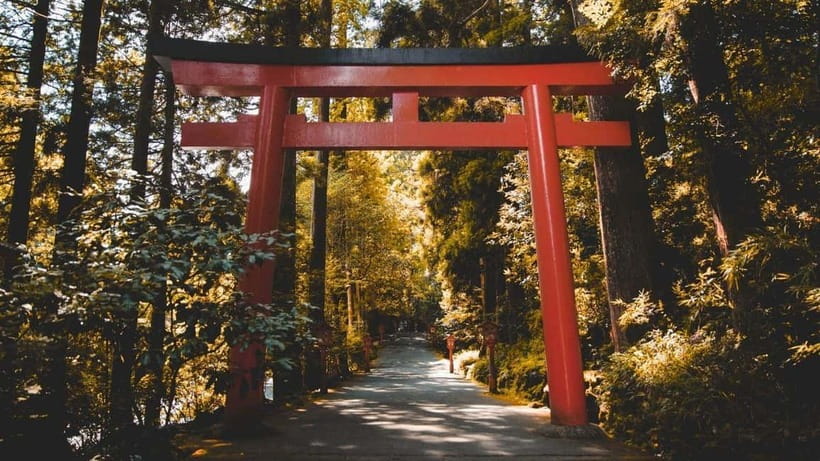
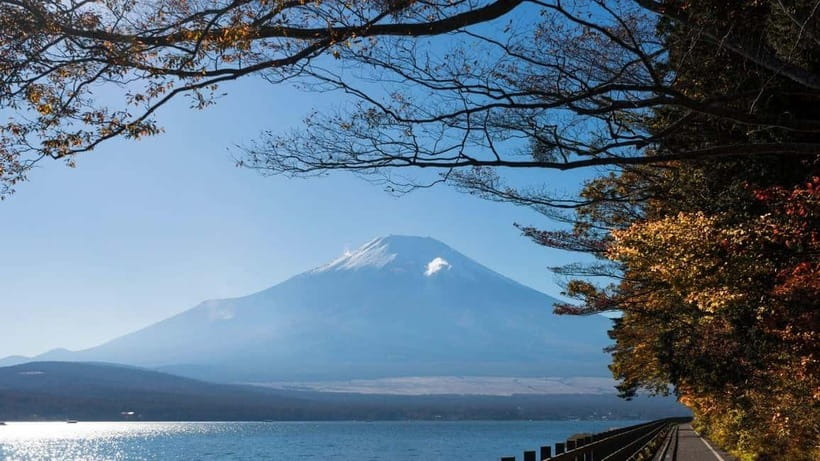
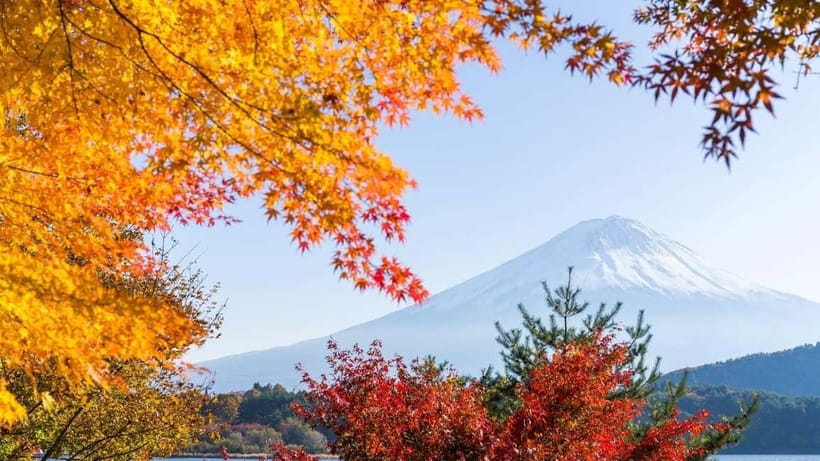
Lake Yamanaka, also called Yamanakako, is one of the Fuji Five Lakes. Its calm water can provide beautiful reflections of Mt. Fuji when the weather cooperates. The planned visit lasts about 45 minutes, giving you time for photographs and a short walk.
This is a good early stop because it offers a wide, open view after the long drive from Tokyo. It also gives you a sense of the region’s scale. Fuji does not simply appear as a backdrop to one town. The mountain shapes the whole area, and the lakes provide different angles and moods.
The short visit is also a warning. You will have time to see the shore and take photographs, but not to explore the entire lake district. If your main goal is a relaxed lakeside morning, a focused Kawaguchiko or Yamanakako day would allow more time than this broad circuit.
Owakudani’s volcanic steam and black eggs
Owakudani is the most unusual natural stop on the route. Volcanic activity sends steam from vents in the valley, creating an unmistakable sulfurous setting. The famous black eggs are a local specialty and an easy snack to try on site.
You get about an hour here for photographs, walking, and sightseeing. The stop adds variety to a day otherwise built around water views, mountain scenery, shrines, and shopping. It feels less polished than a viewpoint or museum, which is part of its appeal.
Access and conditions can vary around volcanic areas. Follow local instructions and expect the weather to feel different from Tokyo. If you are sensitive to sulfur smells, this may not be your favorite stop, but it is one of the day’s most distinctive experiences.
A few more Tokyo tours and experiences worth a look

Lake Ashi and the Hakone Shrine torii
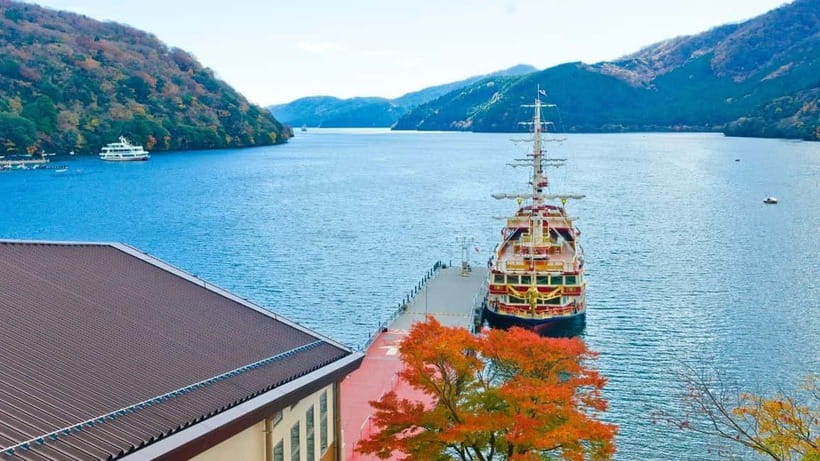
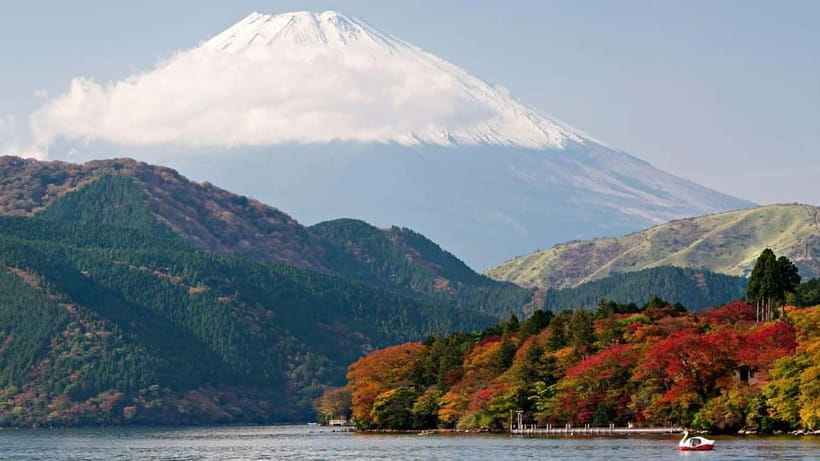
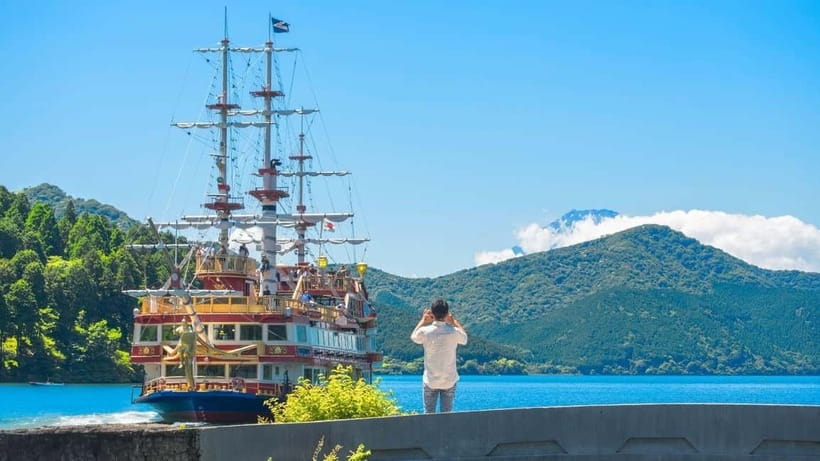
Lake Ashi brings the tour into Hakone’s classic postcard setting. The lake is surrounded by mountains, and on a clear day Mt. Fuji may appear beyond the water. The scheduled sightseeing and scenic drive take about 45 minutes before lunch and the later Hakone stops.
An optional sightseeing cruise can add a different view. From the water, you can take in the lake, mountain slopes, and shrine area without staying beside the road. Cruise tickets are not included, so check the cost before committing. The cruise also uses part of your limited schedule, which makes it a better fit for you if the lake itself is a priority.
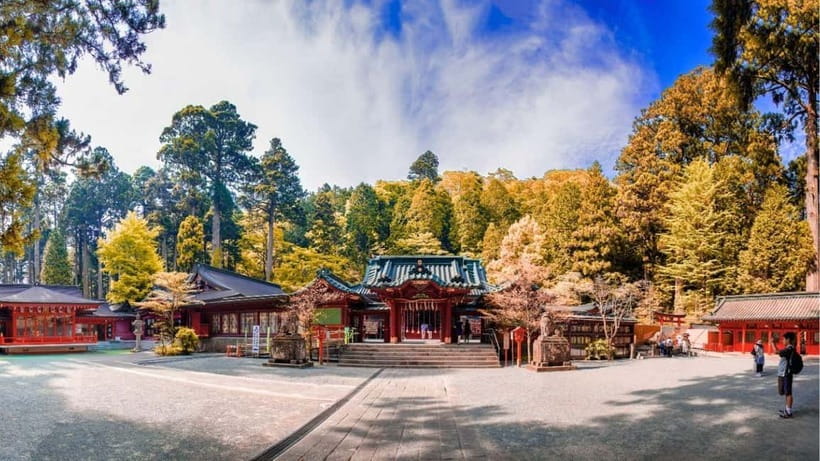
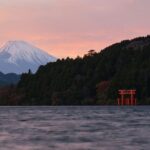
The Heiwa no Torii, linked with Hakone Shrine, is the famous red gate rising from the water. You get around 30 minutes for a photo stop and walk. It is one of the most recognizable images in Hakone, but it can be busy, and the photo area does not offer endless time for quiet contemplation.
The shrine itself sits in a forested setting, giving the stop a spiritual and visual change from the open lake and volcanic valley. Wear shoes you can walk in comfortably. You may need to manage steps and uneven ground around shrine areas, although the activity is listed as wheelchair accessible.
Lunch in Hakone, with room for your own choice
Lunch is allocated about 90 minutes in Hakone, but food is not included. That is useful for flexibility: you can choose a local restaurant and spend according to your appetite and budget rather than accepting a fixed meal.
It also means you need to plan your expectations. This is not a food tour, and your driver may offer advice, but the meal remains your responsibility. Bring cash, since the instructions specifically recommend it, and remember that food and drinks are allowed in the vehicle only if you avoid making a mess. Alcohol is not allowed in the car, and unusually heavy cleaning can cost ¥7,000.
The long lunch window can help a family or larger group reset. It is also one of the places where the day can slip behind schedule, so keep the next attraction in mind.
The Hakone Open-Air Museum
The Hakone Open-Air Museum places large art installations in an outdoor mountain setting. It is a good choice if you want more than viewpoints and photographs. The museum gives the day a cultural break, with time to walk among sculptures and see art framed by Hakone’s hills.
The scheduled visit lasts about 90 minutes. That is enough for a useful introduction, but probably not enough for every exhibit if you move slowly. Admission is extra, and the booking information also refers to a cable car ride in connection with this part of the route, so confirm exactly which transport and tickets are included before you go.
This stop is optional in spirit because the full route already contains more sights than most people can absorb in one day. If your group includes art lovers, keep it. If everyone is focused on Fuji photographs, you may prefer to use the time at a lake, shrine, or viewpoint.
Gotemba Premium Outlets and the cost of extra stops
Gotemba Premium Outlets is one of Japan’s largest outlet malls, with international and local brands. The stop is scheduled for about 65 minutes, including shopping and the scenic drive.
For a serious shopper, that is a useful pause. For someone hoping to spend more time outdoors, it may feel like an odd interruption in a Fuji and Hakone day. The mall can also tempt you into buying more than planned, so decide in advance if shopping is part of your goal.
The outlet stop illustrates the tour’s flexible nature. You are not locked into a single theme. You can combine natural sights, culture, food, and shopping. The price of that variety is less time at each individual place.
What the drivers add to the experience
The driver often shapes the day more than the written route does. Haider was praised for careful driving, flexibility, photography, and polite service. Umer received repeated praise for his friendly approach and ability to adjust the route. Anas was described as punctual, helpful, easy to communicate with, and willing to make a different drop-off work.
Jabir’s gentle driving was especially useful for a family whose son became carsick. He allowed time outside the vehicle and let the child sit up front, helping the family continue comfortably. Mohinder also adjusted a lunch stop to suit a group’s cravings, while other drivers, including Deo, Bhatti, and Hassan, were praised for taking groups to requested sights and offering useful comments.
The pattern is clear: the strongest part of the service is practical care. You can ask for a slower pace, a photo stop, or a reasonable route adjustment. Still, do not confuse a helpful driver with a full-time historian. One strong assessment noted that the day felt more like a scenic photography outing than a detailed history lesson.
Timing, pickup zones, and possible surcharges
The advertised 10-hour duration applies to Tokyo-area pickup and drop-off. Pickup and drop-off are available within Tokyo’s 23 wards. If you are staying outside those wards, the surcharge ranges from ¥5,000 to ¥20,000, depending on the location, and is paid before or on the day of the trip.
You can also start or finish in Hakone or the Fuji area. For those bookings, pickup is generally between 9:30 and 10:00 in the morning, with drop-off around 16:00 if you finish in the same general area. The operator may adjust the timing based on the distance involved.
A different drop-off location is allowed within the permitted areas at no extra cost. Tell the driver on the day. The operator contacts you through WhatsApp in the afternoon one day before the trip, usually around 4:00 to 5:00 Japan time, so make sure the booking has a working contact number.
Price, group size, and who gets the best value
At $488 per group of up to five, this is easiest to justify with four or five people. A family avoids separate rail fares, buses, taxis, and the hassle of keeping everyone together. You also gain hotel pickup, an air-conditioned vehicle, and a driver who can adapt the day.
For one or two people, the price is harder to defend unless comfort and privacy are your top priorities. A public tour or regular transport may cost less, though it will not give you the same control. The tour is also not all-inclusive. Add lunch, cruise or museum tickets, Mt. Fuji 5th Station selection if priced separately, and shopping to your budget.
I would choose this for families, small groups, older relatives, or anyone who wants to cover both Fuji and Hakone in one day. I would hesitate if you dislike long car rides, want a slow pace, or care most about detailed explanations at every shrine and museum.
Practical tips for a smoother Fuji day
- Choose the 5th Station at checkout if a high viewpoint is important to you.
- Ask about every optional ticket before departure. Attraction admissions are not included.
- Bring cash for food, tickets, snacks, and the overtime charge if the day runs long.
- Wear comfortable shoes for Owakudani, shrine walks, museum grounds, and lake stops.
- Keep lunch efficient if you want full time at the later attractions.
- Expect weather changes. Fuji may be hidden by cloud, even when the rest of the route is pleasant.
- Tell the driver your priorities early. A photo-focused group, a family with children, and a group that wants shopping will need different timing.
Free cancellation is available up to 24 hours before departure, and you can reserve now and pay later. The tour operates in rain or shine unless the operator considers conditions unsafe.
Should you book this Mt. Fuji and Hakone tour?
Book it if you want a private, efficient sightseeing day and your group values comfort over a slow, specialist visit. The ability to connect Yamanakako, Owakudani, Lake Ashi, the shrine, and optional Fuji or shopping stops is the main reason to choose it.
Go in with realistic expectations. This is a broad day with a lot of driving and several paid extras. You may rush a few stops, and the standard driver service may not provide long historical explanations. But with a careful driver, a clear priority list, and a group of four or five, the tour offers a practical way to see a large and beautiful area without managing the transport yourself.
FAQ
How long is the tour?
The tour lasts 10 hours when you are picked up and dropped off in Tokyo’s 23 wards. Timing can change for pickups or drop-offs in the Fuji or Hakone area.
Is hotel pickup included?
Yes. Pickup and drop-off are included for hotels within Tokyo’s 23 wards. Locations outside those wards may require a surcharge of ¥5,000 to ¥20,000, depending on the location.
Is Mt. Fuji’s 5th Station included automatically?
No. You must select the Mt. Fuji 5th Station option at checkout if you want to visit it.
Are attraction tickets and meals included?
No. Food, drinks, attraction admissions, and optional activity tickets such as a Lake Ashi cruise are not included.
Is the tour private?
Yes. It is a private group experience for up to five people, using a modern air-conditioned vehicle.
What happens if the tour runs overtime?
Overtime costs ¥2,500 per 30 minutes and is payable in cash to the driver. The packed route makes it wise to watch the schedule at each stop.
More Private Tours in Tokyo


More Hakone Day Trips in Tokyo
More Mt Fuji Day Trips in Tokyo
More tours in Tokyo we've reviewed


Mt Fuji Day Trips, compared.
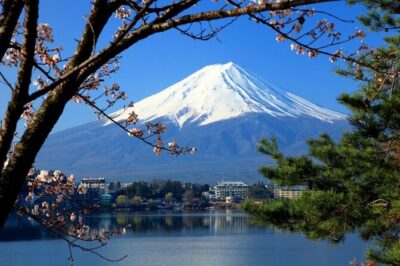 ★ 5.0Mt Fuji and Hakone 1-Day Bus Tour Return by Bullet TrainFrom $163
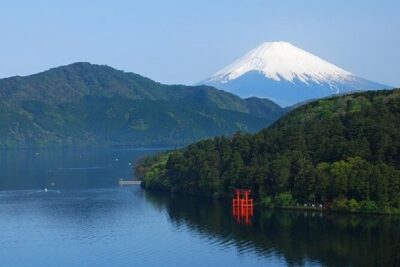 ★ 4.0Mt Fuji & Hakone Cruise, Drum Show Bullet Train 1 Day from TokyoFrom $149
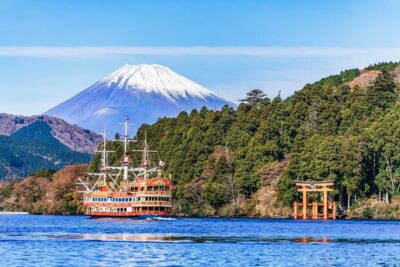 ★ 4.4Tokyo Mt Fuji 5th St & Hakone Cruise Bus Tour w/Bullet TrainFrom $15410 hours
 ★ 4.5From Tokyo: Mount Fuji Full-Day Sightseeing TripFrom $6810 hours
 ★ 4.7Tokyo: Mt. Fuji Tour, Hakone Ropeway, Owakudani, Lake AshiFrom $5410 hours
 ★ 4.4Tokyo:Mt.Fuji,Kawaguchiko Oishi Park,Arakurayama Sengen ParkFrom $5410 hours