
Reviewed · TOURS
Half Day Sightseeing Tour in Tokyo
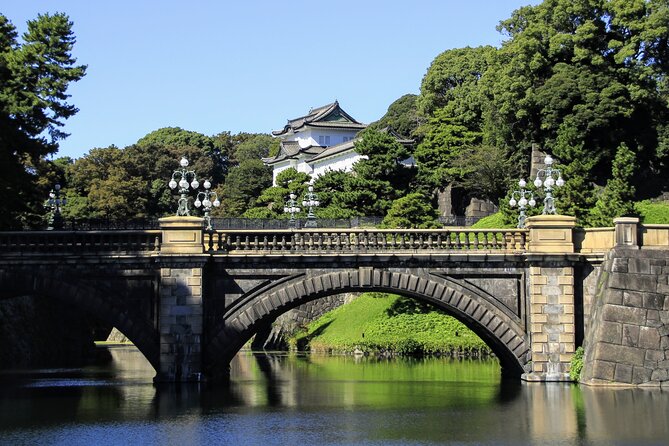
Tokyo packs a lot into a small area, and this morning coach tour gives you a quick look at several major sights without making you master the subway on your first day. You’ll visit peaceful Meiji Jingu, see the Imperial Palace area, and finish in Asakusa near Senso-ji Temple.
I like the air-conditioned coach, especially in Tokyo’s humid summer, and I like the small matcha tasting in Asakusa. The main catch is time: you may spend much of the tour on the road, and the Imperial Palace stop can amount to a bridge and moat rather than a full garden visit.
In This Review
- Key points to know before booking
- A fast way to see Tokyo’s old and new sides
- Morning pickup and the long city drive
- Meiji Jingu, Tokyo’s wooded Shinto refuge
- The Imperial Palace area and its limits
- Asakusa and the matcha tasting
- Senso-ji and the important ending detail
- What your guide can add to the experience
- Walking, weather, and group size
- Is $94.84 a fair price?
- Who should book this morning tour?
- Should you book it?
- FAQ
- How long does the Tokyo sightseeing tour last?
- Where can I join the tour?
- Where does the tour finish?
- Is Senso-ji Temple included?
- Is the Imperial Palace open during the tour?
- Is matcha included?
- What languages are available for the audio guide?
- Can I cancel for a full refund?
Key points to know before booking
- Meiji Shrine gives you the tour’s best quiet moment, with a broad wooded approach and a sacred Shinto setting in the middle of Tokyo.
- The coach covers ground efficiently, passing areas such as Harajuku, Akihabara, Ueno, and the National Diet Building.
- The Imperial Palace visit varies, and access may be limited to the outer bridge and gate area.
- Asakusa is the tour’s final stop, with matcha, Nakamise shopping street, and access to Senso-ji Temple.
- The tour ends in Asakusa, not at the Ginza or Shinjuku pickup point.
- Guide quality matters, with especially strong praise for guides including Ayaka, Yuki, Mao, Hiro, Tsubasa, Aiko, and Lisa.
A fast way to see Tokyo’s old and new sides
At $94.84 per person, this is not a bargain subway ride. You are paying for the air-conditioned bus, an English-speaking guide, audio options in several languages, Wi-Fi, and a planned route through widely separated parts of Tokyo.
That price can make sense if you have only one morning, are uneasy about Tokyo’s huge rail system, or want someone else to handle directions and timing. It is less convincing if you are comfortable using trains and prefer long visits at one or two places. Several stops are brief, and some sights are viewed from the coach rather than visited on foot.
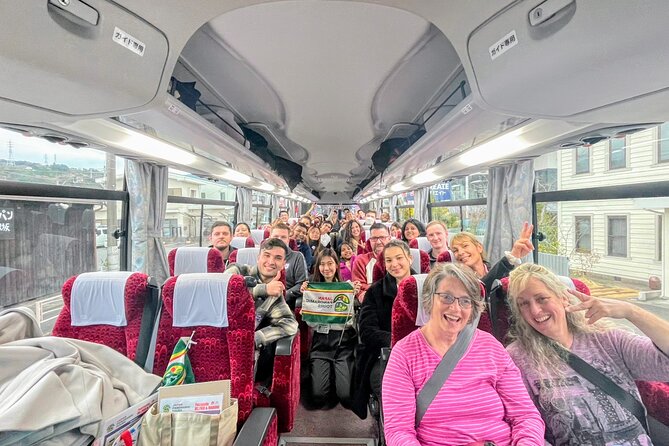
The tour runs for about three to four hours, though some people have found the half-day version closer to three hours. The maximum group size is 43, so this is a large coach outing, not a personal neighborhood walk. A good guide can make that format work. Ayaka, Yuki, Mao, Hiro, Tsubasa, Aiko, Lisa, and others have been singled out for clear English, humor, organization, and care with the group.
If you're still narrowing it down, here are other tours in Tokyo we've reviewed.

Morning pickup and the long city drive
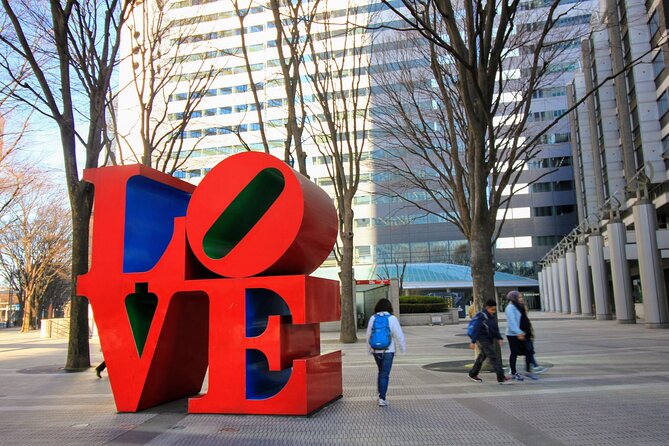
The listed pickup options are Matsuya Ginza at 7:20 a.m. and the LOVE sculpture in Shinjuku at 7:50 a.m. The LOVE sculpture is a practical landmark, but you need to arrive early and confirm your exact boarding point and time before setting out.
Once aboard, the bus begins its useful work: linking districts that would take more effort to combine independently. You may pass through Harajuku, Akihabara, Ueno, and other central areas, with multilingual audio available in English, French, Italian, Spanish, German, Portuguese, and Ukrainian.
The guide may also point out places such as the National Diet Building, Japan’s parliament, and shops associated with anime, games, maid cafés, kitchen goods, knives, and food replicas. These are usually drive-by views, not extended stops. Think of this section as a moving introduction to Tokyo, not a series of sightseeing visits.
That distinction matters. Some guides offer lively explanations and useful cultural notes, while others spend much of the ride checking head counts and reminding everyone about the next stop. Sitting near the front can help if you want to hear the guide clearly. One person found it difficult to hear from the rear of the bus and had a better experience after moving forward.
Meiji Jingu, Tokyo’s wooded Shinto refuge
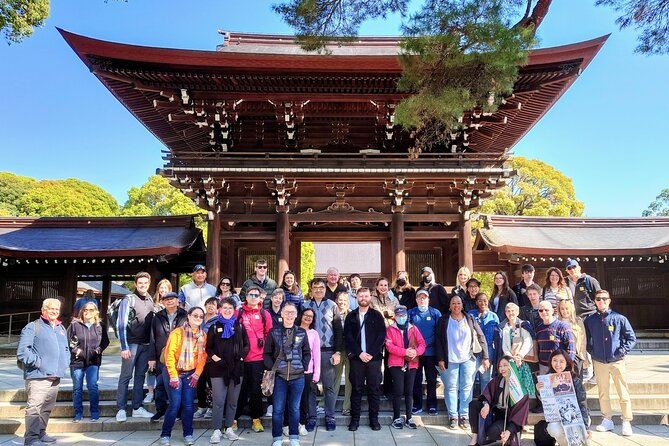
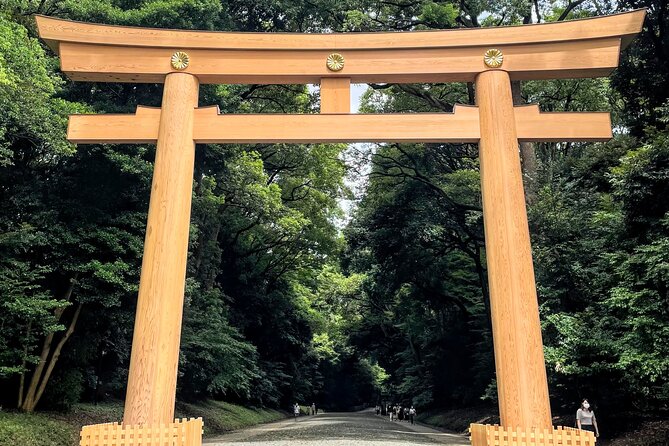
Meiji Jingu is the strongest full stop on the morning route. Built in 1920 for Emperor Meiji, the shrine sits within a large wooded area that feels far removed from nearby Harajuku.
You’ll have about 50 minutes here. That is enough time to walk through the grounds, notice the sake barrels and wine barrels along the approach, and take in the torii gates and shrine buildings. The guide may explain Shinto customs, the meaning of the gates, and details such as the torii donated by Taiwan.
I like this stop because it provides a needed pause after the early coach ride. Tokyo can feel like a wall of buildings and signs, but Meiji Jingu offers trees, gravel paths, quiet courtyards, and a chance to see people purifying themselves and praying at a working shrine.
You should still keep expectations in check. Fifty minutes is not enough for a slow exploration of the entire grounds, and the group must return to the bus on schedule. Wear comfortable shoes, since this is one of the tour’s main walking sections.
Harajuku is close by, and the coach represents the district as a center of youth fashion and Japanese pop culture. You may see the area from the bus, but you will not have a free shopping period there. If Harajuku is a priority, plan to return on your own later.
The Imperial Palace area and its limits
The next major stop is the Imperial Palace, built on the former site of Edo Castle and still associated with the Imperial family. The grounds include traditional gardens, seasonal flowers, moats, bridges, and historic structures.
The planned visit lasts about 50 minutes, but the exact experience depends on what is open and how the route is operating. In some cases, you may visit part of the East Garden or another accessible area. In others, you may only reach the outer bridge and gate area.
This is the tour’s biggest point of uncertainty. The word stroll can suggest a lengthy garden walk, but you should not book this outing expecting an interior palace visit. Several people found the stop too limited, especially when the garden was closed and the group saw only the gate or bridge.
Even with that limitation, the palace area can be worthwhile as a quick introduction to Tokyo’s former castle center. One guide explained the horse position on a samurai statue, noting what one raised leg represents. Small explanations like that help turn a photo stop into something meaningful.
Traffic, weather, closures, and operating conditions can change the order or remove a stop. If a location is closed, the operator may substitute another place or provide a gift, with no refund for those changes. If the Imperial Palace matters most to you, visit its accessible grounds independently on another day so you are not relying on this short stop.
Asakusa and the matcha tasting
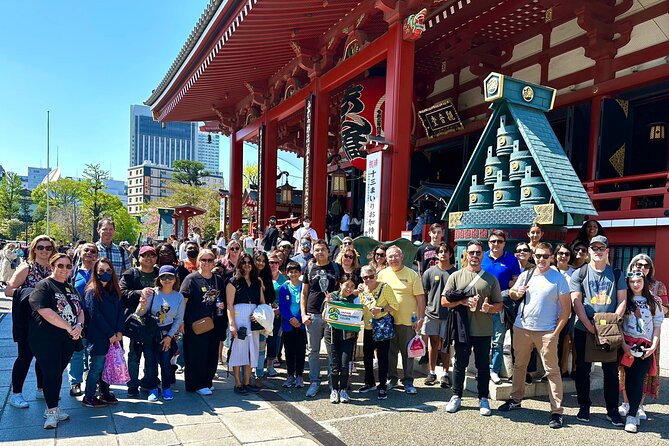
The coach continues to Asakusa, Tokyo’s old downtown district and the most traditional-feeling part of the morning. Here you receive a matcha drink or matcha gelato, using first-flush tea from Uji in Kyoto.
The tasting is a pleasant extra, but it is not a full tea ceremony. It takes about 30 minutes and may include a chance to browse matcha products. The advertised matcha is presented as smooth and not bitter, which may appeal if you are unsure about powdered green tea.
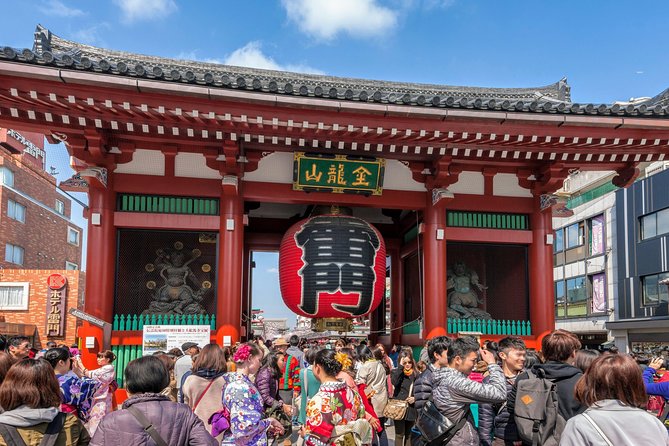
The Asakusa stop works best because it combines a small food experience with time near some of Tokyo’s most recognizable sights. You can look around Nakamise Avenue, take photos at Kaminari-mon Gate, and continue toward Senso-ji Temple.
The schedule is tight, so you should not expect a long shopping session or a careful visit to every building. The matcha stop may also feel like a retail visit if you would rather spend the time at the temple. Still, it offers a simple taste of Japanese tea culture without requiring a separate booking.

Senso-ji and the important ending detail
Senso-ji is one of Tokyo’s best-known temples, and the tour ends in this area. The formal stop is listed at about 10 minutes, but you can use the end of the tour as the beginning of your own Asakusa visit.
This is where the tour’s transportation plan needs careful attention. You are not returned to Ginza or Shinjuku. The half-day route finishes at Senso-ji in Asakusa, and no extra hotel drop-off is provided.
That arrangement can be either a problem or a benefit. If you want to explore Asakusa, eat nearby, shop along Nakamise, or visit the temple at your own pace, ending here saves you a separate train ride. If your hotel or next appointment is near Ginza or Shinjuku, you must arrange your own return.
The tour information has caused confusion for people expecting a round trip, so treat the ending as a firm part of your planning. Bring a phone with transit access or know your next destination before the bus leaves you in Asakusa.
What your guide can add to the experience
The guide is the most important variable. The best guides turn a rapid tour into a useful first look at Tokyo. Ayaka has been praised for her fluent English, cultural explanations, and friendly humor. Yuki has been noted for her calm organization and personal care with a large group.
Mao, Hiro, Tsubasa, Aiko, Lisa, and Elven have also received strong praise for clear explanations, warmth, humor, and the ability to keep the morning moving. Hiro was especially attentive to a person who had trouble walking, which is reassuring on a tour with several walking sections.
You may also encounter a newer guide who is still finding a rhythm, or a guide who gives fewer historical details than you hoped for. Large groups require head counts, and that practical task can take attention away from storytelling.
The audio system helps fill in some gaps, with recordings available in seven languages. However, audio guidance cannot always replace a guide who responds to questions or explains what you are seeing at the right moment. If cultural context is your main reason for booking, the quality of the live guide will shape the value.
Walking, weather, and group size
The tour is not recommended if you cannot walk long distances. Meiji Jingu and Asakusa both require time on foot, and the palace area may involve walking over paths or around the outer grounds. Comfortable shoes are essential.
The bus has air conditioning and Wi-Fi, which is useful in hot weather or when you want to check maps after the tour. The coach also gives you a break between walking stops. In winter or rain, conditions may affect the order of visits or prevent some activities.
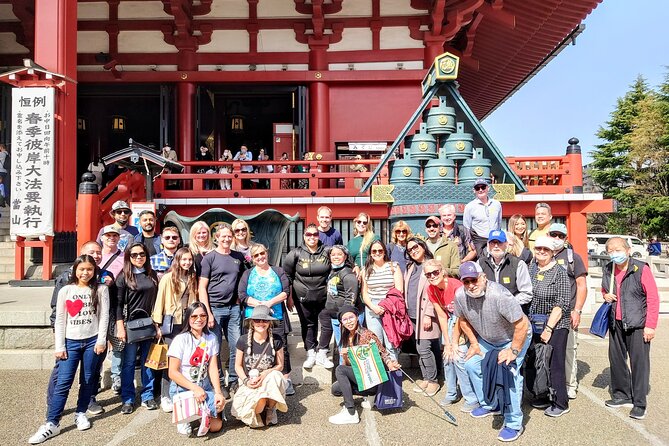
With up to 43 people, you need to stay alert at meeting times. The operator says late arrivals cannot join the group partway through, although one late family was helped by a phone operator and managed to catch up. Do not count on that exception. Be at the pickup point early.
Most people can participate, and the tour is near public transportation. Still, a large coach group moves at the pace of its slowest section, not your personal schedule. If you want quiet temple time, food stops, or photographs without a crowd, an independent visit will give you more control.
Is $94.84 a fair price?
The value depends on what you want the money to buy. At $94.84, you receive transport between distant districts, a professional English-speaking guide, multilingual audio, bus Wi-Fi, and a matcha drink or gelato. You also avoid the work of planning a route that links Meiji Jingu, the Imperial Palace area, and Asakusa in one morning.
The price is harder to justify if you mainly want entrance access or long visits. Admission is not charged for the listed stops, and several famous places are seen only briefly or from outside. Tokyo’s rail network can take you between these districts for far less, though you would need to organize the route and explanations yourself.
I would view this as an orientation tour. It helps you identify places to revisit, gives you a first look at several neighborhoods, and leaves you in Asakusa with the rest of the day open. I would not choose it as my only Tokyo sightseeing experience if I wanted detailed history or relaxed time at the Imperial Palace.
Who should book this morning tour?
You should consider booking if you are visiting Tokyo for the first time, have only a morning available, prefer a coach to several train transfers, or want a guide to explain basic differences between shrines and temples. It also suits people who like seeing several districts before choosing where to spend more time later.
The tour is less suited to independent sightseers who already know Tokyo, people hoping for an in-depth Imperial Palace visit, or anyone who dislikes fixed schedules. It is also a poor fit if you need to finish back near Ginza or Shinjuku.
My practical choice would be to book it early in your Tokyo stay, then return independently to the places that catch your interest. Sit toward the front, confirm the pickup point, and plan your onward route from Asakusa before departure.
Should you book it?
Book this half-day Tokyo sightseeing tour if convenience, air conditioning, and a broad first look matter more to you than long visits at each stop. Meiji Jingu and Asakusa are the reliable highlights, and the matcha tasting adds a nice local touch.
Skip it if you expect a full Imperial Palace garden walk, a return to your pickup point, or detailed commentary from start to finish. For the best value, treat the morning as a guided sampler, not a complete tour of Tokyo.
FAQ
How long does the Tokyo sightseeing tour last?
The tour is scheduled for approximately 3 to 4 hours. Some departures may operate closer to three hours.
Where can I join the tour?
Pickup is available from Matsuya Ginza at 7:20 a.m. or the LOVE sculpture in Shinjuku at 7:50 a.m. Check your booking details for the correct location and time.
Where does the tour finish?
The tour ends at Senso-ji Temple in Asakusa. There is no return transport to Ginza or Shinjuku and no hotel drop-off service.
Is Senso-ji Temple included?
The tour finishes at Senso-ji Temple, near Nakamise Avenue and Kaminari-mon Gate. The formal temple stop is listed as about 10 minutes, and you can remain in Asakusa afterward on your own.
Is the Imperial Palace open during the tour?
Access can vary. The tour may visit the East Garden or another accessible area, but closures can limit the visit to an outer bridge, gate, or moat area.
Is matcha included?
Yes. The tour includes either a matcha drink or matcha gelato. The matcha uses first-flush tea from Uji, Kyoto.
What languages are available for the audio guide?
Audio guidance is available in English, Spanish, French, Italian, German, Portuguese, and Ukrainian. A professional English-speaking guide also accompanies the tour.
Can I cancel for a full refund?
You can cancel up to 24 hours before the local start time for a full refund. Cancellations or changes made less than 24 hours before departure are not refunded or accepted.
More tours in Tokyo we've reviewed




Tours, compared.
 ★ 5.0Mt Fuji and Hakone 1-Day Bus Tour Return by Bullet TrainFrom $163
 ★ 5.01-Day Tokyo Bus TourFrom $129
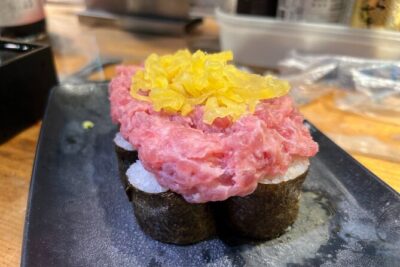 ★ 5.0Tokyo: Shinjuku Food Tour (13 Dishes at 4 Local Eateries)From $86
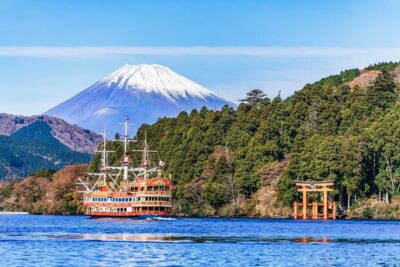 ★ 4.4Tokyo Mt Fuji 5th St & Hakone Cruise Bus Tour w/Bullet TrainFrom $15410 hours
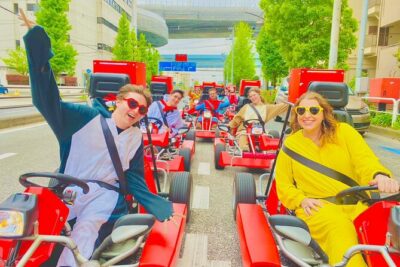 ★ 5.0Flagship 2-Hours Official Street Go-Kart Tour – Tokyo Bay ShopFrom $642 hours to 2 hours 30 minutes (approx.)
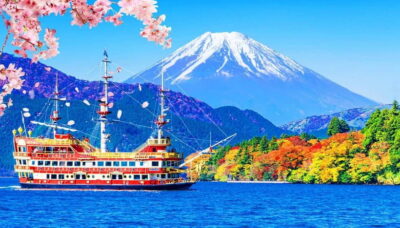 ★ 4.7Tokyo: Mt. Fuji Tour, Hakone Ropeway, Owakudani, Lake AshiFrom $5410 hours