
Reviewed · TOKYO
Geisha Entertainment Experience in Tokyo
Tokyo’s geisha arts are presented here in a friendly, compact setting at Tomioka Hachimangu Shrine, a 400-year-old site tied to Edo-era Fukagawa. You watch graceful dance and shamisen playing, then take part in the cheerful ozashiki style of entertainment, where food, games, and conversation share the stage.
I like the choice built into the experience: you can order a full kaiseki meal, local Fukagawa meshi, or simply Japanese sweets and matcha. I also like the personal touch, since the program explains the customs instead of asking you to admire them from a distance. The main drawback is practical: the venue can be difficult to find, and the strict non-refundable policy leaves little room for a change of plans.
In This Review
- Key points to know before booking
- Why this short Tokyo experience works
- Arriving at Tomioka Hachimangu Shrine
- What happens during the performance
- Choosing MATSU, TAKE, or UME
- MATSU: the full 70-minute program
- TAKE: the 45-minute middle choice
- UME: the 30-minute tea and sweets visit
- TAKE Course with Hire Included
- Food, tea, and the value of local details
- How authentic and interactive is it?
- Price and practical value at $82.24
- Who should book this experience?
- Should you book it?
- FAQ
- Where does the geisha entertainment experience take place?
- How old is Tomioka Hachimangu Shrine?
- How long does the experience last?
- What is included with every main course?
- What food comes with the MATSU course?
- What is included with the TAKE course?
- What does Fukagawa meshi contain?
- What comes with the UME course?
- Is there a car-hire option?
- Can I cancel or change my booking?
Key points to know before booking
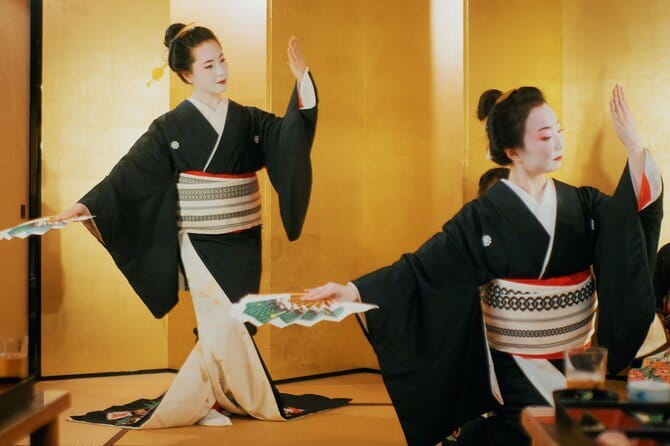
- A geisha performance inside a historic shrine precinct: The setting links the show to Fukagawa’s Edo-period identity.
- Three food and time choices: MATSU lasts about 70 minutes, TAKE about 45 minutes, and UME about 30 minutes.
- Traditional arts with audience participation: Expect dance, shamisen, explanations, and ozashiki games on the MATSU and TAKE courses.
- Fukagawa meshi offers a local taste: This regional dish features rice cooked with clams in a savory broth.
- Tea and sweets make the shortest option: UME includes Japanese sweets, matcha, a performance, and a souvenir.
- An optional five-hour car hire is available: The driver can speak English, and the hire begins after the noon geisha experience.
Why this short Tokyo experience works
Many first-time visitors find geisha culture hard to approach. A formal dinner in a traditional setting can be expensive, unfamiliar, and difficult to arrange. This experience gives you a clear introduction in less than an hour, with the arts explained as they happen.
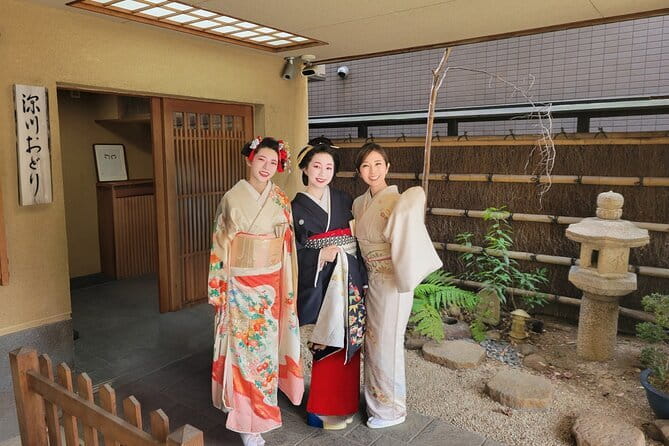
The venue, Fukagawa Odori Gekijyo, sits within the grounds of Tomioka Hachimangu Shrine. The shrine was built 400 years ago and is closely linked with Fukagawa during the Edo period. That matters because the setting is not a random event room. You are visiting a place with a direct connection to the old neighborhood identity that the performance presents.
The mood is not stiff. You watch traditional dance and shamisen, but you also join the social side of the ozashiki gathering. The games help break the ice, especially if you are unsure how to respond to a formal performance. You can ask questions, learn why certain customs are done in a particular way, and take part rather than simply sit quietly.
The program also makes a good bridge between entertainment and cultural education. Explanations cover geisha traditions, tea, and the meaning behind the dances. One performance included translations during each dance, while another used a phone translation app when the English translator was away. That tells you to expect useful language support, but not to assume that a live English interpreter will always be present.
If you're still narrowing it down, here are other tours in Tokyo we've reviewed.

Arriving at Tomioka Hachimangu Shrine
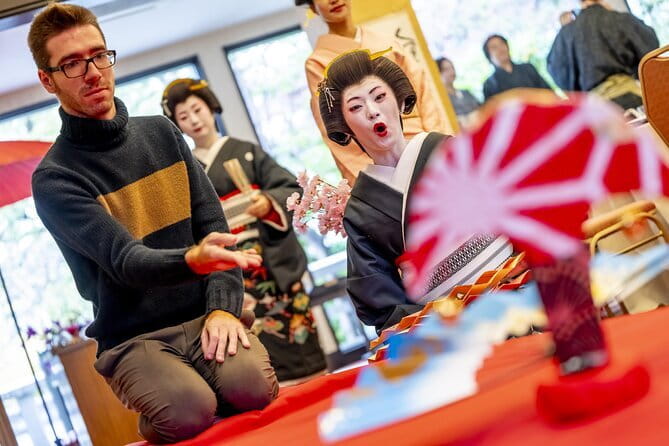
The experience takes place at Fukagawa Odori Gekijyo, within the Tomioka Hachimangu Shrine grounds. The venue is near public transportation, but finding the exact entrance can take effort. Allow extra time and check the location details carefully before setting out.
This is the one logistical weakness I would take seriously. The shrine precinct can have several paths and entrances, and following a map link does not always make the final approach obvious. If you arrive just before the start, you may feel rushed. I would aim to be in the shrine area early enough to locate the facility without hurrying.
The old shrine setting adds atmosphere, but it also means you should not expect a large modern theater with an obvious street entrance. Look for the specific facility name, Fukagawa Odori Gekijyo, rather than relying only on the shrine name.
What happens during the performance
The central program combines geisha dance, shamisen music, and ozashiki entertainment. The dancing gives you a quiet look at the discipline and control behind the art. The shamisen adds the distinct sound of traditional Japanese performance, while the explanations help you understand what you are seeing.
The presentation is designed to be approachable. You can learn about the history and customs connected with geisha and tea, then see those traditions used in performance. The explanations are important because the gestures, music, and formal movements can otherwise be difficult to read if you are new to Japanese arts.
The ozashiki portion brings a more social tone. Traditional games invite participation and create the feeling of a Japanese party rather than a museum demonstration. You may find this especially enjoyable if you like experiences where you do something, not just watch something.
On the MATSU and TAKE courses, the ozashiki entertainment is included. The UME course does not include that part, so pay attention to the choice you make. UME still includes a performance, but it is the shorter and simpler format.
Choosing MATSU, TAKE, or UME
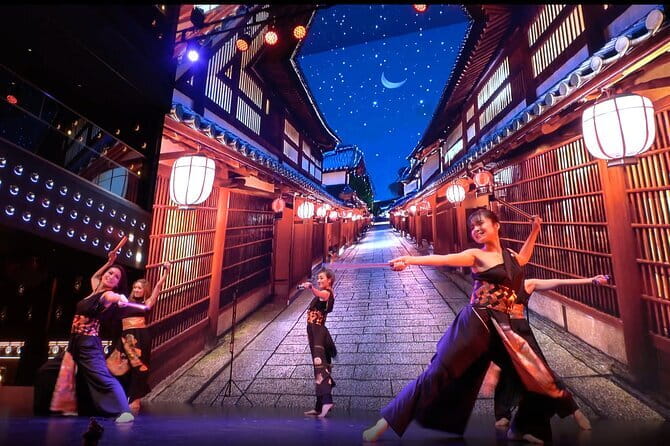
The three main choices suit different appetites, budgets, and schedules. The supplied details also list a fourth option, TAKE Course with Hire Included, which adds a private car arrangement after the noon experience.
MATSU: the full 70-minute program
MATSU is the most complete choice. It includes admission, the performance, ozashiki geisha entertainment, a traditional kaiseki meal with Fukagawa meshi, a drink, and a souvenir.
Choose this if the food is part of your reason for booking. Kaiseki is presented as a traditional Japanese course meal, so this option gives the experience a fuller dining element rather than a quick cultural stop. The extra time also allows more room for the performance, explanations, and games.
The tradeoff is simple: MATSU takes about 70 minutes. That is still short by Tokyo standards, but you need to protect more space in your day. If you want the strongest combination of food, performance, and participation, this is the most suitable option listed.


TAKE: the 45-minute middle choice
TAKE lasts about 45 minutes and includes admission, the performance, ozashiki entertainment, Fukagawa meshi with a side dish, and a souvenir. It leaves out the full kaiseki meal and drink included with MATSU.
I see TAKE as the sensible choice for many people. You still get the key cultural elements, including the games and local food, but you do not need to set aside as much time. Fukagawa meshi is the important detail here: it is rice cooked with clams in a savory broth, a local specialty that gives the meal a clear connection to the neighborhood.
If you want to understand the geisha arts and have a taste of Fukagawa without making this the main event of your day, TAKE offers a good balance.
UME: the 30-minute tea and sweets visit
UME lasts about 30 minutes and includes the performance, Japanese sweets, matcha, and a souvenir. The ozashiki geisha entertainment is not included.
This is the best fit for a tight schedule or for someone who wants a calm introduction rather than a meal and party-style program. Tea and sweets provide a gentle way into the experience, and the shorter visit may work well between sightseeing stops.
The limitation is that you miss the audience participation connected with ozashiki entertainment. If playing a traditional game and joining the social part are high on your list, choose MATSU or TAKE instead.
TAKE Course with Hire Included
The hire-car option begins after the geisha experience at 12:00. You then have up to five hours to explore Tokyo on your own, and the driver can speak English.
This is not simply a longer version of the performance. It combines the TAKE experience with private transport for the rest of the day. The supplied details do not specify the exact car route, stops, or destinations, so you should treat it as flexible transport rather than a fixed sightseeing itinerary.
The hire may suit you if you want to continue exploring without working out every train connection. It will be less useful if you already have a firm Tokyo plan or prefer to travel independently by rail. Confirm the hire details before booking, since the car portion is a separate add-on structure.
Food, tea, and the value of local details
The food choices are more than a menu decision. They shape the pace and character of the visit.
MATSU gives you a traditional course meal and a drink, with Fukagawa meshi included as part of the kaiseki meal. TAKE gives you the local rice dish with a side dish. UME keeps things light with sweets and matcha.
I like the way Fukagawa meshi connects the meal to place. A bowl of rice cooked with clams in a savory broth may sound humble beside a formal kaiseki course, but local food often tells you more about a neighborhood than a grand restaurant does. Here, the dish anchors the performance in Fukagawa rather than presenting a generic Japanese meal.
The tea element also receives attention. The program introduces the Japanese tea ceremony and explains some of the reasons behind its customs. You should not expect a long specialist tea-school lesson in a 30 to 70 minute entertainment program, but you will get a useful first look at the care, manners, and calm rhythm involved.
If you have dietary needs, raise them before you arrive. One participant received help finding vegan food afterward, including personal assistance from the hostesses. That is a kind sign, but it does not mean a special meal is guaranteed within the booked course.
How authentic and interactive is it?
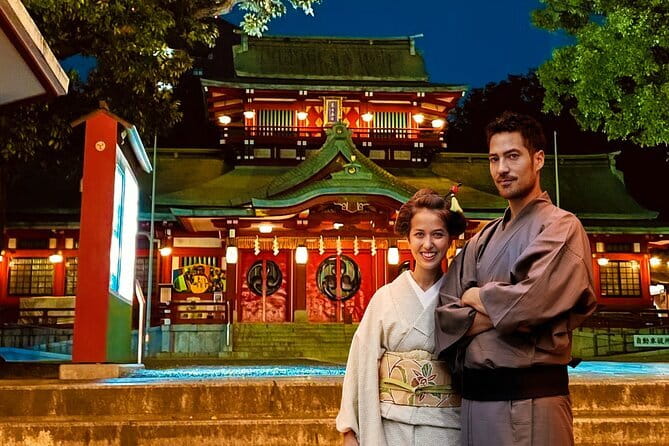
The experience feels intimate and personal rather than like a large stage production. That is a benefit if you want contact with the performers and the chance to ask questions. The host creates a welcoming atmosphere, and the explanations help you connect the beauty of the dance with the work and training behind it.
The traditional games are a major part of the appeal. They give families and first-time visitors a way to participate without needing prior knowledge. You can enjoy the humor and social rhythm even if you do not understand every word.
At the same time, keep your expectations sensible. This is a prepared cultural entertainment program, not an ordinary private geisha gathering. You receive a structured show, food or tea depending on your option, and a souvenir. Its strength is that it offers access to customs that can otherwise feel difficult to approach, while remaining manageable for a short Tokyo visit.
The experience has received a perfect five-star rating from 10 submitted ratings, with 100 percent recommending it. The most praised features are consistent: beautiful dance, kind staff, good food, clear explanations, a welcoming mood, and the chance to play a traditional game. One person described it as a peaceful introduction to tea ceremony, while another found the combination of talent, culture, and intimacy worth the cost.
Price and practical value at $82.24
At $82.24 per person, the experience is not a bargain tea stop, but the value depends on the course you choose. The price includes admission, the performance, and a souvenir. MATSU also includes kaiseki cuisine and a drink, TAKE includes Fukagawa meshi and a side dish, and UME includes sweets and matcha.
You are paying for several parts at once: access to a specialized performance, a historic setting, food or tea, cultural explanation, and participation. That package can make sense if you already plan to pay for a meal and want your meal to be part of a memorable cultural event.
MATSU should offer the broadest value because it includes the most food and the longest program, but it also requires the most time. TAKE may be the best middle ground if you want the main entertainment and local dish. UME is the lightest commitment, though it gives you less interaction.
The average booking point is 21 days ahead. I would not leave this until the last minute if your Tokyo dates are fixed, especially since confirmation is issued within 48 hours of booking and remains subject to availability.
The cancellation policy is strict. The experience is non-refundable and cannot be changed for any reason. Book only when your schedule is settled.
Who should book this experience?
I would recommend it to you if you want a culturally focused activity that fits into a half-day sightseeing plan. It works particularly well for first-time visitors who want an understandable introduction to geisha arts, tea, and traditional Japanese entertainment without committing to a long formal dinner.
Families may appreciate the games and friendly setting. Couples may prefer the calm beauty of the dance and tea. Food-focused visitors should look at MATSU or TAKE, while busy sightseers may find UME easier to fit between other plans.
It is less suitable if you want a large-scale theatrical production, a fully guided day around Tokyo, or a guaranteed live English interpreter. It is also not a good last-minute booking because of the strict cancellation terms and the need to locate the venue carefully.
Should you book it?
Book this experience if you value close-up cultural contact, traditional food, and a chance to take part. TAKE is my practical pick for most schedules because it includes the performance, ozashiki games, Fukagawa meshi, and a souvenir in about 45 minutes.
Choose MATSU when the meal matters as much as the show. Choose UME when you mainly want dance, tea, sweets, and a short visit. Add the hire car only if flexible transport for up to five hours after noon will genuinely simplify your day.
The difficult directions are the main warning. Get to Tomioka Hachimangu early, confirm the exact facility, and book only once your plans are firm. Do that, and this offers a memorable way to meet an important part of Tokyo culture in a small, welcoming setting.
FAQ
Where does the geisha entertainment experience take place?
It takes place at Fukagawa Odori Gekijyo, located within the precincts of Tomioka Hachimangu Shrine in Tokyo.
How old is Tomioka Hachimangu Shrine?
Tomioka Hachimangu Shrine was built 400 years ago and symbolizes Fukagawa during the Edo period.
How long does the experience last?
The MATSU course lasts about 70 minutes, TAKE lasts about 45 minutes, and UME lasts about 30 minutes.
What is included with every main course?
Each main course includes admission, a performance, and a souvenir.
What food comes with the MATSU course?
MATSU includes traditional kaiseki cuisine with Fukagawa meshi and a drink.
What is included with the TAKE course?
TAKE includes Fukagawa meshi, a side dish, the performance, ozashiki geisha entertainment, admission, and a souvenir.
What does Fukagawa meshi contain?
Fukagawa meshi is rice cooked with clams in a savory broth.
What comes with the UME course?
UME includes the performance, Japanese sweets, matcha, admission, and a souvenir. It does not include the ozashiki geisha entertainment experience.
Is there a car-hire option?
Yes. The TAKE Course with Hire Included begins with the geisha experience at 12:00, followed by up to five hours of independent Tokyo exploration in a hire car. The driver can speak English.
Can I cancel or change my booking?
No. The experience is non-refundable and cannot be changed for any reason. Confirmation is provided within 48 hours of booking, subject to availability.
More tours in Tokyo we've reviewed










Tokyo, compared.
 ★ 5.0Mt Fuji and Hakone 1-Day Bus Tour Return by Bullet TrainFrom $163
 ★ 5.01-Day Tokyo Bus TourFrom $129
 ★ 4.6Tokyo: teamLab Planets TOKYO Digital Art Museum Entry TicketFrom $251 day
 ★ 4.0Mt Fuji & Hakone Cruise, Drum Show Bullet Train 1 Day from TokyoFrom $149
 ★ 5.0Tokyo: Shinjuku Food Tour (13 Dishes at 4 Local Eateries)From $86
 ★ 4.4Tokyo Mt Fuji 5th St & Hakone Cruise Bus Tour w/Bullet TrainFrom $15410 hours