
Reviewed · FULL-DAY
Full-Day Accessible Tour of Tokyo for Wheelchair Users
Tokyo is not an easy city to tackle by wheelchair on your own. Stations can be huge, crowds can be thick, and the best route is not always the shortest one. This private seven-hour tour takes care of the hard parts while showing you major sights by train and on foot.
I like the included hotel pickup and train tickets, and I like that the guide can adjust the pace and route around your needs. Guides including Fumiko, Yumi, Kaori, Machiko, and Emiko have helped families manage ramps, crowded areas, tired legs, and changing mobility needs. The main consideration is that this remains an active day, with several stops and a moderate fitness requirement.
In This Review
- Key points at a glance
- Why this accessible Tokyo tour works
- Starting in Asakusa, with Tokyo’s old face first
- Sumida Park and the Tokyo Skytree view
- Shibuya Crossing, then the quieter edge of fashion
- Meiji Shrine, where the city gives way to trees
- Omotesando finishes the sightseeing route
- What the train travel adds to the experience
- Guide quality is the real value
- Who should book this day
- FAQ
- What time does the tour start?
- Where does the tour begin?
- Is hotel pickup included?
- Is this a private tour?
- Are train tickets included?
- Can I use a taxi or private car instead of trains?
- Are meals included?
- How many people are required to book?
- Is the tour suitable for service animals?
- What is the cancellation policy?
- Should you book it?
Key points at a glance
- Private guiding for your group: You receive undivided attention rather than sharing the day with strangers.
- Train travel is part of the lesson: Your guide handles tickets and helps you use Tokyo’s rail system, including station assistance and slope ramps.
- The route covers classic Tokyo: Asakusa, Senso-ji, Sumida Park, Shibuya, Harajuku, Meiji Shrine, and Omotesando all appear on the day.
- The pace can change: Guides have adjusted plans for tired legs, wheelchair access, and personal requests.
- Hotel pickup is included in Tokyo’s 23 wards: Private taxi, car, or bus transport costs extra if you do not want to use trains.
- Plan for a full day out: The tour lasts about seven hours, and one past guest recorded 15,000 steps while using a combination rollator-wheelchair.
Why this accessible Tokyo tour works
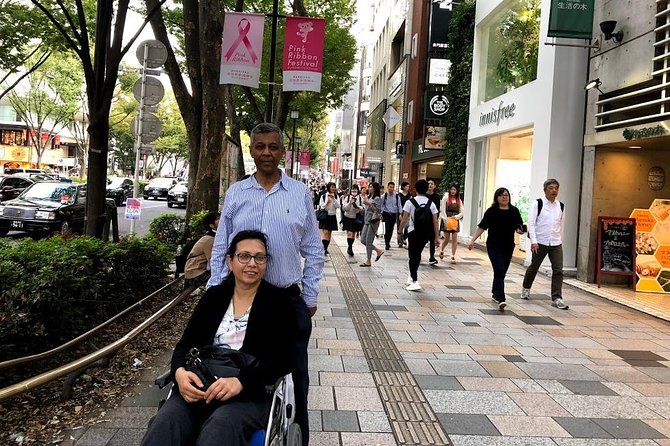
The best feature here is not a single temple or viewpoint. It is the way the tour joins Tokyo’s sights with the practical business of moving through the city. You can see old Asakusa in the morning, cross modern Shibuya, and finish among the trees and grand avenues near Meiji Shrine and Omotesando.
Your guide handles much of the mental work. That includes finding train routes, getting tickets, locating accessible station exits, and asking station staff for ramp support. One guest specifically praised how the guide made the Japan train system easier to use, while another noted that station attendants supplied slope ramps at each station used.
The private format matters. If you need a slower crossing, a rest, a route with fewer steps, or a change of plan, your guide is working with only your party. Guides have adapted the itinerary when mobility needs changed, recommended lunch spots, and chosen routes with fewer stairs when legs became tired.
Still, accessible does not mean effortless. Tokyo’s crowds, long station corridors, busy sidewalks, and large sightseeing areas can demand stamina. The tour requires at least two people per booking, including caregivers, and the stated fitness level is moderate. If you use a larger wheelchair or need a very low-activity day, contact the provider before booking and explain your equipment and support needs.
A few more Tokyo tours and experiences worth a look
Starting in Asakusa, with Tokyo’s old face first
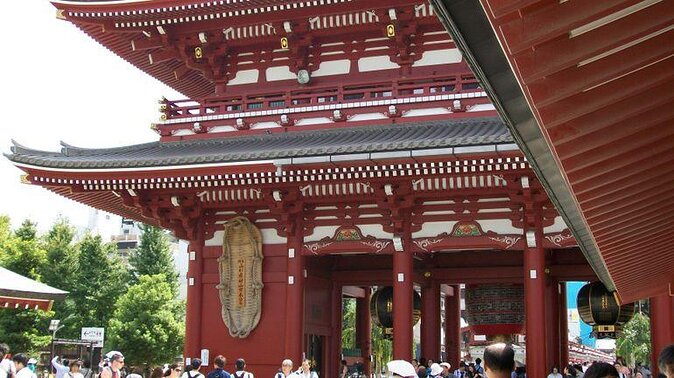
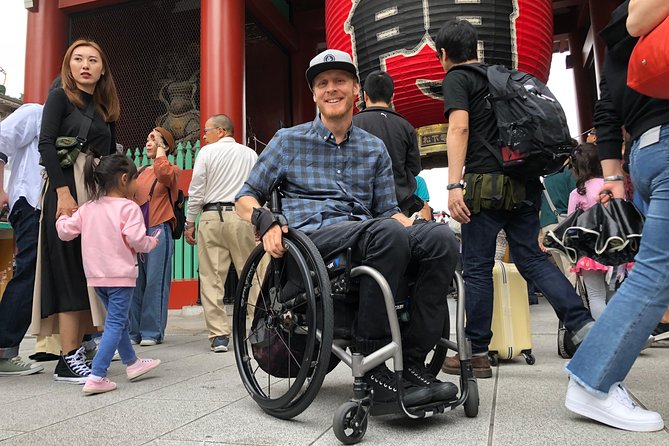
The listed meeting point is the Asakusa Culture Tourist Information Center at Kaminarimon, near Senso-ji. The tour begins at 9:30 a.m., and hotel pickup is offered within Tokyo’s 23 wards. Since the supplied meeting information also says the activity ends back at the meeting point, confirm the exact pickup and finish arrangement when you book.
The tourist center itself is worth a brief look. Designed by Kengo Kuma, it is an eight-story modern building facing the Kaminarimon area. The stop is scheduled for about 15 minutes and admission is free. It is a useful place to get oriented before entering one of Tokyo’s most famous temple districts.
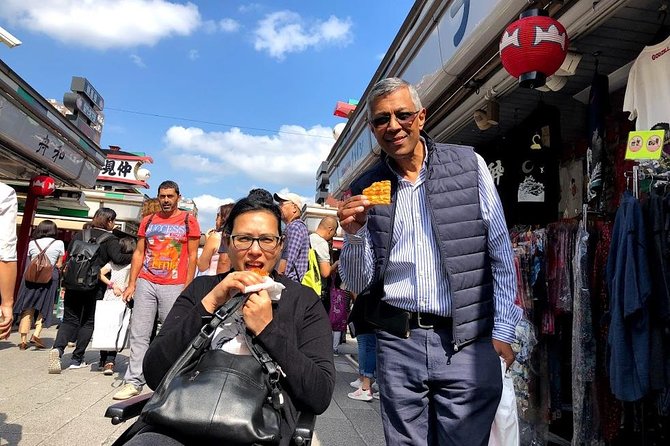
From there, you move toward Nakamise Shopping Street through the Kaminarimon, or Thunder Gate. The gate is the outer entrance to Senso-ji and one of the most recognizable sights in Tokyo. Nakamise is lined with shops selling snacks, souvenirs, and traditional goods, and the route leads directly toward the temple.
The practical catch is crowding. Nakamise is a busy pedestrian area, and a wheelchair can make stopping, turning, and keeping together harder. This is exactly where a private guide earns the fee. Yumi, for example, has helped with crowded Asakusa while explaining the differences between temple and shrine architecture. Your guide can help you keep moving without losing the atmosphere of the place.
Senso-ji receives about 20 minutes on the planned schedule. It is Tokyo’s best-known Buddhist temple, with a colorful entrance and a long connection to local legend. The visit is short, so expect an introduction and a look around rather than a slow, detailed temple study.
That short timing is both useful and limiting. It lets you fit several parts of Tokyo into one day, but anyone who wants extended time for photographs, shopping, or quiet observation may need to reduce later stops. A private tour gives you some room to ask, but seven hours still puts a natural limit on the pace.
Sumida Park and the Tokyo Skytree view
Sumida Park is a calmer change after the temple district. The park follows the Sumida River near Asakusa Station and offers views toward Tokyo Skytree. In cherry blossom season, the riverside scenery is especially attractive.
The planned visit lasts about 15 minutes. That is enough for a look at the river and a few photographs, but not a long park outing. For wheelchair users, the value is the open space and change of setting after the tighter streets around Kaminarimon and Nakamise.
This is also a good place to tell your guide what the rest of the day feels like. If the morning has already used more energy than expected, the private format may allow a shorter stop elsewhere or a slower route. The tour is designed around access, but your own stamina still sets the real schedule.
Shibuya Crossing, then the quieter edge of fashion
The tour shifts from historic Asakusa to Shibuya Crossing, one of Tokyo’s most famous urban scenes. At a green light, large waves of pedestrians cross in several directions around the station. Your scheduled stop is about 20 minutes.
The crossing is exciting, but it is not a restful place. The area is crowded, and sightlines can be difficult from a seated position. You may need to plan carefully with your guide so you can see the action without being pushed into the main flow of people.
Next comes Cat Street, a half-mile shopping route between Shibuya and Harajuku. The street is associated with fashion shops and younger Tokyo style, making it a contrast to the temple lanes of Asakusa. The planned stop is 25 minutes.
Cat Street is less about a single landmark and more about seeing how Tokyo’s districts change within a short distance. Shops line the route, but the tour does not include purchases, food, or drinks. If shopping is important to you, ask how much time can be set aside without losing Meiji Shrine or Omotesando.
Meiji Shrine, where the city gives way to trees
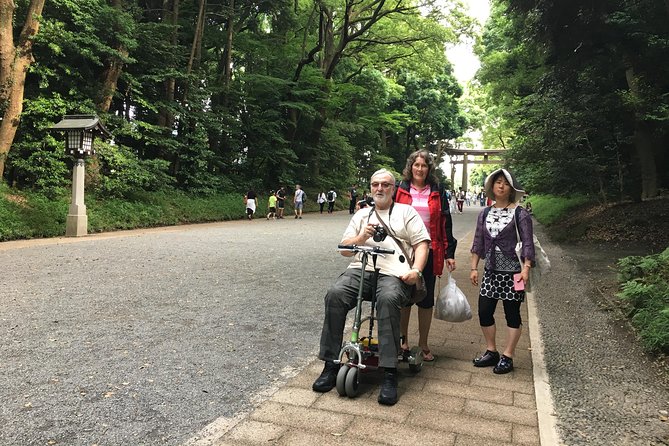
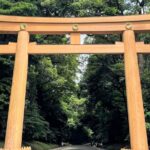
Meiji Jingu receives the longest scheduled stop, about 50 minutes. The shrine honors Emperor Meiji and Empress Shoken and sits beside Harajuku Station. Its setting provides a strong change from Shibuya’s crowds and commercial streets.
The visit gives you time to see a major Shinto site and ask questions about Japanese religious customs. Yumi has explained the difference between shrine and temple architecture, a useful distinction when you visit both Senso-ji and Meiji Jingu on the same day.
Access here deserves a realistic note. A shrine complex can involve long distances, changing surfaces, and large open approaches even when the main route is manageable. The guide’s role is to choose the most practical way through and adjust if the distance becomes too much. The tour is not a promise that every part of every site is barrier-free.
One family used this type of tour for a 96-year-old mother with a combination rollator-wheelchair. With Emiko as their guide, they learned how to seek wheelchair assistance in the Metro system and completed a very full day. That example shows the tour can support older visitors, but it also shows how much energy a day like this may require.


Omotesando finishes the sightseeing route
Omotesando is a tree-lined boulevard running through the fashionable Aoyama area between parts of Shibuya and Minato wards. The itinerary allows about 20 minutes here, following Meiji Shrine and the Harajuku area.
The avenue brings the day back to modern Tokyo. You will see broad streets, designer shops, and contemporary architecture rather than temple buildings and river paths. It is a pleasant final contrast and a chance to ask your guide about neighborhoods you may want to return to independently.
The itinerary lists about three hours of sightseeing time across the eight stops. The rest of the seven-hour day is naturally taken up by rail transfers, station navigation, access arrangements, and breaks. Food and drinks are not included, so discuss lunch with your guide. One guide, Kaori, made a helpful lunch recommendation for a group and adjusted the plan around their needs, but the meal itself remains your expense.
What the train travel adds to the experience
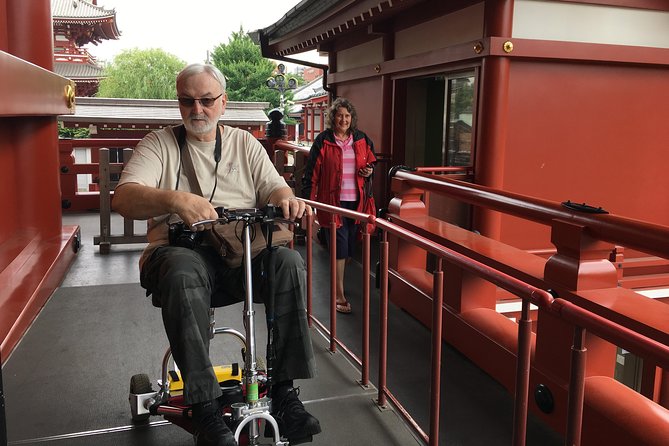
Many accessible tours avoid public transportation and rely on private vehicles. This one uses Tokyo’s trains, with tickets included. That keeps the tour closer to daily city life and teaches you something useful for the rest of your visit.
The benefit is not only saving money on separate fares. A guide can show you how station staff help wheelchair users, where ramps are needed, and how to handle the complicated parts of the system. Lisa specifically valued getting train tickets and help navigating the rail network, while another guest praised the station attendants’ support.
The tradeoff is time and effort. Tokyo stations can involve long connections, and boarding a train may require waiting for assistance. You should expect transfers to be part of the experience, not dead time between sights. If you want a vehicle-based day, private taxi, car, or bus service is available for an extra fee, but that cost is not included in the $191.08 price.
Guide quality is the real value
At $191.08 per person, this is not a bargain if you judge it as a list of free attractions. The temples, parks, crossing, streets, and shrine do not charge admission on this itinerary. The price pays for planning, personal attention, transport tickets, hotel transfers within the 23 wards, and help making Tokyo workable.
For a wheelchair user or family caregiver, that service can be worth more than entrance tickets. The strongest part of the experience is the guide’s practical judgment. Fumiko has been praised for keeping track of a group in thick crowds and helping everyone see the sights. Machiko has been credited with explaining local history while accommodating wheelchair access. Kaori has been described as organized and quick to reshape the day.
The tour has a 4.9 rating from 32 reviews, with 100 percent recommending it. That is a small sample, so I would not treat it as proof that every day will be perfect. Still, the same themes appear repeatedly: friendly guides, clear explanations, patience, flexibility, and help with trains.
For two people, the starting total is about $382.16 before food or any paid vehicle upgrade. That is easier to justify when you would otherwise need to arrange accessible transfers, rail help, route planning, and a full-day companion service yourself.
Who should book this day
I would choose this tour for a first Tokyo visit when you want the major sights but do not want to solve every access problem alone. It is especially suitable for a wheelchair user traveling with a caregiver, an older parent using a rollator-wheelchair, or a family that wants a private guide rather than a fixed group itinerary.
It also suits you if you want to learn Tokyo’s rail system. The guide does more than move you from sight to sight. You receive a practical introduction to asking for ramps and handling station transfers.
I would think twice if you want a slow day at one or two places. Eight stops in seven hours is ambitious, and the schedule leaves limited time for shopping, meals, or long visits. I would also ask detailed questions before booking if you require private vehicle transport, have strict medical timing, or use mobility equipment with unusual dimensions.
Free cancellation is available when you cancel at least 24 hours before the start time. Changes or cancellations inside that window are not accepted for a refund.
FAQ
What time does the tour start?
The stated start time is 9:30 a.m.
Where does the tour begin?
The listed meeting point is the Asakusa Culture Tourist Information Center at Kaminarimon in Taito City, Tokyo.
Is hotel pickup included?
Yes. Hotel pickup and drop-off are included for locations within Tokyo’s 23 wards. Confirm the exact pickup arrangement when booking because the meeting information also lists the Asakusa tourist center.
Is this a private tour?
Yes. Only your group participates, and the guide provides private attention.
Are train tickets included?
Yes. Train tickets are included in the tour price.
Can I use a taxi or private car instead of trains?
Private taxi, car, or bus transportation is available for an extra fee. It is not included in the listed price.
Are meals included?
No. Food and drinks are not included.
How many people are required to book?
A minimum of two people is required per booking, and caregivers count toward that minimum. The minimum age is six.
Is the tour suitable for service animals?
Yes. Service animals are allowed.
What is the cancellation policy?
You can receive a full refund if you cancel at least 24 hours before the experience start time. Cancellations or changes made less than 24 hours before the start are not accepted for a refund.
Should you book it?
Book this tour if your priority is seeing Tokyo with less stress around trains, ramps, crowds, and route choices. Its real strength is the guide, not paid admission or luxury transport. A patient guide such as Fumiko, Yumi, Kaori, Machiko, or Emiko can make a demanding city feel far more manageable.
Skip it if you want private-car sightseeing, a leisurely pace, or a day built around just one neighborhood. For most wheelchair users visiting Tokyo for the first time, though, the combination of hotel pickup, included rail tickets, flexible pacing, and personal assistance offers solid value at $191.08 per person.
More Full-Day in Tokyo
More tours in Tokyo we've reviewed







Full-Day, compared.
 ★ 4.5From Tokyo: Mount Fuji Full-Day Sightseeing TripFrom $6810 hours
 ★ 4.9Mount Fuji Full-Day Private Tour from Tokyo (Customizable)From $393
 ★ 5.0Tokyo Private Full-Day Tour by Car or VanFrom $321
 ★ 4.7From Tokyo: Must-Visit Mount Fuji Highlight Full-Day TourFrom $6911 hours
 ★ 4.5Mt. Fuji, Hakone Full-Day Private Tour with English Driver GuideFrom $495
 ★ 4.8From Tokyo: Mount Fuji Full-Day Customizable Private TourFrom $48310 hours