
Reviewed · HAKONE DAY TRIPS
Exciting Hakone – One Day Tour from Tokyo
Hakone gives you a lot in one day: bubbling volcanic pools, a mountain railway, ropeways, and a boat ride across Lake Ashi. This private tour also removes the usual Tokyo-to-Hakone planning headache, with hotel pickup in Tokyo’s 23 wards and a guide to keep the connections moving.
I like the variety of transport and the chance to see real volcanic activity at Owakudani. I also like the small group limit of five, which lets guides such as Akira, Hideaki, and Yumiko Sano offer personal help. The catch is the price: at $208.49, you still pay about 12,560 yen per person for the Shinkansen ticket and Hakone Free Pass, plus lunch and admissions.
In This Review
- Key points to know before booking
- Why this Hakone day trip works from Tokyo
- 8:30 hotel pickup and the trip to Odawara
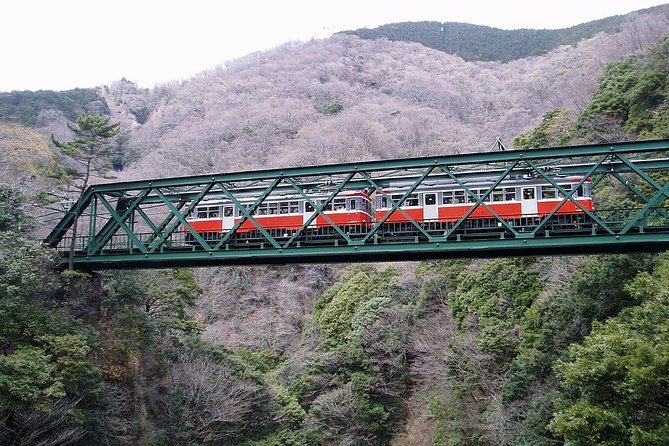
- Hakone Yumoto to Gora by mountain railway
- Gora to Owakudani by cable car and ropeway
- One hour at Owakudani’s volcanic pools
- Ropeway down to Lake Ashi
- A 30-minute cruise across Lake Ashi
- Hakone Shrine and the final return to Tokyo
- What the $208.49 price really covers
- Who will enjoy this route most
- Weather, cancellations, and small practical details
- Should you book this Hakone tour?
- FAQ
- Where does the tour begin?
- Does the tour include hotel pickup and drop-off?
- How long does the tour last?
- Is this a private tour?
- Is transportation included in the price?
- Is lunch included?
- Can I see Mt. Fuji?
- What happens if the ropeway or boat is closed?
- Is there much walking?
- What is the cancellation policy?
Key points to know before booking
- Four kinds of transport in one day: Ride a Shinkansen, mountain train, cable car and ropeway, then cruise Lake Ashi.
- Owakudani is the main attraction: See steaming volcanic ground and try the famous black eggs boiled in hot spring water.
- Mt. Fuji depends heavily on weather: Visibility is far better in winter, at about 80 percent, than in summer, at under 30 percent.
- Private group of five maximum: Your party travels with a professional guide rather than joining a large coach tour.
- The day runs on a strict schedule: Expect roughly 10 hours, with about an hour at Owakudani and a short visit to Hakone Shrine.
- Extra costs are substantial: Transport, lunch, and admission fees are not included in the tour price.
Why this Hakone day trip works from Tokyo
Hakone is close enough to visit from Tokyo, yet the day feels very different from the capital. You trade city streets for wooded valleys, steep mountain railways, volcanic vents, and Lake Ashi. On a clear day, Mt. Fuji adds the grand final touch.
The appeal here is not one single attraction. It is the changing rhythm of the day. You start with a fast bullet train, slow down on a mountain railway, rise above the hills by ropeway, then cross the lake by boat. That sequence makes the journey itself part of the sightseeing.
I especially like this approach for a first visit to Hakone. The region has several railways, buses, ropeways, and boats, and the connections can be confusing when you are working from a Tokyo hotel. Your guide handles the route and explains what you are seeing, while you concentrate on the views and the next connection.
The private format matters. The maximum group size is five, so this is not a large bus excursion where you wait for dozens of people at every stop. Guides named with this experience include Akira, Hideaki, and Yumiko Sano. The feedback about them highlights careful timing, polite service, help with language, and a willingness to adjust when weather spoils part of the route.
There is still a practical warning. This is a full day built around public transport, so delays, crowds, weather, and missed connections can affect the pace. You should also expect a moderate amount of walking, including stations, platforms, sightseeing areas, and shrine paths.
A few more Tokyo tours and experiences worth a look
8:30 hotel pickup and the trip to Odawara
The day begins at 8:30 in your hotel lobby. Pickup is offered in Tokyo’s 23 wards, and the group first travels by local train to Tokyo Station or Shinagawa Station.
At 9:26, you board the Shinkansen for Odawara. This is not the fastest bullet train service, but it still runs at about 260 kilometers per hour. The ride gives you an efficient start and a fun contrast with the slower mountain transport later in the day.
The included guide is useful here because the tour involves several separate fares and tickets. However, transportation is not included in the quoted tour price. You pay 6,560 yen per person for a two-way discounted Shinkansen ticket and 6,000 yen per person for the Hakone Free Pass.
That adds roughly 12,560 yen per person before lunch and admissions. At $208.49, the experience is best understood as a private guiding service and organized day route, not as an all-inclusive excursion. If you are comfortable planning Japanese trains on your own, you may find the price high. If you value personal help and want to avoid sorting out Hakone’s transport system, the cost becomes easier to justify.
Hakone Yumoto to Gora by mountain railway
From Odawara, the route continues at 10:13 to Hakone Yumoto. At about 10:30, you board the mountain train to Gora for a ride of roughly 40 minutes.
This is one of the most pleasant parts of the route. The train works its way through narrow valleys and wooded mountain country, giving you a close look at Hakone rather than a quick view from a highway. The pace is slow enough to make the railway feel like an attraction in its own right.
The seasonal highlight comes from mid-June to mid-July, when hydrangeas along the railway are especially attractive. If flowers matter to you, this period may add a little extra color to the ride. The tour information does not promise a special flower stop, so think of the hydrangeas as scenery viewed along the line.
The mountain railway also sets expectations for the rest of the day. You are not simply being driven to a viewpoint. You are using the transport system that makes Hakone distinctive, with each leg offering a different view and feel.
Gora to Owakudani by cable car and ropeway
From Gora, you take a cable car and ropeway toward Owakudani. The ride takes about 20 minutes, and on a sunny day it can provide views toward Mt. Fuji.
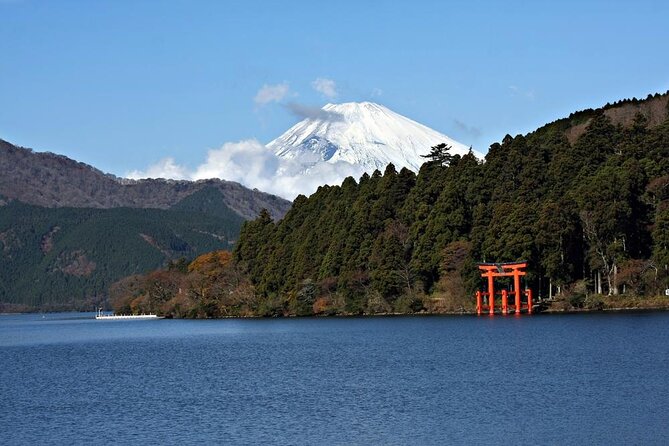
This is the point where weather becomes especially important. Fuji visibility is not something the tour can guarantee. Based on weather records for Fuji City, the chance is about 80 percent in winter and below 30 percent in summer. A clear winter day gives you the best odds, while summer humidity and cloud can hide the mountain.
That makes the trip worthwhile even if Fuji does not appear. Owakudani offers a strong attraction of its own, and the ropeway gives you a different view of Hakone’s mountain terrain. Still, if Mt. Fuji is your main reason for booking, choose your season carefully and keep expectations sensible.
The ropeway may be suspended when snow, strong winds, or other natural hazards are forecast. This is not a minor inconvenience. It can change the route and remove one of the day’s most memorable rides.
One hour at Owakudani’s volcanic pools
You spend about an hour strolling around Owakudani. This volcanic area is known for steaming ground and bubbling hot spring pools, with the smell and sight of active geothermal power close at hand.
The famous local snack is the black egg, boiled in the hot spring water. The shell turns dark during cooking, making it an easy and memorable Hakone specialty. The egg itself is the simple pleasure here, while the volcanic setting provides the real reason to stop.
Owakudani is a good place for your guide’s commentary. Without context, you see steam, dark rock, and pools. With an explanation of the volcanic activity, the stop becomes more than a photo break. You can understand why hot springs are central to Hakone and why this area has such a different feel from Tokyo.
An hour is enough for a look around, but not a long hike. You should not expect a full day in the volcanic zone. The route is designed to let you see the main features before moving on to Lake Ashi.
A few more Tokyo tours and experiences worth a look


Ropeway down to Lake Ashi
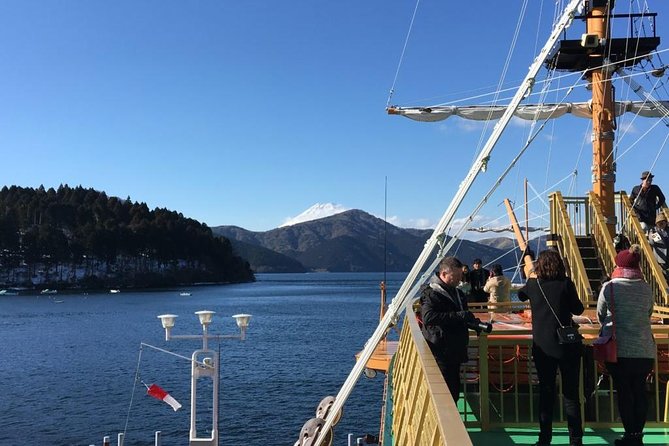
After Owakudani, the ropeway continues toward Lake Ashi for about 20 minutes. This is another opportunity for mountain views and, on a clear day, Mt. Fuji.
The two ropeway sections are among the tour’s most scenic moments, but they are also the least dependable. Snow and strong winds can stop service, and the lake cruise can also be suspended. The tour can be rearranged, as Hideaki did for one group when poor weather prevented both the cable car and boat, but you should not assume that an alternative will feel identical.
This is a useful point to consider before booking. The route is varied, but the weather can remove two of its signature experiences. A flexible attitude will help. You still have the mountain railway, Owakudani, Hakone Shrine, and the guide’s assistance, but the day may not follow the ideal sequence.
A 30-minute cruise across Lake Ashi
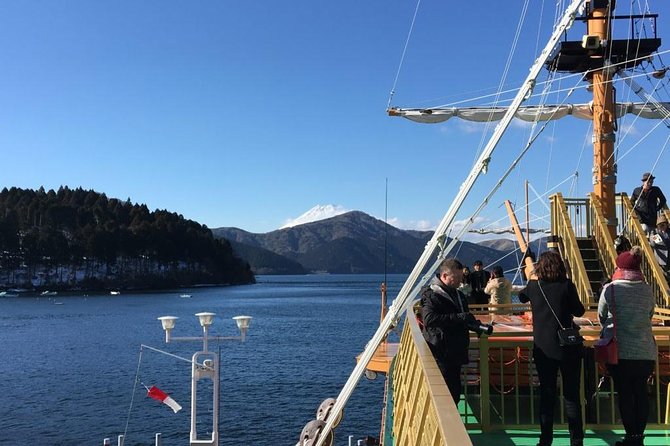
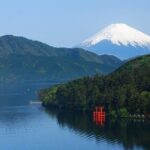
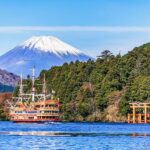
The scheduled Lake Ashi cruise lasts about 30 minutes. The boat provides a relaxed change after the railway and ropeway rides, with open water, mountain slopes, and the possibility of seeing Mt. Fuji in favorable weather.
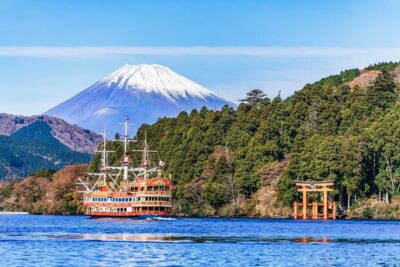
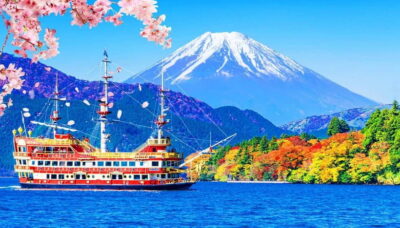
The sightseeing boat is sometimes described as a pirate ship, which adds a playful touch to what might otherwise be a standard lake crossing. You should think of this as a scenic cruise rather than a long boat excursion. Thirty minutes gives you time to enjoy the views without taking over the day.
Lake Ashi is one of the reasons Hakone works so well as a countryside break from Tokyo. The setting is broad and quiet compared with the capital, and the boat ride gives you a chance to sit down and watch the area pass by.
Strong wind can suspend the cruise. If the boat is important to you, check the forecast before departure and understand that the operator may need to alter the plan for safety.
Hakone Shrine and the final return to Tokyo
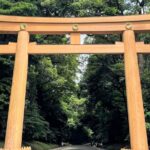
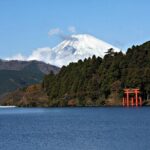
After the cruise, the tour includes time to stroll around Hakone Shrine. The shrine adds a cultural stop after a morning focused on transport and volcanic scenery.
The available details do not give a precise length for the shrine visit, so expect a shorter stop rather than an extended temple tour. It is a chance to slow down, walk through the shrine grounds, and take in another side of Hakone before the return journey.
At 16:30, you take a bus from Lake Ashi to Odawara. At 17:42, the Shinkansen leaves Odawara for Tokyo or Shinagawa, with arrival scheduled for 18:16. You then return to your hotel.
Those times show why the guide matters. The day has little spare room. A delay on one section can affect the next train, and you are using a bus, mountain railway, ropeway, boat, and bullet train in a single circuit. The route is efficient, but it is not loose or leisurely.
What the $208.49 price really covers
The listed price is $208.49 per person. It includes a professional guide, a private tour, and meeting at your hotel lobby in the Tokyo 23 wards. Hotel pickup and return save you from arranging the first and last legs yourself.
The main transport is extra. You pay 6,560 yen per person for the two-way discounted Shinkansen ticket and 6,000 yen per person for the Hakone Free Pass. Lunch and admission fees are also excluded.
For one person, the total can become a serious day-trip expense. For a private group of two to five, the value looks better because the guiding cost is shared while your group keeps its own guide. Group discounts are offered, though the exact discount is not specified.
I would book this for convenience, personal attention, and the number of experiences packed into one day. I would not book it expecting a cheap way to reach Hakone. Independent visitors who already understand Japanese railways may prefer to buy the required passes and plan the route themselves.
Who will enjoy this route most
This tour suits you if you want Hakone’s main sights but do not want to build the route from separate train and transport schedules. It is also a strong choice for first-time visitors who want explanations along the way rather than a bare transfer between attractions.
The private format works well for couples, families, and small groups. Children must be accompanied by an adult, and most people can participate, but you should be ready for a moderate amount of walking.
You may find the pace demanding if you prefer long meals, extended shrine visits, or free time in one place. Lunch is not included, and no lunch duration is given, so your guide will need to fit food into a day already governed by transport times.
The tour can also suit visitors who want help with language and ticket procedures. Yumiko Sano is described as fluent in English, polite, flexible, and able to help with Shinkansen ticket purchases. That kind of practical support can make a difference on a complicated day.
Weather, cancellations, and small practical details
Mt. Fuji is a bonus, not a promise. Winter offers the strongest chance of a clear view, while summer is much less reliable. If Fuji is hidden, Owakudani and the transport route still provide the core of the experience.
The ropeway and Lake Ashi cruise can be suspended because of snow, strong winds, or other natural hazards. A guide may rearrange the day, but the exact substitute is not specified.
Confirmation is normally received at booking. If you book within two days of travel, confirmation can take up to 48 hours and remains subject to availability.
You can cancel for a full refund up to 24 hours before the start time. Cancellations or changes made less than 24 hours before departure are not accepted for a refund.
Should you book this Hakone tour?
Book it if you want a private guide, hotel pickup, and a tightly organized introduction to Hakone’s major sights. The combination of bullet train, mountain railway, ropeway, volcanic pools, lake cruise, shrine, and small-group service is the real strength.
Choose winter if Mt. Fuji matters most, and keep a backup attitude about the ropeway and boat. If you want a low-cost trip or plenty of free time, use the route as inspiration and plan Hakone independently instead.
For a small group that values personal help, this is a practical and memorable escape from Tokyo. Just budget for the extra transport, lunch, and admissions before deciding that the price works for you.
FAQ
Where does the tour begin?
The tour begins at 8:30 am with a meeting in your hotel lobby in Tokyo’s 23 wards.
Does the tour include hotel pickup and drop-off?
Yes. Hotel pickup and drop-off are included for hotels in the Tokyo 23 wards.
How long does the tour last?
The experience lasts approximately 10 hours. The scheduled return to Tokyo or Shinagawa is at 18:16.
Is this a private tour?
Yes. Only your group participates, and the maximum group size is five people.
Is transportation included in the price?
No. You pay separately for the two-way discounted Shinkansen ticket, priced at 6,560 yen per person, and the Hakone Free Pass, priced at 6,000 yen per person.
Is lunch included?
No. Lunch is not included.
Can I see Mt. Fuji?
You may see Mt. Fuji from the ropeway and around Lake Ashi on a clear day. The chance is about 80 percent in winter and below 30 percent in summer, based on the stated weather records.
What happens if the ropeway or boat is closed?
The ropeway and Lake Ashi cruise may be suspended because of snow, strong winds, or other natural hazards. The guide may rearrange the day to include other activities.
Is there much walking?
A moderate amount of walking is involved. Most people can participate, but children must be accompanied by an adult.
What is the cancellation policy?
You can cancel at least 24 hours before the start time for a full refund. Cancellations or changes made less than 24 hours before the start time are not accepted for a refund.
More 1-Day Tours in Tokyo
More Hakone Day Trips in Tokyo
More tours in Tokyo we've reviewed










Hakone Day Trips, compared.
 ★ 5.0Mt Fuji and Hakone 1-Day Bus Tour Return by Bullet TrainFrom $163
 ★ 4.0Mt Fuji & Hakone Cruise, Drum Show Bullet Train 1 Day from TokyoFrom $149
 ★ 4.4Tokyo Mt Fuji 5th St & Hakone Cruise Bus Tour w/Bullet TrainFrom $15410 hours
 ★ 4.7Tokyo: Mt. Fuji Tour, Hakone Ropeway, Owakudani, Lake AshiFrom $5410 hours
 ★ 4.2Tokyo: Mt. Fuji 5th Station & Hakone Cruise 1-Day Bus TourFrom $12911 hours
 ★ 5.0Private Tour to Mt. Fuji and Hakone (Fully Licenced Operator)From $497