
Reviewed · TOKYO
Create Your Own Japanese HANKO Name Seal in Tokyo
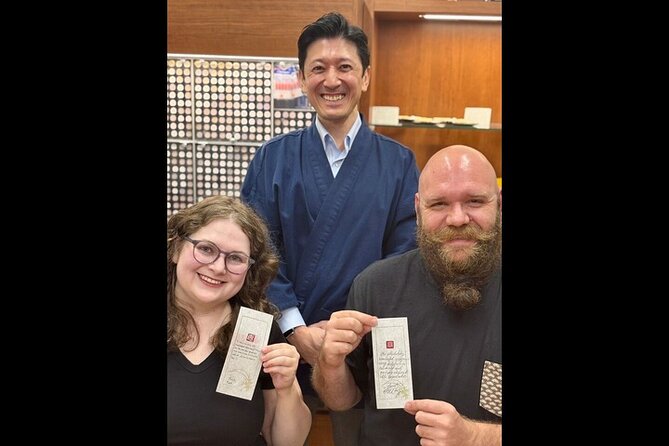
A Japanese Hanko is a small object with real personal meaning. In this 90-minute workshop near Tokyo Station, you learn how name seals fit into Japanese life, choose your characters and design, then carve the seal yourself under the care of master artisan Shosaku.
I especially like the hands-on carving and the chance to choose a word or name with personal meaning. I also like the close support from Hina, the bilingual guide, who helps explain the process and makes it easier to ask questions. The main consideration is price: at $190 per person, this costs more than many ordinary Tokyo souvenirs, though it includes the seal, engraving, case, and instruction.
In This Review
- Key points
- Why a Hanko Makes a Better Souvenir Than a Standard Souvenir
- Inside the Otemachi Seal Shop Near Tokyo Station
- Choosing Characters, Font, Style, and Material
- Carving the Seal With Master Artisan Shosaku
- What You Take Home at the End
- Is $190 a Fair Price?
- Who Will Enjoy This Experience Most?
- Timing, Meeting Point, and Practical Details
- What the Experience Does Especially Well
- The Limits You Should Know Before Booking
- Should You Book the Tokyo Hanko Workshop?
- FAQ
- Where does the Hanko-making experience begin?
- Where does the activity end?
- How long does the workshop last?
- How much does the experience cost?
- Is the activity private?
- Is transportation included?
- What is included in the price?
- Will I make the seal myself?
- Is the experience available in English?
- Can I cancel for a full refund?
Key points
- Carve your own Hanko: You do not simply order a stamp. You create and engrave it yourself with guidance from an artisan.
- Work with Shosaku and Hina: Shosaku leads the craft side, while Hina provides bilingual help and explains the steps.
- Choose a meaningful design: You select the characters, style, font, and material for a seal that is personal to you.
- Visit a long-established seal shop: The workshop takes place near Tokyo Station in Otemachi, a central and convenient part of Tokyo.
- Take home a complete keepsake: Your package includes the original Hanko, engraving fee, and a dedicated case.
- Private and compact: Only your group takes part, and the activity lasts about one hour and 30 minutes.
Why a Hanko Makes a Better Souvenir Than a Standard Souvenir
Tokyo is full of tempting purchases, from kitchen tools to character goods. A Hanko gives you something different: a small object connected to identity, writing, and everyday Japanese custom.
In Japan, a Hanko is more than an attractive stamp. It can represent a person’s name and identity. The workshop gives you enough background to understand why these seals matter, rather than treating the activity as a quick craft project.
That distinction matters. You are not just decorating a ready-made item. You are deciding what the seal should say, how it should look, and how its characters should fit within a small carved surface.
One of the most appealing parts is choosing a word that means something to you. You might use your name, a Japanese rendering of your name, or a word that captures a personal value. The exact choices available depend on the workshop process, but the experience is designed around making an original seal rather than selecting a mass-produced one.
This makes the Hanko a good fit for a honeymoon, family trip, first visit to Japan, or a milestone journey. The finished item is compact, easy to pack, and tied to a memory that a department-store purchase cannot provide.
If you're still narrowing it down, here are other tours in Tokyo we've reviewed.


Inside the Otemachi Seal Shop Near Tokyo Station
The meeting point is the Shin-Otemachi Building at 2-chōme-2-1 Ōtemachi, Chiyoda City. The location is near public transportation and close to Tokyo Station, so it works well alongside a day in central Tokyo.
The shop setting is important. You are learning in a long-established seal shop, not in a temporary tourist studio. That gives the activity a stronger connection to the craft and lets you see Hanko as part of a continuing tradition.
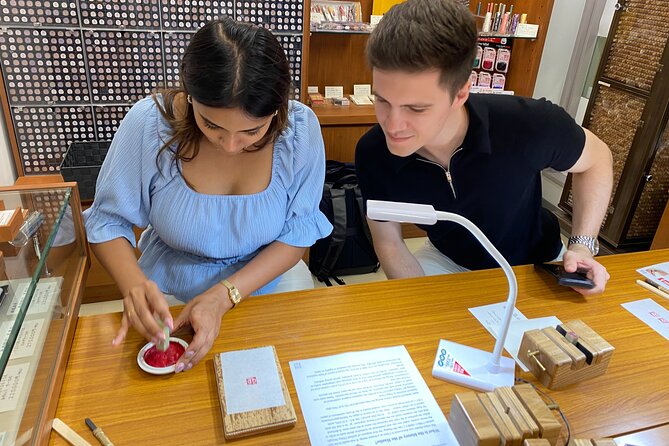
Your visit begins with an introduction to Hanko, including their cultural meaning and different styles. You learn that the appearance of a seal can change based on its characters, lettering style, and material.
This opening section helps you make better design choices later. Without it, the options could feel like a series of attractive but random choices. With some context, you can think about the kind of mark you want to create.
The activity is private, so only your group participates. That should make it easier to ask questions and work at a comfortable pace. It also suits families and couples who want a personal activity rather than a large class.
Choosing Characters, Font, Style, and Material
The design stage is where the activity becomes personal. You choose the characters for your Hanko, then consider the style, font, and material.
A name written in another language may need careful handling, so this is where the guide and artisan are especially useful. Hina helps with communication, while Shosaku advises on how the design can work on the seal.
The small size of a Hanko means every choice matters. Characters need to fit. Lines must remain clear. The font affects the overall feel, from formal and balanced to more decorative or traditional.
You do not need to arrive with a finished design. The workshop is built around guidance, and the artisan helps you move in the right direction. Several participants specifically appreciated the patient explanations, design help, and assistance when something did not go as planned.
I would spend a little time before the appointment thinking about a meaningful name or word. You do not need to study Japanese, but having an idea of what you want the seal to represent can make the design stage more rewarding.
Carving the Seal With Master Artisan Shosaku
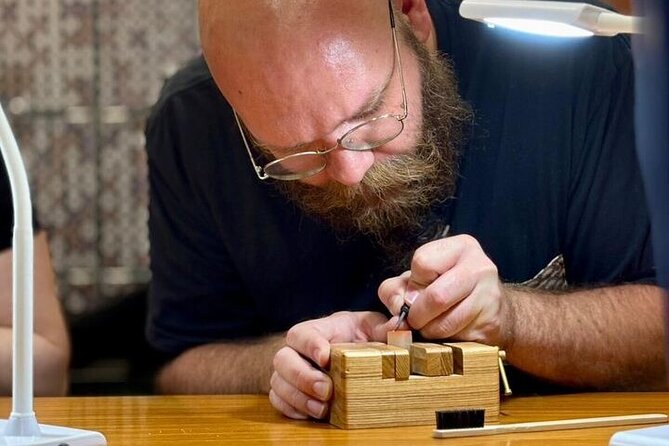
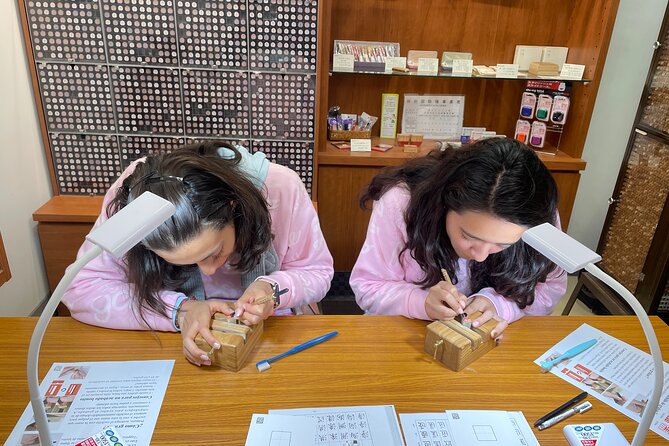
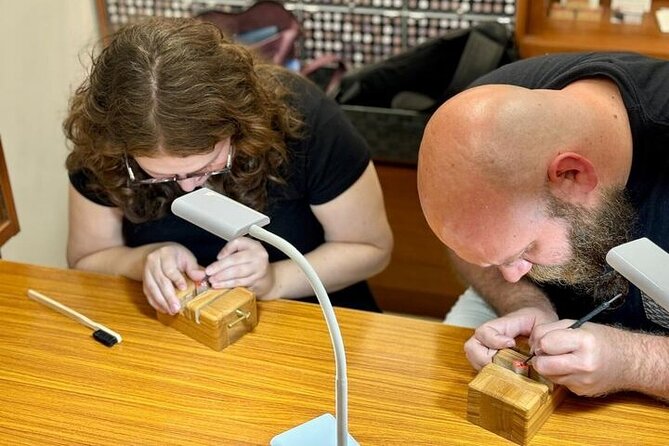
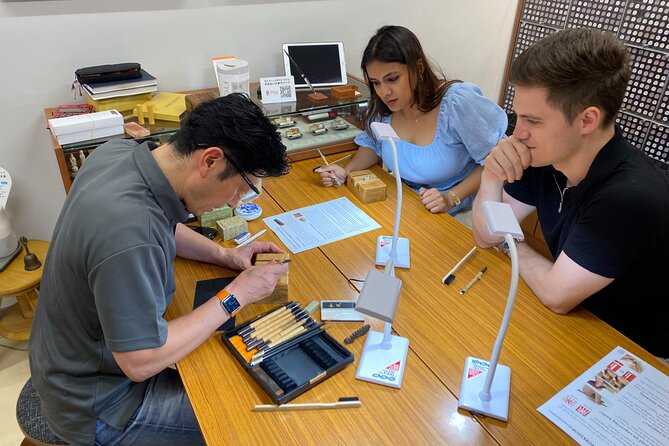
The main event is carving the Hanko yourself. Under Shosaku’s direction, you engrave the chosen characters into the seal.
This is a real craft task, so do not expect a completely effortless souvenir. The appeal comes from making the marks yourself, while still having an experienced artisan nearby to guide your hand and correct errors when possible.
That balance is one of the strongest features of the workshop. You get genuine participation, but you are not left alone with an unfamiliar tool and a precious piece of material.
The process also gives you a better sense of the skill involved. A finished seal may look simple, but carving readable characters into a small surface calls for control and planning. Shosaku’s role helps you see the difference between a casual stamp and a carefully made Hanko.
The workshop is suitable for most people, and the activity information says most participants can take part. Still, the carving portion requires attention and care. Parents should expect children to need close supervision, even though the activity has worked well for families.
A small mistake does not necessarily ruin the experience. The available guidance is intended to help you fix or adjust problems as you work. That support is reassuring, especially if you have never carved anything before.
What You Take Home at the End
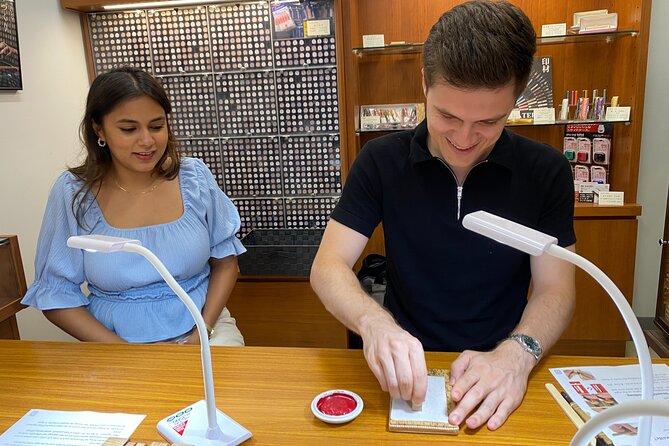
Your finished package includes the original Hanko, the engraving fee, and an original case for the seal. The case is a useful addition because it protects the object and gives it a proper home.
You also learn how to use the Hanko. That makes the activity feel more complete. You leave with both the object and a basic understanding of what it represents.
Do not expect a large souvenir. A Hanko is small by design. Its value lies in the personal mark, the craft, and the memory attached to it.
The compact size is actually practical. It fits easily into luggage and does not create the packing problem that comes with ceramics, framed art, or bulky traditional goods. The case also makes it easier to keep the seal clean and protected.




Is $190 a Fair Price?
The cost is $190 per person, and that is the clearest drawback. If you want the cheapest possible souvenir, this is not the right choice.
The price includes a private activity, bilingual support, artisan instruction, the seal itself, engraving, and a case. It also covers a rare chance to work inside a traditional seal shop rather than simply buy a finished product.
I see the value most clearly for people who care about process. You are paying for time with an artisan and the chance to make a personal object, not just for the raw material.
The value is also stronger for a small private group. Couples, families, and friends can share the same activity without being placed in a large class. For a honeymoon or special trip, the personal nature may justify the higher cost.
For a budget-conscious visitor, the decision is simple: book only if the making matters as much as the finished seal. If you mainly want a Hanko as a souvenir, buying one may cost less, but it will not carry the same connection to your trip.
Who Will Enjoy This Experience Most?
I would recommend this activity to anyone who likes traditional crafts, small-group cultural activities, or souvenirs with a story.
It is particularly well suited to:
- Couples marking a honeymoon or special occasion
- Families looking for an activity that adults and children can share
- First-time visitors who want more than sightseeing
- People interested in Japanese writing, design, or identity
- Anyone searching for a personal gift that is easy to pack
The private format is useful for people who prefer to ask questions freely. English communication is supported by a bilingual guide, and the combination of Hina’s translation and Shosaku’s instruction has helped make the process clear.
I would think twice if you dislike detailed handwork or want a fast, passive activity. The session lasts about 90 minutes, and the carving is the point. You need to pay attention and take part.
Timing, Meeting Point, and Practical Details
The experience starts and ends at the Shin-Otemachi Building. There is no separate drop-off at another attraction, so plan your route after the workshop or allow time to continue exploring Otemachi and the Tokyo Station area.
The activity lasts approximately one hour and 30 minutes. That is long enough for background, design, carving, and finishing without taking over your day.
A mobile ticket is provided, and confirmation arrives at booking. Transportation is not included, so you are responsible for getting to the meeting point. The location is near public transportation, which keeps the logistics fairly simple.
Book at least a few days ahead if possible. This experience is often reserved about seven days before the date, and the private format may limit the number of available appointments.
Free cancellation is available when you cancel at least 24 hours before the start time. Changes or cancellations within 24 hours are not accepted for a refund, and the cut-off follows Tokyo local time.
What the Experience Does Especially Well
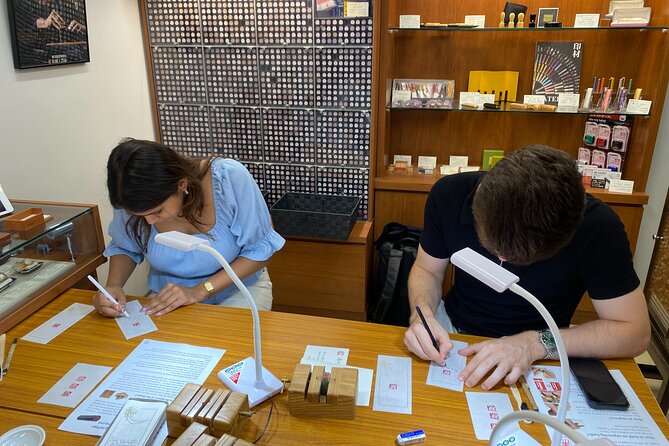
The strongest part of this activity is the human guidance. Shosaku brings the craft expertise, while Hina helps explain the process and supports communication. That partnership matters because you are making choices that can feel difficult if you are unfamiliar with Japanese characters and seal design.
The second strength is the personal meaning. You can choose a word or name that matters to you, rather than accepting a fixed design. That makes the final Hanko feel connected to your own trip.
The third strength is the setting. A traditional seal shop near Tokyo Station gives the lesson a sense of place. You are learning about a Japanese object in a setting connected to its real use, not just handling a souvenir in a generic craft room.
The activity also handles mistakes in a sensible way. Guidance is available throughout, and the artisan can help correct problems or redirect the design. You still do the work, but you have expert help when the carving becomes tricky.
The Limits You Should Know Before Booking
The price is high for a 90-minute activity. The seal and case add value, but the main cost is the private instruction and artisan time. You should be comfortable paying for the experience itself, not only the final object.
The information provided does not specify every available material, font, or character option in advance. You can choose among styles, fonts, and materials during the workshop, but exact choices may depend on your name and the design discussion.
Transportation is also not included. The meeting point is central and near public transportation, but you still need to plan your own arrival.
Finally, the workshop is hands-on. Most people can participate, but it is not a show where you simply watch Shosaku work. The best results come from listening carefully, accepting guidance, and taking your time with the carving.
Should You Book the Tokyo Hanko Workshop?
Book it if you want a personal Japanese keepsake and enjoy making things with your own hands. The combination of a traditional shop, private instruction, bilingual support from Hina, and guidance from Shosaku gives the activity substance beyond simple souvenir shopping.
I would especially choose it for a honeymoon, family outing, or first visit to Japan when you want one memorable cultural activity near Tokyo Station.
Skip it if your priority is saving money, avoiding handwork, or packing your schedule with major sights. At $190, this is a considered purchase. For the right person, though, the finished Hanko can be one of the most meaningful small souvenirs of a Japan trip.
FAQ
Where does the Hanko-making experience begin?
It begins at the Shin-Otemachi Building, 2-chōme-2-1 Ōtemachi, Chiyoda City, Tokyo 100-0004, Japan.
Where does the activity end?
The activity ends back at the meeting point.
How long does the workshop last?
The experience lasts approximately one hour and 30 minutes.
How much does the experience cost?
The listed price is $190 per person.
Is the activity private?
Yes. Only your group participates in the activity.
Is transportation included?
No. Transportation fees are not included, so you must arrange your own travel to and from the meeting point.
What is included in the price?
The price includes your original Hanko seal, engraving fee, an original case, and a bilingual guide.
Will I make the seal myself?
Yes. You design your Hanko and carve the characters into the seal with guidance from the artisan.
Is the experience available in English?
A bilingual guide is included. Hina has provided translation and communication support during the workshop.
Can I cancel for a full refund?
Yes, if you cancel at least 24 hours before the experience start time. Cancellations or changes made less than 24 hours before the start time are not accepted for a refund.
More tours in Tokyo we've reviewed





Tokyo, compared.
 ★ 5.0Mt Fuji and Hakone 1-Day Bus Tour Return by Bullet TrainFrom $163
 ★ 5.01-Day Tokyo Bus TourFrom $129
 ★ 4.6Tokyo: teamLab Planets TOKYO Digital Art Museum Entry TicketFrom $251 day
 ★ 4.0Mt Fuji & Hakone Cruise, Drum Show Bullet Train 1 Day from TokyoFrom $149
 ★ 5.0Tokyo: Shinjuku Food Tour (13 Dishes at 4 Local Eateries)From $86
 ★ 4.4Tokyo Mt Fuji 5th St & Hakone Cruise Bus Tour w/Bullet TrainFrom $15410 hours