
Reviewed · SHINJUKU TOURS
Breakfast Ramen Tour in Shinjuku, Tokyo
Three mini bowls of ramen before most of Tokyo has fully woken up: that is the clever idea behind this two-hour Shinjuku breakfast tour. You begin with ramen basics at a coffee shop, then visit two ramen shops for classic shoyu bowls, another style, and gyoza.
I like the small portions, since you can taste three bowls without turning breakfast into a food marathon. I also like the early start, which gives you a quieter look at Shinjuku and leaves the rest of your day free. The catch is simple: this is an early-morning activity, and $90 per person is a serious price for breakfast.
In This Review
- Key points
- Three small ramen bowls make breakfast work
- Meeting near Kabukicho before the crowds arrive
- Coffee first, ramen theory before ramen
- First ramen shop: two bowls of classic shoyu
- Second ramen shop: tonkotsu, other styles, and gyoza
- Guides who make the food lesson personal
- Is $90 a fair price for breakfast?
- Who will enjoy this early Shinjuku food tour?
- Timing, cancellation, and what to plan
- Should you book the breakfast ramen tour?
- FAQ
- How long does the breakfast ramen tour last?
- Where is the meeting point?
- How many ramen bowls are included?
- What food and drink are included?
- Which ramen styles will I learn about?
- Is the tour offered in English?
- Can I cancel for a full refund?
Key points
- Three mini bowls instead of one huge serving: Try different ramen styles without filling up after the first stop.
- Classic Tokyo shoyu ramen comes first: Two mini bowls introduce the soy-sauce style and its place in ramen culture.
- Tonkotsu and gyoza finish the meal: The second shop adds pork-bone ramen and two dumplings.
- A coffee-shop lesson starts the tour: You learn basic ramen terms and get quizzed before eating.
- Early Shinjuku feels different: The tour offers a quieter morning view of an area better known for late nights.
- English-speaking guides add personality: Guides including Deep, Daisy, and Frank have been praised for friendly, interactive explanations.
Three small ramen bowls make breakfast work
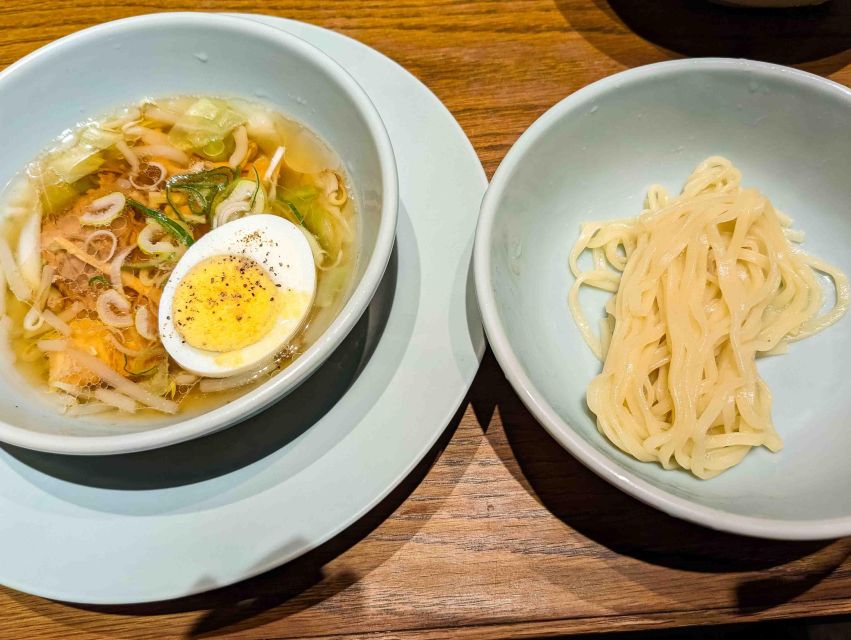
The tour solves a common Tokyo food problem: ramen portions are often large, and ordering several bowls on your own can leave you stuffed before you understand what you are tasting. Here, each bowl is about one-third the size of a standard serving.
That format matters. You get enough to notice the broth, noodles, toppings, and seasoning, but not so much that the third taste becomes a chore. You also get a useful comparison between ramen styles, rather than one isolated bowl that you may or may not know how to judge.
The food included is three mini bowls, two gyoza dumplings, and one beverage. The meal is the main event, but the explanations give it structure. You are not simply moving from shop to shop eating whatever happens to be available.
The tour focuses especially on shoyu ramen and tonkotsu ramen. Shoyu means soy sauce, and the first shop serves two mini bowls of classic Tokyo-style shoyu ramen. At the second shop, you try another mini bowl and gyoza while learning about other ramen styles and pork-bone tonkotsu ramen.
A few more Tokyo tours and experiences worth a look
Meeting near Kabukicho before the crowds arrive
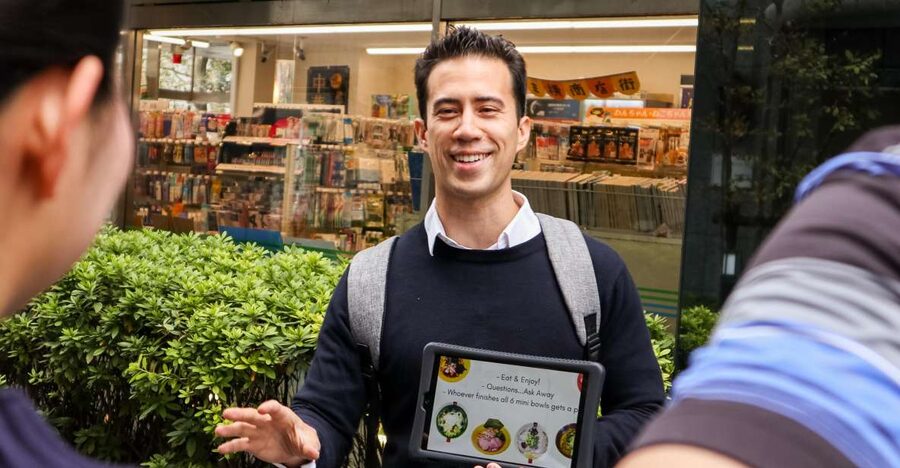
You meet in front of the 7-Eleven on Yasukuni-dori Avenue, at the entrance to Kabukicho in Shinjuku. The meeting point is close to Shinjuku Station’s East Exit, and your guide carries a Tokyo Ramen Tours sign.
That location is practical, but Shinjuku Station can be confusing, especially early in a trip. Give yourself time to find the East Exit and then locate Yasukuni-dori Avenue. If you need a train to reach the meeting point, the fare is not included.
The early timing changes the mood of the neighborhood. Shinjuku is famous for crowds, bright signs, nightlife, and constant motion, but this tour takes place in the morning. You get a different view of the district, with more room to notice the streets and surroundings before the day reaches full speed.
This is one of the experience’s better features, especially if you are an early riser or have just arrived in Tokyo and want to use your morning well. It is less suitable if you prefer slow hotel breakfasts or tend to struggle with early appointments.
Coffee first, ramen theory before ramen
The first stop is a nearby coffee shop. Before you enter the ramen shops, the guide explains the basics of the dish and tests your knowledge with a quiz.
That opening lesson gives the meal a purpose. You learn the terms and broad differences first, then apply them at the bowls. For someone new to Japanese food, this can make the experience less confusing. Instead of hearing shoyu or tonkotsu and simply nodding, you have a framework for understanding what arrives at the counter.
The quiz also keeps the morning interactive. This is not a lecture where you stand quietly while someone recites facts. The exact quiz format is not specified, but the tour description makes clear that you will be asked to take part.
The coffee-shop stop is also a useful pause before the food begins. You can meet your guide and group, settle into the morning, and get a little context before navigating the compact ramen shops. Since the total tour lasts two hours, the introduction is focused rather than a long classroom session.
First ramen shop: two bowls of classic shoyu
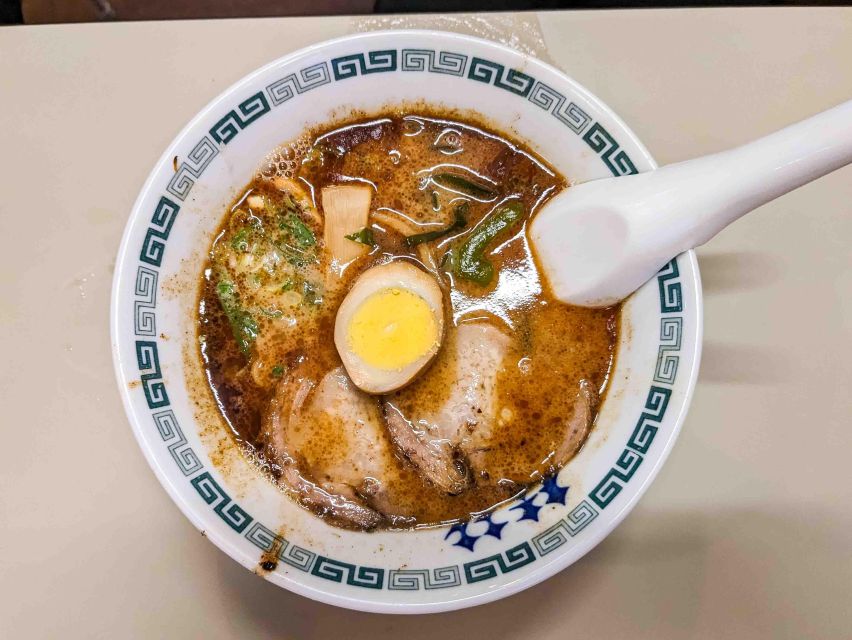
The first ramen stop is the centerpiece for Tokyo-style shoyu ramen. You receive two mini bowls, each about one-third of a full bowl, while the guide explains ramen’s history and the importance of shoyu ramen.
Trying two bowls at the same shop lets you compare without rushing through a single taste. Soy sauce brings a savory, seasoned character to the broth, and the guide helps connect that flavor to the style’s place in Tokyo ramen.
This is where the small servings earn their keep. A full bowl can be satisfying but heavy, particularly at breakfast. Two mini bowls let you pay attention to differences and ask questions while you still have an appetite.
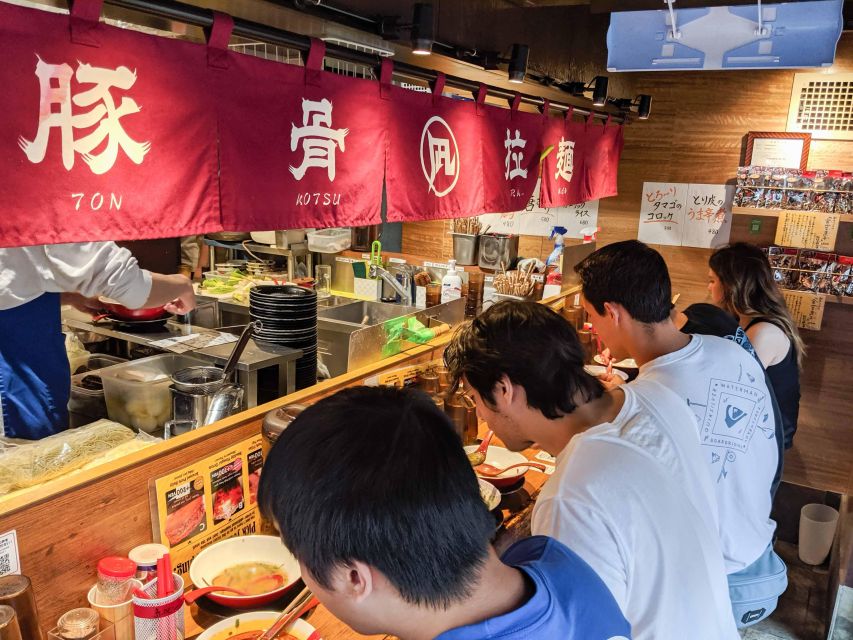
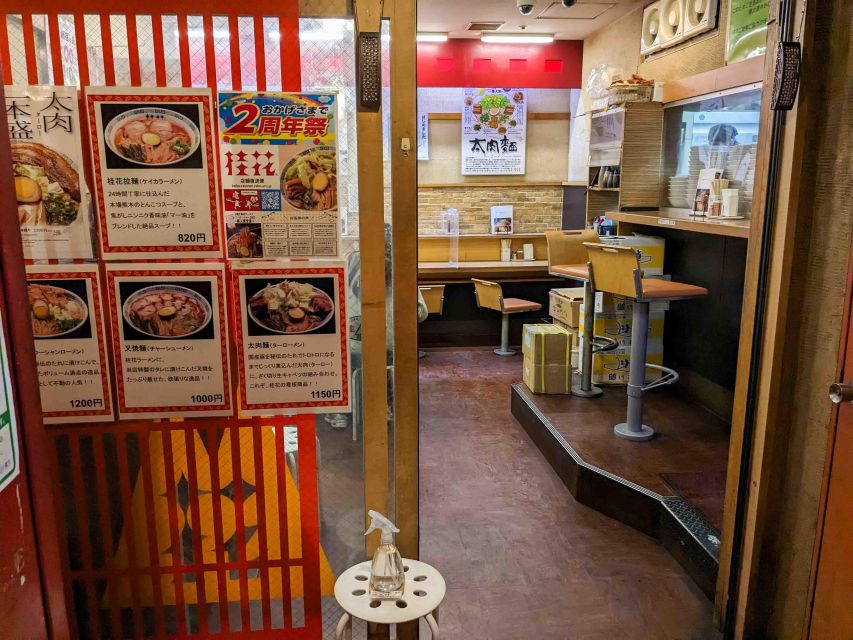
The shops are described as small local places, including spots you might not find on your own. That is valuable in Shinjuku, where it is easy to default to a famous chain or choose a restaurant based only on a sign you can read. The tour removes some of that guesswork and takes you to places selected for the ramen lesson.
Still, small shops can mean a more intimate setting and less room for lingering. The experience is built around eating and learning, not sitting over a long meal. If you want a relaxed restaurant morning, this brisk format may feel too organized.
Second ramen shop: tonkotsu, other styles, and gyoza
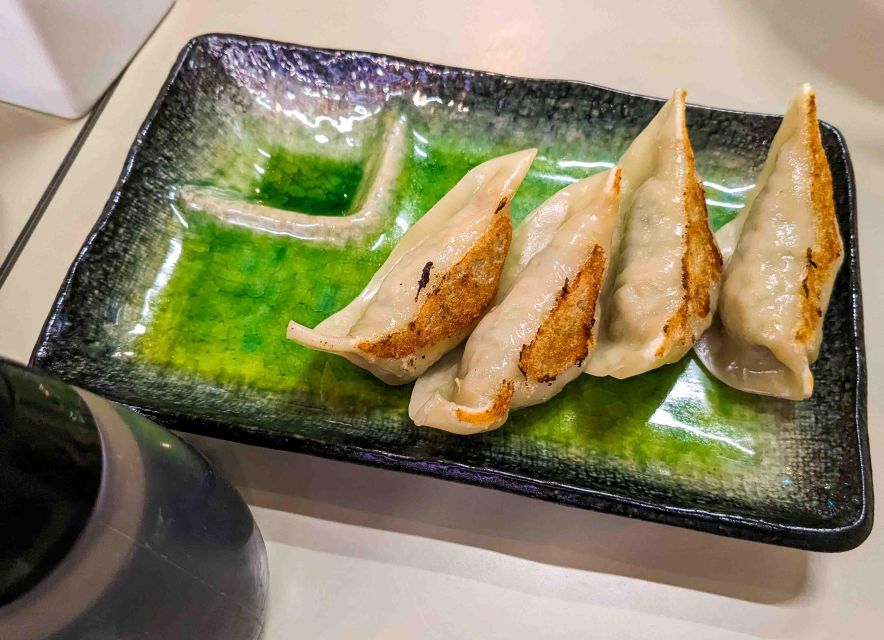
The second shop adds another mini bowl and two gyoza dumplings. This is where the focus shifts to other ramen styles, including tonkotsu, the pork-bone style named in the tour description.
The contrast with shoyu is the point. You can consider how a soy-based broth differs from a pork-bone broth, and how ramen changes from shop to shop. The guide explains the differences as you eat, so the information stays tied to what is in front of you.
The two gyoza add a welcome change in texture and flavor. They are a small serving, not a separate meal, but they round out the breakfast and give you another classic Japanese food to try.
One useful feature of this stop is that you do not have to commit to a full bowl of a style you may not like. Tonkotsu can be a strong choice for someone who prefers lighter soups, while shoyu may feel more familiar to many first-time ramen eaters. Mini servings make the comparison low-risk.
The tour does not promise a particular noodle firmness, topping selection, or exact broth recipe. Those details can vary by shop and by the day. What you can count on is the tasting structure: one more mini ramen bowl, gyoza, and an explanation of ramen styles.





Guides who make the food lesson personal
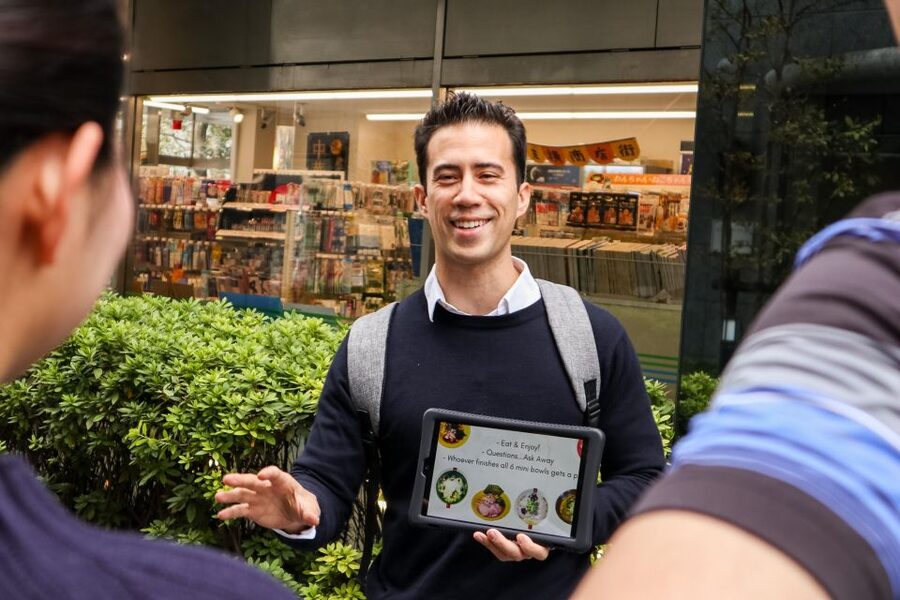
The guide is central to the value here. The tour is offered in English, and the guide leads the coffee-shop introduction, the quiz, the shop visits, and the food explanations.
Several guide names appear in the experience feedback. Deep was praised for a friendly, easygoing manner and for sharing information about ramen, Tokyo, and Japan. Daisy led a group of five and was described as personable and interactive. Frank was singled out for his expertise on ramen and his easy conversation.
That variety suggests a tour built around the individual guide, not a recorded audio script. You should expect questions, explanations, and conversation rather than a silent food crawl. The exact guide assigned to your date is not stated, so do not book solely on the assumption that one named guide will lead your group.
The personal approach is especially useful if you are unsure how to order ramen in Japan or want to understand the food beyond its popularity. You can ask about the styles being served as you taste them, which is far more useful than memorizing a few menu words in advance.
Private and small-group options are available. A smaller group should make it easier to hear the guide and ask questions, while a private booking may suit families or friends who want the morning to feel more personal. Availability and pricing for those formats should be checked when booking.
Is $90 a fair price for breakfast?
At $90 per person, this is not a bargain breakfast. If you compare it only with the cost of a ramen bowl in Tokyo, the price will look high.
The better comparison is a guided food experience. Your fee covers three mini bowls, two gyoza, one beverage, the English-speaking guide, the coffee-shop lesson, the ramen quiz, and visits to two shops. You are also paying for someone else to choose the stops and explain what you are tasting.
I see the value most clearly for first-time visitors who want an introduction to ramen but do not want to research shops, styles, and ordering customs. The tour can also be worthwhile for serious ramen fans who want to compare shoyu and tonkotsu with an expert on hand.
It is less convincing for confident Tokyo eaters who already know the ramen shops they want to visit. If your main goal is simply a large bowl of noodles, you can spend far less by eating on your own.
The three small servings help justify the cost because they turn breakfast into a tasting session. You are buying variety and guidance, not just volume. The experience is also only two hours, so it does not consume a full day of sightseeing.
Who will enjoy this early Shinjuku food tour?
I would recommend it most strongly to:
- Early risers who want a useful first activity in Tokyo
- First-time visitors curious about Japanese ramen
- Food-focused visitors who enjoy learning while eating
- People who want to compare styles without ordering three full bowls
- Small groups seeking an English-speaking guide
- Anyone interested in seeing morning Shinjuku rather than only its nightlife
Families and groups should think about the early start and the private or small-group format. The quiz and guide-led structure may appeal to curious older children, but no specific child policy or age guidance is provided.
This is also a good choice for someone who feels nervous about entering small Japanese ramen shops alone. You have a guide to explain the meal and lead the way. The tour does not promise a broad tour of all ramen styles, so experts seeking an exhaustive study should keep expectations modest. It gives you a focused introduction to shoyu, tonkotsu, and related styles.
Timing, cancellation, and what to plan
The tour lasts two hours, with starting times that depend on availability. Since the activity begins early, check the exact start time before you book and plan your route to Shinjuku’s East Exit.
Free cancellation is available up to 24 hours in advance for a full refund. You can also reserve and pay later, which is useful if your Tokyo schedule is still changing.
The only listed item that may add to your cost is a train ticket, if you need one to reach the meeting point. Your included food is fixed at three mini bowls, two gyoza, and one beverage, so plan on a tasting breakfast rather than a large all-you-can-eat meal.
The overall rating is five out of five from eight reviews, with repeated praise for the food, the guides’ friendly manner, the useful explanations, and the amount of food. The comments also repeatedly treat the early hour as a positive, but that benefit depends on your own schedule.
Should you book the breakfast ramen tour?
Book it if you want a guided introduction to ramen, three different tasting portions, and a quieter morning in Shinjuku. The strongest reasons are the small bowls, the contrast between shoyu and tonkotsu, and the chance to visit small shops you might not locate by yourself.
Skip it if you dislike early starts, want a full-size ramen breakfast, or are judging value only by food cost. At $90, this makes sense as a food class and neighborhood experience, not as a cheap meal.
For most first-time Tokyo visitors with a flexible morning, I think the format is smart. You eat well, learn enough to make future ramen choices with more confidence, and still have most of the day ahead of you.
FAQ
How long does the breakfast ramen tour last?
The tour lasts two hours.
Where is the meeting point?
Meet in front of the 7-Eleven on Yasukuni-dori Avenue at the entrance of Kabukicho in Shinjuku. It is close to Shinjuku Station’s East Exit, and the guide will have a Tokyo Ramen Tours sign.
How many ramen bowls are included?
You receive three mini bowls of ramen. Each is about one-third the size of a full bowl.
What food and drink are included?
The tour includes three mini ramen bowls, two gyoza dumplings, and one beverage.
Which ramen styles will I learn about?
You will learn about shoyu ramen, which uses soy sauce, and tonkotsu ramen, which is based on pork bone. The guide also discusses other ramen styles.
Is the tour offered in English?
Yes. The tour has a live English-speaking guide.
Can I cancel for a full refund?
Yes. You can cancel up to 24 hours in advance for a full refund.
More Shinjuku Tours in Tokyo

More tours in Tokyo we've reviewed











Shinjuku Tours, compared.
 ★ 5.0Tokyo: Shinjuku Food Tour (13 Dishes at 4 Local Eateries)From $86
 ★ 5.0Tokyo Bar Hopping Tour in Shinjuku (All-You-Can-Drink + Dinner)From $106
 ★ 4.9Tokyo: Shinjuku Food Tour (15 Dishes and 4 Eateries)From $853 hours
 ★ 5.0Best of Shinjuku: Izakaya Food Tour (4 Stops, 14+ Tastings)From $92
 ★ 4.9Tokyo: Shinjuku Local Bar and Izakaya Guided Walking TourFrom $343 hours
 ★ 5.0Tokyo Shinjuku Chopsticks Making ClassFrom $20