
Reviewed · MT FUJI DAY TRIPS
Autumn Leaves: Mt. Fuji Views, 5-Storey Pagoda and Lake Kawaguchi
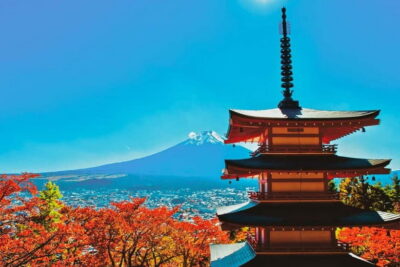
The classic Japan postcard comes together on this November day trip: red maple leaves, Mt. Fuji, and a five-story pagoda above Fujiyoshida. You’ll also get Lake Kawaguchi, a mountain-town lunch, and a coach ride that removes the day’s transport puzzle.
I like the simple logistics and the amount of scenery packed into one day. I also like the food plan: warm Kuri Okowa chestnut rice and hoto hot pot at lunch, followed by a seafood bento on the ride back. The included bunch of Shine Muscat grapes is a cheerful extra.
The catch is the pace and the crowds. The 398-step climb at Arakurayama Sengen Park is serious, and November traffic can shorten stops or delay the return to Tokyo. Mt. Fuji is never guaranteed, even on a clear-looking autumn day.
In This Review
- Key points to know before booking
- Why this November coach trip works
- Arakurayama Sengen Park and the famous 398 steps
- Lake Kawaguchi’s Momiji Corridor
- A Yamanashi lunch of chestnut rice and hoto hot pot
- Dinner on the return to Tokyo
- What the tour conductor does, and what the conductor does not do
- Is $116.55 a fair price?
- Who should book this day trip?
- Should you book the Autumn Leaves tour?
- FAQ
- When does this autumn foliage tour operate?
- How long does the tour last?
- What are the main stops?
- Is Mt. Fuji guaranteed to be visible?
- How many steps are required at Arakurayama Sengen Park?
- Is there an alternative to the stairs?
- What meals are included?
- Are special dietary requests accepted?
- Is the tour conducted in English?
- What happens if traffic changes the schedule?
Key points to know before booking
- The pagoda view requires 398 steps: A gentler road route takes about 10 minutes, but the famous pagoda-and-Fuji view requires the stair climb.
- November is the only operating season: The schedule aims for the usual early to late November foliage window, but nature does not follow a timetable.
- Three scenic stops break up the coach ride: Arakurayama Sengen Park, Lake Kawaguchi’s Momiji Corridor, and Enzan in Yamanashi each offer a different kind of autumn view.
- Both lunch and dinner are included: You do not need to hunt for food during a tightly scheduled day.
- The tour conductor is not a licensed guide: Japanese is the main language, with key information supported by a translation app. English-speaking staff, including Natsumi on one departure, may assist.
- The $116.55 price covers more than transport: Round-trip bus service, lunch, dinner, and grapes make the cost easier to justify, especially for a solo visitor.
Why this November coach trip works
A day trip from Tokyo to the Fuji Five Lakes area can be awkward by public transport. You may need to coordinate trains, buses, timed connections, and crowded autumn routes. This tour puts you on one coach for the long movements and gives you three clearly defined stops.
That matters most if you are traveling alone or do not want to rent a car. You get a meeting point in Tokyo, a tour conductor, round-trip transport, and meals without having to make decisions at every turn. The group can reach places that would take more planning on your own.
The bus carries up to 42 people, so this is not a small private outing. The trade-off is predictable: less flexibility, but far less navigation work. The day lasts about 9 hours and 10 minutes, so expect a full outing rather than a relaxed half-day escape.
This is also a seasonal bet. The tour operates only in November, with the usual peak period running from early to late in the month. The exact color can vary with weather and temperature. You may see perfect crimson branches, late-turning leaves, or foliage past its best.
A few more Tokyo tours and experiences worth a look
Arakurayama Sengen Park and the famous 398 steps
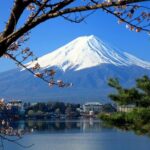
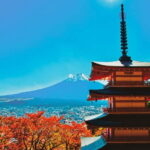
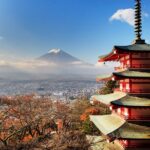
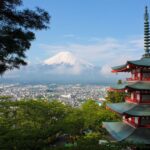
The first stop is Arakurayama Sengen Park, the place most closely tied to the familiar Fuji photograph. From the upper area, the five-story Chureito Pagoda frames Mt. Fuji beyond the autumn trees. When the sky cooperates, this is the image that gives the day its headline.
Getting there takes effort. From the park entrance, you climb about 398 steps, or roughly 20 to 30 minutes at a steady walking pace. The bus cannot take you to the viewpoint. Wear shoes with a firm grip and clothing that lets you move freely.
There is an alternative route along the road with a gentler slope. It takes about 10 minutes on foot, but you will not reach the exact iconic composition of pagoda and Mt. Fuji together. If your legs are not up to the stairs, the area near the entrance still offers Fuji views when the mountain is visible.
I would treat this stop as the day’s main physical test. The time listed here is about 1 hour and 10 minutes, which sounds generous until you account for the climb, pauses, photographs, and the walk back down. You need to keep an eye on the departure time.
The reward is not just the pagoda. The view lets you see how a Shinto park, mountain slopes, autumn color, and Japan’s best-known peak fit into one frame. The setting is busy during foliage season, so patience helps. You may need to wait for a clear sightline or accept that your best photo will include other people.
Mt. Fuji is weather dependent. Rain and cloud can hide it completely. One departure continued in rainy conditions, and the visitor still enjoyed the stops and the staff, but Fuji was not visible. There is no refund if cloud or poor foliage changes the main photo opportunity.
Lake Kawaguchi’s Momiji Corridor
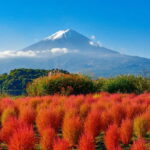
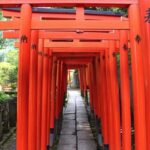
The second stop moves from a high viewpoint to a walk beside Lake Kawaguchi. The Momiji Corridor is lined with more than 60 maple trees, creating a tunnel of red and gold when the timing is right.
The stop lasts about 50 minutes. That is enough for a walk, photographs, and a quick look at the lake area, but not enough for a long lakeside exploration. You should think of this as a focused foliage stop rather than free time in the wider Lake Kawaguchi region.
This is a good counterpoint to Arakurayama. The pagoda stop gives you height and a famous long view. The Maple Corridor gives you close-up color and a more intimate walk beneath the branches. If Fuji disappears behind cloud, the maple-lined path still offers something worthwhile.
The main limitation is congestion. Autumn roads and popular viewing spots can become crowded, slowing the coach and reducing time at the stops. The order of the day can change, too. Keep your phone charged, note the bus location, and return promptly when instructed.
A Yamanashi lunch of chestnut rice and hoto hot pot
Around 1:00 PM, the tour reaches Enzan in Yamanashi, described in the schedule as Koshu. Lunch is built around two regional comfort foods: Kuri Okowa, sticky rice cooked with chestnuts, and hoto hot pot.
Hoto is a Yamanashi specialty made with broad noodles in a warm soup. It suits a cool November day and gives the meal a distinctly local character rather than the generic boxed food often served on group excursions. The chestnut rice adds a mild sweetness and seasonal touch.
Lunch at around 1:00 PM is later than many people expect. Eat a proper breakfast, especially if you are sensitive to long gaps between meals. The schedule gives this stop about 50 minutes, so lunch is designed to be efficient rather than leisurely.
Special dietary requests, including food allergies, cannot be accommodated. If you have strict dietary needs, you should arrange your own food and understand that there is no meal refund. The supplied information also notes that food and drinks are not included unless specified, so bring or buy anything extra you want during the day.
This meal is one of the tour’s better value points. You are not simply paying for a bus seat and a few photo stops. The lunch gives you a taste of Yamanashi’s local cooking without asking you to find a suitable restaurant during a tightly timed route.
Dinner on the return to Tokyo
The food continues after the sightseeing ends. A seafood bento is provided for dinner on the coach ride back to Tokyo, which is practical after a long day outdoors.
A boxed evening meal also protects your return journey from an additional restaurant stop. You can eat on the bus and keep moving, though you should not expect a sit-down dinner or a choice of menu. The tour cannot accommodate special food requirements, so this is another point to check before booking.
You also receive a bunch of Shine Muscat grapes to take home. These prized Japanese grapes are a small but memorable touch, and they make the trip feel more connected to Yamanashi’s agricultural identity.
The exact return time can shift. Autumn traffic, weather, and road conditions may cause delays. The operator can shorten or omit parts of the schedule when congestion becomes severe, with no refund for those changes.


What the tour conductor does, and what the conductor does not do
The person accompanying the group is a Japanese-speaking tour conductor, not a National Government Licensed Guide Interpreter. The conductor focuses on practical instructions and essential information, using a translation app to support foreign participants.
That distinction matters. If you want detailed history, temple interpretation, or a long explanation of Fuji geology, this is probably not the right format. One English-speaking tour leader, Natsumi, was specifically praised for being friendly and professional on a rainy departure, but English support can vary by departure.
The strongest part of this setup is organization. You receive meeting instructions, move as a group, and get help with the day’s basic flow. One traveler found the format especially useful when going alone, with clear bus meeting information and lunch included.
The weaker part is interpretation. A past participant felt rushed and wanted more explanation, even while finding the food good and the English guide pleasant. That is a fair warning: book this for scenery and transport, not for a detailed guided lesson.
Is $116.55 a fair price?
At $116.55 per person, this is not the cheapest way to look at autumn leaves near Tokyo. You are paying for convenience during one of the busiest sightseeing periods of the year.
The value improves when you count the included pieces:
- Round-trip coach transport from Tokyo
- Three sightseeing stops
- Kuri Okowa and hoto hot pot lunch
- Seafood bento dinner
- A bunch of Shine Muscat grapes
- A tour conductor and organized meeting points
For a solo visitor, the price is easier to defend because you are not splitting a rental car, paying for fuel, or working out the route yourself. It also protects you from the stress of finding food and transport in crowded autumn destinations.
The value drops if you want long stays at each site, a private guide, or a flexible photo schedule. You could spend more time at one location by arranging the day independently. You would also carry the full burden of planning and possible transport delays.
I see this as a convenience-focused package with a solid food component, not a luxury tour. Its success depends on three things: clear weather, good foliage timing, and tolerable traffic.
Who should book this day trip?
I would recommend it to you if you want to see several major autumn sights outside Tokyo in one day and prefer not to manage Japanese transport. It also suits solo visitors, active walkers, and people who appreciate having meals arranged.
You should be comfortable with a fairly quick pace. The Arakurayama climb is the key issue. The tour is not recommended for people with leg problems, and even fit walkers should allow for a tiring uphill route followed by more walking at the other stops.
Families and older participants may prefer the gentle road route at Arakurayama, though that means giving up the exact pagoda-and-Fuji view. Most people can participate, but the steps and November crowds should be taken seriously.
This tour is less suitable if your priority is a professional English guide. The conductor shares essential information and manages the group, but does not provide the level of detailed commentary you would expect from a licensed guide interpreter.
Book only if you accept weather risk. A hidden Fuji, weak foliage, traffic delay, or shortened stop is possible, and the price will not be refunded for those conditions. If you can treat the mountain view as a bonus rather than a promise, the day becomes a safer choice.
The cancellation terms are strict. Cancel at least six full days before the start for a full refund. A cancellation two to six full days before departure receives a 50 percent refund, while cancellations less than two full days before the start are not refunded. The operator can also cancel if minimum numbers are not met, in which case you receive an alternative or full refund.
Should you book the Autumn Leaves tour?
Book it if you want a well-organized November scenery day with Mt. Fuji, a pagoda, Lake Kawaguchi, local food, and no complicated transport planning. The combination is appealing, and the included lunch, dinner, and grapes make the price more reasonable.
Skip it if you need a slow pace, detailed guiding, strict dietary control, or a guaranteed Fuji photograph. The stairs, crowds, translation-app format, and weather uncertainty are real limitations.
For the right kind of day, this is a practical way to reach some of Japan’s most photogenic autumn scenery from Tokyo. Just wear good shoes, eat breakfast, keep your expectations flexible, and remember that Fuji has the final say.
FAQ
When does this autumn foliage tour operate?
The tour is available only during November. The typical foliage period is early to late November, but the exact timing depends on seasonal weather and temperatures.
How long does the tour last?
The experience lasts approximately 9 hours and 10 minutes.
What are the main stops?
The tour visits Arakurayama Sengen Park, Lake Kawaguchi’s Momiji Corridor, and Enzan in Yamanashi, also referred to as Koshu in the schedule.
Is Mt. Fuji guaranteed to be visible?
No. Cloud or unfavorable weather can hide Mt. Fuji, and there is no refund if the mountain cannot be seen.
How many steps are required at Arakurayama Sengen Park?
The main route to the five-story pagoda requires about 398 steps one way. The walk takes roughly 20 to 30 minutes, depending on your pace.
Is there an alternative to the stairs?
Yes. A road route with a gentler slope takes about 10 minutes on foot. This route does not provide the famous view of Mt. Fuji and the pagoda together.
What meals are included?
Lunch includes Kuri Okowa chestnut rice and hoto hot pot. A seafood bento is provided for dinner on the return coach ride.
Are special dietary requests accepted?
No. The tour cannot accommodate special dietary requests, including food allergies. No meal refund is provided if you do not eat the supplied food.
Is the tour conducted in English?
The tour conductor is Japanese-speaking and uses a translation app to provide key information for foreign participants. The conductor is not a National Government Licensed Guide Interpreter. English-speaking assistance may be available, as with Natsumi on one departure, but detailed English guiding is not promised.
What happens if traffic changes the schedule?
The itinerary order may change, and the bus may arrive late. During the busy foliage season, stops may be shortened or omitted because of traffic or congestion, with no refund for those changes.
More Mt Fuji Day Trips in Tokyo
More tours in Tokyo we've reviewed





Mt Fuji Day Trips, compared.
 ★ 5.0Mt Fuji and Hakone 1-Day Bus Tour Return by Bullet TrainFrom $163
 ★ 4.0Mt Fuji & Hakone Cruise, Drum Show Bullet Train 1 Day from TokyoFrom $149
 ★ 4.4Tokyo Mt Fuji 5th St & Hakone Cruise Bus Tour w/Bullet TrainFrom $15410 hours
 ★ 4.5From Tokyo: Mount Fuji Full-Day Sightseeing TripFrom $6810 hours
 ★ 4.7Tokyo: Mt. Fuji Tour, Hakone Ropeway, Owakudani, Lake AshiFrom $5410 hours
 ★ 4.4Tokyo:Mt.Fuji,Kawaguchiko Oishi Park,Arakurayama Sengen ParkFrom $5410 hours