
Reviewed · ASAKUSA TOURS
Asakusa: Beginner-Friendly Japanese Dance Workshop
Nihon Buyo is the star here: a graceful Japanese dance tradition shaped over more than 400 years. In 45 minutes, you’ll watch a professional dancer in kimono, see the striking white makeup tradition called shironuri, then try a few fan movements yourself.
I like the small time commitment and the way the program moves from watching to doing. I also like the welcome matcha and the photo session, which give you a friendly introduction to Japanese arts without requiring a costume, dance background, or a full afternoon.
The main consideration is that this is a short cultural sampler, not a full theater performance or an advanced dance class. Arrive early if you want the matcha, since drink service ends five minutes before the show begins.
In This Review
- Key points at a glance
- A compact introduction to Japanese classical dance
- Matcha before the performance
- Watching the dancer in kimono
- The shironuri makeup moment
- Picking up a folding fan
- A personal photo with the performer
- What the $25 price buys you
- Location and timing in Asakusa
- Who will enjoy this workshop most
- Booking flexibility and practical planning
- How this fits into an Asakusa day
- Should you book the Asakusa dance workshop?
- FAQ
- How long does the Japanese dance workshop last?
- Where does the workshop take place?
- What is included in the price?
- Do I need dance experience?
- Do I have to wear a kimono?
- What kind of drink is provided?
- When should I arrive for the matcha?
- Is instruction available in English?
- Can I cancel the booking?
Key points at a glance
- A 45-minute introduction to Nihon Buyo: See a professional performance, then learn simple fan movements.
- The shironuri reveal adds theater: The dancer appears in traditional white stage makeup at the performance’s climax.
- Matcha is served before the show: Arrive early, since the welcome drink is not available during the final five minutes before starting time.
- No costume or dance skills are needed: The class is designed for first-timers and includes English and Japanese instruction.
- Photos finish the visit: You can take a commemorative picture with the dancer in full kimono and makeup.
- Easy to pair with Asakusa sightseeing: The venue is near Kaminarimon Gate, with the meeting point on the sixth floor.
A compact introduction to Japanese classical dance
This Asakusa workshop gives you a close look at Nihon Buyo, a classical Japanese dance form that grew during the Edo period. The movements are slow and carefully controlled. A turn of the wrist, a lowered fan, or a measured step can suggest a season, a mood, or a character.
That restraint is part of the appeal. You are not watching a high-energy stage show with constant motion. Instead, you are asked to notice small gestures and the way the dancer uses posture, timing, costume, and space to tell a story.
I find this kind of introduction useful because traditional arts can seem difficult to approach from the outside. You do not need to understand every story or recognize every movement. The performance gives you a visual starting point, and the workshop helps you feel how much control even a simple gesture requires.
The setting in Asakusa makes sense. Kaminarimon Gate and the surrounding old-town streets are among Tokyo’s best-known places for traditional atmosphere. You can combine the 45-minute session with a visit to the gate, Senso-ji area, nearby shopping streets, or a meal in the district.
A few more Tokyo tours and experiences worth a look


Matcha before the performance
The welcome drink is a small detail, but it shapes the beginning of the visit. You are served a cup of matcha before the performance, giving you a few quiet minutes to settle in and shift your attention away from Tokyo’s busy streets.
This is not a separate tea ceremony, so you should not book the activity expecting a long lesson in tea preparation or etiquette. The matcha is a simple welcome service, but it adds a clear Japanese touch to the program.
Timing matters. Matcha is served only until five minutes before the performance starts. If you arrive after that point, the staff cannot prepare the drink in time. I would plan to reach the sixth-floor meeting point early rather than cutting it close.
One booking also included iced matcha and a small origami fan gift. The standard information confirms the welcome drink, while the exact drink style or gift may depend on the session. You should treat the matcha as part of the visit, but not assume that every extra item will be included every time.
Watching the dancer in kimono
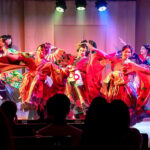
The first main part of the program is the live performance. A professional dancer appears in a beautiful kimono and demonstrates the controlled movements associated with Nihon Buyo.
The costume is not just decoration. In Japanese classical dance, the kimono affects the line of the body and the way the dancer moves. A sleeve can extend a gesture. A fan can suggest an object, a breeze, or a change in feeling. The pace gives you time to watch these details.
The performance also draws on traditional images connected with Japan’s four seasons. One recent booking described the dance as expressing those seasons with elegance. That gives you a useful way to watch: look for changes in mood, posture, and the use of the fan rather than waiting for a literal plot with spoken explanation.
Because the entire experience lasts only 45 minutes, the performance is best viewed as an introduction. You will not receive a full-length theater production with an elaborate story and extended musical structure. You will get a focused presentation that shows why Nihon Buyo depends on precision and suggestion.
The shironuri makeup moment
A memorable part of the program comes when the dancer appears with shironuri, the white makeup used in traditional Japanese theater and dance. The makeup creates a strong stage image and helps the dancer’s face remain expressive under performance lighting.
For you, this moment adds a bit of theater craft to the dance lesson. You are not seeing only steps and costumes. You are also seeing how traditional performance uses the face, clothing, and visual style to create a character.
The white makeup may look unusual if you are seeing it for the first time. That is exactly why it helps to have it explained as part of a long performance tradition rather than treating it as a costume novelty. It connects the short workshop to wider Japanese stage arts.
Photography is part of the program, but it is worth staying attentive during the show instead of turning the performance into a camera session. The scheduled photo time afterward gives you a better chance to enjoy the presentation first.
Picking up a folding fan
After the performance, the activity shifts from watching to participation. An instructor guides you through basic fan dance movements, with no previous dance or costume experience required.
This is a gentle class, not a test. You are not expected to master a routine or match a professional dancer. The point is to try the posture, hand position, timing, and flow of a few simple movements while receiving help from the instructor.
I like this format because it gives you a physical sense of the art. From your seat, a fan movement may look effortless. Once you try it, you notice how much the angle of the wrist and the speed of the movement change its effect.
The workshop should suit families, couples, solo visitors, and anyone who feels uncertain about joining a dance class. The program is specifically described as beginner-friendly, and instruction is available in English and Japanese.
Do not expect to wear a kimono. You can take part in ordinary clothing, which keeps the experience simple and avoids the time and cost of a costume rental. If your goal is a formal dressing session or a longer dance lesson, this is not that kind of activity.
A few more Tokyo tours and experiences worth a look




A personal photo with the performer
The session ends with a photo opportunity alongside the dancer in full kimono and makeup. This gives you a tangible memory of the visit and a chance to see the costume up close after the performance.
The photo session also changes the tone of the meeting. Instead of watching from a distance, you can have a brief personal connection with the performer and staff. The activity information also notes a chance to chat, so you can use the moment to ask a simple question or thank the dancer.
I would bring a phone that is ready to use and decide ahead of time who will take the picture if you are not traveling alone. The supplied information does not specify the number of photos, whether professional photos are taken, or how images are delivered, so you should regard this as a commemorative photo opportunity rather than a formal photography package.
One booking described the staff and artists as particularly kind and attentive. Another account from a parent and son praised the hospitality, the iced matcha, the origami fan, and the chance to dance together. Those details suggest that the human welcome is an important part of the visit, not just an extra around the performance.
What the $25 price buys you
At $25 per person, this is priced as a short cultural activity rather than a major theater ticket. The cost includes four clear elements: a live Nihon Buyo performance, a basic fan workshop, a photo session with the dancer, and a welcome drink.
I see the value in the variety. In less than an hour, you watch a professional, learn context through the visual performance, try a traditional movement, and leave with a photo. That makes the price reasonable if you want a compact introduction between other Asakusa plans.
The value is weaker if you are seeking a long class, a full traditional theater production, or extensive one-to-one instruction. The 45-minute duration limits how much history, technique, and practice can fit into the session.
For a first contact with Japanese dance, though, the format is efficient. You are not paying for a full costume change, a long transfer, or an entire evening. The venue’s location near Kaminarimon Gate also means you can build the activity into a day of sightseeing without losing much time.
Location and timing in Asakusa
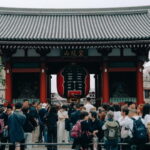
The workshop takes place in Asakusa, near Kaminarimon Gate, one of Tokyo’s most recognizable old-town landmarks. The meeting instruction says to go directly to the sixth floor, so check your booking details carefully and allow time to find the building and reach the room.
The supplied information does not name the building or give a detailed route from a particular station. For that reason, I would not arrive at the last minute. Asakusa is easy to explore, but its busy streets and sightseeing crowds can slow you down, especially if you are coming from another part of Tokyo.
Arriving early serves two purposes. You have time to find the sixth-floor meeting point, and you can receive the matcha before service ends five minutes before the performance. Late arrival may also mean missing the opening portion of the show, so punctuality matters more here than it might for a casual drop-in attraction.
The activity lasts 45 minutes, with starting times shown according to availability. That makes it easy to pair with other plans, but it also means you should protect the full time slot rather than scheduling a nearby meal or museum visit too tightly.
Who will enjoy this workshop most
This is a strong choice for a first-time visitor who wants a direct encounter with Japanese culture without committing to a long formal program. It also works well for families, since the hands-on fan segment gives children something active to do after the performance.
The activity may appeal to you if you enjoy:
- Traditional arts presented in a short, accessible format
- Visual storytelling through costume, gesture, and movement
- Small-group cultural activities near major sightseeing areas
- Simple participation rather than a demanding class
- Photos that record a specific local experience
- A program suitable for people with no dance background
It may be less suitable if you want a full evening of theater, detailed historical instruction, or a serious technical study of Nihon Buyo. The workshop gives you a taste, not a complete education in the art.
The wheelchair-accessible information is useful for visitors who need step-free or accessible arrangements, though the supplied details do not explain the exact room layout or restroom setup. If you need specific access features, confirm them before booking.
Booking flexibility and practical planning
You can cancel up to 24 hours before the activity for a full refund. You can also reserve now and pay later, which is helpful when your Tokyo schedule is still changing.
I would book a starting time that leaves room around it. The activity is short, but the welcome drink cutoff makes early arrival worthwhile, and getting to an unfamiliar sixth-floor meeting point can take longer than expected.
The instructor can guide you in English or Japanese. That matters during the fan lesson, where a small correction in hand position or timing can make the movement easier. The visual nature of the performance also means you can follow much of it even if you do not understand Japanese.
The program is offered by YUKI YOSHIDA. No individual instructor or dancer names are provided, so do not expect to select a particular performer when booking.
How this fits into an Asakusa day
I would schedule this activity either before or after exploring Kaminarimon Gate and the nearby historic district. Its 45-minute length makes it a practical middle stop rather than the main event of your entire day.
Before the workshop, you can walk through the area and get a sense of Asakusa’s old-town character. Afterward, the photo with the dancer gives the day a personal souvenir that a standard sightseeing walk does not provide.
The timing also makes this a good backup for a rainy day. Most of the activity takes place indoors, although the supplied information does not describe the venue’s full facilities. You still need to allow for getting to the building and finding the sixth floor.
Do not expect the workshop to replace a visit to a major theater or a full cultural performance. Instead, think of it as a friendly door into an art form that can seem formal or distant when encountered without explanation.
Should you book the Asakusa dance workshop?
I would book this for the accessible mix of performance and participation. The live kimono dance, shironuri makeup, matcha, fan lesson, and photo session give you several distinct moments for $25, and the location is convenient for an Asakusa sightseeing day.
The strongest reason to choose it is the balance between looking and doing. You watch a professional dancer first, then try a simplified version of the movements yourself. That makes the art easier to remember than a performance viewed only from the audience.
Skip it if you want a long class, a full theatrical production, or a costume rental. Book it if you want a warm, compact introduction to Japanese dance, especially if you are traveling with a child, have limited time, or prefer cultural activities that do not demand prior knowledge.
FAQ
How long does the Japanese dance workshop last?
The activity lasts 45 minutes.
Where does the workshop take place?
It takes place in Asakusa, near Kaminarimon Gate in Tokyo. The meeting instruction says to go directly to the sixth floor.
What is included in the price?
The $25 price includes a live performance by a professional Nihon Buyo dancer, a basic fan dance workshop, a photo session with the dancer, and a welcome drink.
Do I need dance experience?
No. The workshop is designed for first-timers, and no dance or costume experience is needed.
Do I have to wear a kimono?
No. You do not need to wear a kimono to participate.
What kind of drink is provided?
A complimentary cup of matcha, traditional Japanese green tea, is provided. One session also included iced matcha, but the standard information identifies the welcome drink as matcha.
When should I arrive for the matcha?
Arrive before the final five minutes before the performance begins. Drink service ends five minutes before the start time, and drinks cannot be provided after that point.
Is instruction available in English?
Yes. The instructor can provide guidance in English and Japanese.
Can I cancel the booking?
Yes. You can cancel up to 24 hours in advance for a full refund. You can also reserve now and pay later.
More Workshops & Classes in Tokyo
More Asakusa Tours in Tokyo

More tours in Tokyo we've reviewed





Asakusa Tours, compared.
 ★ 4.8Tokyo: Japanese Dance Cabaret Theater Asakusa-Kaguwa TicketFrom $492 hours
 ★ 4.7Tokyo: Meiji Shrine, Asakusa, Skytree Bus Tour and CruiseFrom $12210 hours
 ★ 4.9Tokyo: Roll and Authentic Sushi Making Class in AsakusaFrom $581h 40m
 ★ 4.8Tokyo: Asakusa Walking Tour with Sensoji Temple VisitFrom $222 hours
 ★ 5.0Tokyo Asakusa Rickshaw TourFrom $42
 ★ 4.5Tokyo Panoramic 1 Day: Meiji Shrine, Asakusa, Odaiba and SKYTREE®From $85