
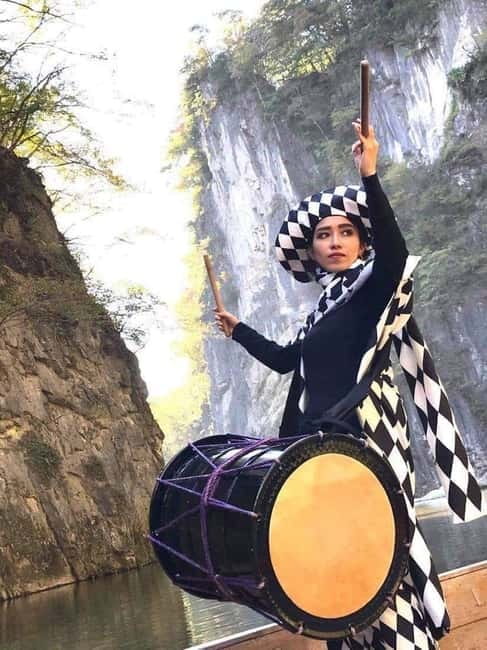
Reviewed · TOKYO
Tokyo’s Authentic and Finest Taiko Drumming Experience
Taiko drumming is not a polite sit-and-watch activity. In Eva Kestner’s 90-minute class, you learn the stance, stick work, rhythms, poses, and force behind a real performance. You also get a short demonstration from Eva and a video of your own playing to keep.
I like the mix of cultural background and hands-on practice, and I like that the class teaches both a traditional piece and a contemporary one. The personal video is another smart touch, since it lets you remember the rhythm and check your form later.
The main caution is physical: this class can be a proper workout. Your arms may feel it afterward, and the studio can get warm, so wear light, comfortable clothing and bring water.
In This Review
- Key points at a glance
- Why this taiko class feels like more than a tourist photo stop
- Meeting Eva Kestner, your taiko instructor
- The first stage: foundation training and form
- The rhythm training: where the class gets lively
- Learning a traditional piece from the Tokyo region
- Adding a contemporary piece and performance movement
- Eva’s demonstration performance
- The personal video is a useful souvenir
- Is $120 a fair price?
- Who should book this experience?
- Practical tips for a better session
- Should you book Eva Kestner’s taiko workshop?
- FAQ
- How long does the taiko drumming experience last?
- How much does the experience cost?
- Do I need previous taiko or musical experience?
- What languages are used during the class?
- What will I learn during the workshop?
- Are the drums and sticks provided?
- What should I bring and wear?
- Can I cancel my booking?
Key points at a glance
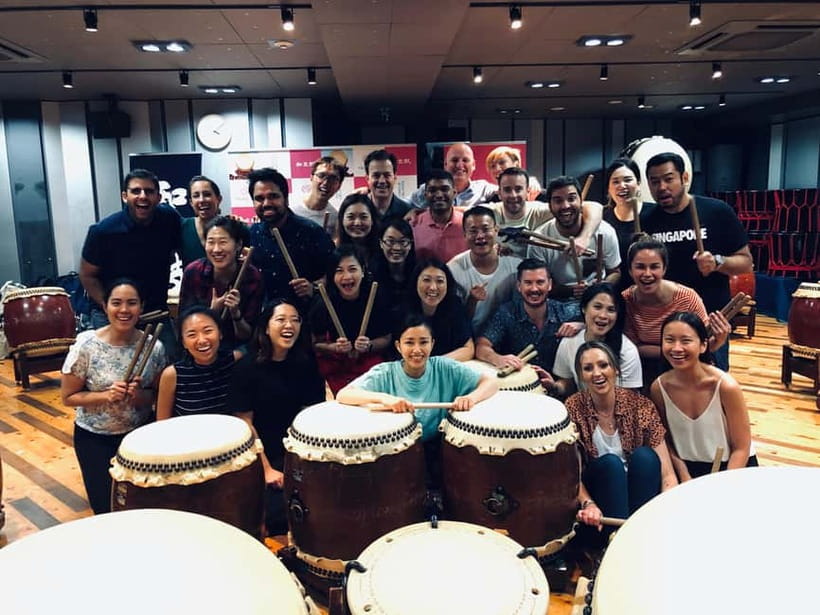
- Learn from Eva Kestner: A professional taiko artist who founded and led Cornell University’s taiko group and received an excellence award from the Tokyo University of the Arts New Artists Competition.
- Practice two styles: The class includes foundation work, rhythm training, and both traditional and contemporary taiko music.
- Expect active participation: You will stand, move, repeat patterns, and play with real energy rather than simply watch a show.
- Take home a personal video: A recording of you playing provides a useful souvenir and a way to practice your form.
- Suitable for complete beginners: No prior taiko experience is required, and instruction is given in English and Japanese.
- Plan for the workout: Comfortable clothes and a water bottle are not optional extras. They are sensible preparation.
Why this taiko class feels like more than a tourist photo stop
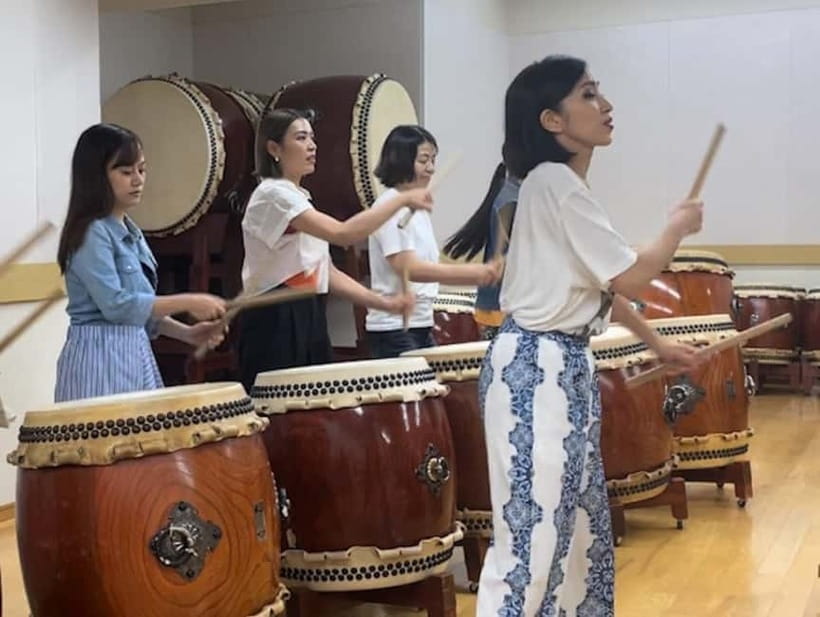
Many cultural activities let you try something for five minutes, pose for a picture, and move on. This one gives you a real lesson structure. You begin with the basics, work through repeated rhythms, and finish by playing pieces that require attention, timing, and body movement.
That matters because taiko is not simply a matter of hitting a large drum. You learn how to hold the sticks, how to stand, how to use the body, and how to keep a pattern with others. The reviews describe paired playing, different beats, poses, and switching on and off the drum. Those details suggest a class built around performance, not random noise.
I especially like the balance between explanation and action. Eva gives a brief history of taiko and explains its place in Japanese culture, then gets you playing. You will not spend most of the 90 minutes sitting through a lecture.
The class has earned a perfect 5 rating from 28 reviews, and the praise is unusually consistent. The most repeated points are Eva’s clear teaching, her energy as a performer, the fun of learning a genuine piece, and the intensity of the physical work. That combination is the heart of the experience.
If you're still narrowing it down, here are other tours in Tokyo we've reviewed.


Meeting Eva Kestner, your taiko instructor
Eva Kestner brings an impressive artistic background to the class. She founded and served as the first musical director of Cornell University’s Taiko Drumming group. She also received an excellence award from the Tokyo University of the Arts New Artists Competition.
Her original music has been published by Harper Collins and the Cambridge International Curriculum. You do not need to understand the details of those credentials to see why they matter here. This is not a casual class led by someone who learned a few tourist-friendly beats. You are being taught by a working artist with experience in both performance and instruction.
The teaching style is a major part of the value. Eva explains clearly, demonstrates the movement, and leads you through patterns step by step. The supplied information says she teaches in English and Japanese, making the class a practical choice for international visitors who want direct instruction rather than a language barrier.
I also like that the class seems to keep moving. You cover stick holding, basic technique, rhythm sets, and pieces within the 90-minute session. That pace keeps the energy high, but it also means you need to pay attention. This is not the best choice if you want a slow, meditative craft lesson.
The first stage: foundation training and form
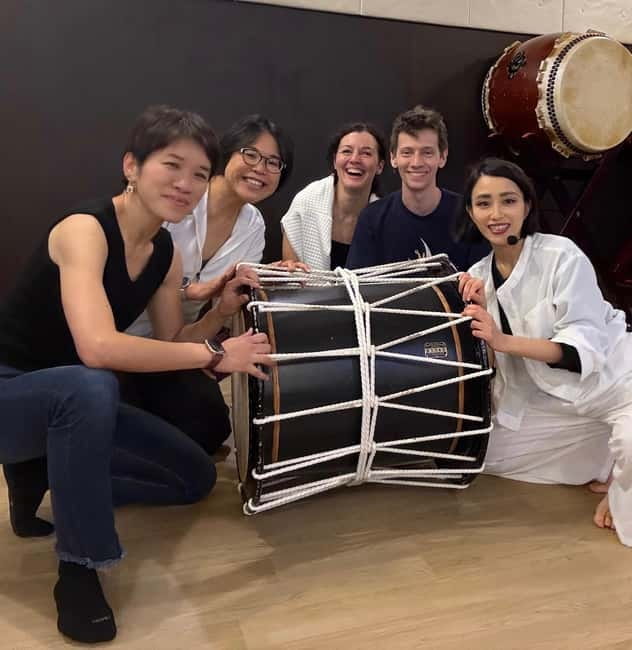
The workshop begins with foundation training. This is where you learn how to hold the taiko sticks and how to position yourself at the drum.
Beginners should welcome this part. Taiko playing depends on form, and it is easy to focus only on the sound. The class instead gives you a base for producing that sound with control. You may also learn that the visual side of taiko matters, including posture, movement, and performance gestures.
This opening section is useful even if you have played drums before. Taiko has its own physical style, and general musical experience will not replace learning the particular stance and motions. At the same time, the class does not require any previous experience, so first-time players are not expected to arrive with special skills.
The foundation work also prepares you for the physical side of the workshop. You will be standing and moving while repeating motions. If you have shoulder, arm, or mobility concerns, keep the activity’s active nature in mind before booking.
The rhythm training: where the class gets lively
After the basics, Eva leads rhythm exercises. This is likely the point where the workshop changes from instruction into group music making.
You work through different beat patterns and repeat them until the group can hold the rhythm. The structure gives you a chance to hear how small patterns fit into a larger piece. It also demands focus. One participant described the class as a good way to sharpen concentration, and that makes sense: you must watch, listen, remember, and strike at the right time.
The exercises can also include different roles within the group. Some people play while others wait, then the parts switch. Paired performances with different beats and poses add a playful stage element. That makes the activity fun for families and friends, since you are not working alone in silence.
The tradeoff is effort. Several descriptions of the class point to tired arms, sore muscles, heat, and an unexpected workout. One person called it exhausting after a while, while another advised wearing shorts because the room became warm. I would book this with the same mindset you bring to an active class, not a quiet museum visit.
Learning a traditional piece from the Tokyo region
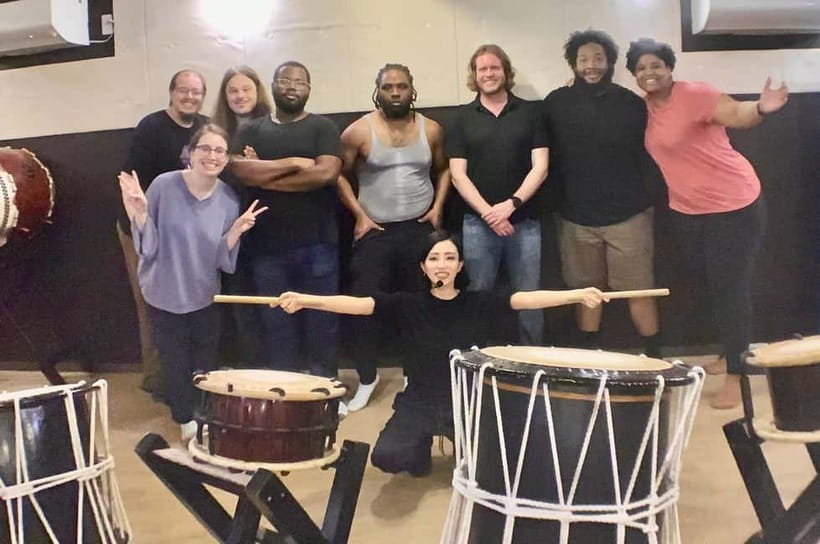
The workshop includes a traditional taiko composition. The specific piece can vary, but the class has used a regional work from Miyake, one of the islands near Tokyo.
This is one of the strongest cultural parts of the experience. You are not just copying a generic rhythm made for visitors. You are learning a piece connected to a Japanese place and performance tradition. Even a short introduction to one regional composition gives you a better sense of how taiko can carry local identity.
The traditional piece is also the harder part of the class. You need to remember patterns, keep time, follow the group, and coordinate the physical movements. That may sound daunting, but Eva leads you through it in manageable steps. You do not need to arrive as a musician.
I like this challenge. A class that is too easy can feel disposable. Here, the effort gives the final performance some meaning. You may not master every detail in 90 minutes, but you will have a genuine taste of the discipline behind taiko.



Adding a contemporary piece and performance movement
Along with the traditional material, you learn a contemporary taiko piece. This gives the session a useful contrast.
The traditional composition connects you with regional practice. The contemporary work shows how taiko can be arranged for a modern performance setting. You may also work with poses, changes in movement, and shifts between players. These elements help explain why taiko performances can be as visual as they are musical.
This is where the class becomes especially good for groups. Friends or family members can share the beat, take turns, and perform together. The experience does not depend on one person being musically gifted. In fact, coordinated group effort is part of the fun.
The lesson can move quickly, though. You cover a lot in 90 minutes, and beginners may occasionally feel they are trying to remember several things at once. I would not expect a polished concert performance. The goal is to learn the building blocks, perform a short piece, and enjoy the process.
Eva’s demonstration performance
At some point during the workshop, Eva gives a demonstration performance. This is more than a short break from practice.
Seeing an expert play helps you understand the gap between the beginner exercises and finished taiko performance. You can watch the timing, force, posture, and confidence that the class is trying to teach. It also gives the session a live artistic moment rather than making the entire experience feel like a fitness lesson.
I consider this one of the most valuable parts for first-time visitors. A demonstration puts the instrument in context. You see what the movements are working toward, and you get a chance to appreciate Eva as a performer, not only as an instructor.
The contrast may also make your own playing more enjoyable. You do not need to sound like Eva to have a good time. You only need to notice how much skill sits behind the strong, clean sound of a professional performance.
The personal video is a useful souvenir
After the workshop, you receive a personalized video of yourself playing taiko. The recording is a better souvenir than a standard group photograph because it captures the actual activity.
You can use it to remember the rhythms, review your form, and share the experience at home. One description specifically valued having a recording for practice. Even if you never play taiko again, the video preserves the sound, movement, and atmosphere of the session.
Do not think of the recording as proof that you completed a perfect performance. The class is short, and the traditional piece can be challenging. Its value is that it gives you a record of taking part and shows the progress you made during the lesson.
The video also adds value to the $120 price. You are paying for instruction from an accomplished artist, use of the drums and sticks, a live demonstration, cultural explanation, and a personal take-home record. That is a stronger package than a brief drum-tryout activity.
Is $120 a fair price?
At $120 per person, this is not a bargain-bin Tokyo activity. You should book it because you want a focused, instructor-led cultural workshop, not because you are looking for the cheapest way to make a loud noise.
For the right person, the price is reasonable. The session lasts 90 minutes, includes the instruments and sticks, provides direct teaching, and includes both traditional and contemporary material. The personal video gives you something to keep, and Eva’s background adds a level of instruction that a casual demonstration may not offer.
The private-group option can also improve the value for families, couples, or friends who want the class to feel personal. Group size details are not specified for standard bookings, so check the option you select. Groups larger than 20 people should contact Eva directly at [email protected].
The location is in central Tokyo, with the studio described as about 20 minutes from Shibuya by train for large groups. The meeting point can vary by booking option, so confirm the exact location before setting your day around it. That small bit of planning matters in Tokyo, where a short train ride can still involve a station walk and a transfer.
Free cancellation is available up to 24 hours before the activity for a full refund, and reserve-now-pay-later booking is offered. Those policies are useful if your Tokyo schedule is still shifting.
Who should book this experience?
I would recommend it to you if you want an active cultural activity with real instruction. It suits couples, families, friends, and solo visitors who are comfortable joining a physical class.
It is a particularly good pick if you enjoy:
- Learning by doing rather than watching
- Music, rhythm, or performance
- Japanese cultural activities with historical context
- Group activities that require attention and coordination
- Bringing home a personal video instead of a standard souvenir
Families should note that the supplied information does not give a minimum age. If you are booking for children, confirm age suitability before paying.
You should think twice if you dislike heat, repeated arm movement, or activities that move at a steady pace. This class has been described as tiring, and your arms may be sore afterward. Comfortable clothing is essential, and a water bottle is specifically recommended.
Practical tips for a better session
Wear clothing that lets you move freely. Light clothes or shorts may be more comfortable because the room can become warm during the active sections.
Bring water and arrive ready to participate. The class supplies taiko drums and drumsticks, so you do not need special equipment.
Keep your expectations realistic. In 90 minutes, you can learn basic technique, several rhythms, and sections of traditional and contemporary pieces. You are not completing professional training, but you are getting a serious introduction with enough structure to feel progress.
If you want the personal video to be useful later, pay attention to form as well as sound. Watch how Eva holds the sticks and positions the body. The recording can then serve as a reminder of technique, not just a fun clip.
Finally, leave room in your day after the class if possible. You may want a quieter activity afterward, especially if you are not used to repeated upper-body exercise.
Should you book Eva Kestner’s taiko workshop?
Yes, if you want one of Tokyo’s more active cultural experiences and you value a real lesson over a staged photo opportunity. Eva Kestner’s artistic background, clear English-language teaching, demonstration performance, and personal video make this feel substantial for a 90-minute session.
Book it with the right expectations. The class is energetic, sometimes tiring, and more demanding than it first sounds. If you want to learn, move, concentrate, and make music with other people, the $120 price is justified. If you want a relaxed activity with little physical effort, choose something gentler.
FAQ
How long does the taiko drumming experience last?
The workshop lasts 90 minutes.
How much does the experience cost?
The listed price is $120 per person.
Do I need previous taiko or musical experience?
No. Prior taiko drumming experience is not required.
What languages are used during the class?
Instruction is available in English and Japanese.
What will I learn during the workshop?
You will learn taiko foundation techniques, rhythm exercises, a traditional piece, and a contemporary taiko piece. The session also includes a brief history explanation and a demonstration performance by Eva.
Are the drums and sticks provided?
Yes. Taiko drums and taiko drumsticks are provided.
What should I bring and wear?
Bring a water bottle and wear comfortable clothing that allows you to move. The class can be physically tiring, and the room may become warm.
Can I cancel my booking?
You can cancel up to 24 hours in advance for a full refund. Reserve-now-pay-later booking is also available.
More tours in Tokyo we've reviewed





Tokyo, compared.
 ★ 5.0Mt Fuji and Hakone 1-Day Bus Tour Return by Bullet TrainFrom $163
 ★ 5.01-Day Tokyo Bus TourFrom $129
 ★ 4.6Tokyo: teamLab Planets TOKYO Digital Art Museum Entry TicketFrom $251 day
 ★ 4.0Mt Fuji & Hakone Cruise, Drum Show Bullet Train 1 Day from TokyoFrom $149
 ★ 5.0Tokyo: Shinjuku Food Tour (13 Dishes at 4 Local Eateries)From $86
 ★ 4.4Tokyo Mt Fuji 5th St & Hakone Cruise Bus Tour w/Bullet TrainFrom $15410 hours