
Reviewed · TOURS
Tokyo: True Crime And Ghost Stories Tour
Tokyo’s polished surface slips away quickly on this three-hour dark-history walk. Starting at Hanazono Shrine beside Golden Gai, you move through Kabukicho, Toyama Park, and Aoyama Cemetery while guide John links organized crime, wartime atrocities, sex districts, murder cases, and Japanese ghost lore.
I like the strong historical angle, especially the discussion of Unit 731 and the difficult parts of Japan’s wartime past. I also like John’s lively delivery: he uses jokes, dramatic acting, and odd little side stories to keep heavy material from becoming a grim lecture.
The catch is the subject matter and the walk itself. You will cover a fair distance, climb stairs, and hear about murder, prostitution, human experimentation, and other upsetting topics. The humor is deliberately dark, and adult language appears along the way.
In This Review
- Key points before you book
- Tokyo’s dark side, told on foot
- Meeting at Hanazono Shrine near Golden Gai
- Kabukicho: crime, vice, and organized power
- Toyama Park and the weight of Unit 731
- Aoyama Cemetery after dark
- John’s style: part historian, part actor
- Walking demands, timing, and comfort
- Is $35 a fair price?
- Who should book this Tokyo night walk?
- Final verdict: a strong choice for dark-history fans
- FAQ
- How long does the Tokyo True Crime and Ghost Stories Tour last?
- Where does the tour begin?
- Where does the tour finish?
- What language is the tour conducted in?
- Is transportation included in the tour price?
- Is the tour suitable for children?
Key points before you book
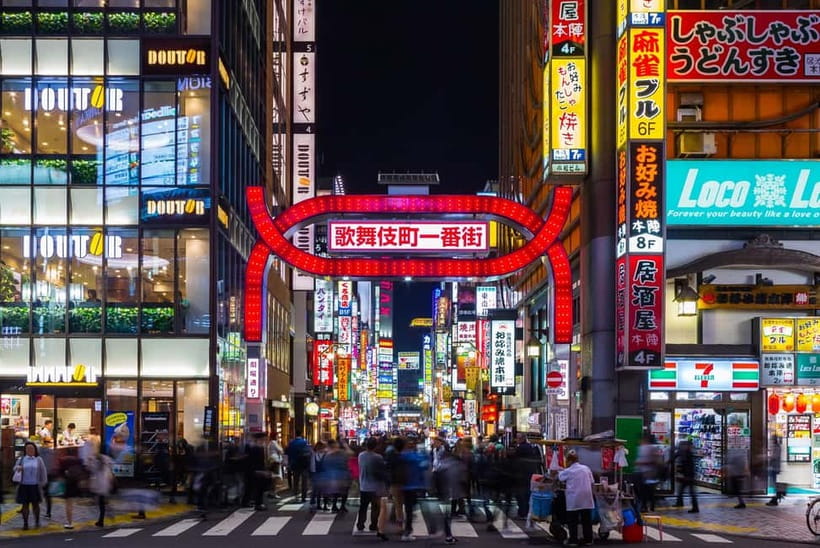
- Kabukicho sets the tone: Begin in Tokyo’s largest red-light district, with stories of gang conflict, murders, love hotels, and the city’s quasi-legal sex trade.
- Toyama Park brings wartime history into focus: The tour discusses Unit 731 and the human experimentation connected with this area.
- Aoyama Cemetery supplies the ghost-story setting: Expect Japanese supernatural tales among one of Tokyo’s largest burial grounds.
- John is the main attraction: His storytelling, comic timing, expressive acting, and local knowledge shape the experience.
- Golden Gai is nearby, but dinner is not included: Plan your own food and drinks before or after the walk.
- This is an adult walking tour: It is not suitable for children under 14, wheelchair users, people with low fitness, or people over 300 pounds, or 136 kilograms.
Tokyo’s dark side, told on foot
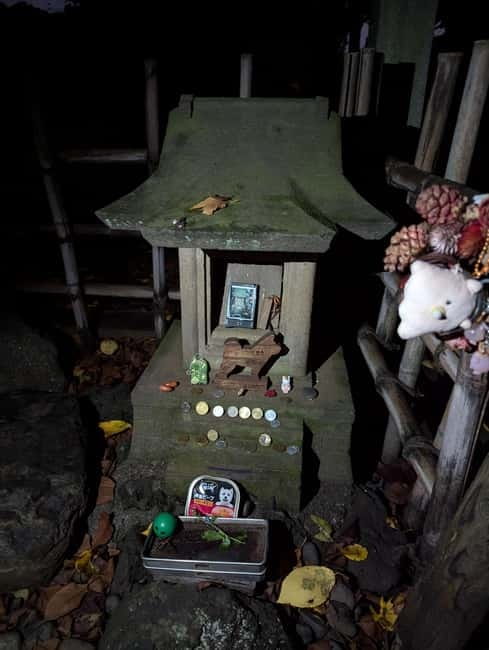
This is not a standard sightseeing walk with a few spooky anecdotes added for flavor. It is built around the less comfortable parts of Tokyo: crime, organized vice, historical violence, shameful wartime actions, and stories of restless spirits.
That mix gives the tour more substance than a simple ghost walk. You are not only hearing tales designed to frighten you. You are also looking at how neighborhoods developed, how Tokyo’s entertainment districts operate, and how certain episodes of Japanese history are remembered, avoided, or discussed with care.
John’s approach is deliberately irreverent. He can shift from a serious explanation of a crime or war crime to a silly joke or theatrical retelling. That style will work well for you if you like crime documentaries, horror, folklore, and history but do not want three hours of solemn narration.
I would not choose this as a gentle introduction to Tokyo. It is best treated as an evening of serious subjects delivered in an informal, sometimes outrageous way.
If you're still narrowing it down, here are other tours in Tokyo we've reviewed.

Meeting at Hanazono Shrine near Golden Gai
The tour begins inside Hanazono Shrine, just in front of the stairs leading toward the main shrine building. This is close to Golden Gai in Shinjuku, so you are starting in one of Tokyo’s most atmospheric nightlife areas rather than at an ordinary station plaza.
Look for John, described as a thin, bald white man. Check your email or GetYourGuide messages for any extra meeting instructions, since the shrine grounds have more than one possible approach.
The setting is useful. Hanazono Shrine gives you a calm, traditional starting point, while the nearby bars and narrow lanes of Golden Gai hint at the night-time Tokyo you are about to examine. It is a fitting contrast: shrine gates and neon nightlife within a short walk of each other.
Arrive ready to walk. The tour uses public streets, shrine grounds, parks, and cemetery paths rather than paid attractions. There are no entry fees along the route, but transportation costs add about 200 yen.
Kabukicho: crime, vice, and organized power
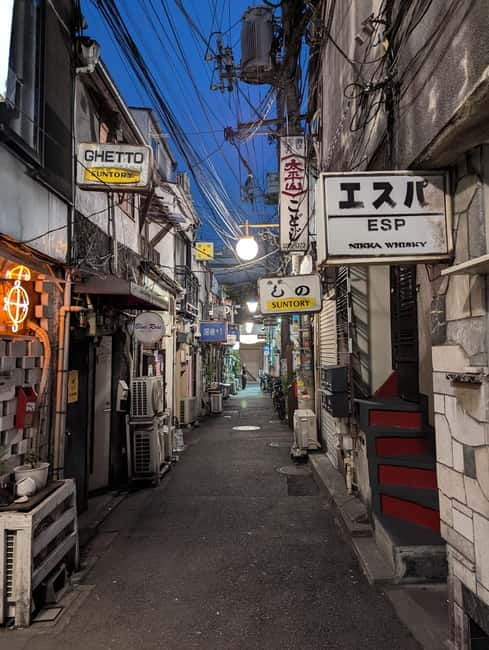
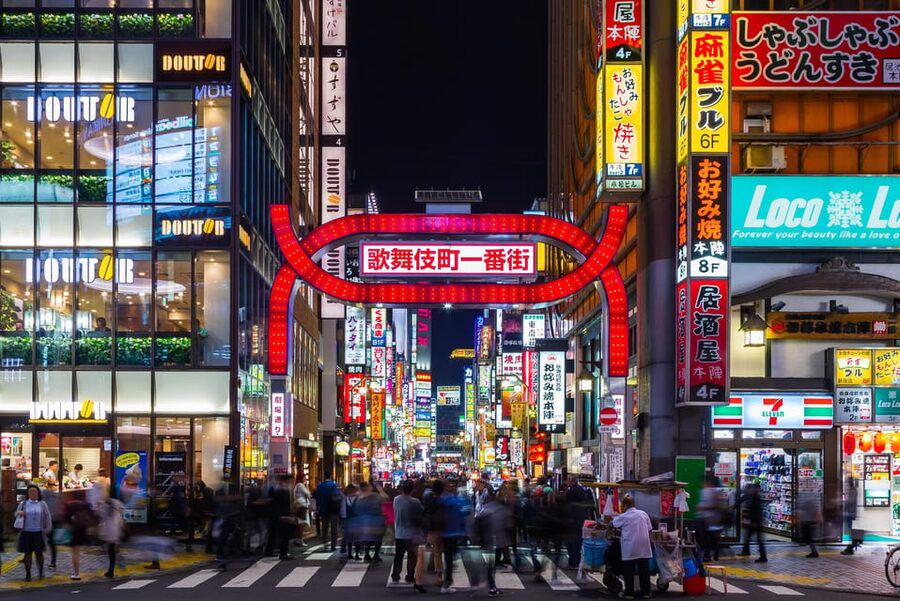
The first main section takes place in Shinjuku’s Kabukicho district and lasts about 45 minutes. Kabukicho is widely known as Tokyo’s major red-light district, and John uses it to explain the city’s organized crime culture, gang disputes, murders, relationships gone bad, and the complicated business around adult entertainment.
This is the part of the tour most likely to feel immediate. You are not hearing about a distant castle battle or a famous historical figure. You are walking through a modern entertainment district while learning about the forces that have shaped it.
John also discusses girl clubs, boy clubs, love hotels, and the quasi-legal sex industry. That wording matters. Tokyo’s nightlife economy does not always fit neat categories, and the tour aims to explain some of those gray areas rather than simply point at flashy signs.
The stories can be gruesome. At the same time, the neighborhood itself is full of ordinary restaurants, hotels, shops, and crowds. The tour helps you look beyond the bright signs without pretending that every street corner is a crime scene.
Golden Gai receives attention as Tokyo’s best-known drinking district. You should not expect a bar crawl or a meal here. Dinner and drinks are not included, so I would eat beforehand if you need a proper meal, or return later if you want to explore the area on your own.
Toyama Park and the weight of Unit 731
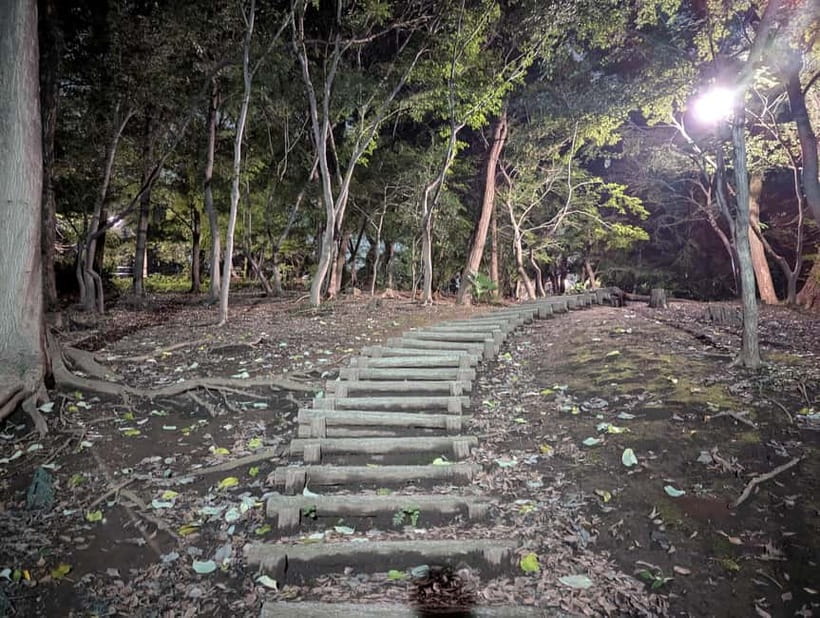
The route then moves to Toyama Park for roughly 30 minutes. This is the most historically serious stop, and probably the section that separates this experience from a standard Tokyo ghost tour.
The tour presents Toyama Park as a place connected with Unit 731, the Japanese military unit associated with human experimentation during World War II. The material concerns crimes against humanity, so the tone here may be more disturbing than spooky.
John places the subject in a wider historical frame. That is important because the section is not merely a collection of shocking details. It asks you to think about how wartime crimes are remembered, how uncomfortable subjects can be left out of popular accounts, and how a normal city park can carry associations that are invisible to most passersby.
You should prepare yourself for upsetting descriptions. The experience is educational, but it does not soften the subject for easy consumption. If you prefer your dark tourism to stay at the level of legends and old murders, this part may be too heavy.
I see it as one of the tour’s strongest features, provided you approach it with respect. The title promises true crime and ghosts, but Toyama Park adds a serious moral and historical dimension.
Aoyama Cemetery after dark
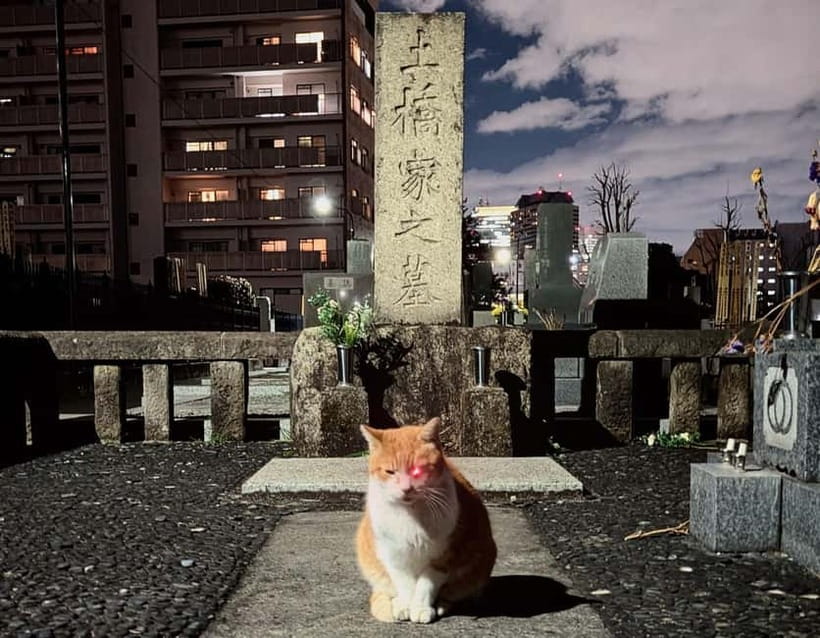
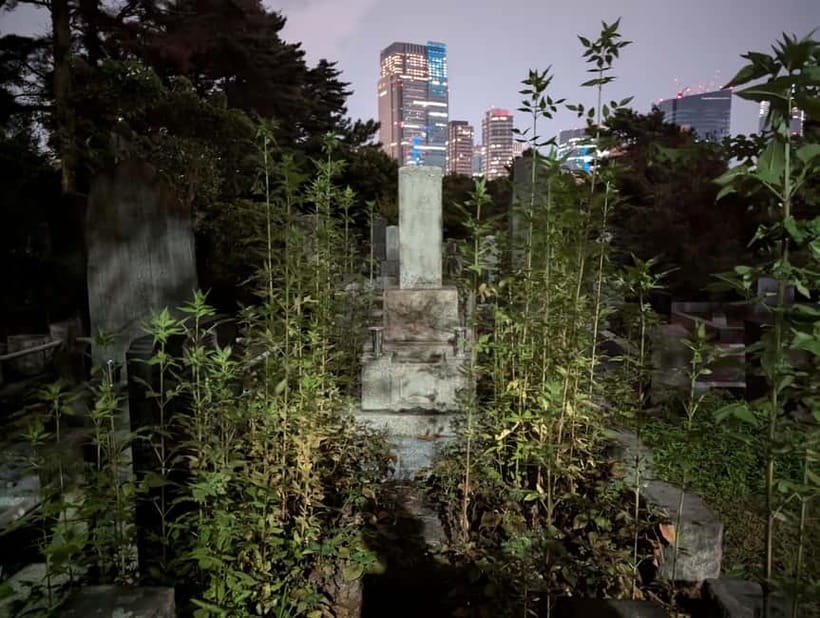
The final main section takes you to Aoyama Cemetery, described as the largest cemetery in Tokyo. The tour finishes near Aoyama-Itchome Station after about 45 minutes here.
This is where the mood shifts toward traditional ghost stories. A cemetery at night gives John the right setting for Japanese tales about spirits, hauntings, and strange encounters. The walking route, darkness, and quiet surroundings do part of the work, while John supplies the stories and theatrical delivery.
Do not expect a haunted-house attraction with props or jump scares. The appeal is the setting and the oral storytelling. John is known for acting out parts of his stories, and his expressive style is especially useful here. He can make a ghost tale playful, creepy, or knowingly silly without losing the thread.
The cemetery section also includes a visit to the grave of Hachiko, the famous loyal dog associated with Japan. This gives the final stop a gentler note amid the murders and supernatural stories. It is a small but memorable change of pace.
One practical point: the tour takes place in the cemetery after dark, so you may see less of the grounds than you would in daylight. That is part of the atmosphere, but it also means you should not expect a detailed cemetery sightseeing visit. One useful suggestion is to begin earlier if you want some remaining daylight to see the setting before the ghost stories take over.



John’s style: part historian, part actor
John is central to the experience. The strongest praise for the tour focuses on his ability to tell a story, keep a group involved, answer questions, and use humor without letting the walk become flat.
He is described as passionate about Japanese history and able to discuss subjects beyond the set route. If you have questions about Japan, you may find the conversation continues beyond the prepared stories. He has also helped people find their trains after the tour, which is practical since the finish is at Aoyama-Itchome Station rather than the starting point.
His comic style is not subtle. You may hear dark jokes, cheesy jokes, adult language, and deliberately dramatic performances. Some people will find that a welcome release after grim material. Others may feel that jokes about terrible events go too far.
That is the key judgment call. If you want a polished, restrained academic lecture, this is not the right fit. If you like a guide who can explain serious history, then switch into an exaggerated character and keep the group laughing, John’s style should suit you.
The tour has a very high 4.9 rating from 163 reviews, and the repeated praise is specific: storytelling, humor, historical context, enthusiasm, and the ability to hold attention for the full three hours. Several people describe the time as passing quickly, even in heat, humidity, rain, or after a long day of walking.
Walking demands, timing, and comfort
Three hours on foot is a real commitment in Tokyo. The route includes urban streets, shrine steps, park paths, and cemetery walking. The information specifically warns that the tour is not suitable for people with a low level of fitness or those who tire easily.
Wear comfortable shoes. Bring water, particularly in warm or humid weather, and dress for the season. The tour can operate in rain, so a weather check before leaving is wise. You should also be comfortable walking at night and moving between different parts of Tokyo.
The route includes stairs, and John’s stair counting may not always be exact. Treat that as part of the humor, not as a precise accessibility guide.
Wheelchair users should not book this experience. The route and stairs make it unsuitable, and the supplied information also excludes people over 300 pounds, or 136 kilograms. Children under 14 are not allowed, which makes sense given the sexual material, murder cases, graphic subjects, and adult jokes.
Transportation costs are not part of the price. Budget about 200 yen for the required transport. Since the tour ends at Aoyama-Itchome Station, you will need to arrange your onward journey from there. John may help with train directions, but your hotel transfer remains your responsibility.
Is $35 a fair price?
At $35 per person, the value depends on how much you want from a guide-led experience. There are no museum admissions or special attraction tickets included, but there are also no extra entry charges along the walking route. You are paying mainly for three hours of research, narration, local context, and guided movement through areas you could visit independently.
You could walk through Kabukicho, Toyama Park, and Aoyama Cemetery without a guide. The hard part is knowing which stories belong to which places, how to explain the history responsibly, and how to connect modern Tokyo with older crimes and folklore. That is where the price makes sense.
A private group is available, which may improve the value for couples, friends, or families of eligible age who want more room for questions. The standard experience is in English, and the guide fee is included.
I would not compare this with a sightseeing bus or a major-ticket attraction. Compare it with an evening of independent wandering, a few hours of research, and the chance of missing the meaning behind the places. For people who actively enjoy true crime, dark history, and ghost stories, $35 is reasonable.
Who should book this Tokyo night walk?
I would recommend it to you if you enjoy:
- True crime and crime documentaries
- Japanese ghost stories and paranormal folklore
- Difficult wartime history
- Tokyo’s nightlife districts and social undercurrents
- Guides with strong personalities and theatrical delivery
- Walking tours that encourage questions and conversation
It is especially suitable for adults who have already seen Tokyo’s famous temples, shopping districts, and observation decks and want a different angle. The tour can add context to the city by showing that modern Tokyo contains painful, strange, and often overlooked stories alongside its pop culture and polished public image.
I would skip it if you dislike graphic subjects, sexual topics, dirty humor, or stories about human experimentation. I would also avoid booking it after an exhausting sightseeing day if you are already struggling with the heat or your step count.
The balance between horror and history is one of the experience’s main strengths. It is not only about making you uncomfortable. The best sections help you understand how places, memories, and public silence shape the city.
Final verdict: a strong choice for dark-history fans
Book this tour if you want Tokyo presented without its usual glossy filter. John’s mix of historical detail, jokes, acting, and ghost stories gives the walk a clear personality, while the route covers four distinct subjects: Kabukicho nightlife, organized crime, wartime atrocities, and Japanese spirits.
Just know what you are choosing. This is a long walk with adult material, heavy history, and humor that can be deliberately crude. For the right audience, the result is an unusual and memorable evening that shows you parts of Tokyo most guidebooks pass over.
FAQ
How long does the Tokyo True Crime and Ghost Stories Tour last?
The tour lasts three hours, including the walking sections through Shinjuku, Toyama Park, and Aoyama Cemetery.
Where does the tour begin?
It begins at Hanazono Shrine in Shinjuku, just in front of the stairs leading to the main shrine building inside the shrine grounds, near Golden Gai.
Where does the tour finish?
The tour finishes at Aoyama-Itchome Station.
What language is the tour conducted in?
The tour is conducted in English with a live guide.
Is transportation included in the tour price?
No. Transportation fees are not included. You should budget about 200 yen. There are no entry fees for the places visited along the route.
Is the tour suitable for children?
No. Children under 14 are not permitted. The tour includes adult language, sexual subjects, murder, human experimentation, and dark humor.
More tours in Tokyo we've reviewed











Tours, compared.
 ★ 5.0Mt Fuji and Hakone 1-Day Bus Tour Return by Bullet TrainFrom $163
 ★ 5.01-Day Tokyo Bus TourFrom $129
 ★ 5.0Tokyo: Shinjuku Food Tour (13 Dishes at 4 Local Eateries)From $86
 ★ 4.4Tokyo Mt Fuji 5th St & Hakone Cruise Bus Tour w/Bullet TrainFrom $15410 hours
 ★ 5.0Flagship 2-Hours Official Street Go-Kart Tour – Tokyo Bay ShopFrom $642 hours to 2 hours 30 minutes (approx.)
 ★ 4.7Tokyo: Mt. Fuji Tour, Hakone Ropeway, Owakudani, Lake AshiFrom $5410 hours