
Reviewed · TOURS
Tokyo Toilet Tour
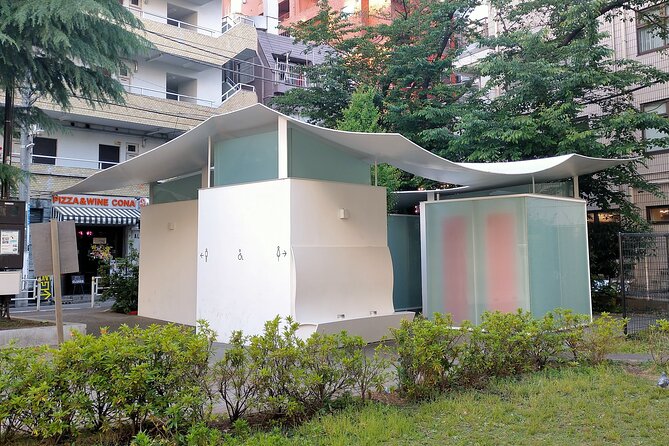
Tokyo’s famous toilets are more than a practical stop. On this private walking tour, you’ll see striking public facilities designed by Shigeru Ban, Tadao Ando, Kengo Kuma, Toyo Ito, and other leading architects. The route also carries you through small parks, residential streets, Shibuya, and Ebisu, far beyond the usual scramble across Shibuya Crossing.
I like the personal format and the chance to ask questions as you go. I also like the connection to Wim Wenders’ film Perfect Days, especially at Yoyogi Hachimangu Shrine. The main consideration is the price: at $223.34 per group of up to four, it makes better financial sense for a small group than for one person, and lunch and transportation are not included.
In This Review
- Key points at a glance
- Why Tokyo’s toilets make a surprisingly good tour
- Starting at Yoyogi Fukamachi Mini Park
- Miyashita Park and Tadao Ando’s design
- Crossing Shibuya for five minutes
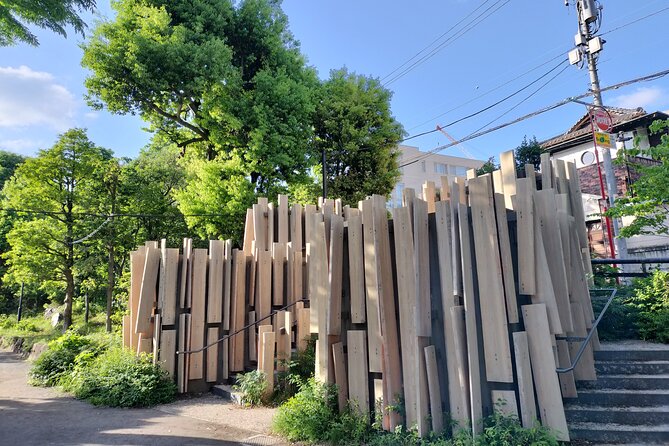
- Nabeshima Shoto Park and Kengo Kuma
- The final stretch through Ebisu
- What the private format adds
- Is $223.34 fair for up to four people?
- Timing, walking, and practical planning
- Who will get the most from this walk?
- Should you book the Tokyo Toilet Tour?
- FAQ
- Where does the Tokyo Toilet Tour begin?
- Where does the tour end?
- How long does the tour last?
- How many people can join the private tour?
- Is private transportation included?
- Is lunch included?
- Which architects are represented on the tour?
- Does the tour include Shibuya Crossing?
- Is the tour connected to Perfect Days?
- Can I cancel for a full refund?
Key points at a glance
- Architect-designed public toilets: See work by Shigeru Ban, Toyo Ito, Tadao Ando, Kengo Kuma, Fumihiko Maki, Kashiwa Sato, and Nao Tamura.
- A private route through Shibuya: Your group walks between stops instead of riding in private transportation.
- A film connection: Yoyogi Hachimangu Shrine includes the toilets associated with Perfect Days.
- Five distinct areas: The route links Yoyogi, Miyashita Park, Shibuya Crossing, Nabeshima Shoto Park, and Ebisu.
- Guide Ken may lead the walk: Past tour feedback specifically praises Ken’s friendly approach and explanations of the Shibuya City project.
- Good for a small group: The flat group price can offer fair value for up to four people traveling together.
Why Tokyo’s toilets make a surprisingly good tour
Tokyo has a reputation for clean, carefully designed public facilities, but this outing focuses on something more specific: the Tokyo Toilet project and its unusual mix of architecture, public space, and everyday life.
Instead of rushing from one famous sight to another, you spend three and a half hours looking at places most people would simply use and forget. The toilets are the main subject, yet the real appeal is the route between them. You move through parts of Shibuya that feel more local and less staged for sightseeing.
I like this kind of tour because it gives you a sharper sense of how Tokyo works. Small parks, shrine grounds, commercial districts, quiet housing streets, and major train hubs appear in one connected walk. Your guide can also explain why different architects approached a humble public building in such different ways.
The experience is private, so only your group takes part. That matters if you want to stop for photos, ask about the architects, or adjust the pace. It also makes the tour a better choice for couples, families, and solo visitors who find large walking groups tiring or impersonal.
The tone is not a formal architecture lecture. The best version of the experience is a conversation while walking. Guide Ken is praised for being friendly and for explaining the background of the Shibuya City project and the architects involved. Confirmation of a particular guide should be checked when booking, but Ken is the name most closely connected with the available feedback.
If you're still narrowing it down, here are other tours in Tokyo we've reviewed.
Starting at Yoyogi Fukamachi Mini Park
The walk begins at Yoyogi Fukamachi Mini Park, at 1-chōme-54-1 Tomigaya in Shibuya. This is a useful starting point because the first stop is close to Yoyogi Hachimangu Shrine, and the route gradually moves toward Ebisu rather than doubling back.
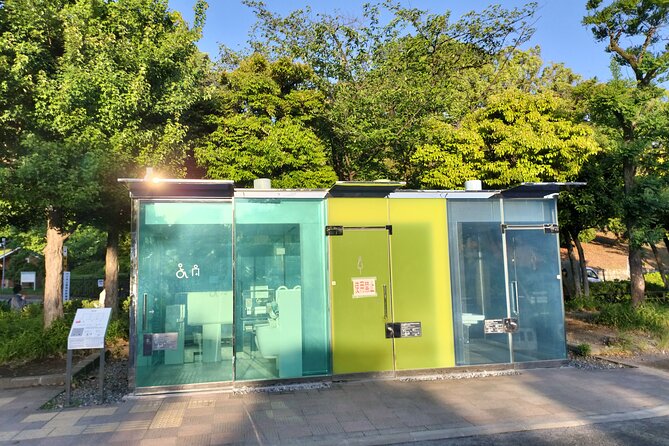
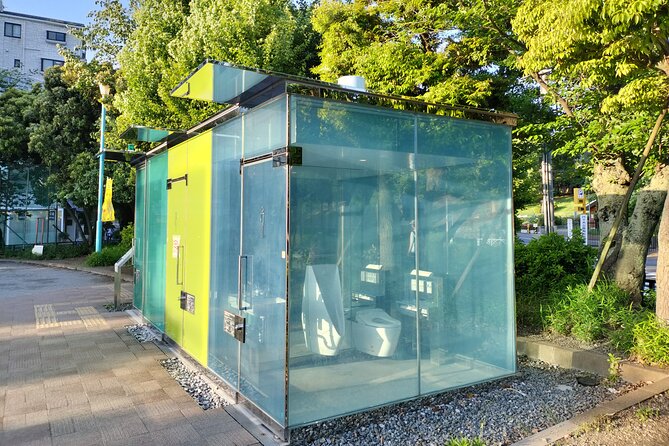
Your first look is at toilets designed by Shigeru Ban and Toyo Ito. The transparent cubicle is the feature most likely to catch your eye. It gives the facility an unusual visual presence and raises practical questions about privacy, materials, and how design can change your reaction to a public toilet.
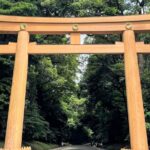
The nearby shrine adds a welcome change of mood. Yoyogi Hachimangu is a small Shinto site, so this stop is not only about architecture. You get a look at a quieter religious space before continuing into the more urban parts of the route.
This location also connects to Perfect Days, the Wim Wenders film about a Tokyo toilet cleaner. The main character takes a lunch break here, making the stop especially worthwhile if you have seen the film. If you have not, the shrine and the surrounding streets still give the visit a clear sense of place.
Plan on about 30 minutes here. Admission is free. The tour does not require a separate ticket for the toilet or shrine stop.
Miyashita Park and Tadao Ando’s design
The second stop is Miyashita Park, located between Shibuya and Harajuku. This area has undergone major redevelopment in recent years, so it offers a useful contrast with the smaller shrine and park at the first stop.
The toilet here was designed by Tadao Ando. His work often makes people pay attention to structure, light, concrete, and the relationship between a building and its setting. On this tour, you do not need to arrive with an architecture background. Your guide can point out what to notice and explain how the project fits into the changing district.
Miyashita Park is also a good point for understanding Tokyo’s constant renewal. You are not seeing an isolated work of art. You are seeing design placed in a district that has been reshaped for modern city life. That context gives the toilet more meaning than a quick photo stop would provide.
You spend about 30 minutes here. Since the tour is on foot, the route itself becomes part of the experience. You should expect regular walking on city streets, with the exact pace shaped by your group and guide.
Crossing Shibuya for five minutes
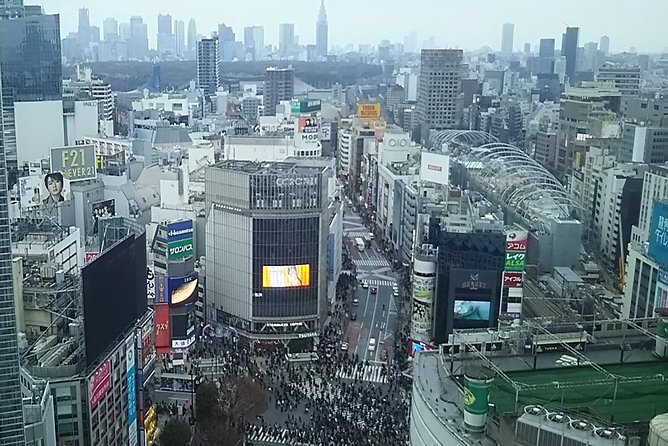
The route includes Shibuya Crossing, one of Tokyo’s most familiar sights. The crossing is not directly part of the Tokyo Toilet project, but it appears naturally as you move to the next location.
This is a short stop, about five minutes, and it should be treated as a transition rather than a full sightseeing session. You will cross the intersection, take in the scale of the surrounding district, and continue.
That brief pause works well in the larger route. You get one unmistakable Tokyo moment, then leave the busiest area behind. If you want an extended photo session or time to visit nearby shops, this tour does not appear designed for that. Its focus stays on the toilet project and the neighborhoods connected to it.
Nabeshima Shoto Park and Kengo Kuma
The third toilet stop is at Nabeshima Shoto Park, roughly a kilometer from Shibuya Station in a quiet residential area. This is one of the route’s most useful changes of pace.
The toilet was designed by Kengo Kuma, an architect known for work that pays close attention to materials and the surrounding setting. Here, the park and residential streets matter as much as the building itself. After the energy of Shibuya Crossing, the quieter atmosphere helps you see how public facilities can fit into everyday neighborhood life.
You have about 15 minutes at this stop. That is enough for a look and an explanation, but not a long visit. The short timing also means the route keeps moving toward Ebisu.
The walk of about a kilometer from the main station area is worth noting. You should be comfortable walking at a moderate pace and standing outside at each stop. The tour is not presented as strenuous, but it does require a moderate level of physical fitness. Comfortable shoes are a sensible choice.

The final stretch through Ebisu
The last major stop brings you to Ebisu, one station south of Shibuya. Here, you see toilets associated with Fumihiko Maki, Kashiwa Sato, and Nao Tamura.
Having several designers represented in one area helps make the point of the project clear. There is no single Tokyo Toilet look. Different designers bring different ideas to a small public structure, and your guide can help you compare them rather than treating each stop as an unrelated object.
Ebisu also gives the tour a satisfying finish. You are no longer near the route’s starting point, so the walk feels like a short journey through several sides of Shibuya. You end at Ebisu Station, on the JR Yamanote Line and Tokyo Metro Hibiya Line, making it easy to continue sightseeing or return to your hotel.
The final stop lasts about 30 minutes. The stated end point is Ebisu Station, at 1 Chome-5 Ebisuminami. This is practical if you plan to explore Ebisu afterward, though you should allow extra time if you want a meal or a longer look around the neighborhood.
What the private format adds
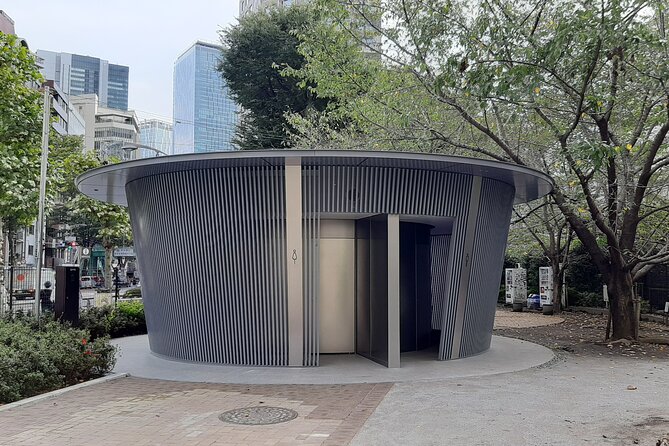
A private tour changes the feel of a subject like this. In a large group, you might get a fixed explanation and a short pause at each building. Here, you can ask why a design looks the way it does, connect the route to Perfect Days, or spend more time on the stops that interest you most.
The format is also described as customizable. Popular Tokyo sights such as Tsukiji Market, Meiji Jingu Shrine, and the Imperial Palace can be discussed when planning a private day with a local guide. However, the specific route supplied for this experience is the five-stop Tokyo Toilet walk from Yoyogi to Ebisu.
That distinction matters. If you want a focused architecture and neighborhood walk, this route is clear and appealing. If you want a broad first-day introduction to Tokyo with several major attractions, confirm exactly what will be included before booking. The experience description presents customization as an option, but the detailed route centers on the toilets and the five listed areas.
Families may appreciate the ability to set a comfortable pace. Couples can treat the walk as an unusual way to see Shibuya. Solo visitors gain company and local explanation without joining a large group. The private setup also works well if your group has a specific interest in architecture, urban planning, or the film connection.
Is $223.34 fair for up to four people?
The price is $223.34 per group, with up to four people included. That works out to about $56 per person for four people, before any exchange-rate changes or additional booking costs. For two people, the effective cost is about $112 each, and a solo booking pays the full group price.
The value depends on what you want from the guide. You are not paying admission to major attractions, since the listed stops are free. You are paying for private guiding, route planning, context about the project and architects, and the chance to see several neighborhoods without having to work out the connections yourself.
For four people, I find the price easier to justify. A small group gets a private experience for a price that can compare favorably with several individual tickets for more conventional attractions. For one person, the cost is harder to defend unless you place a high value on the subject or strongly prefer private guiding.
Lunch is not included, and private transportation is not included. The tour is built around walking, so you should budget for food separately and avoid expecting a chauffeured route. Its value is in the guided walk, not in included extras.
Timing, walking, and practical planning
The experience lasts about three hours and 30 minutes. The listed stop times add up to roughly two hours, leaving the rest for walking, transitions, explanations, and the movement between districts.
You should treat this as a real walking tour, not a series of quick vehicle transfers. Public transportation is nearby, but private transportation is not included. The route begins in Yoyogi and ends in Ebisu, so it is helpful to plan your day around that one-way direction.
The mobile ticket makes access simple, but confirmation is subject to availability and is received within 48 hours of booking. The experience is free to cancel up to 24 hours before the start time. Changes or cancellations inside that window are not accepted for a refund.
Book ahead if your schedule is tight. The tour is booked, on average, 39 days in advance, which suggests that the private format has steady demand. I would also wear comfortable shoes and keep your schedule afterward flexible enough to enjoy Ebisu without rushing.
Who will get the most from this walk?
You are likely to enjoy this tour if you have already seen Tokyo’s famous sights and want something more specific. It is also a strong pick for a first-time visitor who prefers a small, guided introduction to the city rather than a packed bus route.
Architecture fans will get the clearest payoff because the itinerary includes several major designers. Film fans should give extra weight to the Yoyogi Hachimangu stop and its link to Perfect Days.
This is less suitable if you dislike walking, want a food-focused experience, or expect a long visit at each architectural site. It is also not the right choice if you want admission to famous landmarks included in the price. The tour’s pleasure comes from observation, conversation, and the neighborhoods between stops.
Should you book the Tokyo Toilet Tour?
Book it if you want an unusual, focused way to see Tokyo and you like the idea of turning ordinary public facilities into a lesson in design and city life. The route includes free stops, but the private guide gives them shape and meaning. Guide Ken is specifically praised for friendly explanations, and the walk takes you through quieter parts of Shibuya that many sightseeing routes skip.
I would book it for a group of three or four, for fans of Perfect Days, or for anyone curious about Japanese public design. I would think twice as a solo visitor paying the full group price, unless this subject is a high priority.
The best reason to choose it is not simply to photograph unusual toilets. It is to see Yoyogi, Shibuya, Nabeshima Shoto, and Ebisu as connected parts of Tokyo, with an informed local voice helping you notice what you might otherwise walk past.
FAQ
Where does the Tokyo Toilet Tour begin?
The tour begins at Yoyogi Fukamachi Mini Park, 1-chōme-54-1 Tomigaya, Shibuya, Tokyo 151-0063, Japan.
Where does the tour end?
The tour ends at Ebisu Station, 1 Chome-5 Ebisuminami, Shibuya, Tokyo 150-0022, Japan.
How long does the tour last?
The experience lasts approximately three hours and 30 minutes.
How many people can join the private tour?
The price covers one private group of up to four people.
Is private transportation included?
No. Private transportation is not included. The route is a walking tour, though the areas are near public transportation.
Is lunch included?
No. Lunch is not included in the tour price.
Which architects are represented on the tour?
The route includes work by Shigeru Ban, Toyo Ito, Tadao Ando, Kengo Kuma, Fumihiko Maki, Kashiwa Sato, and Nao Tamura.
Does the tour include Shibuya Crossing?
Yes. The route crosses Shibuya Crossing for about five minutes on the way to the next location.
Is the tour connected to Perfect Days?
Yes. At Yoyogi Hachimangu Shrine, you see toilets connected with the location where the main character in the film takes a lunch break.
Can I cancel for a full refund?
Yes. You can cancel at least 24 hours before the experience start time for a full refund. Cancellations or changes made less than 24 hours beforehand are not accepted for a refund.
More tours in Tokyo we've reviewed





Tours, compared.
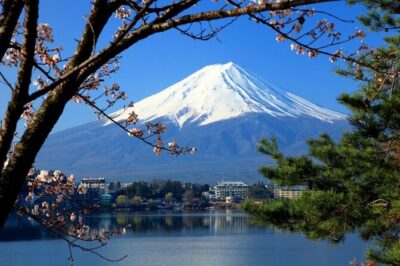 ★ 5.0Mt Fuji and Hakone 1-Day Bus Tour Return by Bullet TrainFrom $163
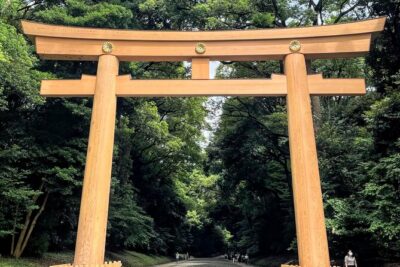 ★ 5.01-Day Tokyo Bus TourFrom $129
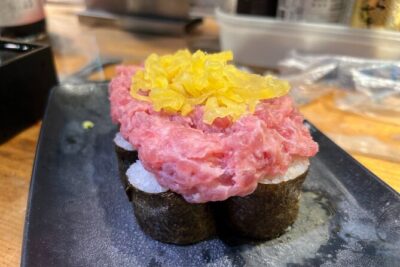 ★ 5.0Tokyo: Shinjuku Food Tour (13 Dishes at 4 Local Eateries)From $86
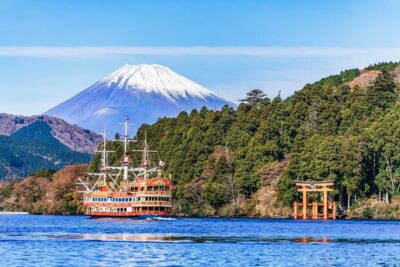 ★ 4.4Tokyo Mt Fuji 5th St & Hakone Cruise Bus Tour w/Bullet TrainFrom $15410 hours
 ★ 5.0Flagship 2-Hours Official Street Go-Kart Tour – Tokyo Bay ShopFrom $642 hours to 2 hours 30 minutes (approx.)
 ★ 4.7Tokyo: Mt. Fuji Tour, Hakone Ropeway, Owakudani, Lake AshiFrom $5410 hours