
Reviewed · TOKYO
Tokyo Time Machine Exploring Old School Monzen Nakacho
Monzen-Nakacho gives you a side of Tokyo that neon-heavy sightseeing often misses: small food shops, neighborhood temples, and cramped Showa-era bars where the evening feels local rather than staged. This six-hour walk combines cultural stops with food and drinks, ending back near the station.
I like the tiny group, capped at six people, because it gives your guide room to translate, explain customs, and adjust the pace. I also like the range of stops, from a shrine and Buddhist temple to plum wine, heritage food, and a narrow alley lined with little bars. The main consideration is that this is not a general Tokyo highlights tour, and the food-and-drink balance may lean toward sake or other alcohol more than some people expect.
In This Review
- Key points to know before booking
- Why Monzen-Nakacho makes a good Tokyo food walk
- Tsurugaoka Hachimangu Shrine and the first hour
- Fukagawa Fudo-do and the sound of a fire ritual
- Tatsumi Shindo, two hours among tiny bars
- What you may eat and drink along the way
- The guide is part of the meal
- Is $195 a fair price?
- Timing, meeting point, and walking pace
- Who should book this experience?
- My verdict on Tokyo Time Machine
- FAQ
- Where does the tour start?
- What time does the experience begin?
- How long does the tour last?
- What food and drinks are included?
- How many people can join?
- Can I cancel for a full refund?
Key points to know before booking
- Old Tokyo atmosphere: Monzen-Nakacho offers generations-old food shops, temples, and Showa-era drinking alleys away from the city’s best-known districts.
- Six-person maximum: The small group makes conversation and translation easier, and guides have more room to accommodate individual needs.
- Food and drinks included: Expect snacks, dinner, tea or coffee, and alcoholic drinks during the walk.
- Three main areas: The route includes Tsurugaoka Hachimangu Shrine, Fukagawa Fudo-do, and Tatsumi Shindo.
- Guide-led access: A guide handles language barriers and helps you order, understand rituals, and speak with local shopkeepers.
- A six-hour afternoon and evening: The tour begins at 1:00 pm at Monzen-Nakacho Station and finishes at the same meeting point.
Why Monzen-Nakacho makes a good Tokyo food walk
Tokyo is easy to admire from the outside. You can visit a famous crossing, photograph a tower, and move through polished shopping districts without ever learning how a neighborhood spends its ordinary evening. Monzen-Nakacho offers a different sort of sightseeing.
The area is known for old-school Tokyo character. You walk past local businesses, historic religious sites, and small places where the room may be designed for only a handful of customers. That setting matters. In a tiny bar, the guide is not simply pointing at a menu. The guide can explain what you are eating, help with translation, and give you a way into a place you might not enter alone.
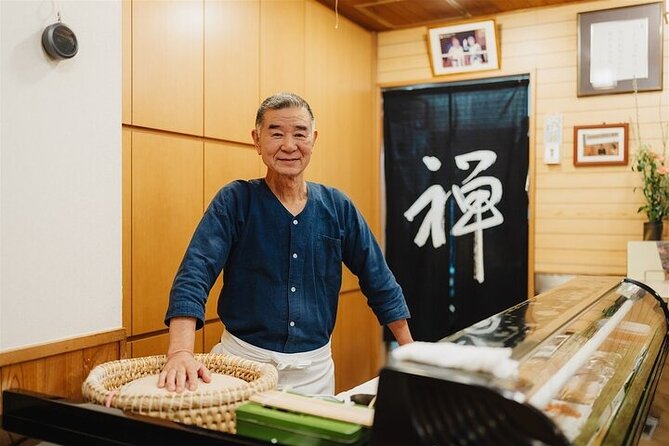
The tour is run by Culinary Backstreets, and the guide changes by departure. Names associated with this experience include Diana, Michelle, Nicole, Mairi, and Chika. You should not expect a particular person unless your booking confirms it, but the guides described here share an important job: they connect you with food, customs, and people in a neighborhood where English may not be widely spoken.
The six-person limit is one of the strongest features. A bigger group would be awkward in a narrow bar or small restaurant. With only a few people, you can ask questions, hear the guide clearly, and get help with unfamiliar dishes. One guide was also able to adjust the outing for a person with limited mobility, though you should still discuss your needs before booking rather than assume every part of the route will suit you.
If you're still narrowing it down, here are other tours in Tokyo we've reviewed.
Tsurugaoka Hachimangu Shrine and the first hour
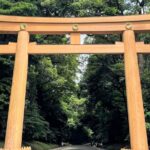
The first stop is Tsurugaoka Hachimangu Shrine, founded in 1627 and described as Tokyo’s largest Hachiman shrine. The site is linked with sumo history, including a yokozuna stele, and monthly markets are held on the first, 15th, and 28th of each month.
You get roughly an hour here. That is enough time to take in the red torii, look at the grounds, and hear how the shrine fits into local religious and sporting traditions. If your visit lands on a market day, the atmosphere may be especially lively, but the tour does not promise a market on every departure.
This stop gives the afternoon a useful start. You are not rushed straight into eating. Instead, the guide establishes a sense of place before the food portion begins. Ask about the shrine’s connection to sumo and pay attention to the details of shrine etiquette. A guide who can translate and explain the setting makes a major difference here, since the visual symbols alone do not tell the whole story.
The practical drawback is simple: admission is free, but the stop is still a walking and standing visit. If you need frequent rests, tell the guide at the outset. Also, this is a neighborhood tour rather than a grand national shrine circuit, so do not book it expecting a long list of major Tokyo monuments.
Fukagawa Fudo-do and the sound of a fire ritual
The second stop is Fukagawa Fudo-do, another hour of the route. This Buddhist temple is known for Goma fire rituals and large wooden statues. The approach also includes small fox Inari shrines, creating a compact mixture of Buddhist and Shinto imagery.
The temple adds a strong cultural layer to the afternoon. Food tours can become a chain of tastings with little connection between them. Here, the visit breaks up the eating and gives you a chance to understand a religious practice that may be unfamiliar. The fire ceremony, when taking place as part of the visit, is a memorable contrast to the quiet lanes outside.
Several food stops are tied to this part of the outing in the overall experience. You might encounter traditional dishes, a warming fisherman’s clam broth and rice stew, mochi, or other local specialties. The exact menu can change, but the point is variety rather than one formal meal served in one restaurant.
You should also expect the guide to explain what you are seeing rather than leave you to guess. That is especially useful at a working temple, where casual tourist behavior can feel out of place. Follow the guide’s lead, listen during the ritual, and keep the cultural part of the tour as important as the tasting.
Tatsumi Shindo, two hours among tiny bars
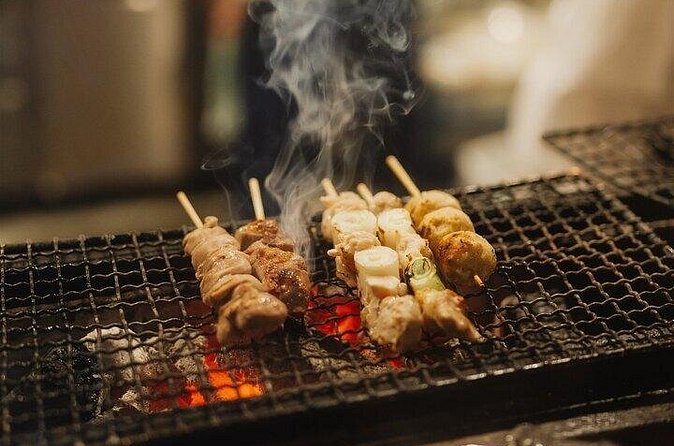
Tatsumi Shindo is the longest stop, with about two hours in an alley lined with roughly 30 small bars. The area preserves a Showa-era mood and is associated with karaoke, yakitori, motsu-nikomi, and late-night bar hopping.
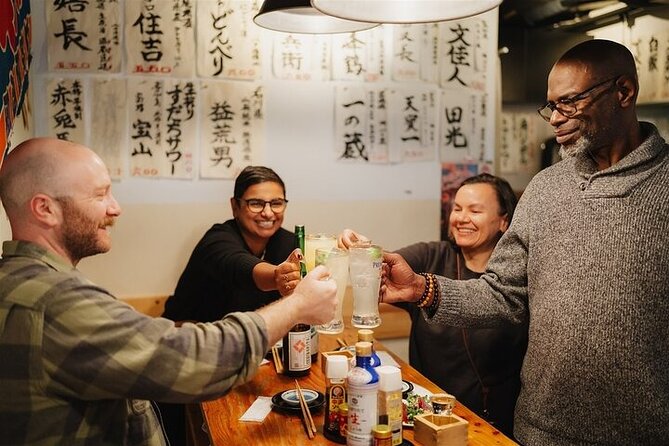
This is the part of the tour that most clearly shows why a guide is valuable. A narrow local bar can be difficult to enter without Japanese language skills, especially when menus, ordering customs, and seating arrangements are not obvious. Your guide translates and helps the group move through the experience without turning the place into a performance for tourists.
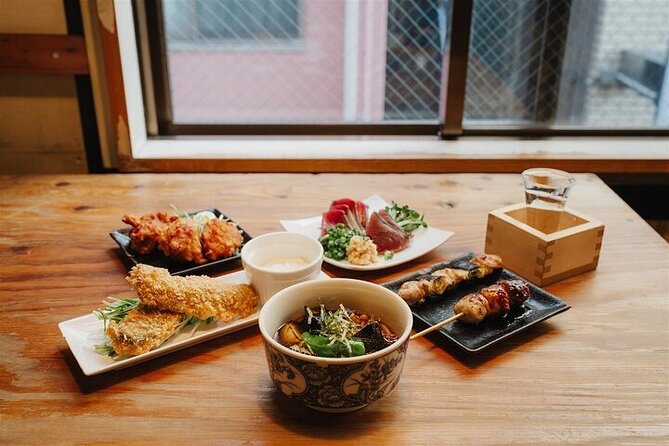
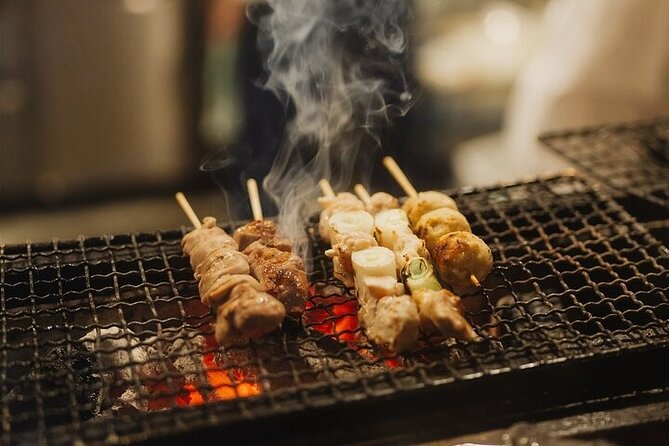
The food may include familiar Japanese bar fare and dishes you would not know to order. Yakitori is a natural fit for this setting. Motsu-nikomi, a slow-cooked offal dish, is more of an adventurous choice. You may also sample drinks such as plum wine, sake, gin, or other regional pours. Coffee or tea is included as well, which helps keep the menu from being entirely alcoholic.
This is also where expectations matter most. One person who enjoyed the tour still wanted the description to make the sake focus clearer and would have preferred more emphasis on food. If you are not a sake fan, tell your guide early. The experience includes a good range of food, but it is not a meal-only tour. It is built around the social life of small bars, and alcohol is part of that setting.
The cramped spaces can also affect comfort. Tatsumi Shindo is appealing because it feels close and local, but that means it may not offer the elbow room of a large restaurant. The group size helps, yet you should be comfortable walking between stops and spending time in compact venues.
What you may eat and drink along the way
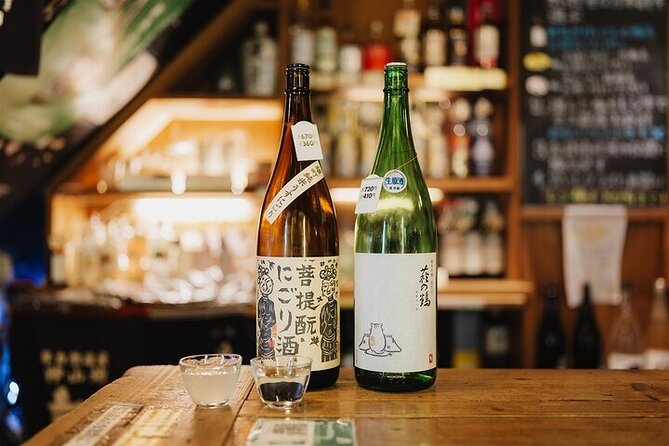
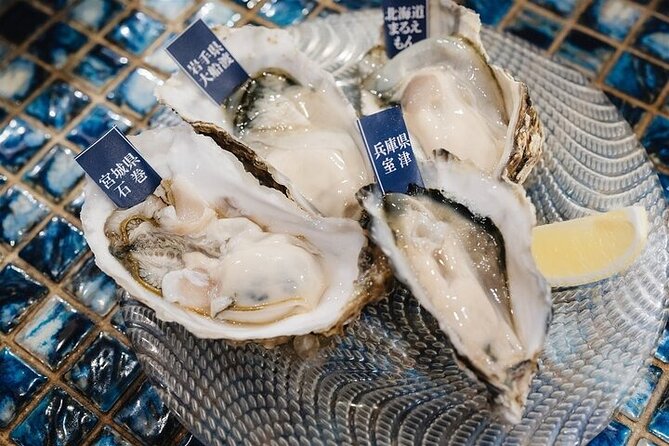
The included food is best understood as a series of tastings, snacks, and meals woven into the walk. The supplied details point to several kinds of stops: a small restaurant serving heritage food, traditional sweets such as mochi, a shop specializing in plum wines, and local drinking spots.
That variety is a major strength. You are not asked to make one risky order and hope for the best. Instead, the guide can introduce several flavors and explain how each fits into everyday Japanese eating and drinking. A warming clam broth with rice stew offers comfort food. Plum wine gives you a sweeter alternative to sake. Small bar dishes show how food works alongside conversation and drinks.
The included package lists dinner, snacks, coffee or tea, and alcoholic beverages. At $195 per person, those inclusions matter. You are paying not only for food, but also for interpretation, translation, and entry into places that can be hard to manage independently.
Still, do not assume every palate will be equally happy. If you dislike alcohol, have dietary restrictions, or prefer a full sit-down dinner over several small portions, contact the operator before booking. The available information confirms a varied menu, but it does not provide a fixed list of dishes for every date.

The guide is part of the meal
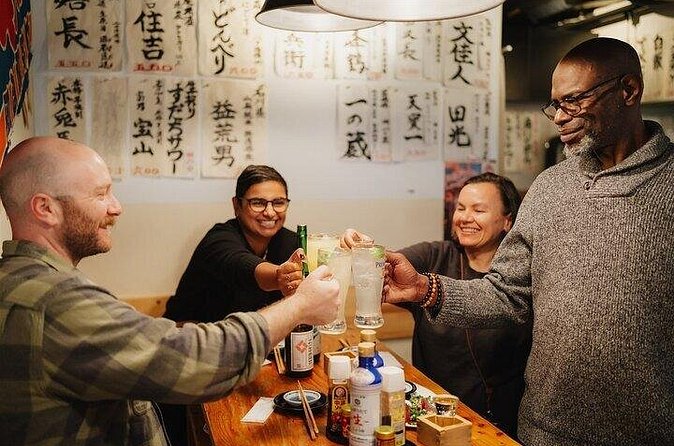
The best version of this experience depends heavily on the guide. Diana is associated with strong explanations of Japanese food, history, and culture. Michelle is noted for a warm hosting style and for connecting each stop with the people and traditions of the neighborhood. Nicole is remembered for making the outing especially enjoyable, while Chika and Mairi are also named in connection with memorable departures.
Those details are useful, but they do not mean you can select a guide. Treat the names as examples of the guiding team rather than a promise. The key feature is the guide’s role in making communication possible.
Language translation is not a minor convenience here. It can help you understand what you are ordering, ask a shopkeeper a question, and learn why a dish or ritual matters. It also reduces the risk of turning a local business into a silent photo stop. You get more from the neighborhood when conversation is possible.
The small group adds to this. With a maximum of six people, the guide can answer questions without holding up a large party. It also makes it easier to meet the other people on the tour. The group may include visitors with very different plans, such as people heading onward for a skiing trip, but the shared food stops give you an easy point of connection.
Is $195 a fair price?
The price is $195 per person, which is a serious expense for a six-hour walk. You should compare it with the cost of arranging several meals, drinks, taxis, and paid guiding on your own. The tour includes dinner, snacks, tea or coffee, and alcoholic drinks, and private transportation is not included.
The value is strongest if you want access and context rather than simple sightseeing. You could walk around Monzen-Nakacho independently for less money, but you might not know which tiny businesses to choose, how to order, or how to understand the religious stops. The translation and planning do real work.
The value is weaker if you already speak Japanese, have extensive experience with local izakayas, or mainly want a large dinner. You may also find the cost harder to justify if you do not drink and would not use much of the included alcohol.
Booking this early may be wise. The experience is often reserved about 84 days ahead, and the six-person cap naturally limits supply. Free cancellation is available up to 24 hours before the start time. After that point, refunds and last-minute changes are not accepted.
Timing, meeting point, and walking pace
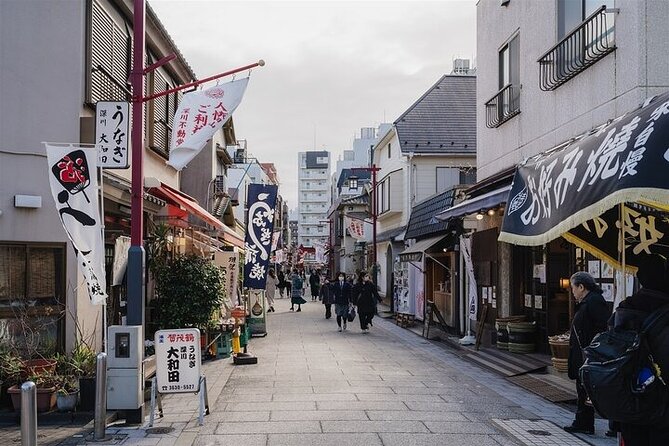
The tour starts at 1:00 pm at Monzen-Nakacho Station, at 2 Chome-4 Monzennakacho, Koto City, Tokyo. It ends back at the same meeting point. Since private transportation is not included, plan to reach the station on your own and expect the experience to connect its stops by walking and local movement.
A 1:00 pm start is practical. You have daylight for the shrine and temple, then move toward the bar area as the afternoon turns into evening. The six-hour length also means you should avoid scheduling a major dinner reservation immediately afterward.
Wear comfortable shoes. The route includes religious sites, neighborhood streets, and an alley of small bars. The tour is suitable for most people, but tell the operator about mobility concerns before you arrive. One guide has shown flexibility with limited mobility, but the exact route and seating conditions can vary.
Who should book this experience?
I would choose this tour if you have already seen Tokyo’s headline districts or if you want food to lead you into local history and daily life. It suits curious eaters who enjoy trying unfamiliar dishes, asking questions, and spending time in small places.
It is also a good match for first-time visitors who want a friendly introduction to izakaya culture without having to decode every menu alone. The guide provides a safety net, but the experience still feels more personal than a standard restaurant meal.
I would think twice if you want a strict sightseeing itinerary, dislike alcohol, need guaranteed accessible facilities, or prefer food choices to be fully specified in advance. The tour is designed around discovery, and discovery includes some uncertainty.
My verdict on Tokyo Time Machine
Book Tokyo Time Machine if you want to trade famous Tokyo sights for neighborhood food, temple traditions, and tiny bars with a local guide doing the translation. The strongest reasons are the six-person group, the mix of cultural and culinary stops, and the chance to enter places you might skip on your own.
I would schedule it early in your Tokyo stay. The guides offer recommendations for the rest of your visit, and the dishes, drinks, and neighborhood customs can help you make better choices afterward. Just go in expecting a food-and-drink walk rather than a pure food tour, and be ready for sake or other alcohol to share the stage with dinner.
FAQ
Where does the tour start?
It starts at Monzen-Nakacho Station, at 2 Chome-4 Monzennakacho, Koto City, Tokyo 135-0048, Japan.
What time does the experience begin?
The tour begins at 1:00 pm.
How long does the tour last?
The experience lasts approximately six hours and ends back at the meeting point.
What food and drinks are included?
The inclusions are coffee or tea, snacks, dinner, and alcoholic beverages.
How many people can join?
The maximum group size is six travelers.
Can I cancel for a full refund?
Yes. You can cancel at least 24 hours before the local start time for a full refund. Cancellations or changes made less than 24 hours before the start are not accepted for a refund.
More tours in Tokyo we've reviewed

Tokyo, compared.
 ★ 5.0Mt Fuji and Hakone 1-Day Bus Tour Return by Bullet TrainFrom $163
 ★ 5.01-Day Tokyo Bus TourFrom $129
 ★ 4.6Tokyo: teamLab Planets TOKYO Digital Art Museum Entry TicketFrom $251 day
 ★ 4.0Mt Fuji & Hakone Cruise, Drum Show Bullet Train 1 Day from TokyoFrom $149
 ★ 5.0Tokyo: Shinjuku Food Tour (13 Dishes at 4 Local Eateries)From $86
 ★ 4.4Tokyo Mt Fuji 5th St & Hakone Cruise Bus Tour w/Bullet TrainFrom $15410 hours